
MOZA Clamp for Truck Wheel : Test & Review | What it's really worth in 2026
MOZA Clamp for Truck Wheel: My quick review
Above all, this clamp provides a much more credible and comfortable truck driving posture, with a real feeling of stability over long sessions. It makes sense for sim racers already equipped with a MOZA, who often spend time on truck or bus games and want to avoid a dedicated cockpit. For this profile, the investment remains coherent and relevant.
When you buy through our links, we may earn an affiliate commission.
Test & review MOZA Clamp for Truck Wheel: the accessory that (really) changes the life of virtual truck drivers?
The MOZA Clamp for Truck Wheel targets a very specific niche: truck, bus and heavy vehicle-oriented sim racers who want a more realistic steering wheel position than the usual GT or F1 steering wheels. We're not talking about a steering wheel, not a base, but an often underestimated element: the attachment and position of the steering wheel in space.
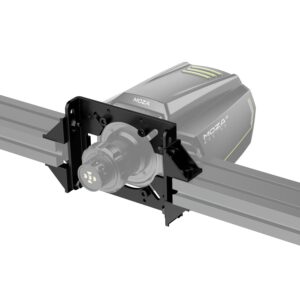
This bracket promises something simple, but crucial: to enable a MOZA truck or bus steering wheel to be mounted in a stable, adjustable and, above all, credible manner in terms of angle and height, without the need for a dedicated 100 % truck cockpit. The idea is to go from a "racing" setup to a "truck" setup without dismantling everything.
My angle of analysis is therefore clear: rigidity, stability, ease of adjustment, compatibility with a desk or chassis, and above all real impact on playing sensations. Does this clamp justify its place on an already busy setup, or is it just a nice but dispensable comfort accessory?
The question is: does it transform a simple Euro Truck or ATS session into a much more credible experience? Or is the gain mainly ergonomic, with no major effect on immersion?
Design and manufacture of the MOZA Clamp for Truck Wheel
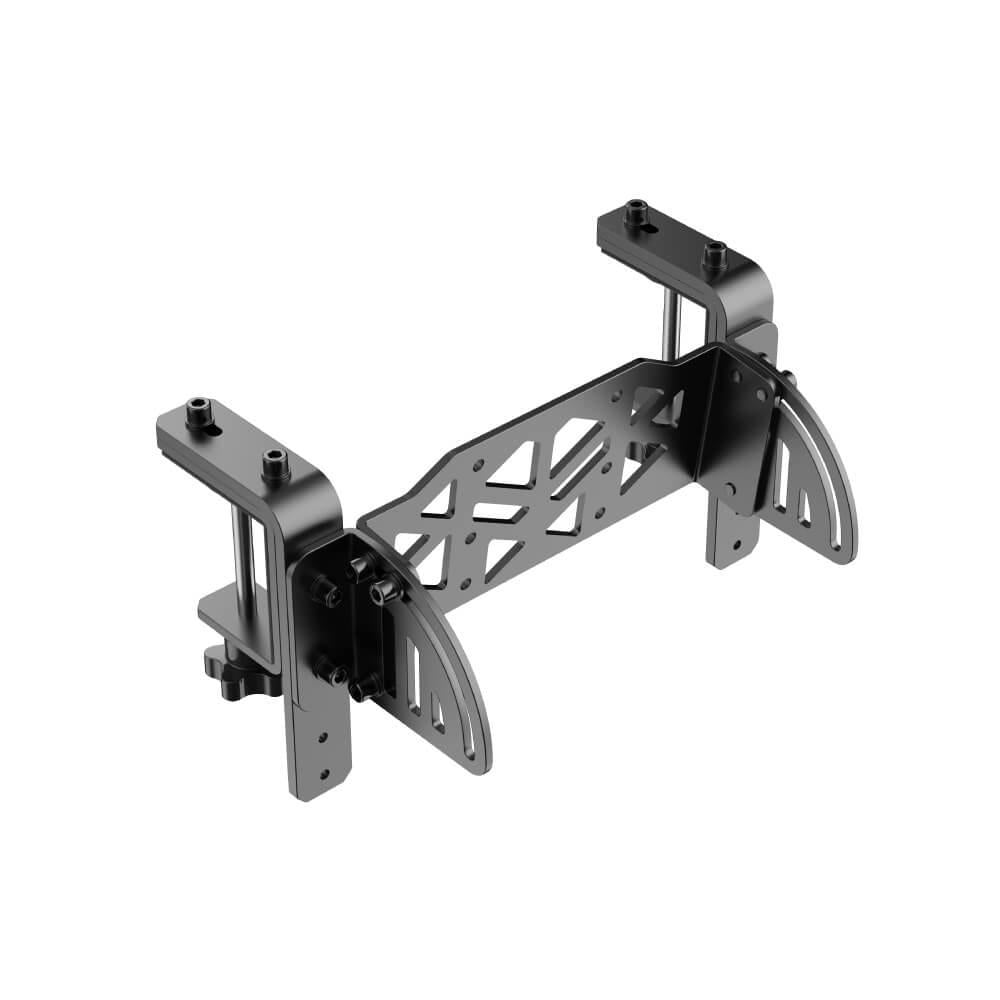
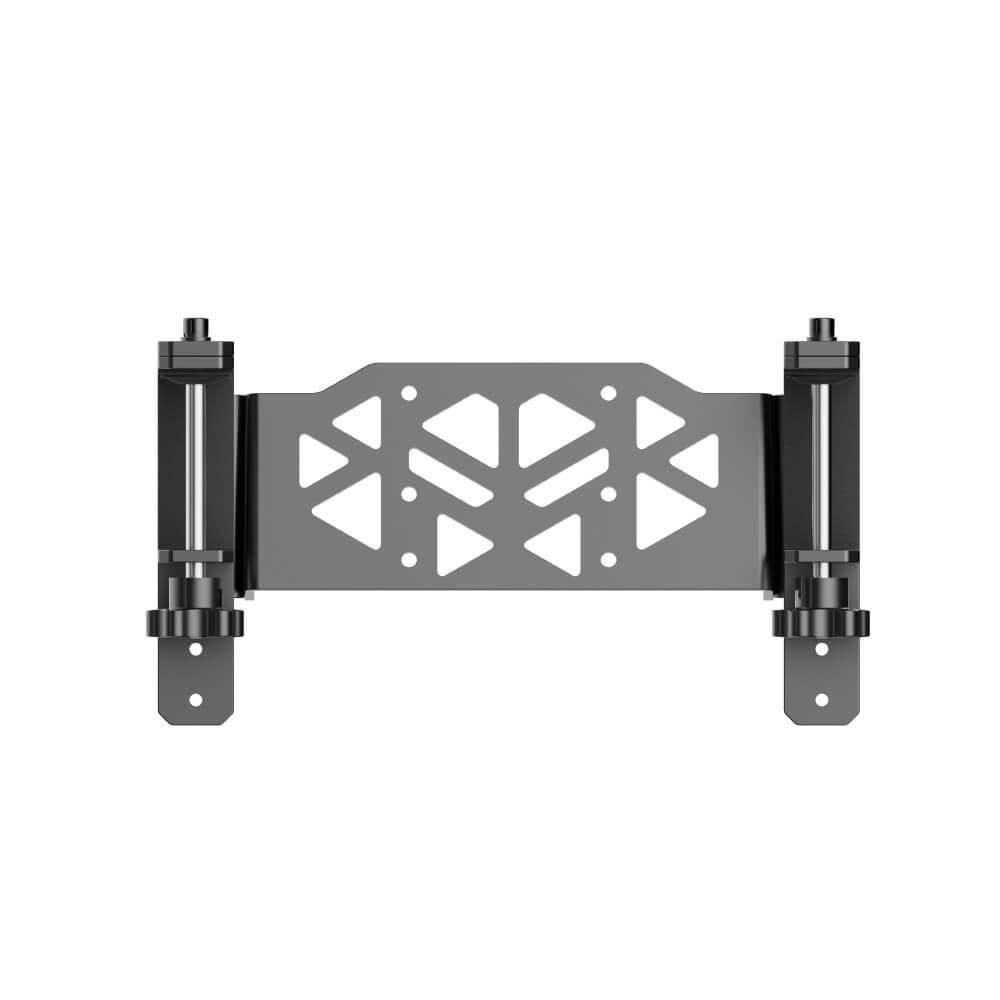
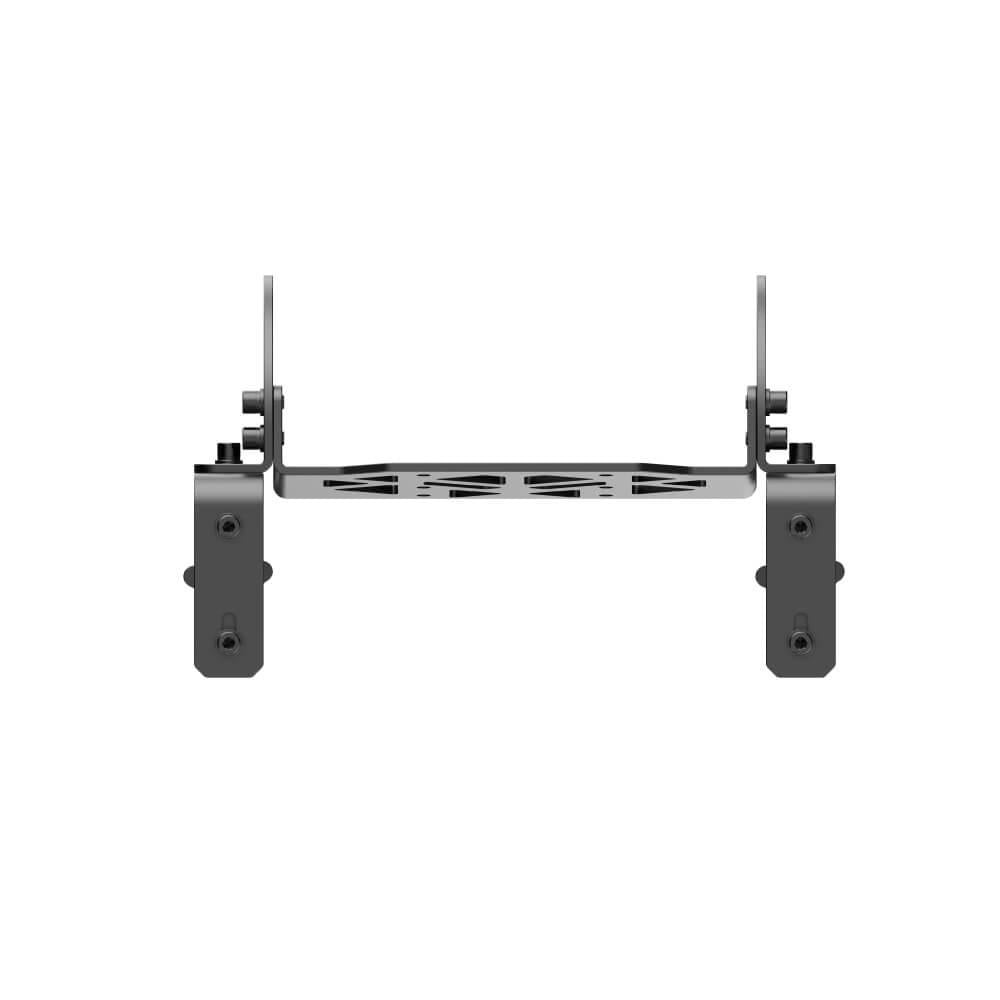
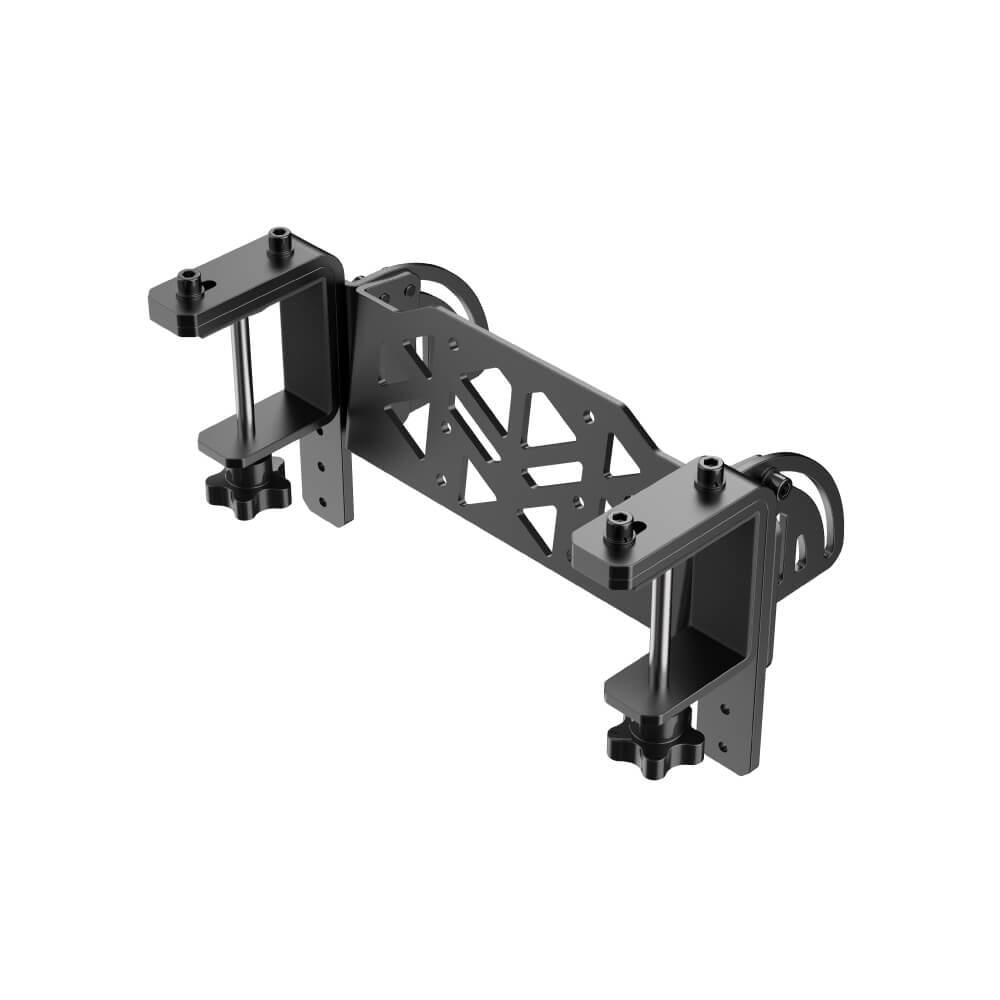
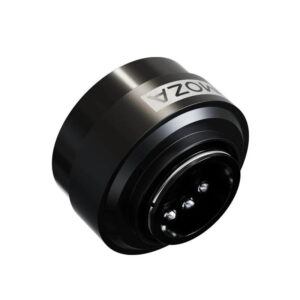
Visually, the MOZA Clamp for Truck Wheel remains in line with the MOZA ecosystem: sober design, angular lines, serious black finish. In hand, the first impression is one of density. The clamp clearly gives the impression of being able to handle the torque of the home-made direct drive bases without flinching, even over long sessions.
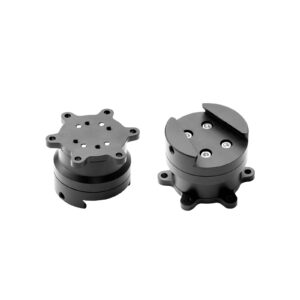
The choice of materials is geared towards rigidity: metal structure, visible thickness, few "cheap" parts. The clamping zones inspire confidence, giving the impression of a monolithic block once everything has been tightened. You get the feeling that this isn't just a cobbled-together universal office clamp, but a part designed for a large, heavy truck steering wheel.
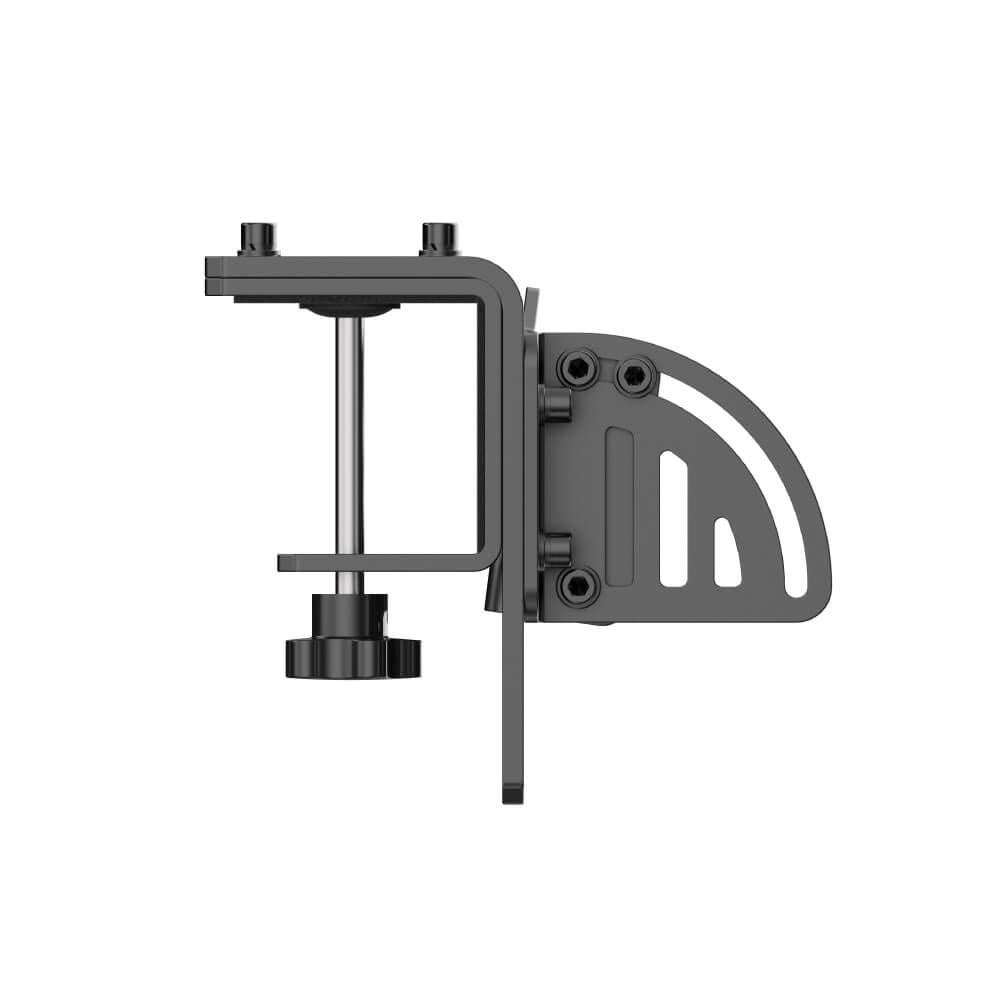
Overall, mechanical adjustments are clean. There's little play in the joints, and the knobs are large enough to be easily manipulated, even when leaning over the desk or cockpit. You don't get that stray flex when you lean on the steering wheel. When you start turning hard, the whole thing doesn't feel like it's suffering.
Where this may be a little disappointing is for users accustomed to large aluminum profile cockpits. Compared to a fully rigid profile mount, we're still on a clamp system: lateral rigidity is very good for what it is, but not quite up to the level of a custom-made column bolted directly to the chassis. The difference is most noticeable when riding with very high base torque and abrupt steering inputs.
On the other hand, compared with classic "desktop" steering wheel brackets or 3D-printed adapters, we're clearly a step up in seriousness. It's a product that sits somewhere between the casual world and the dedicated full-metal cockpit, with a real sim racing philosophy.
Settings, customization and compatibility
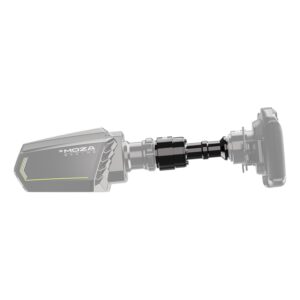
The beauty of the MOZA Clamp for Truck Wheel is the range of adjustments it offers to adapt the position of the truck steering wheel. Height, inclination, overhang: everything is designed to bring the driving posture closer to that of a truck, more upright and higher than a GT or single-seater position.
Adjustments are made via physical knobs and screws, with no need for complicated tools. You can go from a relatively low position (closer to a car steering wheel) to a very high position, tilted towards the driver, typical of a truck or bus. The learning curve is short: a few tries are enough to find a comfortable compromise. Adjust, tighten, test two virtual traffic circles, and refine.
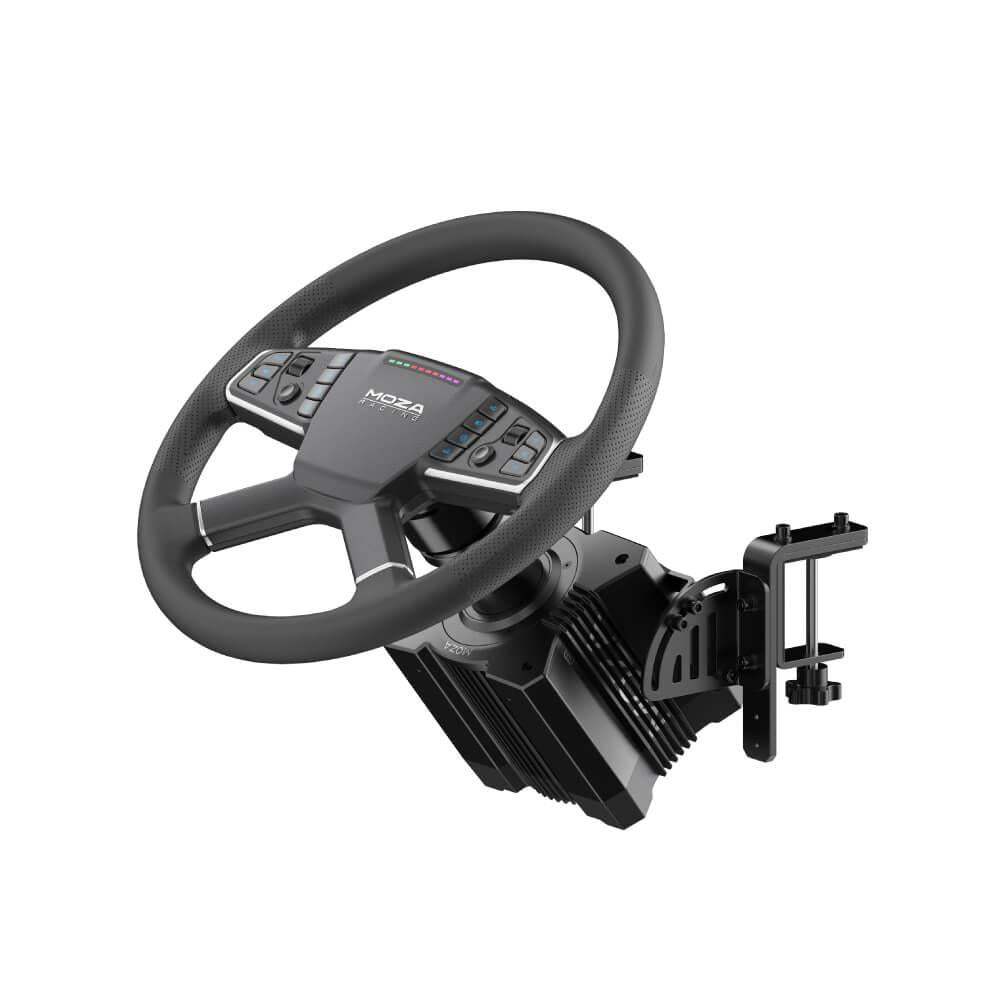
What's interesting is that it can really be integrated into an existing ecosystem. The clamp is designed to work with compatible MOZA bases and their dedicated truck steering wheels. On PC, integration is naturally more flexible, with the possibility of changing games very easily (truck sim, bus sim, even free driving). On consoles, everything depends on the general compatibility of the MOZA base used: the clamp doesn't limit anything, but it doesn't "unlock" any specific compatibility either.
On an office desk, the clamp can transform a simple work setup into a truck driver's station, without the need to drill holes or invest in a chassis. On a cockpit, it's more of a specialization element: you can imagine two driving positions, one for racing, the other for transport, playing on modularity.
As far as upgradability is concerned, this is clearly a durable accessory. As long as you stay within the MOZA ecosystem and use a compatible truck steering wheel, the clamp will remain of interest. It's not a "starter" to be replaced, but rather a part that accompanies an upgrade of the rest of the setup.
Sensations in play: what the Clamp for Truck Wheel really changes
Even if the clamp itself doesn't generate force, it has a direct influence on the way force feedback is perceived and the information sent back from the base. The difference lies in the position of the steering wheel and the overall stability of the assembly.
In truck configuration, with the steering wheel well up and slightly tilted, reading the FFB becomes more natural for this type of vehicle. The center of rotation is closer to what you'd expect in a truck or bus: you turn more "upwards" than "forwards", and the brain adapts very quickly. It's easier to understand the slow mass transfers, the leaning in on long freeway bends, and the roll corrections.
On tight bends in town or at junctions, the effect is quite noticeable. The more upright position of the steering wheel means that you dose the steering with fuller movements, which is more in keeping with heavy-duty driving. Base reactions can be read more clearly in the arm, especially if you like to drive without filtering the FFB too much. You get the impression of driving a heavier, less responsive vehicle, without having to tamper with the base settings to the extreme.
On grip, the clamp doesn't change the raw information, but the way the body receives it. Progressive loss of grip at the rear is felt more "gently", as the steering wheel is further away from the body and higher up. For a truck sim, this makes sense: we anticipate, accompany and stabilize, rather than counter-steering ultra-fast like in GT3.
Vibrations and road irregularities are read differently too. In the truck position, vibrations are picked up by a more relaxed posture of the arms. Dry shocks, or curbs taken a little hard, remain clear but less aggressive than on a very low GT steering wheel. As a result, you can ride for long periods without excessive shoulder fatigue. On long sessions such as long-distance delivery, this is where the clamp really comes into its own. You keep your sensations, but your body tires less.
When making quick corrections, e.g. to catch up with a slightly over-steering trailer or to avoid an obstacle, the stability of the clamp is decisive. As long as you stay within a reasonable torque range on the base, the clamp doesn't flinch or feel springy. You can really "throw" the wheel to one side and then bring it back again, without the angle or height shifting.
Compared with a less powerful base mounted on a simple desk stand, the MOZA base + Truck Wheel + Clamp combo gives a much more serious overall feel. There's less parasitic movement of the desk, less unnecessary vibration, and above all a much more coherent driving position for this type of game. Conversely, compared with a rigid column on a full-aluminum cockpit, we lose a very slight percentage of ultimate rigidity, but gain in versatility and ease of repositioning.
In terms of immersion, the clamp doesn't "wow" on its own, but it perfectly complements the truck's steering wheel. It's the link that makes the whole thing credible. You don't feel like you're driving a 40-ton truck in an F1 position. You sit back, put your hands on top of the steering wheel, and mentally, it's easier to switch to the role of the virtual trucker. For a truck, bus or even coach-oriented player, this really changes the overall perception of the setup.
Who's it for? And what we like / don't like
The MOZA Clamp for Truck Wheel is clearly aimed at a well-defined profile: sim racers already sensitive to immersion, who regularly play truck or bus simulators, and who either have a compatible MOZA base, or are planning to migrate to this ecosystem. It's not a discovery accessory, it's a well-considered purchase to specialize your installation.
What I appreciate most is the overall stability. Once you've tightened it up, you quickly feel you can trust the clamp, even with respectable torque. The second strong point is the range of height and tilt adjustments: you can really get close to a truck position, or on the contrary stick to something more versatile if you alternate playing styles. Finally, the perceived quality and aesthetic coherence with the MOZA ecosystem are spot on. Visually, it blends in well with an already high-end setup, without looking like an add-on.
As far as limitations are concerned, the first comes from the very specialization of the product. If you play few or no truck- or bus-oriented titles, the investment loses its meaning. You end up with a very well-designed but under-used part. Secondly, the maximum rigidity is still lower than that of a hard-mounted column on an aluminum profile chassis. Purists of "zero flex" will feel this, especially with very high forces and rough riding. Thirdly, dependence on the MOZA ecosystem: this clamp comes into its own with MOZA flywheel trucks. If you're on another ecosystem, you won't be able to really take advantage of it.
In terms of perceived value, this is not a gadget. It's an investment for those who want to take their truck setup up a notch, without rebuilding the whole cockpit. If you value realistic posture and long-distance comfort, the price/experience ratio quickly becomes attractive.
Verdict: is the MOZA Clamp for Truck Wheel worth its place in a setup?
The MOZA Clamp for Truck Wheel doesn't change the pure performance of your base, but it does profoundly alter the way you operate it for driving heavy vehicles. It adds a layer of ergonomics and posture realism that, for a truck sim enthusiast, clearly takes the experience to another level.
On the market, it's positioned as a specialized mid/high-end accessory, designed to complement a setup already structured around a MOZA base. It doesn't replace a cockpit or steering wheel, but acts as a pivot between the desktop and serious truck simulation. For those who want to keep their setup relatively compact, yet credible, it's a particularly coherent solution.
I'd recommend it mainly to PC gamers, already committed to the MOZA ecosystem, who spend a significant amount of time on Euro Truck, American Truck, bus or car simulators, and who attach importance to the driving position. On the other hand, if you mainly play classic racing sims, don't have a dedicated truck steering wheel, or are on another basic brand, this won't be your best investment.
If you're looking to give your MOZA truck steering wheel a credible, stable and comfortable position, this product can clearly make the difference in your setup.




Reviews