
Simucube Quick Release Wheel side Kit : Test & Reviews | What it's really worth in 2026
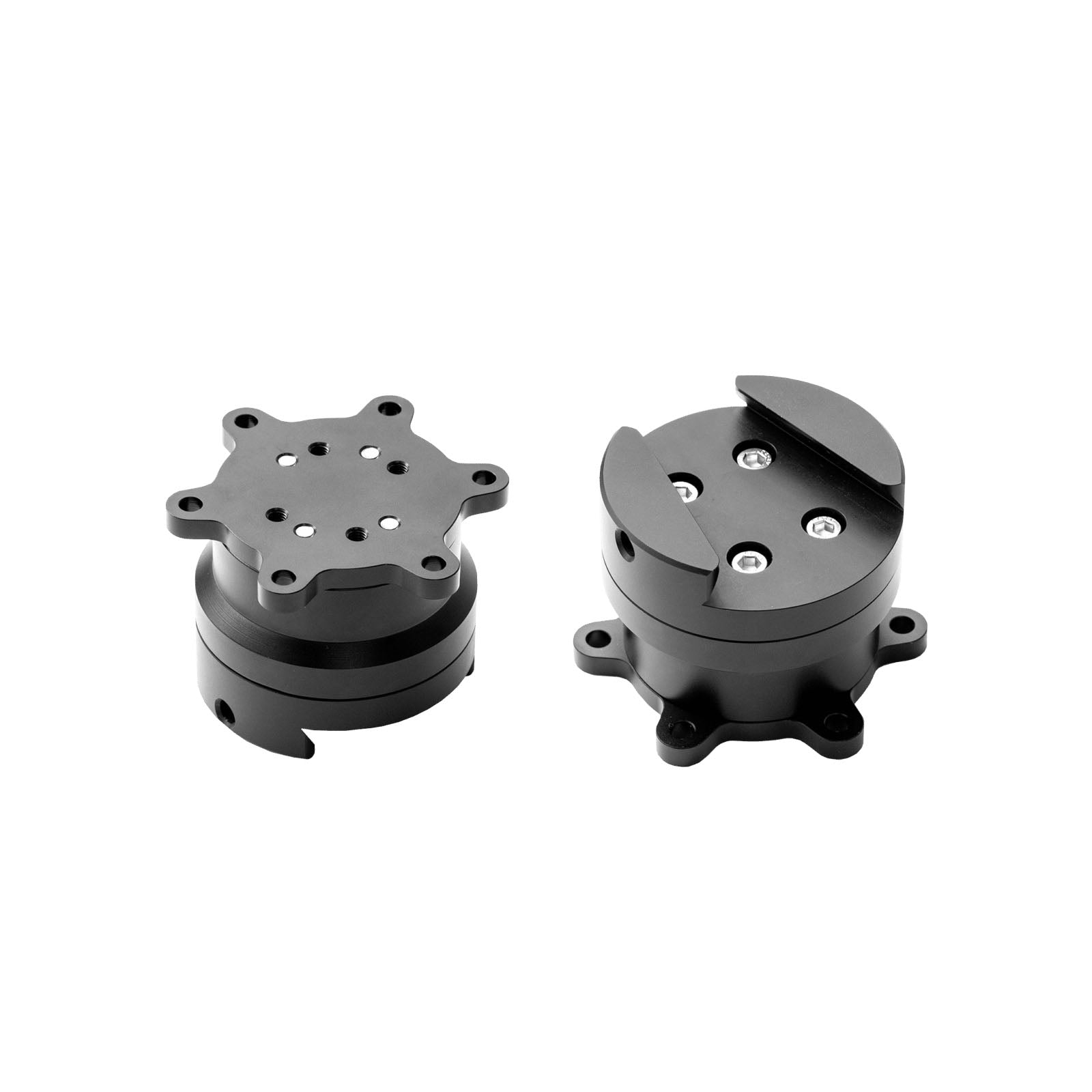
Simucube Quick Release Wheel side Kit : My quick review
This quick release gives a very rigid and transparent flywheel/base connection, which impressed me above all with its total absence of play and feedback noise. It makes sense for simracers already invested in the Simucube ecosystem, with a serious cockpit and several steering wheels. In such a setup, its cost remains consistent with the value it secures.
When you buy through our links, we may earn an affiliate commission.
Simucube Quick Release Wheel Side Kit: a demanding simracer's opinion
In the small world of high-end sim racing, the Simucube Quick Release Wheel Side Kit has become something of a benchmark for steering wheel mounts. Not the flashiest, not the most "fun", but the one we quote whenever we talk about rigidity and reliability on Simucube Direct Drive bases.
On paper, it promises a backlash-free connection between base and flywheel, ultra-fast wheel changing, and above all zero compromise on force feedback sensations. In other words: all the finesse of a powerful Direct Drive, with no creaking, no parasitic vibration, no flex.
My angle is simple: does this quick release justify its "pro standard" image when used on a daily basis? Does it really add anything to the systems supplied as standard with certain third-party steering wheels or hubs? And above all, for what type of simracer does this kit really make sense, in terms of comfort, feel and overall investment in a setup?
I'm going to focus on three things: pure manufacturing quality, ease of use/compatibility, and the concrete impact on in-game sensations. Because at the end of the day, it's very clear what counts: does it really change the way you feel at the wheel, or not?
Design and manufacture: tough stuff built to last
In hand, the Simucube Quick Release Wheel Side Kit gives an immediate impression of density and seriousness. The body is made of machined metal, with a clean finish and no burrs or badly broken angles. This is clearly a product designed to withstand high torque and hours of intensive riding. Nothing sounds hollow, nothing toy-like.
The part on the steering wheel side remains compact, but exudes rigidity. Once mounted on a hub or compatible steering wheel, the whole unit retains a very one-piece appearance. It's clear that Simucube has prioritized solidity and assembly precision over saving a few grams at all costs. As far as I'm concerned, I much prefer this: a steering wheel that's a little "denser" but doesn't move a millimetre.
What's most striking is the absence of any perceptible play once locked to the base. No parasitic micro-rotation, no rattling. When you shake the steering wheel firmly, all you hear is the cockpit. This is exactly what you'd expect from a quick release on a top-of-the-range Direct Drive: to completely forget that it's an intermediate part.
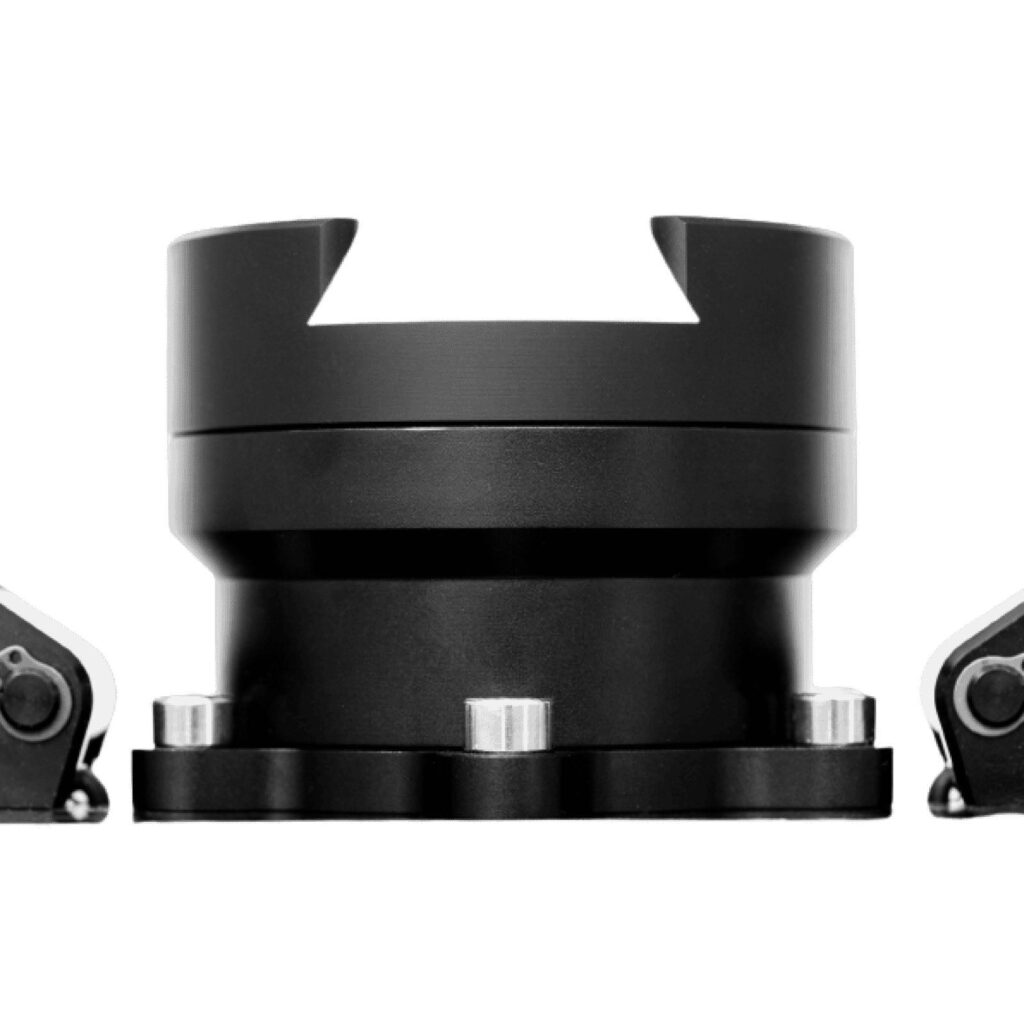
The locking mechanism is straightforward and clean, with a reassuring mechanical feel. There's none of the muffled softness of some plastic-coated cam systems, but there's a direct mechanical connection that feels very "racing".
What may be a little disappointing is the rather raw, very functional look. No frills, few stylistic effects. If you're looking for a visually elaborate QR, like a piece of CNC jewelry to show off on Instagram, this isn't the most spectacular. What's more, the system seems to have been designed more for efficiency than for showroom-style assembly/disassembly.
Compared with the more consumer-oriented quick releases supplied with some mid-range steering wheels, we're clearly taking rigidity and precision up a notch. Compared with other high-end third-party solutions, we're more in the "pro tool" category: less flashy, but extremely serious once you put it to work.
Settings, customization and compatibility
A quick release can't really be adjusted in the same way as a chainstay or pedalboard, but there are still some important points to consider when it comes to installation and setup customization. The Wheel Side Kit is designed to integrate naturally into the Simucube ecosystem, with wheel-side mounting remaining fairly standard for compatible hubs and wheels.
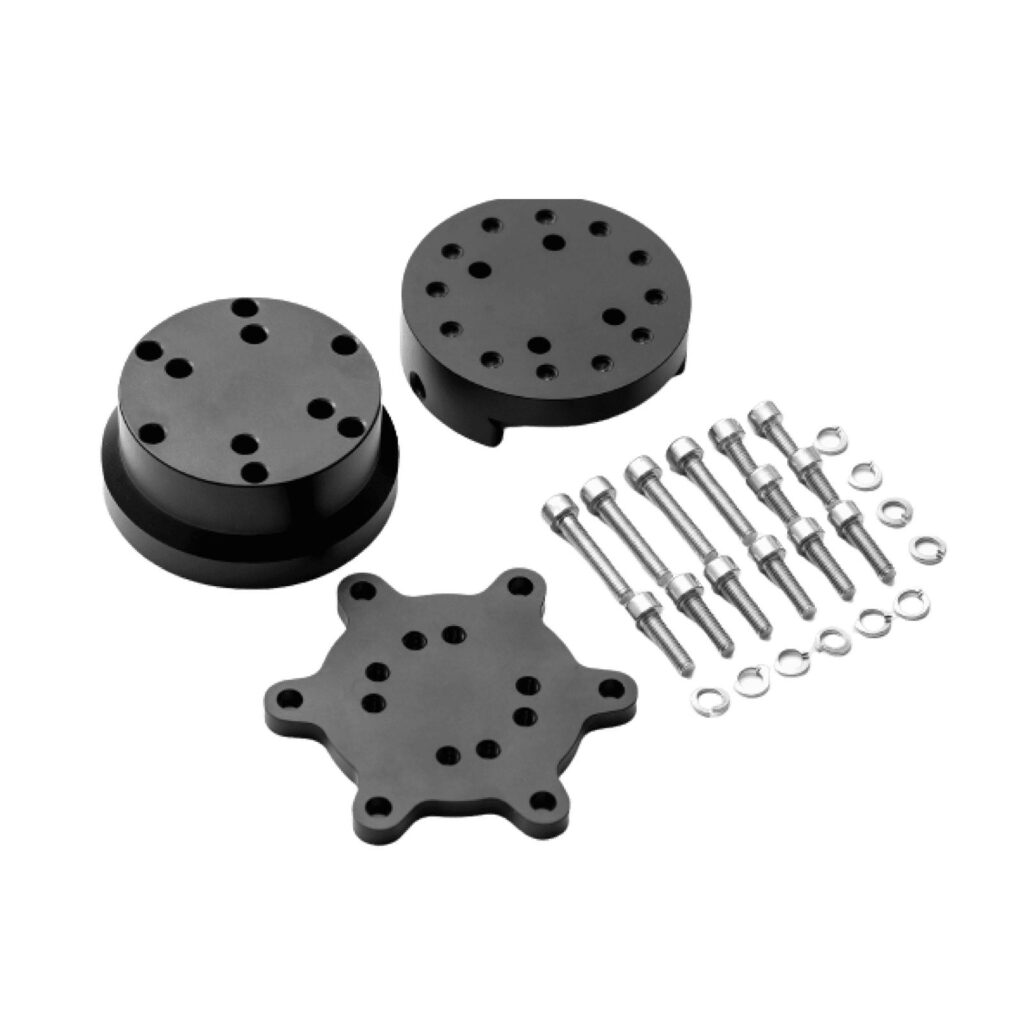
Installation requires a minimum of time to align the holes, tighten correctly, and ensure that the mounting face is perfectly flat. It's not complicated, but it deserves to be done properly, especially if you're riding on high-torque chainstays. Once it's done, there's no going back.
Where this really comes into play is in compatibility with various third-party steering wheels and hubs. The kit is designed for wheels adapted to the Simucube interface, either via a specific hub, or via compatible solutions. For a user already in the Simucube ecosystem, this makes sense: we maintain a clear logic, with a single, reliable and recurring connection standard.
For a multi-platform simracer, or one that likes to mix products from very different brands, there may be a little more thought to be given to the complete chain: base, hub, QR, steering wheel. As far as PC compatibility is concerned, the quick release itself doesn't change a thing. On consoles, as usual, everything depends more on the base and on-board electronics than on the mechanical part.
The learning curve is more about gesture and routine: engaging, locking, quick check before driving. The mechanism is quick to learn, even for users who change steering wheels frequently. It's mechanical and instinctive, with no need for menus or presets.
In terms of upgradeability, this Wheel Side Kit is more like a long-term investment than a simple accessory. If you're building a setup around a Simucube base and intend to multiply the number of steering wheels, this is typically the kind of part you'll keep in place for years, even as the rest of the equipment evolves.
In-game sensations: total rigidity, zero noise
Where this Quick Release Wheel Side Kit really comes into its own is on the track, especially on a powerful Direct Drive base. The basic idea is simple: take nothing away from what the base can do. No unnecessary damping, no flex, no rattle, just the most direct drive possible.
On the first few laps with a Simucube base, what stands out is the clarity of the torque transitions. Load changes in the flywheel take place without any mechanical dead zones. When the car stalls, you immediately feel the loss of grip in your hands, with no "blurring" due to play in the mounting system. You immediately understand what the car is doing, even at the limits.
In fast corners, the QR's rigidity translates into very clear steering. You can feel the car gradually loading up, the slight variations in grip, the bumps that pass under the tires. There's none of the sensation sometimes encountered with softer quick releases, where you guess that something is dampening part of the FFB signal.
On vibrators and aggressive edges, the behavior is quite revealing. The texture comes through in full, with a highly structured message. It taps, yes, but it doesn't sound hollow. No parasitic metallic vibration due to poor locking or approximate tolerances. When it shakes, you can tell it's due to the physics of the game, not some dubious mechanical noise in the QR.
Quick corrections, especially in controlled drift or oversteer, also put the system to the test. Here, the kit doesn't flinch. Rapid countersteering movements generate no perceptible clacking or twisting. The flywheel remains firmly attached to the base as if they were a single piece. Confidence is huge: you dare to go further, because you know that the mechanical connection will never betray the feel.
Over long sessions, consistency is a real strength. No gradual slackening, no annoying loosening if everything has been correctly assembled from the outset. The feeling remains identical from start to finish. You can push the base, link relays, the QR's behavior doesn't change.
If I compare this to less rigid systems or more consumer-oriented quick releases, the clearest difference is in the small nuances of force. With a "softer" system, some of the micro-variations end up being lost or smoothed out. With the Wheel Side Kit, these details remain. This is particularly appreciated on GT cars, prototypes or single-seaters, where load changes are subtle but decisive.
On the other hand, compared to some extreme solutions that are even more specialized or integrated into ultra-high-end flywheels, we're not talking about a revolutionary gadget that completely changes the FFB. Instead, we're working on a very sound basis, which ensures that you really get the most out of what your Simucube base can already send. The main benefit is that you no longer have to worry about the steering wheel/base connection. You can concentrate on the track.
Who's it for? Daily strengths and limitations
The Simucube Quick Release Wheel Side Kit is clearly aimed at simracers who already have one foot firmly planted in the "serious enthusiast" or downright "semi-pro" segment. If you ride a PC with a Simucube Direct Drive base, already have a rigid cockpit, and are considering several wheels, the profile fits perfectly. Even for an "intermediate" player determined to invest in a durable setup, this QR makes sense.
What I appreciate most is the uncompromising rigidity. You feel that the torque from the base is transmitted in full, without any parasitic mechanical damping. Then there's the perceived reliability: once you've taken it seriously, you've got a system you don't need to check every five minutes. Finally, the consistency with the Simucube ecosystem: same quality logic, same product philosophy focused on raw feel and precision.
However, there are a few limitations to bear in mind. First of all, it's not the most universal solution for those who juggle several hardware ecosystems, or who ride on both console and PC. The kit makes the most sense with a Simucube base and a fleet of compatible wheels. Secondly, aesthetics and "object pleasure" may seem a little austere for those who like visually spectacular hardware. Here, the priority is clearly functional. Finally, the investment may seem high if considered in isolation, especially when compared with the more affordable quick releases supplied with some consumer wheels.
The real question is the perceived value of a complete setup. If your cockpit, base and steering wheels are already top-notch, this Wheel Side Kit acts as a solid link that secures the rest. In this context, the price is better justified: it's a part you don't change every year, and it protects the quality of everything upstream. If your overall setup is more modest, the difference in value will be less obvious in use.
Verdict: a key link in a serious Simucube setup
The Simucube Quick Release Wheel Side Kit doesn't magically transform an average base into a sensational monster. What it does do is more subtle, but crucial: it ensures that the link between your Simucube base and your steering wheel will never be the weak link. For a high-end Direct Drive setup, that's no mean feat.
On the market, I clearly place it in the premium category, with a "work tool" rather than "fun accessory" positioning. It's not trying to be eye-catching, it's aiming for consistency and precision. And on that score, it ticks all the right boxes. Fussy simracers who want a perfectly rigid, play-free connection will find what they're looking for.
I'd recommend it without hesitation to Simucube base users who plan to use several wheels, who ride mainly on PCs, and who already have a cockpit capable of handling the torque of a Direct Drive. For the more occasional player, with a more modest or console-oriented setup, other investments will have a more immediate impact on gaming pleasure.
If you're looking for a flywheel/base link that's ultra-rigid, reliable over time, and perfectly consistent with a Simucube Direct Drive base, this product can clearly make the difference in your setup.</final



Reviews