
MOZA CM HD Digital Dash : Test & Review | What it's really worth in 2026
MOZA CM HD Digital Dash: My quick review
This dash gave me the feeling of moving from a "gamer" setup to a real cockpit, with central info that's clear and easy to read when racing. Above all, it makes sense for sim racers already equipped with MOZA, who ride regularly and want to structure their cockpit. In this context, the benefits in terms of visual comfort and immersion are well worth the investment.
When you buy through our links, we may earn an affiliate commission.
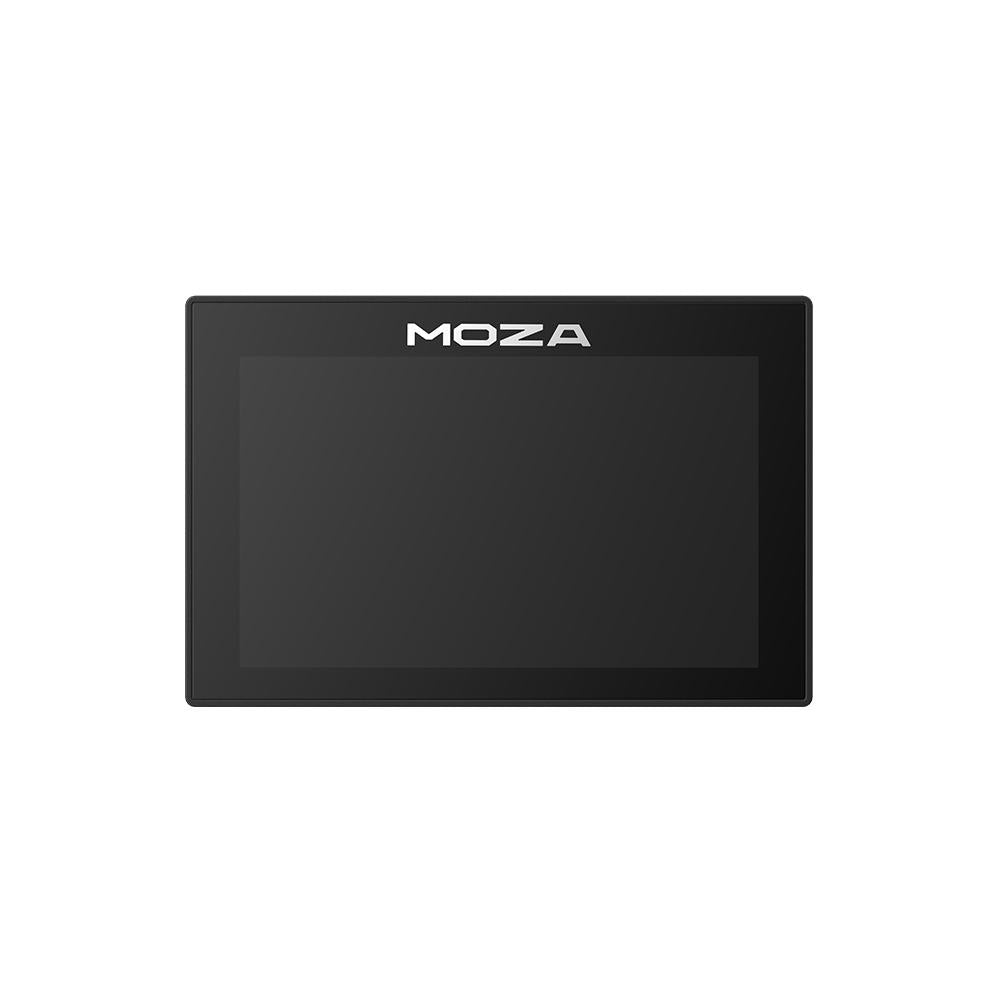
In the MOZA ecosystem, the CM HD Digital Dash occupies a special place. It's neither a steering wheel nor a base, but an additional screen designed for sim racing enthusiasts who want a dedicated, clean, readable and immersive dashboard. It attaches directly to certain MOZA bases and promises to do one simple thing: bring the driver info closer to what you'd find in a modern GT or proto, without having to cobble together an external screen or rely on the in-game HUD.
What makes it so appealing is this mix of high-definition display, clean physical integration and customizable dashboards. We're talking about a product that targets sim racers already equipped, who want to "take it up a notch" in immersion and readability, without going for ultra-complex solutions like triple screens + DIY dash. The angle of analysis is pretty clear to me: legibility on the run, display quality, day-to-day ergonomics and coherence with an existing MOZA setup.
In practice, this type of dash must answer two questions: is it really more useful than the on-screen HUD, and is it integrated well enough to justify its place on the desk or in the cockpit? That's exactly how I've approached it.
Design & manufacturing
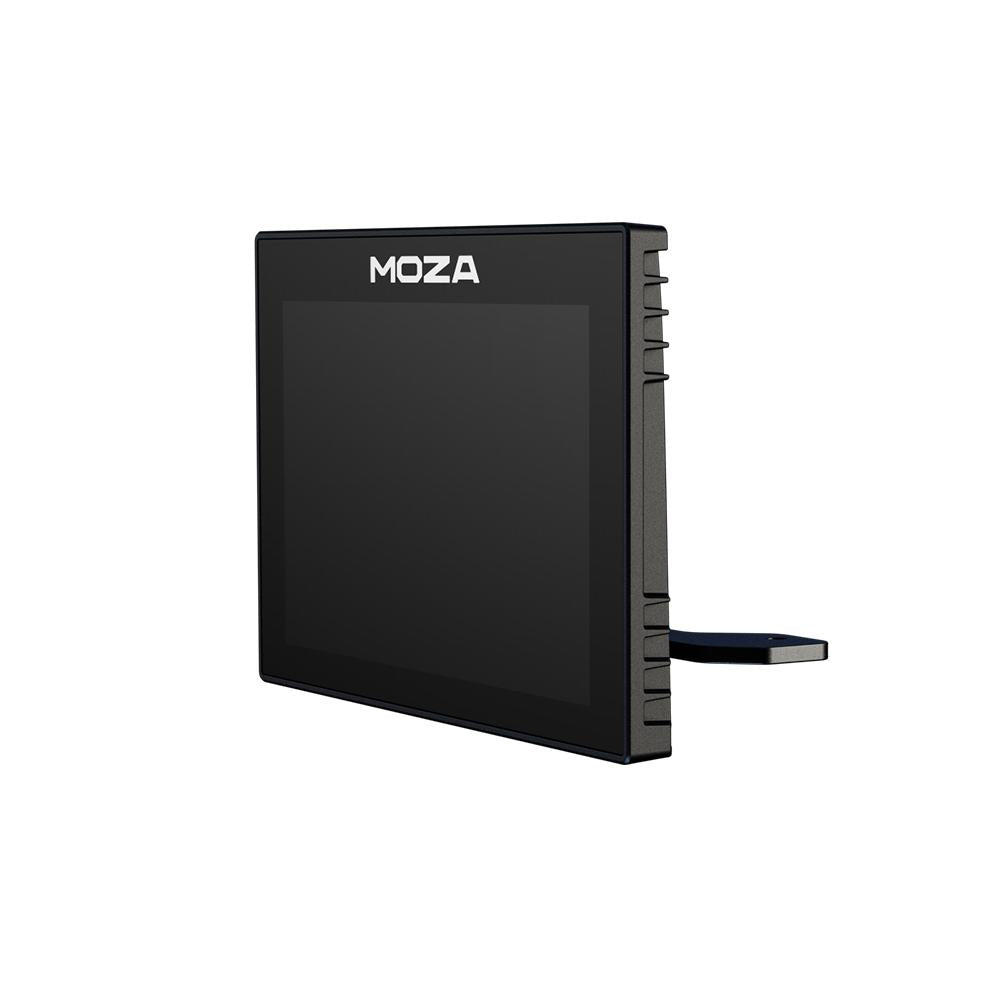
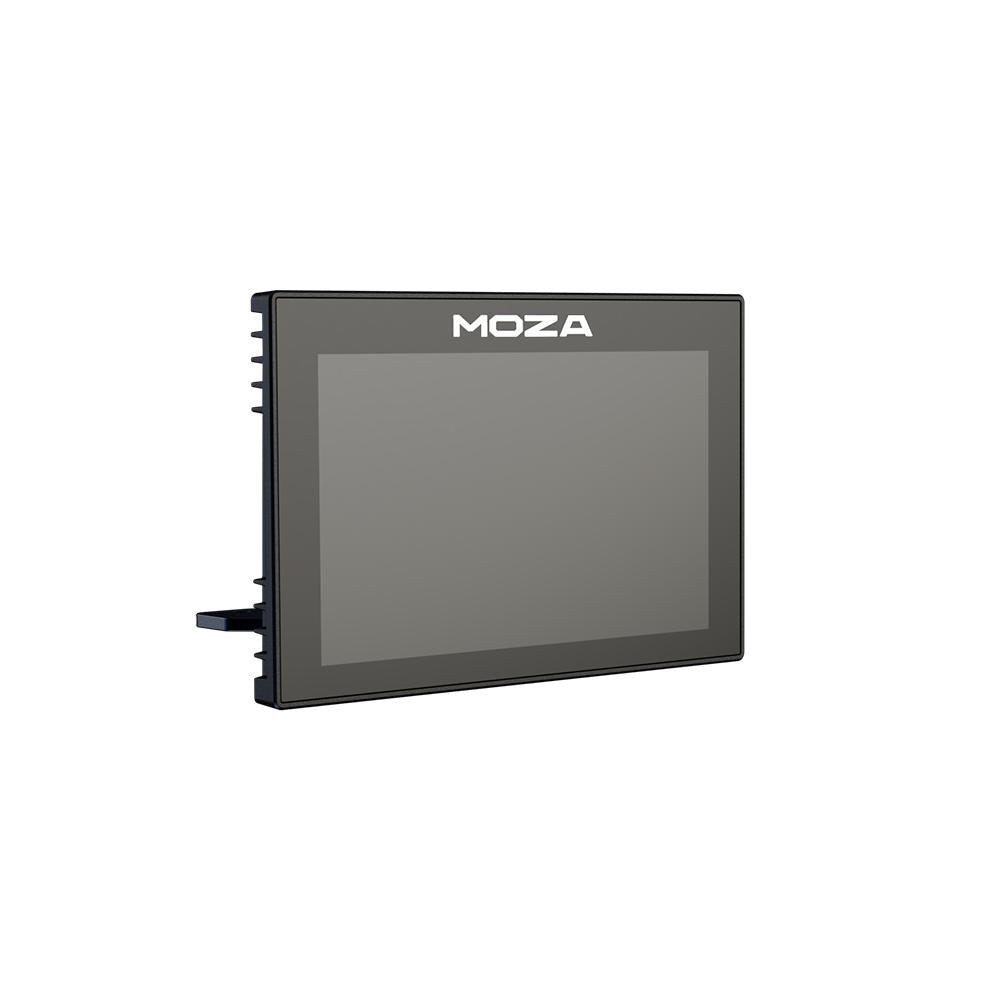
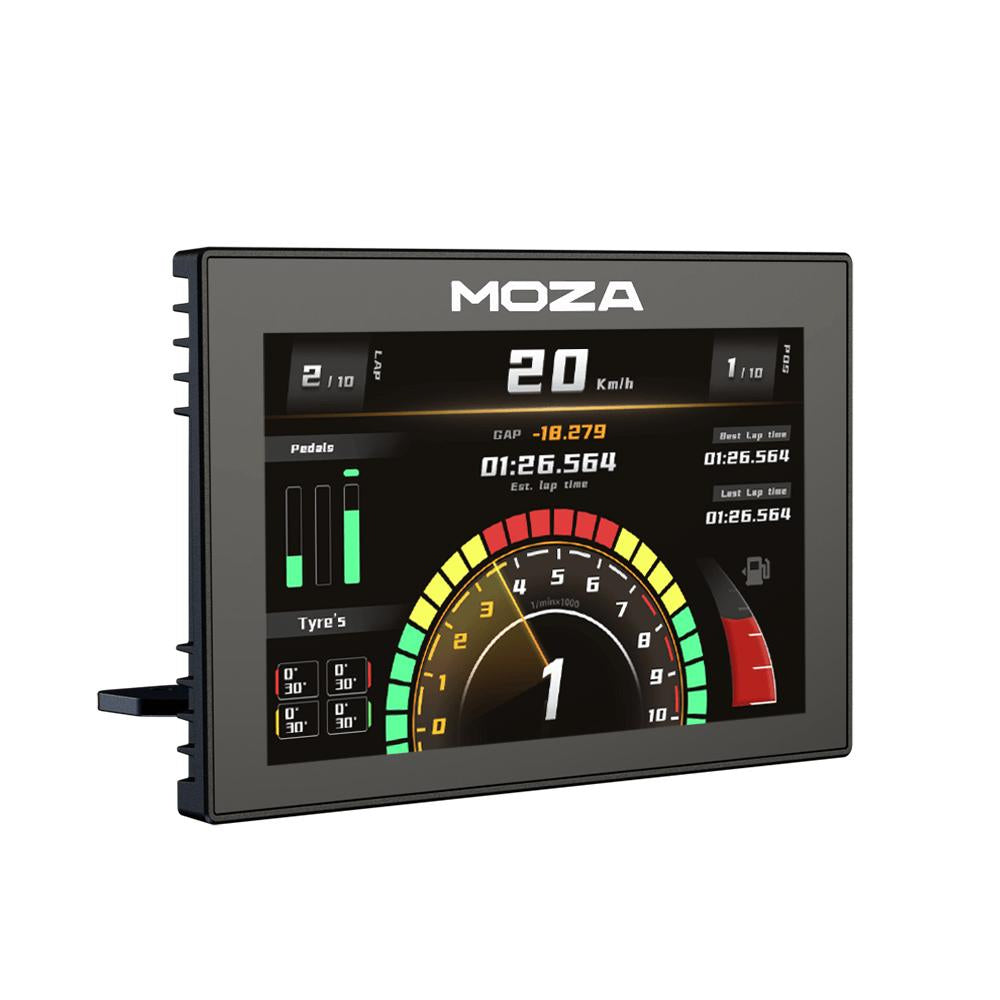
In hand, the MOZA CM HD immediately gives the impression of a serious product. The chassis is mainly metal, with the front panel occupied by the screen and a slim frame that doesn't look gimmicky. The density is a little surprising for a "simple" screen: you can feel that there's material and not just a hollow plastic shell. Placed on the base, the whole looks coherent, with no toy effect or visible parasitic vibration.
The overall finish is clean: tight fit, clean assembly, no play in the fastening. Edges are well worked, corners don't cut, surfaces don't mark at the slightest touch. You really get the feeling of an accessory designed to stay in front of you for hours, without attracting the eye for the wrong reasons. It's sober, modern, rather discreet once integrated into the setup.
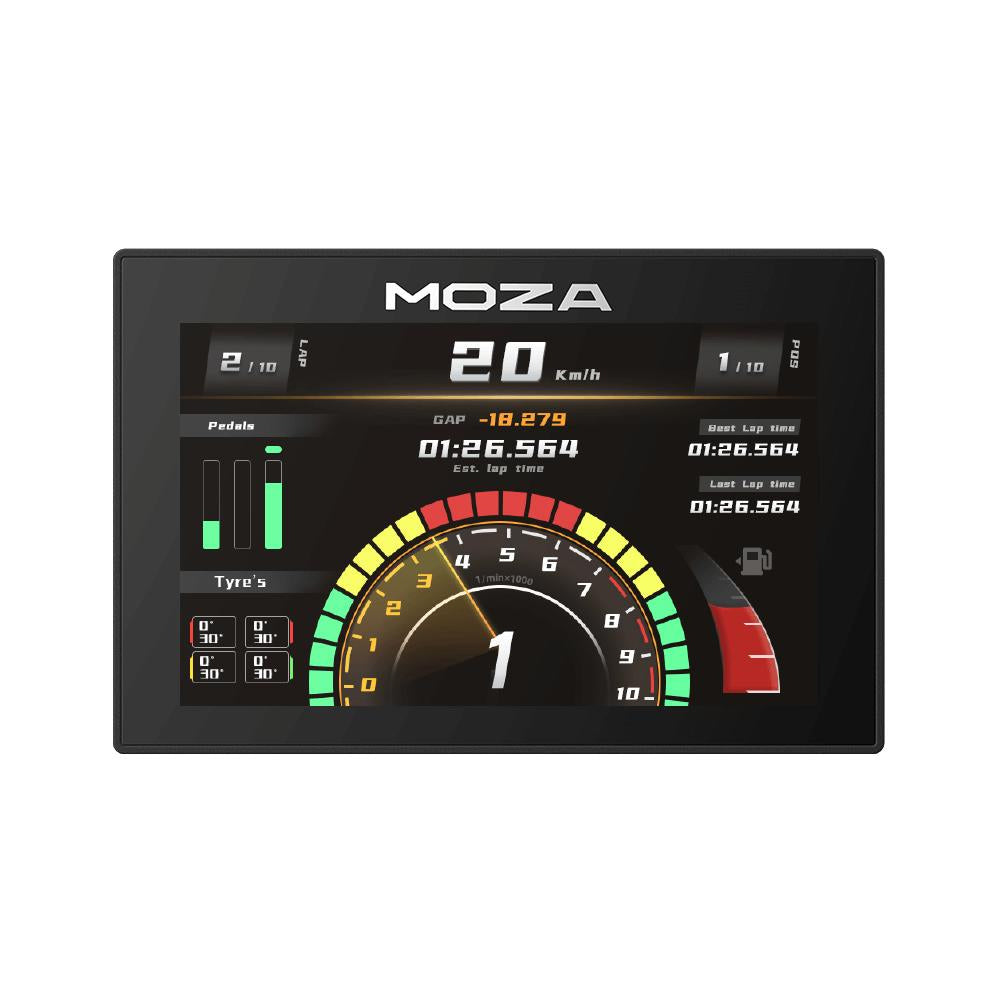
The screen is clearly the heart of the product. Good brightness, decent contrast, sufficiently vivid colors to be read quickly without having to squint. It's still a typical "on-board screen" rendering, not a competition monitor, but for a dash, it's exactly what's needed: information jumps out, even in peripheral vision. Numbers are crisp, and graphics are fine, even on the busiest layouts.
Where it may disappoint slightly is in its purely premium feel, compared with some of the more solid machined-aluminum boutique dashboards. It's more about a clean, industrial approach than a collector's item. Compared to low-cost 3D-printed dashboards or DIY solutions with a small HDMI screen, the qualitative leap is obvious. Compared to the top-of-the-range products on the market, the MOZA CM HD is positioned more in the middle/upper range, with an excellent balance between finish, compactness and integration.
Settings, customization & compatibility
The strength of CM HD lies in its integration into the MOZA ecosystem via in-house software. The logic is very plug & play: you connect, the software recognizes, and you can quickly choose from several dashboard layouts. No need for scripts, obscure plug-ins or to configure each game individually. Visually, the menus are clear and easy to find.
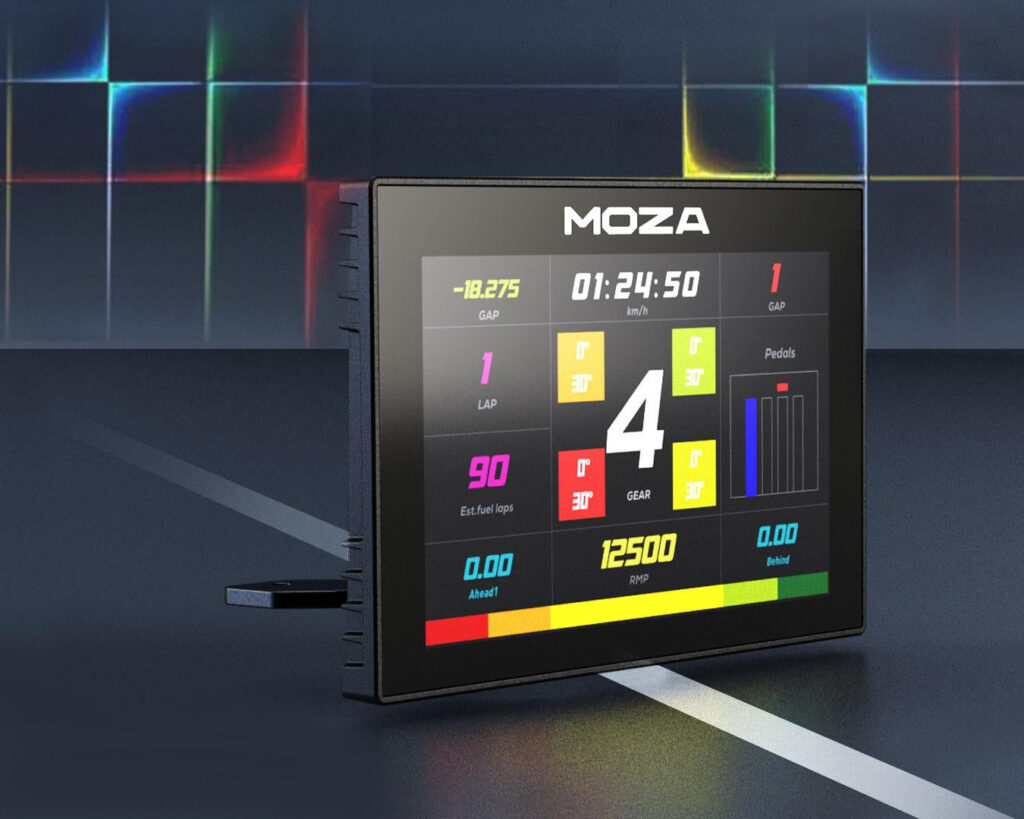
Customization is achieved mainly through the choice of display themes: different styles of counters, speed indicators, delta, gear engaged, fuel info, etc. We're not talking about absolute pixel-by-pixel freedom, but well-thought-out presets adapted to the main types of discipline: GT, single-seater, rally, endurance. What I found most useful was the ability to select a very minimal layout for qualifying attacks, followed by a richer layout for longer races, with fuel and wear management.
The learning curve is, frankly, gentle. It only takes a few minutes to find the right dashboard, adjust the brightness and forget that you've been through a set-up phase. To go further, you'll need a little more time to test the different layouts and see which one best suits your riding style, but it's still very accessible, even for a user unaccustomed to software settings.
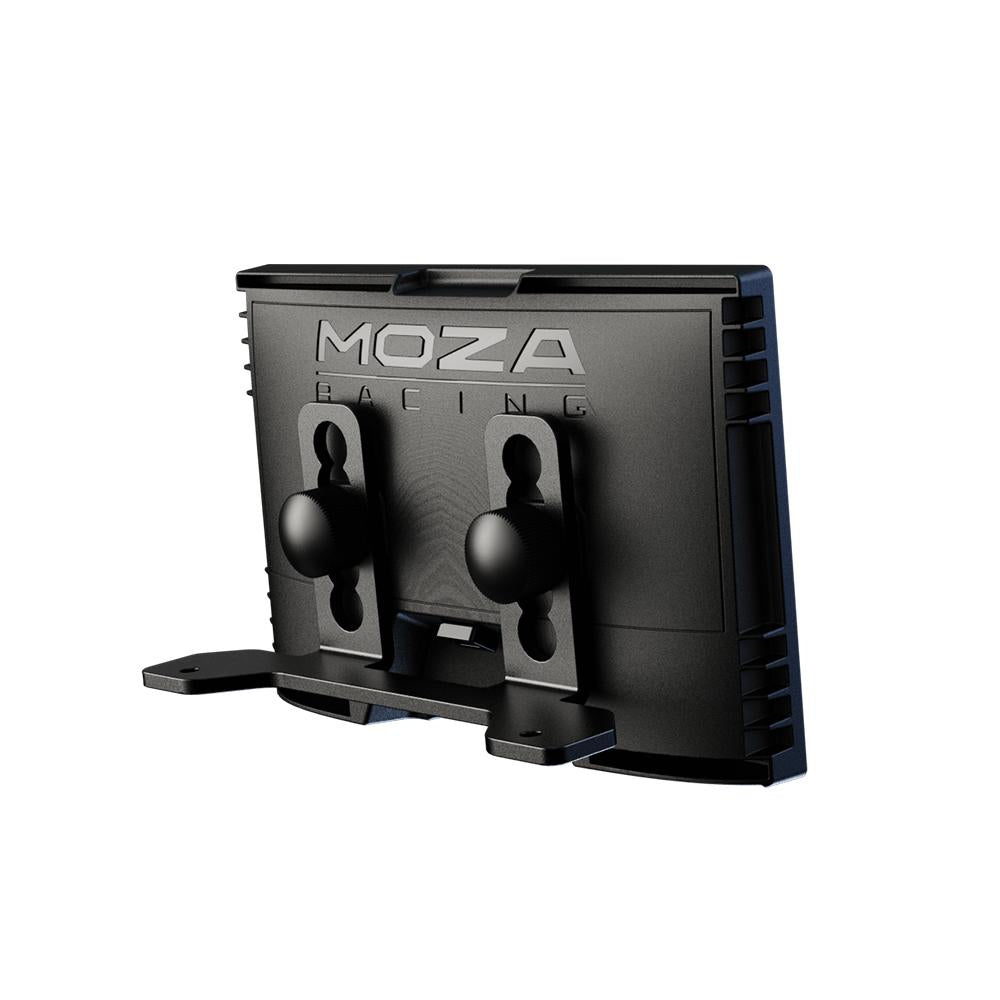
Compatibility-wise, the product remains PC-oriented above all, like a large part of the MOZA ecosystem. On consoles, this type of accessory is more limited by the absence of dedicated software support. Integration is optimal with compatible MOZA bases, and it's clearly designed to clip into a setup already sporting the brand's colors. For a cockpit-mounted user, the screen falls neatly in the line of vision, just above the steering wheel, without the need for exotic brackets.
In terms of upgradeability, I see the CM HD more as a natural upgrade to a MOZA setup than as an entry point. It's an accessory that makes a set more complete, rather than something you buy first. Once in place, it gives a real feeling of a "complete" cockpit, modern enough to support a future upgrade of the rest of the equipment.
Sensations in play
On the track, the contribution of a dash like the MOZA CM HD is measured not in Newton-meters, but in the amount of useful information per glance. Where a conventional HUD scatters the eye over the main screen, here everything is concentrated in a compact block, always in the same place, in line with the steering wheel. We go from a diffuse reading to a very clear central reference point. You immediately understand what the car is doing.
For precision and grip reading, the screen acts as a support for force feedback. The FFB is still the main tool for feeling the limit, but seeing the delta, speed, tire temperature or skid indicators right in front of you helps you interpret what the steering wheel is saying. In fast corners, you can check at a glance whether you're gaining or losing time, without overloading your brain. This makes corrections more rational, especially on circuits you know well.
When braking, the display of speed and engaged gear right in the middle makes for greater consistency. Visual and auditory cues are more easily acquired. In long sessions, this repetitive aspect is highly appreciated: you end up anchoring your braking points according to what you see on the dash. Consistency improves, and you make fewer silly mistakes. That's where this type of product really changes the experience.
On vibrators and load transfer phases, the dash doesn't add any physical sensation, of course, but it does accompany the control phase. In an aggressive chicane, for example, seeing the engine revs and gears click correctly with each pass boosts confidence. When correcting a slip or oversteer, keeping a stable reference point in the center of the field of vision helps you stay "in" the car, rather than getting lost between the screen, the in-game speedo and the audio information.
Compared with a setup without a dedicated dash, eyestrain is reduced. There's no need to search for information in different corners of the screen. The eye focuses on a single block, and the brain sorts through information much more quickly. Compared with DIY solutions or smaller, lower-quality screens, the advantage comes mainly from sharpness and responsiveness: no annoying latency, no droopy numbers, no illegible icons.
Obviously, compared to a high-end, ultra-configurable telemetry display, the MOZA CM HD is simpler and less extreme in its customization. But for pure pilot use, it's more than enough. The important point is that immersion really gains in coherence: you have the impression of being in a modern cockpit, where the steering wheel, base and dash form a logical whole. You move from the "gamer" setup to the more serious cockpit, without falling into the complexity of an ultra-advanced simulator.
For whom? + What we like / What we don't like
The MOZA CM HD Digital Dash appeals above all to two profiles: the intermediate user already well equipped with MOZA equipment, who wants to go one step further in terms of immersion and readability, and the confirmed sim racer who spends many hours on the track and is looking to streamline his information flow. For a complete beginner, it's clearly a luxury, if not a premature purchase. The real interest comes when you start chasing tenths, racing in leagues or endurance races, and want to master your basic data without opening a second screen.
On the positive side, the screen's legibility is what stands out most. Crisp figures, clear information, well thought-out dashboard design: there's no fighting with the interface. The second strength is the physical and software integration into the MOZA ecosystem: plug it in, it works, and it aligns perfectly with the base without any tinkering. Finally, the sense of immersion is very real. The cockpit takes on another, more serious, "modern race car" dimension. You take on the setup differently.
On the other hand, there are limits to be borne in mind. The first is dependence on the MOZA ecosystem: outside it, practical interest and ease of integration plummet. It's a product that makes sense, especially if you're already in the MOZA house. The second is customization, which remains limited by the layouts on offer. For hyper-custom telemetry freaks, this may seem a little wise. The third is the notion of investment: we're talking about an accessory that doesn't magically make you go faster, but does bring comfort and consistency. The perceived value will depend very much on your level of involvement in sim racing.
For someone who rides occasionally, a few evenings a month, the purchase may seem hard to justify. For a regular virtual pilot who has already invested in a good base, a serious steering wheel and a decent cockpit, the CM HD becomes a logical, almost natural upgrade.
Verdict
In a performance- and immersion-oriented setup, the MOZA CM HD Digital Dash fills a very real gap: that of a clear, dedicated dashboard, perfectly aligned with the rest of the hardware. It doesn't transform force feedback, it doesn't replace a good steering wheel or precise pedals, but it does change the way you read the race and focus on the track.
On the market, it is positioned as a well-targeted mid/high-end solution, designed above all for users of the MOZA ecosystem who want a more "professional" cockpit without going overboard with hardware. For an involved, PC-oriented sim racer who spends many hours on the road, the contribution in visual comfort, legibility and immersion clearly justifies its place.
I'd recommend it above all to virtual drivers who have already set up a MOZA base, and who want to structure their cockpit and better manage their racing information. For a beginner or a very casual player, the money will be better placed in the steering wheel, the base or the pedals before moving on to the dash.
If you're looking to clarify your dashboard, gain immersion and make your MOZA cockpit more coherent, this product can clearly make the difference in your setup.


Reviews