
Fanatec CSL DD Ready2Race McLaren Bundle for Xbox & PC : Test & Review | What it's really worth in 2026
Fanatec CSL DD Ready2Race McLaren Bundle for Xbox & PC : My quick review
This bundle gave me the impression of a real step forward in terms of car feel and legibility, without falling into the complexity of the very high-end. It's aimed above all at already motivated Xbox/PC gamers who want to switch to Direct Drive with an upgradeable base. The whole package offers consistent value if you really intend to invest time in simracing.
When you buy through our links, we may earn an affiliate commission.
Fanatec CSL DD Ready2Race McLaren Bundle: a real "level up" pack for Xbox & PC
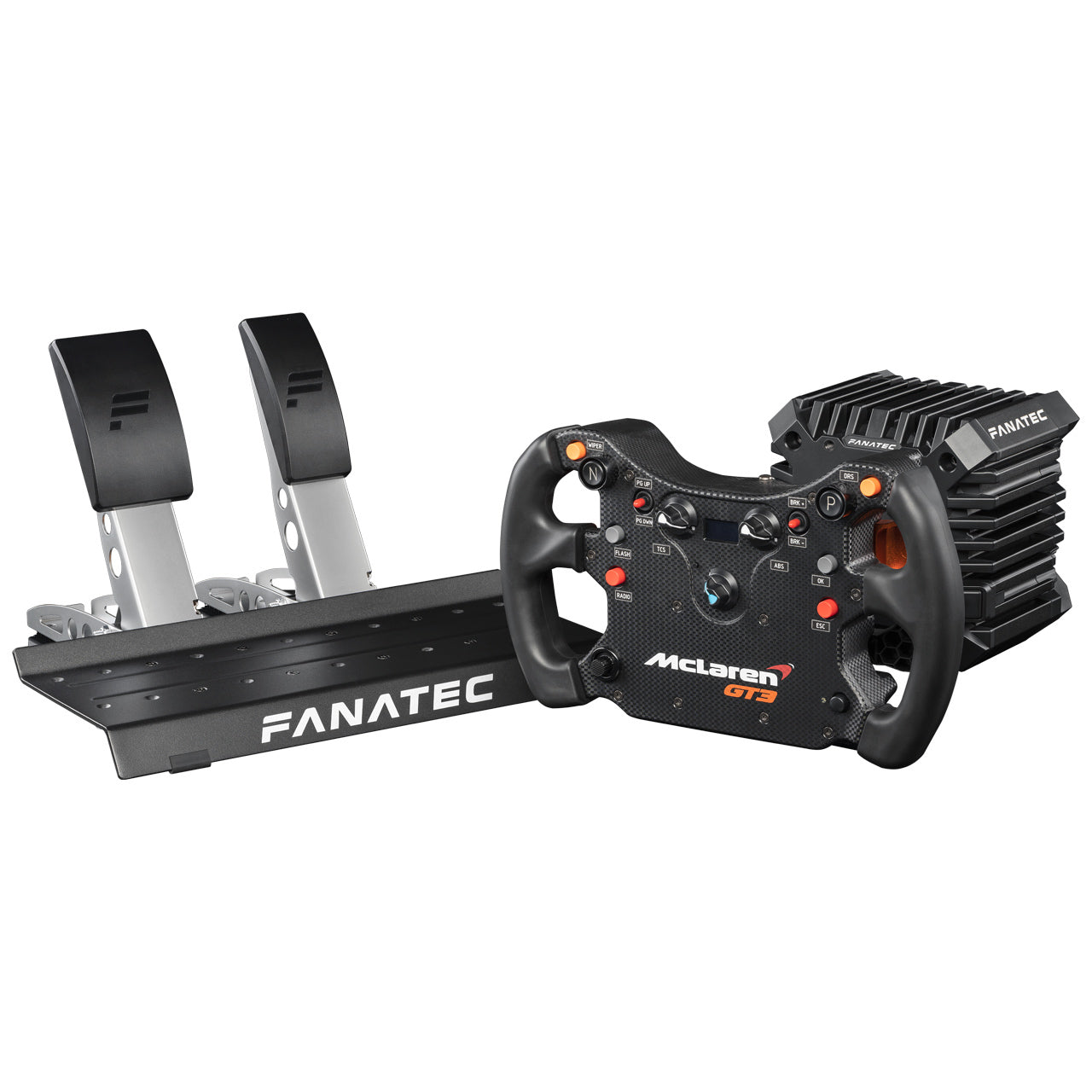
The Fanatec CSL DD Ready2Race McLaren Bundle for Xbox & PC targets a very specific segment of the market: those who want to switch to serious Direct Drive, without immediately upgrading to "hardcore" simracing hardware costing several thousand euros. It's a bundle designed to deliver a big jump in sensations in a single box: Direct Drive CSL DD base, licensed McLaren steering wheel, pedalboard, all plug-and-play on Xbox and PC.
On paper, the promise is clear: more torque, more precision, a level of immersion far superior to entry-level belt or gear bases, while remaining usable on a daily basis, even for someone who has just graduated from a mainstream steering wheel.
My angle here is simple: look at what this pack changes concretely on three levels. The finesse of sensations (grip reading, track details), versatility (games, platforms, settings) and comfort of use over time. In short: is this a really good entry point into the Fanatec ecosystem, or just a "marketing" kit based around the McLaren logo?
As soon as you start putting in the laps, one thing becomes clear: you're in a different category from the classic living-room steering wheels. You can really feel what the car's doing.
Design & manufacturing: serious, compact, with a few compromises
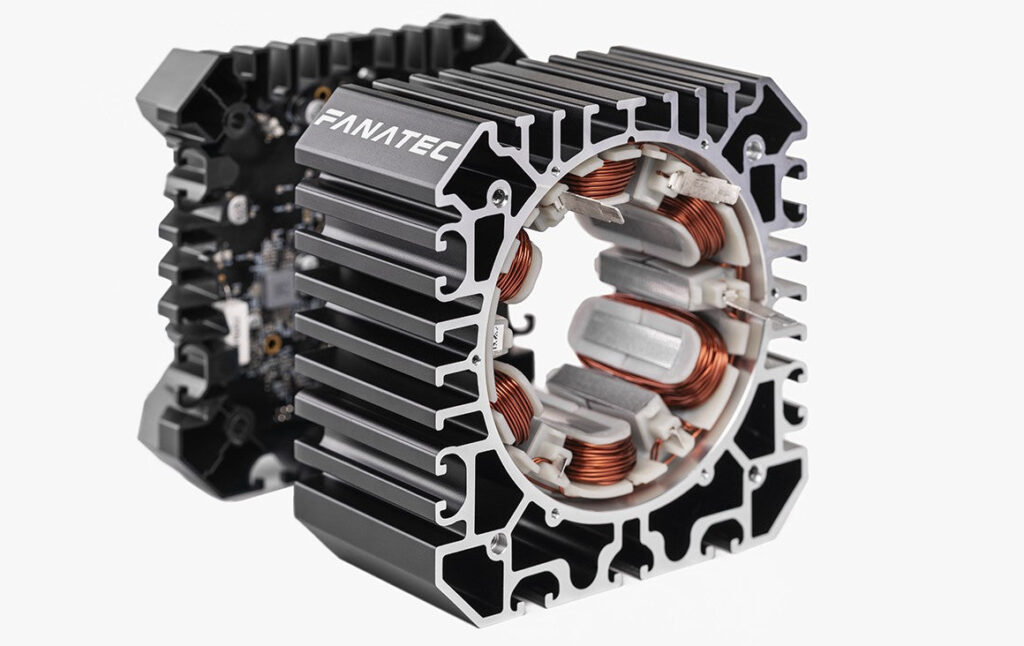
The heart of the bundle is the CSL DD base. Visually, it's compact and sober, with a large finned aluminum block that doubles as a heatsink. In hand, you get a real impression of density. It looks like a serious piece of equipment, not a toy. Mounted on a rigid cockpit, nothing moves, even with the torque boost. Overall rigidity is very good for this price range.
The McLaren steering wheel is the big "look magnet" of the package. The shape replicates a modern GT, with side grips, a multitude of knobs, rotary switches and paddles. The feel in hand is pleasant: well-designed grips, ideal size for GT and protos, clean overall finish. The plastics aren't absolute premium, but they're far superior to most console steering wheels. The gearshift paddles are crisp, with a clear click, even if they're not up to the level of the most high-end mechanicals on the market.
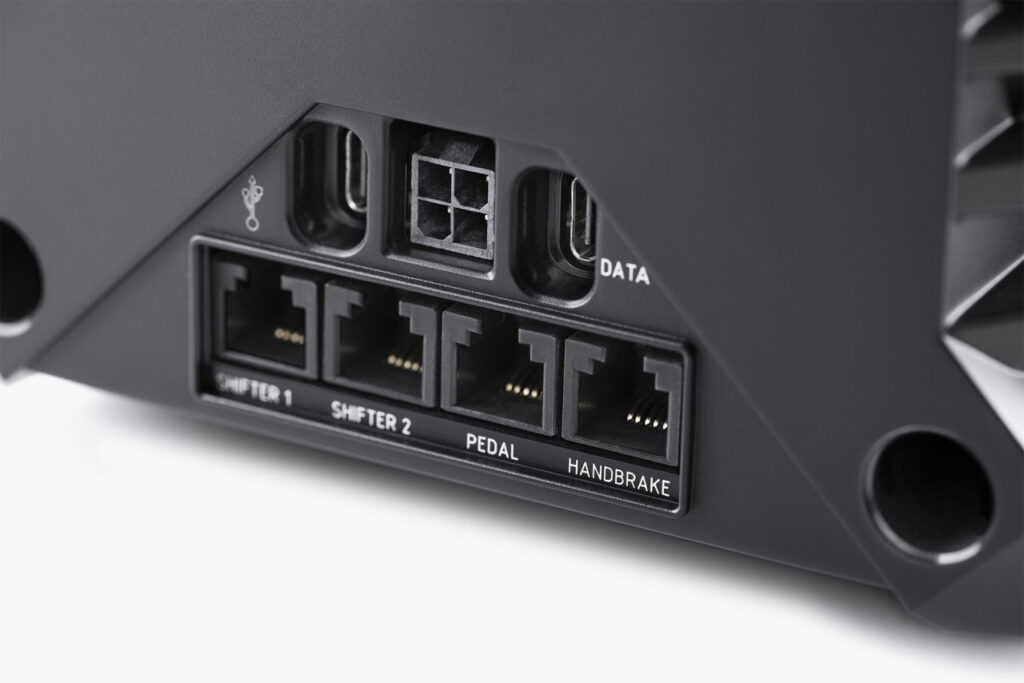
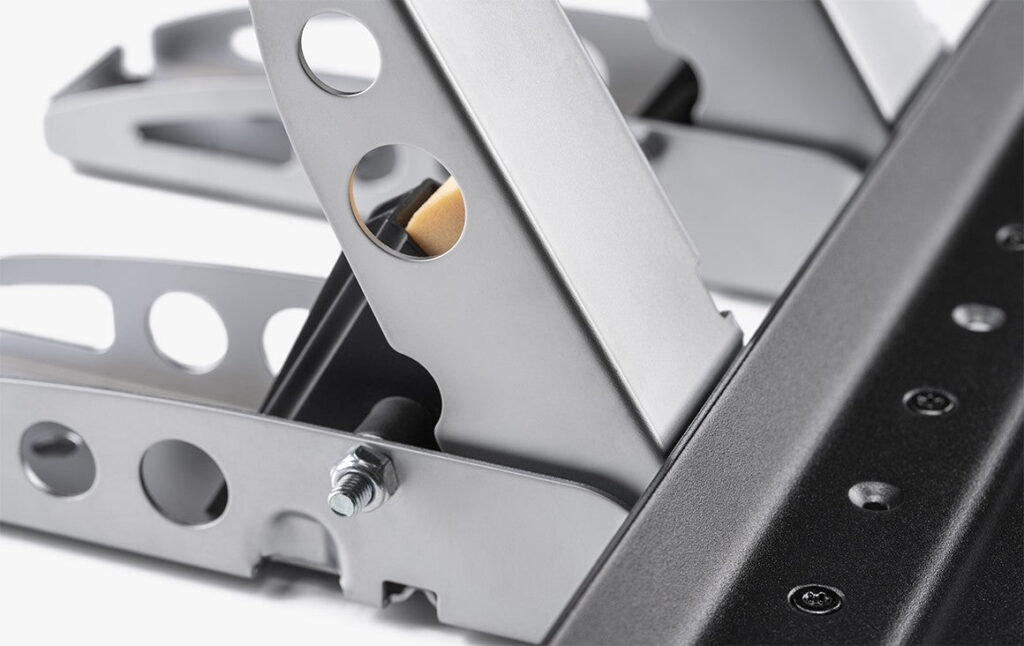
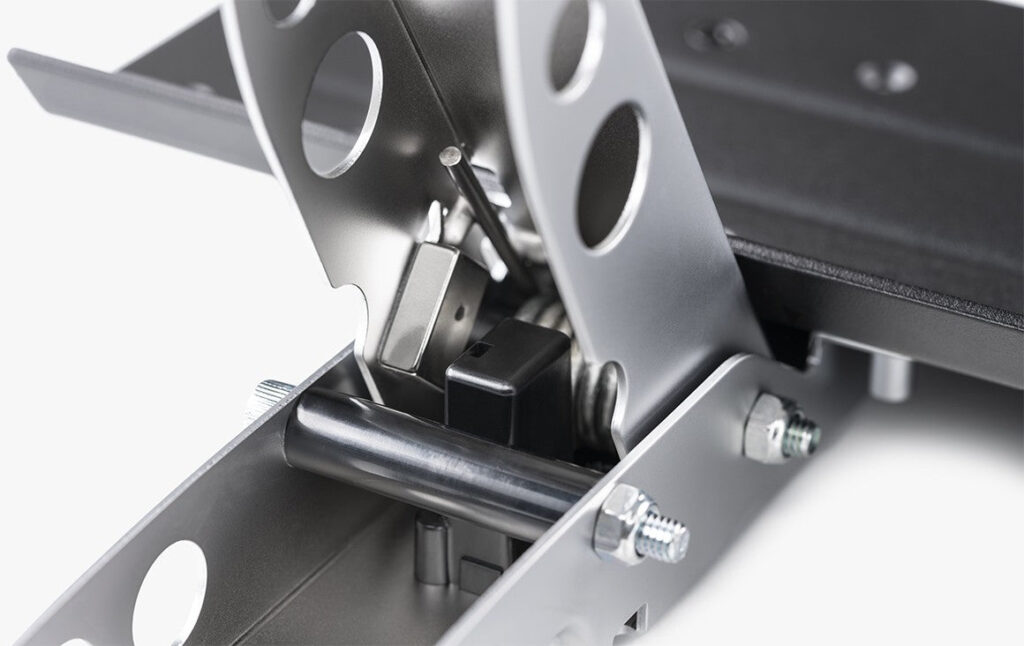
The overall assembly inspires confidence. There's no detectable play in the hub, and no suspicious creaking when forced to the stop. The crankset supplied in this type of bundle is visually simpler, made mainly of metal, with a sturdy but basic construction. It does the job in terms of solidity, without the visual sophistication of dedicated load cell cranksets.
What may be slightly disappointing is the overall feel of some of the steering wheel plastics compared to truly premium steering wheels, and a crankset clearly designed as a starting point rather than a final product. Compared to other mid-range belt-driven combos, however, there's a definite improvement in the base and mechanical feel of the steering wheel.
Settings, customization & compatibility: a true ecosystem behind the scenes
As far as settings are concerned, we're typically in the Fanatec spirit: the base offers an on-board menu with the main parameters (maximum force, filter, linearity, etc.) and the PC software allows you to go even further. The presets supplied for the main games are already usable, so you can get going very quickly. As far as I'm concerned, the learning curve is rather gentle: you quickly understand what changes what, even if you're not an FFB engineer.
The settings that are really useful on a day-to-day basis are the FFB's overall power, the filter for smoothing or refining the return, and the speed of return to center. By playing with these three, you can easily adapt the bundle to your style: softer and more tolerant for a beginner, more nervous and rougher for a rider used to long sessions. You can also adjust the rotation to suit your game, which is handy for switching from a GT3 to a rally or single-seater.
Compatibility is a strong point. On PC, the base integrates very well with the majority of modern simulations and racing games. On Xbox, the bundle is designed to work natively, limiting unpleasant recognition surprises. This makes it a credible option for someone who regularly alternates between console and PC, or who wants to upgrade to PC later on.
The big attraction is the ecosystem that goes with it. This pack is a gateway to the Fanatec world: other steering wheels, shifters, handbrakes, more advanced cranksets, everything can be added. The CSL DD base remains sufficiently powerful to support this move upmarket. It's easy to start with this bundle and upgrade only the crankset or flywheel later.
In terms of upgradability, this is not a disposable kit. It's a base that can remain the center of the setup for a long time, especially if you mainly drive GT, touring or F1 on Xbox/PC.
Game sensations: the game-changing Direct Drive
This bundle really comes into its own on the virtual track. The switch to Direct Drive, even at this power level, is immediately felt in the precision of the force feedback. Steering becomes more "alive", more legible. We quickly perceive micro-variations in front-end load, mass transfers and the beginnings of understeer or oversteer. The steering wheel's message is clearer, cleaner and less filtered than on a belt-driven system.
In the corners, the car is much more progressive. When you enter a curve, the steering wheel "speaks": you can feel the car settling on its supports, you can feel the grip building up, and then stall if you push too hard. This transition phase is where the CSL DD really comes into its own. You know sooner when you're going too far. The car doesn't surprise, it warns. This is invaluable for fine-tuning trajectories or working on consistency.
On vibrators, the difference with a less powerful base is clear. The steering wheel doesn't bang stupidly, it reproduces the texture. Fast vibratory sequences don't turn into jumbled vibrations. You can tell the difference between a flat vibrator, an aggressive vibrator or a simple asphalt connection. This finesse adds a great deal to immersion, especially on well-modeled circuits.
Grip reading is a huge asset. In mixed conditions or at the limit of grip, you can feel the slightest loss of rear grip in the steering wheel, even before the timer confirms it. For quick corrections, the base torque really helps. You can catch the start of a slide with short, precise movements, without the steering wheel feeling "sluggish" or behind. Where a belt-driven base sometimes gives the impression of lag, the Direct Drive responds immediately.
Over long sessions, consistency is good. The base doesn't heat up to the point of losing strength, and the feel remains stable. What's most noticeable is the fatigue, more related to the intensity of the signals than to a lack of power. With moderate settings, you can hold long relays without your forearms exploding, while retaining essential information. By increasing the force, you gain in physical strength, but you pay in fatigue. It's a question of personal choice.
Compared with a less powerful base, the gain is clearly in responsiveness and smoothness. You don't feel as if you've got a big rubber band between your hands and the road. Compared with much more powerful Direct Drives, we lose a little in brutality and steering "clamping" under heavy loads. But for mixed Xbox/PC use, in a living room or compact cockpit, this level of force is more than enough to be immersive and instructive.
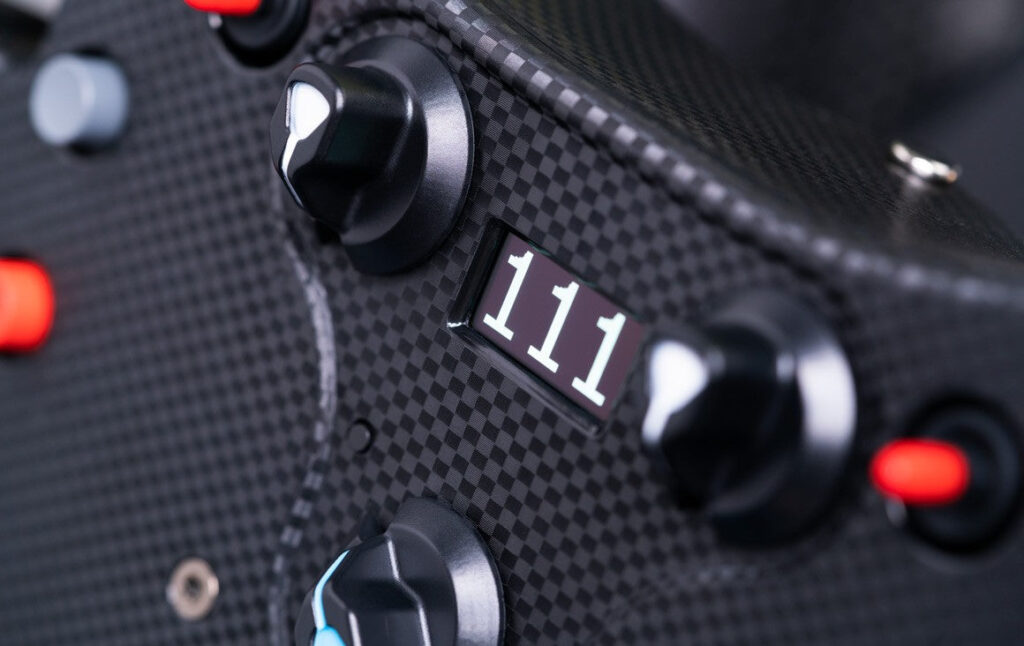
Overall immersion is seriously boosted. The McLaren steering wheel, with its GT shape and controls, reinforces this effect: visually and in hand, you feel like you're in a real modern racing car. The buttons are easily accessible during the race, allowing you to manage traction control, ABS and mapping without losing your rhythm. The focus is on driving, not technique.
Who's it for? What we like / What we don't like
This bundle is clearly aimed at a specific user profile: the motivated simracer, already a bit of a fan, who wants to take a serious step forward in terms of sensations without starting out on a gas factory. For a complete beginner, it's possible, but a little ambitious; for an intermediate Xbox or PC gamer coming from a belt- or gear-driven wheel, it's a real upgrade. For an experienced driver who's not looking for the ultimate in torque, it's a coherent combo that can be used on a daily basis.
Among the points that really appealed to me, the first was the ratio of feel to size. The base is compact but delivers a clean, precise FFB that transforms the way you read the car. The second positive aspect is the surrounding Fanatec ecosystem. We know we can keep this base as our "heart" and develop the rest over time, without starting from scratch. Last but not least, the McLaren steering wheel is a real plus in terms of racing ergonomics: shapes, buttons, paddles, everything encourages you to drive GTs or protos with pleasure.
As far as limits are concerned, the supplied crankset gets the job done, but quickly shows its limitations if you really want to work on threshold braking. Without a load cell, the brakes lack a little finesse, especially in competition sims. A second reservation is that some of the steering wheel's finishing details (plastics, feel of the rotors) are reminiscent of a mid-range bundle, not an ultra-premium package. Last but not least, the power of the base unit, while more than sufficient for many, will leave purists hungry for extreme power and a gigantic margin of adjustment.
The notion of investment is interesting here. It's not an impulse buy; we're talking about a product that represents a solid budget. But the perceived value, in terms of possible progression, driving pleasure and access to a complete ecosystem, is high. For someone who knows he'll be spending hours on the virtual track, the cost is far better justified than multiplying small entry-level upgrades.
Verdict: a Direct Drive bundle that structures a setup
The Fanatec CSL DD Ready2Race McLaren Bundle doesn't just add a cool steering wheel to an existing setup. It repositioned the whole level of sensations, especially if you'd come from a belt- or gear-driven wheel. It's a real pivot point: you go from "serious racing" to credible simracing, with tools that allow you to progress and really feel what the car is doing.
On the market, it's clearly positioned in the ambitious mid-range: beefier and more precise than mainstream combos, less extreme and less expensive than the big, purely PC Direct Drives of relentless simracer. For many Xbox and PC gamers, this is exactly the comfort zone they're looking for.
I'd recommend it to those who want a structured, upgradeable setup, with a very pleasant GT-style steering wheel, and who are willing to add a more advanced crankset later on if the timekeeping bug catches them. On the other hand, if you've already set your sights on the very top of the range, with maximum torque and full-metal hardware throughout, this bundle may seem too conservative.
If you're looking for a real jump in feel to Direct Drive, Xbox & PC compatible, with a serious GT steering wheel and a base capable of keeping up with your progress, this product can clearly make the difference in your setup.
Other products we have tested
-
Fanatec Gran Turismo DD Pro (5 Nm)
-
MOZA R9 & FSR Formula Wheel & Hub Kit Bundle
-
MOZA R12 & FSR Formula Wheel & Hub Kit Bundle
-
Fanatec CSL DD WRC for Xbox & PC (8 Nm)
-
MOZA R12 & RS V2 Steering Wheel Bundle
-
Fanatec CSL DD Ready2Race Bundle for PC (5 Nm)
-
MOZA R9 V2 & KS Wheel Bundle
-
Fanatec ClubSport DD F1 Esports V2


Reviews