
Getting Started in Sim Racing: The Complete Guide to Choosing Your Setup (2026)
Getting started in sim racing means facing dozens of steering wheels, bases, pedal sets, and cockpits, with prices ranging from 300 to several thousand euros. This guide gets straight to the point: what to buy, in what order, and for which platform—without breaking the bank or buying the same gear twice. We’ve based it on our tests and on what’s really changed this year.
The Four Building Blocks of a Setup
A sim racing setup consists of four elements, in this order of importance:
- The base and the steering wheel : It's the powerful response, the very heart of the experience.
- The pedals : the most critical control for lap times, especially when braking.
- The stand or the cockpit : rigidity—an often-overlooked factor that determines everything else.
- The platform (PC, PlayStation, or Xbox): Check this before buying, as it limits your hardware options.
You can build your setup piece by piece. The important thing is to choose components that are compatible with each other and scalable, rather than buying everything all at once.
The base and the steering wheel: the heart of the driving experience
The part that makes all the difference isn't the rim; it's the base—that is, the motor that generates the force feedback. There are two main types.
Belt, gear, or direct drive?
On a steering wheel gear-driven or belt-driven (such as Logitech or Thrustmaster controllers), the motor transmits force through an intermediate mechanism. The result is a slight delay and a somewhat springy feel, which obscure some of the feedback. On a base direct drive, the rim is attached directly to the motor shaft: the response is nearly instantaneous and much more detailed.
| Criterion | Belt / Gear | Direct drive |
|---|---|---|
| Impressions | Correct, but a little loose | Clear, precise, detailed |
| Responsiveness | Slight mechanical delay | Almost instantaneous |
| Admission Price | 200 to 350 euros | 350 to 500 euros |
| Who is it for? | Very tight budget, discovery | As soon as you want to make progress |
What Changed in 2026: Direct Drive Is No Longer a Luxury
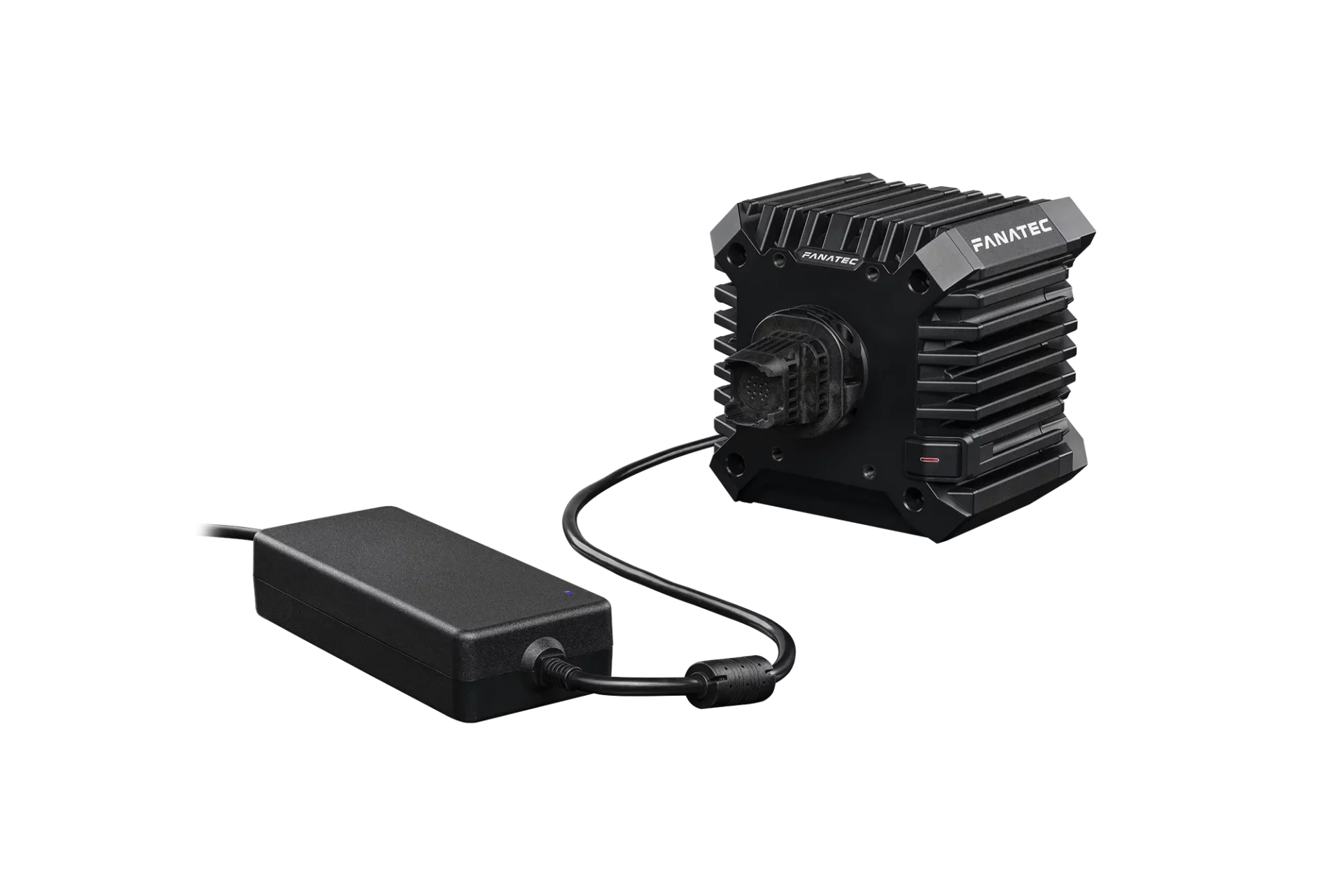
The old advice—to start with a belt-driven system and then upgrade—no longer really holds true. Prices have converged: an entry-level direct-drive model like the MOZA R5 or the Fanatec CSL DD costs about the same as a good belt-driven steering wheel these days. As for torque, there’s no need to aim for the maximum: 8 to 15 Nm is enough to feel everything without saturating the signal.
With a budget of 400 euros or more, an entry-level direct-drive model is currently the best buy. The advice to “start with a belt-driven model” now applies only to those on a very tight budget.
Our Guidelines by Budget
- To learn about direct drive : MOZA R5 on a PC, or Fanatec Gran Turismo DD Pro on PlayStation.
- For a true course : Fanatec CSL DD at 8 Nm or MOZA R9 V2, the ideal balance between quality and price.
- To Aim High : Asetek Invicta or Fanatec ClubSport DD+, when you're looking for the utmost finesse.
Check out all of our Tested and Rated Databases and our steering wheels to compare in detail.
The crankset: where you save the most time per lap
It’s the classic mistake: putting all your money into the steering wheel and buying the cheapest pedal set. Yet the brake is the most important control in racing, and it’s the pedal set that lets you modulate it with millimeter precision.
An entry-level crankset uses a position sensor : It measures the pedal stroke. A crankset with load cell (load cell) measures the pressure applied, just like the brake on a real car. You brake with the force of your foot, not by how far you press the pedal, and your control improves instantly.
If you have to decide where to spend an extra euro, spend it on the braking system. A load cell improves smoothness faster than any premium flywheel.
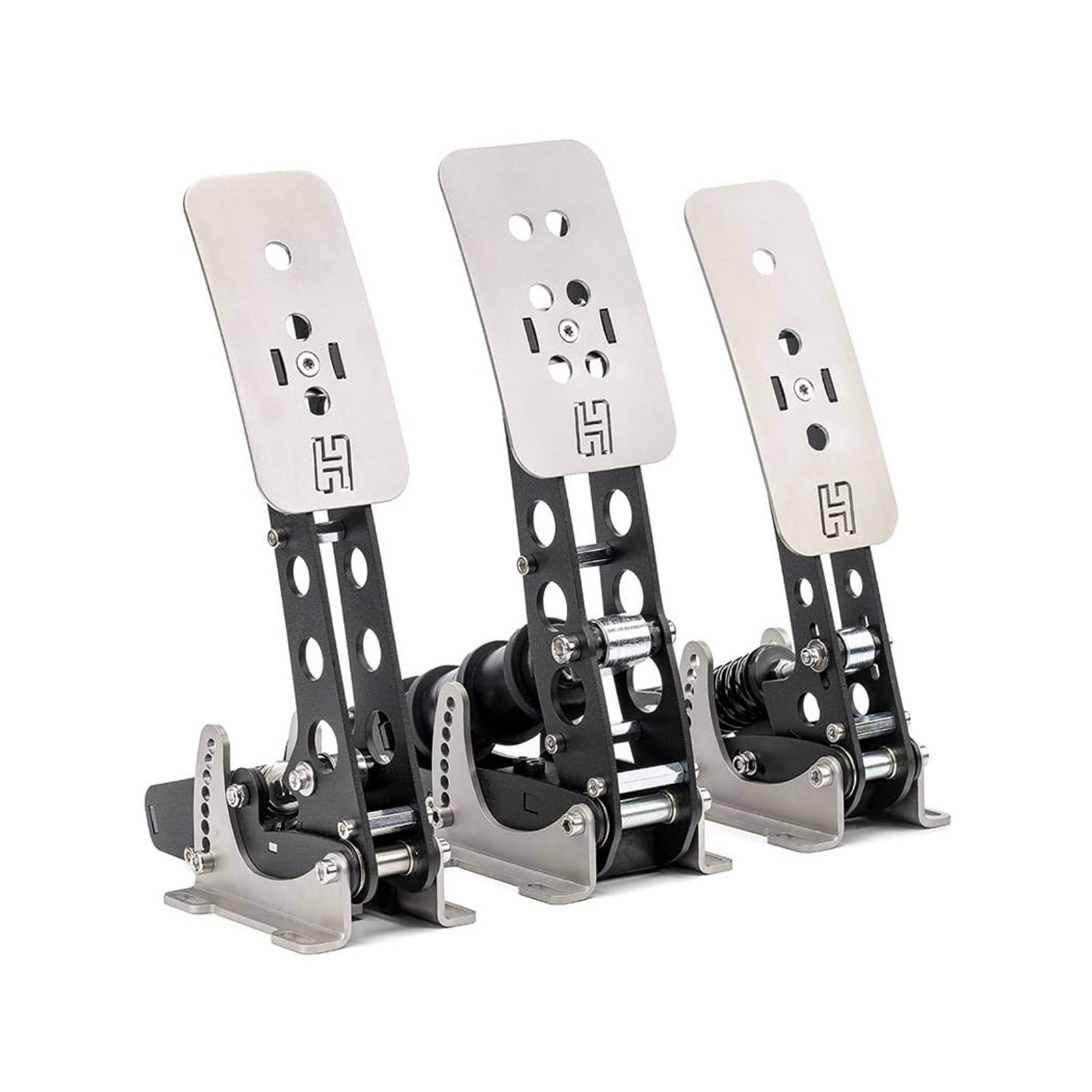
- Good value for the price with a load cell : Fanatec CSL Pedals LC.
- A Time-Tested Choice : Fanatec ClubSport Pedals V3.
- The go-to choice when you won't settle for less : Heusinkveld Sim Pedals Sprint.
All of our Tested pedals are rated on a scale of 10 to compare braking performance.
Support or the cockpit: the overlooked aspect
Even the best steering wheel in the world loses all its appeal if it wobbles or vibrates on a table. The more powerful your system is, the sturdier the stand you’ll need. There are three levels:
- The Table Clamp : For a quick fix using a starter wheel, provided you have a very stable table.
- The Foldable Stand (Playseat Challenge model): perfect if you're short on space and stick with a belt drive or a lightweight direct drive.
- The Rigid Cockpit : Virtually indispensable as soon as you switch to a powerful direct-drive system, otherwise the entire structure will flex.
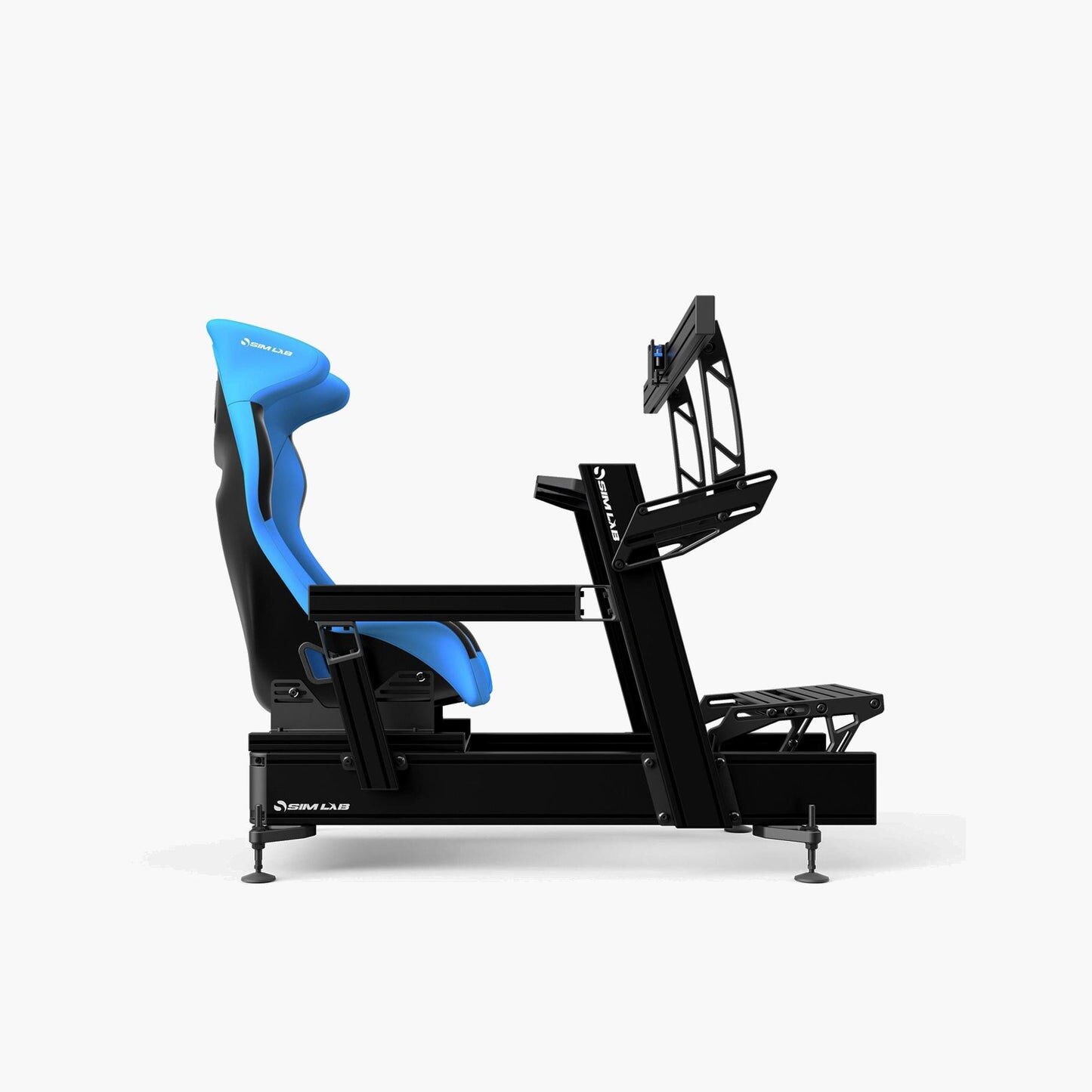
Discover our tested cockpits, from entry-level models to those with a rigid frame, such as the Sim-Lab P1-X Pro.
PC, PlayStation, or Xbox: Check Compatibility Before You Buy
This is the number one pitfall for beginners. Not all hardware works on all platforms, and the logic isn't intuitive. At Fanatec, for example, the rule is clear once you know it: PlayStation compatibility is built right in (a PS-licensed base model such as the Gran Turismo DD Pro), while Xbox compatibility comes from the steering wheel (an Xbox-licensed steering wheel). The same Xbox-licensed hub, mounted on a PlayStation-licensed base, can therefore work on both consoles.
On the PC side, everything is open: MOZA, Asetek, Simucube, and Fanatec work without a console license.
Buying a steering wheel without checking its compatibility with your console. You should check this on the product page before placing your order—never after.
How Much to Budget: Three Typical Setups
Here are three practical starting points, including supporting materials:
| Bearing | Base | Pedal set | Support | Estimated Budget |
|---|---|---|---|---|
| Getting Started | Entry-level direct drive | 2 pedals | Folding stand | 400 to 600 euros |
| Confirmed | 8 Nm | Load cell | Cockpit | 900 to 1,300 euros |
| Passionate | High-end | Premium | Rigid cockpit | 1,800 euros and up |
Not sure about your configuration? Our Tool: Which Setup Is Right for You?, on the home page, offers a base, a steering wheel, and a pedal set based on your platform, budget, and driving style.
Which games to start with?
- Gran Turismo 7 (PS5): Its driving school teaches the basics step by step, making it ideal for console play.
- Le Mans Ultimate : Surprisingly accessible—you can customize shorter weekends and a more forgiving AI to get started in endurance racing.
- Assetto Corsa (PC): Very comprehensive out of the box and massive with mods. Its sequel, Assetto Corsa Competizione, focuses on GT3 racing.
- iRacing : the most sophisticated platform for online racing, but also the most expensive in the long run (subscription plus purchases of cars and tracks).
The Three Force Feedback Settings That Make All the Difference
Once the equipment is plugged in, three settings make all the difference right from the start:
- First, calibrate the rotation the steering wheel settings in the manufacturer's software and in the game, so that the displayed angle matches the position of your hands.
- Don't set the force to the maximum. The goal isn't maximum force but maximum information. Too much force obscures the details and tires the forearms. Start with moderate force, minimal damping, and minimal added effects.
- Adjust the in-game gain To avoid clipping: When the signal saturates the vibrators, you lose information. Lower the gain until the peaks pass cleanly.
Beginner Mistakes to Avoid
- Buying the cheapest equipment and then having to replace it all six months later: it’s better to go one step up—consistent and scalable.
- Neglecting the support: a wobbly steering wheel negates the benefits of a solid foundation.
- Getting the console compatibility wrong: Check it before you buy, not after.
- Driving with the default settings: the seat position, steering wheel angle, and pedal placement can be adjusted in five minutes.
- Braking too late and too hard: that’s a surefire way to cause understeer and spinouts. The first thing you learn is to brake early and gradually.
- Skip the practice: A few training sessions to learn how to brake are better than ten botched races.
Where to start now
First, decide on your platform and budget, then choose your base, pedals, and stand—in that order. For a 10-second recommendation, check out our recommendation tool, then compare the models in our steering wheel tests, basics and cranksets, all rated on a scale of 10. Have a safe trip.


