
Heusinkveld Sim Pedals Sprint : Test & Review | What it's really worth in 2026
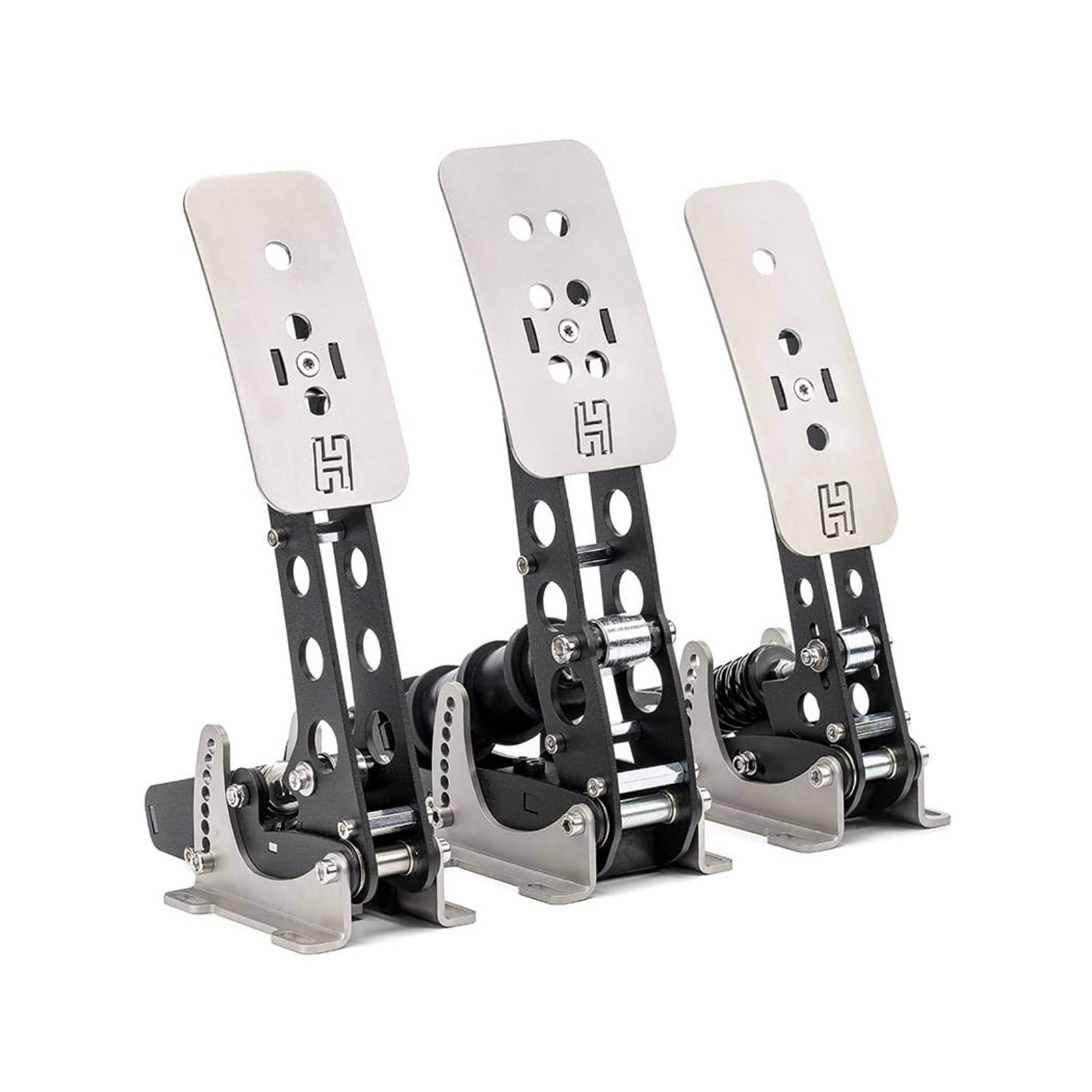
Heusinkveld Sim Pedals Sprint: My quick review
The Heusinkveld Sim Pedals Sprint is a high-end load cell pedal set, available in two- or three-pedal configurations. Its brake features a 120 kg load cell (up to 65 kg of actual force) and a stack of elastomers for surgical-level responsiveness. Laser-cut stainless steel construction and comprehensive SmartControl software, but strictly PC-compatible. A benchmark product that we rank at the top of its category.
When you buy through our links, we may earn an affiliate commission.
What We Liked
- A load-cell brake that is highly progressive and perfectly repeatable
- Solid stainless steel construction, no play or flex
- Net threshold point that builds muscle memory
- Virtually unlimited mechanical and software settings via SmartControl
- Settings stored in the pedalboard, identical across all simulators
- Available in two- or three-pedal versions
- Proven long-term reliability, replaceable brake rubber
Reserves
- PC-only; not supported on Xbox, PlayStation, or Linux
- A 65-kg weight limit that may restrict very powerful brakes
- Getting started with SmartControl takes some time
- The brake pad rubber wears out and must be replaced
Technical Specifications
| Brake Type | 120 kg load cell, up to 65 kg of actual force |
| Accelerator and Clutch | load cell sensors (position) |
| Materials | laser-cut, shot-blasted, and powder-coated stainless steel |
| Bearings | sliding bearings tested over one million cycles |
| Brake Adjustment | six combinations of springs, preload, and adjustable curves |
| Software | SmartControl (curves, dead zones, force, real-time adjustment) |
| Configurations | set of two pedals or three pedals (two-stroke clutch) |
| Connectivity | USB |
| Compatibility | Windows 10 or later PCs only (no consoles or Linux) |
| Included | pedals, USB cable, hardware, adjustment tools, manual |
| Warranty | 2 years |
The load cell that made its name
Let’s start with what defines this pedal system, because that’s where it all begins. The Sprint’s brake doesn’t measure a position; it measures pressure. A 120-kg load cell absorbs the force and converts it into a signal, with actual braking force peaking at around 65 kg. Unlike the rotary potentiometers found on entry-level pedal systems, this technology produces a linear value that is unaffected by dust and does not drift over time. In practice, you press the pedal just like in a real car: it’s the force of your foot—not the pedal travel—that controls braking.
A steel block built to last
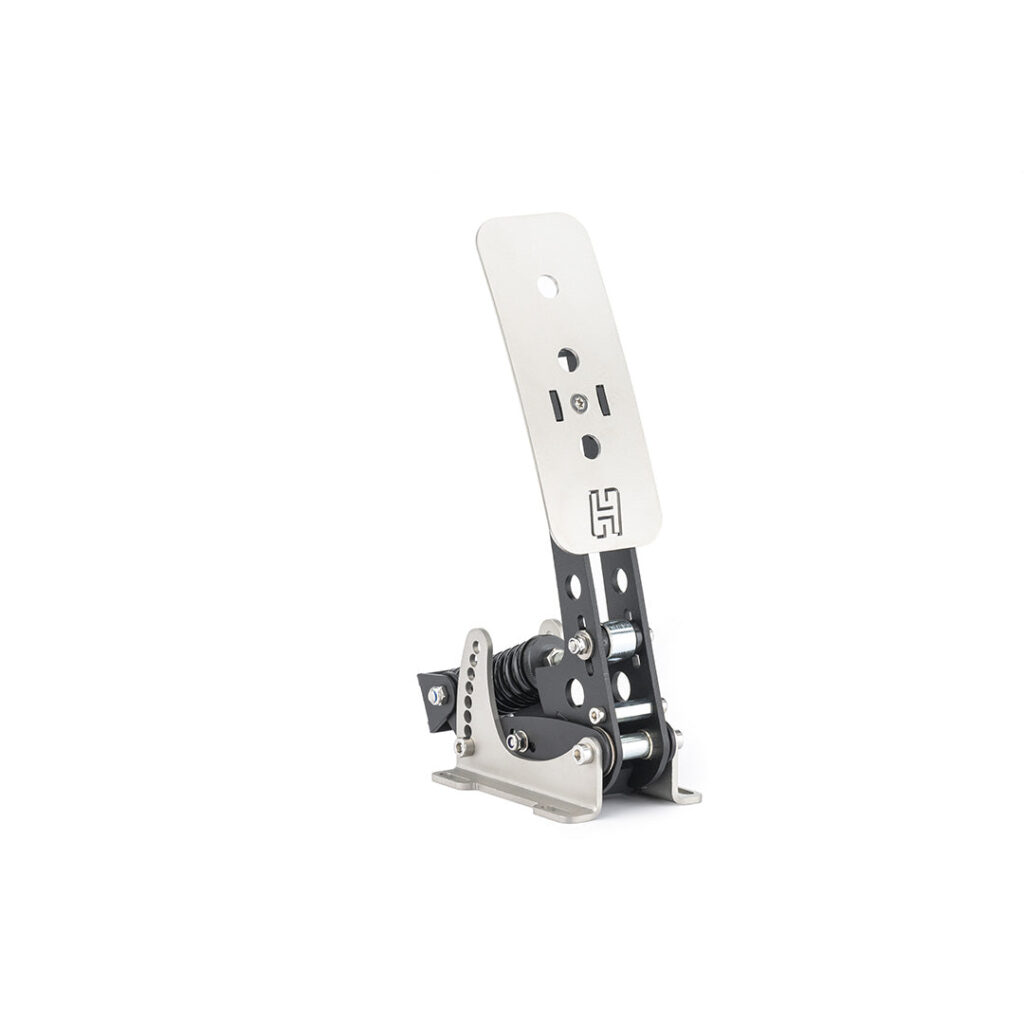
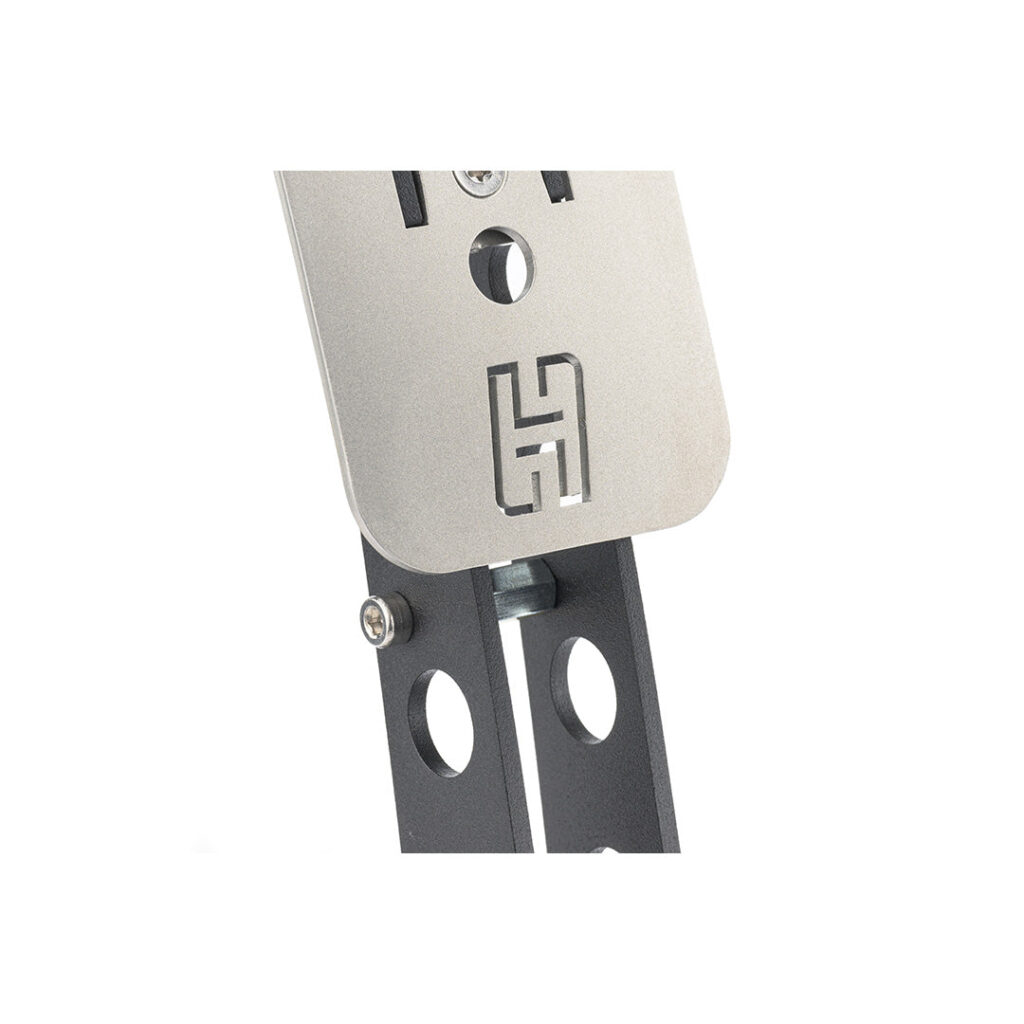
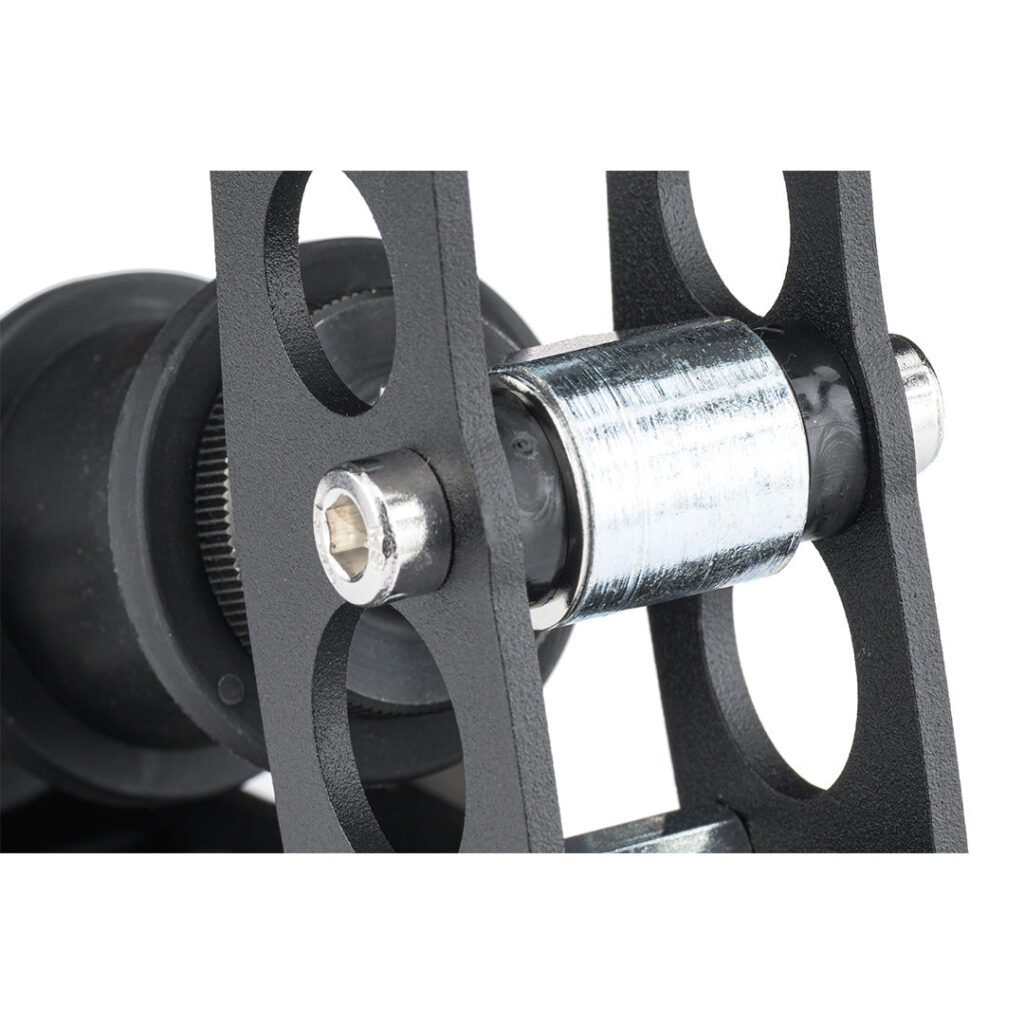
When you take the pedals out of the box, your first impression is that they’re a solid, substantial piece of equipment. The main parts are made of laser-cut stainless steel that has been shot-blasted and then powder-coated. Nothing wobbles, nothing vibrates, and there’s no unwanted play under your foot—even when you press down hard. Heusinkveld claims that the slide bearings have been tested for one million cycles, and when you use them, you understand where that confidence comes from: this is the kind of equipment that gives the impression it can withstand years of use without batting an eye.
When braking, precision becomes second nature
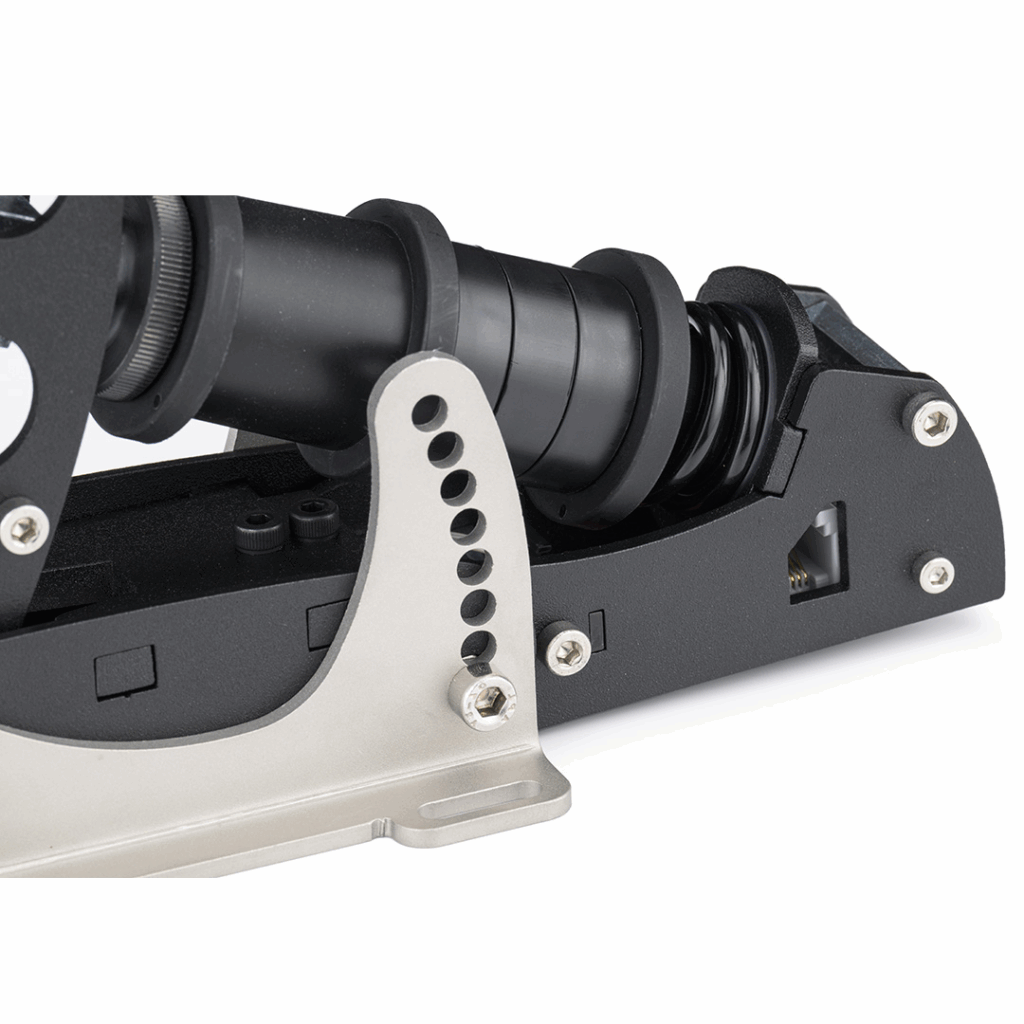
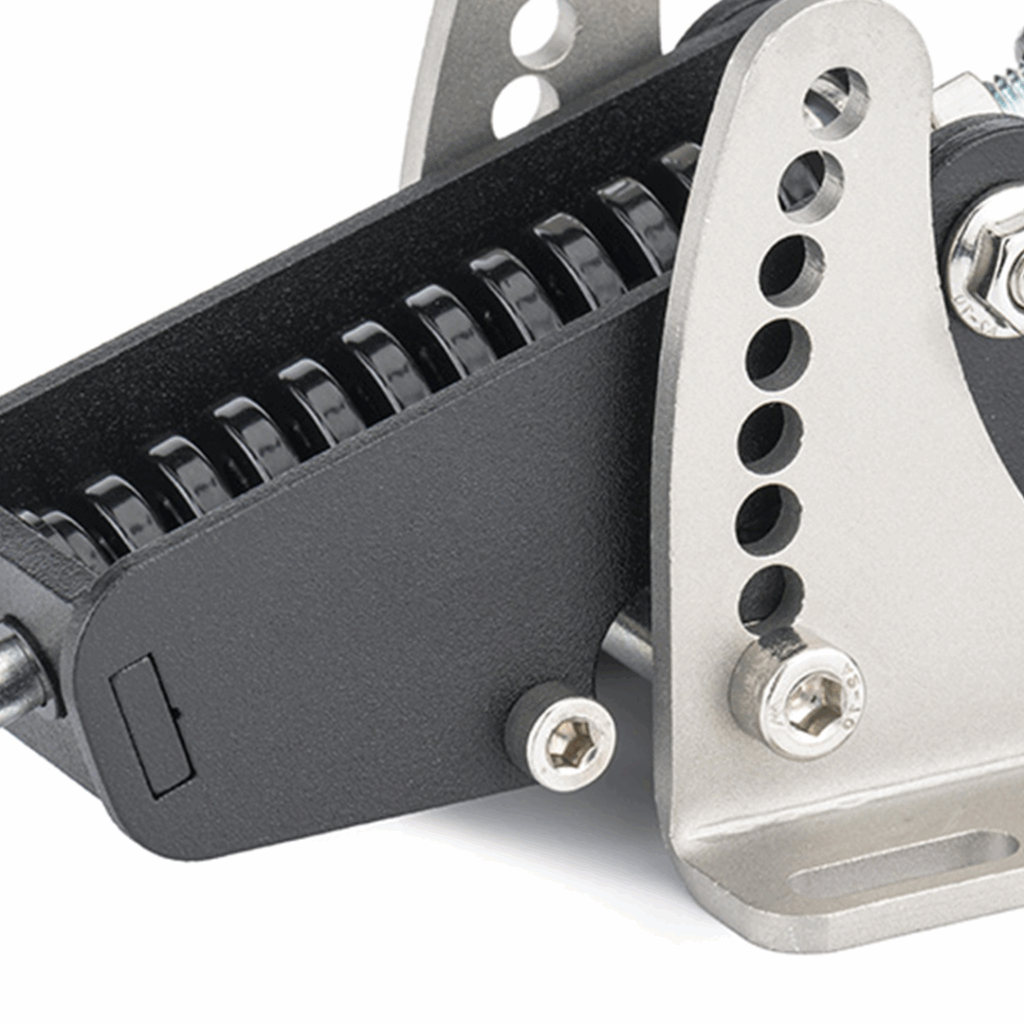
It’s on the track that the Sprint really comes into its own. The brake relies on a stack of elastomers, with six possible spring combinations to adjust the pedal feel from a soft, easy-to-modulate pedal to a very firm, single-seater-style “wall.” We particularly appreciated the slight initial spring action at the start of the stroke, which recreates the sensation of the pads making contact before the brakes really bite. Going into a hard turn, you feel a clear and consistent threshold—and that’s exactly what you need to build muscle memory. Brake application after brake application, you release the pedal at the same spot, modulate it right on the edge without locking up, and your lap consistency genuinely improves. It’s not the kind of spectacular gain you get from a force-feedback system; it’s more subtle: you gain consistency—a few tenths of a second on average per lap—and, above all, you stop fighting against your equipment.
During long endurance sessions, this firmness pays off twice over. Whereas a soft pedal eventually causes fatigue and throws the rider off, here the bite point remains consistent from the first to the last lap. The only part that shows normal wear after months of intensive use is the brake pad rubber, and it can be replaced in just a few minutes.
Well-maintained accelerator and clutch
The throttle isn't left out either. The travel, effort (up to three times harder depending on the setting), and spring preload are all adjustable, and a rubberized stop keeps the whole assembly quiet. You can make it light for precise throttle control when exiting a turn, or more firm if you like to feel some resistance. The clutch, meanwhile, offers a two-stage effect that mimics the slip point: it features a true “bite point” zone, invaluable for standing starts and heel-and-toe shifting. On the two-pedal version, you focus on the brake and throttle; the three-pedal version adds this clutch for those who want a full manual transmission.
SmartControl: Stepless Adjustment
All software customization is done through SmartControl. There, you can plot nonlinear output curves, set dead zones, adjust braking force, and—most importantly—save the settings directly to the pedal set: no matter which simulator you launch next, the behavior remains the same. Heusinkveld provides downloadable presets tailored to specific sims and car types, which serve as a good starting point before fine-tuning. You’ll need to be willing to spend a little time on this—we easily spread our adjustments over a week before finding our ideal setup—but that’s the price you pay for equipment that truly adapts to its driver. The real-time function even lets you make adjustments while you’re driving.
PC only; please check before purchasing
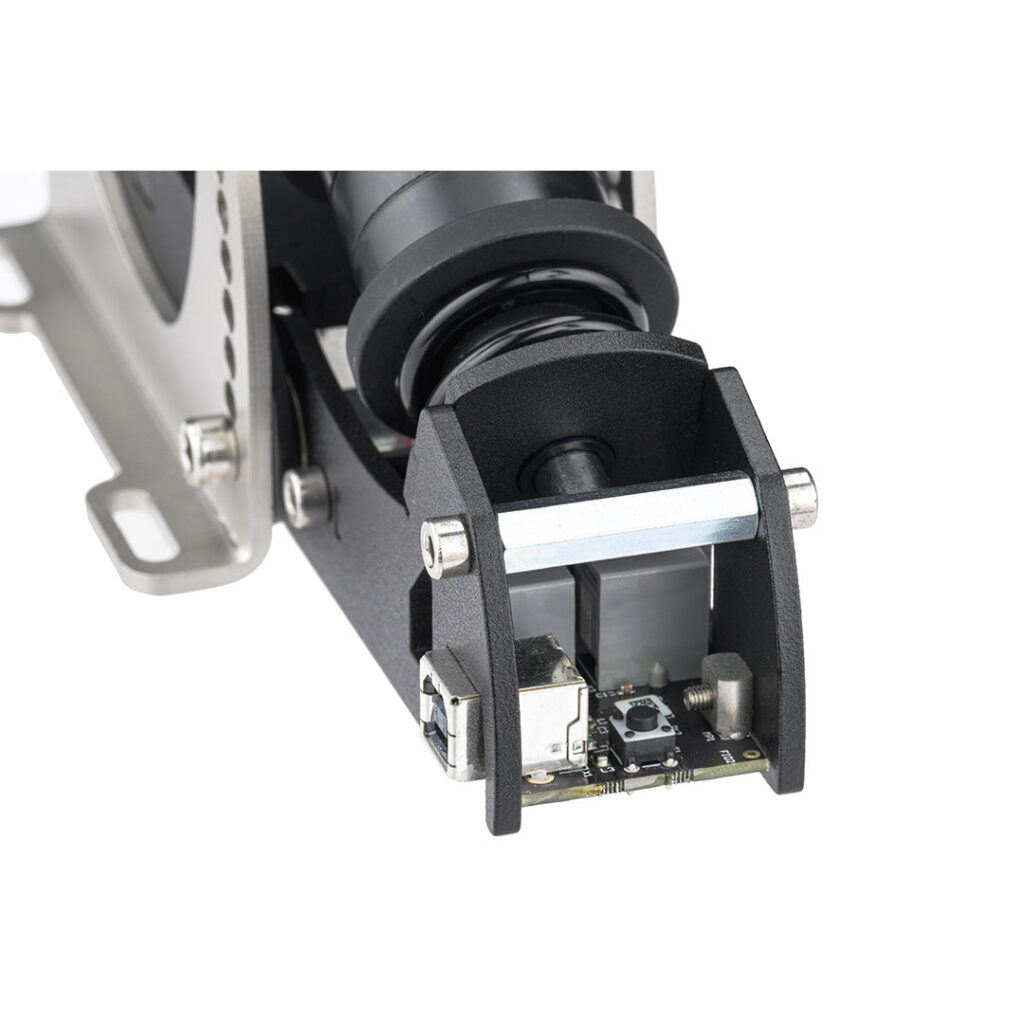
One crucial point: the Sprint is a PC pedal set. It connects via USB on Windows 10 or later, and it is not supported on Xbox, PlayStation, or Linux. If you’re gaming on a console, this isn’t the right product for you, and no adapter can change that on the software side. For a PC setup, however, setup is immediate, and the box contains everything you need: a USB cable, mounting hardware, adjustment tools, and a manual, along with a two-year warranty.
Our verdict
The Sprint occupies a very unique position in the market: it offers the essentials of much more expensive pedal sets, without the extra cost associated with marginal improvements. The load cell, steel construction, and precise resistance control make it a foundation on which you can truly improve, session after session. Its only real limitations—the 65 kg weight limit for drivers with very powerful braking and the complete lack of console compatibility—are important to be aware of before ordering. For a demanding PC sim racer, it’s one of the best investments you can make.



Reviews