
Fanatec CSL Pedals : Test & Review | What it's really worth in 2026
Fanatec CSL Pedals: My quick review
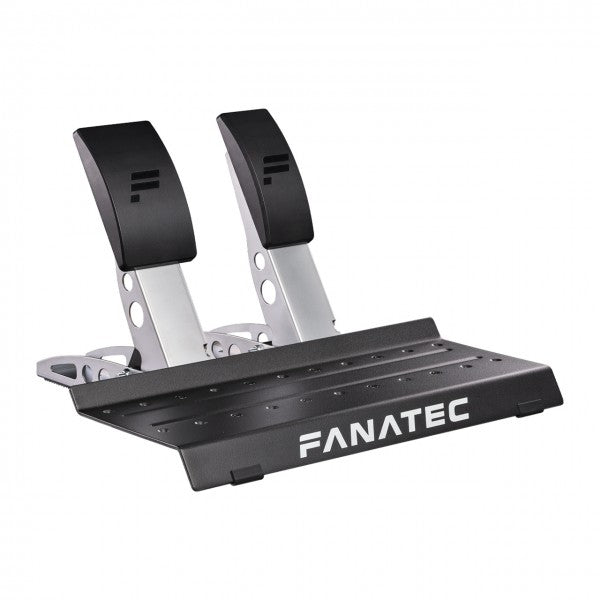
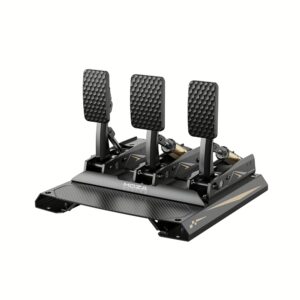
The Fanatec CSL Pedals are an all-steel, two-pedal set powered by contactless Hall-effect sensors that do not drift over time. The base is heavy, stable, and surprisingly well-finished for this entry-level segment, featuring a spring-loaded brake supported by a foam damper that provides progressive feedback. Above all, it’s an upgradeable platform: a clutch kit and load cell kit are available for when you’re ready to take it to the next level.
When you buy through our links, we may earn an affiliate commission.
What We Liked
- Heavy-duty, stable all-steel construction—top-of-the-line for this price point
- 12-bit non-contact Hall-effect sensors, with no wear or drift over time
- PU foam shock absorber that provides progressive braking
- Smooth, precise, and quiet accelerator
- Adjustable for spacing, plate height, and inverted mounting
- Scalable platform: clutch kit and load cell kit
- Plug-and-play with all recent Fanatec bases and a 3-year warranty
Reserves
- A lightweight, racing-style brake, unlike a load cell
- Set limited to 2 pedals (clutch optional)
- USB standalone operation is not possible without an adapter or load cell kit
- The full potential is unlocked by adding the load cell kit, at an additional cost
Technical Specifications
| Type | 2-pedal pedal set (accelerator, brake) |
| Sensors | 12-bit non-contact Hall effect sensor (accelerator and brake) |
| Construction | All-steel construction (excluding soles), pearl chrome plating, painted heel rest |
| Brake | Reinforced spring plus PU foam shock absorber for progressive response |
| Settings | Pedal spacing, plate height, reverse mounting possible |
| Connection | RJ12 cable to Fanatec base (USB via optional adapter) |
| Compatibility | All current and older Fanatec bases (CSL Elite and ClubSport); PC, PS4/PS5, Xbox, depending on the base and steering wheel |
| Scalability | Clutch kit, load cell kit, tuning kit (aluminum plates) |
| Warranty | 3 years |
An entry-level pedal set that takes its cues from the big names
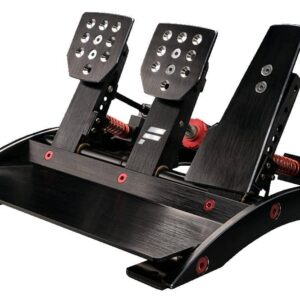
The first thing that strikes us when we take the CSL Pedals out of the box is their weight. Fanatec has built this two-pedal set entirely out of steel (except for the pedal pads), with a pearl chrome finish on the bases and arms and a black-painted heel rest. This is a far cry from the flimsy plastic you usually find at this price point. Placed on the floor without being bolted to a chassis, the set stays firmly in place thanks to its weight: it doesn’t slide when you press down hard, which is already a real luxury for beginners without a rigid cockpit. This overall sturdiness inspires confidence from the very first press of the pedals, and it explains why these pedals are often described as the more refined successor to the older CSL Elite models.
Hall-effect sensors that won't degrade over time
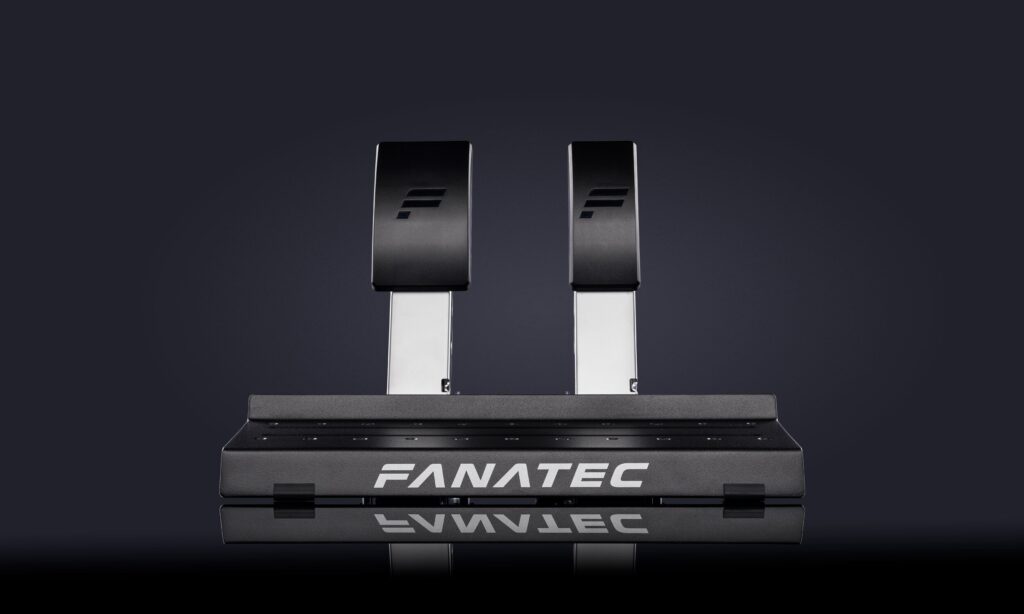
The real technical selling point is the sensors. Both the accelerator and brake use 12-bit contactless Hall-effect sensors, which detect the pedal’s position using magnets rather than friction-based potentiometers. In practical terms, no parts wear out over virtual kilometers: no scraping, no values that become erratic after a few months, and no dead zone that develops. In our testing sessions, the accelerator remains smooth and silent, with no jerks or background noise, and the position reading remains consistent from one session to the next. For a pedal set designed to last and withstand hundreds of hours of use, this choice of sensors is the most reassuring feature—especially since it’s typically found in much more expensive equipment.
When braking: the foam does the job, but it has its limits
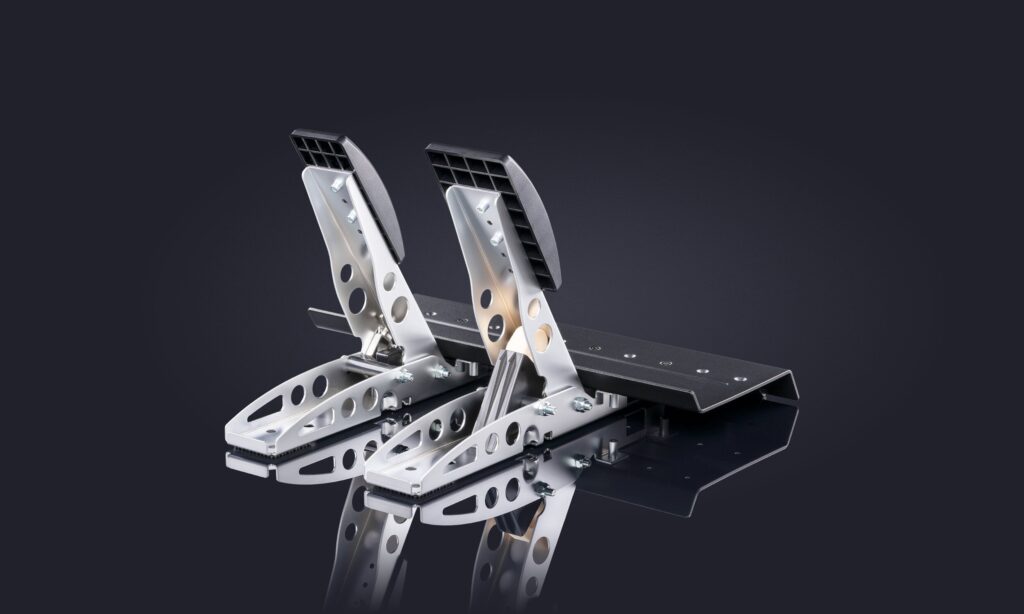
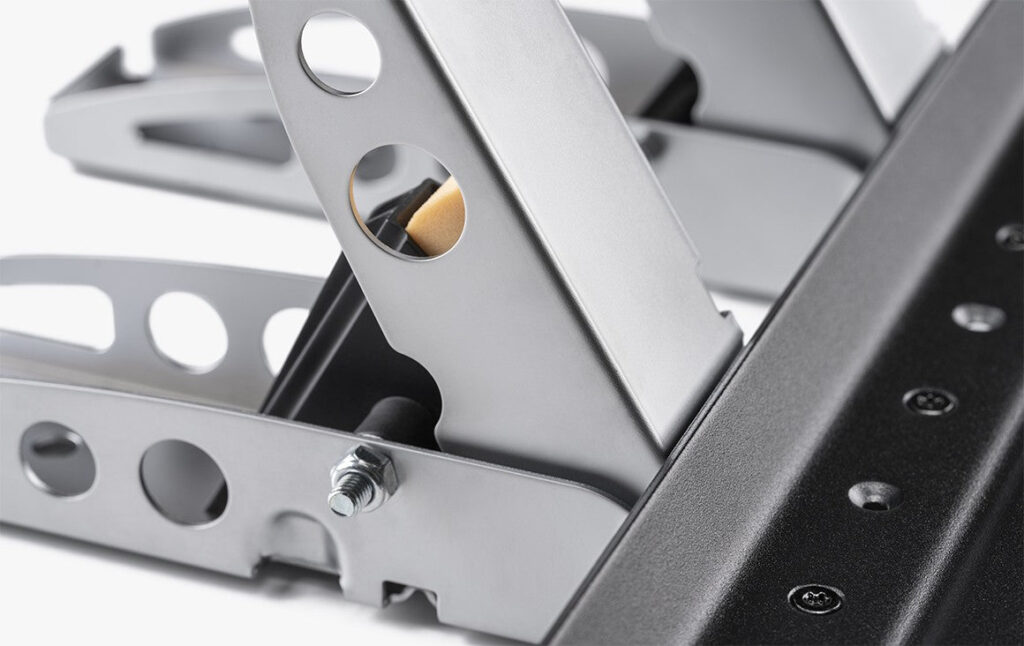
The brake in the basic set uses a stiffer spring than the throttle, supplemented by a PU foam damper that becomes stiffer as it is compressed. It’s a good concept: the harder you press, the stiffer the pedal becomes, which provides a pleasant, progressive feel and lets you modulate your braking without needlessly bottoming out the pedal. In practice, braking here is based on pedal travel (the pedal’s position) rather than pressure, just like in a real car. The muscle memory you develop therefore focuses on pedal travel, not on the force applied. For relaxed driving, rallying, or your first steps in GT racing, it does the job perfectly, and you can cleanly modulate your entry into corners. More demanding drivers will quickly notice that the spring remains light and that the lock-up point lacks firmness when aiming for millimeter-precise late braking. This is the accepted trade-off of an entry-level brake, and it’s precisely what Fanatec invites you to correct with its load cell kit.
On the gas and over long distances
On the right side, the accelerator pedal is the one that won us over right away. The travel is smooth and linear, and the contactless sensor makes the pedal response predictable: you can gently apply the gas coming out of a turn without the spongy feel of budget pedals. During long endurance sessions, nothing goes wrong: no calibration drift, no noise that sets in with mechanical fatigue, and the brake foam returns to its original shape between presses. It’s a system you forget about once you’re underway—which is the highest compliment you can pay to a driving peripheral.
Simple but useful settings
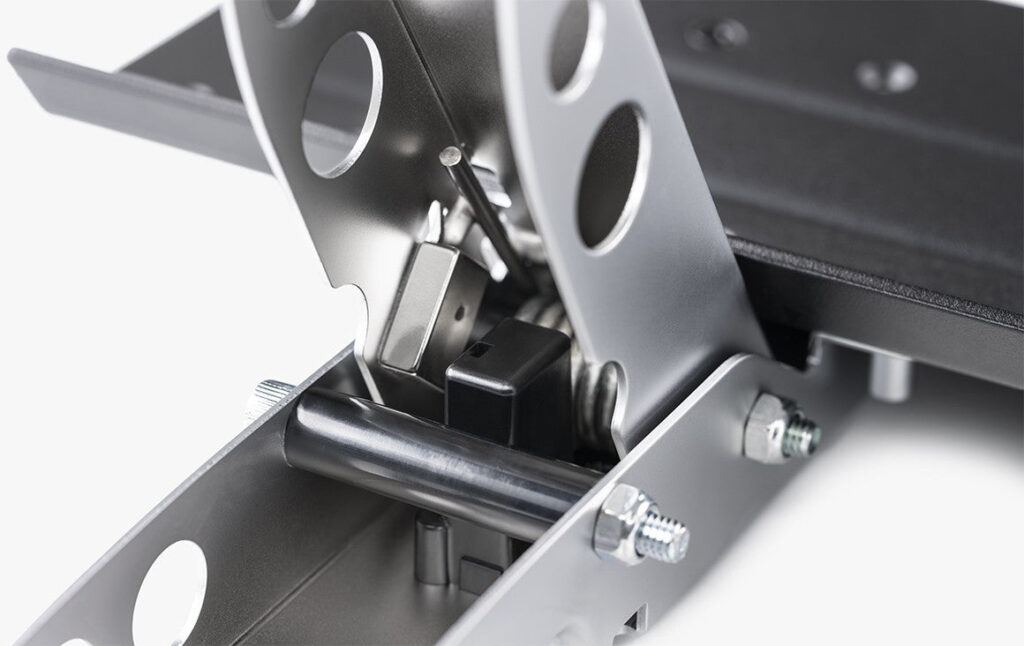
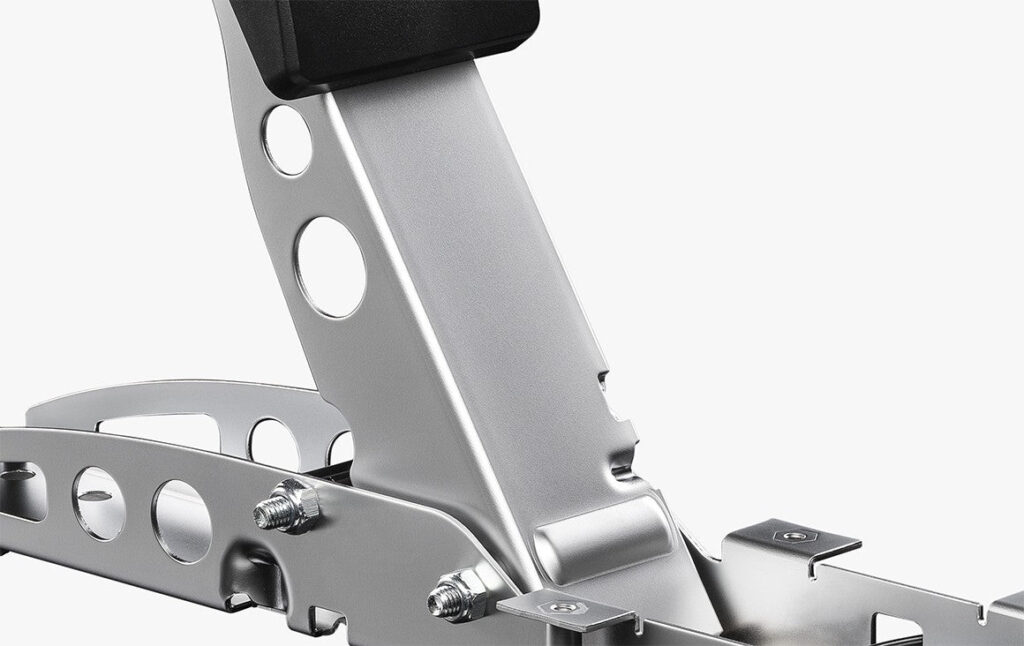
Fanatec has included features that allow you to customize the pedal set to fit your body type. You can adjust the horizontal spacing of the pedals along the heel rest, adjust the height of the pedal plates, and even consider a reverse mounting depending on your setup. These aren’t the extensive adjustment options found on a high-end pedal set, but the essentials are there to help you find a natural foot position and avoid cramps after an hour of racing. The integrated heel rest also helps maintain a consistent pedaling motion, which is more important than you might think for consistency in time trials.
Compatibility: The base unit controls it; the pedals follow
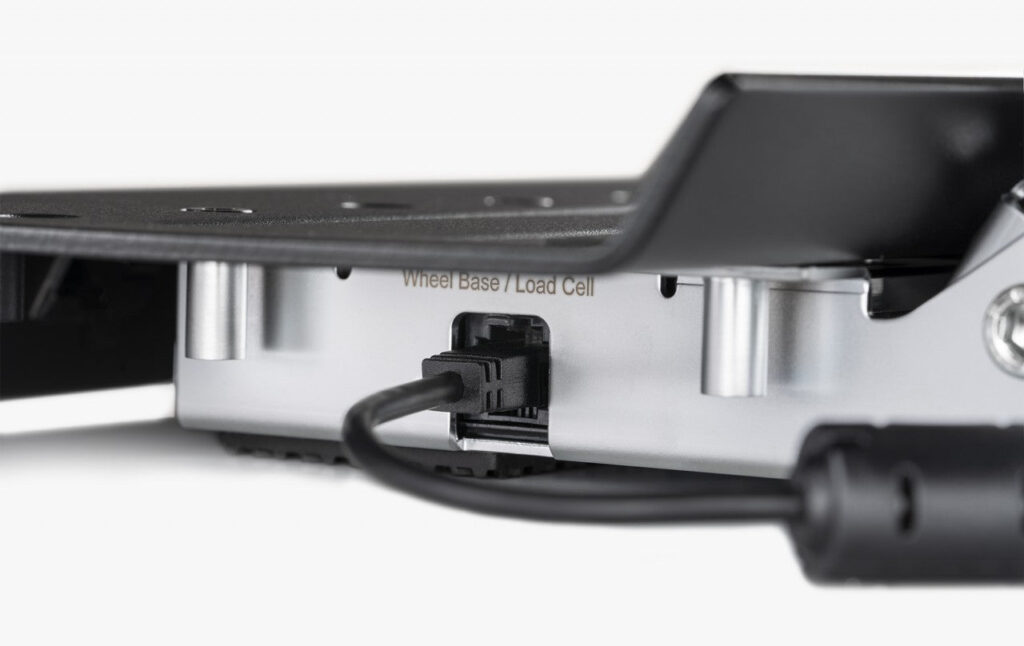
This is an important point to clarify, as it’s a common pitfall. CSL Pedals are not standalone USB devices by default: they connect via RJ12 directly to a Fanatec base. They are plug-and-play with all current Fanatec bases (CSL DD, GT DD Pro, ClubSport DD) as well as with the older CSL Elite and ClubSport bases. So, which consoles do they work with? The ones supported by your base and your steering wheel. In other words, it’s the base-plus-steering-wheel combination that determines whether you’re playing on PC, PlayStation, or Xbox—not the pedal set itself, which remains platform-agnostic. For USB use on a PC without a base, you’ll need to use a ClubSport adapter or the load cell kit, which includes the necessary electronics.
A platform built to grow
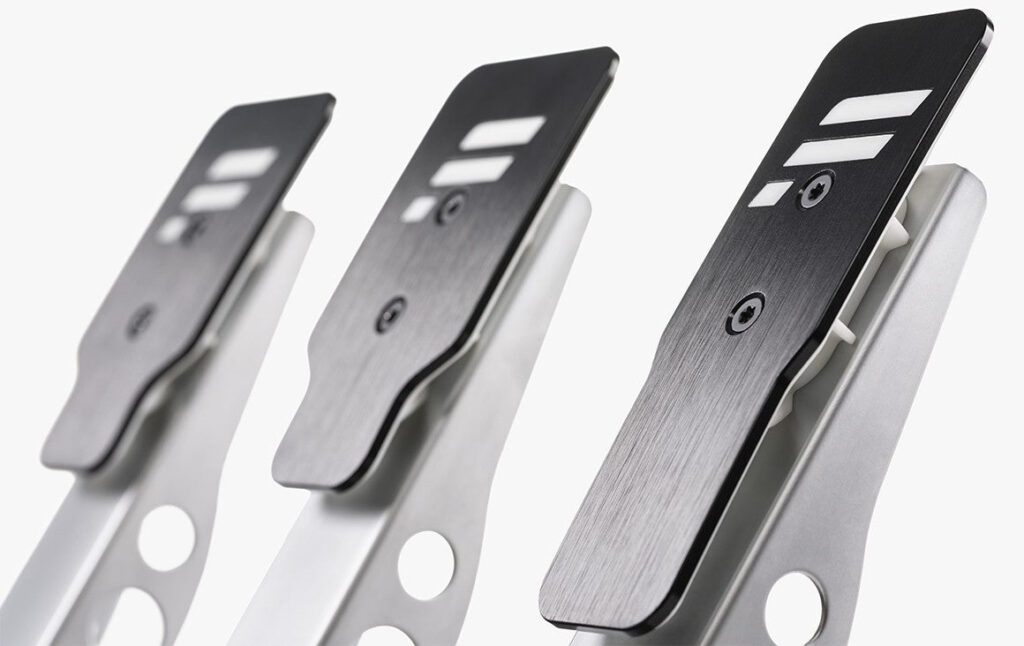
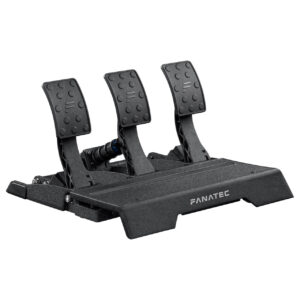
That may be the best feature of these CSL Pedals: you’re not buying a dead end, but a starting point. A clutch kit adds a third pedal for those who want to switch to a manual transmission. The load cell kit, on the other hand, replaces the brake pedal with a load-cell brake that measures pressure rather than travel—a modification that radically changes the feel and frees up the original brake pedal for use as a clutch pedal. An aluminum tuning kit is also available. This allows you to start small and then upgrade piece by piece as your budget and skill level allow, without having to buy the entire set all at once. This modular approach, backed by a 3-year warranty, makes the investment particularly worry-free.
Our verdict
The CSL Pedals check almost all the boxes you’d expect from a modern entry-level pedal set: a reassuring all-steel construction, Hall-effect sensors that don’t wear out, a precise throttle, and a clear path for upgrading. The basic, lightweight, racing-style brake remains their natural limitation, but it’s a known issue that can be addressed. To get off to a solid start in the Fanatec ecosystem without closing any doors, this is a choice we recommend without hesitation.





Reviews