
MOZA CRP2 Pedals : Test & Review | What it's really worth in 2026
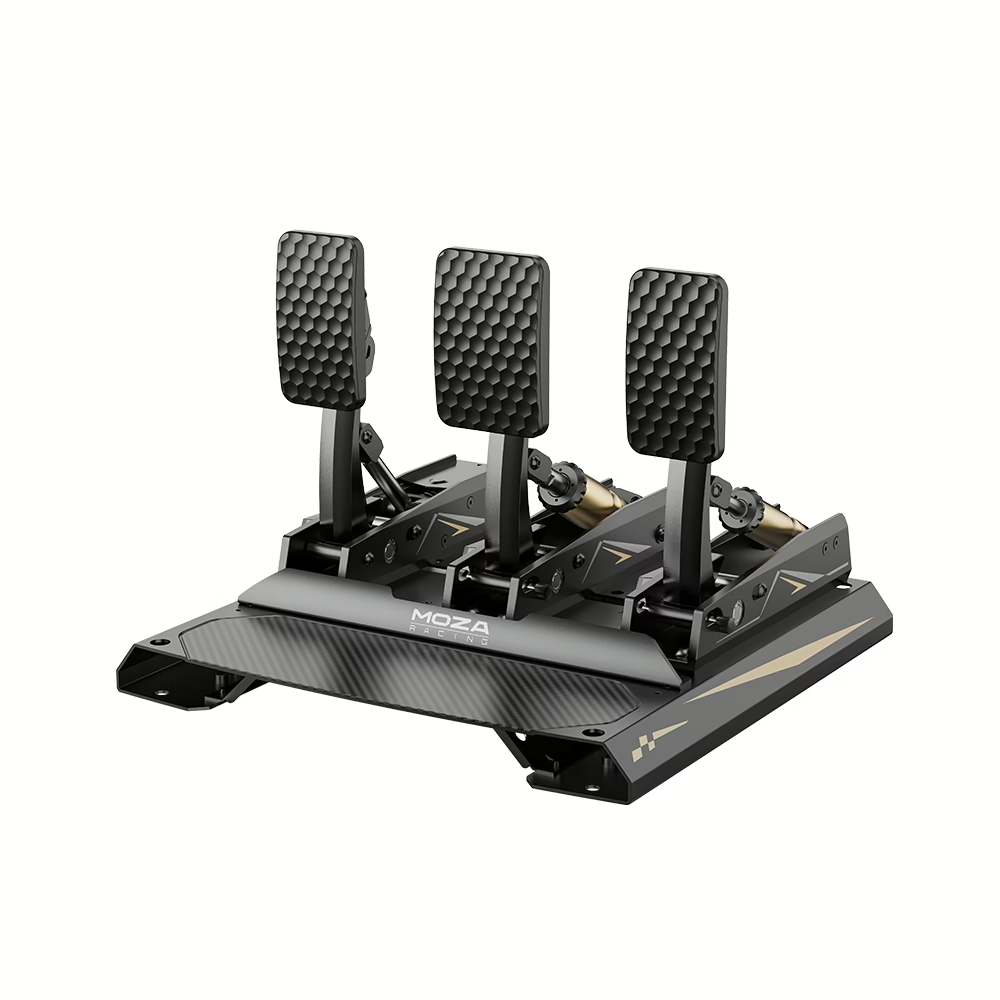
MOZA CRP2 Pedals: My quick review
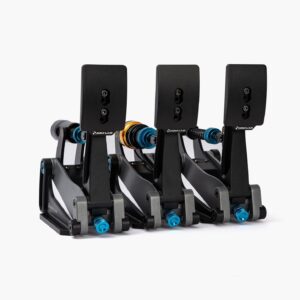
The MOZA CRP2 is a 200 kg load cell pedal designed around the brake, featuring a 15-bit angle sensor and resistance that can be adjusted using stackable elastomers. In use, modulation remains precise and, above all, consistent over long sessions, making it a real step up from the original CRP. The aluminum and steel construction is flawless, the throttle is smooth, and the clutch (optional) is impressive. A pedal set that requires careful adjustment but performs well above its class.
When you buy through our links, we may earn an affiliate commission.
What We Liked
- 200-kg load cell with precise, linear, and highly consistent braking
- Customization of the large brake using stackable elastomers
- Adjustable pressure/stroke settings in the Pit House to customize each car
- High-end construction (aluminum, steel base, carbon heel cup), total rigidity
- Smooth and progressive acceleration, clutch with a satisfying slip point
- Works via USB on a PC, even with a dock from another brand
- Full range of position adjustments (height, angle, stroke, heel rest)
Reserves
- Changing the brake elastomers is a tedious process (requires disassembly by hand)
- The pedal surfaces are very slippery; shoes are required
- Carbon heel rest, which is still a wear part
- Mandatory bottom bracket plate, redundant with certain cockpits
- Clutch sold separately from the base model
- The clutch engagement feels a bit abrupt on the firmest settings
Technical Specifications
| Type | Load-Cell Pedal set |
| Brake sensor | Load cell 0 to 200 kg + 15-bit angle sensor (32,768 points) |
| Brake Configurations | Over 100 as standard, up to 1,764 with the Performance Kit |
| Brake travel | 15 to 20 degrees |
| Throttle travel | 15 to 23 degrees |
| Clutch Travel | 15 to 25 degrees (optional clutch) |
| Materials | Aeronautical-grade aluminum, high-strength steel base, 3K carbon heel pad |
| Settings | Sole height and heel support up to 30 mm, angle 0 to 15 degrees |
| Endurance | Tested for over one million pedal strokes |
| Connectivity | USB |
| Compatibility | PC and Xbox (via the MOZA ecosystem) |
| Software | MOZA Pit House |
The brake first, because it's the one that determines everything
We set up the CRP2 with the idea that we would judge these pedals based on one thing alone—the brake—and MOZA clearly built the entire set around that concept. The load cell can handle up to 200 kg—far more than what a human foot actually exerts during a race—and you can feel this extra capacity right from the first few revolutions. Where more modest pedals reach their limit when you push hard, here there’s still plenty of reserve, and the modulation never gets muddled. You push down, the pedal responds linearly, and you get exactly the same braking pressure on the next stroke. It’s this repeatability that saves lap time—not some marketing figure.
Two sensors, a signal you shape yourself
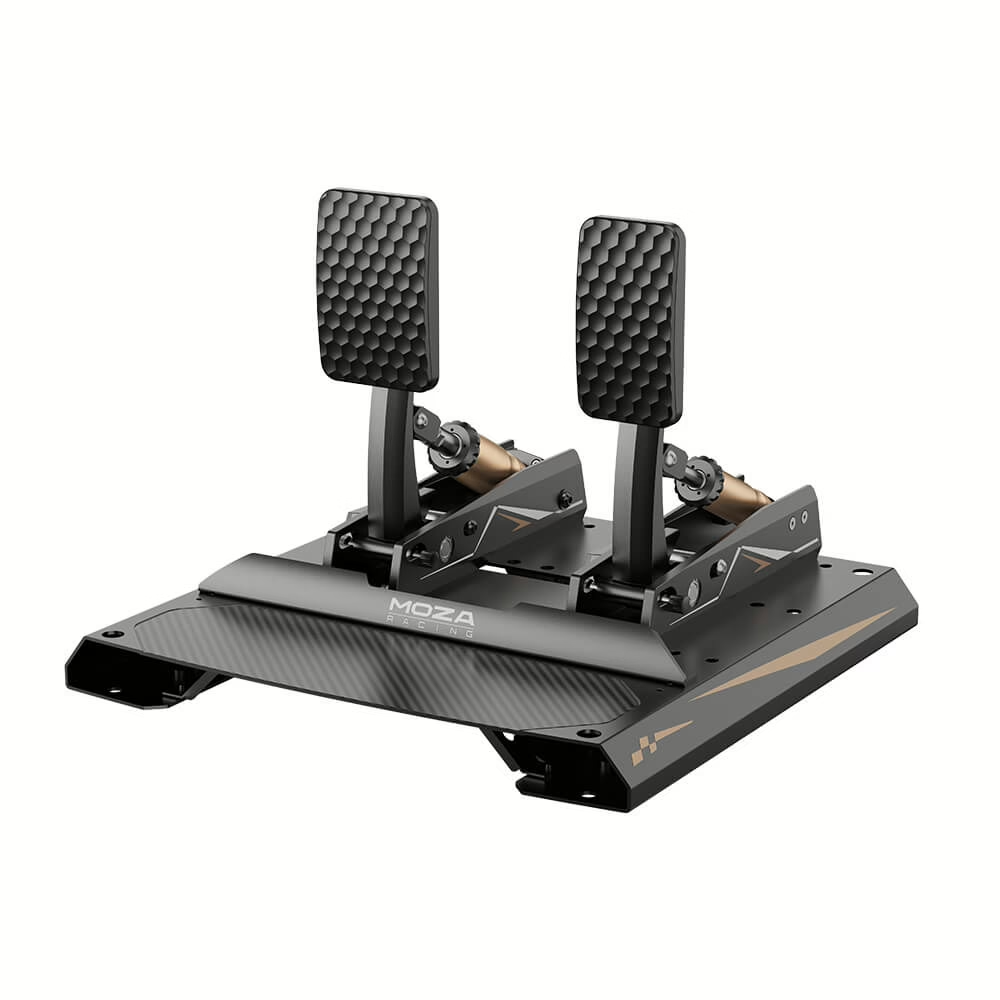
What makes this brake unique is that it combines a load cell with a 15-bit angle sensor (32,768 points). In practice, you can adjust the ratio of pressure to travel that makes up the braking input using the Pit House software. In a heavy GT, you’ll want to prioritize pure pressure to hit the apex with the strength of your calf. On a nimble single-seater, you reintroduce a bit of travel to feel the pedal depress under your foot. This level of adjustability is rarely seen in this price range, and it’s what allows the same equipment to be adapted to cars that are completely different from one another.
Over a hundred brake hardness levels—and that's no bluff
MOZA offers more than a hundred standard brake feel combinations, and up to 1,764 configurations with the optional Performance kit. Behind these numbers lies a system of elastomers of varying hardness that are stacked to shape the resistance curve. In practice, this creates a two-stage braking system that we really liked: a smooth initial phase to settle the car into the turn, followed by a wall of resistance as you approach the lock-up threshold. This progressive response is a huge help for trail braking, when you gradually release the pedal while turning. Once you’ve found the right stack, your foot knows exactly where it stands without having to look at the telemetry. Changing the hardness requires no tools, which encourages you to experiment until you find the feel that’s just right for your favorite car. We spent a good half-hour stacking and restacking the blocks before finalizing our setup, and this fine-tuning phase is as much a part of the fun as it is a challenge.
The accelerator and clutch follow the movement
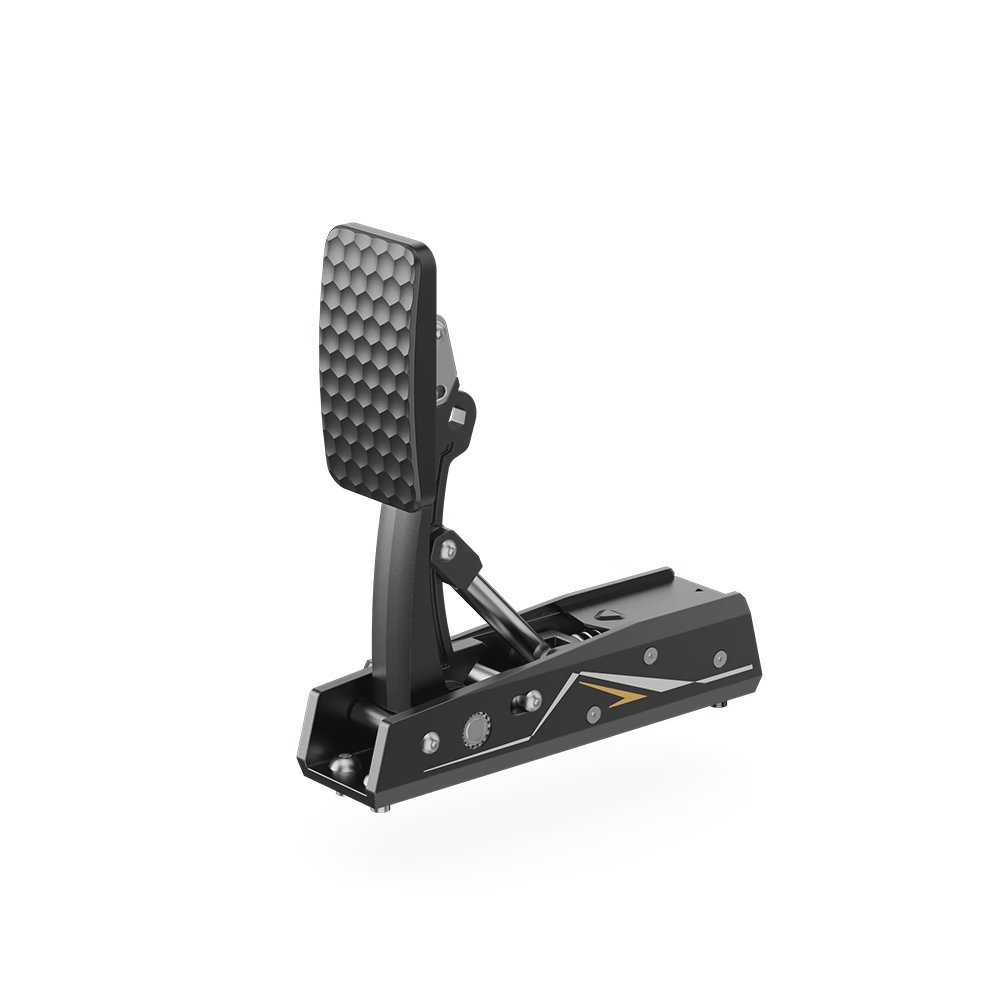
The throttle is based on a streamlined spring mechanism that provides a smooth, progressive travel. You can modulate the throttle output coming out of a turn with a finesse not found on entry-level pedals, where the feedback is often abrupt and binary. Two springs are included, and the preload is continuously adjustable, so everyone can set the firmness to their liking. The clutch, sold separately, adds a distinct slip point with a crisp engagement, which is very enjoyable for pulling away from a standstill or driving a classic car with a manual transmission. One honest caveat: at the firmest settings, this engagement becomes a bit abrupt, and we ended up preferring the softer configuration.
How the product feels in your hands
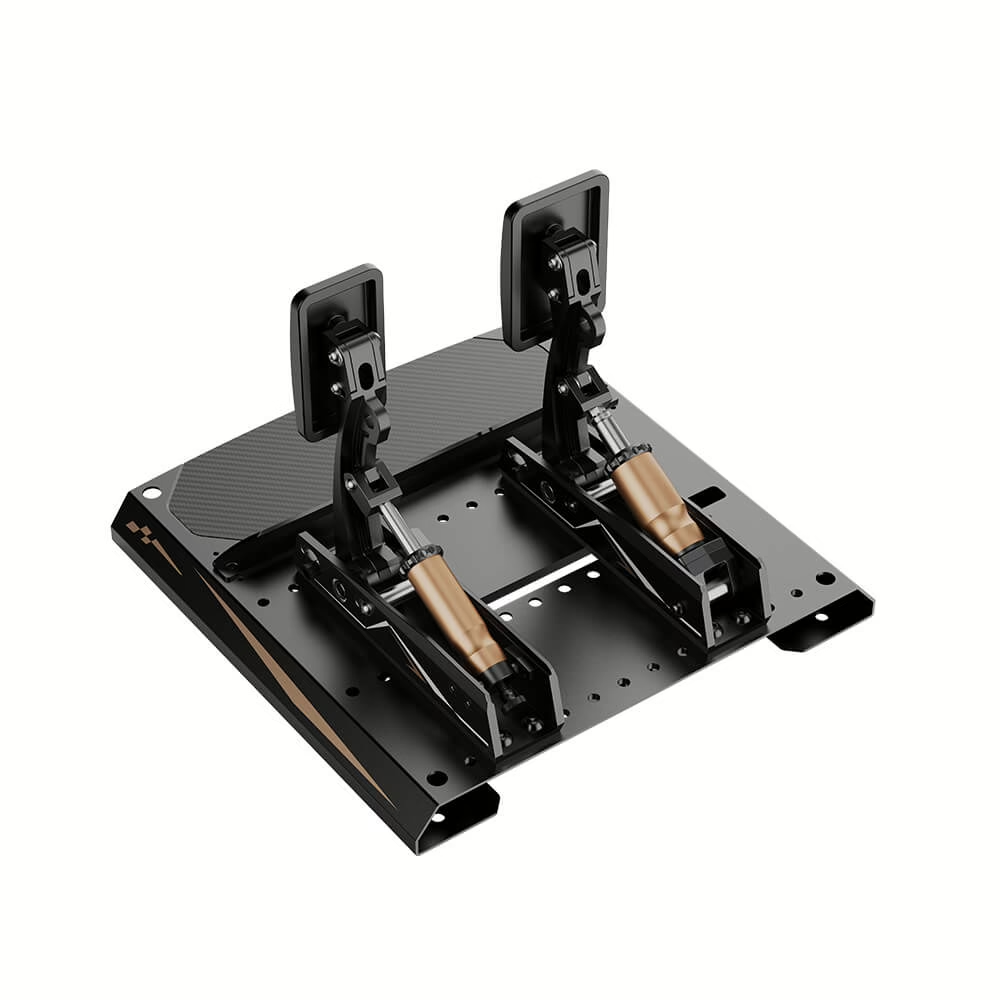
The CRP2 exudes solidity. With an aerospace-grade aluminum body, a high-strength steel base, and a 3K carbon fiber heel rest, the whole unit is heavy and perfectly rigid. Nothing wobbles, nothing creaks, and the axles slide silently thanks to their internal damping. Once you bolt the whole thing to your cockpit, the structure doesn’t budge a millimeter, even when you slam on the brake with your full weight. MOZA claims over a million pedal presses in endurance testing, and in actual use, there’s no reason to doubt this given how well the assembly is crafted. Only the carbon heel rest remains a wear part that will eventually show signs of wear over time.
In the game, after several hours of driving
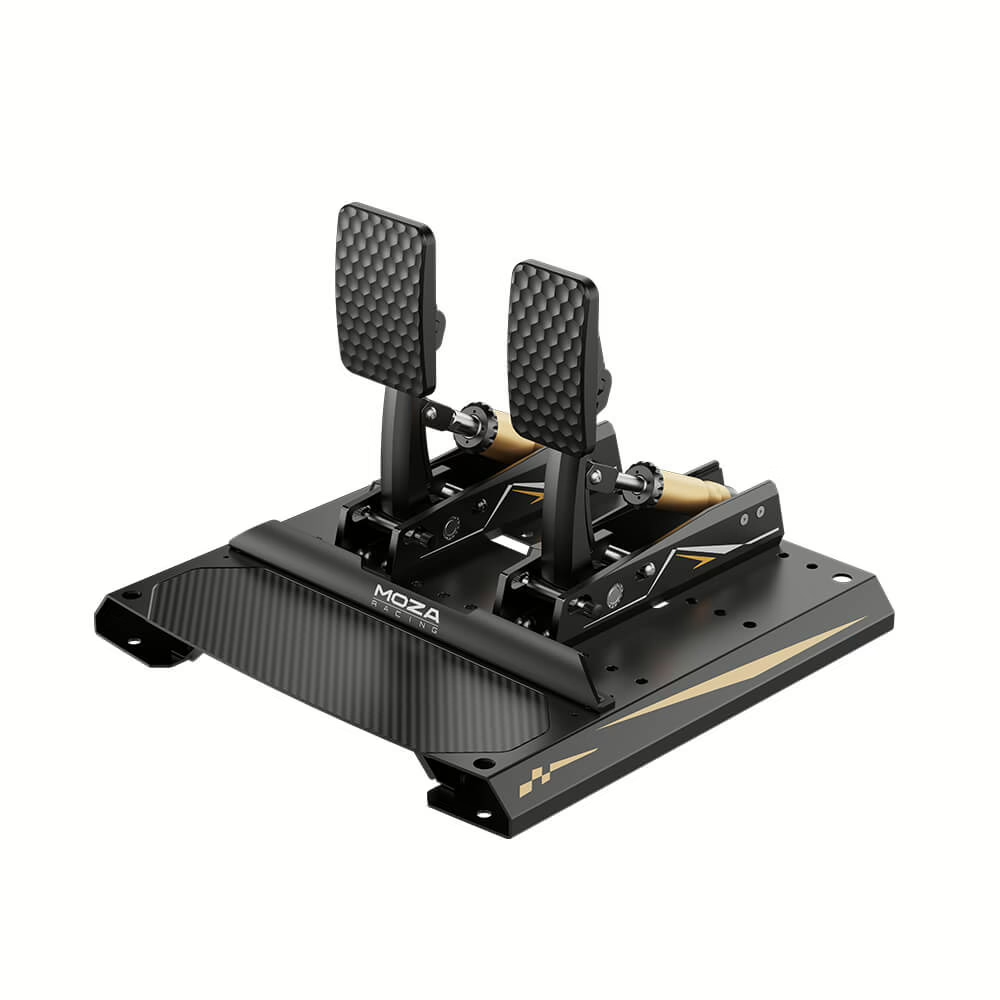
It was over long periods of driving that the CRP2 really won us over. During a simulated one-hour endurance race, the brake pedal doesn’t drift, the bite point stays in the same place from the first lap to the last, and muscle memory sets in for good. When braking into the first chicane, you can brake late, apply heavy pressure, and modulate the release without ever catching the front end off guard. Coming out of the chicane, the throttle lets you correct the onset of oversteer with a measured touch rather than an all-or-nothing approach. Calf fatigue—inevitable with a demanding load cell—can be managed by simply lowering the target force in Pit House, restoring comfort without sacrificing precision. Setup took us about a quarter of an hour, and calibration in the software is a breeze. One practical detail: the pedal surfaces are very slippery, so you should ride in shoes—and definitely not in socks—or your foot might slip at the worst possible moment. We also appreciated being able to adjust the height of the pedal plates, the angle of the arms, the spring preload, and the travel, so that we can position the pedals exactly under the arch of the foot rather than having to adapt our posture to the equipment. The heel rest, which slides three centimeters, rounds out the package and prevents cramps during long sessions—a level of comfort you don’t fully appreciate until you’ve felt it under your foot.
Things That Are Annoying
Nothing is perfect, and the CRP2 has a few flaws that it doesn’t shy away from. Changing the brake rubber pads is a hassle; the manual even recommends using your foot to remove the stack, which isn’t exactly elegant. The included pedal plate is required for the standard setup—a redundant detail if your cockpit already has its own integrated plate. And the base version includes only the throttle and brake; the clutch is an additional purchase you’ll need to plan for if you want the full trio.
Compatibility and Ecosystem
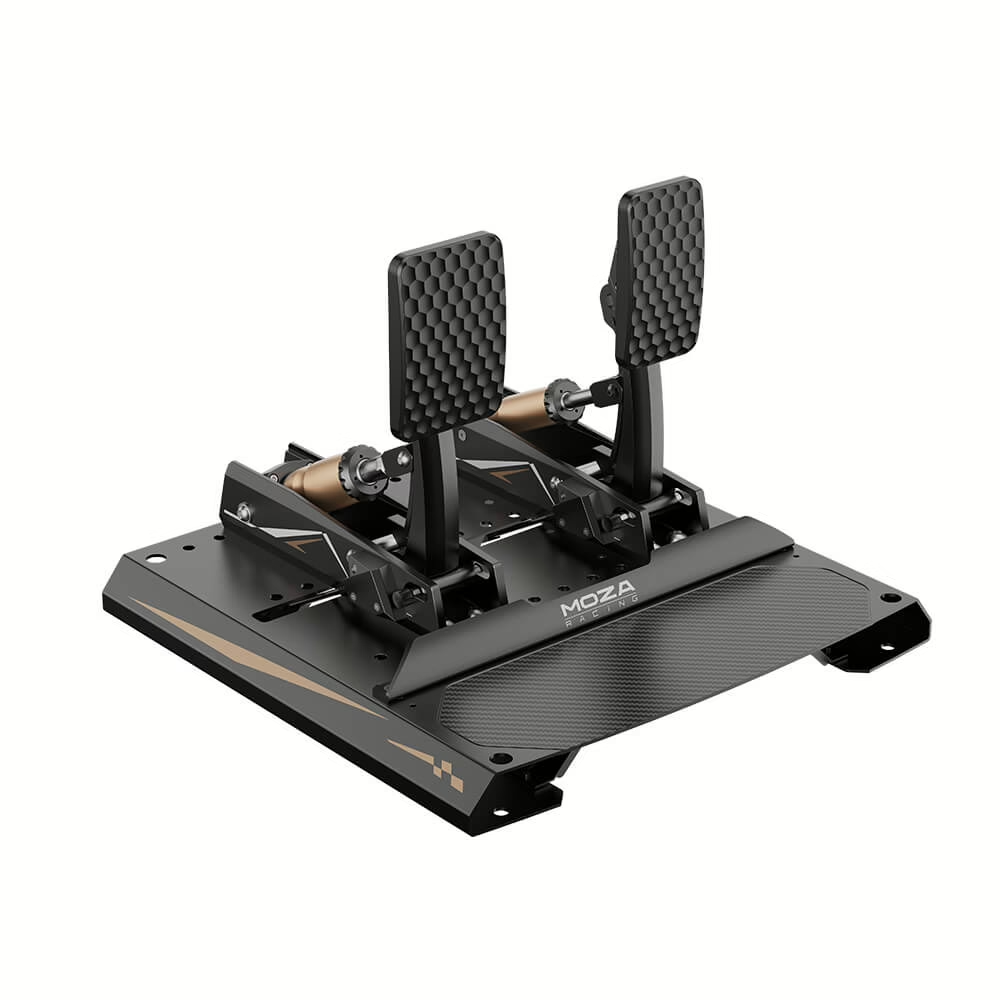
The CRP2 connects via USB and works on PCs, even with a third-party base, making it an attractive standalone pedal set even outside the MOZA ecosystem. As for consoles, the advertised compatibility includes the Xbox through the MOZA ecosystem. However, this set isn’t designed for the PlayStation—something to check before purchasing if your primary platform is Sony’s console. The Pit House software, common to all MOZA hardware, centralizes calibration, curves, and sensor mixing in an interface that’s easy to get the hang of.
Who, in the end,
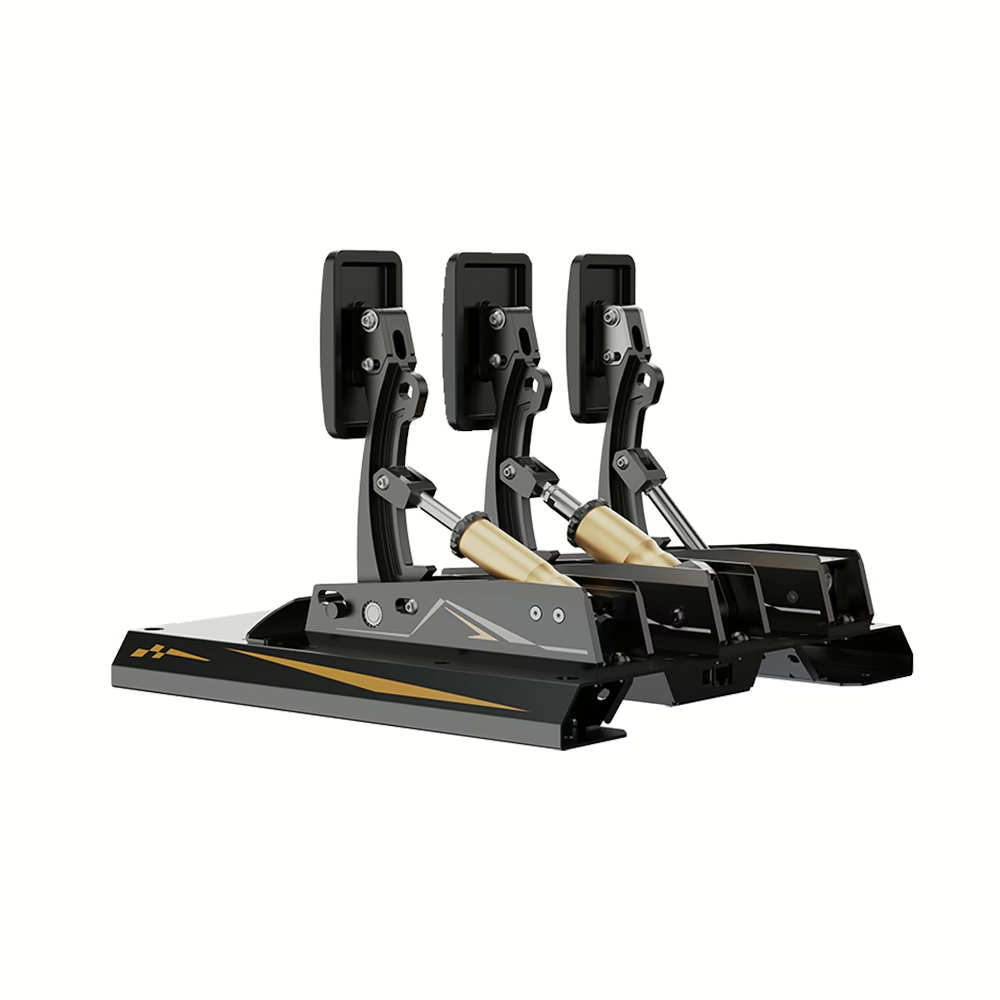
The CRP2 is designed for sim racers who take braking seriously and are willing to spend a little time tuning their equipment. For those coming from a potentiometer- or spring-based pedal set, the leap in precision is spectacular. For those who already own a MOZA base, the choice is a no-brainer—the integration is so seamless. It’s a mid-range load-cell pedal set that clearly outperforms its class, provided you enjoy tinkering with your stack of elastomers to find the perfect braking feel.




Reviews