MOZA SR-P Pedal : Test & Review | What it's really worth in 2026
MOZA SR-P Pedal: My quick review
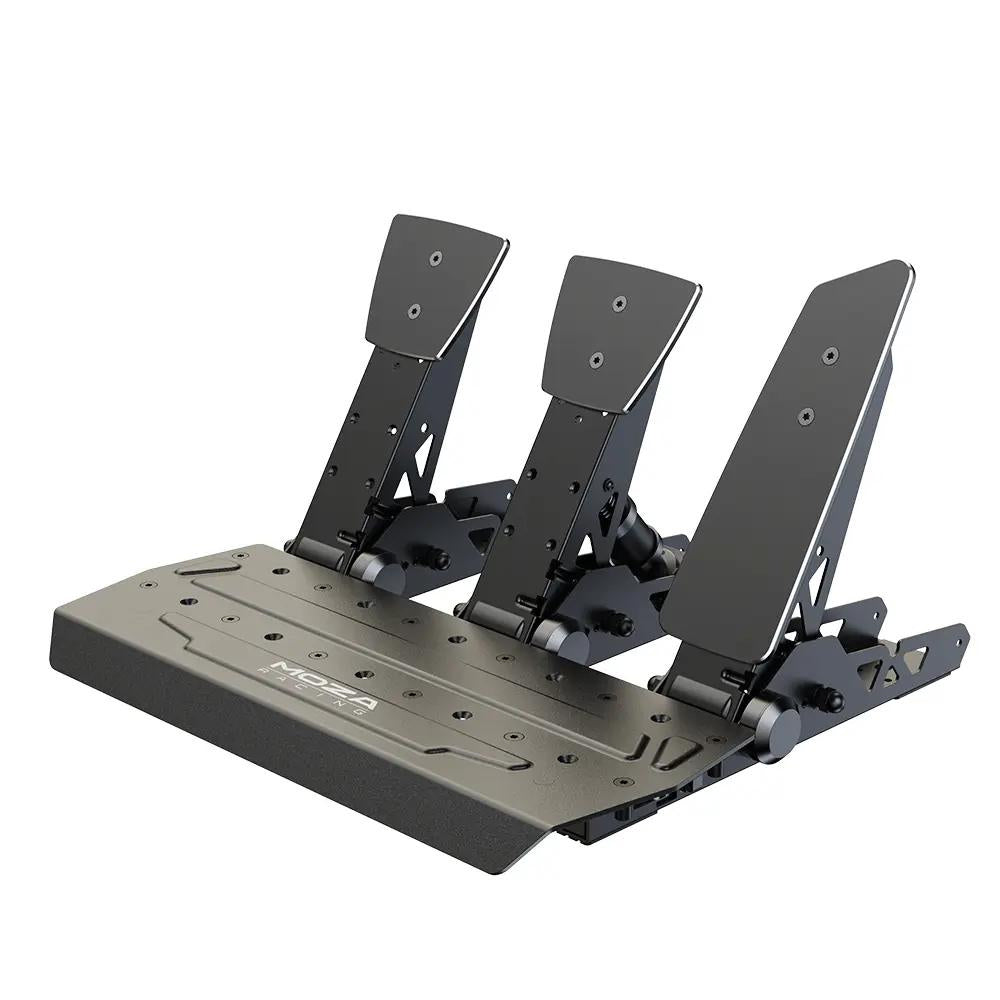
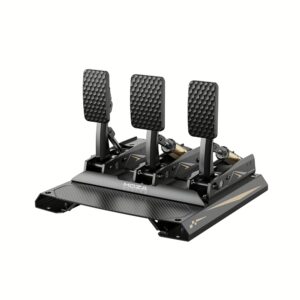
The MOZA SR-P is a two-channel pedal set (brake and throttle) made of steel, with the brake based on a 100 kg load cell supported by an angle sensor. We tested it as a serious entry point into pressure-based braking, featuring an organic-style throttle and a host of customization options. The clutch is optional, and everything is controlled via the Pit House software on a PC. For its price, it clearly outperforms its category.
When you buy through our links, we may earn an affiliate commission.
What We Liked
- True load cell brake (100 kg) supported by an angle sensor
- High-strength steel frame, highly rigid under high pressure
- 15-bit magnetic encoders (32,768 PPR) on all pedals
- Adjustable plate spacing and height
- An organic accelerator that is easy to measure out
- Excellent value for a load cell pedal set
- Very easy to modify and customize
Reserves
- The brake is too soft in its factory setting; it needs to be adjusted
- Pit House ignores the default load cell; configuration is required
- Comes with two pedals; the clutch must be purchased separately
- No console support (PC only)
- The accessory kit for varying the feel is optional
Technical Specifications
| Configuration | 2 pedals (brake + accelerator), optional clutch |
| Brake sensor | 100 kg load cell + angle sensor |
| Resolution | 15-bit magnetic encoder, 32,768 PPR |
| Brake Adjustment | spring + shock absorber assembly (optional kit for up to 6 settings) |
| Accelerator | organic type, angle sensor |
| Material | high-strength steel plate |
| Settings | Adjustable pedal spacing and footplate height |
| Connectivity | USB to PC, MOZA Pit House software |
| Compatibility | PC only (compatible with third-party bases), no console |
| Dimensions | 410 x 310 x 170 mm |
| Weight | about 4.3 kg (2-pedal configuration) |
| Includes | USB cable and tools |
An affordable load cell, without the usual price tag
Switching from a potentiometer-based pedal system to a load-cell brake is often when you see the biggest improvement in lap time consistency. The MOZA SR-P tackles this very issue: it offers a true pressure-based brake without the price tag of a high-end model. It comes in a two-pedal configuration (brake and throttle), with the clutch available as an option for those who drive a manual transmission. Right out of the box, it’s clear that MOZA hasn’t skimped on the essentials: the chassis is solid, and it mounts onto a rigid cockpit with no play.
Steel Instead of Plastic
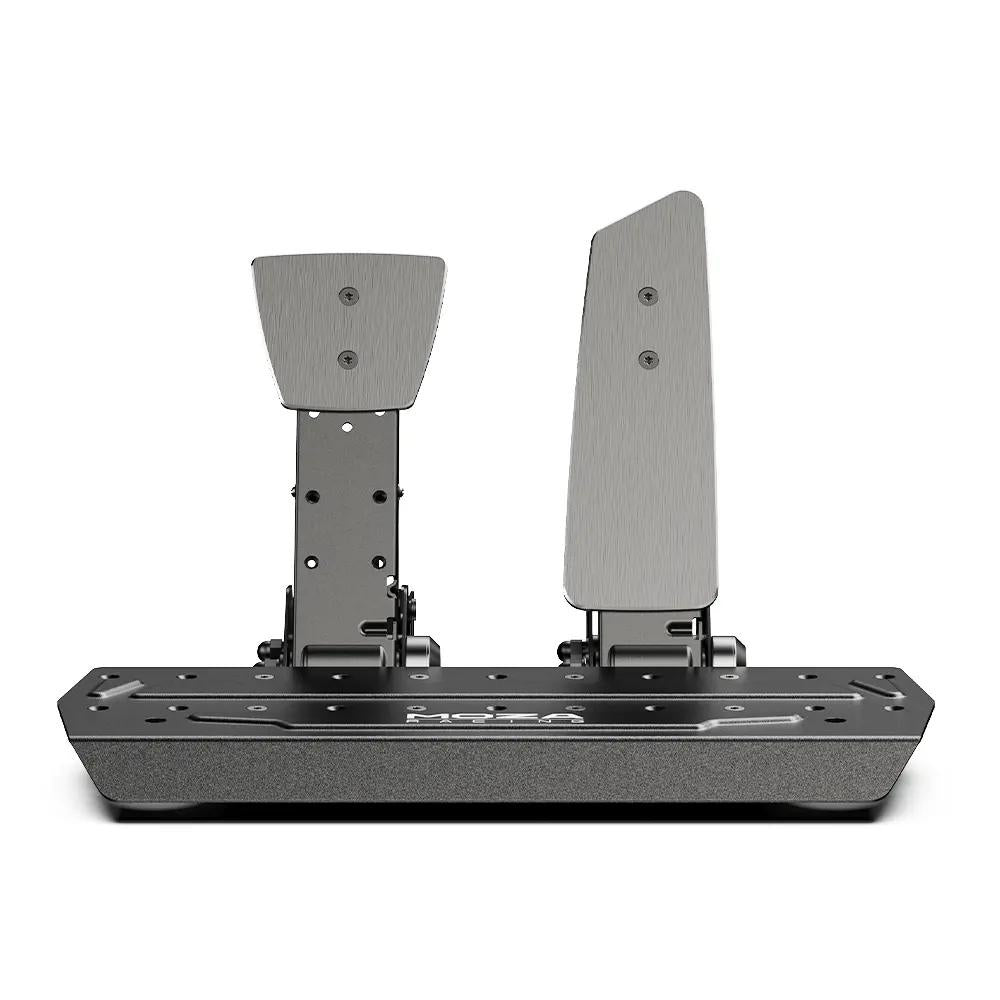
The first pleasant surprise is physical. The unit is constructed from high-strength steel plate, and on the scale, the pair weighs in at about 4.3 kg with dimensions of 410 x 310 x 170 mm. You screw it together, tighten it up, and nothing gives way—even when you slam on the brake with all your weight. This rigidity makes all the difference: on a pedal set that flexes, it’s hard to gauge the pressure, whereas here the structure absorbs the force and provides clear, distinct resistance. In use, it feels like you’re handling equipment that costs two to three times as much, and that’s precisely where the SR-P scores points over entry-level all-plastic sets.
The brake—where it all comes down to
The heart of the pedal system is its dual-sensor brake. MOZA combines a load cell capable of measuring up to 100 kg and an angle sensor, each managing a distinct phase of the stroke. The initial contact is controlled by angle, allowing for a smooth, gradual application of braking force, then pressure takes over during the middle and end of the stroke, when you’re looking for that extra bite. In practical terms, braking is no longer based on the distance the pedal travels but on the force applied, and this makes braking at the limit and trail braking much more predictable. The stiffness is adjusted mechanically via a combination of a spring and a damper block, and an optional accessory kit allows you to achieve up to six different feel settings, depending on whether you want a soft, road-car-like feel or a very firm ride.
A raw feeling at first, one that needs to be tamed
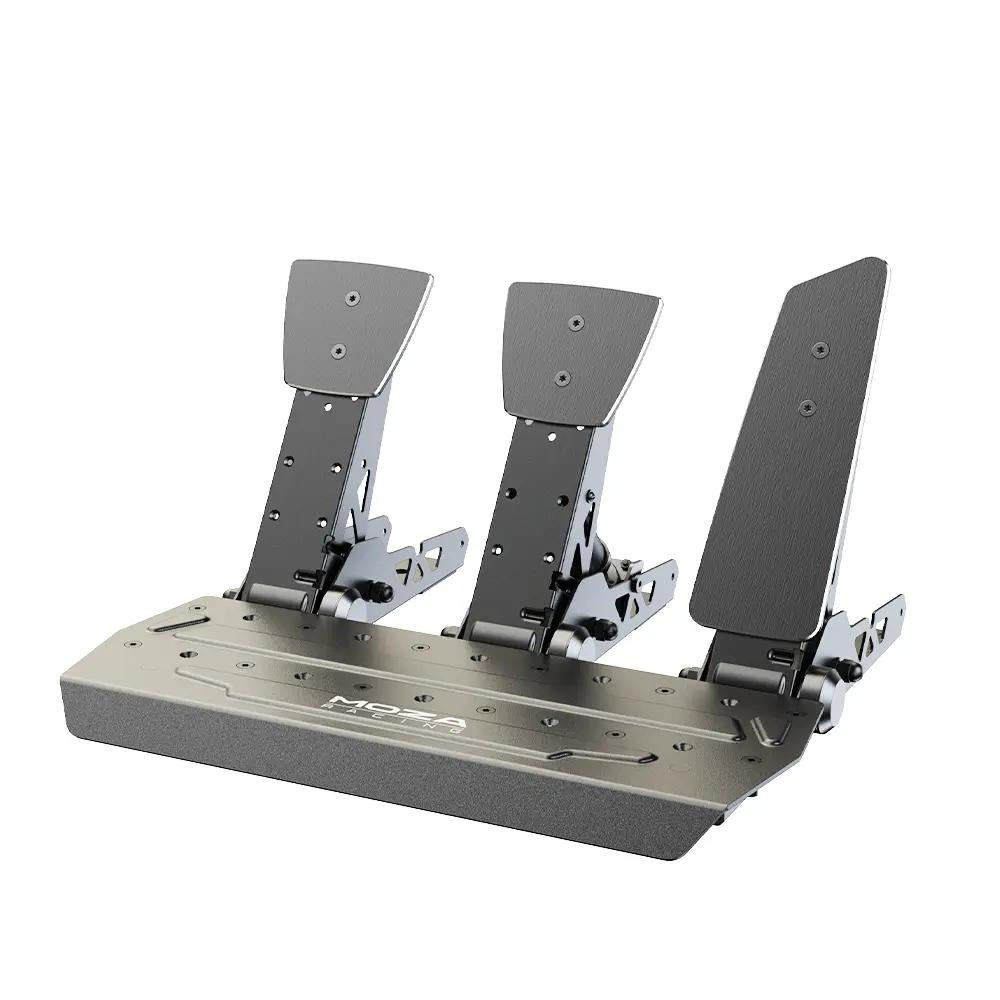
Let’s be honest about the feel: with the factory settings, the brake felt too spongy to us. The initial spring travel is long and gives that spongy feel we don’t like—a world away from a real car’s brake pedal, which barely moves once the hydraulic system is pressurized. The good news is that the SR-P can be tamed. You can mechanically tighten the feel, and the community has taken it a step further by replacing the spring with skateboard bushings—those rubber cones that significantly stiffen the pedal action. Once you’ve done that, the pedal becomes firm, progressive, and frankly impressive. We’ve found exactly the kind of brake that inspires confidence when initiating a hard stop—the kind where you dare to brake later because you know precisely where the locking point is.
The Pit House Software Trap You Need to Know About
There’s one detail that absolutely must be addressed to get the most out of the pedal set, and no one emphasizes it enough. By default, the MOZA Pit House software calibrates the brake for 100 % of travel and simply ignores the load cell. In other words, you could buy a pressure-sensitive brake and end up braking as if it were a potentiometer without even realizing it. You need to open Pit House and switch the curve to use the load cell reading for the magic to happen. It only takes a few clicks, but until you do it, you’re missing out on the product’s main selling point. Once the settings are corrected, the SR-P immediately ranks among our favorite pedals in its class.
Organic Accelerator and Settings
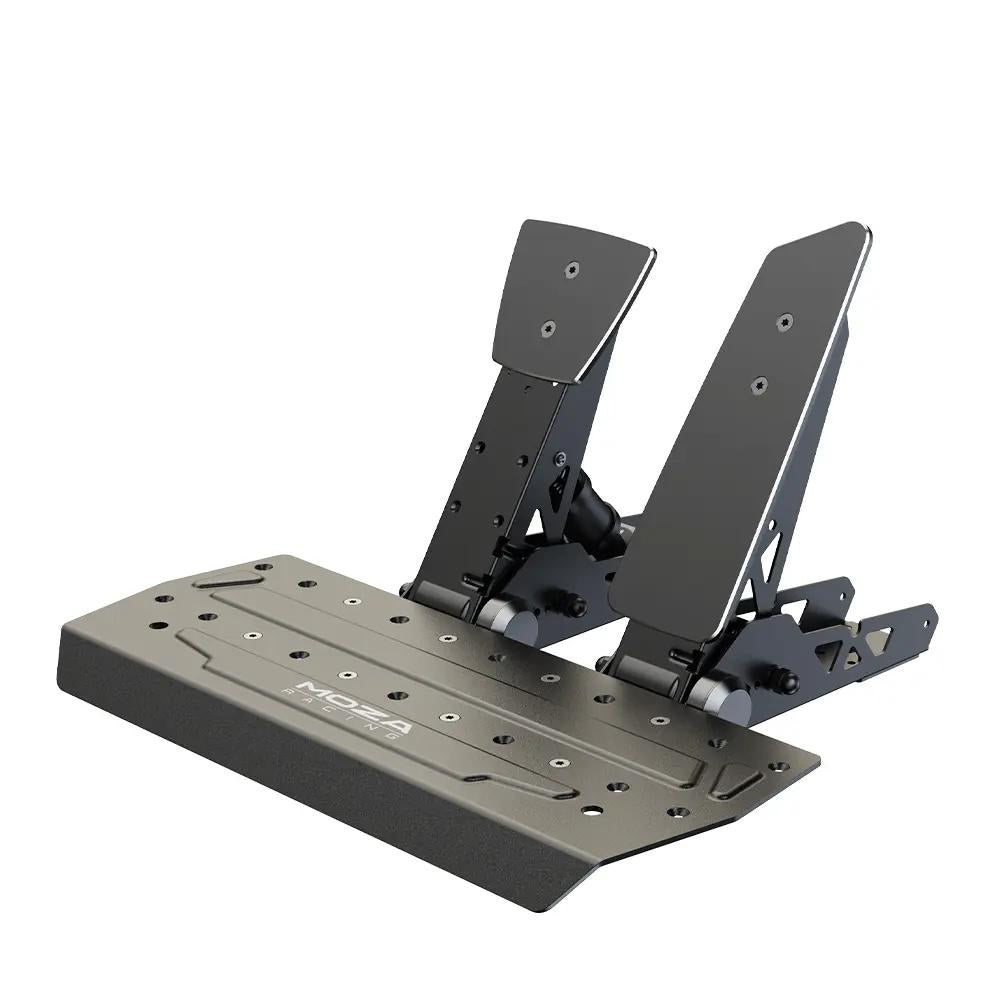
On the right, the accelerator features a so-called "organic" design, hinged to the floor like a real car pedal. The foot's path follows that of the pedal, making throttle control feel more natural—especially when exiting a turn, when you want to apply power without losing traction. Both the throttle and the optional clutch rely on angle sensors, and the entire pedal assembly uses a 15-bit magnetic encoder with 32,768 points per revolution—which is more precise and more stable over time than a Hall-effect sensor. In terms of ergonomics, the pedal spacing and the height of the footrests are adjustable, allowing you to tailor the setup to your body type and riding style. A toolkit and USB cable are included for installation.
Compatibility: Designed for PCs
One crucial point to keep in mind before pulling out your credit card: the SR-P is a PC pedalboard. It connects via USB directly to your computer and is calibrated in Pit House without requiring a MOZA base, making it compatible with equipment from other brands. However, there’s no announced compatibility with consoles—neither PlayStation nor Xbox. This makes sense for a standalone USB pedal set, but if your setup runs on a console, this isn’t the product for you. Also note that it’s not compatible with accessories from the SR-P Lite line.
Our Verdict on Usability
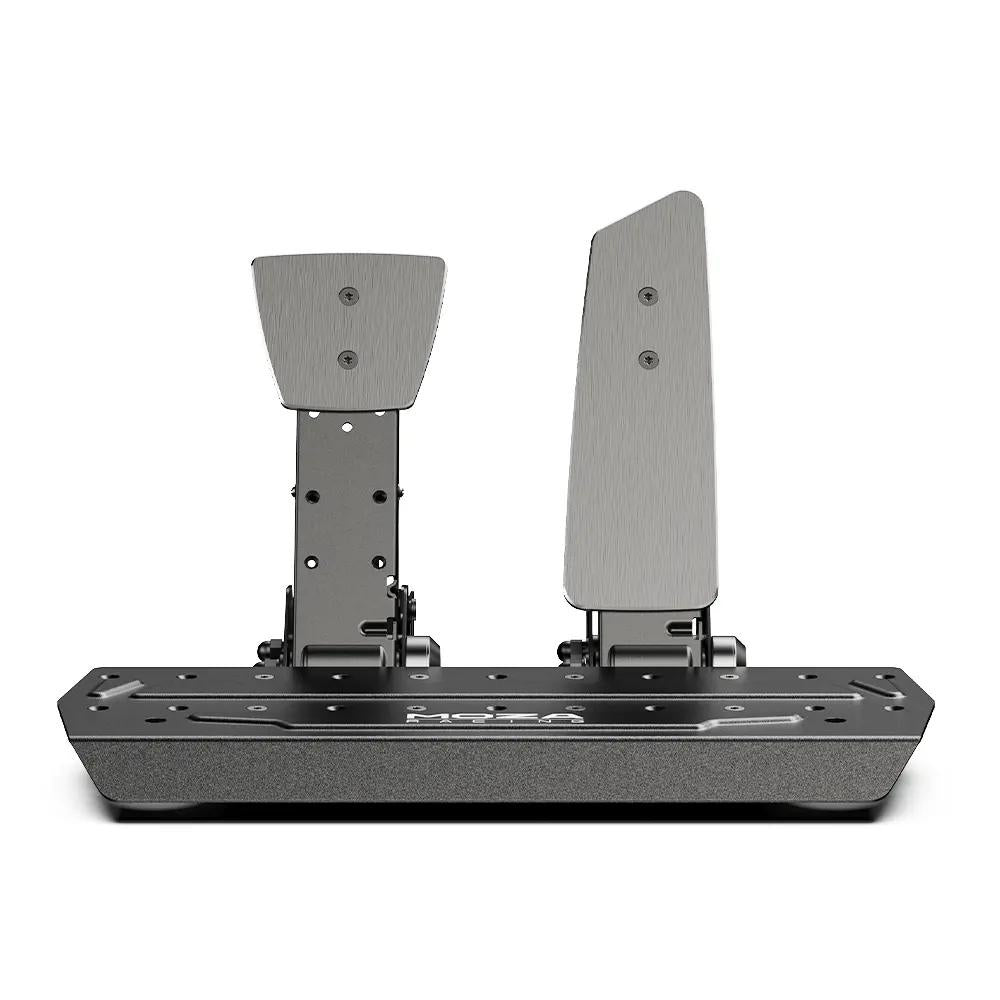
The MOZA SR-P checks the box that matters most when you're moving up: true pressure-based braking, in a steel housing, at a price that remains reasonable. It requires a minimal amount of effort—just enough time to update the software on the load cell and, if necessary, tighten the brake—but the effort is well worth it. We recommend it to the dedicated PC sim racer who wants to take their braking to the next level without aiming for the top of the line right away.




Reviews