
Simlab XP1 Loadcell Pedals : Test & Review | What it's really worth in 2026
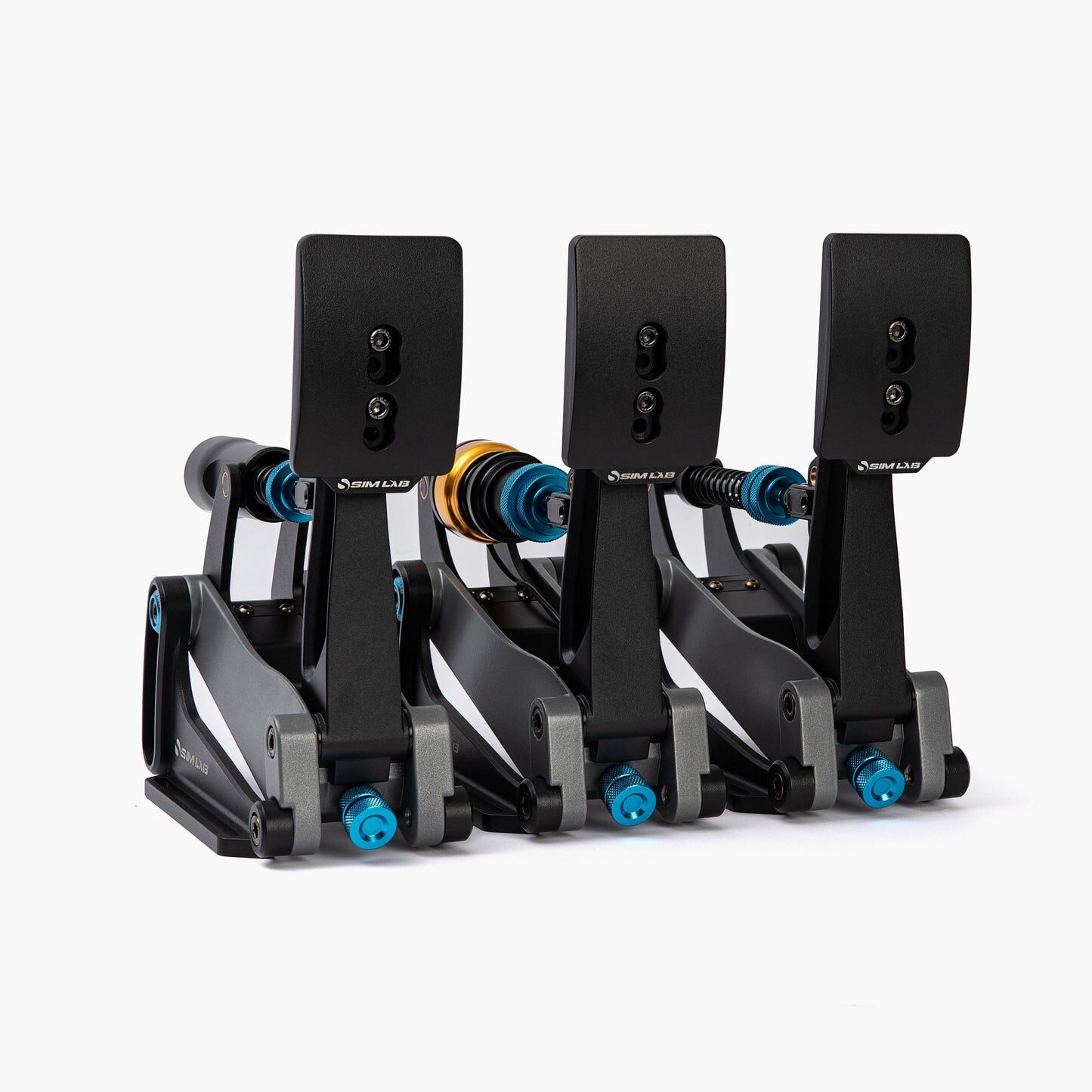
Simlab XP1 Loadcell Pedals: My quick review
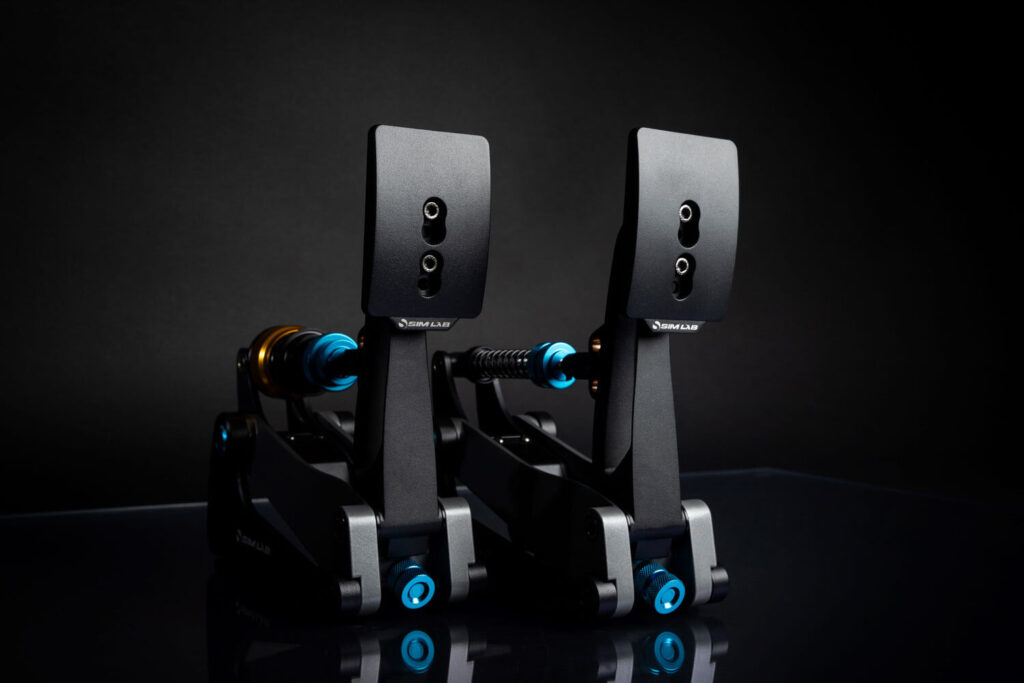
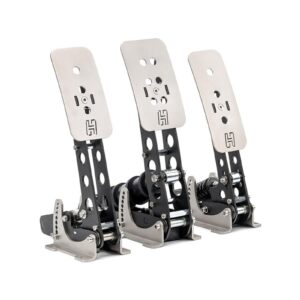
The Sim-Lab XP1 Loadcell is an all-aluminum two-pedal set built around a 200 kg load cell. It features exemplary craftsmanship, extensive tool-free adjustability, and precise braking performance on par with much more expensive models. Sold without a base plate and designed exclusively for PC use, it’s aimed at drivers who want high-end performance without breaking the bank.
When you buy through our links, we may earn an affiliate commission.
What We Liked
- Exemplary all-aluminum construction, with no play or flex
- Precise and progressive 200-kg load-sensing brake, excellent for trail braking
- A wide range of mechanical adjustments that can be made without tools
- A low-power, wear-free Hall-effect accelerator
- Solid value for the price at this level
- Consistent feel even during long sessions
Reserves
- Base plate not included; must be purchased separately
- PC-only compatibility; no native console support
- RaceDirector software—deliberately basic
- The footrest plate and overall width can be a bit bulky, depending on the rig
Technical Specifications
| Type | Crank set with load cell |
| Configuration | 2 standard pedals (3 optional pedals) |
| Brake | 200 kg load cell, 16-bit analog input, up to approximately 100 kg of force |
| Accelerator / Clutch | 16-bit non-contact Hall-effect sensor |
| Materials | CNC-machined aluminum, brass bushings, Teflon |
| Brake Adjustments | 3 springs, 3 elastomers (Shore 50A/60A/70A), 3 stops (7/9/11 mm), preload, and stroke |
| Angle Adjustment | Heel angle of approximately 20 degrees, adjustable footrest plate |
| Software | RaceDirector (curves, dead zones, profiles, firmware) |
| Connection | USB via a controller box |
| Compatibility | PC only |
| Base Plate | Sold separately |
| Warranty | 3 years |
An aluminum block built to last
The first thing that stands out when you set up the XP1 is its solid build. Almost everything is made of CNC-machined aluminum, with brass bushings and Teflon parts at the friction points to minimize wear. You tighten the fasteners, press down on the pedals—nothing bends, nothing rattles. Sim-Lab has been manufacturing simulation chassis for a long time, and that mechanical expertise is immediately evident in the finish, the anodizing, and the fit of the parts. It’s one of the best-built pedal sets we’ve ever handled in this price range.
Braking: The Heart of the XP1
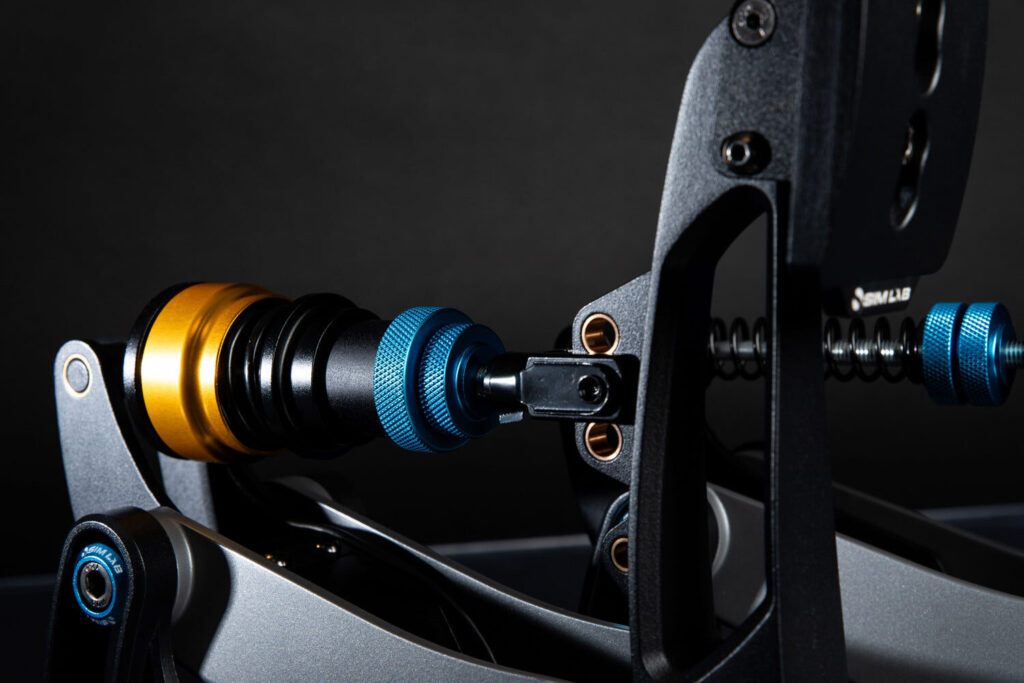
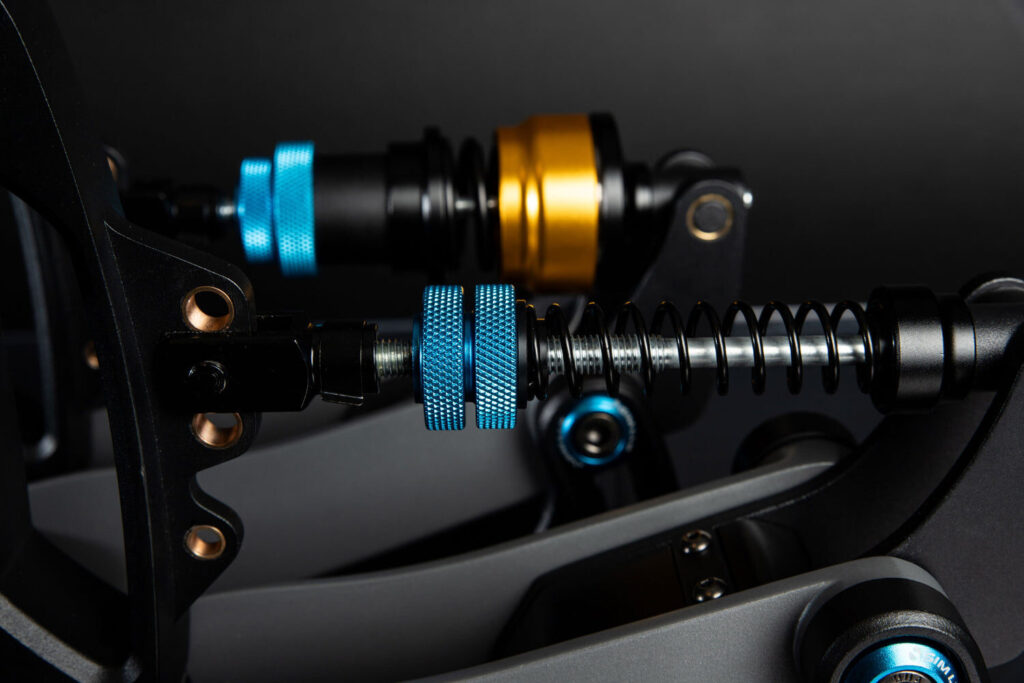
The entire system is centered around the brake. It relies on a 200-kg load cell positioned in-line, which provides a 16-bit analog output for a highly precise pressure reading. Depending on the mounting position of the arm, the maximum force required can be adjusted up to approximately 100 kg per foot. In use, the resistance increases gradually and smoothly, providing a very precise sensation of compression rather than simply a stiff button. That’s what really matters with a load-cell brake: you brake based on pressure, not travel, and the XP1 offers enough resolution to control the force down to the gram. In this regard, it’s on par with significantly more expensive pedal sets.
Accelerator and Clutch: Smoothness Above All Else
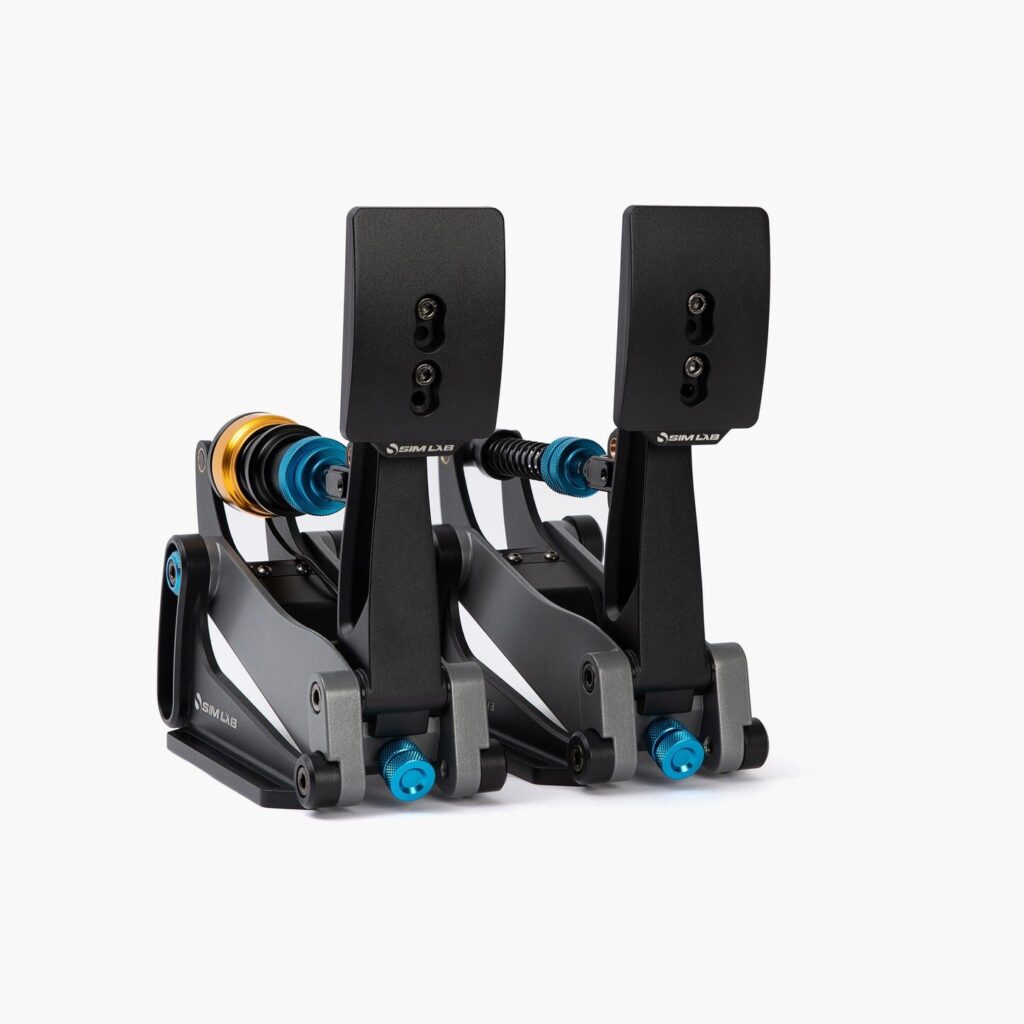
The throttle uses a 16-bit Hall-effect sensor, which is contactless and therefore wear-free over time. It features a long travel and very smooth movement, making it ideal for fine-tuning throttle input when exiting a turn. You can adjust its stiffness or stroke length using two springs, by choosing the mounting point, adjusting the preload, and setting the stroke. The three-pedal version adds a clutch built on the same principle, which is ideal for rallying or classic cars with manual transmissions. The standard configuration, meanwhile, comes with two pedals.
A toolbox with adjustable parts, but without the toolbox itself
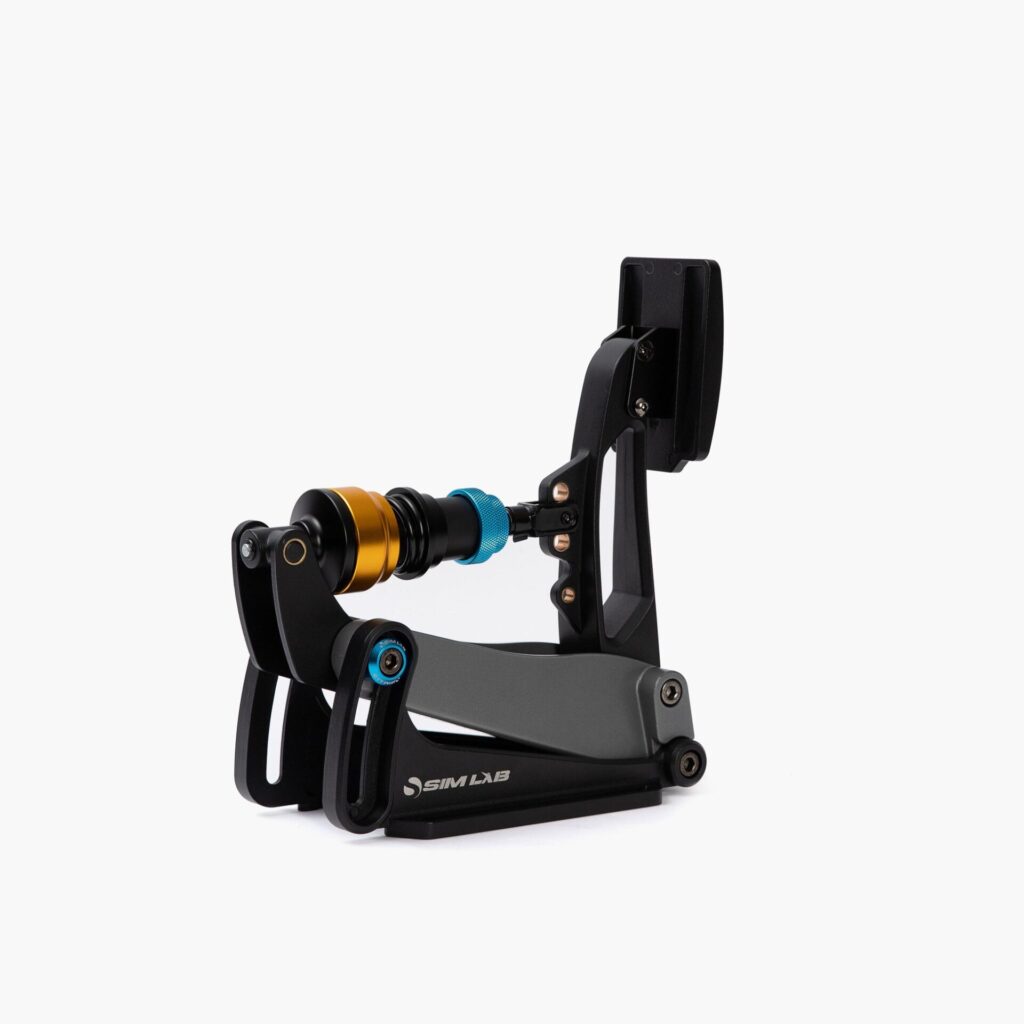
This is where the XP1 really impresses. Virtually all adjustments are made by hand, without a wrench. For the brake, you combine three spring stiffnesses, three elastomers (Shore 50A, 60A, and 70A), and three stops (7, 9, and 11 mm) to go from a soft, long pedal stroke to a firm, short one. You adjust the preload with a blue ring, the travel with a front nut, and the heel angle by about 20 degrees, with the footplate also being tiltable. All these options allow you to recreate just about any braking feel and, most importantly, to adjust the settings as you improve. Our advice: start with the factory settings, get a feel for the basics, then adjust the travel first before tinkering with the elastomers.
On the track: from late braking to long sessions
With the shifter in hand, the word that comes to mind is “smoothness.” When entering a turn, the sensitivity of the sensor makes trail braking very predictable: you ease off the brake by a millimeter as you turn, without any jerks, and the car remains stable on the front axle. During hard, late braking, the firm stop provides a clear and repeatable reference point, which helps immensely in applying the same pressure lap after lap. And because everything is made of metal and guided by high-quality bushings, the feel doesn’t deteriorate over the course of a long session: no play develops, and no softness sets in. You finish an endurance race with exactly the same feel as on the first lap.
RaceDirector, our in-house software
The pedal set is controlled by the RaceDirector software. The interface fits into a single window and focuses on the essentials: calibration, response curves by axis, dead zones, linearity, profile management, and firmware updates. It’s simple and functional, which is sufficient for 90% of uses once the mechanical setup is done correctly. It’s worth noting, however, that the software options aren’t as advanced as those of some competitors: here, most of the work is done by hand on the hardware, not through menus.
PC only: What to check before buying
One thing needs to be clear: the XP1 is a PC pedal set. It connects via USB through its small controller box and is not designed to work natively on PlayStation or Xbox consoles. Another thing to factor into your budget: the baseplate is not included as standard. The pedal set is designed to be screwed onto an aluminum-profile frame or a rigid plate, and Sim-Lab offers its own baseplate as an optional accessory. So be sure to factor this in if your setup doesn’t already have a way to secure it firmly.
Our verdict

The Sim-Lab XP1 checks almost all the boxes for a good load-sensing pedal set: impeccable build quality, precise and progressive braking, a huge range of tool-free adjustments—all at a price that remains reasonable for this level of quality. What stands out most is its versatility—it can accompany a rider from their very first rides all the way to competition. The few drawbacks are minor details: the base plate must be purchased separately, the software is intentionally minimalist, and compatibility is limited to PCs. For anyone who plays on a computer and is looking for durable gear without aiming for the overpriced top-of-the-line models, this is a solid choice.




Reviews