Fanatec CSL DD QR2 (8 Nm) : Test & Review | What it's really worth in 2026
Fanatec CSL DD QR2 (8 Nm) : My opinion in brief
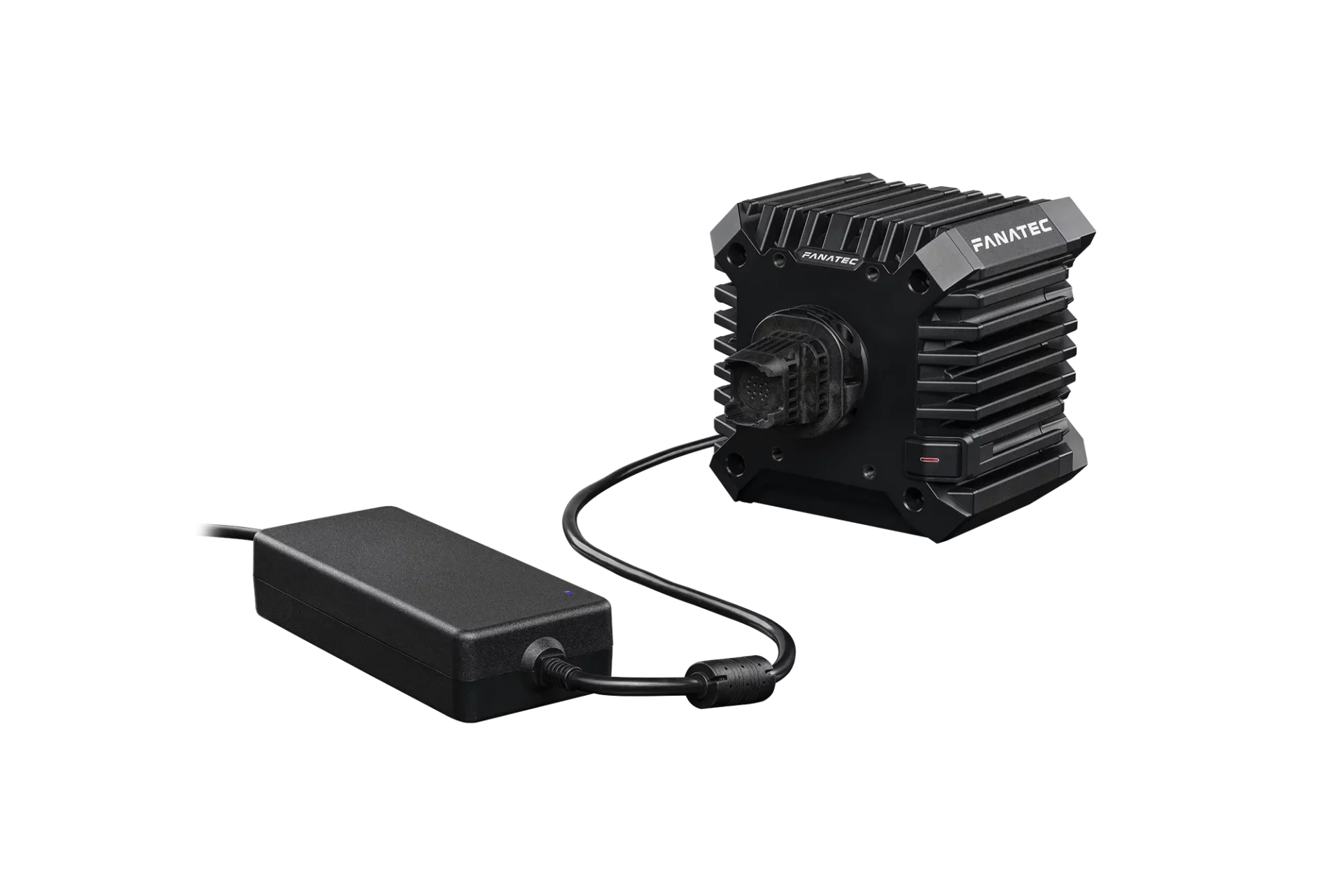
At 8 Nm, the CSL DD QR2 finally delivers on its promise: clean, detailed, and consistent Direct Drive—without requiring a titan-sized cockpit or a wrestler’s forearms. The new QR2 eliminates the play that was a criticism of the QR1, Fanatec’s software remains the most user-friendly on the market, and the ecosystem is vast. It’s no longer the most powerful base for its price on PC, but it’s one of the easiest to recommend for taking your gaming to the next level, especially on Xbox.
When you buy through our links, we may earn an affiliate commission.
What We Liked
- FFB FluxBarrier is precise and detailed, especially at 8 Nm
- QR2: play-free linkage, crisp and reassuring steering response
- Fanatec's software is crystal clear; everything works right out of the box (perfect for getting started with DD)
- Compatible with PC and Xbox; a vast and expandable Fanatec ecosystem
- Fanless aluminum chassis—quiet and doesn't get hot
- Warranty extended to 3 years as of June 2025
Reserves
- Included P1 V2 steering wheel that bends and creaks under 8 Nm
- Crank set supplied without a load cell brake
- On a standard PC, the Moza R9 V3 often offers a better experience at the same price
- No PlayStation license (for the PS5, it's Gran Turismo DD Pro)
- Fanatec's after-sales service and RMA processes can sometimes take a long time
Technical Specifications
| Motor type | Direct Drive |
| Maximum torque | 8 Nm (with Boost Kit 180) |
| Quick-release fastener | QR2 |
| Chassis | Aluminum, passive cooling without a fan |
| Platforms | PC and Xbox (Fanatec Xbox-licensed steering wheel); no PS5 license |
| Warranty | 3 years (since June 2025) |
Fanatec CSL DD QR2 (8 Nm): The Mid-Range Model That Changed the Game
The CSL DD brought Direct Drive into the real world: suddenly, you no longer needed a pro driver’s budget to really feel the car. Today, with the switch to the QR2 and the 8 Nm version, Fanatec isn’t reinventing the formula—it’s making it more reliable. We looked at it from this specific angle: does the 8 Nm version change the car’s track behavior, does the QR2 provide a real gain in stiffness, and does this base model remain a credible foundation for your setup as you improve?
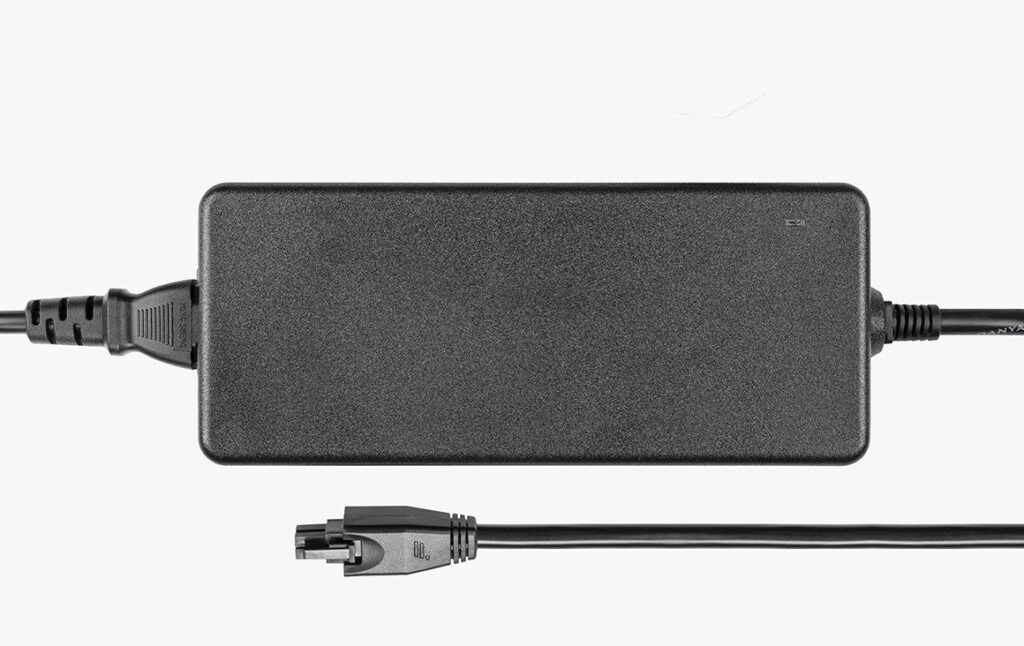
The key to understanding this is the power supply. The motor and chassis are the same across the entire lineup: the entry-level version delivers 5 Nm with its small power supply, and the Boost Kit 180 unlocks the full 8 Nm. No chip, no firmware to unlock—just a more powerful power supply. And all the testers say the same thing, including us: at 5 Nm, the motor feels held back; at 8 Nm, it finally comes into its own.
Design and construction: compact, quiet, built to last
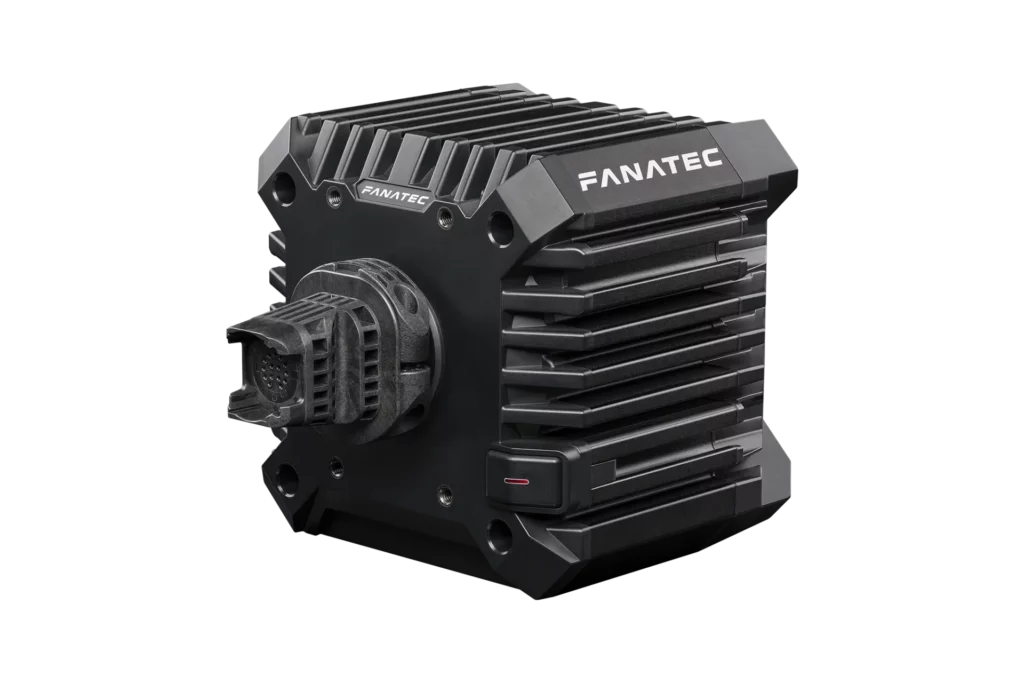
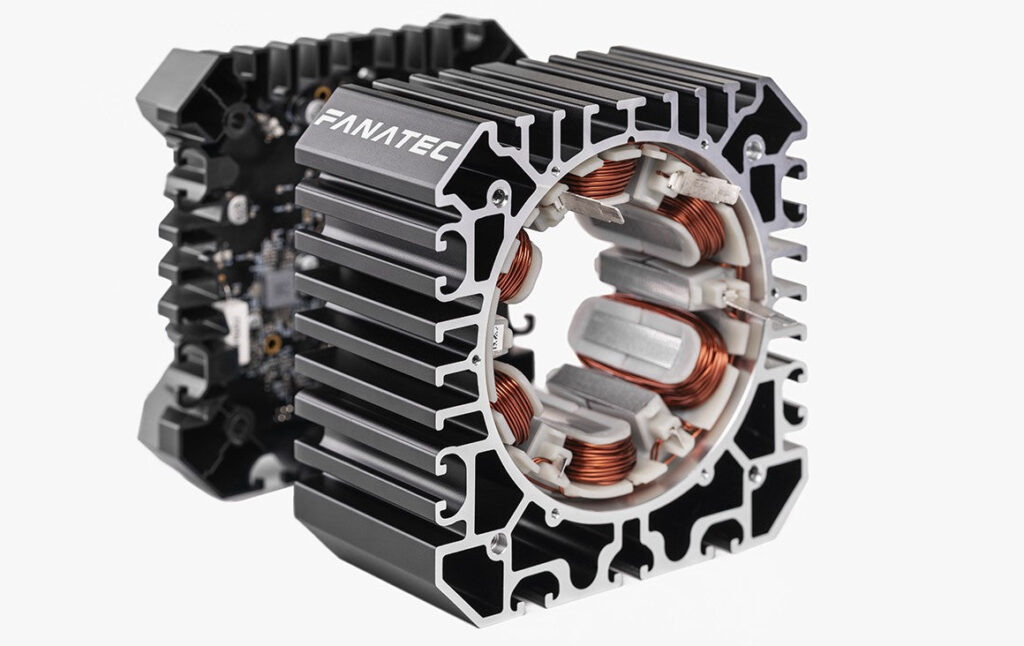
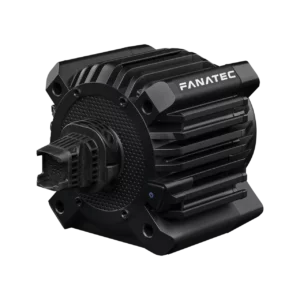
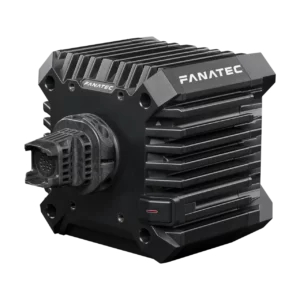
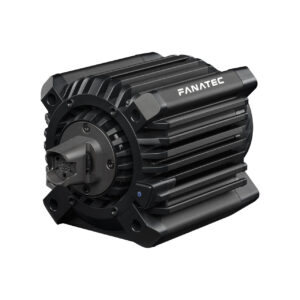
In your hands, the unit inspires confidence. The extruded aluminum chassis is solid, well-finished, and, most importantly, fanless: no fan, just heat sinks to dissipate heat. During our testing sessions, it never felt hot to the touch, and it remains silent even under heavy load. This is a real advantage on a desk or in a living room, where noise is quickly noticeable.
You have to be realistic about what comes with it, though. The included P1 V2 steering wheel is the budget option: it’s fine up to 5 Nm, but it starts to flex and creak below 8 Nm, especially during long sessions. It’s the first part most owners replace. The same goes for the pedals: the included CSL Pedals get the job done, but they lack load cells. We’ll come back to this later, because that’s where the real benefit lies.
QR2: The End of the Game at the Hub
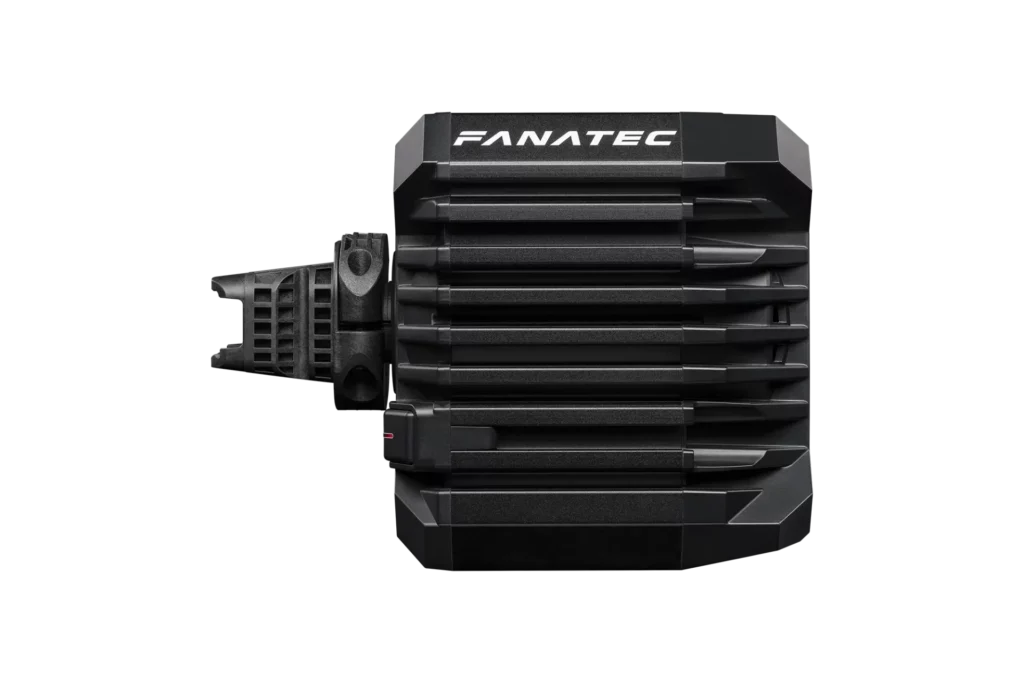
This is the most noticeable change compared to the previous generation. The QR2 locks the steering wheel onto the base with a distinct “click,” and then nothing moves. The play and wobble that were criticisms of the QR1 are gone, and you can feel the difference immediately in the precision: a Direct Drive with a loose connection wastes some of its torque, but here the connection is firm.
Something to keep in mind before buying: the QR2 comes in several finishes. The entry-level composite version is more than sufficient for 5 Nm, but if you’re aiming for 8 Nm with a heavy steering wheel, it may flex a bit. In that case, it’s best to go with the aluminum version—the one most 8 Nm owners end up choosing.
Driving Experience: What Those 8 Nm Really Unlock
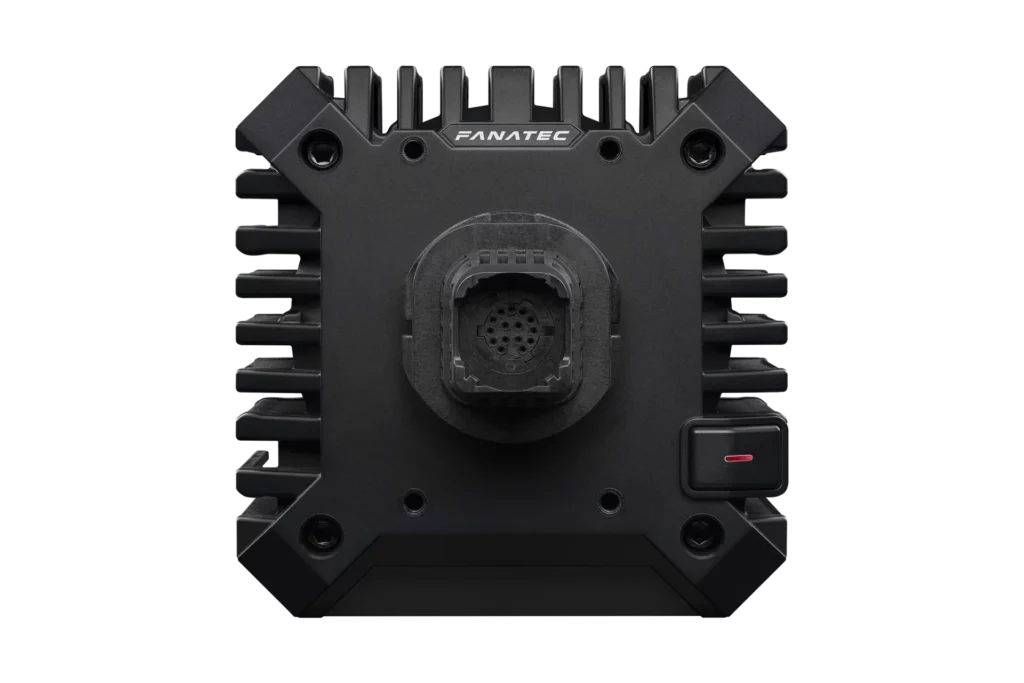
Once on the track, the difference compared to a belt-driven base or a small direct-drive system is immediately apparent. The feedback is crisp, with little blurring around the center point, and you instantly understand what the car is doing. Fanatec’s FluxBarrier technology conveys road textures, rumble strips, and the moment the front end loads with a clarity that’s missing from entry-level models.
The shift to 8 Nm is where the base model really comes to life. The shock absorbers clunk harder, bumps challenge you instead of being smoothed out, and the steering wheel pushes back hard enough that you can feel the car loading the front end as you enter a turn. It’s still a far cry from a flagship model at 18 or 25 Nm: don’t expect the raw physical impact of the very top of the line, and on heavy Formula or LMP cars with FFB cranked all the way up, the engine eventually lacks authority. But for driving cleanly, maintaining consistency, and improving your skills, it’s more than enough—and that’s what matters to the vast majority of us.
Also good to know: with a less expensive base unit, you mainly gain in usable torque reserve. You can set up the FFB without the steering feeling mushy during heavy compression, and you can better distinguish the differences between cars and tracks. During long sessions, the torque remains stable and the base doesn’t limit performance, provided you’ve set an appropriate curve rather than leaving everything at 100 %.
Settings, software, and compatibility: simple, but be sure to read the console manual carefully
This is one of its major strengths. The Fanatec software detects the base immediately, and everything is clearly displayed: overall force, filtering, damping, and sensitivity. After struggling with the clunky software from some competitors, we appreciate that everything works right out of the box. For a first foray into Direct Drive, this is probably the smoothest onboarding experience on the market. The only real limitation compared to a Moza is that you can’t edit the pedal curves in the Fanatec software.
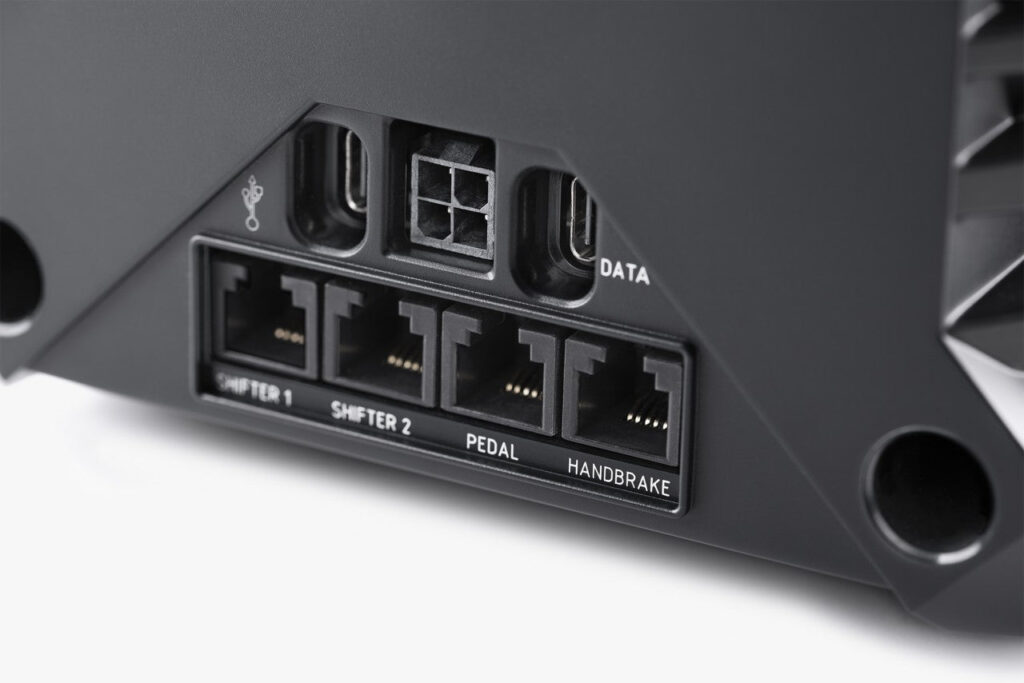
Be careful, however, about compatibility, because the name can be misleading. The CSL DD works on PC and Xbox, provided you install an Xbox-licensed Fanatec steering wheel. It is not PlayStation-licensed: if you play on PS5, this isn’t the model you need—you’ll want the Gran Turismo DD Pro, which uses the same chassis but includes the PlayStation license. Buying the wrong version means you’ll end up with a base unit that won’t turn on when connected to your console.
For whom, and in the face of competition
The CSL DD QR2 is aimed at the dedicated sim racer: not necessarily an eSports driver, but someone who races regularly and views their setup as a long-term investment. On Xbox, it’s simple: there’s virtually nothing else in Direct Drive at this price point, with the only real alternative costing about twice as much. It’s the benchmark for entry-level Direct Drive on console.
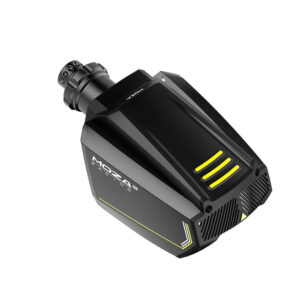
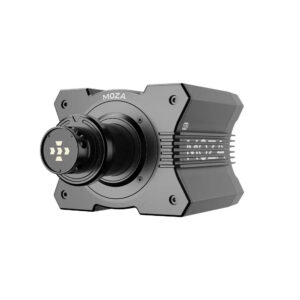
On PC, the landscape has changed. The Moza R9 V3 is now often cited as offering the best feel for the same budget, and a step up from that, the R12 V2 provides the extra torque that many eventually come to want. The selling point of the CSL DD on PC is no longer just the drive unit itself, but the Fanatec ecosystem and the upgrade path: you can add a load cell brake and then a better steering wheel without ever having to sell your old equipment. If you know you’ll be sticking with the Fanatec lineup, that’s a real plus. If you plan to mix and match brands later on, you’re better off starting with something else from the get-go.
One last tip from the track: the biggest lap-time gain won't come from the steering wheel, but from braking. Switching to a load-cell brake will improve your lap time more than any rim change. Keep that in mind as you plan your upgrades.
Verdict
It’s no longer the most powerful or best-value PC setup in 2026, and you have to accept its entry-level components, including the included steering wheel and pedal set. But with 8 Nm of torque, the QR2 that eliminates play, intuitive software, and a massive ecosystem, the CSL DD remains one of the most reliable entry points into serious direct-drive racing. Plan to add a load cell brake eventually, and you’ll have a reliable core setup that will last for several years. On Xbox, it’s simply the default choice.


Reviews