MOZA R12 Wheel Base : Test & Reviews | What it's really worth in 2026
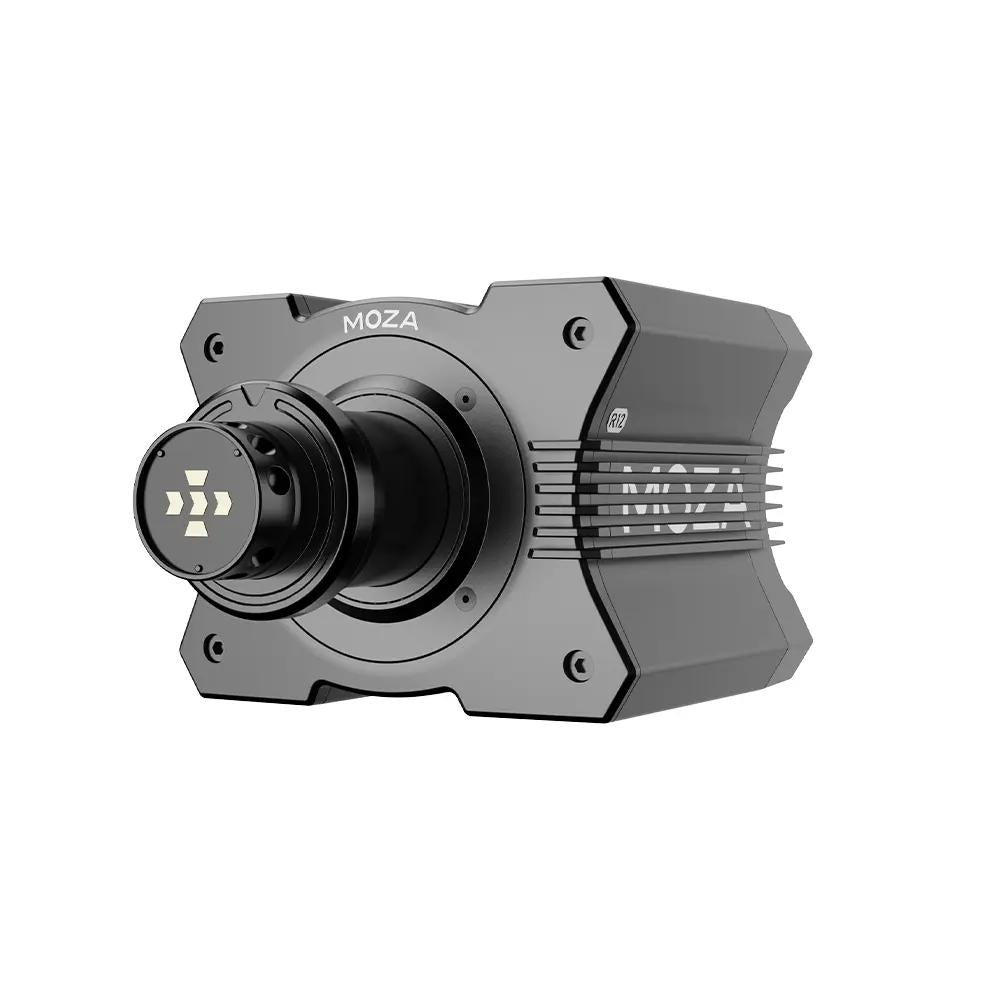
MOZA R12 Wheel Base: My quick review
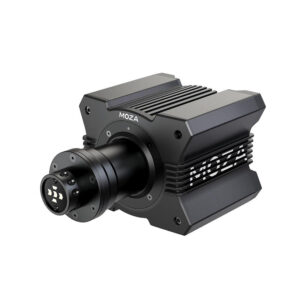
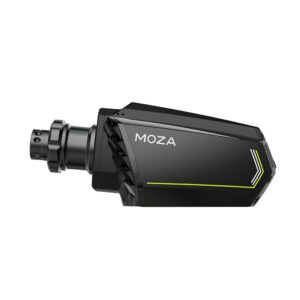
The MOZA R12 fills the 12 Nm gap in the brand’s direct-drive lineup, sitting right between the R9 and the R16. During our testing sessions, it delivered clean, detailed, and surprisingly quiet force feedback, all within a compact aluminum housing that allows the screen to be positioned closer. Powered by Pit House software, it’s aimed at sim racers who want a serious setup without stepping up to the very high-end tier. It’s compatible with PC and Xbox, provided you install a compatible steering wheel.
When you buy through our links, we may earn an affiliate commission.
What We Liked
- A well-balanced 12 Nm of torque—powerful yet manageable
- Detailed, clear, and consistent force feedback across games
- Cool and virtually silent operation during long sessions
- Aviation-grade aluminum frame, compact design that brings the screen closer
- Pit House software with 19-point FFB adjustment and profiles per game
- Effective anti-drop protection (Hands-off)
Reserves
- Slightly subtle understeer on certain tracks (Assetto Corsa)
- Mount from the bottom only (not from the side or front)
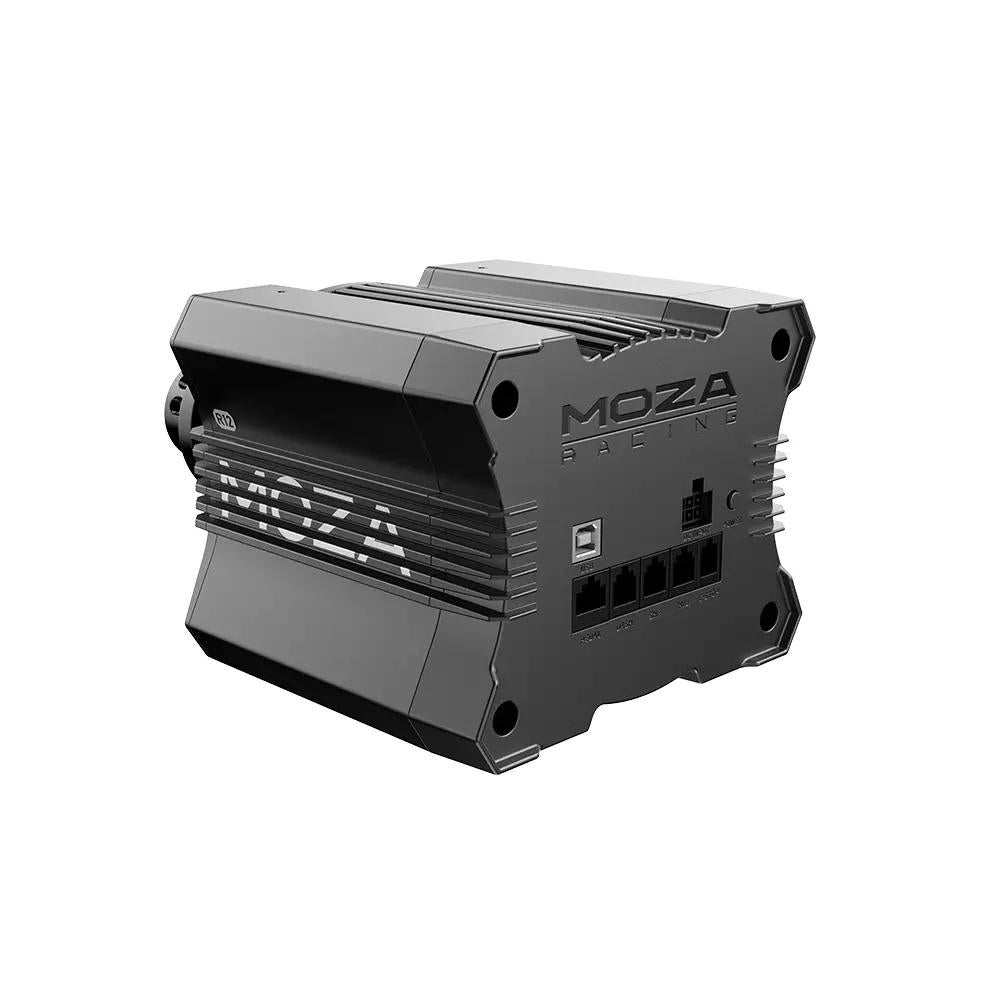
- Power button on the back is hard to reach once the device is installed
- Not compatible with PlayStation
- The Xbox console also requires a compatible rim
Technical Specifications
| Type | Direct-drive base (servomotor) |
| Maximum torque | 12 Nm |
| Encoder | 21-bit magnetic, resolution 0.00017° |
| Engine | asymmetrical segmented design, 18-slot/16-pole configuration, carbon-wrapped rotor |
| USB Frequency | 1000 Hz |
| Conductive ring | Automotive-grade quality, over 5 million rotations |
| Case | aeronautical-grade aluminum alloy |
| Weight | 7.5 kg |
| Dimensions | 225.87 x 156.68 x 123.99 mm |
| Software | MOZA Pit House (19-point FFB adjustment, mobile app) |
| Security | Anti-drop protection (Hands-off) with Mode 2 |
| Platforms | PC (Xbox with compatible controller), no PlayStation |
The Missing Link at 12 Nm
MOZA’s direct-drive lineup jumped a bit too quickly from the R9 to the R16, and the R12 fills exactly that gap. Twelve newton-meters is that famous sweet spot that many pilots consider ideal: enough power to never let the signal clip during hard inputs, but not so much that it’ll leave your shoulders aching after twenty minutes. From our very first laps, we felt that torque that remains manageable while still delivering plenty of power.
How it feels, controller in hand
The real test of a suspension is how it feels through the handlebars, and in that regard, the R12 won us over. Rumble strips, bumps, and changes in road surface are transmitted clearly, without being either exaggerated or muddled. Going into a turn, the bike reacts very quickly: you can feel the front end loading up, and—most importantly—you can recover from the onset of a slide more easily because the feedback about loss of traction comes early and clearly. During long rides, two things stood out to us: the frame stays cool and remains virtually silent, with no rattling even when you’re revving at 12 Nm.
The only downside in terms of feel is understeer on certain tracks—notably in Assetto Corsa—where the feedback is a bit subtle: you end up relying more on visuals and sound than on your hands. Adjusting the slip settings helps, though it doesn’t completely eliminate the issue. It’s not a deal-breaker, but we thought it was worth mentioning.
A compact, well-finished aluminum block
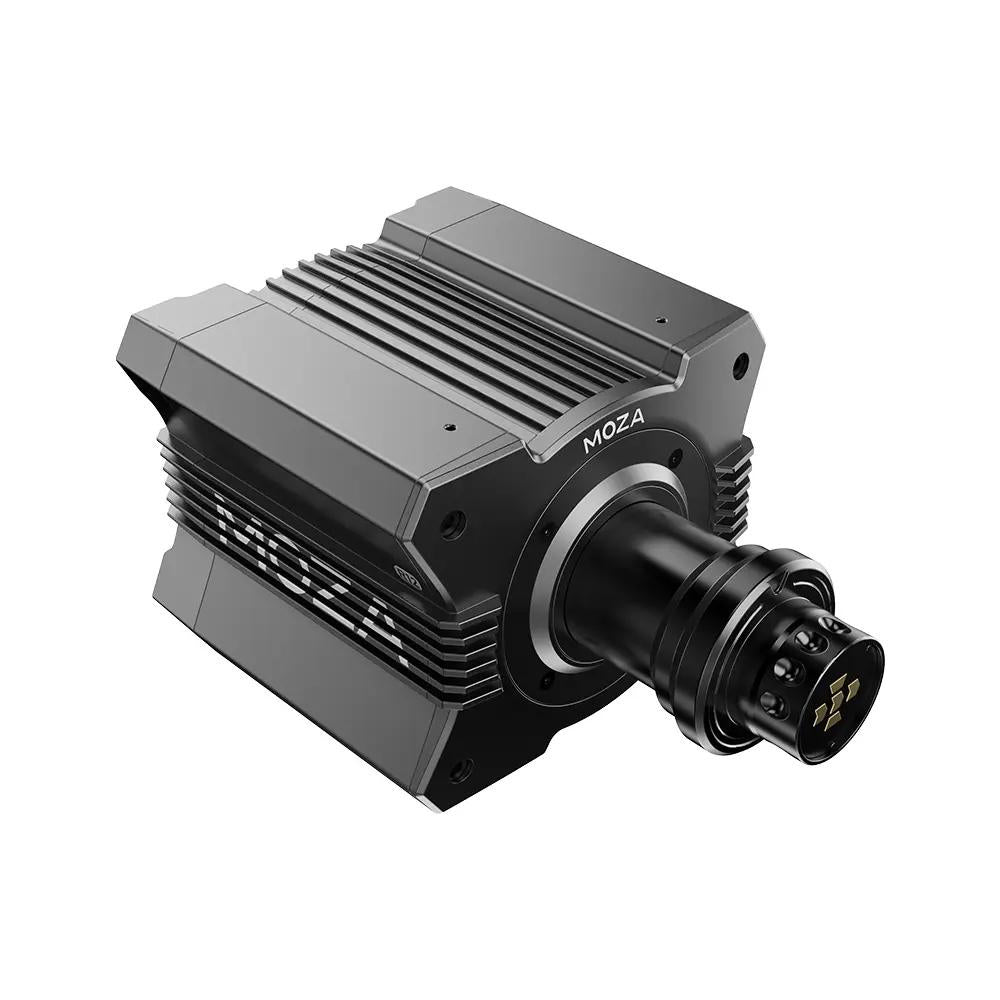
The aircraft-grade aluminum chassis inspires confidence: it has a solid, resonant sound and doesn’t wobble. Weighing just 7.5 kg and with its compact design, the R12 is barely noticeable once secured, and its compact size allows the screen to be positioned closer to the steering wheel, which is a big help in a single-screen setup. On the downside, however, the mount is only available from the bottom (not from the side or front), and the power button on the back isn’t the easiest to reach once the base is installed in the cockpit.
Pit House, Settings, and Safety
When it comes to software, MOZA Pit House remains one of the best companions in the sim racing ecosystem, in our opinion. The interface is clean, with no buried menus, featuring game-specific profiles for a quick start—and, for those who like to tinker, 19-point force feedback adjustment, a road feel equalizer, and customizable FFB curves. The mobile app even lets you make adjustments on the fly without leaving the race. We also appreciate the “Hands-off” feature, which stops oscillations and centers the wheel if your hands leave the rim, with a Mode 2 that doesn’t interfere with drifting.
On which platforms?
Something to check before buying: The R12 base is designed for PC. It also works on Xbox, but only if you attach an Xbox-compatible MOZA rim; the base alone does not enable the console. However, it’s not compatible with PlayStation: if your team races on PS5, look elsewhere. On PC, the list of supported games is extensive (iRacing, Assetto Corsa, the F1 series, etc.), and the wireless connection to the steering wheel via the conductive ring works flawlessly for us.
Who is this for?
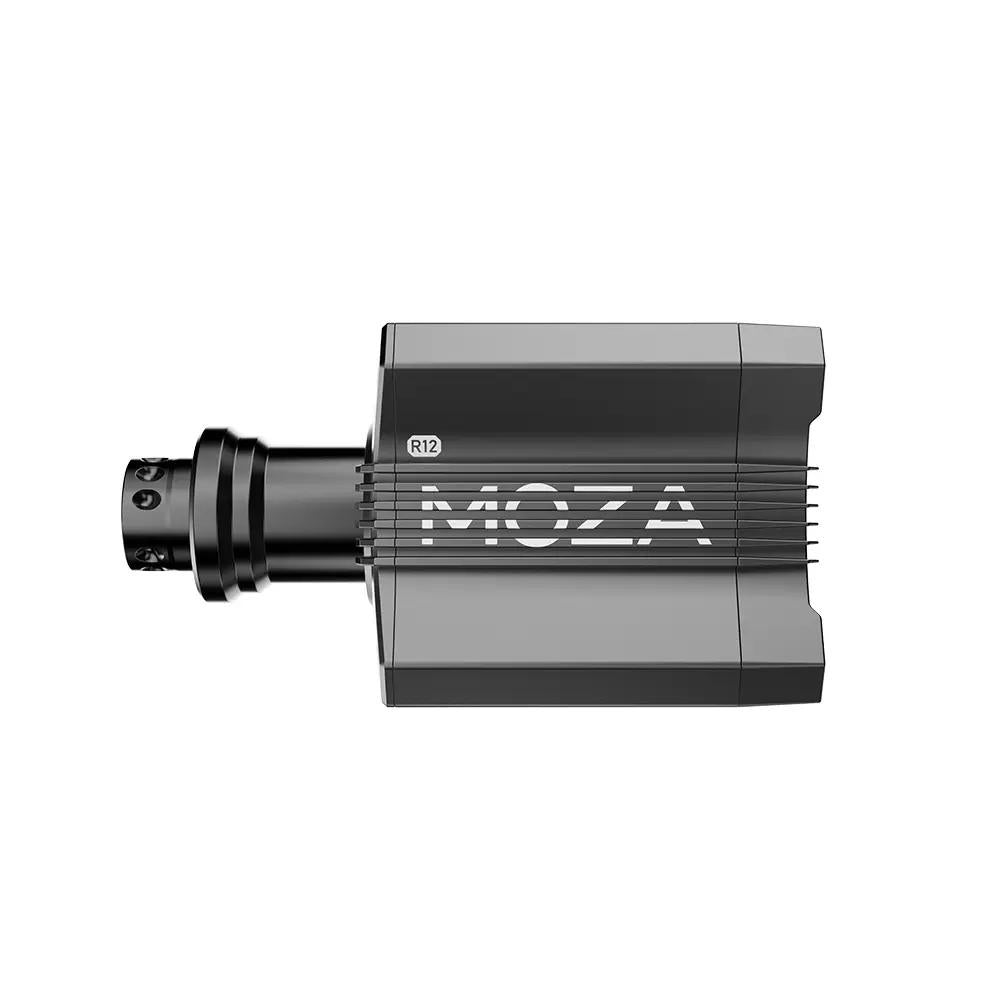
The R12 is designed for drivers who have outgrown an entry-level system and want to upgrade to a serious direct-drive setup without breaking the bank. With solid build quality, clean and versatile force feedback, and polished software, it’s a very solid mid-range option—provided you’re playing on PC or Xbox.


Reviews