MOZA R16 Wheel Base : Test & Reviews | What it's really worth in 2026
MOZA R16 Wheel Base: My quick review
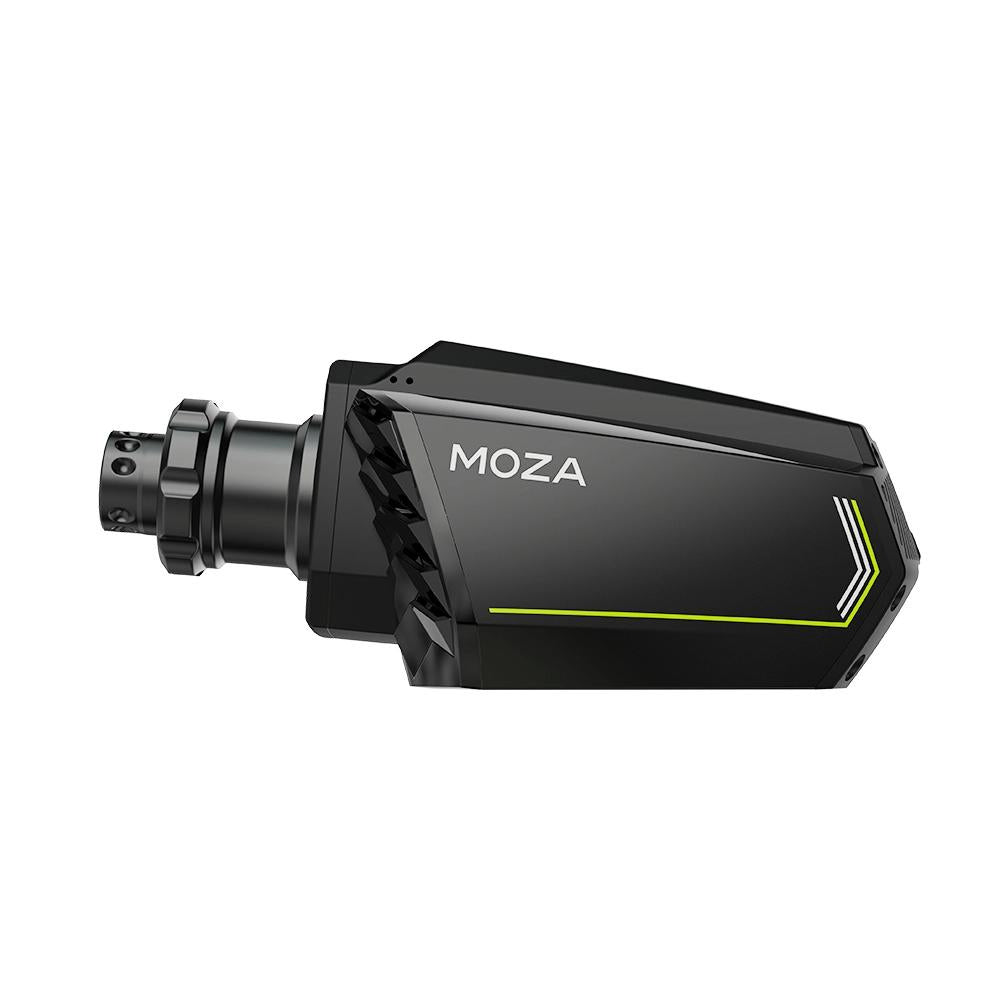
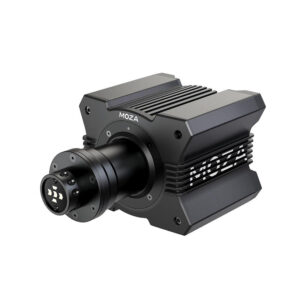
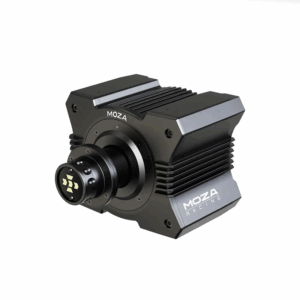
The MOZA R16 is a 16 Nm direct-drive base aimed at the mid-to-high end of the market without breaking the bank. It features a very smooth skewed-pole motor, a 21-bit encoder, and the full Pit House ecosystem. Enough torque to hold long turns, enough precision to read the road—all housed in a solid aluminum block. A sure bet for making the leap to serious direct drive.
When you buy through our links, we may earn an affiliate commission.
What We Liked
- 16 Nm is enough to hold long turns without cutting out
- A very smooth-running, virtually silent skewed-pole motor
- Imperceptible cogging while driving
- Made of solid aluminum; no flexing once installed
- Complete Pit House software with mobile Bluetooth control
- Numerous built-in ports (pedals, shifter, handbrake, dashboard, emergency stop)
- Effective thermal management during long sessions
Reserves
- Intrusive full-intensity feedback—adjustment required
- Requires a rigid cockpit and all four mounting brackets
- Weighs 8.9 kg, requiring a sturdy stand
- Graphics are less sharp on consoles than on PCs (adapters required)
Technical Specifications
| Maximum torque | 16 Nm (direct drive) |
| Peak power | 360 W |
| Engine | slanted-pole servo, 18 slots / 16 poles, carbon fiber rotor |
| Encoder | 21-bit magnetic (2,097,152 steps) |
| Resolution | 0.00017° per step |
| Processor | 280 MHz |
| FFB Algorithm | NextGen 4.0 |
| Travel | adjustable from 90° to 2700° |
| USB Frequency | 1000 Hz |
| Chassis | aircraft-grade aluminum alloy |
| Dimensions | 327 x 170 x 130 mm |
| Weight | 8.9 kg |
| Ports | power supply, USB, pedals, dashboard, shifter, parking brake, emergency stop |
| Quick release | covered |
| Software | MOZA Pit House (PC + Bluetooth mobile app) |
| Platform | PC (console via compatible devices) |
16 Nm: the right amount to switch to direct drive
When you fire up the R16 for the first time after driving a belt-driven base model or a small 5 to 8 Nm engine, the difference is immediately apparent from the very first turn of the wheel. The 16 Nm of torque isn’t just a number on the spec sheet—it changes the way the car handles on the track. Where a modest base model runs out of steam on a long, fast straight, the R16 keeps the steering wheel weighted and responsive, never letting up when you need it most. That’s what impressed us the most: the torque isn’t there to strain our wrists; it’s there to maintain a continuous flow of feedback between the front end and our arms.
To put this in perspective, 16 Nm places this base model at the upper end of the mid-range. There’s plenty of headroom: in practice, you never hit the limit, which leaves a reserve for sudden impacts (aggressive speed bumps, running off the road) without clipping. The transition from a more powerful engine didn’t feel out of place, proving that this level of torque is more than sufficient for virtually all uses, whether in a GT or a single-seater.
What the R16 Reveals, Turn by Turn
When entering a turn, the rear end gradually loads up, and you can feel the front end bite in, followed by the precise moment when grip begins to give way. It’s not a wall that hits you all at once; it’s a predictable build-up of tension that gives you time to correct. Under hard braking, the chassis transmits the subtle movements of the front end without ever feeling vague—a point on which the test reports agree: road feedback is crisp and clear, with no mushy feel.
On speed bumps and surface changes (grass, concrete, curbs), the R16 reacts quickly. When you hit a speed bump, the steering wheel responds instantly, with a feel that can be adjusted via the road sensitivity setting in the software. As we adjusted the intensity, we quickly realized that you shouldn’t set everything to 100 percent: at full power, the feedback becomes downright overwhelming and tiring. Around 45 to 60 percent, we found the ideal balance—enough detail to position the car with millimeter precision and enough smoothness to keep it going for the long haul.
In fact, during long sessions, two things work in our favor. First, the smoothness of the motor, which prevents the nerve-wracking sensation of a choppy response. Second, thermal management: the aluminum body acts as a passive heat sink, and the base remains cool even after a long stint. We can string together stints without feeling the power drop off.
A quiet, smooth-running engine
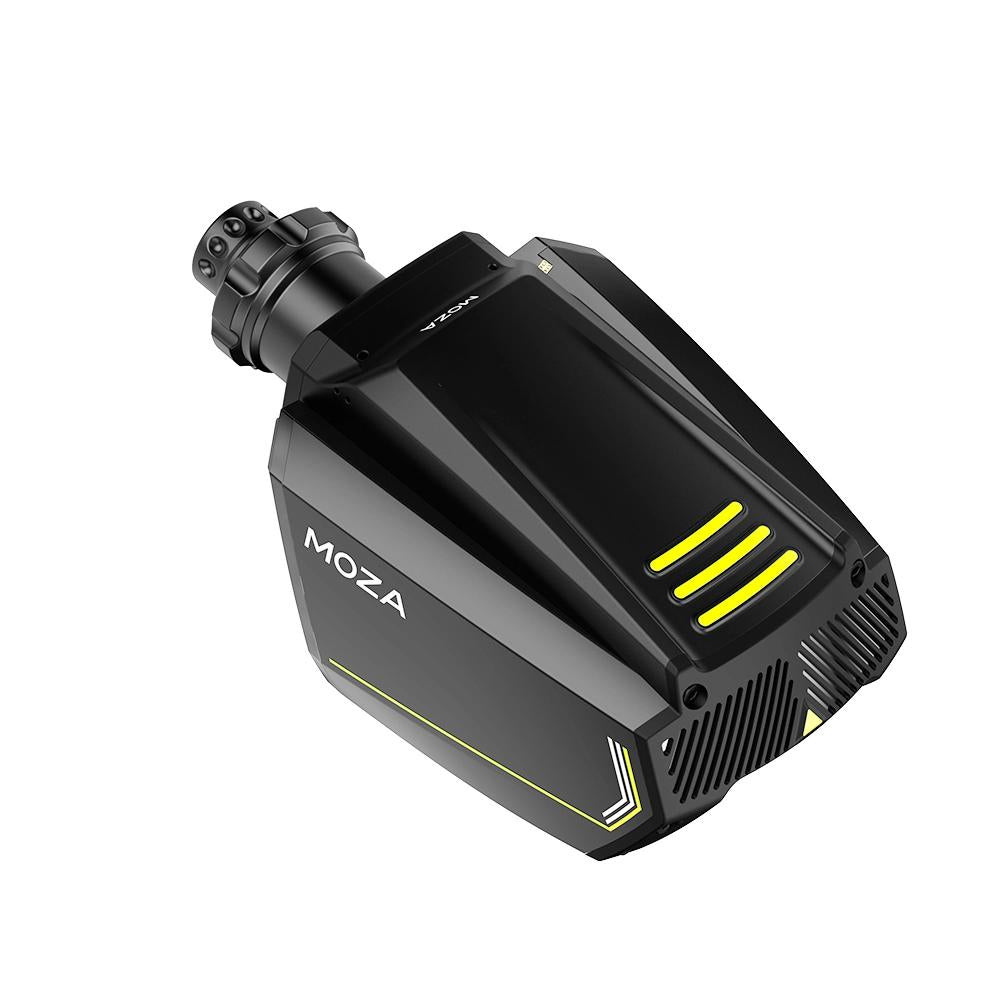
The R16’s major technical achievement is its skewed-pole motor with an 18-slot/16-pole configuration and a carbon-fiber-coated rotor. In practical terms, cogging (those unwanted notches you feel when turning the steering wheel while stationary) is reduced to the point of being imperceptible while driving, and operation is virtually silent at all speeds. You get a base that conveys the track without adding its own mechanical signature on top, and that’s exactly what you want from a direct-drive system. Compared to bases that are significantly more powerful on paper, the R16 stands out for the overall smoothness of its feedback, which makes the information easy to interpret.
Manufacturing: A Block That Doesn't Move
The frame is made of aircraft-grade aluminum alloy, with an automotive-grade paint finish. Weighing 8.9 kg and measuring a compact 327 x 170 x 130 mm, the R16 is a commanding presence and shows no perceptible flex once strapped in. We recommend using all four mounting points rather than just two: with this setup, a secure mount on a rigid cockpit isn’t just an option—it’s essential to fully enjoy its precision. On a solidly bolted structure, the base becomes the true heart of the cockpit.
Pit House and the MOZA Ecosystem
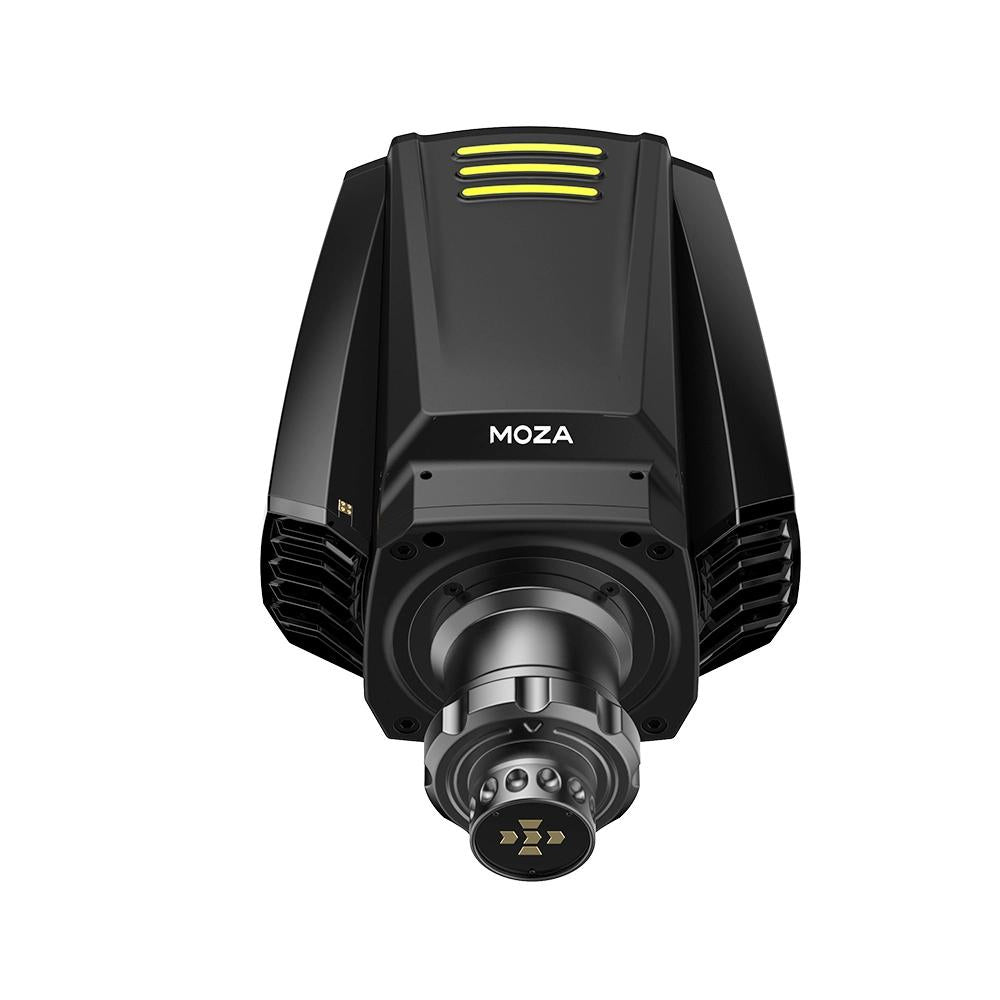
Everything is controlled via the feature-rich and comprehensive MOZA Pit House software: adjustable steering angle from 90° to 2700°, road sensitivity, maximum steering wheel speed, NextGen 4.0 filters, plus a slew of presets (GT mode is a good starting point). We also appreciate the real-time adjustments via the Bluetooth-connected mobile app, which is convenient for fine-tuning settings without leaving the driver’s seat. The current version features multiple ports directly on the base (pedals, dash, shifter, handbrake, emergency stop), which keeps the PC’s USB ports free and greatly simplifies the wiring for a full cockpit setup. The base integrates with the entire MOZA ecosystem—including steering wheels, pedals, and accessories—with a quick-release mechanism that makes switching steering wheels a breeze.
Compatibility: Designed for PCs
Let's be clear: the R16 performs best on PC, where the force feedback is the most pronounced and immediate. That's where we recommend using it first and foremost. On consoles, the experience relies on compatible peripherals and adapters, and the feedback remains good, though less crisp and less direct than on PC. If you primarily use a console, be sure to carefully check which steering wheel and base are compatible before purchasing. For PC gamers, however, there are no reservations to be made on that front.
Our thoughts after the tests
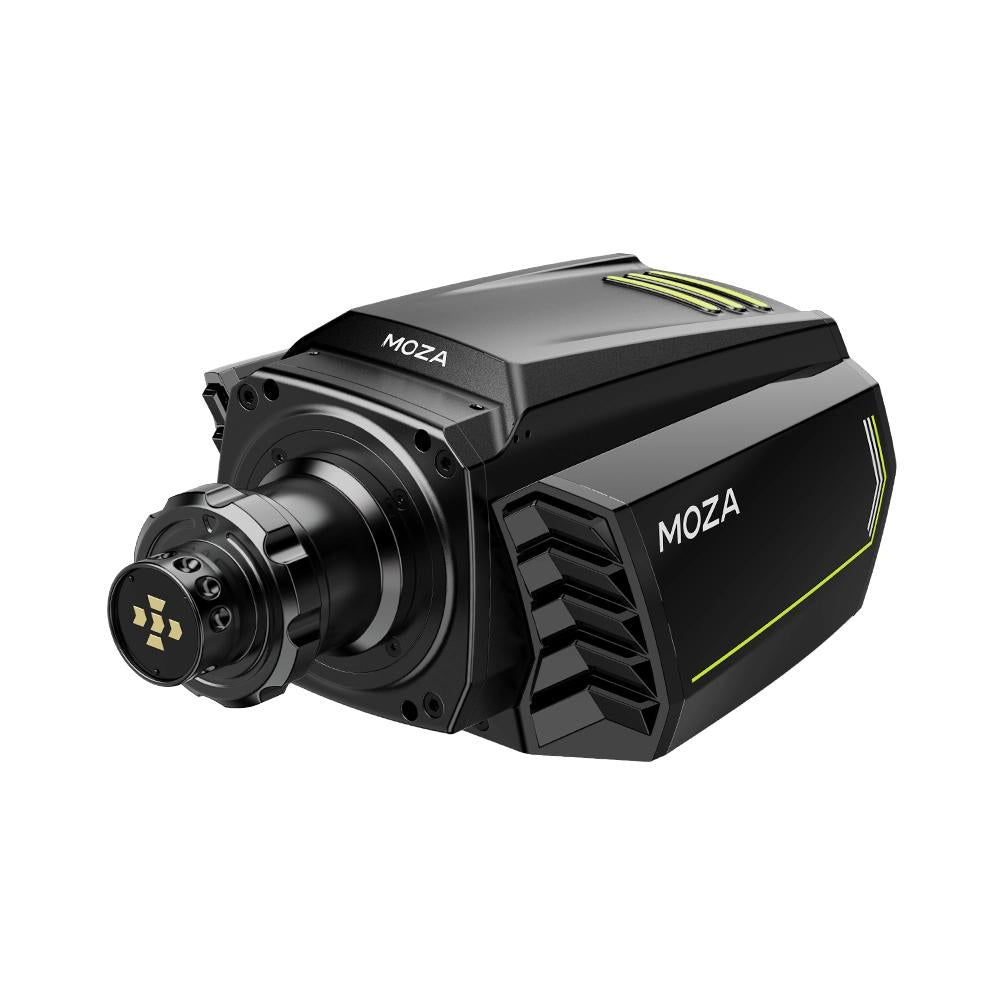
The R16 checks almost all the boxes for a direct-drive base model that we recommend without hesitation: enough torque to be impressive without being overwhelming, a remarkably smooth motor, impeccable build quality, and one of the most sophisticated software ecosystems available. It requires a rigid frame and a bit of setup time to reveal its full potential, but once dialed in, it transforms the riding experience and takes it to the next level. For anyone looking for high-end direct-drive on a PC without having to pay the higher prices of 20 Nm and above bases, this is a very solid choice.


Reviews