Simucube 2 Pro : Test & Review | What it's really worth in 2026
Simucube 2 Pro: My quick review
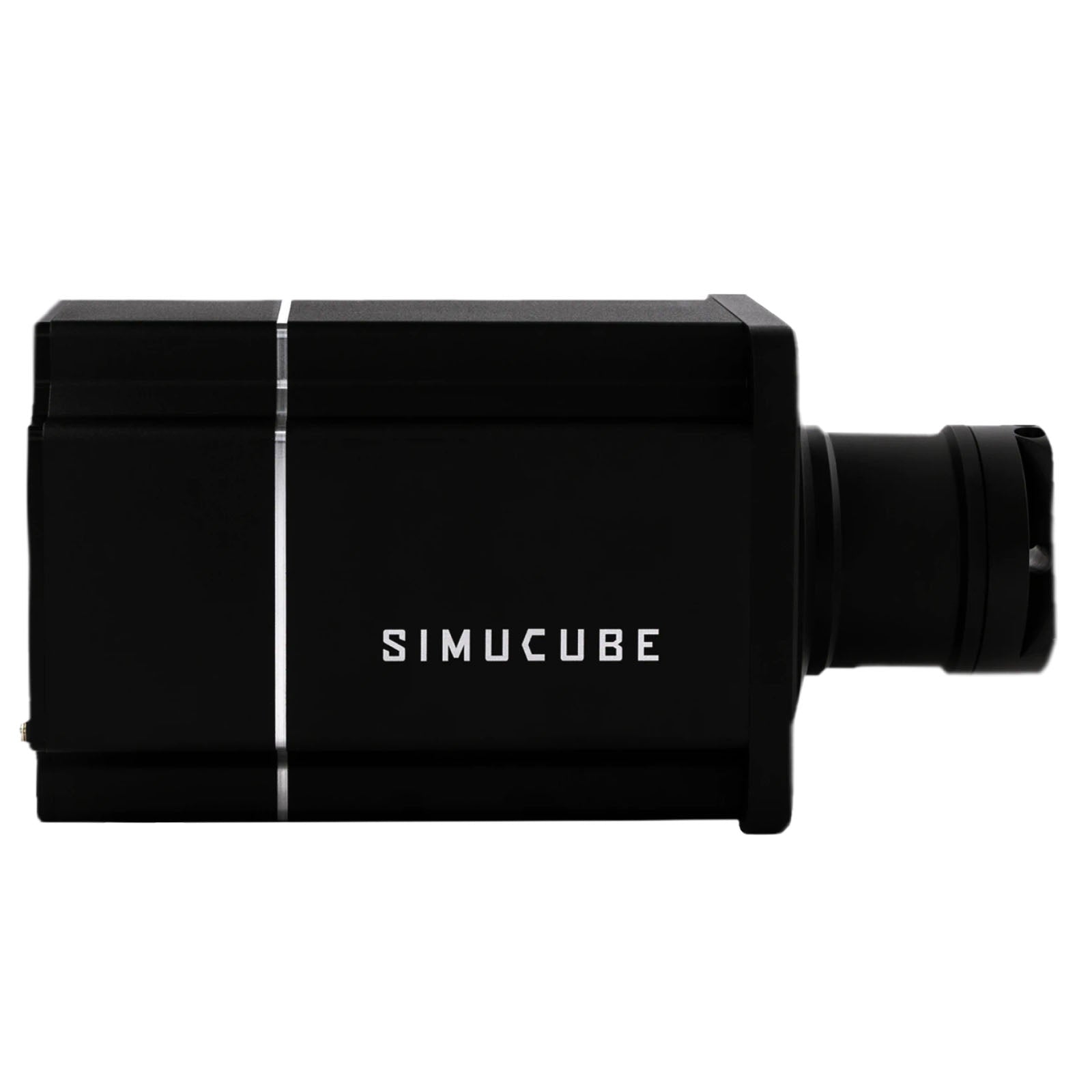
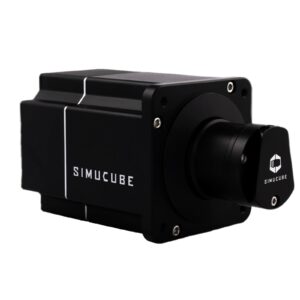
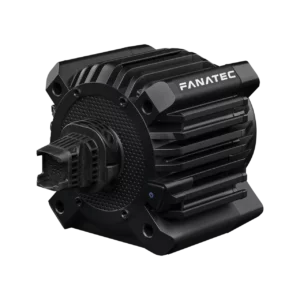
The Simucube 2 Pro is a 25 Nm direct-drive base that, six years after its release, remains a benchmark in the high-end market. We spent some time behind the wheel to evaluate its signal clarity, level of detail, and True Drive software. Verdict: one of the clearest force feedback systems on the market, available exclusively for PC.
When you buy through our links, we may earn an affiliate commission.
What We Liked
- Virtually no noise floor, indicating exceptional signal purity
- Track details are preserved even under heavy loads
- Comprehensive and well-documented True Drive software, Paddock ecosystem
- Industrial manufacturing and reliability proven over time
- SQR quick-release system with no play; wireless steering wheel switching with no perceptible latency
Reserves
- PC-exclusive; not compatible with consoles
- SQR quick-release clip sold separately
- Heavy weight that requires a rigid cockpit
- Premium pricing; competitors' specs are sometimes more impressive at the same price
Technical Specifications
| Max torque | 25 Nm |
| Torque Rise Rate | 8.0 Nm/ms (adjustable from 1 to 8) |
| Angle Sensor | 22-bit absolute |
| Power supply | 450 W peak (R2) |
| Weight | 11.1 kg |
| Dimensions | 130 x 130 x 270 mm (with SQR) |
| Mounting | M8 x 4, center-to-center distance 145 mm, center diameter 110 mm |
| Wireless Steering Wheel Mount | yes |
| Software | True Drive / Simucube Tuner with Paddock Profiles |
| Compatibility | PC only |
The silence before the sensations
The first thing that strikes us about the Simucube 2 Pro isn’t its power, but its quietness. With many systems, you can hear a grainy background noise—a sort of mechanical hum—when the steering wheel is turning freely. Here, there’s nothing. The noise floor is virtually nonexistent, and it’s precisely this background silence that makes the useful feedback stand out. The low-torque-ripple motor delivers its subtle effects smoothly, without jerks, without stuttering, and without the roughness found in less refined models. It’s easy to see why this platform continues to win most comparisons in its class.
What the Track Tells Us
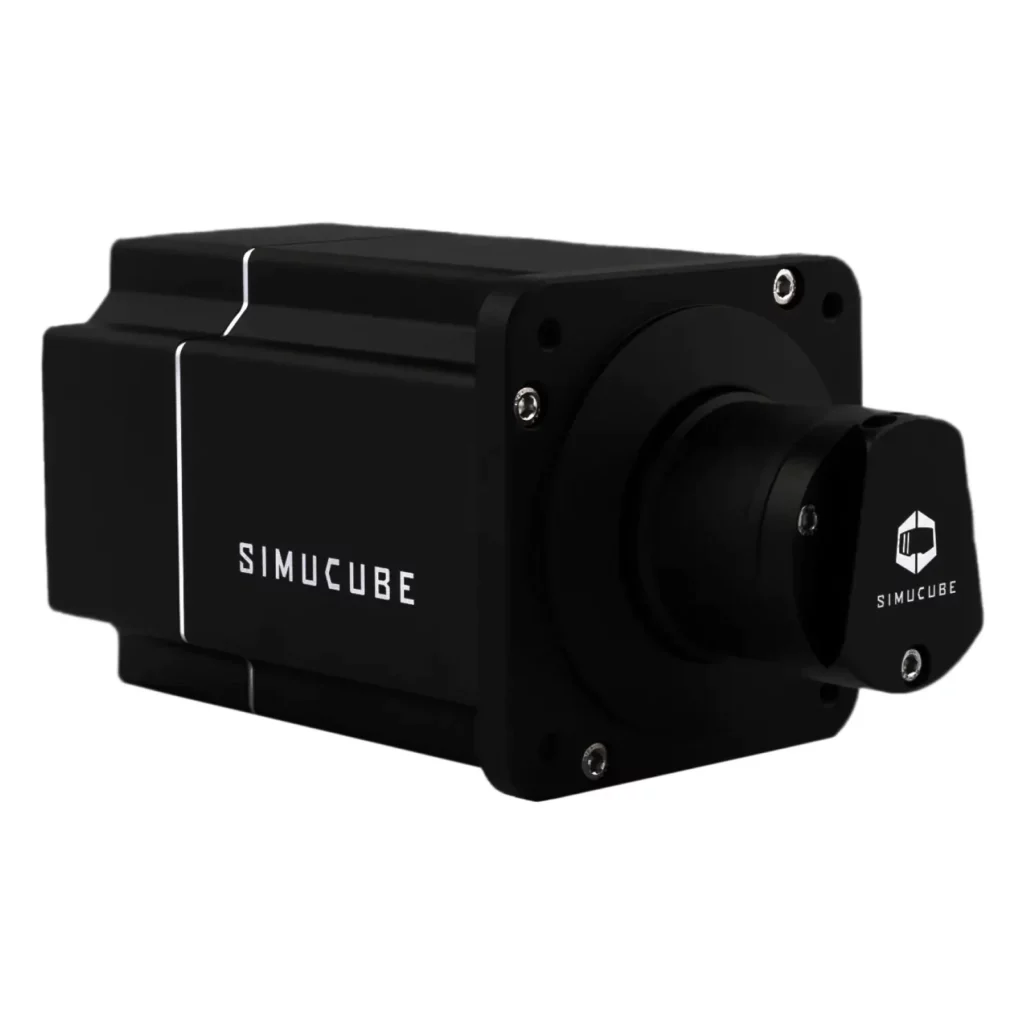
With 25 Nm of torque at its disposal, the Pro doesn’t rely on brute force but rather on predictability. When entering a turn, it feels confident during weight transfer, without ever yanking on your wrists. Front-end slip occurs as a continuous gradient rather than a sudden step: you can feel the limit gradually taking shape, which makes corrections feel natural. One detail stood out to us: when a wheel locks up while the car is turned, the steering wheel pulls slightly in the direction of the turn, as if the tire sidewalls were folding beneath us. It’s the kind of subtlety that transforms the driving experience.
On rumble strips, the feedback is clear and precise without becoming harsh, and even under heavy load, you can still feel the track’s fine details rather than having them smothered out. This is what makes the Pro particularly well-suited for heavy single-seaters and prototypes, where you need authority on turn-in while still maintaining grip feedback. During long endurance sessions, this lack of saturation makes a difference: the feedback remains informative for hours without causing unnecessary fatigue.
True Drive and Paddock: The Real Advantage
We still consider the True Drive software to be the best tuning interface in its class. It offers more settings than competing control panels, each setting is well documented, and the live telemetry view is the most readable we’ve ever used. The torque, damping, inertia, and friction reconstruction filters let you fine-tune the feel exactly the way you want it. And for those who don’t want to tweak everything, the Paddock system is a game-changer: with just a few clicks, you can download profiles shared by the community or renowned drivers, and the system automatically switches between simulators or cars on its own. Firmware updates are frequent and painless.
Manufacturing and Quick-Release Fastener
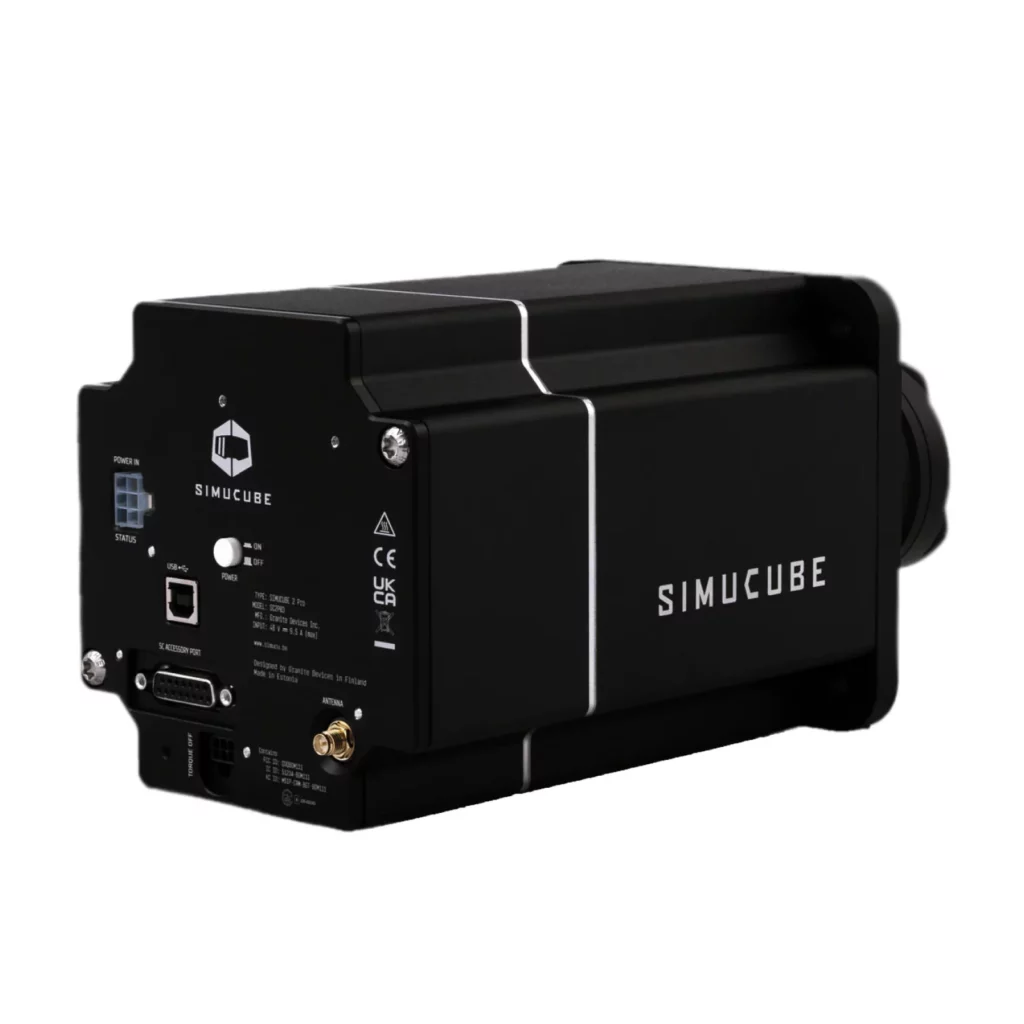
The build quality is industrial-grade. The aluminum chassis and its 11.1 kg weight inspire immediate confidence: this base doesn’t budge or flex. After several years of use, feedback from long-time users reports zero reliability issues, which speaks volumes about the product’s sturdiness. The SQR quick-release clamp, sold as an accessory, lives up to its reputation: no play, no wobble, and solid machining. It allows for wireless wheel swapping, and the latency is practically indistinguishable from a wired connection, making wheel changes mid-session perfectly feasible.
PC only—please note this before purchasing
The key point to keep in mind: the Simucube 2 Pro is exclusively for PC. It is not compatible with PlayStation or Xbox, and no such compatibility is planned. If you play on a console, you’ll have to look elsewhere—period. It’s mounted using a front bracket, and its weight requires a sturdy, dedicated cockpit—not a makeshift desk mount. These aren’t so much flaws as they are usage requirements: the Pro is designed for a serious, dedicated setup.
For whom, and at what level
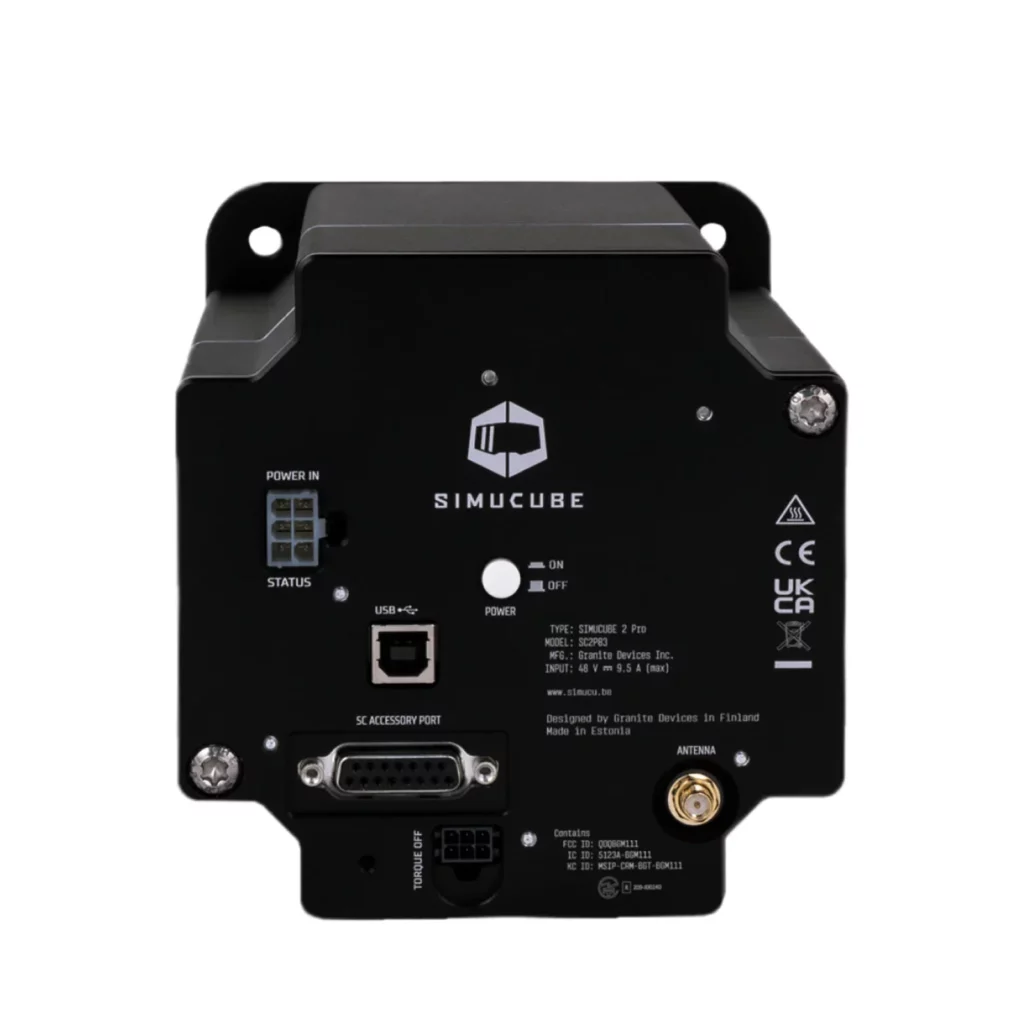
Positioned in the 25 Nm range, the Pro is designed for the demanding PC pilot who wants both finesse and power, and who plans to keep their setup for a long time. On paper, some newer models boast more impressive specs for the price, but the Simucube’s power delivery, signal purity, and software maturity remain very hard to match. It’s a sensible choice for anyone aiming for the top of the line and who doesn’t want to have to think twice about it afterward.


Reviews