
Fanatec Podium Wheel Base DD2 : Test & Review | What it's really worth in 2026
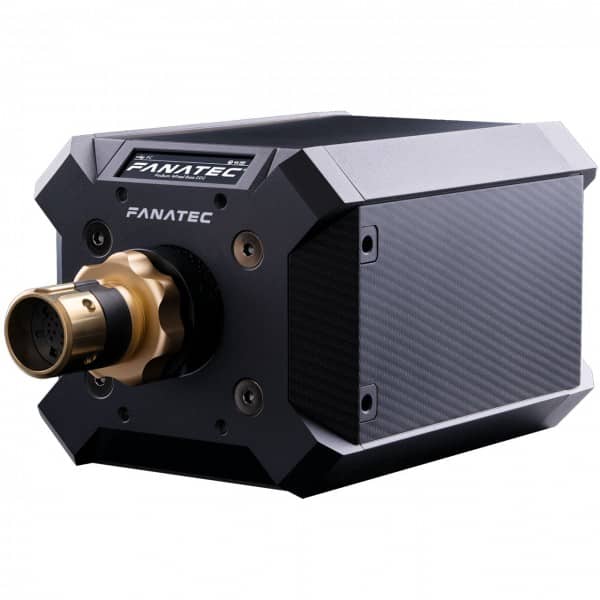
Fanatec Podium Wheel Base DD2: My quick review
The Podium DD2 is the flagship model in Fanatec’s consumer-grade direct-drive lineup, featuring 25 Nm of peak torque and an outrunner motor designed for sim racing. We spent long sessions testing it, appreciating both the precision of the force feedback and its virtually inexhaustible power reserve. It’s an endgame-level setup—demanding both in terms of cockpit setup and budget—and is available only for PC and Xbox. A Fanatec steering wheel is still required to use it.
When you buy through our links, we may earn an affiliate commission.
What We Liked
- 25 Nm of torque with enormous power reserves
- A powerful return with rare finesse, without a jagged effect
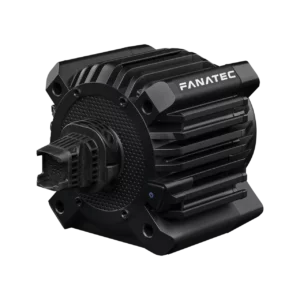
- Industrially manufactured, solid aluminum with carbon fiber side panels
- Safety kill switch included as standard equipment
- High-end QR2 quick-release system with built-in OLED display
Reserves
- Completely incompatible with PlayStation
- Fanatec steering wheel required and sold separately
- A torque wrench is essential for using the base
- Requires a rigid cockpit and a dedicated space
- Very high-end pricing strategy
Technical Specifications
| Maximum torque | 25 Nm |
| Holding torque | 20 Nm |
| Engine | direct-drive outrunner designed for sim racing |
| Screen | 2.7-inch OLED (256x64) |
| USB refresh rate | 1000 Hz |
| Quick release | QR2 (base side) (Type-M, machined aluminum) |
| Rotation | up to 2,520 degrees (electronically adjustable) |
| Security | kill switch with remote button included, torque wrench |
| Platforms | PC and Xbox (One, Series X, and S) |
| Steering wheel | Fanatec required; not included |
The entry-level model in the Podium lineup
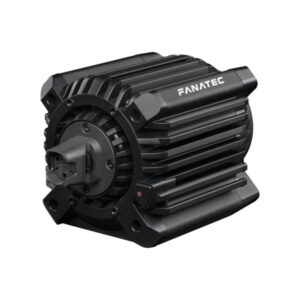
As you move up the Fanatec ladder, the Podium DD2 is the last step before semi-pro equipment. It’s a direct-drive base rated at 25 Nm of peak torque—the top of the line for what a sim racer can set up at home without resorting to industrial-grade solutions. Right out of the box, the tone is set: a solid unit weighing about twenty kilos that requires two hands to handle. This is no longer just a gaming accessory—it’s a mechanical component.
25 Nm under the hood, and a wrench to loosen them
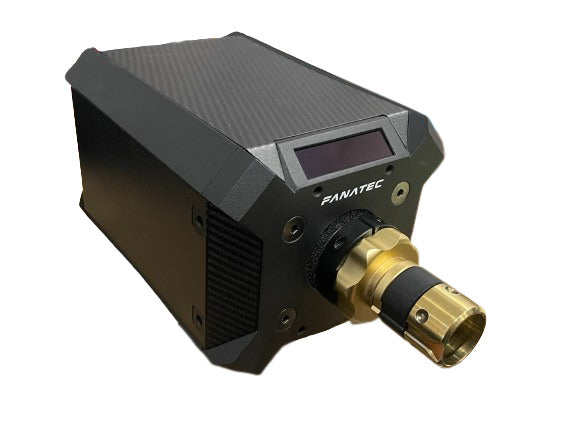
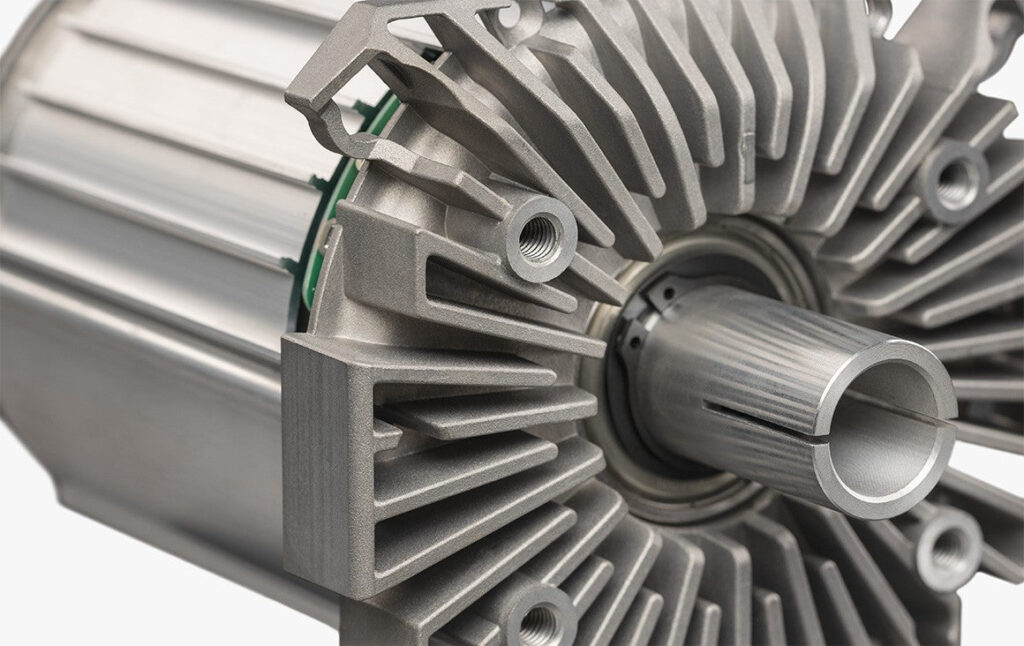
At the heart of the DD2 is an outrunner-type direct-drive motor designed specifically for sim racing, with very low torque ripple. The shaft drives the steering wheel directly, without a belt or gear, which explains the clean signal. One detail to note before purchasing: the base is locked at around 8 Nm by default. To unlock the 25 Nm, you must insert the supplied torque wrench. Without it, you’ll miss out on everything that makes this machine special, and the low mode quickly proves too timid for heavy cars.
Compared to the DD1, the DD2 delivers 5 Nm more peak torque (25 vs. 20) and more sustained torque (20 vs. 15). On paper, the difference may seem negligible. In practice, it’s mainly a matter of reserve; the base model retains its refined characteristics even when under heavy load.
Here's what it's like with the steering wheel in your hands
What really won us over about the DD2 is its smoothness. The force feedback is smooth, without the slightest jerkiness sometimes found in belt-driven systems. When entering a turn, you feel the front end gradually load up, then the precise moment when traction starts to give out. This early indication of loss of traction changes the way you drive; you anticipate slides and recover from oversteer situations that, on a less capable car, would have already gotten out of control.
During hard braking, the base transmits ABS vibrations and weight shifts with such clarity that it really helps with modulation. On rough speed bumps and off-road, the 25 Nm of torque really comes into its own; impacts are felt strongly without drowning out the more subtle feedback. That said, let’s be clear: this torque alone won’t save you seconds. During our test sessions, a setting around 15 Nm was already enough to ride fast and consistently; the rest is about immersion and provides headroom for the most aggressive setups.
During long sessions, the power commands respect. If you spin out, it’s best to let go of the steering wheel, because a sudden snapback can hurt your wrists and thumbs. A rigid cockpit isn’t an option here—it’s a must. If mounted on a flexible bracket, the base loses precision and transmits its vibrations throughout the entire structure.
Manufacturing That Inspires Confidence
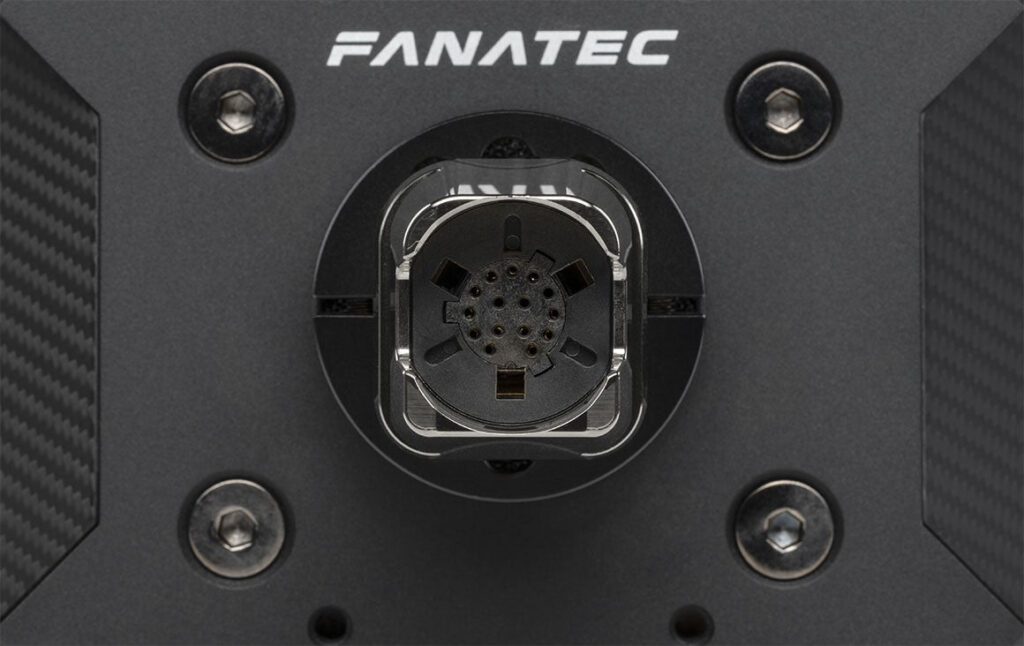
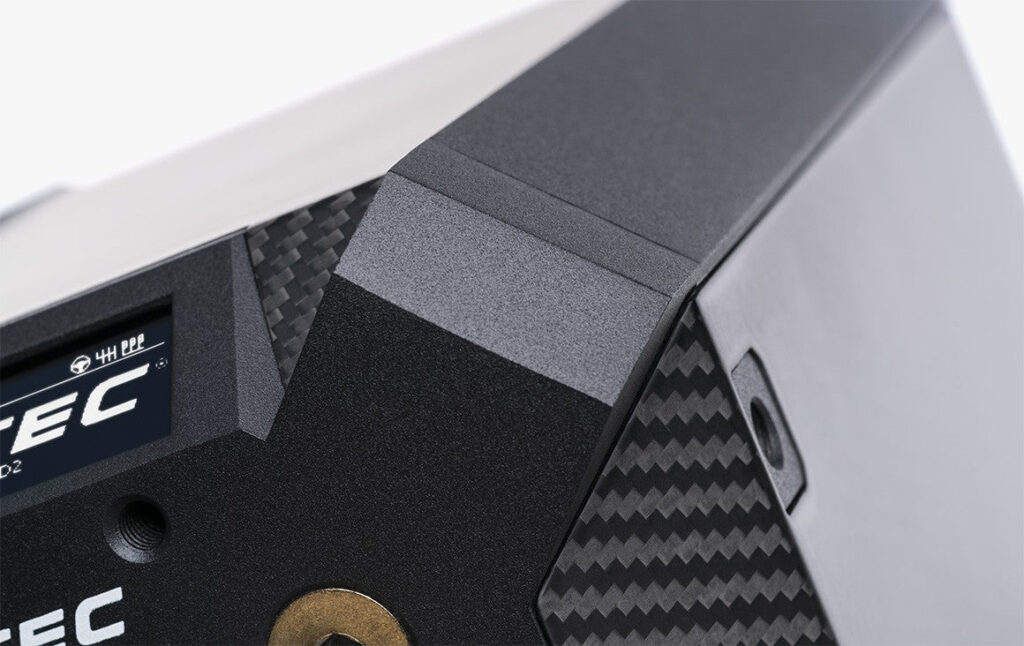
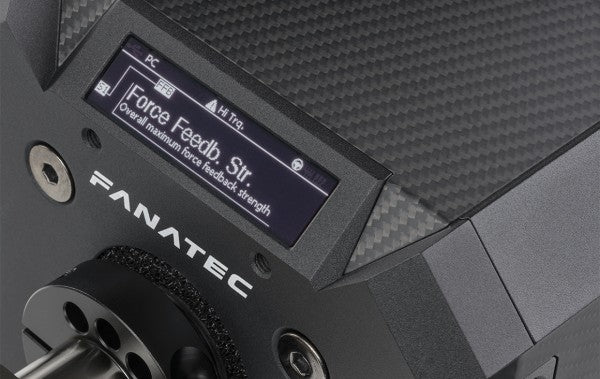
The cast aluminum chassis exudes quality, with carbon-fiber side panels and meticulous finishes. The small, built-in 2.7-inch OLED screen displays setup menus and telemetry directly on the base, making it convenient to adjust settings without leaving the seat. It looks a bit dated compared to newer steering wheel displays, but it remains easy to read and doesn’t get in the way during a race. The QR2 quick-release mechanism on the base, machined from a solid block, locks the steering wheel in place with no play and makes it easy to switch quickly between models.
The kill switch: the real added value
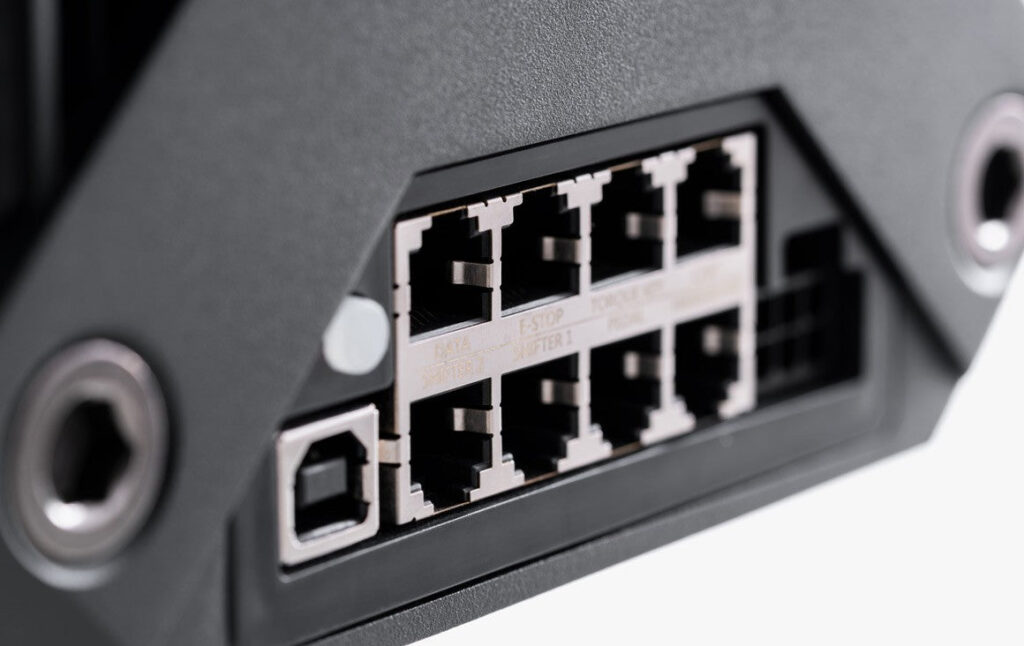
The main practical difference from the DD1 is the killswitch included as standard—a remote emergency stop button with an on/off function. Given this level of power, it’s reassuring to be able to cut the power with a single gesture rather than having to fumble around behind the engine block. On the DD1, this feature is optional, and here it accounts for a significant portion of the additional cost, along with the carbon side panels and the extra torque.
PC and Xbox, but not a single PlayStation
An important point to note before pulling out your credit card: the DD2 works on PC and Xbox (One, Series X, and Series S), provided you use a compatible Fanatec steering wheel, and it is in no way compatible with PlayStation. No software update will change this. If your primary platform is a PS5, this base unit simply isn’t for you. Also note that the DD2 is sold as a standalone unit; you must select and purchase the steering wheel separately.
For whom, and at what price?
The DD2 is designed for seasoned sim racers who have a sturdy cockpit and are ready to spend time fine-tuning their setup using Fanatec drivers and Fanalab. It’s an endgame purchase—one that comes with a high price tag and requires a dedicated space due to its size. For many, the DD1 already covers most needs. But if you’re looking for the top of the consumer-grade line—with the torque reserve, kill switch, and build quality that come with it—the DD2 delivers on all its promises.


Reviews