MOZA RM High-Definition Digital Dashboard : Test & Review | What it's really worth in 2025
MOZA RM High-Definition Digital Dashboard: My quick review
Above all, this dashboard gave me the feeling of making race info clearer, more accessible and "professional", without tinkering or distraction. It makes sense for PC simracers already equipped with Direct Drive MOZA, who drive often and want to better manage rhythm, strategy and consistency. The investment remains targeted, but consistent with a setup geared to performance and immersion.
When you buy through our links, we may earn an affiliate commission.
In the MOZA ecosystem, the RM High-Definition Digital Dashboard is clearly positioned as a top-of-the-range additional screen for Direct Drive bases. It's not just a luminous gadget: its stated aim is to approximate the ergonomics of a real GT or proto dashboard, with as much information as possible readable at a glance. It's attractive because it promises precisely what many simracers are looking for after investing in a good steering wheel: clarity, visual comfort and a more "racing" immersion.
My angle is simple: how much does this screen really change the way you drive and manage a race, compared to a setup without a dedicated dash or with a cobbled-together tablet-type solution? I'm mainly interested in display quality, readability in action, info customization, and compatibility with the MOZA ecosystem and PC games. In other words: does the RM offer a real gain in performance and comfort, or is it just a pretty object to put on its base?
Design & Manufacturing
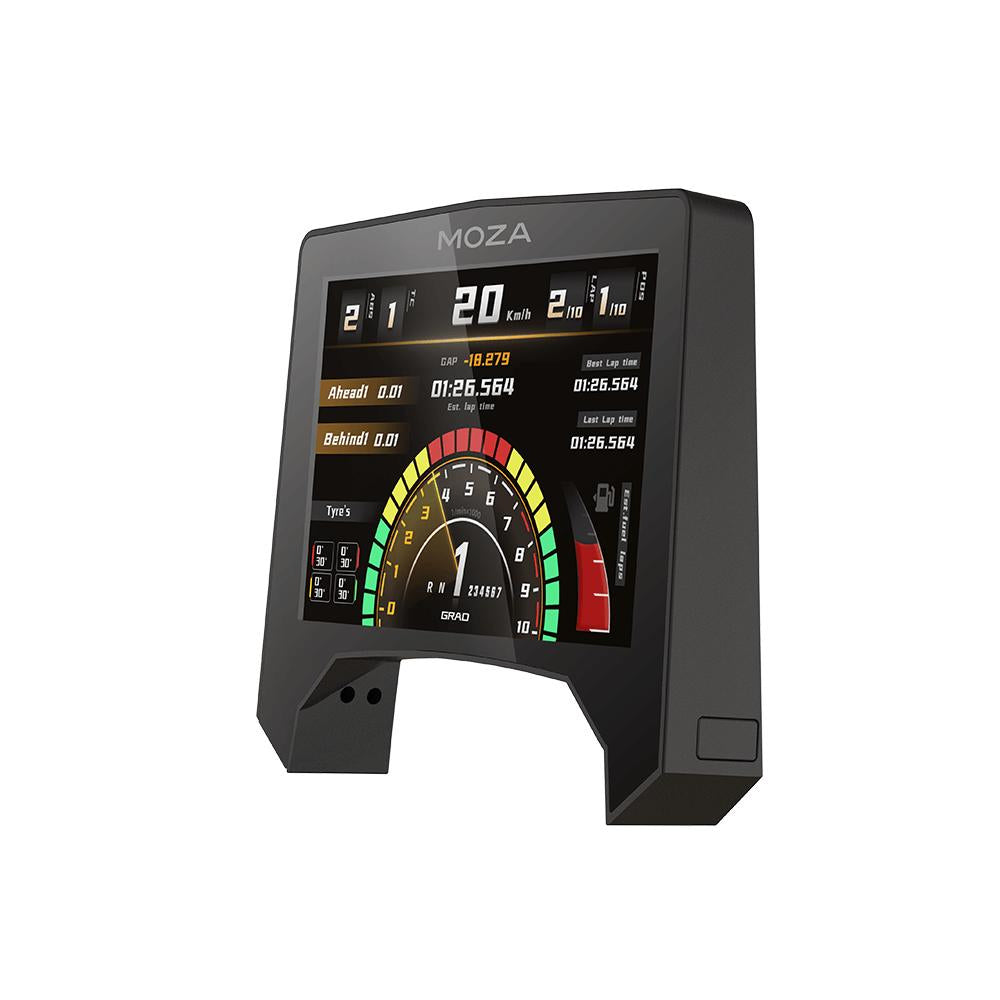
The MOZA RM gives an immediate impression of seriousness. The chassis is made of metal, with a matt finish that inspires confidence. In hand, it's dense and rigid, and nothing flexes when slightly bent. The logic is clearly one of high-end sim racing equipment rather than desktop gadgetry. Assembly is clean, fit is crisp, and there's no parasitic play or hollow-sounding parts.
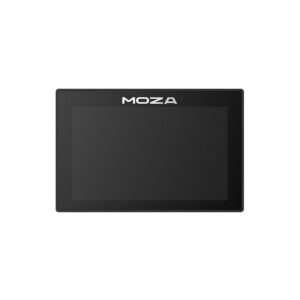
The high-definition screen is the center of everything. Colors are vivid, contrast is strong, and above all, readability remains excellent even when you're a little off-center. Information remains clear, numbers are clean, gauges don't drool. You get the feeling that MOZA has aimed for something closer to an instrumentation screen than a simple secondary monitor. Borders are contained, reinforcing the impression of a compact, serious "block".
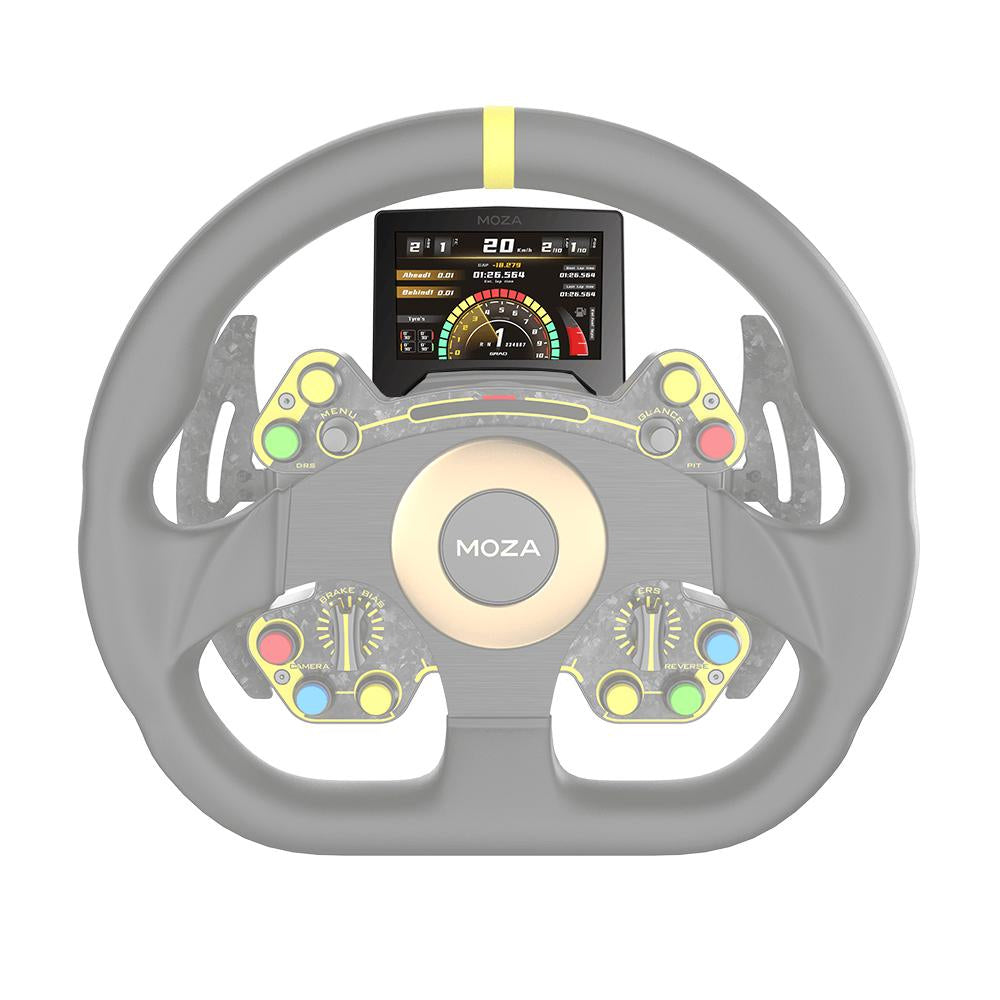
The surprise comes mainly from the perception of overall solidity: once mounted on a MOZA base, the whole thing doesn't budge, even with a strong Direct Drive. No parasitic vibrations, no annoying shaking when going over vibrators. You really get the impression that the dash is one with the base.
What's a little disappointing isn't the manufacturing itself, but rather the feeling that MOZA could have gone a little further on certain ergonomic details (organization of physical buttons around the dash, for example, non-existent here). Compared with some of our competitors' dashboards, which incorporate more controls, we lose out on a few direct control options. On the other hand, if I compare the quality of the screen and the rigidity of the whole with 3D-printed solutions or tablet-based assemblies, we're clearly a notch above in terms of premium feel.
Settings, customization & compatibility
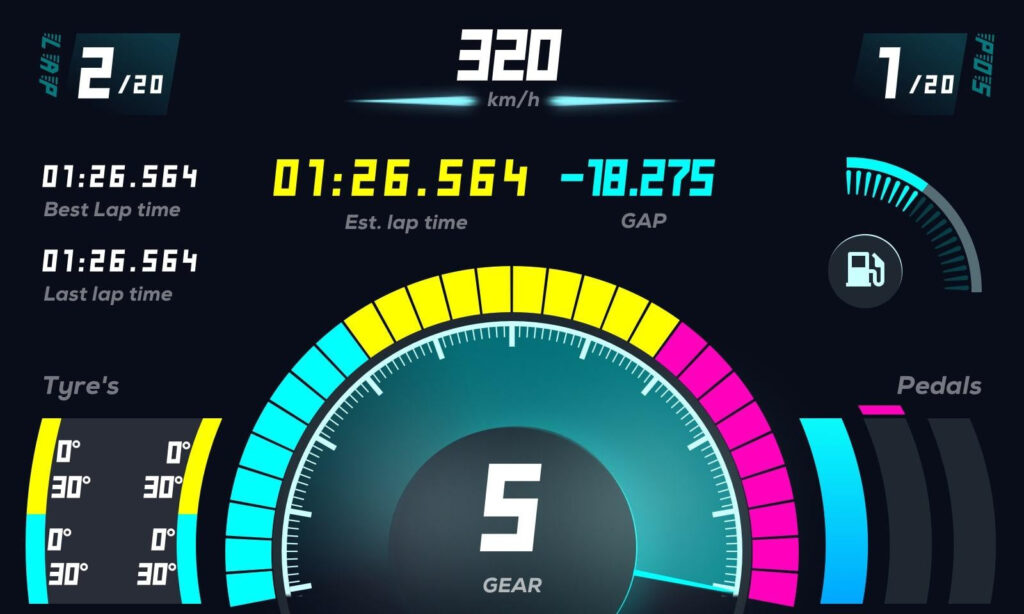
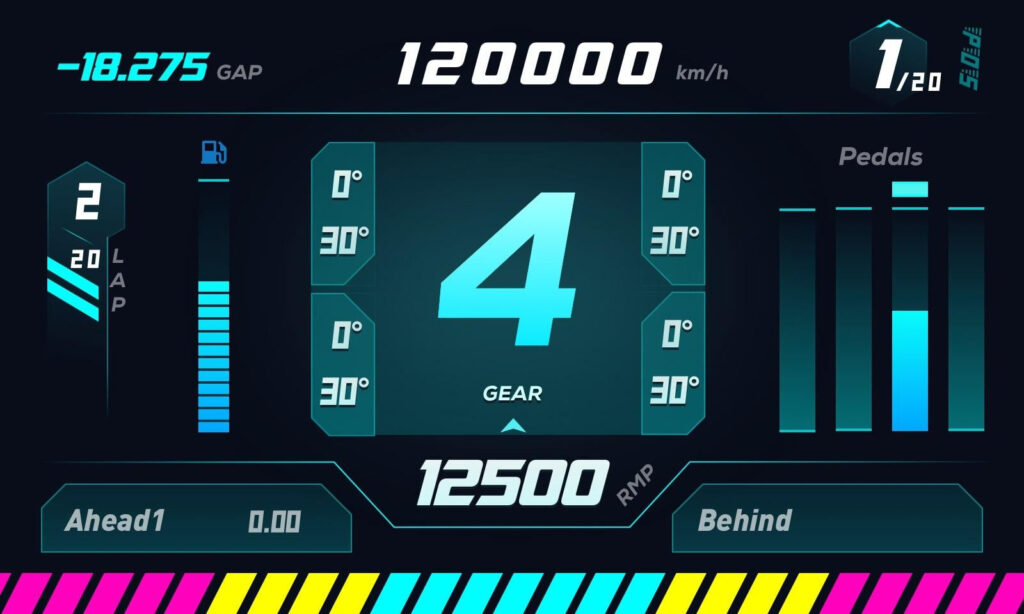
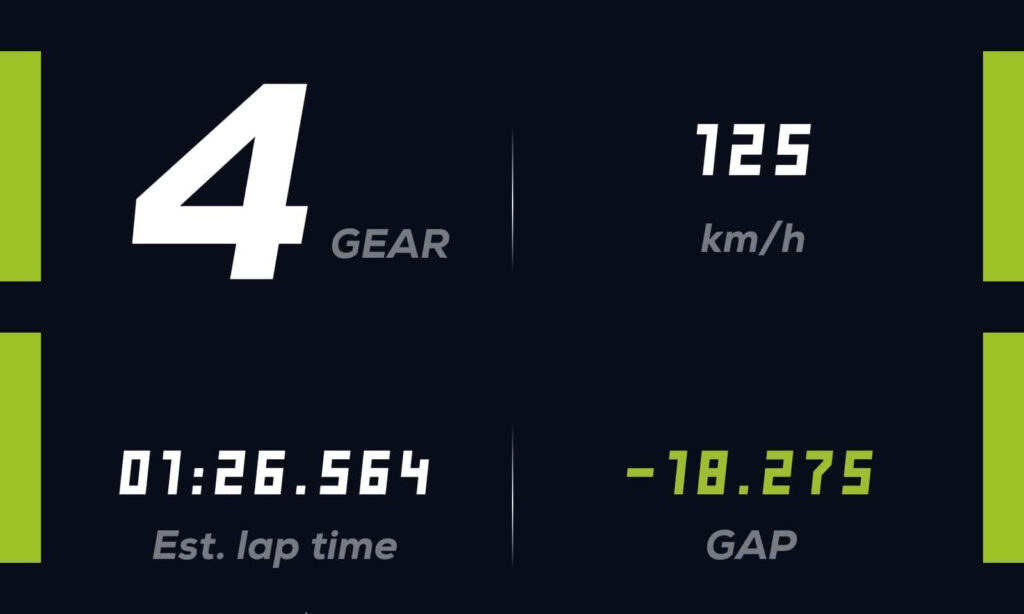
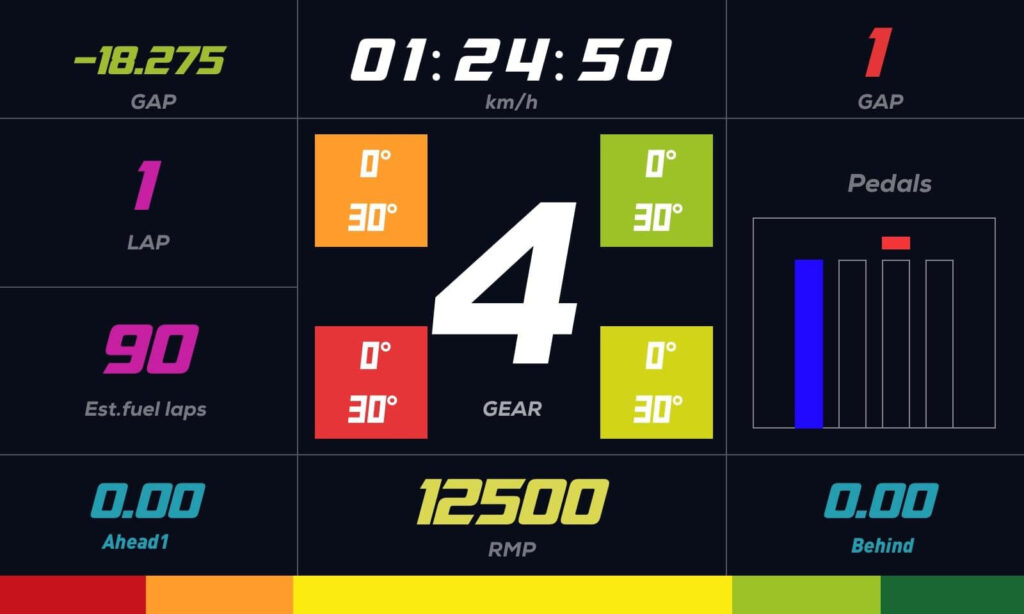
The MOZA RM is configured via the in-house MOZA Pit House software. The interface is in line with what the brand offers for its bases and steering wheels: fairly clear, with logical menus and predefined profiles. You can choose from different dashboard layouts, oriented towards GT, F1, endurance, etc. Each layout highlights certain information: engine rpm, speed, gear engaged, delta, lap time, tire temperature, fuel, and other data depending on the game.
Where it gets interesting is in the personalization. You can customize what's displayed where, to a certain extent. It's not an unlimited sandbox like some ultra-modern tools, but for "demanding consumer" use, it's more than enough. You select the display that suits your main discipline, adjust a few parameters, and off you go. The learning curve is reasonable: it takes a little time to understand where everything is set, but you're not lost.
In terms of compatibility, we're sticking to PC. The dash uses telemetry from games compatible with MOZA Pit House. On consoles, the question becomes much more complicated: this type of peripheral is rarely used natively, and here the focus is clearly on PC use. In terms of the ecosystem, integration with MOZA Direct Drive bases is logical and fluid. Anticipated fastening, correct detection, centralized configuration: everything encourages you to stay with the MOZA family.
With a rigid cockpit, the RM easily finds its place, especially if the base is well positioned. This isn't a product that's intended to be universally adaptable to all steering wheels of all brands; it's clearly designed as an element of the MOZA ecosystem. From my point of view, it's more of a durable part of a setup: you're not going to change it every year. The dash goes very well with a gradual move upmarket in the rest of the equipment, especially for someone who is already at MOZA or who plans to stay there.
Sensations in play
This is where the MOZA RM really comes into its own. The first thing that strikes you is the way it refocuses essential information in the line of sight. One glance at the dash, and you immediately know where you stand: gear engaged, rpm, delta, time, tire condition. There's no need to search for lost numbers on a HUD at the top of the screen. The head stays in the race, the eyes make a micro-displacement, and that's it. On a double or triple screen, this really changes ergonomics.
When cornering, especially on demanding GT3-type combos on technical circuits, the RM clearly helps to manage the pace. The shift light and engine speed readouts are very precise. You know exactly when to shift up, without having to rely on sound alone. On cars where the engine sound is less distinct, this is a real plus. It's easier to set braking and acceleration points. You immediately understand what the car is doing.
For grip readings, the dash plays its part via tire temperature and pressure info, as well as any loss-of-grip indicators available depending on the game. In the middle of a stint, you can follow the color or value of the tires to anticipate a drop in performance. Combined with the Direct Drive feedback, the brain merges the data very naturally. You feel the grip on the wheel, and confirm it on the dash.
On the vibrators, it's obviously not the dash that creates the sensation, but it does accompany the moment: you can instantly see if you're overdoing it a little, if lap times are deteriorating, or if the tires are heating up too much. The combination of force feedback and real-time data readout gives a complete picture of the situation. It's no longer a case of "I think I'm doing better", but "I can see I'm doing better".
On long sessions, the main benefit is consistency. Having a dedicated dashboard helps to keep a steady pace. Delta and lap times remain under control, and fuel and strategy info is right there, always legible. It's less tiring to keep an eye on what's going on. You concentrate more on steering and managing traffic, less on hunting for information on the screen.
During quick corrections, especially on corner exits when the rear end loses some of its weight, you're quick to glance at the dash to check whether traction control, ABS or tire temperature are playing a role in this behavior. This fast feedback loop boosts confidence. You feel you have a better understanding of why the car reacts the way it does.
Compared to a setup without a dedicated dash, the difference is clear: everything looks more organized, "cleaner". You're no longer dependent on the game's HUD, which is often overloaded or misplaced. Compared to a simple tablet attached to the cockpit, the advantage of the MOZA RM comes above all from its legibility, its integration with the base and the absence of software tinkering. It's more plug & play, more serious, and above all, more stable during the race.
Faced with even more high-end hardware, such as a steering wheel directly integrating a full screen, the RM remains a slightly more "remote" solution, but more than sufficient for those who want a serious dashboard without buying a full steering wheel. Immersion is already very solid: you really feel like you're sitting behind a real racing dash. This is where the product changes the day-to-day experience.
For whom? + What we like / What we don't like
The MOZA RM is clearly aimed at PC simracers who have already got past the basic setup stage. I see it as an excellent choice for intermediate to advanced users, equipped with a MOZA Direct Drive base and who regularly drive competition-oriented sims (GT, F1, endurance, modern rally with usable telemetry). For a beginner who's just discovering sim racing, it's a luxury that's not necessarily essential, but for someone who runs in leagues or classified races, the dash really starts to make sense.
On the plus side, I really like the display quality and legibility. The screen is crisp, colors are vivid without being aggressive, and data can be read in the blink of an eye, even in the midst of battle. Integration into the MOZA ecosystem is also a big plus: mounting, detection and configuration are consistent with the rest of the brand's hardware. The third strong point is the impact on race management: fuel strategy, temperatures, delta, everything is under control. We feel we're gaining in precision and mental comfort.
In terms of limitations, the first point is its dependence on the MOZA ecosystem and the PC. If you're hoping to use it easily with bases from other brands or on a console, you're likely to be disappointed or limited. Second point: the absence of physical buttons or rotators on the dash itself. Some competing dashboards combine screen and controls, which may be lacking here for pilots who like to centralize settings within easy reach. Finally, the price clearly places the RM in the considered investment category. Perceived value is consistent with quality, but this is a pleasure/performance product that comes after you've already equipped your setup well.
For someone looking for a first upgrade after a base and steering wheel, this is not necessarily the very first purchase to make. However, for a rider who is already well established and wants to optimize his legibility during races, the utility/quality/immersion ratio becomes very interesting.
Verdict
The MOZA RM High-Definition Digital Dashboard changes one thing above all else in a setup: the way you read and manage racing information. It transforms a classic cockpit into a cockpit closer to a real racing car, with a clear, responsive and perfectly integrated dashboard. We've moved away from DIY and into dedicated hardware, designed for simulators and built to last.
On the market, I place it in the "specialized premium" segment. It's not an entry-level accessory, nor an ultra-elitist product reserved for a few exotic setups. It's a coherent high-end dash for those who already have a serious Direct Drive base, especially in the MOZA ecosystem. It's aimed at PC simracers who drive often, who like to optimize their relays, and who want a clean, legible and efficient cockpit.
If you're an occasional gamer, a console user or your budget is still focused on the base, steering wheel and pedals, there are clearly other priorities. If you're looking to gain in legibility, race management and visual immersion on PC, this product can clearly make the difference in your setup.

Reviews