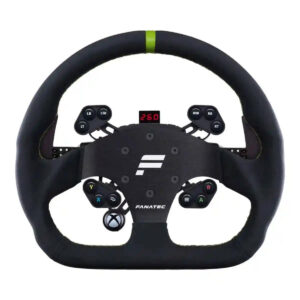
Fanatec ClubSport Steering Wheel R300 V2 for Xbox : Test & Review | What it's really worth in 2025
Fanatec ClubSport Steering Wheel R300 V2 for Xbox: My quick review
This steering wheel gave me a real feeling of confidence and control, with a clean, consistent feel in play. It makes sense for Xbox/PC simracers already a little invested, who want to switch to serious, durable hardware without aiming for the ultra-premium showcase. Its value lies above all in its versatility and the logic of long-term investment in the Fanatec ecosystem.
When you buy through our links, we may earn an affiliate commission.
Fanatec ClubSport Steering Wheel R300 V2 for Xbox: test & feedback after use
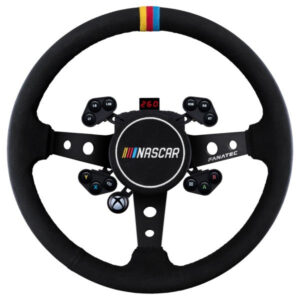
On paper, the Fanatec ClubSport Steering Wheel R300 V2 for Xbox ticks a lot of interesting boxes for console or PC gamers who want to go upmarket without going overboard. It's a fairly compact "racing" diameter wheel, designed to be versatile: GT, touring, a bit of rallying, a bit of everything. It's part of the ClubSport range, clearly above the brand's entry-level steering wheels, but without falling into the ultra-premium delirium.
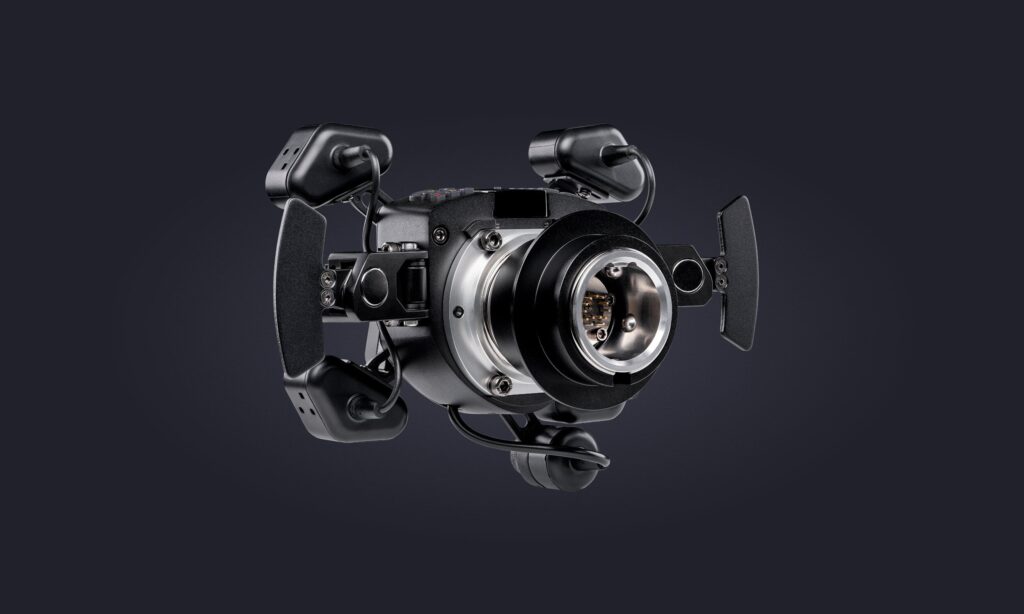
What attracts is the combo: a serious R300 hoop, an official Xbox module, broad compatibility (PC, Xbox, and indirectly PlayStation via compatible base) and above all Fanatec's new-generation QR, which promises a stiffer, more reliable connection. On paper, we have a "ready for anything" steering wheel for those who want a clean, solid setup, with a real racing wheel look.
My angle here is simple: does this R300 V2 really add to the feel, ergonomics and comfort of use compared to other, more accessible Fanatec "all-in-one" wheels, and is it worth the extra cost in a ClubSport or even CSL DD setup? To put it plainly: pleasure in hand, feedback in play, and investment logic.
Design and manufacturing: serious, compact, efficient
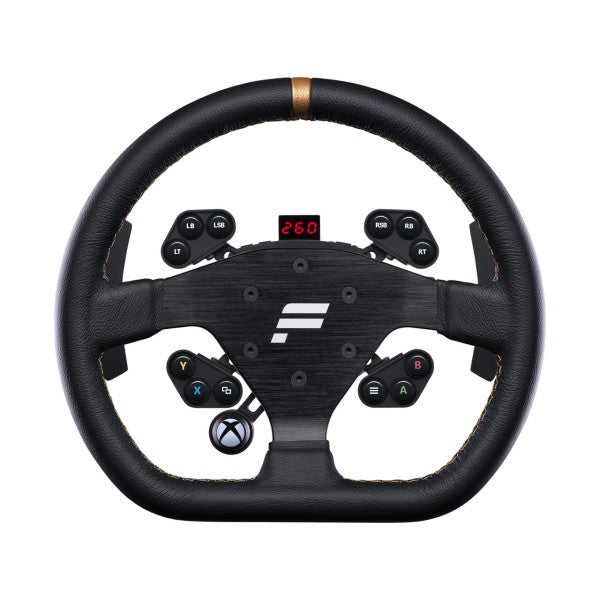
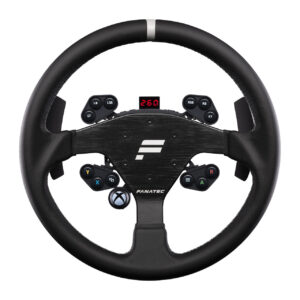
In hand, the R300 V2 gives an immediate impression of seriousness. The aluminum hoop is rigid, with no perceptible flex, even when loaded on a heavy-duty Direct Drive chainstay. The structure exudes solidity, with a thick central hub and clean assembly. Nothing moves, nothing creaks, it's cleanly machined.
The leather upholstery (or good-quality imitation, depending on version) is pleasant. The density of the underlying foam is well balanced: firm enough to maintain good feedback, but not so hard that you can drive for a long time without your hands burning. In hand, you get the feeling of a compact "real steering wheel", closer to a modern GT steering wheel than the big hoops of rallying or classic touring.
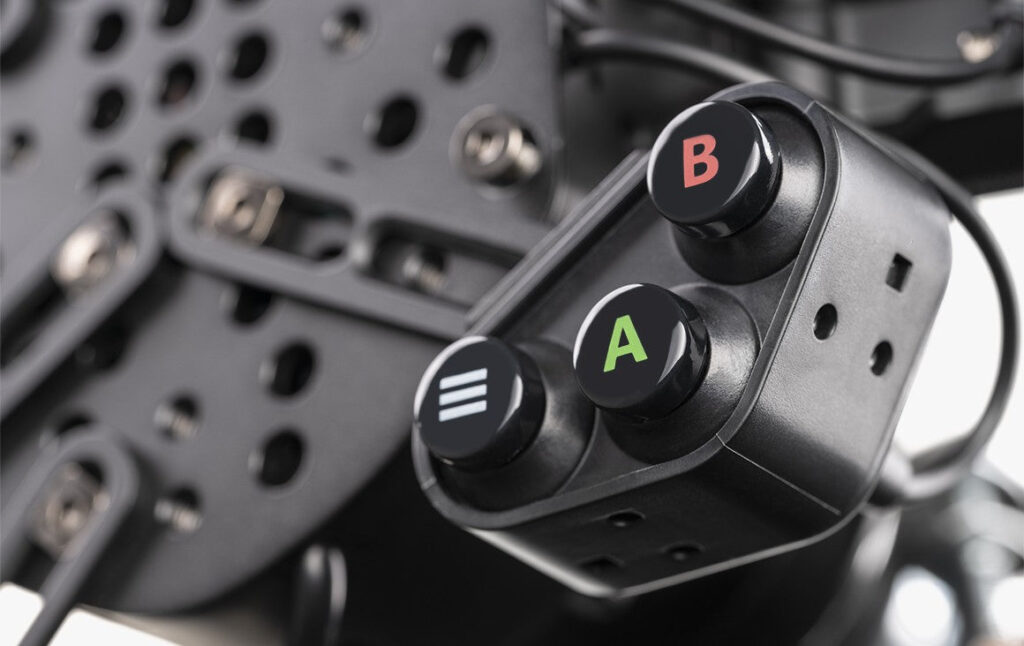
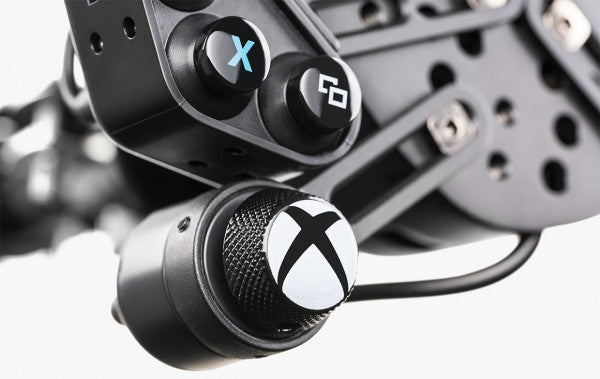
The topstitching is clean, the inner edges don't cut into each other, and the temples don't interfere with the grip. It's not particularly luxurious or flashy, but rather sober and functional. The brushed aluminum, Xbox module and colored buttons add a touch of "serious sim rig" without going overboard.
The paddles are metallic, with a clean click and short stroke. The feel is really good: you know instantly whether the gear has been shifted, with no exaggerated noise or parasitic play. The rigidity of the whole, especially with the new generation of QRs, is clearly superior to the lighter CSL/ClubSport steering wheels of the past.
What may be a little disappointing is that, visually, we're not at the level of an ultra-premium steering wheel in perforated leather or full-custom Alcantara. We're talking about solidity, not window-dressing "wow". Compared with a more plastic Fanatec steering wheel from the CSL range, however, there's a real leap forward in perceived quality and robustness. This is a steering wheel you don't have to worry about squeezing hard.
Settings, customization and compatibility
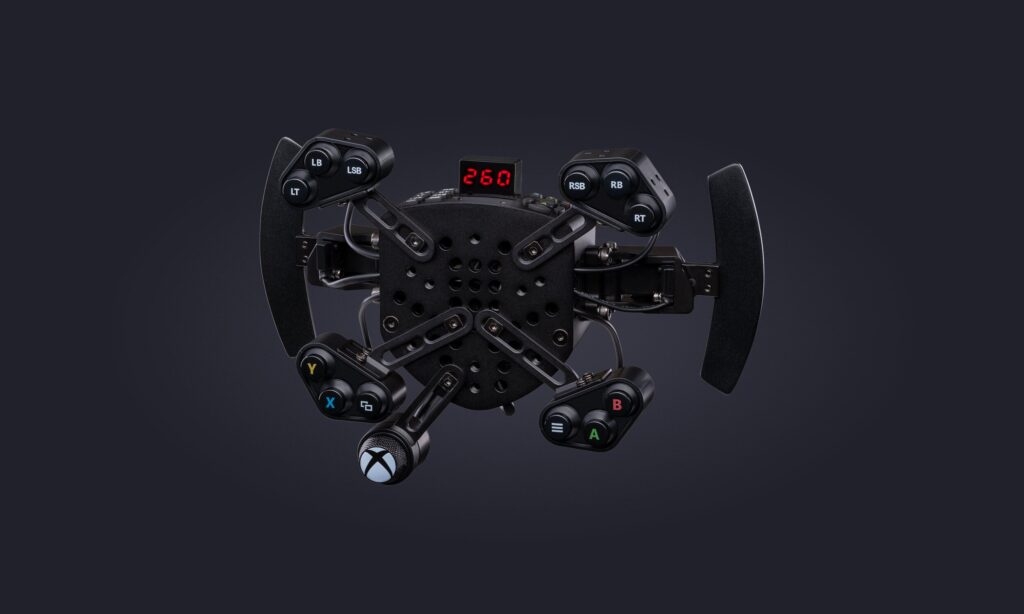
The R300 V2 for Xbox is based on Fanatec's modular logic: we have the R300 hoop, the Xbox control module in the center, the ClubSport paddles at the rear, and of course the modernized QR. As far as settings are concerned, everything goes through the Fanatec base (CSL DD, ClubSport DD, Podium, etc.) and through the PC software when you want to go further.
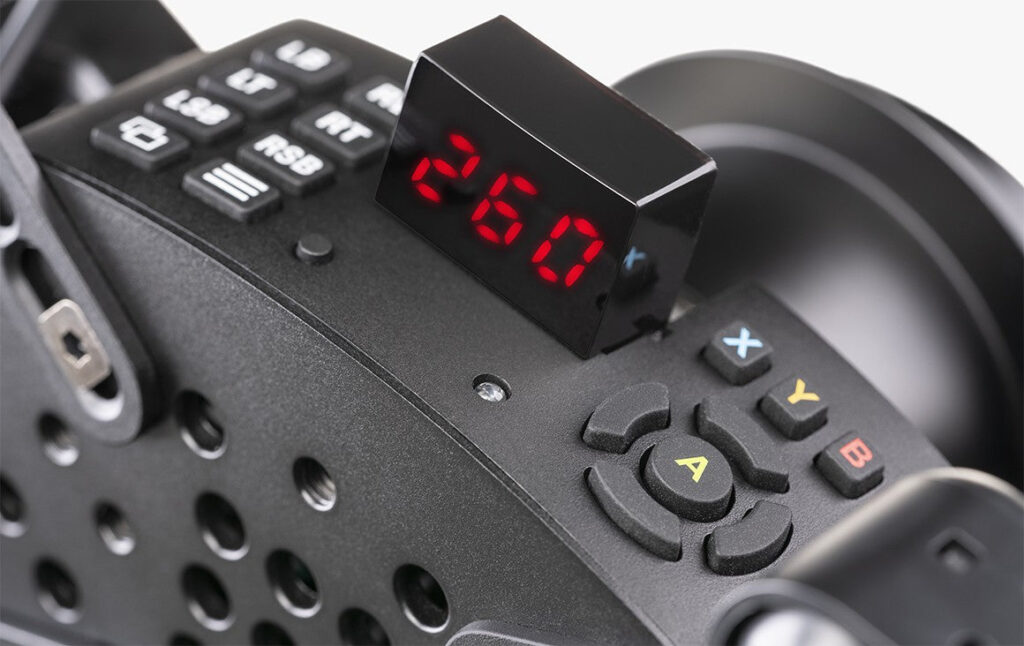
The good news is that button ergonomics are well thought-out for console use. The Xbox buttons are there, easily accessible, and additional buttons map key functions: DRS, headlight, view change, menu, etc. You won't get lost, even coming from a controller, as Xbox mapping remains logical.
In terms of customization, the main interest lies in the ecosystem: the possibility of changing paddles (magnetic, dual-clutch shifter, etc.), switching to another hoop while keeping the base, mixing with pedals, load-cell brakes, sequential shifters and H. On the contrary, the R300 doesn't restrict the evolution of your setup. On the contrary, it integrates seamlessly into a serious cockpit.
On PC, no particular worries, managed by the Fanatec driver and the configuration software where you adjust FFB parameters, rotation angle ranges and button sensitivity. On Xbox, compatibility is assured as long as the base is Xbox-certified, which is the case for many Fanatec bases. The learning curve is fairly short: if you know a little about the Fanatec ecosystem, everything is familiar. If you're new to the system, you'll need a little time to get to grips with the database menus and FFB profiles, but there's nothing to stop you.
In practice, I see this R300 V2 as a durable part of a setup. You can move up in base (from a CSL to a more powerful DD) without changing the wheel, and it will follow without flinching. It's not just an entry point, it's a wheel that can stay on a rig for a long time.
Game feel: compact, precise, easy to read
Where the R300 V2 clearly stands out is in its game feel, especially with a Direct Drive base. Its relatively compact diameter makes for highly responsive steering. Small corrective movements are instantaneous, and you soon get the impression of controlling the car "with your fingertips", without blur or lag.
The accuracy of the feedback obviously depends on the base, but the steering wheel doesn't slow down the signal. On the contrary, the rigidity of the assembly and the play-free QR allow you to feel a very clean FFB. It's easy to feel the small grip deviations, the micro-oscillations of the car at high speed, and the load transfers to the brakes. You quickly understand what the car is doing.
When cornering, the R300 V2 gives a very good grip reading. Torque rise at the wheel is progressive and clear. You can clearly feel when the front begins to widen, or when the rear lifts a little on entry. On a less powerful base (such as a CSL DD with low Nm), the steering wheel remains usefully legible: the moderate diameter helps to exploit the available force to the full, and returns seem livelier than on a larger, heavier wheel.
On the vibrators, the sensations are frank but not caricatured. You can feel the relief, the vibrations and the oscillations of the body. The steering wheel doesn't shake uncontrollably, and its rigidity prevents parasitic noises and "mossy" vibrations that eat up information. On a very bumpy track, the feeling remains exploitable, you're not fighting against the hardware, you're driving.
During quick corrections - oversteer, slight slippage on corner exit, loss of rear grip - the shape of the steering wheel and its well-controlled weight make right-left linkages very natural. You can counter almost instinctively, which gives you a lot of confidence. You dare to attack more, because you know that if you stall, you'll have the hands to catch up.
Over long sessions, comfort is good. The leather holds well, doesn't become slippery too quickly, and the underlying foam doesn't crush. Fatigue comes more from the base FFB than from the steering wheel itself. The balance between feedback and comfort is well managed: we maintain a good level of detail without feeling a permanent aggressiveness in the hands.
Compared to a lighter or more plastic entry-level steering wheel, the main gain is in consistency. Feedback is cleaner, impacts are better controlled, and there's less mechanical noise. Compared with an even higher-end or more typical steering wheel (GT3 replica, F1 steering wheel, etc.), the R300 V2 lacks the "signature" or ultra-specialized look, but shines in its versatility. You can switch from Assetto Corsa to a more arcade-style title, from GT to rally, without feeling totally out of place.
Who's it for? What we like, what we don't like
In my opinion, the ClubSport Steering Wheel R300 V2 for Xbox is best suited to an intermediate to advanced profile. A gamer who already has a minimum of sim racing experience, who knows he'll be spending hours on it, and who wants a more serious steering wheel than an entry-level model, without necessarily going for an ultra-specialized replica. On Xbox, it clearly speaks to simracers who want to get away from the joystick or "toy" steering wheels and move on to something credible. On PC, it makes sense for a ClubSport or CSL DD setup that aims for long-term progression.
What I appreciate most is the rigidity and overall mechanical quality. It feels like a product designed to take the punishment. Then there's the versatility of the format: not too big, not too small, usable in virtually all types of serious games. Last but not least, the consistency with the Fanatec ecosystem: modern QR, Xbox compatibility, natural integration with bases and accessories, giving the impression of an investment that makes sense if you upgrade your rig.
But there are limits. The first is the absence of any real visual or tactile "premium" touch compared with some of the more high-end wheels: no high-flying Alcantara or ultra-distinctive design, just sober styling, which may seem a little wise to some given the price. Secondly, for a pure PC gamer already equipped with a good setup and no need for Xbox, other Fanatec wheels or other brands may offer more personality or features (advanced rotators, integrated screens, etc.) for a similar budget. Finally, the HTML marketing sometimes suggests a "universal and ultimate" product, whereas in practice it's more like a very good all-round mid/high-end wheel, not an absolute monster.
In terms of perceived value, this is not an impulse purchase. It's a well-considered investment in a Fanatec ecosystem, which makes sense if you plan to keep the brand for several years, change the base, upgrade your rig, and keep the steering wheel as a central pillar.
Verdict: a solid Xbox/PC steering wheel for a setup that wants to grow
The Fanatec ClubSport Steering Wheel R300 V2 for Xbox brings two things above all to a setup: mechanical confidence and great versatility in a compact format. Clearly, we've left the territory of "fun for beginners" steering wheels to enter the realm of equipment that follows in the footsteps of Direct Drive bases.
On the market, I would place it as a mid/high-end pivot product: qualitative enough to accompany a strong base, reasonable enough to remain accessible to a motivated but non-professional simracer. It's not looking to be a category-specific replica, it's looking to be the "default" steering wheel that does everything right.
I'd recommend it to Xbox and PC gamers who want a serious, robust steering wheel that can be used on a wide variety of titles, and who intend to make a lasting contribution to the Fanatec ecosystem. For PC-only gamers looking for a precise replica or advanced functions (rotaries, integrated screen), it may also be worth looking at more specialized alternatives.
If you're looking for a compact, versatile, reliable and Xbox/PC compatible wheel to accompany a Fanatec Direct Drive base for the long haul, this product can clearly make the difference in your setup.</final

Reviews