Fanatec Podium Steering Wheel R300 : Test & Review | What it's really worth in 2026
Fanatec Podium Steering Wheel R300: My opinion in brief
This steering wheel provides a very direct link with the car, with a serious, consistent feel for long, fatigue-free driving. Above all, it makes sense for simracers already equipped with Fanatec, who prefer pure sensations to a profusion of buttons and screens. The investment remains high, but is justified if you're looking for a durable, versatile main steering wheel.
When you buy through our links, we may earn an affiliate commission.
Fanatec Podium Steering Wheel R300: a demanding simracer's opinion
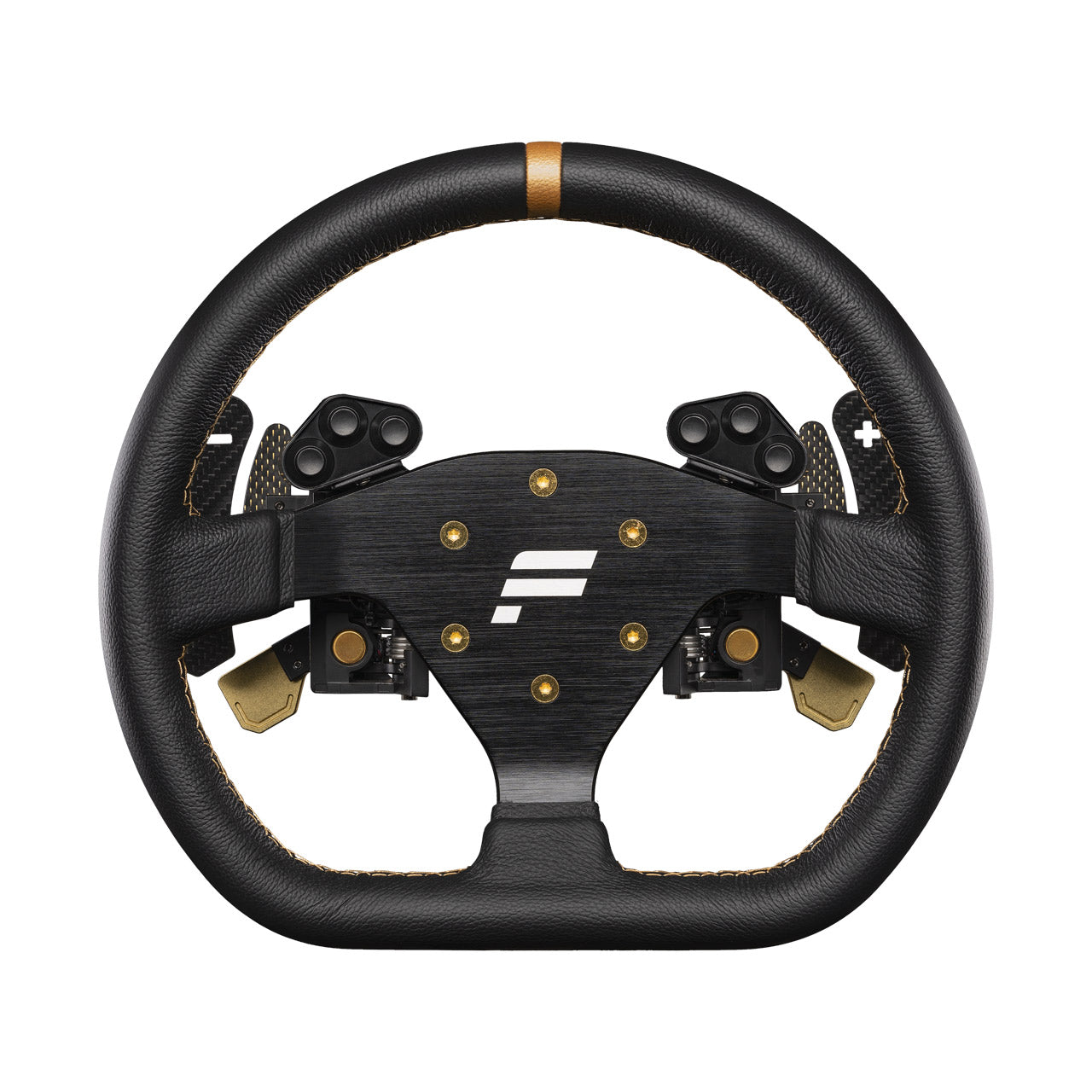
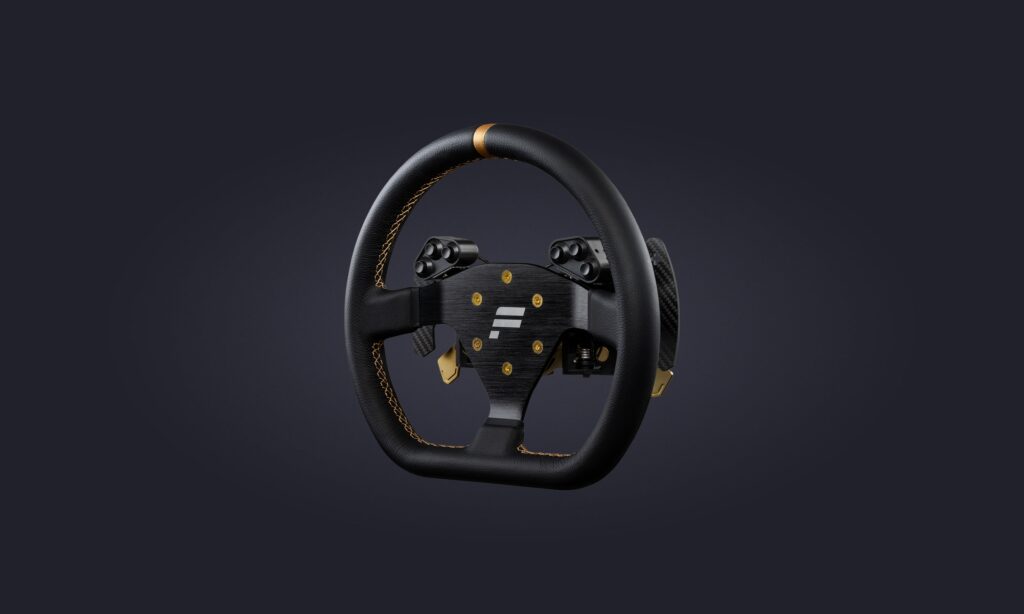
The Fanatec Podium Steering Wheel R300 is the brand's top-of-the-range "naked steering wheel". No buttons everywhere, no screen, no frills. Just an aluminum circle, a rear plate, full compatibility with Podium/ClubSport/CSL bases, and the very clear idea of addressing simracers who want a compact, solid and uncluttered GT / proto / rally steering wheel.
The appeal is precisely that: a serious-sized, Direct Drive-compatible steering wheel with a construction designed to handle high torque, while remaining relatively light and versatile. It's clear that Fanatec is targeting those who ride often, in several disciplines, and who prefer a good "road feel" to an explosion of LEDs.
My angle with this R300: the feel in hand, the actual build quality, the relevance of the format for intensive use, and its place in a setup where you may already have one or two steering wheels. Is it worth the price compared with a more control-laden wheel? Do the diameter and shape really add to precision and control? That's what I judged it on.
Design and manufacture of the Fanatec Podium R300
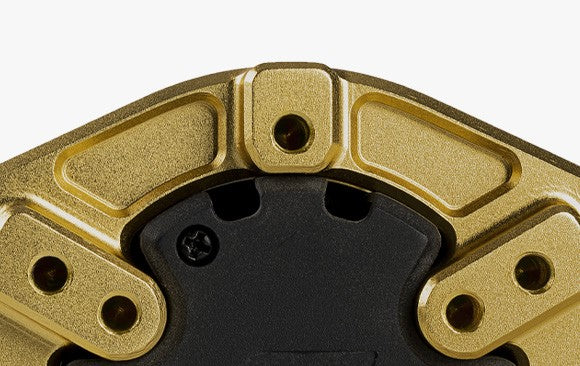
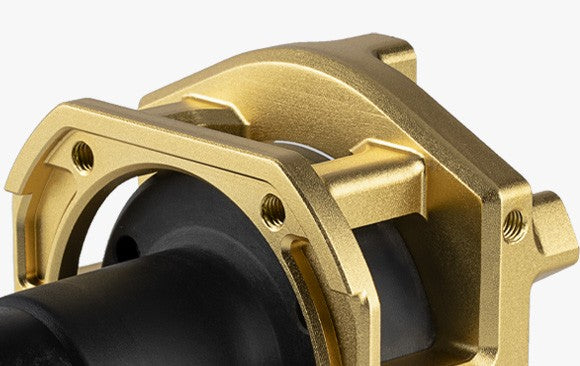
Visually, the R300's aim is clear: compact GT look, black, sober, efficient. The aluminum frame, covered in perforated alcantara, immediately gives an impression of rigidity. No twisting, no flexing, even when squeezing hard or applying violent pressure. You can tell it's made for Direct Drive bases, without compromising on solidity.
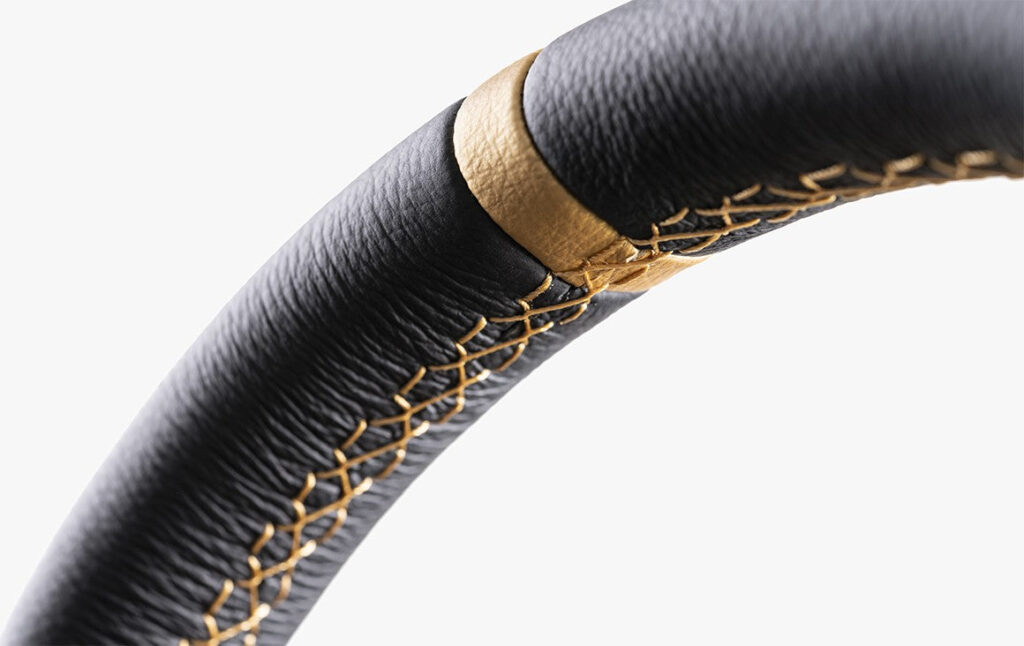
In the hand, the relatively small diameter gives a very direct feel. Hands fall naturally, the grip section is well balanced: neither too thin nor too thick. It feels like a "dense" but not heavy wheel, transmitting what the base does without becoming tiring. It's a steering wheel you won't hesitate to use for a long time.
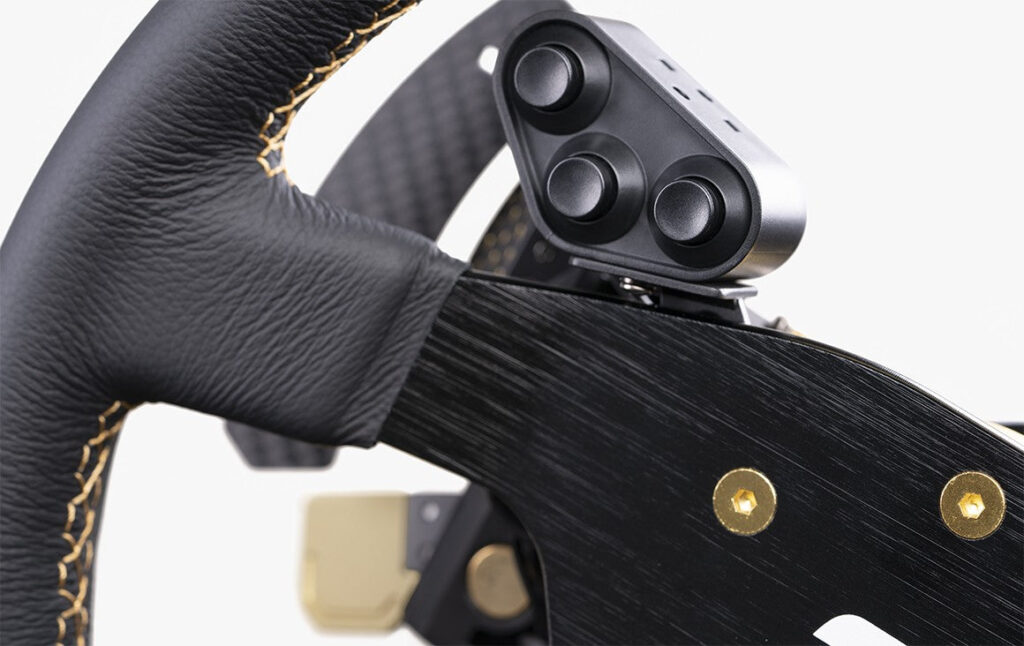
Overall, the finish is very clean: clean seams, taut upholstery, metal backplate, meticulous assembly. Nothing creaks, nothing moves. The alcantara has just the right amount of grip, with a soft yet precise texture that inspires confidence. In terms of quality feel, we're clearly at the "premium sim racing" level.
What may be a little disappointing is the absence of any real visual "staging": no screen, no huge clutch paddles, few integrated controls. Compared to the more "show-off" steering wheels in the Podium range, this may seem a little austere. But that's the idea: a tool steering wheel, not a gadget steering wheel.
Compared to other GT steering wheels of similar size, the R300 is at the top of the range when it comes to rigidity and a feeling of density. Some of our competitors' models may appear more massive or visually busy, but few offer such a coherent combination of compactness + solidity + finish.
Settings, customization and compatibility
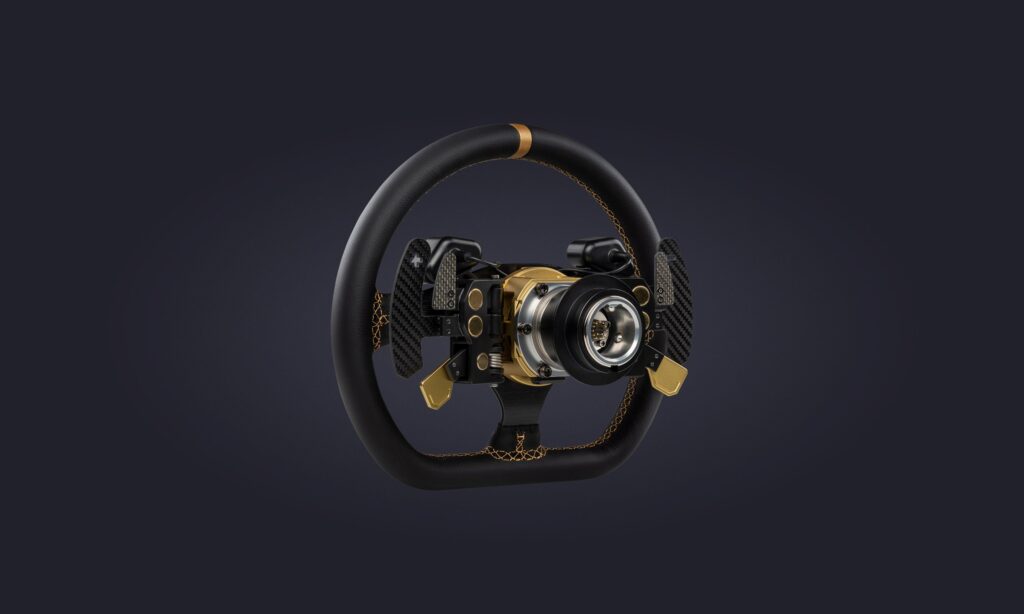
The R300 benefits directly from the entire Fanatec ecosystem. Once mounted on a Podium, ClubSport or CSL base, you'll find the usual menus and presets via the base's PC driver and OSD. Settings remain centered on the base rather than on the steering wheel, which makes things a little simpler: you don't get lost in a thousand wheel rim-specific sub-menus.
The really useful options here revolve around FFB strength, linearity, filter, damper and road effects. Because of its size and weight, the R300 reacts very well to fine-tuning: a slight adjustment of damper or FEI can make a big difference to the feeling of liveliness. On a Direct Drive base, the impact of each parameter is quickly apparent.
The learning curve clearly depends on your experience with Fanatec. If you're already familiar with the ecosystem, getting started is very straightforward: you attach the steering wheel to the QR, choose a profile, and adjust in the PC driver or via the buttons on the base. If you're a complete beginner, you'll need a little time to understand the base/wheel/game interface, but it's not insurmountable.
In terms of compatibility, the R300 follows the brand's rules: PC native, consoles according to the base used. The product's strength lies above all in its place in the ecosystem: you can use it on a Podium base in GT / proto, swap it with an F1 steering wheel loaded with more buttons, combine it with a Load Cell crankset, a sequential shifter, a handbrake... It integrates naturally into an existing Fanatec setup.
In terms of upgradeability, this is clearly a durable steering wheel. The construction means you can keep it for a long time, even if you switch from a mid-range base to a Podium later on. It's not an "entry-level" wheel that you replace quickly: it's more of a working wheel, which you then complete with other, more specific rims, depending on the discipline.
Fanatec Podium R300: sensations at stake
Where the R300 really comes into its own is on the track. The circle's compact diameter and rigidity give a very direct return. On a Direct Drive base, you feel every nuance of the force feedback without parasitic damping. You get the impression of a short link between tires and hands. It's crisp, clean and legible.
Cornering behavior is very healthy. It's easy to roll into fast corners, the car is precisely positioned with support, and above all, it's easy to adjust the trajectory mid-corner. The shape of the steering wheel allows you to change your grip slightly without losing your bearings. You always know where you stand, even in tight sequences.
Grip reading is one of the highlights. Thanks to its moderate weight and rigidity, the R300 doesn't filter what the base wants to transmit. You can feel the car loading and unloading, and perceive micro-losses of grip at the front and rear. You quickly understand how far you can push the car before it stalls. As a result, you find yourself driving closer to the limit, with greater confidence.
On vibrators, the feedback is straightforward. Vibrations are not drowned out by excessive inertia. When you get on an aggressive vibrator, you immediately feel it in your hands, without the steering wheel getting out of control. The circle doesn't resonate, doesn't vibrate strangely: it takes it in, gives it back, and that's the end of it. It's clean. You know exactly when you've eaten too much vibrator.
Over long sessions, this compact format is a great help. Your arms don't get as tired as with a big steering wheel, and you still have plenty of leverage to control the car. Even on a hard-pushing base, you find the right balance between effort and precision. You stay focused on driving, not on fighting the equipment.
In fast corrections, the R300 also proves very comfortable. When a car stalls a little on re-acceleration, the steering wheel quickly returns to center, without any annoying inertia. Oversteer can be corrected in a fraction of a second, without feeling like you're fighting against a steering wheel that's too wide or too heavy. This is the kind of situation where the R300's size really makes a difference.
In terms of overall immersion, we're on to something serious, with no gimmicks. No flashing LEDs, no integrated screen. Just a sturdy circle that does its job: conveying what the car is doing. We're more on a "performance tool" steering wheel than a "show" steering wheel. If you're looking to shave off tenths, this orientation makes sense.
Compared with a flywheel mounted on a belt or belt/gear base, the R300 + Direct Drive combination gives a clear gain in finesse. Load transitions are more gradual, small corrections are better exploited, and you know earlier when things start to slip. Compared to a larger flywheel on the same base, we gain in responsiveness and comfort over time, at the cost of a little less leverage for those who ride with very high forces.
Who's it for? What we like, what we don't like
The Podium R300 is clearly aimed at intermediate to advanced simracers who are already established (rigid cockpit, Fanatec base, regular use) or highly motivated beginners who are building a setup to last. It is particularly suited to those who often drive GTs, prototypes, touring cars, modern rally cars - in short, anything that requires a compact, precise steering wheel. On the PC, it comes into its own thanks to its fine-tuning capabilities, but it's still entirely relevant on the console via a compatible base.
What I appreciate most is, firstly, the rigidity of the ring and the overall build quality, which give an immediate sense of confidence. Next, the well-balanced diameter and weight, which offer a remarkable balance between responsiveness and long-distance comfort. Finally, the natural integration into the Fanatec ecosystem: you put it on a Podium, a ClubSport or a CSL, it just works. Plug it in, set it up, ride it. You get the feeling that you're investing in a steering wheel that's going to follow several setup evolutions.
But there are limits. The first is functional simplicity: few controls on the steering wheel itself, no display, no LEDs. If you spend your life managing ERS deployment, fuel mixture or race settings, you're likely to find it a little basic. Second point: the alcantara, as pleasant as it is, will require maintenance and/or gloves if you drive often, otherwise it will age more quickly. Third point: its price positioning remains clearly in the "investment" zone, not in the "affordable accessory" zone. You're paying for build quality and Podium compatibility.
In terms of perceived value, it all depends on your profile. If you're looking for a single, versatile, solid and durable steering wheel for a Fanatec setup, the investment defends itself very well. If you're looking for a lot of on-board functions, screens and lights, you may feel you're paying a high price for an overly refined design.
Verdict: the Fanatec Podium R300 in a sim racing setup
The Podium Steering Wheel R300 changes one thing above all in a setup: the quality of the link between the base and you. It provides a compact, rigid and precise steering wheel, designed to exploit the full potential of Direct Drive bases, without sacrificing comfort over time. It doesn't transform your setup visually, but it clearly raises the level of "seriousness" in the cockpit.
On the market, it's positioned as a premium product, without going into the delirium of ultra-specialized steering wheels packed with electronics. It's an interesting pivot for those who want an everyday steering wheel capable of handling a high volume of riding with a consistently clean feel. It's not an entry-level steering wheel, nor a toy. It's a tool.
I'd recommend it to those who already have a Fanatec base, or who are clearly planning to stay in the ecosystem, with a strong priority on pure sensations and precise steering. If you want a GT/multi-discipline main steering wheel that's strong and consistent with a Direct Drive base, the R300 makes perfect sense. On the other hand, if your main pleasure lies in the integrated screens, mode rotations and dozens of buttons, there are more suitable options available from the same brand or elsewhere.
If you're looking for a compact, highly rigid steering wheel designed to exploit a powerful base and give you a clean, direct feel for the car, this product can clearly make the difference in your setup.
Other products we have tested
-
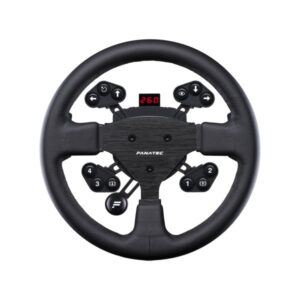
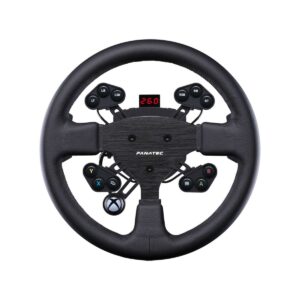
Fanatec ClubSport Round 1 V2
-
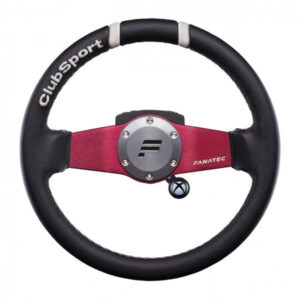
Fanatec ClubSport Drift V2
-
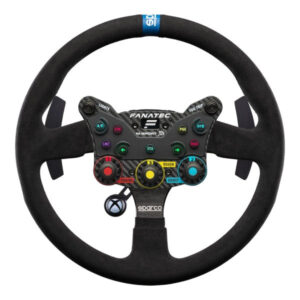
Fanatec ClubSport Steering Wheel Rally Sweden for Xbox
-
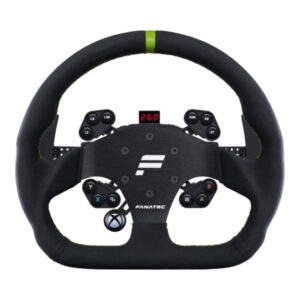
Fanatec ClubSport Steering Wheel GT Alcantara V2 for Xbox
-
Fanatec ClubSport Round 1 V2 for Xbox
-
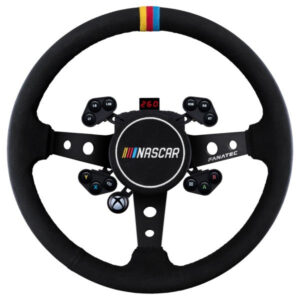
Fanatec ClubSport Steering Wheel NASCAR V2
-
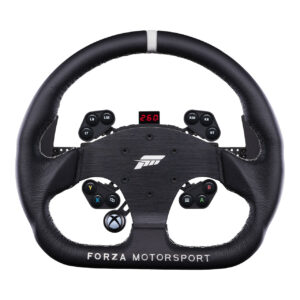
Fanatec ClubSport Steering Wheel GT Forza Motorsport V2 for Xbox
-
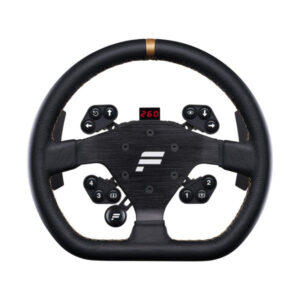
Fanatec ClubSport Steering Wheel R300 V2


Reviews