
MOZA SGP Sequential Shifter : Test & Review | What it's really worth in 2026
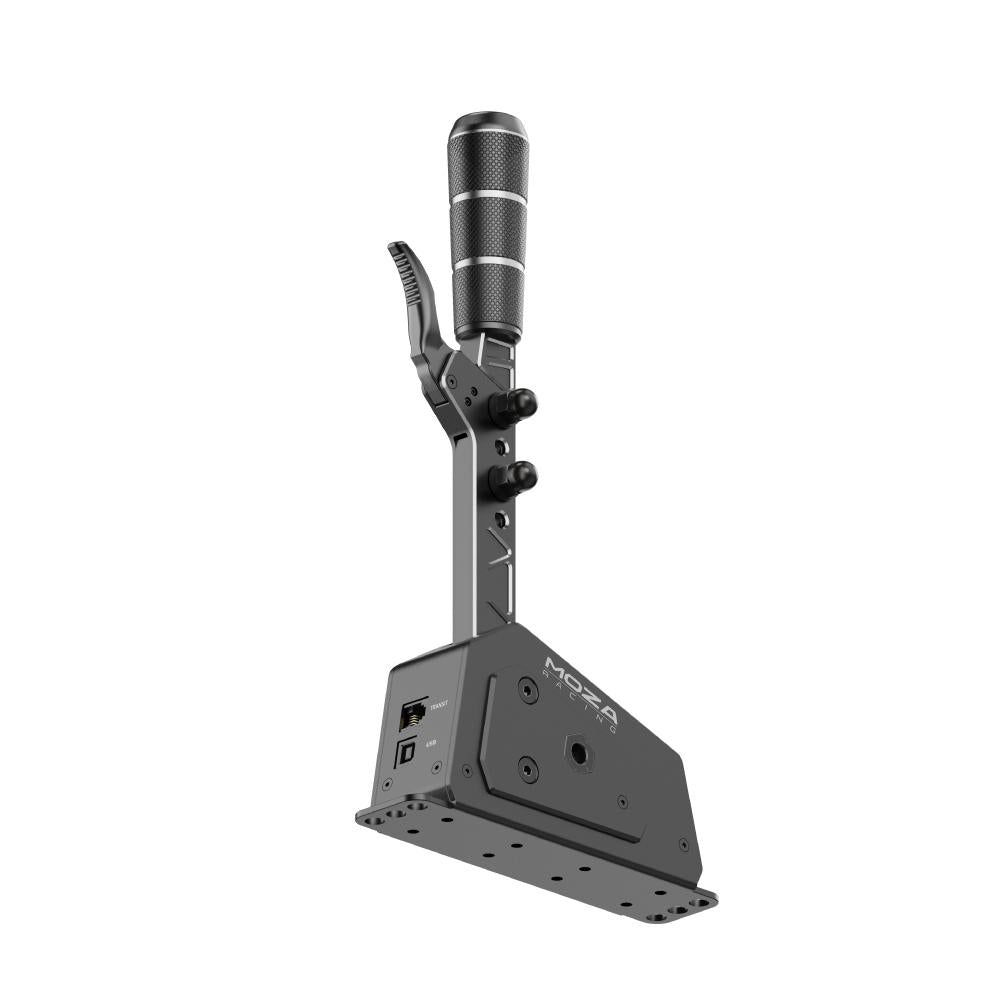
MOZA SGP Sequential Shifter: My quick review
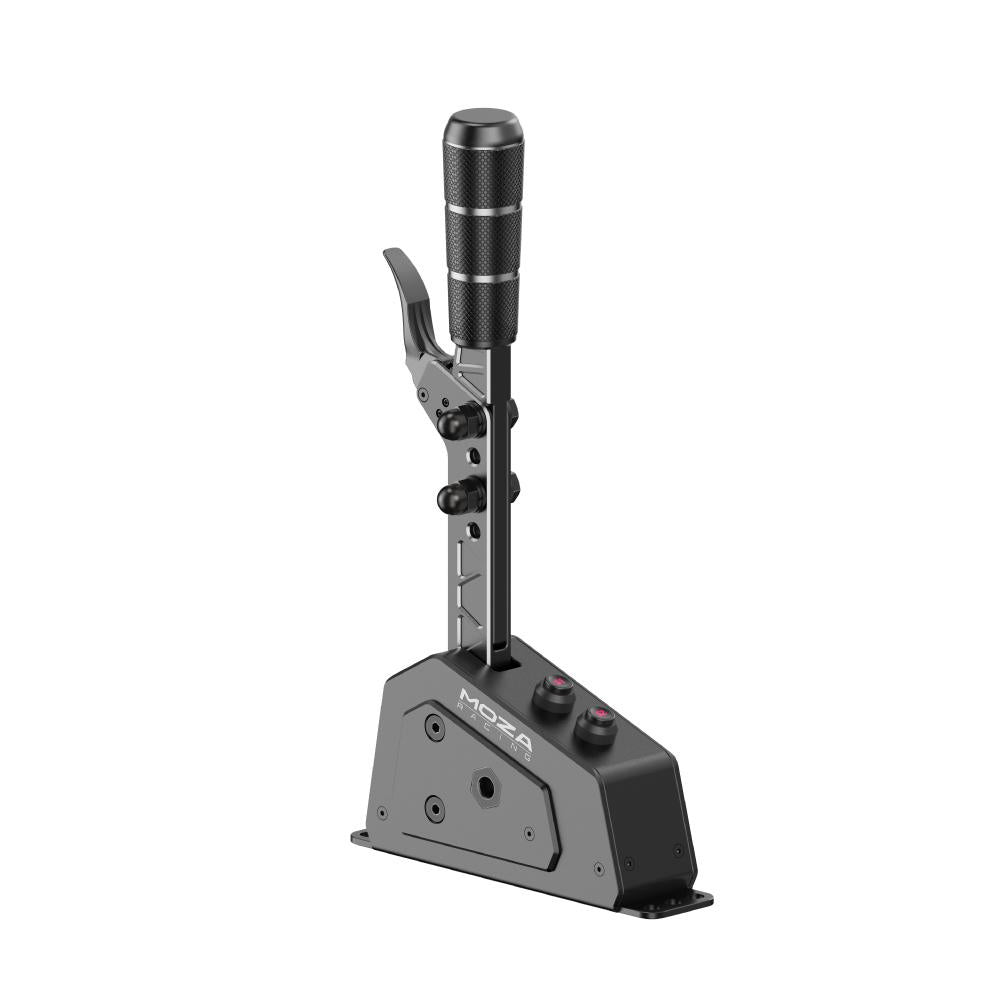
The MOZA SGP is an all-metal sequential shifter that breaks the mold of what you’d typically expect at this price point. It features a contactless Hall sensor, adjustable stiffness and height, two backlit buttons, and—most notably—a multifunction lever, which is rare at this price point. Be aware, however, that it works only on a PC, via USB or a MOZA dock. It’s an excellent first sequential shifter—provided you can live with a few mechanical tolerances that could be improved.
When you buy through our links, we may earn an affiliate commission.
What We Liked
- Very sturdy all-metal construction (aluminum and steel)
- Non-contact, wear-free Hall sensor
- A rare multifunction shifter at this price point
- Two backlit, configurable buttons
- Adjustable height, firmness, and head
- Interchangeable knob with standard M12 x 1.5 thread
- Flexible mounting, direct USB connection, or MOZA base
- Unbeatable value for the money
Reserves
- PC-only compatibility; no console support
- Slight double-click effect when triggered
- Multifunction lever with no tactile feedback and a slight amount of play
- Hex screws that are easily marked
- The lever is less accessible in the up position
Technical Specifications
| Type | Sequential, non-contact Hall effect sensor |
| Materials | Aeronautical aluminum and high-strength steel |
| Weight | about 1.4 kg |
| Dimensions | 320 x 182 x 52 mm |
| Height Adjustment | 64 mm range |
| Knob | interchangeable, M12 x 1.5 thread |
| Orders | 2 RGB backlit buttons and 1 multifunction lever |
| Hardness Adjustment | built-in shock absorber |
| Connectivity | USB Type-B to Type-A, or RJ11 to MOZA Base or MOZA Hub |
| Compatibility | PC only (no console support) |
| Software | MOZA Pit House |
| Assembly | 6 unthreaded M8 holes and 8 threaded M6 holes |
An all-metal sequential design that hits the mark
Sequential shifters are often where you end up paying a premium for a simple click. MOZA takes the opposite approach with the SGP—an all-metal unit featuring a contactless sensor, integrated buttons, and a multifunction lever that few competitors, even much more expensive ones, dare to include. Right out of the box, it lives up to its promise. The unit feels solid and substantial in the hand (weighing around 1.4 kg), and the combination of aluminum and steel exudes quality. You can tell right away that this isn’t some plastic toy tacked onto the side of your rig.
The housing combines aerospace-grade aluminum for the lever and knob with a high-strength steel shell folded in on itself to absorb impacts. You can pull on it roughly while shifting up a gear in a rally, and the structure won’t budge. The only manufacturing drawback to keep in mind for later is that the small hex screws get marked up quickly if you apply too much force during installation.
The click: sudden, loud, addictive
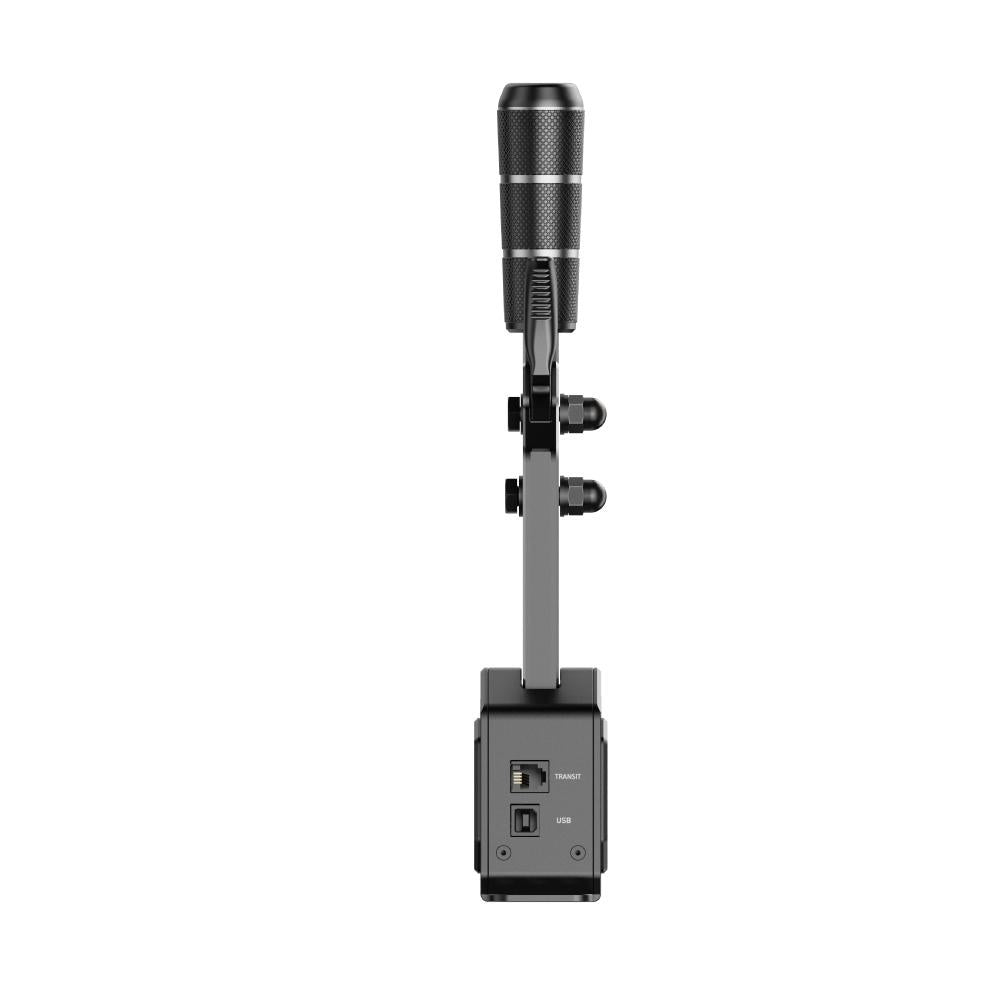
With the controller in hand, the first thing that catches your attention is the sound. The SGP clicks loudly. The comparison that comes to mind is that of a mechanical gaming keyboard switch—an XXL, metal version—that makes you want to tap it over and over again. The feedback travels clearly up through the shifter; you can physically feel the gear engage, and when braking through a downhill turn, that crisp sensation perfectly captures the feel of a race car. On a TCR track day or a rally stage, you get used to it in just a few laps, and the motion becomes instinctive.
One detail did catch our attention during use, though: a slight double-click sensation when pressing the button, when we’d really prefer a single, crisp click. In real-world driving, during a fast lap, you don’t even notice it anymore. But in the quiet of the garage, this slight hesitation reveals the product’s price point. It’s nothing deal-breaking, especially since the sensor is a contactless Hall-effect model—a guarantee of consistency and longevity, with no mechanical wear from constantly shifting gears.
Height, firmness, grip: adjust to fit your hand
The SGP can be adjusted in three key areas. First, the height, with a range of about 64 mm controlled by two bolts, which allows you to position the lever exactly at hand level depending on your driving position. On our setups, opinions actually differ internally: one of us preferred the highest mounting position so it would be under the palm, while the other kept it at the lowest setting for a reason we’ll explain shortly. That’s precisely the point of having a choice.
The stiffness is adjustable via a built-in damper, allowing you to switch from a light feel to something more substantial, depending on your preference. Finally, the shift knob unscrews and features an M12 x 1.5 thread—the standard on real cars—which makes it easy to replace it with a commercially available knob if you feel like it. A quick tip: you’ll need two 10 mm wrenches to make these adjustments, so keep them handy.
The Multifunction Lever: A Truly Great Idea
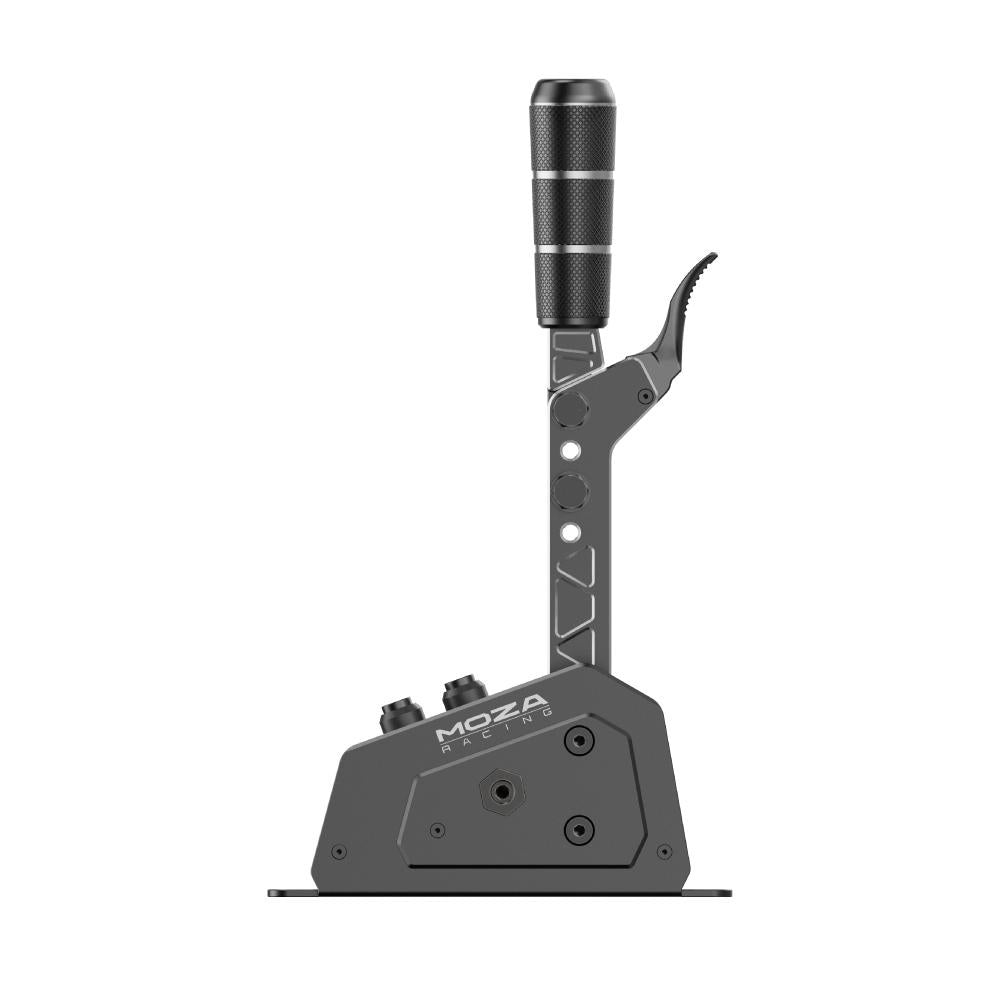
That’s what sets the SGP apart from the rest. On the front panel, a multifunction lever resembles the controls of real sequential racing transmissions—perfect for engaging reverse, neutral, or a custom function. Set low, it falls perfectly under your fingers and becomes a real plus in everyday use. Be careful, though: if you extend the lever all the way, this same multifunction lever becomes much less accessible. That’s why we recommend keeping it set fairly low to keep it within reach—it’s one of the bike’s best features, so you might as well make the most of it.
Added to this are two sturdy backlit buttons on the body, made of the same high-quality material as those on MOZA steering wheels, and fully configurable. Using the MOZA Pit House software, you can choose from eight colors, reverse the shift direction, and assign functions to the buttons. A word of honesty about the multifunction lever: it offers no tactile feedback when engaged and has a slight amount of lateral play; we’d like just a bit more precision from this component.
Connectivity and Compatibility: The PC Comes First
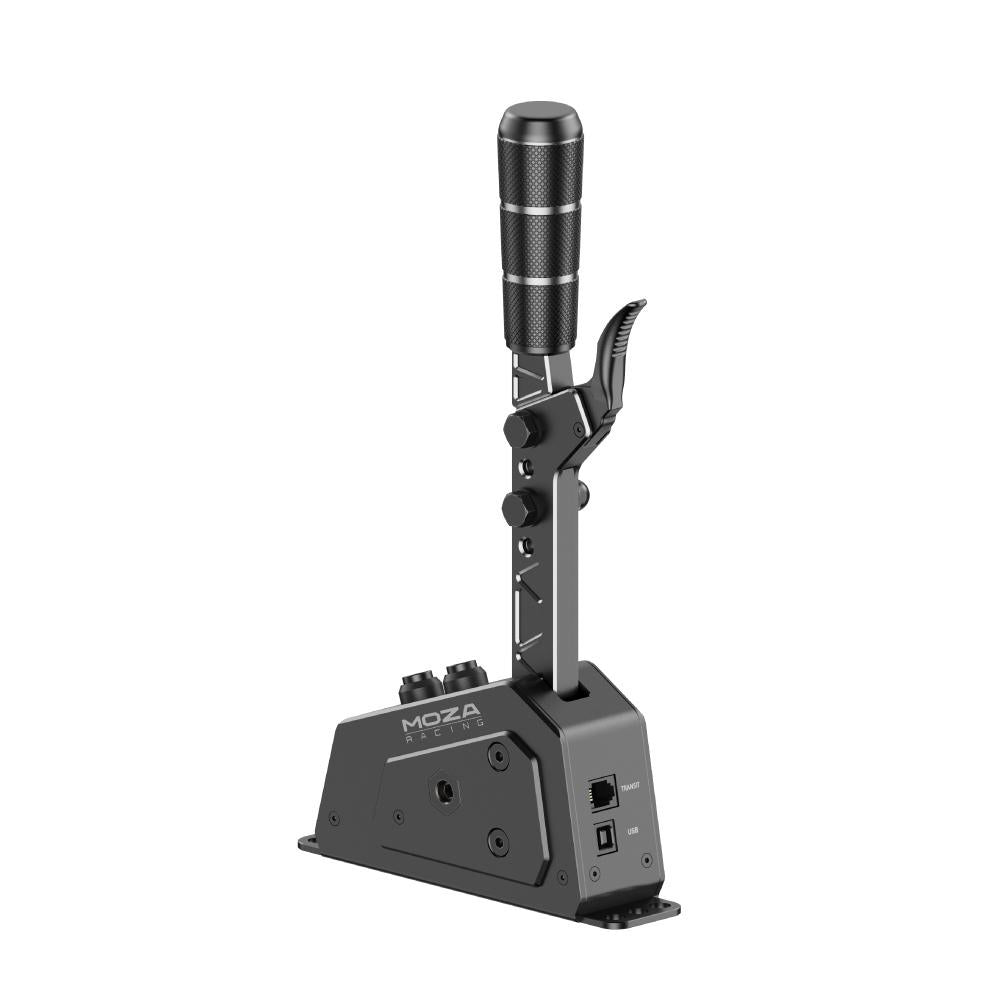
An important point to keep in mind before purchasing: the SGP is a PC peripheral. It does not support consoles. You can connect it either directly to your computer via USB (Type-B to Type-A cable included) or via RJ11 to a compatible MOZA base station or the MOZA Hub, without needing an additional adapter. This makes it the ideal accessory for anyone already using the MOZA ecosystem on a PC, but a bad fit for a console gamer hoping to plug it into their Xbox or PlayStation.
Installation is flexible thanks to numerous mounting holes—six unthreaded M8 holes and eight threaded M6 holes—enough to secure it to most mounts or even with a simple table clamp, as we found in our tests. A tip from real-world experience: on a slightly flimsy rig, pulling hard on the lever can cause the whole assembly to shift; a rigid frame is better suited to the aggressive nature of this shifter.
What Annoyed Us
Nothing dramatic, but let’s be thorough. The tolerances aren’t perfect; the shaft and the multifunction lever have a bit of play that stands out given the overall sturdiness. The hex screws strip easily if you apply too much force, which complicates disassembly if needed. And that double-click issue remains the only real complaint in terms of feel. Given the build quality and, above all, the asking price, these are compromises we’re happy to overlook.
Who, in the end,
The SGP is designed for PC gamers who want a high-quality sequential shifter without breaking the bank—ideally those who already own a MOZA base unit. It offers an all-metal construction, crisp feedback, useful adjustments, and that famous multifunction lever that’s virtually impossible to find anywhere else at this price point. If PC-only compatibility doesn’t deter you, it’s hard to find a better option for discovering or refining the art of old-school gear shifting.


Reviews