
MOZA HGP Shifter : Test & Review | What it's really worth in 2026
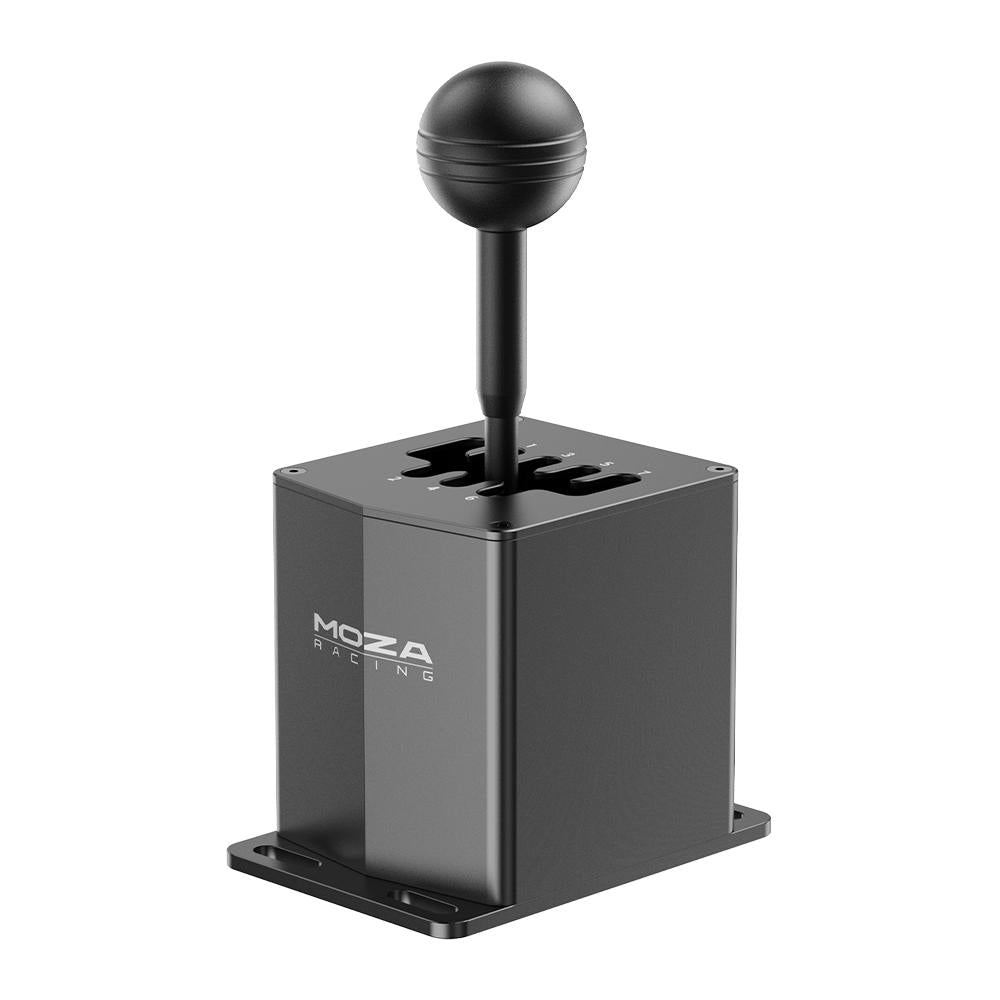
MOZA HGP Shifter: My quick review
MOZA’s first H-shaped shifter, the HGP, boasts an all-aluminum finish and a distinctly mechanical feel. Seven gears plus reverse, a contactless angle sensor, and a screw-on knob—all at a price that gives more expensive models a run for their money. We put it through its paces to see if it performed as well under braking as it did during long endurance races. Verdict: a very convincing debut—provided you mount it on a real racing seat.
When you buy through our links, we may earn an affiliate commission.
What We Liked
- Machined all-aluminum frame, no flex even under heavy load
- A heavy, mechanical motion very similar to that of a real gearbox
- The grid is well-spaced; misfires are rare
- Screw-on knob compatible with most aftermarket knobs
- Assisted downshifting that can be activated and configured via Pit House
- 15-bit non-contact sensor, virtually maintenance-free
- Aggressive pricing for this level of finish
Reserves
- H-pattern shifter only; no sequential mode
- Non-adjustable resistance
- Seventh gear and reverse gear are pushed down; not very intuitive on the 7th
- Not suitable for desk mounting (too tall)
- A metallic noise may occur, depending on the installation
- PC-based and MOZA-based
Technical Specifications
| Configuration | 7 speeds + reverse (H-pattern) |
| Sensor | 15-bit non-contact angular encoder |
| Material | aerospace-grade anodized aluminum, CNC-machined |
| Weight | 1.8 kg |
| Dimensions | 100 x 140 x 250 mm |
| Knob | removable, standard thread (aftermarket compatible) |
| Connectivity | USB-B to PC, RJ11 to MOZA-compatible base |
| Assembly | M6 threaded holes; hardware and tool included |
| Software | MOZA Pit House |
| Assisted Downshift | Yes, optional and configurable |
MOZA has finally rounded out its lineup with a true H-shaped lever
There was one piece missing from the MOZA puzzle. The brand had its bases, steering wheels, pedals, and handbrake, but no in-house gearshift lever. The HGP fills that gap with a simple promise: to offer a premium-quality H-pattern gearshift lever without breaking the bank. On paper, it features seven forward gears plus reverse, a solid-machined housing, and a contactless sensor. In practice, as soon as you get your hands on it, you quickly realize where MOZA invested its money.
What stands out right away is that this first attempt in the category doesn't feel like a rookie product. The HGP goes head-to-head with the top players in the entry-level and mid-range segments, and it does so with concrete merits rather than inflated marketing claims.
A solid block of aluminum that doesn't budge
The chassis is entirely machined from anodized, aircraft-grade aluminum, and you can tell the moment you touch it. It has a reassuring heft—it doesn’t feel hollow, and it doesn’t rattle. Once screwed onto our cockpit, no matter how hard we downshift or how roughly we sweep through the gear, nothing flexes and nothing vibrates. It’s the kind of sturdiness you don’t necessarily expect at this price point—and it makes all the difference as soon as you pick up the pace a bit.
The mechanism is protected by an internal bellows that keeps dust out, while the design embraces a bold, mechanical aesthetic, with exposed components reminiscent of a race car. The result is a product that inspires confidence—built to last rather than to shine for just a few minutes.
The movement: heavy, mechanical, never sluggish
That’s where the HGP really stands out. Shifting gears feels heavy, mechanical, and deliberate. Each shift requires considerable force, and this resistance turns the simple act of changing gears into a genuine physical effort. It’s a far cry from a light shifter that glides on its own; here, you have to make a conscious effort to shift gears, and this demands a feel much closer to that of a real car.
Compared to a benchmark like the Fanatec SQ, the MOZA is noticeably stiffer. The first few laps take some getting used to—it takes time to gauge the pressure and anticipate the movement. But you get the hang of it after a few laps: you stop jerking the shifter, you go with the flow, and the shifts become crisp and confident. When attacking a corner—downshifting while braking as you enter a tight turn—that firmness pays off: you can feel the notches, and you know the gear has shifted without having to take your eyes off the track.
Even during a long session, this stiffness doesn’t feel like a chore. The resistance remains consistent from one gear to the next, with no soft spots or awkwardly placed resistance points, and the factory settings are spot on. It’s worth noting, however, that this resistance isn’t adjustable: what you get out of the box is what you’ll be stuck with. Given how well-calibrated the factory settings are, we’re not complaining, but enthusiasts who prefer fine-tuning should be aware of this.
Seven gears, reverse, and a track that offers little room for error
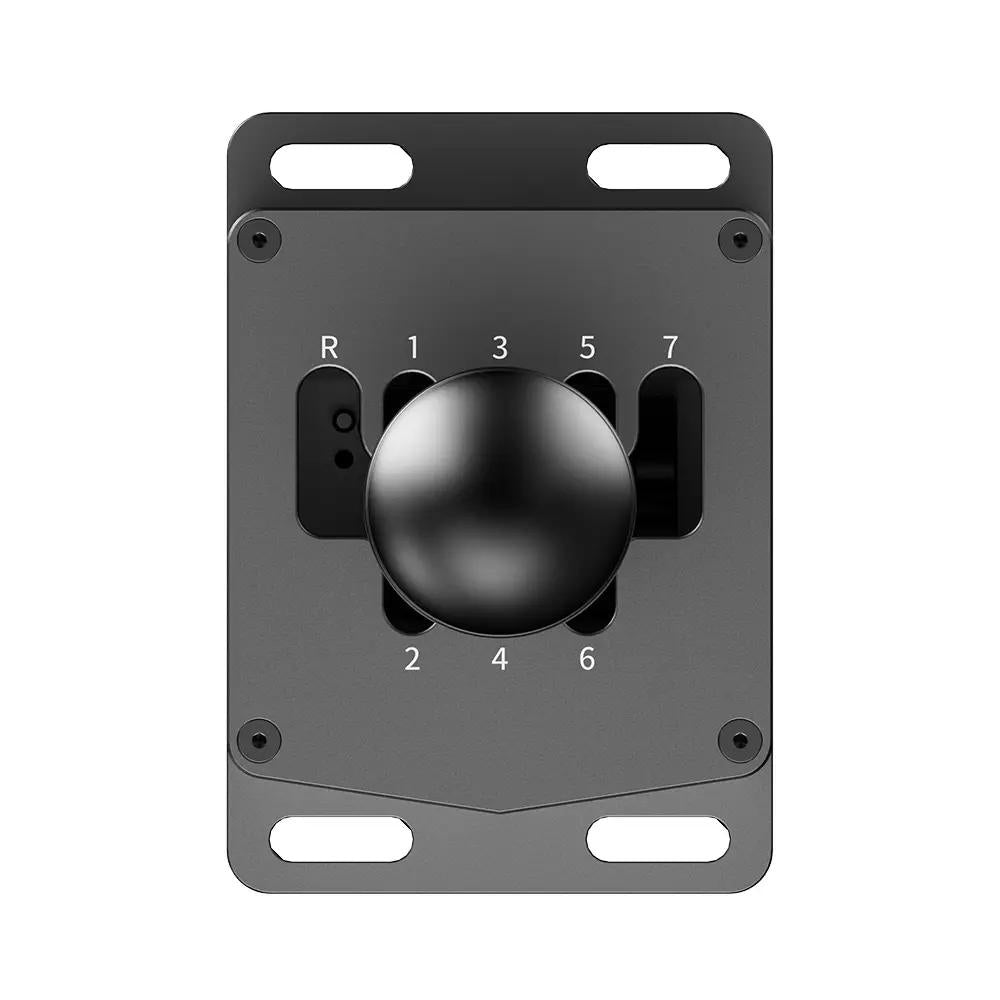
The HGP features a seven-speed H-pattern shifter plus reverse. The gears are well spaced, and the gaps between the shift patterns feel natural to the hand. As a result, missed shifts are rare, even when shifting aggressively. You can find the right gear without hesitation, which is incredibly important in classic cars or GTs that rely heavily on a manual transmission.
Two gears require a specific action: seventh gear and reverse are engaged by pushing the lever down before selecting them—a safety feature designed to prevent accidental shifts. This is effective for preventing accidental engagement of reverse, but we have to admit that with seventh gear, this extra step seemed a bit unnecessary in practice. It’s not a deal-breaker, just something that takes some getting used to.
Non-contact sensor and assisted downshifting
Inside the mechanism, MOZA has incorporated a 15-bit non-contact angle sensor. This offers two advantages: gear ratio readings remain accurate and responsive, and the absence of mechanical contact with the sensor minimizes wear, making the unit virtually maintenance-free under normal use. That’s a plus for an accessory that, by its very nature, tends to take a beating.
The shifter also features an assisted downshift system, with an automatic throttle blip designed to synchronize engine speeds during downshifts. The feature is optional: you can enable, disable, or adjust it (duration, intensity) using the MOZA Pit House software. Finally, the knob unscrews and is compatible with most standard-threaded aftermarket knobs, allowing you to customize the shifter without any DIY work.
To be screwed onto a cockpit, not onto a corner of a desk
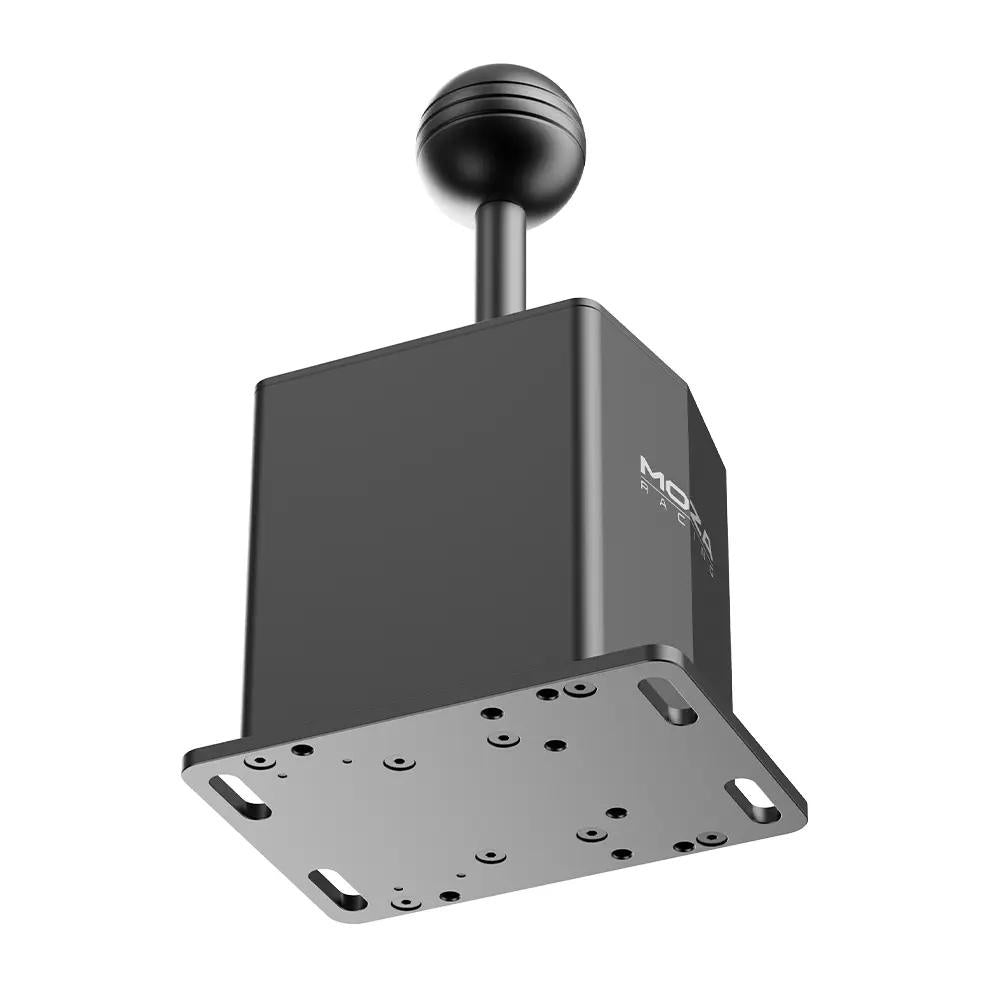
When it comes to installation, MOZA has done a great job. The M6 threaded holes and multiple mounting points accommodate various rig configurations, and the necessary hardware and tools are included. Mounting on a dedicated plate is a breeze, and integration with off-the-shelf mounts is straightforward.
However, there is one important limitation to be aware of before purchasing: this lever is not designed for desk or table mounting. Without the proper height, it ends up too high, which compromises ergonomics. To perform at its best, it needs a cockpit to which it can be screwed into the correct position. We also note that, depending on the setup, there may be some metallic contact noise, which is mitigated by the shock absorbers included in the box.
Connectivity and Ecosystem
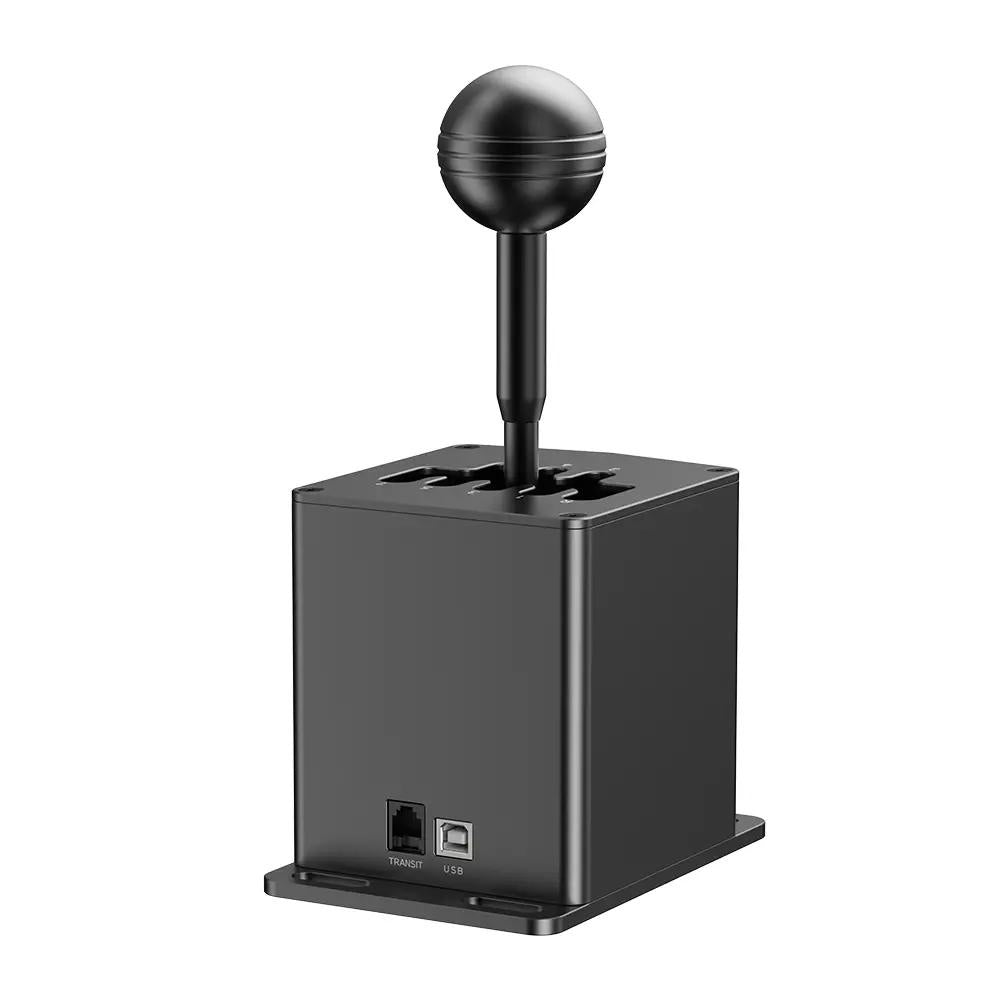
The HGP connects directly to a PC via its USB cable—no adapter required—or to a compatible MOZA base via the included RJ11 cable. It’s an accessory designed primarily for PCs and the MOZA ecosystem, where it integrates seamlessly with the rest of the equipment and can be configured in Pit House. One thing to keep in mind: this is an H-shape joystick only—it does not have a sequential mode. Those who want sequential mode should check out the SGP, the brand’s dedicated model.
Our Conclusions After Testing
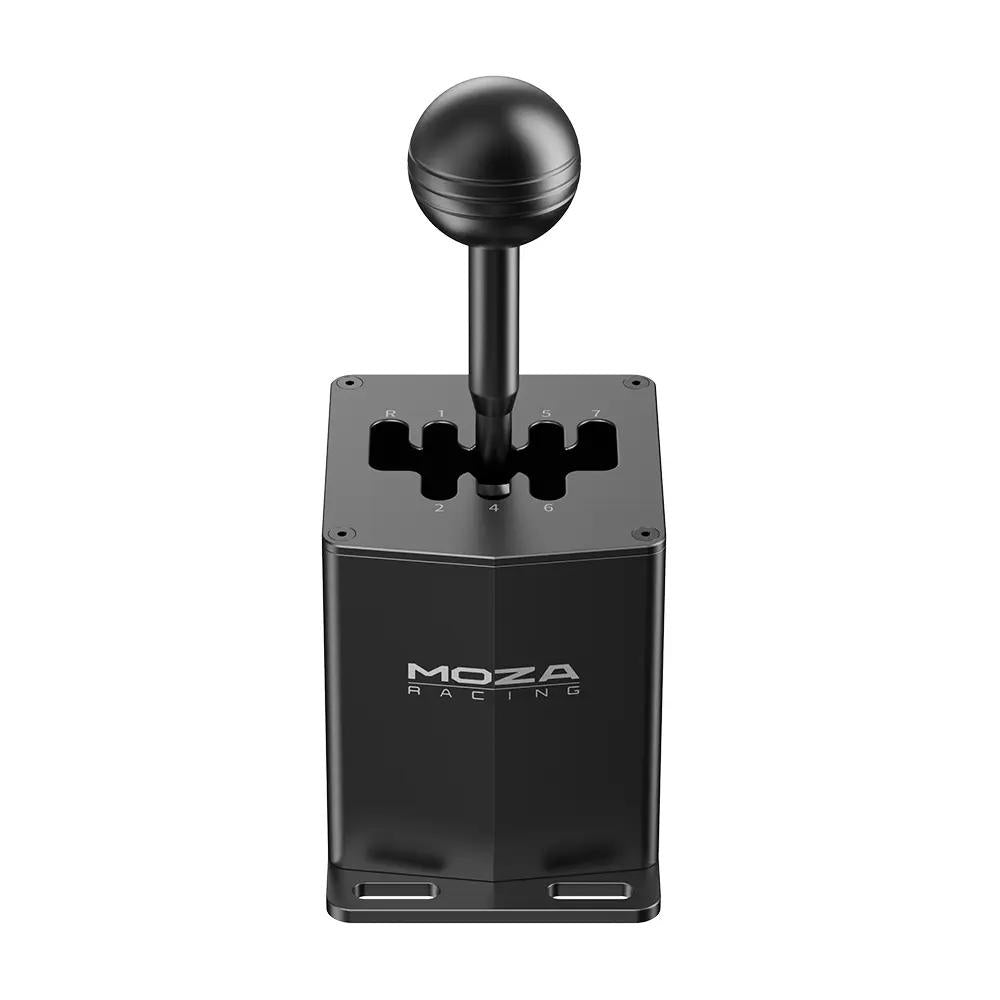
The MOZA HGP has made a successful entry into a category where we didn’t necessarily expect it to perform at such a high level. The build quality is impressive for the price, the mechanical feel is immersive, and the grid is forgiving enough that you can forget about the electronics and focus on driving. Its limitations are clear and well-defined: no sequential shifting, no adjustable resistance, and it requires a cockpit to get the most out of it. If these three points aren’t dealbreakers for you, it’s hard to find anything better at this price.


Reviews