Fanatec CSL Elite Steering Wheel WRC : Test & Review | What it's really worth in 2026
Fanatec CSL Elite Steering Wheel WRC: My quick review
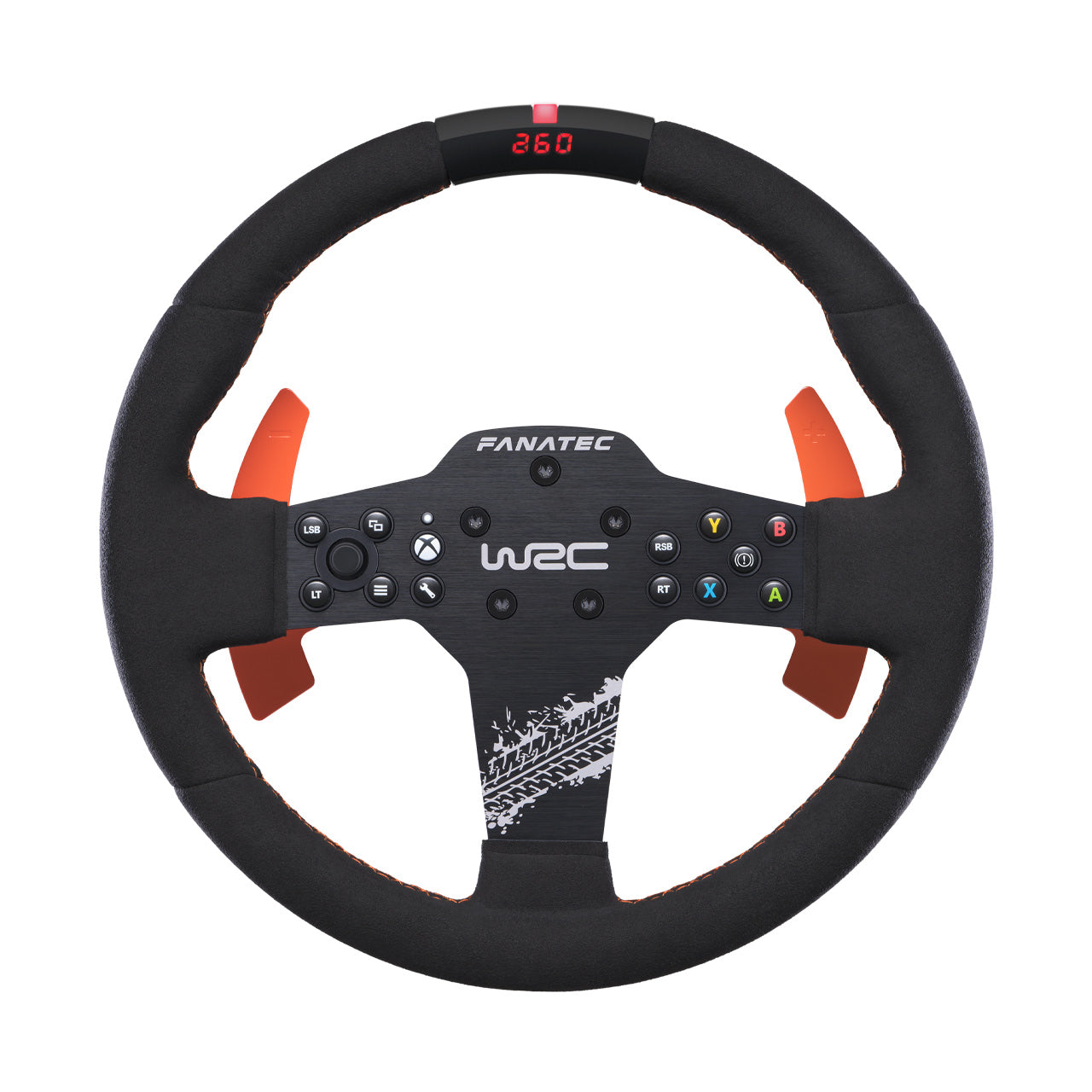
Born out of the official Fanatec x WRC partnership, this rally wheel features a 300 mm rim, genuine Alcantara, and a brushed aluminum frame. It includes Snapdome paddles, the RevStripe, and the new tool-free QR2 Lite quick-release mechanism. This is a standalone wheel designed to be mounted on a compatible Fanatec base, optimized for Xbox and PC. It’s a compelling choice for intermediate drivers already familiar with the ecosystem.
When you buy through our links, we may earn an affiliate commission.
What We Liked
- Realistic 300-mm steering wheel, for a more natural feel in rally driving
- Genuine Alcantara that provides good grip and doesn't get hot
- Sturdy aluminum frame, high-quality finish
- Clean, Removable Snapdome Palettes
- Tool-free, play-free QR2 Lite quick-release system
- Versatile, equally at home on dirt and asphalt
Reserves
- Not compatible with PlayStation (Xbox and PC only)
- Fanatec base required; sold separately
- Just the rim, not a complete wheel
Technical Specifications
| Diameter | 300 mm |
| Weight | about 1092 g (QR2 Lite adapter) |
| Coating | Genuine Alcantara, orange stitching |
| Structure | brushed aluminum temples, reinforced composite back |
| Paddles | metal, Snapdome activation, removable |
| Display | Multicolored RevStripe and 3-digit display |
| Quick release | QR2 Lite (tool-free), ClubSport-compatible |
| Platforms | Xbox One, Xbox Series X|S, PC |
| Required Prerequisites | Fanatec CSL DD, CSL Elite, ClubSport, Podium DD1/DD2 |
A helmet designed for rally racing
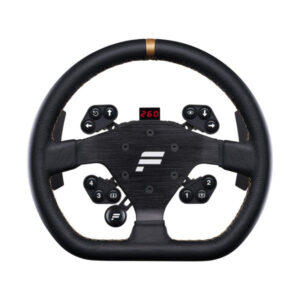
The CSL Elite Steering Wheel WRC is the result of an official partnership between Fanatec and the World Rally Championship. The first thing that stands out when you pick it up is its 300-mm diameter, which is larger than most entry-level steering wheels. You immediately get the feeling of a real rally wheel, halfway between a classic gaming wheel and the equipment used in actual rally cars. Note, however, that this is just the wheel itself—it must be mounted on a compatible Fanatec base (base not included)—and not a complete steering wheel set.
Alcantara, aluminum, and finishes
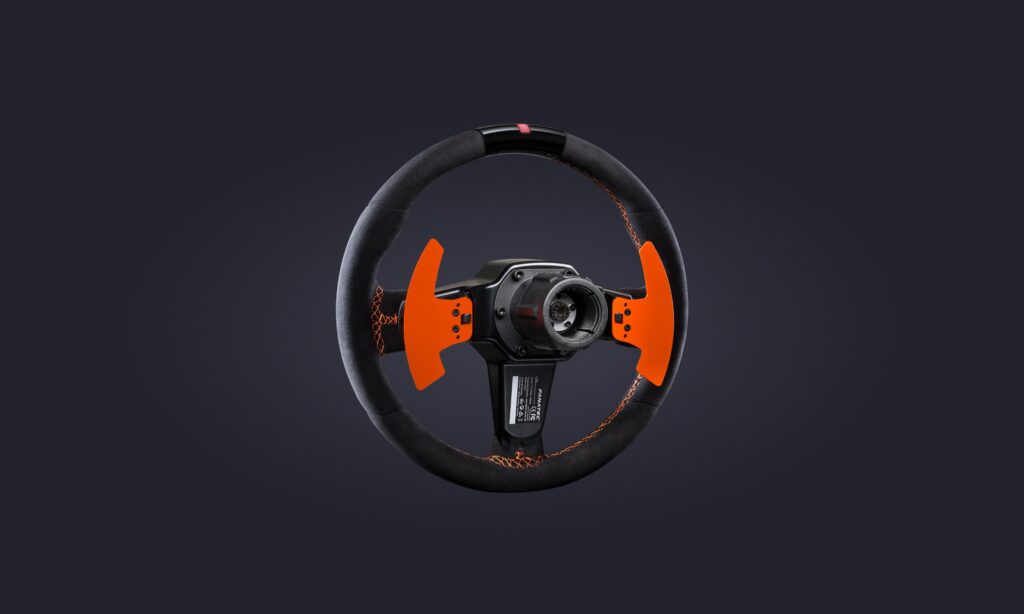
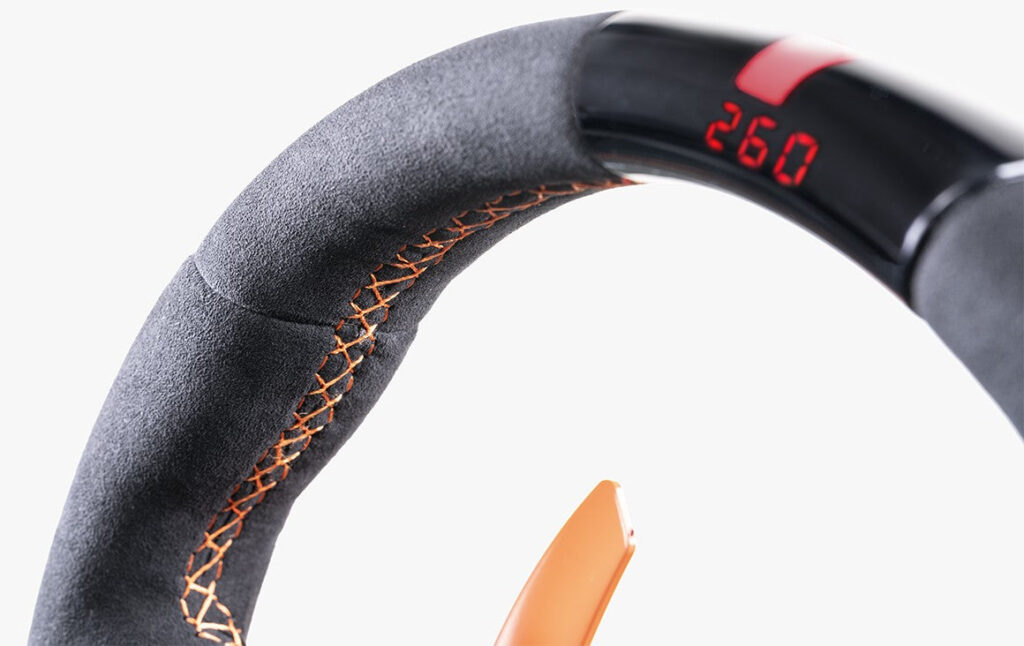
The construction exudes quality. The frame is made of brushed aluminum spokes, and the rim is upholstered in genuine Alcantara with orange stitching—a signature feature of the WRC line. In use, this covering won us over: it stays soft, doesn’t get hot when the steering wheel slips through your hands during countersteering maneuvers, and leaves no residue after long sessions. The back is made of fiber-reinforced composite, and the entire unit weighs about 1.1 kg, depending on the adapter used. This is a well-finished, rigid product with no play or creaking.
Behind the wheel, on dirt roads and paved roads alike
That’s where the diameter really makes a difference. The 300 mm wheels are a game-changer right from the first few turns: small steering corrections feel more natural, the steering motion is more fluid, and the car settles into the turn more gradually. You lose that edgy, somewhat abrupt feel you get with smaller wheels. In rally racing, on the hairpins and tight sequences of *DiRT Rally 2.0* or *WRC*, you can modulate countersteering with greater finesse, and long special stages are less tiring on the forearms thanks to the more generous grip. On asphalt, on the track, the rim remains just as effective for positioning the car precisely. The Alcantara’s grip helps a lot: even with sweaty hands after an hour of play, your hands don’t slip.
Paddles, LEDs, and quick-release mechanisms
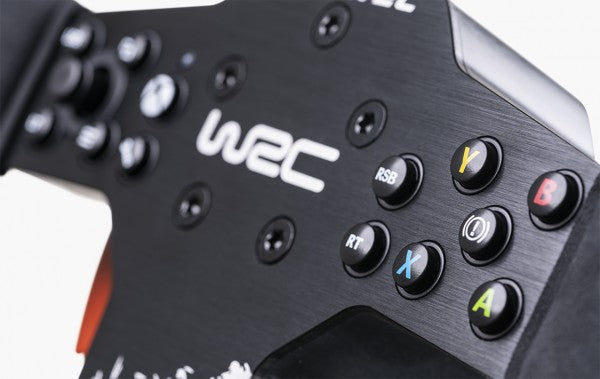
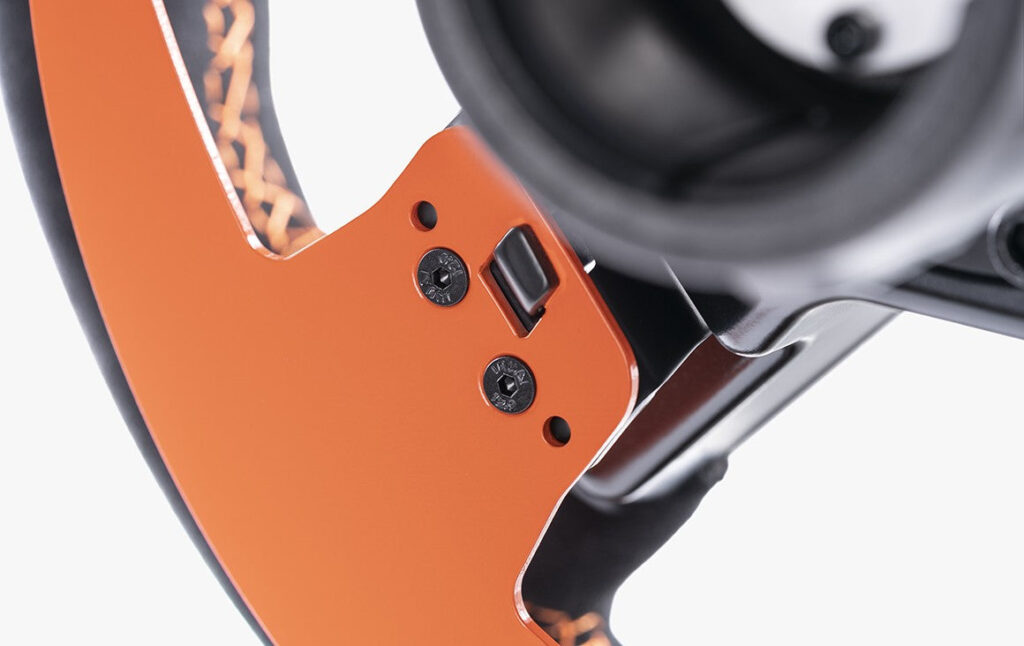
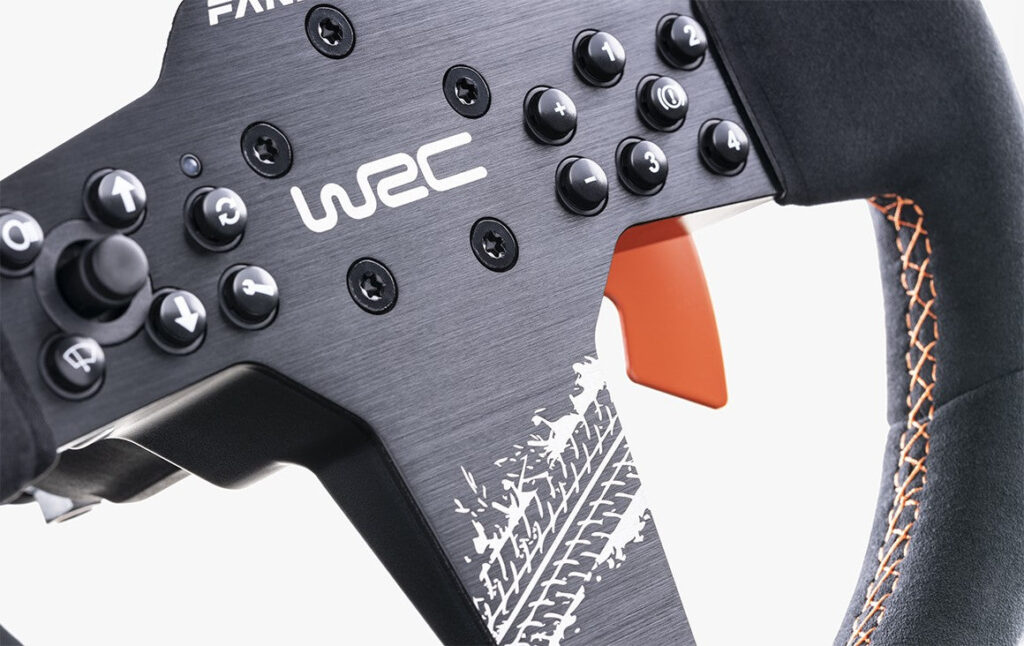
The metallic orange paddles use Fanatec’s Snapdome system: the click is crisp and distinct, with satisfying tactile feedback that makes it a pleasure to use repeatedly. They’re oversized and—a nice touch—removable: you can take them off to install ClubSport Static Shifter paddles if you prefer a different setup. For information, the multicolored RevStripe serves as both a center mark and a tachometer, while a small three-digit display shows speed, gear selected, and telemetry in compatible games. The new QR2 Lite quick-release system can be installed and removed by hand, without tools: you align it, tighten it—a guide mark indicates when it’s locked in place—and the steering wheel holds firmly without any play.
Compatibility: Xbox and PC first
Important point to check before purchasing: this steering wheel features Xbox electronics. When mounted on a compatible Fanatec base, it works with Xbox One, Xbox Series X|S, and PC. However, it is not designed for PlayStation. If you play on PS4 or PS5, this isn’t the right steering wheel for you. And in any case, a Fanatec base is essential (CSL DD, CSL Elite, ClubSport, Podium DD1/DD2): without a base, the wheel is useless. This is how the Fanatec ecosystem typically works, so it’s best to know that from the start.
Our Opinion
The CSL Elite Steering Wheel WRC checks a lot of boxes for intermediate drivers or ambitious beginners who have already entered the Fanatec universe. Premium materials, a realistic diameter, versatility on both dirt and asphalt, and a modern quick-release mechanism: you get a true rally wheel without aiming for the very high end of the market. Its limitations are well-known: namely, the lack of PlayStation compatibility and a required base that adds to the cost. But for anyone building an Xbox or PC setup around Fanatec, it’s one of the most well-rounded wheels in its class.
Frequently Asked Questions
Which sim racing wheel should you choose if you're just starting out?
Direct drive or belt drive: What's the difference?
Does this hardware work on PS5 and Xbox?
Do you need a cockpit to get off to a good start?
How much should I budget for a good setup?
Other Reviews & Testimonials
-
Fanatec ClubSport Steering Wheel Porsche 911 GT3 R V2 for Xbox (Leather)
-
Fanatec ClubSport Steering Wheel Porsche 911 GT3 R V2 for Xbox (Suede)
-
Fanatec ClubSport Steering Wheel Formula V2.5 X
-
Fanatec ClubSport Steering Wheel Classic 2 V2
-
Fanatec ClubSport Steering Wheel F1 Esports V2
-
Fanatec ClubSport Formula V2.5 X
-
Fanatec ClubSport Steering Wheel Flat 1 V2 for Xbox
-
Fanatec ClubSport Steering Wheel R300 V2




Reviews