Fanatec CSL Steering Wheel R300 V2 : Test & Review | What it's really worth in 2025
Fanatec CSL Steering Wheel R300 V2: My brief review
This steering wheel gave me the feeling of switching to a real "driving tool", more immersive and readable than a bundle steering wheel, without falling into unnecessary luxury. It makes sense for intermediate simracers who often drive GT/road cars based on Direct Drive Fanatec. The package remains coherent and durable for a serious mid-ranger.
When you buy through our links, we may earn an affiliate commission.
Fanatec CSL Steering Wheel R300 V2: my test opinion
The Fanatec CSL Steering Wheel R300 V2 is clearly a "club sport light" wheel in the brand's ecosystem. It's not the basic entry-level model, nor is it the top-of-the-range, highly premium GT model. It's aimed at this highly sought-after segment: a true round racing-type steering wheel, Direct Drive compatible, at a price that's still reasonable compared to the monsters in the range.
On paper, it promises a rather attractive combo: realistic road / GT diameter, serious construction, broad compatibility (PC and consoles depending on the base used), and above all a modern interface thanks to QR2 Lite. In short, a steering wheel designed for those who want to take their CSL bundle up a notch, without blowing their budget on a ClubSport or Podium.
My reading angle is simple: feel in hand, perceived quality, comfort in play and overall coherence in a modern Fanatec setup. Does this R300 V2 really add anything to the original CSL steering wheels? Can you really feel the difference on a Direct Drive base, or is it just a prettier ring?
The idea is to see if this wheel deserves its place as a "daily driver" for the PC/console simracer who plays often, for a long time, and is looking for a versatile, reliable and enjoyable wheel.
Design, manufacture and feel
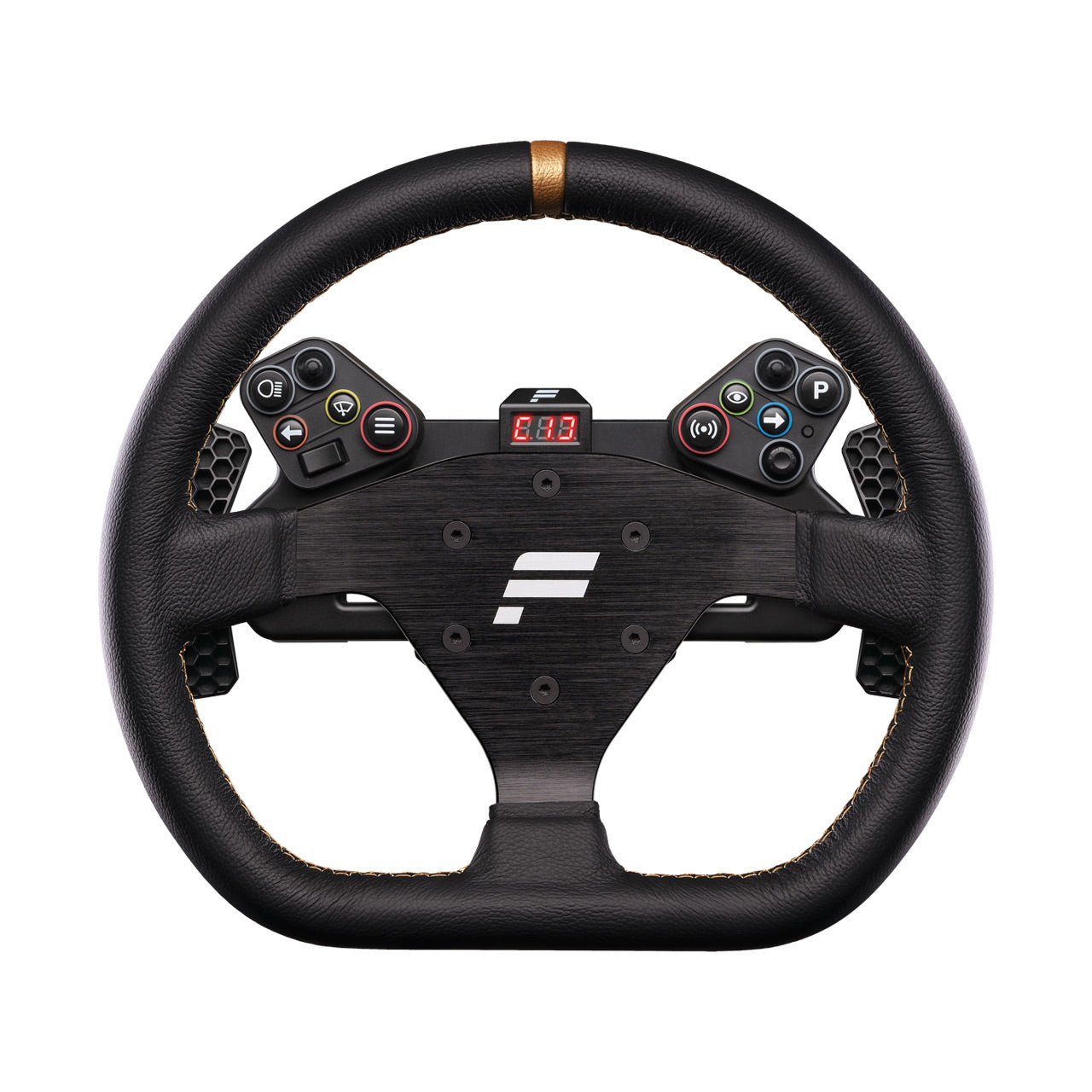
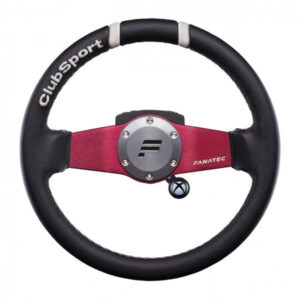
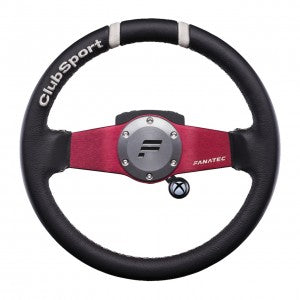
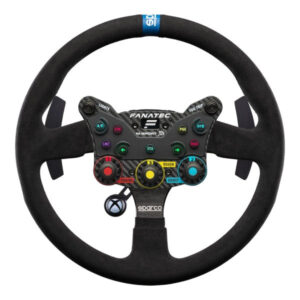
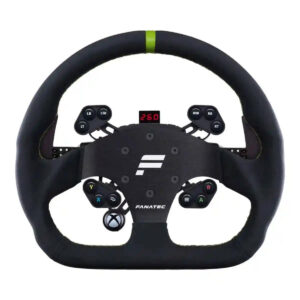
The CSL Steering Wheel R300 V2 is based on a fairly classic Fanatec recipe: a 30 cm round ring, covered in alcantara or imitation leather depending on the variant, mounted on a simplified QR2 Lite-compatible hub. In hand, the first thing that strikes you is the balance between diameter, grip thickness and weight. It's light enough not to suffocate a CSL DD base, but dense enough not to feel like a toy.
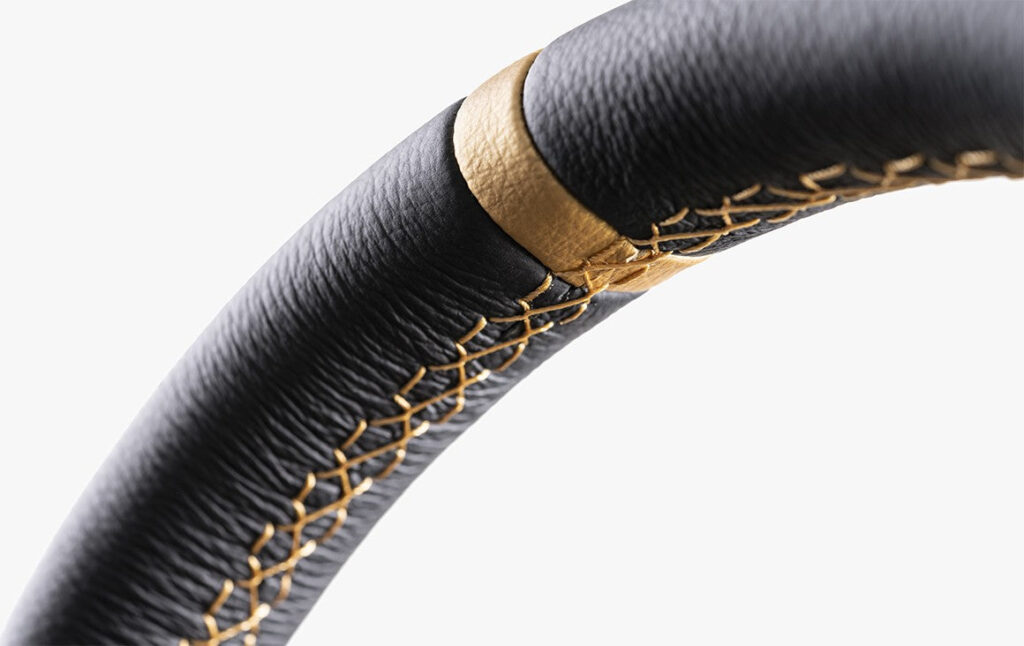
The coating is pleasant, especially if you're wearing gloves. The alcantara provides a more racing feel, slightly "sticky" without being aggressive. In bare hands, you'll have to accept that it will age a little faster, as always with this material. The seams are clean and regular, with no annoying extra thickness around the thumbs. The manufacturing process is industrialized but controlled: nothing moves, there's no play and no creaking.
Ring stiffness is very good. When loaded on a Direct Drive base, it doesn't bend perceptibly, even with heavy blows in the corrections. We're not talking about the absolute rigidity of a high-end solid-metal steering wheel, but for this price segment, the structure holds up well. The spokes are strong enough to withstand sustained FFB without exaggerated flex.
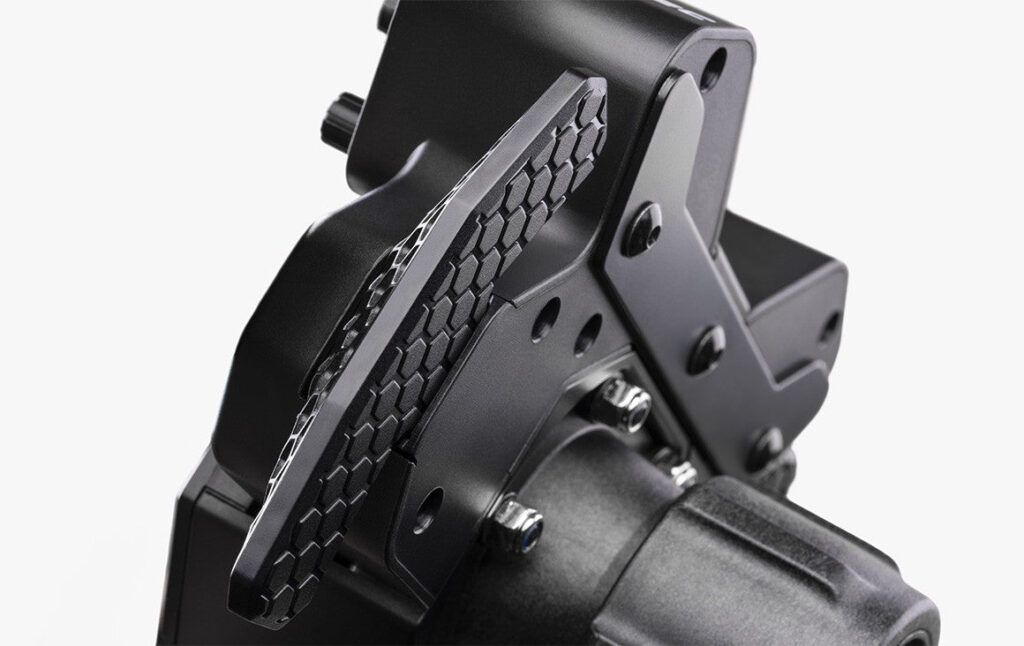
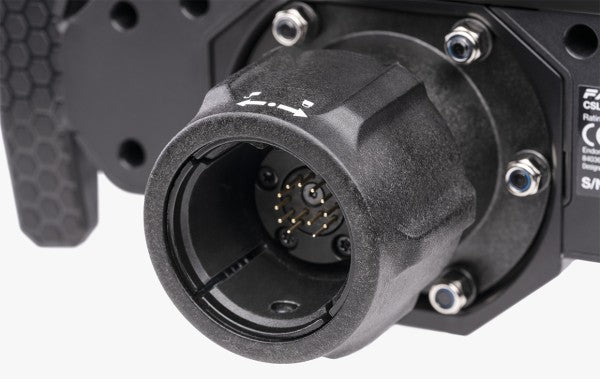
The disappointment comes more from the plastic elements of the CSL hub, especially when you're familiar with the brand's superior hubs. The composite QR2 Lite does its job, but feels a little less premium when assembled/dismantled than a full-metal QR2. Nothing dramatic in play, but when you're often handling the steering wheel, you'd like a more honest mechanical feel.
Compared to smaller bundle steering wheels or lighter P1-type rims, there's a clear gain in presence. In hand, the R300 V2 feels like a real GT or sports car steering wheel. You can grip it naturally at 9:15, your thumbs are well positioned, and there's enough material to play with hand strength without tiring too quickly.
Settings, customization and compatibility
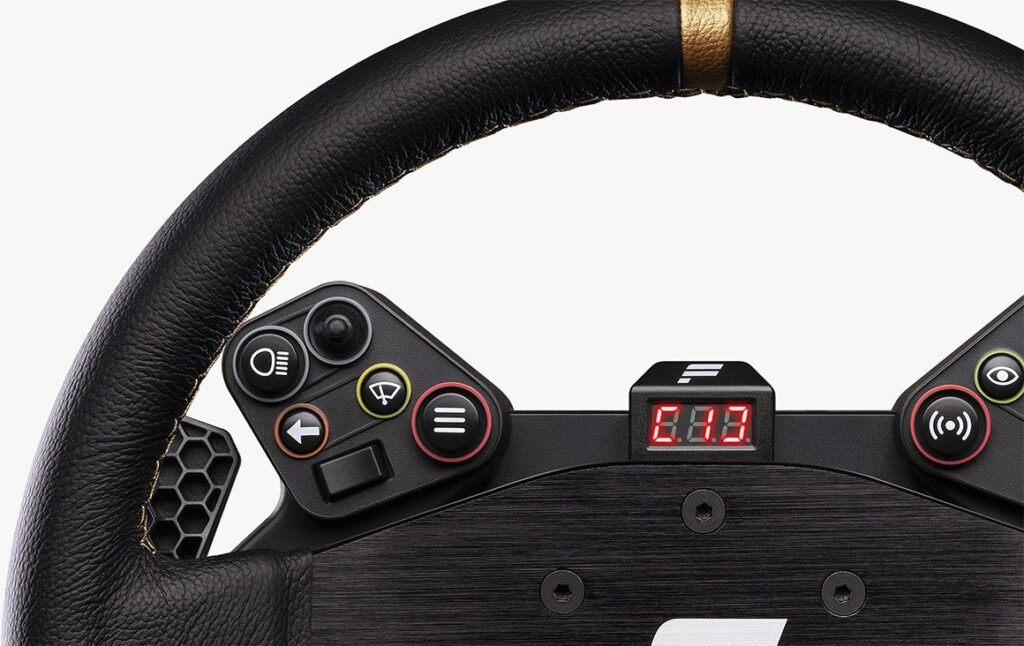
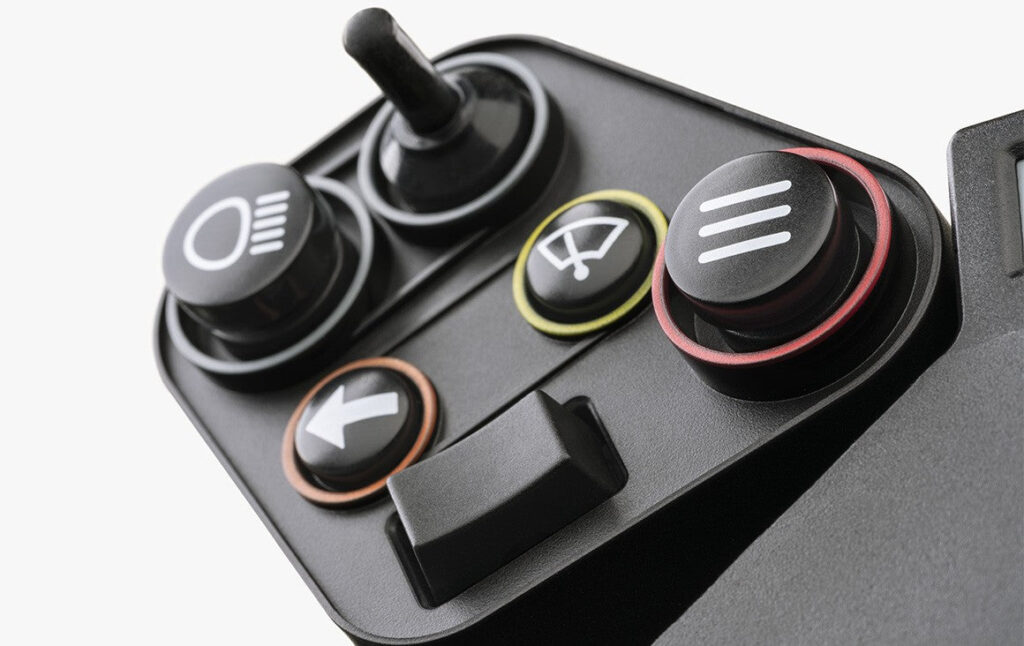
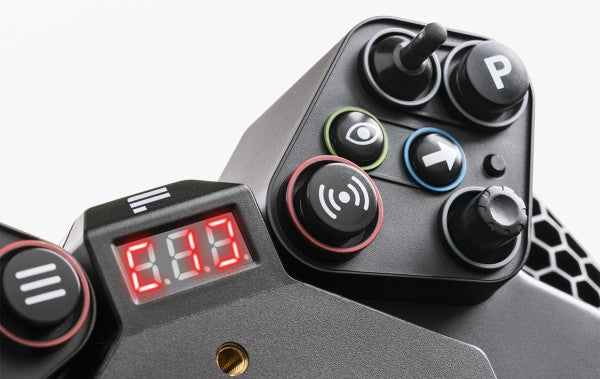
In terms of settings, the R300 V2 remains a relatively simple steering wheel. No overkill of buttons or screens, just the essentials for most uses. Buttons are well positioned to be reached with the thumbs without letting go of the main grip. The click is crisp, not too hard, with just the right amount of feedback to ensure you don't press it by mistake during a tense phase.
The key is integration into the Fanatec ecosystem. On a CSL DD or ClubSport DD base, the steering wheel is immediately recognized, and classic settings are found via the base menu or PC software. The base unit's presets remain valid, and the steering wheel adds no complex software layer. You adjust the force, linearity, FFB filters and rotation stops according to the type of simu, and that's all. The learning curve is therefore very gentle: if you're already familiar with Fanatec, you won't feel out of place.
Customization is more a matter of use: you can adapt the angle of rotation to go from a GT feel to something closer to a road car, or on the contrary restrict rotation for drifting or rallying. The R300 V2's relatively standard diameter makes it at home in all these situations, even if it feels more at home on the track / GT than in single-seaters.
PC and console compatibility obviously depends on the base. Plugged into an Xbox-compatible base, the wheel becomes usable on that platform, and ditto for PlayStation with the right base. From this point of view, the R300 V2 doesn't limit the user: it follows the ecosystem, without any additional locking.
In terms of upgradeability, I see it as a truly durable part of a Fanatec setup. The QR2 Lite already works very well with recent chainstays, and if you upgrade to a metal QR2 later on, you'll keep your steering wheel with no worries. You can upgrade the rest (pedals, shifter, handbrake, cockpit) by keeping this R300 V2 for a long time as your main or secondary steering wheel. It works very well as the first "real" serious round steering wheel in a Direct Drive ecosystem.
Gaming sensations: what the R300 V2 really changes
Once on the track, the R300 V2 quickly shows its personality. On a CSL DD-type Direct Drive base, the first sensation is the clarity of the feedback. The ring's diameter and mass offer a good compromise: we retain the responsiveness and speed of modern bases, without falling into an overly light flywheel that loses nuance.
On fast bends, you can feel the car's gradual build-up of power. The steering wheel offers natural, not artificial, resistance, with a fluid rise in torque as the load on the front axle increases. It's easy to read what's going on under the tires: the start of understeer, a slight lightening of the rear end, a slight transition in mass transfer. It's easy to see what the car is doing.
Grip reading is especially interesting in the mid-corner, mid-acceleration phase. The steering wheel transmits micro-variations in traction well, that little quiver when the tire seeks grip at the exit of a curve. Compared to a lighter entry-level steering wheel, the signals are less "raw" and more nuanced, giving you the confidence to push on progressively without being surprised.
On vibrators, behavior depends very much on FFB settings and simulation, but the R300 V2 takes it well. The rim doesn't resonate unpleasantly, and the grip doesn't "slap" in the hands. You can clearly feel the granulometry of the aggressive vibrators, but it remains under control, without parasitic vibrations. It's clean, crisp and easy to read. On bumpy straights, the steering wheel moves enough to remind you that the track isn't smooth, but it's never a caricature.
In fast corrections, the diameter/weight combination makes sense. You can make sharp counter-steers without the steering wheel flying off in all directions. The Direct Drive base has enough torque to bring the ring back, but not so much as to make the grip tiring. You correct, stabilize and keep your hands firmly planted thanks to the grip. This is where the round shape and "realistic" size really help, especially in rallying, drifting or on very nervous cars.
Comfort is good over long sessions. The thickness of the grip makes it possible to vary the grip slightly to relieve the fingers. The alcantara, with gloves, limits fatigue: no need to grip like crazy to keep control. The reasonable weight of the steering wheel also helps to avoid overtaxing the forearms, even with a strong FFB. You can run several races or a long stint without getting burnt out.
Compared with an even more high-end steering wheel, equipped with a heavy metal QR and full aluminum materials, we lose a little of the "monolithic block" feel. On a very powerful base, some will feel the difference in ultimate rigidity. But on a CSL DD or even ClubSport DD package, the R300 V2 remains consistent: it transmits forces well, with no odd blurring or perceptible play. In realistic use, the limiting factor will not be this steering wheel, but rather the settings or simulation.
Overall, immersion is very good for this segment. The feeling of controlling a real car and not a plastic accessory is there. You gain confidence in corner entry, in small corrections at the chord point, and in your ability to feel progressive loss of grip. It's exactly what you'd expect from a "daily" steering wheel if you want to drive often and make progress.
Who's it for? What we like, what we don't like
The Fanatec CSL Steering Wheel R300 V2 is aimed at a fairly clear profile: the motivated simracer, either intermediate or progressing, who already rides on a Direct Drive base or plans to switch to it, and who wants a versatile round wheel for GT, road and various disciplines. On PC or console, it makes perfect sense as soon as you have a recent Fanatec base.
For a complete beginner discovering sim racing on a tight budget, this may not be the first priority. But for someone who already has a CSL bundle or a more basic original steering wheel, the R300 V2 creates a real qualitative leap in terms of immersion and comfort. It's like going from a "game steering wheel" to a "car steering wheel".
What I like most is the diameter and shape. It has a very natural, modern-sporty feel, which immediately puts you at ease on the track. Secondly, the overall perceived quality is very good for the price: pleasant grip, clean finish, sufficient rigidity to take a serious FFB. Finally, its broad compatibility with the Fanatec ecosystem and QR2 Lite make it a long-term purchase: you can upgrade the base, pedals and cockpit, but the steering wheel remains relevant.
There are limits, however. The first is the slightly less premium feel of the hub and QR2 Lite composite compared to a full-metal set. This doesn't get in the way on the track, but when it comes to clipping and unclipping, you get the feeling of mid-range positioning. Secondly, alcantara remains a demanding material: without gloves, it will mark more quickly, and some will prefer leather that's easier to live with. Thirdly, for F1 or prototype purists, a round steering wheel is not ideal: this R300 V2 does everything, but is no substitute for a real, dedicated formula steering wheel.
In terms of investment, we're talking about a product that requires a considerable financial effort compared to bundle wheels, but which brings real perceived value. It's not an aesthetic whim: it really changes the way you feel and control your game. For a setup already equipped with Direct Drive, it's an upgrade that's easily justified if you ride regularly.
Verdict: where does this R300 V2 really stand?
The Fanatec CSL Steering Wheel R300 V2 fills a very logical niche in a modern setup: that of a versatile round steering wheel, with enough quality to accompany a Direct Drive base, without reaching the prices of a full premium steering wheel. It doesn't revolutionize technology, but it does significantly improve comfort, precision and immersion compared to entry-level rims.
On the market, it is clearly positioned as a solid mid-range model. More serious and consistent than a bundle steering wheel, less exclusive and less expensive than a high-end ClubSport. It's the kind of steering wheel you can keep for a long time, even if you upgrade your equipment around it.
I recommend it to PC and console simracers who mainly drive GT, touring, road or rally cars, and who want a single steering wheel to "do it all" properly. For those looking for a very specific use (F1 only, drift only, or ultra-luxury finish), there are more targeted options, but often more expensive.
If you're looking for a serious, versatile, comfortable round wheel that really takes advantage of a Direct Drive Fanatec base without blowing your budget, this product can clearly make the difference in your setup.

Reviews