
Fanatec Podium Steering Wheel Porsche 911 GT3 R Leather : Test & Review | What it's really worth in 2026
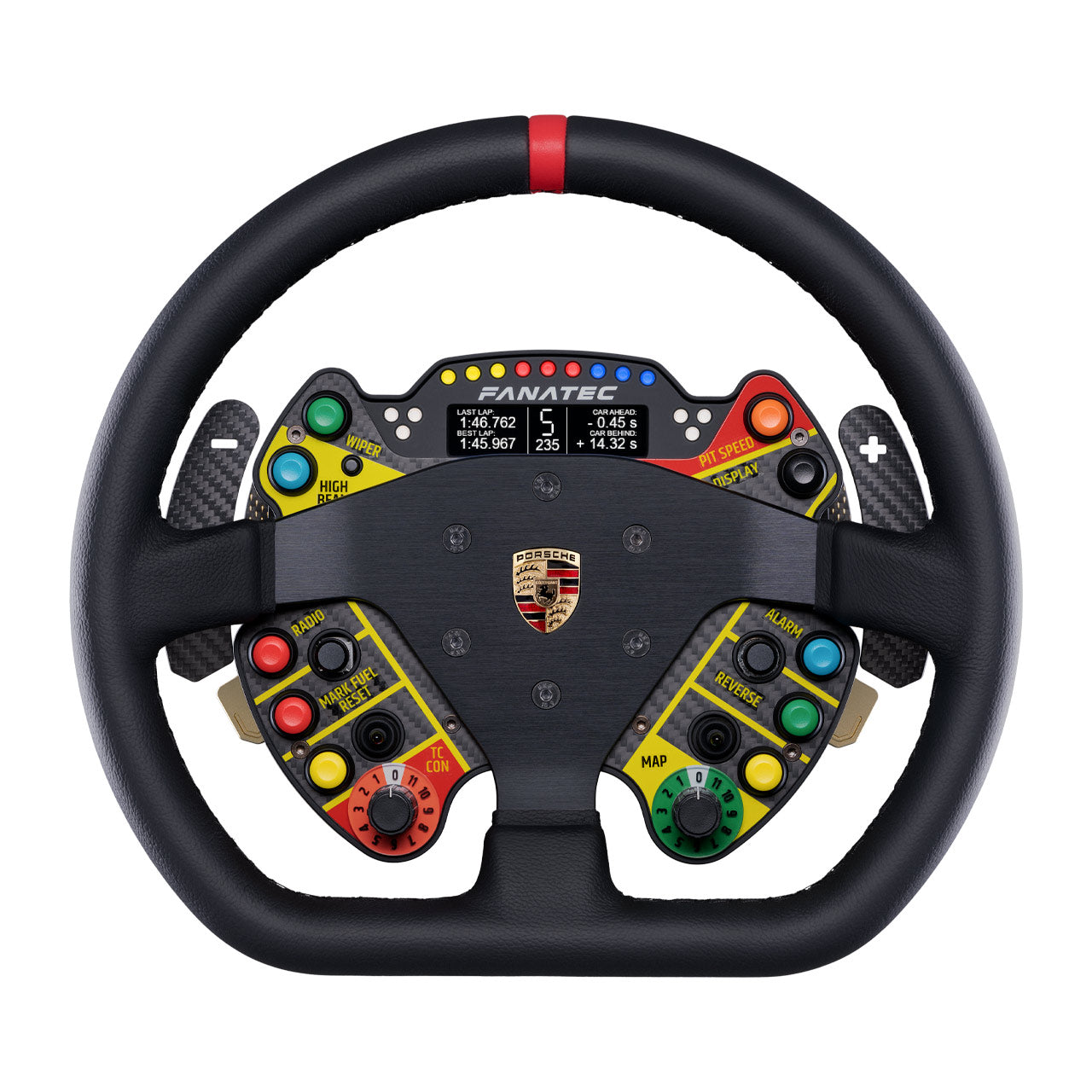
Fanatec Podium Steering Wheel Porsche 911 GT3 R Leather : My opinion in brief
This steering wheel gave me the impression of a serious tool that really clarifies force feedback and makes GT driving more legible and immersive over time. Above all, it makes sense for simracers already invested in Fanatec, with a Direct Drive base and regular GT/endurance-oriented use. The investment remains coherent if you see it as a central part of your setup.
When you buy through our links, we may earn an affiliate commission.
In the Fanatec range, the Podium Steering Wheel Porsche 911 GT3 R Leather is clearly positioned as a premium GT and endurance-oriented steering wheel. It's a product designed for the brand's top-of-the-range Direct Drive bases, for those who want both the official Porsche look and a tool that can actually be used in virtual racing. On paper, it promises a rare combo: a modern racecar design, serious materials and ergonomics that can be used for hours on end.
This steering wheel is attractive because it ticks a number of highly sought-after sim racing boxes: realistic diameter, a sufficient number of buttons without looking like a Christmas tree, and a construction that's aimed more at the world of competition than that of the "gamer toy". It's aimed at gamers who are already committed to the Fanatec ecosystem, or who plan to stay there for a while.
My angle here is simple: how it behaves in a race situation, how pleasant it is to hold for long, how it transmits information from the Direct Drive, and whether it really justifies its high-end positioning in a GT / proto oriented setup. The aim is not to detail every screw or LED, but to see if it does better than a more "generic" steering wheel once on the track.
Design and manufacturing
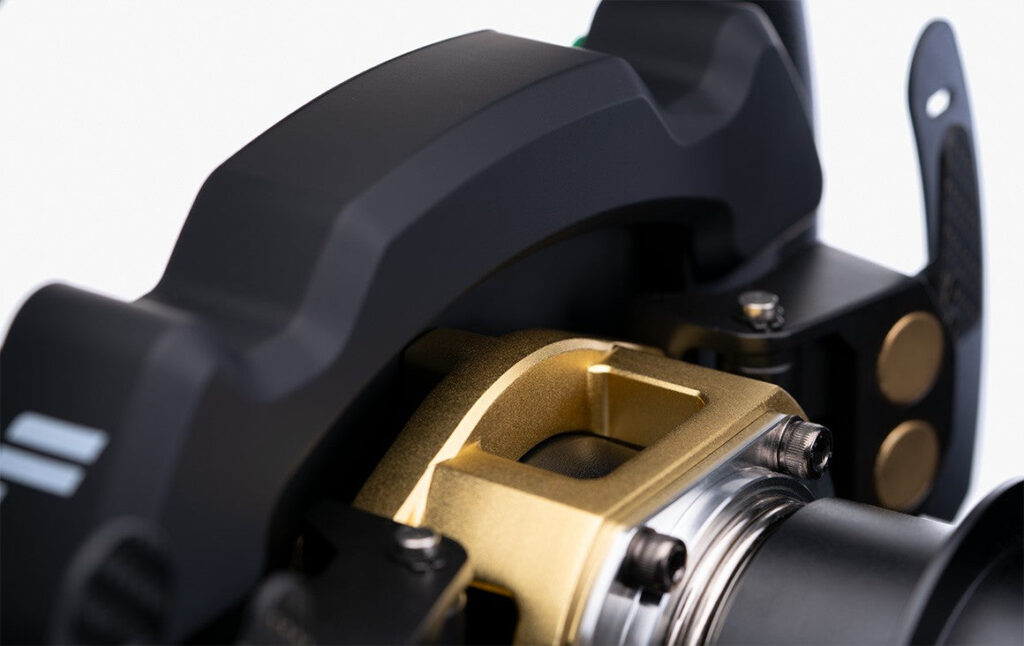
In hand, the Podium Porsche 911 GT3 R Leather gives an immediate impression of density. The metal hub clearly inspires confidence, the spokes don't move a millimetre and the rim doesn't twist when you force it. We feel we're at the top of the range in terms of rigidity. The leather used on the rim is rather firm, with a marked grain. It's less "soft" and enveloping than some more comfort-oriented leather wheels, but it's well suited to intensive track use. It really feels like you're holding a race car steering wheel, not a living room peripheral.
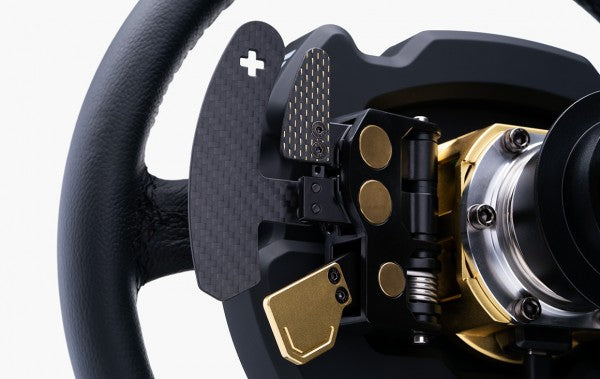
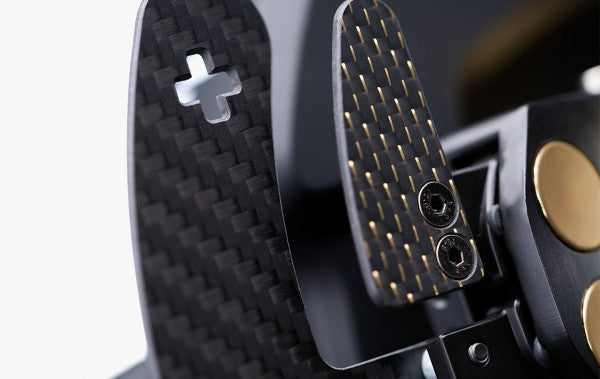
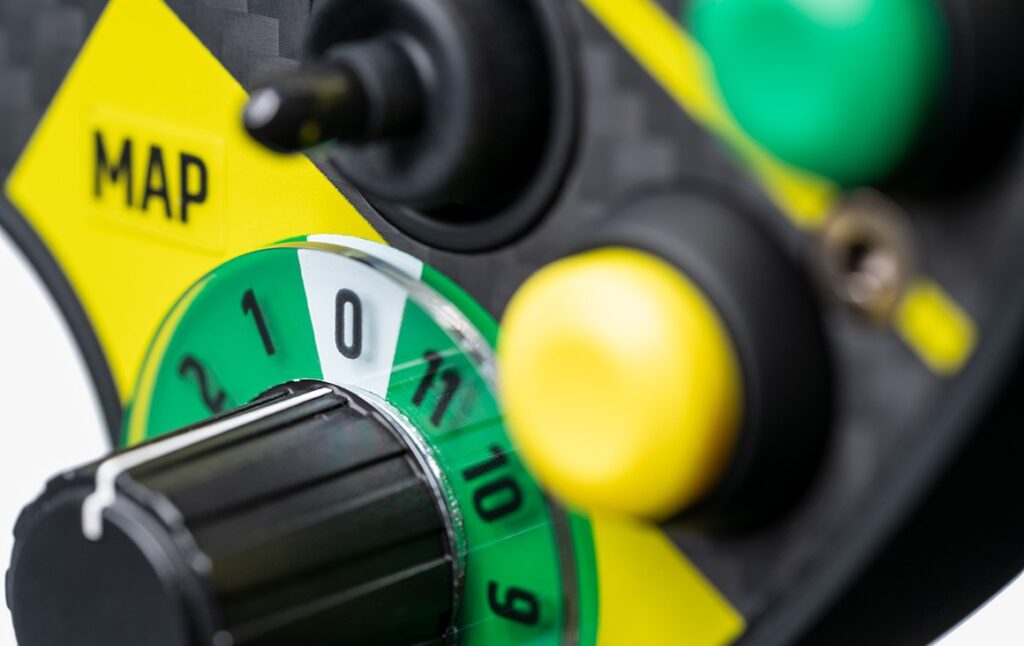
The overall finish is serious: even seams, clean logos, well-mastered fits between the various parts. Buttons click cleanly, without excessive play. The front rotors offer sufficient resistance to avoid involuntary changes in the middle of a maneuver. The rear metal paddles have a dry, precise feel, with a short stroke. A real effort has been made to ensure overall consistency.
What's surprising is the compromise between compactness and realism. We're not on a huge, old-generation GT-type rim, but the diameter is still credible for GT3. Compared with some of Fanatec's more accessible steering wheels, the feeling of a rigid block is clearly superior. On the other hand, not everything is perfect. The leather, even if qualitative, can feel a little slippery without gloves, especially with slightly sweaty hands. This isn't dramatic, but on longer sessions, alcantara grips would have provided a little more bite (at the cost of more demanding maintenance).
Compared to more esport-oriented wheels with lots of plastic, the difference in perception is clear. Compared with other top-of-the-range rims from Fanatec or rival brands, we're still in the same league as premium products: nothing looks "cheap", nothing cracks, and you get the feeling of a steering wheel ready to withstand years of intensive use if you take the minimum of care.
Settings, customization and compatibility
The Podium Steering Wheel Porsche 911 GT3 R Leather benefits directly from the Fanatec ecosystem. Once mounted on a compatible base, everything goes through the usual menus: basic profiles, settings via the base screen or PC software. This steering wheel doesn't revolutionize options, but it does integrate neatly with what the brand already offers. What really counts here is the layout of the controls and the ease with which you can configure what you really need for racing.
Overall ergonomics are well thought-out. The main buttons fall naturally under the thumbs, the rotary ones are accessible without letting go of the grip, and the paddles fall in the ideal area behind the rim. It doesn't take long to map out the essential functions: headlights, wipers, pit limiter, MFD menu, HUD change... On modern GT-oriented sims, you'll find everything you need without having to go back into the menus mid-race. The learning curve is reasonable: it takes a little time to get your fingers used to which button does what, but the logic of placement helps a lot.
As far as compatibility is concerned, we're sticking with "classic" Fanatec: optimal use on PC, and console compatibility which depends on the base used. The steering wheel itself doesn't limit much, it's mainly the base that imposes its rules. The advantage is that if you're already part of the ecosystem (pedals, shifter, handbrake, rigid cockpit), this steering wheel is a no-brainer. It's positioned as a more GT-focused evolution of more versatile or F1-oriented wheels.
In terms of upgradeability, we're talking about a product that can handle several base changes without any problem. You can switch from a less powerful base to a Podium Direct Drive later on, and the flywheel will still be up to the job. It's clearly a medium- to long-term investment for someone who intends to stay with Fanatec. On the other hand, if you like to change your base brand often, the value of this steering wheel is much more linked to being "locked in" at Fanatec.
Sensations in play
It's on the track that this steering wheel really comes into its own. Coupled with a Fanatec Direct Drive base, the first thing that stands out is the precision of the information transmitted. The rigidity of the rim allows the force feedback to express itself without any parasitic filter: no play, no perceptible torsion. Torque variations coming from the base pass directly into the hands, and this clearly changes the perception of the car's behavior.
When cornering, you can read the grip very well. You can feel when the front end starts to lighten up, the slight lightening before understeer, and the micro-corrections of the track surface. On a GT3 car, this finesse really helps you measure out the entry into a curve and adjust the trajectory in the middle phase. You quickly understand what the car is doing. You don't feel like you're straining to interpret what the steering wheel is saying: the information is crystal-clear, especially with a high-torque base.
On vibrators, the feel is very legible. The steering wheel reflects a texture that's clean but not cluttered. You can clearly see the wheel-to-wheel transition, the difference between flat and aggressive vibrators, and how the body reacts when you take on a little too much. Here, the rigidity of the assembly helps to keep the steering wheel stable in the hands, without it vibrating uncontrollably. It remains firm, but controllable.
The steering wheel responds very quickly to fast corrections, especially on rear-end losses on slow corner exits. The diameter and weight remain in a zone that allows you to counter-steer without having to fight against the inertia of the rim. Compared with a wider or heavier wheel, we gain a little in responsiveness. Compared with a lighter, more single-seater rim, we lose a touch of raw liveliness, but gain in stability and comfort, especially over longer stints.
Over extended sessions, comfort is generally good. The shape of the rim allows several hand positions without any particular discomfort. The firm leather limits fatigue caused by minor vibrations, even if, without gloves, you may feel a slight tendency to slip when the effort becomes great on very powerful chainstays. This is where some may prefer alcantara, but for mixed use (with or without gloves), leather remains a reasonable choice.
Compared with a more basic rim on a belt base, the difference is clear. Force feedback seems more nuanced, less "soft", and transitions between grip and stall are easier to read. Compared to a competing high-end rim, we remain in the same category of sensations: it's all a question of personal feel for the leather, rim shape and ergonomic buttons.
In pure immersion, it works very well. The official Porsche design, combined with the realistic size and quality of the materials, reinforces the impression of being in a real racing car. Honestly, once you've done a few laps, you completely forget that you're holding a peripheral and not a real steering wheel. This is where the Direct Drive base really changes the experience: the steering wheel becomes a natural extension of the hands, not just a spinning gadget.
Who's it for? What we like, what we don't like
This steering wheel is clearly aimed at intermediate to advanced GT/endurance-oriented sim racers, who already drive a lot or are planning to start seriously. On the PC, it really comes into its own thanks to the freedom of settings and mapping. On consoles, it's still very good, but the investment is only really relevant if you intend to make full use of the Fanatec ecosystem and spend a lot of hours on the track.
What I appreciate most is the rigidity and purity of the return. You can feel that the rim doesn't "pollute" the work of the base. Next, the general ergonomics work very well for modern GT: accessible buttons, useful rotary controls, precise paddles. Last but not least, the combination of Porsche look and serious materials gives a real racing feel, not just a steering wheel "inspired by". The result is a coherent whole, pleasant to look at from the cockpit, but above all effective once you're in the driving seat.
As far as limitations are concerned, there are a few to bear in mind. Leather, for all its quality, is not the most grippy in intense conditions without gloves. Some will clearly prefer a grippier coating. The weight and diameter are still designed for GT use, making it a poor candidate for those who swear by high-speed single-seaters or high-strung rallies. And of course, the price tag puts it in the heavy investment category: for an occasional player, the perceived value won't be the same as for someone who drives several evenings a week.
This is a product to be considered as a setup centerpiece, not as an impulse buy. It really comes into its own in a rigid cockpit, with a serious Direct Drive base, a high-performance crankset and a simracer that pretty much knows where it's going. For this profile, the value is clear: you gain in precision, operating comfort and riding pleasure. For lighter use, the investment/time spent ratio is likely to be less convincing.
Verdict
The Fanatec Podium Steering Wheel Porsche 911 GT3 R Leather brings a real step upmarket to a GT-oriented setup. It replaces a more generic rim, providing greater rigidity, a cleaner feel for force feedback and ergonomics better adapted to the demands of modern circuit cars. It's a premium product that fully assumes its position, both in terms of price and perceived quality.
In today's market, it's clearly positioned at the top end of the specialized GT range, rather than as a "general-purpose all-rounder". For an experienced Direct Drive Fanatec-based player, it's a very coherent option, especially if you're looking to get closer to a GT3-type environment without going overboard with unnecessary gadgets. For a beginner or occasional player, a more affordable or more generalist steering wheel will probably be a more rational choice.
If you're looking for a serious, rigid steering wheel, designed for modern GT, and you're already (or plan to remain) in the Fanatec ecosystem, this product can clearly make the difference in your setup.
Other products we have tested
-
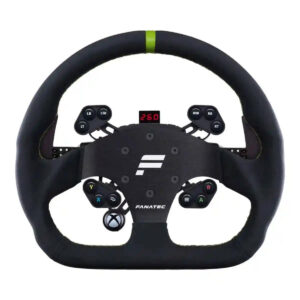
Fanatec ClubSport Steering Wheel Flat 1 V2 for Xbox
-
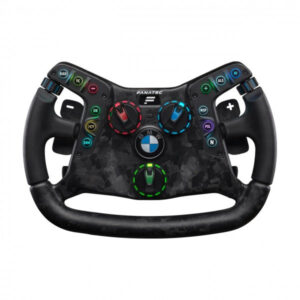
Fanatec ClubSport BMW M4 GT3
-
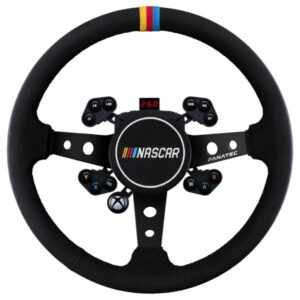
Fanatec ClubSport Steering Wheel NASCAR V2 for Xbox
-
Fanatec ClubSport Steering Wheel GT Alcantara V2
-
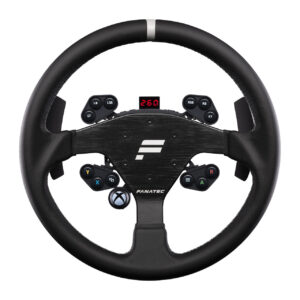
Fanatec ClubSport Steering Wheel 320 Xbox
-
Fanatec ClubSport Steering Wheel Porsche 911 GT3 R V2 for Xbox (Suede)
-
Fanatec ClubSport Drift V2
-
Fanatec ClubSport Steering Wheel Flat 1 V2



Reviews