
MOZA R21 Wheel Base : Test & Reviews | What it's really worth in 2026
MOZA R21 Wheel Base: My quick review
The R21 feels like a very "full", controllable steering wheel, with a real gain in grip reading, control and immersion over time. Above all, it makes sense for PC simracers already well equipped with a rigid cockpit, who ride often and want to make a lasting impact. The investment remains coherent for serious use, less so for occasional gaming.
When you buy through our links, we may earn an affiliate commission.
In the segment of high-end Direct Drive bases, the MOZA R21 is positioned as a very muscular solution, clearly aimed at demanding simracers. We're no longer just discovering Direct Drive, but looking for high torque, precision and consistency to drive hard, for a long time, with maximum steering wheel detail.
What the R21 promises is a powerful base capable of handling serious setups on a rigid cockpit, while retaining clean, usable feedback. It appeals above all to simracers who want to take a step up from entry/mid-range bases, without going for totally extreme or overpriced equipment.
My angle here is simple: to what extent does this base provide a real plus in terms of feel, precision and control, and for what type of rider does it make the most sense. The idea isn't to rave about the spec sheet, but to see what difference it really makes on the track, in the hands, over a full session. To put it plainly: does this R21 justify rethinking a good part of a setup around it, or do we remain in a more marginal gain compared to slightly less powerful bases.
Design and manufacturing
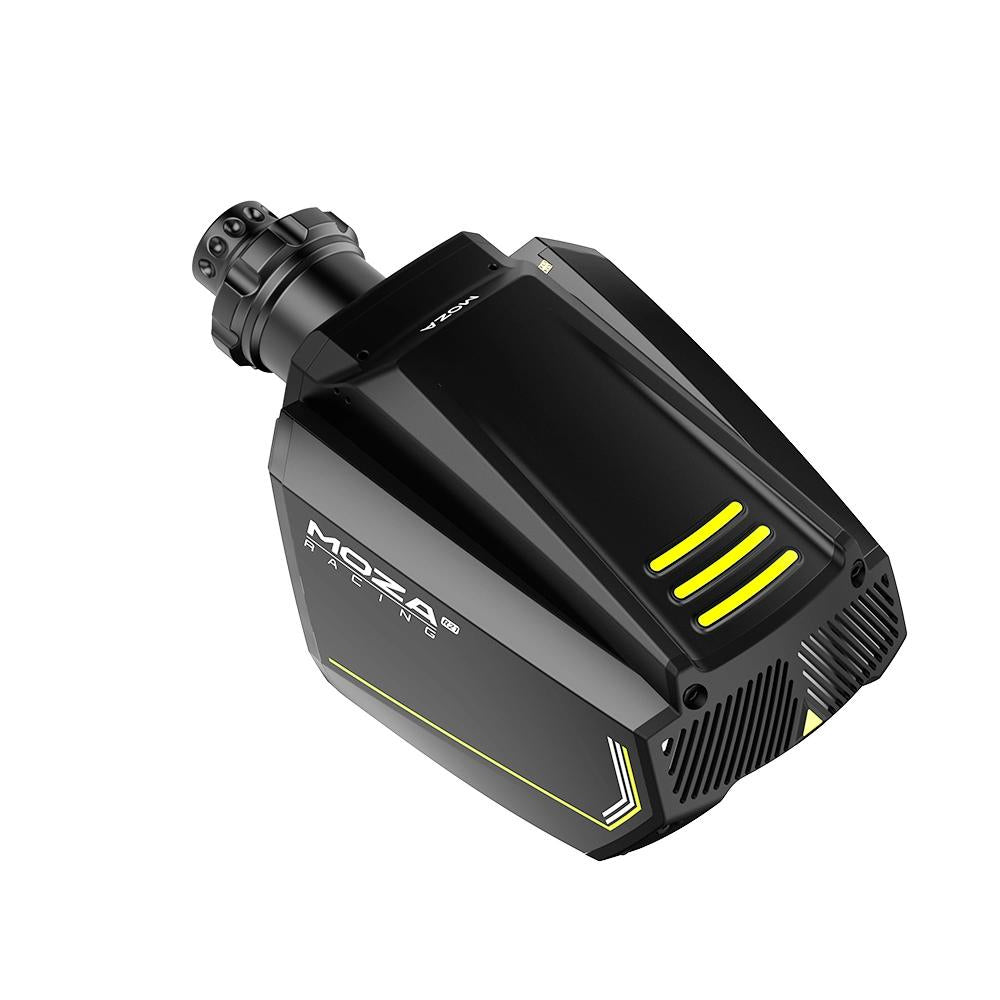
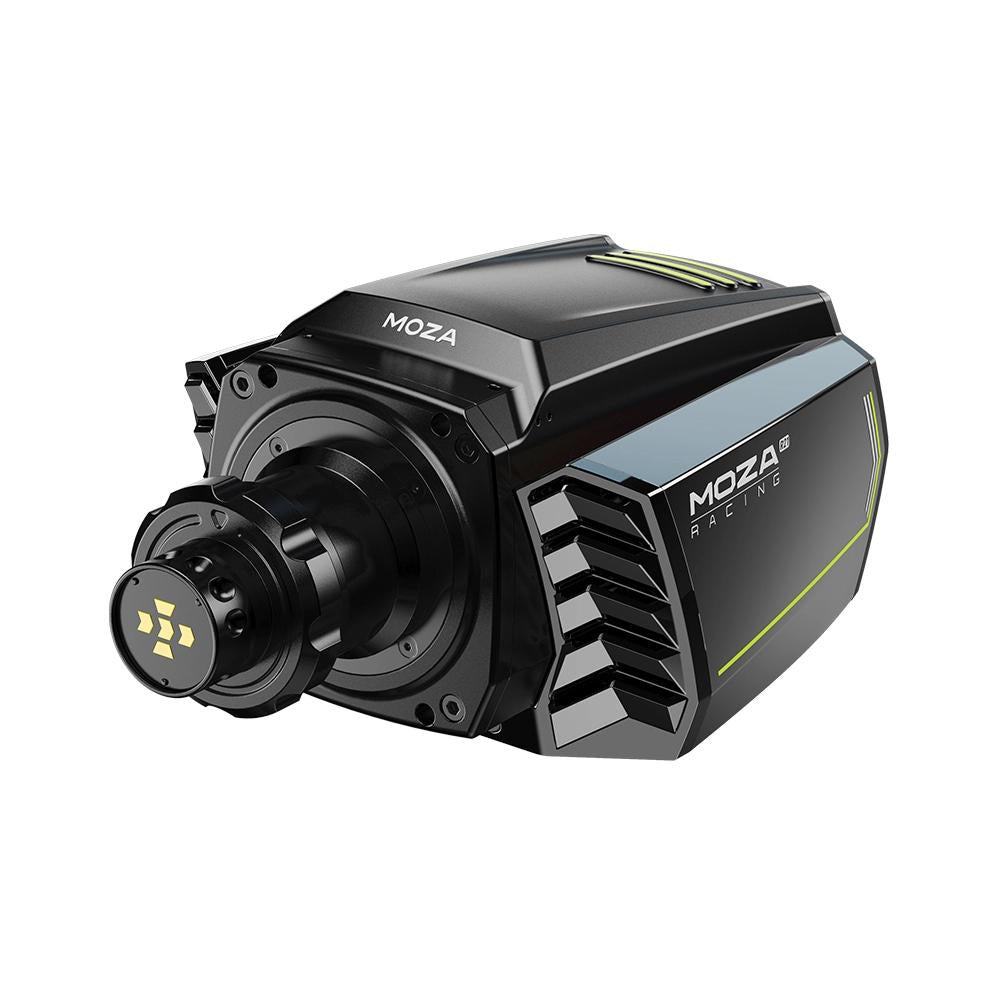
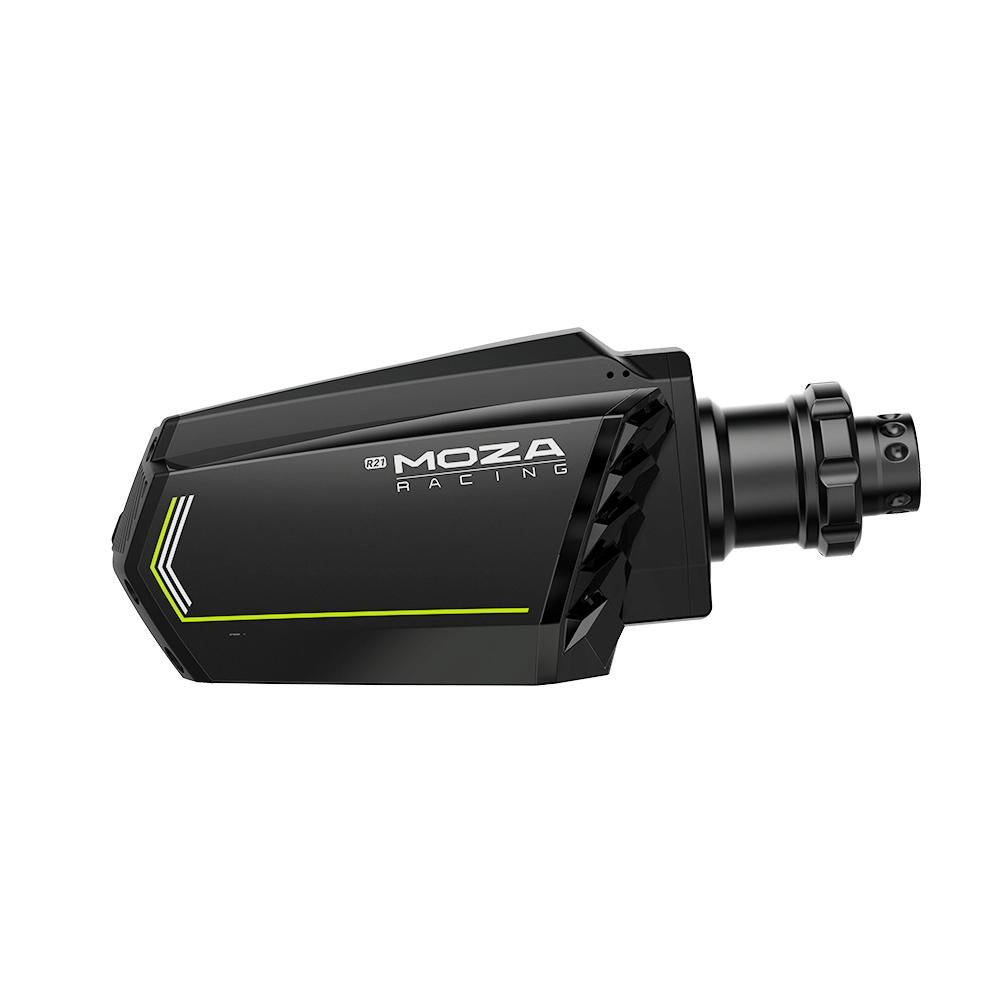
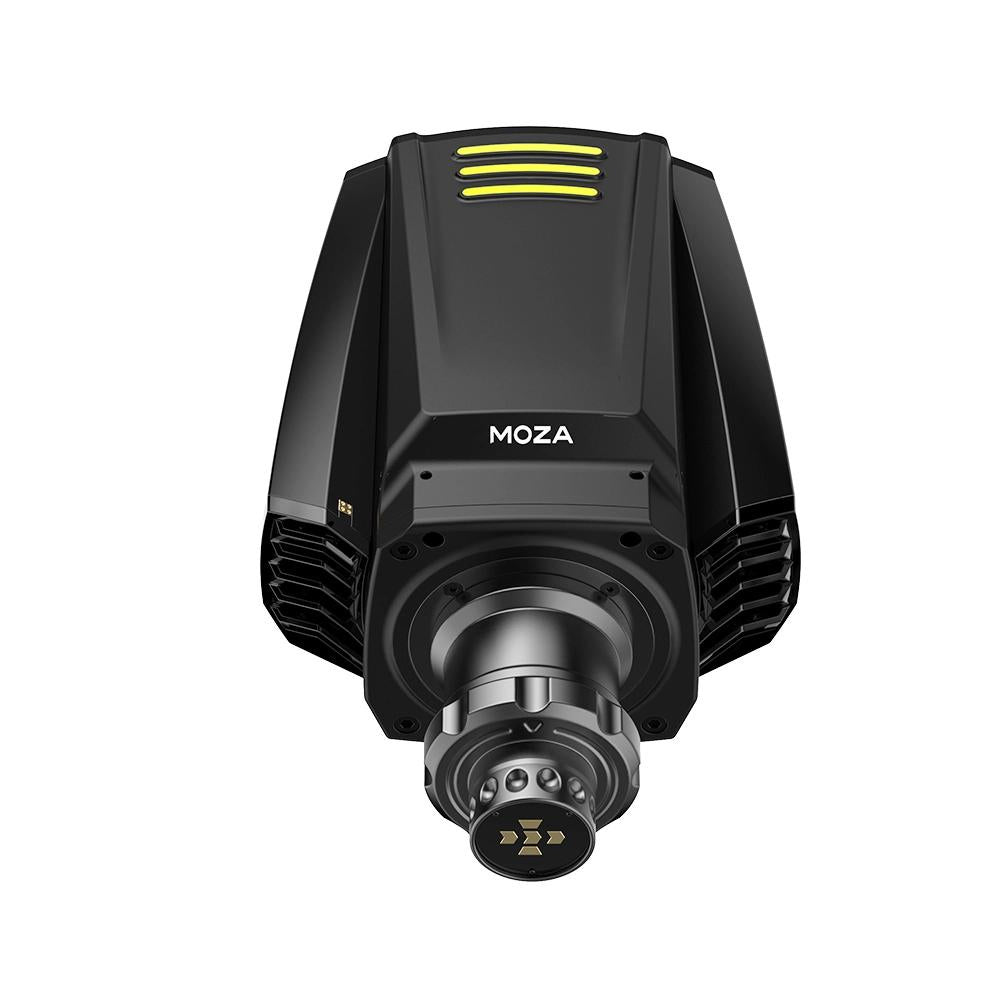
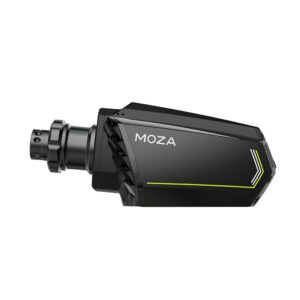
In hand, the MOZA R21 immediately gives the impression of a compact, dense block. The metal chassis inspires confidence, with a rigid hull, clean edges and a finish that remains in the spirit of a "work tool" rather than a decorative gadget. Visually, it looks serious on a well-assembled cockpit, without seeking originality at all costs.
The perception of solidity is very clear. When you tighten the base on a rigid chassis, you feel no play, no suspicious flexing. This is the kind of gear you can imagine running for hours on end with a lot of torque without flinching. Surfaces are well finished, adjustments clean, nothing sounds hollow or cheap. We're clearly in the upper echelons of perceived quality.
What's surprising is the "monolithic block" aspect: you get the feeling that everything has been designed to handle the power of the Direct Drive engine, rather than to be the most compact on the market. It exudes stability. Compared with a lighter or belt-driven base, there's a real sense of controlled mass, ready to take a beating.
On the other hand, this density comes at a price: you need a solid cockpit, ideally all aluminum or steel, otherwise the structure around it will become the weak link. On a lightweight chassis, you quickly run the risk of stray vibrations or bending that spoils the experience. The base isn't there for show, and you can feel it.
Compared to other Direct Drive bases of more moderate power, the R21 is clearly in the "beefy premium" segment. We may lose a little in compactness and integration into small spaces, but we gain in overall rigidity and impression of durability. Typically, this is the kind of base you'd expect to keep for a long time if you stay with the MOZA ecosystem.
Settings, customization and compatibility
The software is a real key point on a base of this power. MOZA's interface is clear overall, with structured menus and presets that allow you to start with settings that are already usable. You can fine-tune overall strength, filters, sensitivity around the center, and the way feedback is smoothed or left raw. You can feel that the base has been designed to be finely controlled via software.
The really useful settings are those that allow you to dose the potential brutality of the torque, filtering just enough to retain detail without turning every vibrator into an uncontrollable shock. The learning curve is reasonable: in just a few sessions, you'll find a profile that suits your style. To get a truly tailor-made feel, however, you need to take the time to test, compare and adjust little by little.
In terms of compatibility, the MOZA DNA remains unchanged: the base is designed above all for the PC, with an ecosystem of in-house steering wheels, pedals and shifters that fit in naturally. MOZA steering wheels are easy to install, integration is clean and communication between components is well managed. For console users, the situation is more limited and will depend on the solutions available at the time of purchase; this is clearly not a base designed primarily for the living room.
When it comes to the cockpit, you need something solid. The base supports and calls for a very rigid chassis, ideally in aluminum section. On an entry-level setup in light tubing or with little reinforcement, you lose some of the R21's appeal.
In terms of upgradeability, we're more on a "long-term objective" basis than a simple entry point. You could very well start with a mid-range MOZA steering wheel and upgrade the rest of the setup around it, but the base won't be the limiting factor for a long time to come.
Sensations in play
Once on the track, the MOZA R21 quickly reveals its DNA: power, precision, torque reserve. The force feedback is immediately authoritative. You can feel that the base is never out of breath, even with fairly aggressive settings and demanding cars. What's striking is its ability to remain easy to read despite the power available.
When cornering, the grip reading is clear. When the front starts to slide, you feel a slight loss of resistance and a change in the texture of the return, without any exaggerated or caricatured effect. You understand what the car is doing, and above all you have time to react. The transition from grip to understeer is gradual and manageable, which gives you confidence.
On vibrators, the R21 can be very expressive. If the signal is left too raw, aggressive vibrators become physically tiring. By dosing the filters, we achieve a pleasant balance where each pass over an edge is clean, dry, but without being destructive to the wrists. Where some lighter bases give a slightly "plastic" effect, the R21 provides a heavier, more mechanical feel, reminiscent of what a real, solidly mounted race car steering can give.
In fast corrections, the base makes a real difference. When you lose rear wheel drive, the steering wheel comes back quickly, but in a controllable way. You can make up for fairly violent oversteer without feeling like you're fighting against the base. The engine responds quickly and without annoying inertia, which helps you develop your own reflexes. It's precisely at these moments that you feel the benefit of a powerful but well-controlled base.
Over long sessions, consistency is a real strength. Feel doesn't collapse, torque remains stable, and warm-up doesn't become a noticeable problem in normal, intensive simracing use. Fatigue comes more from the force you choose to apply in the settings than from the base itself. You simply have to be reasonable and adjust the power to your physical condition and the type of race. Used with the right torque, the R21 remains comfortable over time.
In terms of immersion, the base clearly pulls the setup up. The mass of the steering wheel, the car's reactions, the small irregularities of the track - everything feels fuller, more connected. It no longer feels like you're holding a simple controller, but a mechanical organ that's an integral part of the virtual car. This is where the base really changes the experience.
Compared to a more modest Direct Drive base model, the R21 offers more room for manoeuvre. Where a medium-power base can sometimes reach its limit at the top end of the force range, the R21 has plenty of reserve. We can therefore slightly reduce the overall force while retaining a great deal of detail, resulting in a very pleasant combination of finesse and comfort. Compared with even more extreme bases, the R21 lies in an interesting zone where power is more than sufficient for almost everyone, without tipping over into the over-dimensional, difficult to exploit for domestic use.
Who's it for? What we like, what we don't like
The MOZA R21 is clearly aimed at simracers already at least a little established in the discipline. Motivated beginners who know they want to make a serious long-term investment may find it to their liking, but it will appeal above all to intermediate and advanced profiles who come from a belt-driven base or a lighter Direct Drive and want to take a real step up.
What I appreciate most is the feeling of control despite the power. The base is very muscular, but adjustable and controllable, making it suitable for many riding styles. I also like the overall build quality: it feels like a product designed to last, not to be changed after a few months. Finally, the readability of grip and load transfer is really convincing, especially in GT and fast single-seaters, where every micro-information counts. You immediately understand what the car is doing.
On the other hand, there are several points worth highlighting. Firstly, the R21 is clearly oversized for a small entry-level cockpit: without a rigid structure around it, much of its appeal is lost. Secondly, the power available means that you need to take the time to adjust the FFB to suit your physical condition, otherwise you'll find your sessions unnecessarily tiring. Finally, for gamers looking for turnkey console compatibility, this base is not the simplest or most natural option.
In terms of perceived value, the R21 is positioned as a serious investment, not a spur-of-the-moment purchase. For an enthusiastic simracer who rides regularly, who already owns or is considering a rigid cockpit and a coherent ecosystem, the ratio between performance, quality and longevity is interesting. For a beginner or occasional player, the base may be too expensive and under-utilized.
Verdict
The MOZA R21 is a Direct Drive base that clearly transforms the heart of a sim racing setup. It provides comfortable power, a torque reserve that keeps the FFB rich without saturating, and build quality to match a serious cockpit. We've gone from a steering wheel that does the job to a real driving tool, capable of keeping up with a steady pace and hours of driving.
On the market, the R21 is at the top end of the affordable range, above the "Direct Drive discovery" basics, but below the ultra-specialist solutions where you pay a lot for performance margins that few players will know how to exploit. It's aimed at users who want equipment that's already very robust, designed to last and support progression over several years.
I'd recommend it to PC simracers who are well-equipped with a cockpit, who ride often, who like to fine-tune their sensations and who are looking for a base that won't be limited for a long time. For the occasional gamer, for a home console setup or for a light cockpit, there are more suitable options, less extreme and easier to live with.
If you're looking for a powerful, precise Direct Drive base designed for a heavy-duty setup and serious use, the MOZA R21 can clearly make the difference in your setup.



Reviews