MOZA R9 V2 & RS V2 Bundle : Test & Review | What it's really worth in 2026
MOZA R9 V2 & RS V2 Bundle: My quick review
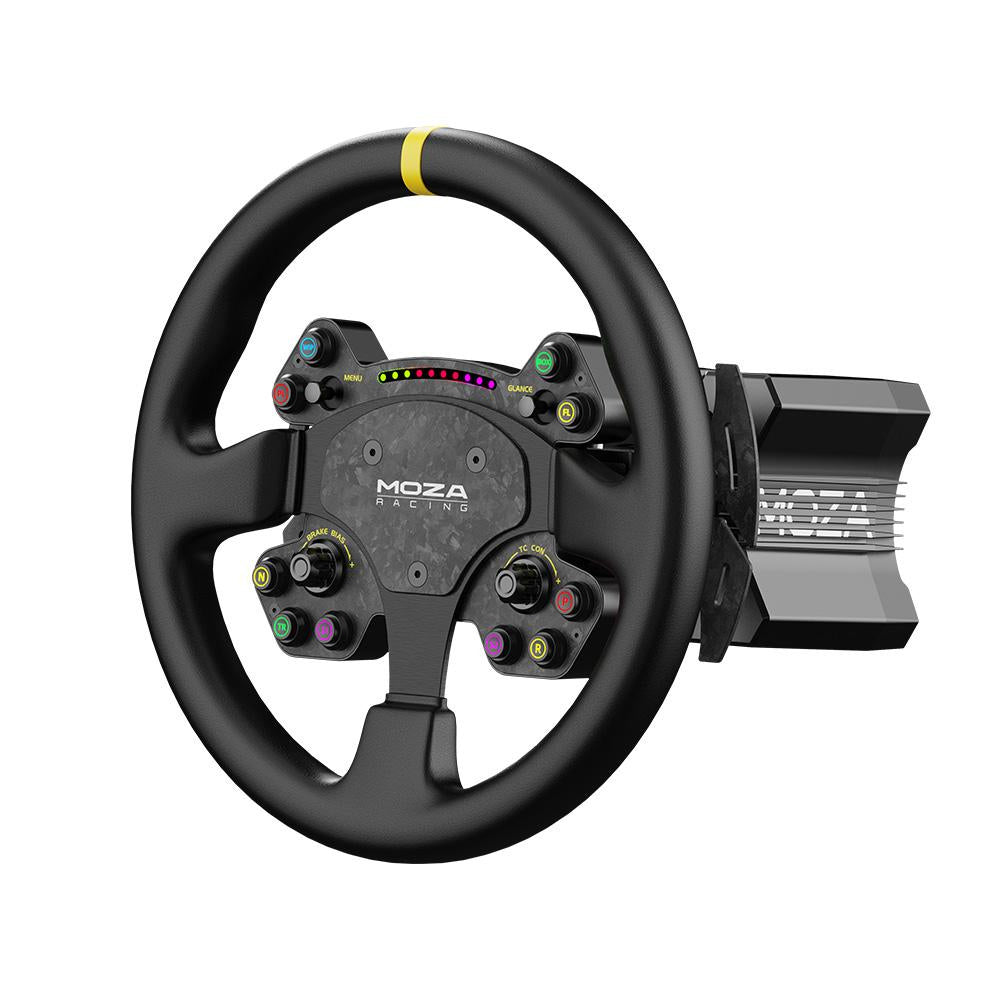
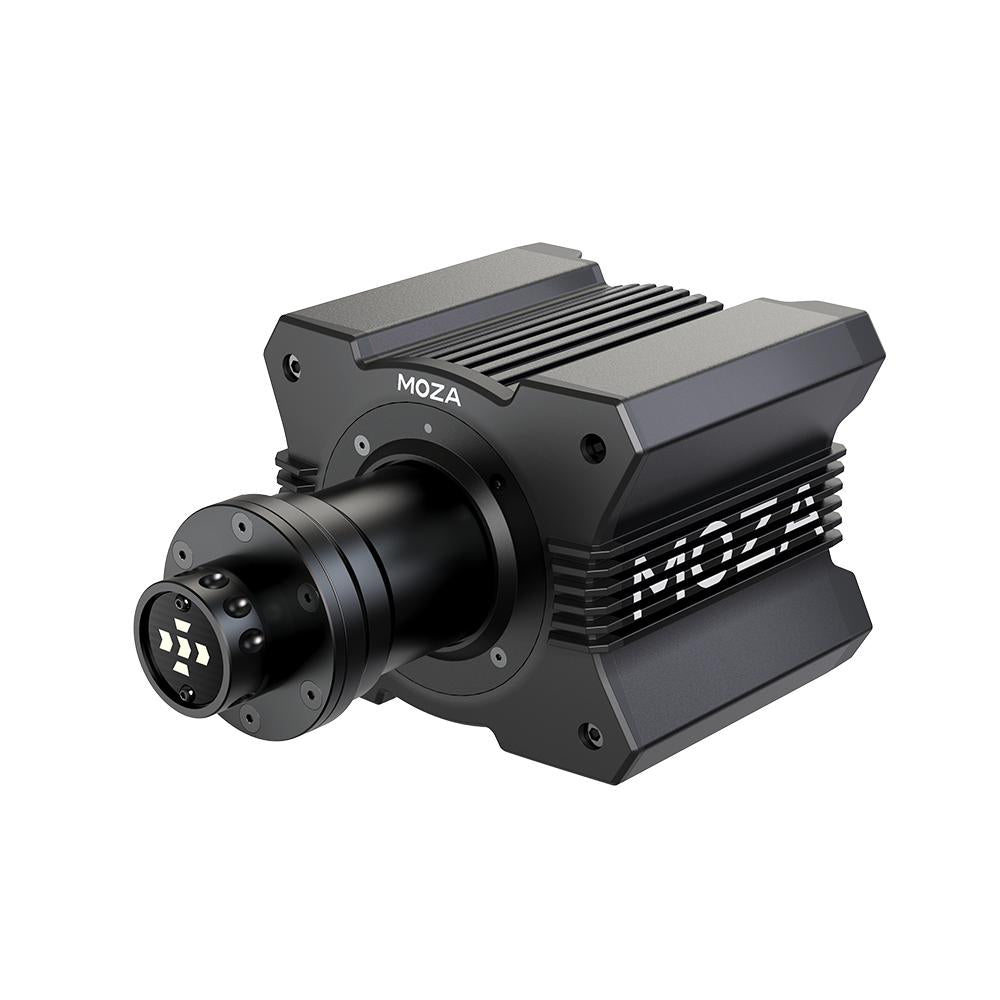
This bundle combines the MOZA Direct Drive R9 V2 base (9 Nm) and the RS V2 steering wheel—a pair designed to take you to the next level without aiming for the very high end. The base unit delivers precise and responsive force feedback, while the steering wheel features forged carbon fiber, aluminum, and genuine leather. It’s a cohesive package, tailored for PC gaming, that we found to be formidable in both GT and endurance racing.
When you buy through our links, we may earn an affiliate commission.
What We Liked
- A responsive 9 Nm direct-drive motor with near-instantaneous response
- Vibrations and subtle adjustments rendered with great finesse
- RS V2 steering wheel made of forged carbon fiber, aluminum, and leather, with a premium finish
- Precise, finely adjustable dual-clutch magnetic paddles
- Compact, sturdy base with active cooling
- Convenient wireless quick-release system, RS V2, compatible with all MOZA bases
Reserves
- Less raw power on big hits than more powerful bases
- The base gets warm after about an hour of continuous play
- A set designed for PCs, with no native console compatibility
- Steering wheel features only an LED strip, with no built-in display
Technical Specifications
| Maximum torque at the base | 9 Nm |
| Motor type | Direct Drive (servo) |
| Peak power | 180 W |
| USB refresh rate | 1000 Hz |
| Base Frame | aircraft-grade aluminum alloy |
| Base Dimensions | 240 x 157 x 124 mm |
| Steering wheel rim | 33 cm (13 inches) |
| Steering wheel materials | forged carbon fiber, aluminum, genuine leather |
| Orders | 10 backlit buttons, 2 encoders, 2 joysticks |
| Paddles | forged carbon selection + dual magnetic clutch |
| RPM Gauge | 10-LED RGB strip |
| Steering Wheel Connection | MOZA quick-release system (wireless and wired) |
| Compatibility | PC (MOZA Pit House software) |
A bundle designed to help you switch to direct drive without breaking the bank
This bundle combines two components that complement each other well: the Direct Drive R9 V2 base unit and its in-house steering wheel, the RS V2. This is exactly the setup you’re looking for when you’re upgrading from a belt- or gear-driven steering wheel and want to finally feel the car—without breaking the bank. On our test bench, the first impression speaks volumes: the base is a small, solid cube made of aluminum alloy with sharp edges, and the steering wheel immediately stands out with its 33-cm leather-wrapped rim. This is equipment that exudes quality.
The R9 V2: 9 Nm That Speak Volumes
Nine newton-meters—on paper, that’s not a number that impresses those used to high-torque engines. But behind the wheel, it’s a different story. What struck us was the finesse: the micro-corrections, the subtle weight transfers, and the rear-end movements come through with a clarity that a belt-driven steering wheel consistently obscures. You don’t need to crank the force feedback all the way up to feel the car come alive in your hands. The increase in force during a turn is linear and easy to read; you know exactly when you’re getting grip and when you’re starting to slide.
Another advantage is its responsiveness. Direct Drive really comes into its own here when you need to correct oversteer: the base responds almost instantly, making corrections feel natural rather than delayed. In this regard, the R9 V2 delivers a driving experience that rivals models priced a notch higher.
Curbs, sliding, and long sessions
It was on speed bumps that this model impressed us the most. Bumps, rough patches, and changes in road surface are rendered with a clarity rarely seen in this class: you can really tell the difference between a speed bump and a simple asphalt joint, whereas a gear-driven steering wheel smashes everything into a jumble of jolts. Whether drifting or driving cleanly, this ability to read the road surface helps with precision control. On long runs, the Base gets slightly warm after about an hour of continuous play, but this isn’t a concern thanks to temperature monitoring and the built-in active cooling system.
The RS V2: A Steering Wheel That Holds Its Own Among the Best
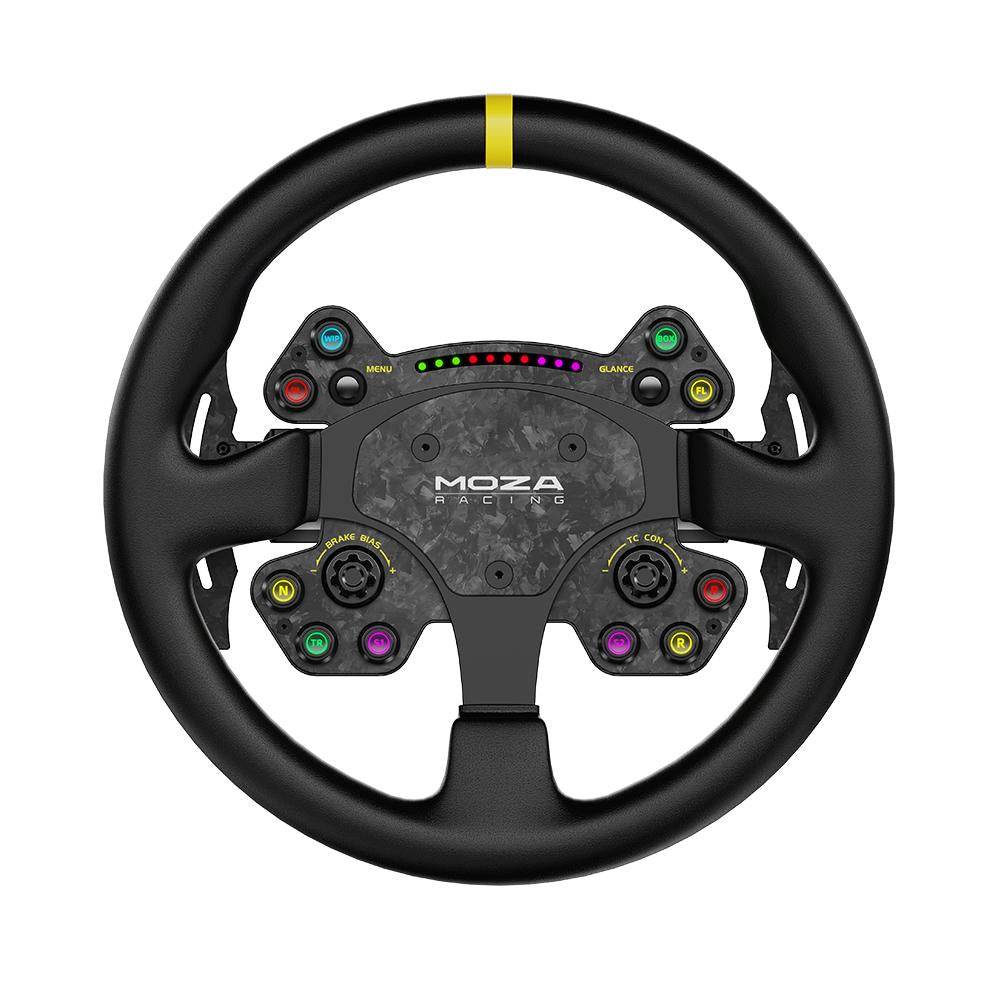
The RS V2 isn't just some accessory thrown in to fill out the box. Its forged carbon fiber front, aluminum back, and hand-stitched leather give it a finish that rivals much more expensive steering wheels sold separately. The ten backlit buttons click with crisp feedback, and the two encoders and two joysticks fall naturally under your thumbs. The forged carbon selection paddles are firm and responsive, and—most importantly—the set of magnetic dual-clutch paddles can be switched between single and dual modes: a real plus for nailing your starts. The strip of ten RGB RPM LEDs remains visible out of the corner of your eye. During long sessions, the grip remains comfortable and precision stays consistent, whether you’re stringing together laps or drifting sideways.
What held us back a little
The R9 V2 doesn’t work miracles on major impacts: compared to more powerful bases, it lacks a bit of raw punch when you hit a high curb or a wall hard. For the vast majority of drivers, the torque reserve is more than enough, but those who love a really intense ride will notice this. The base also gets a bit warm during very long sessions—it’s not a problem, but you can feel it. Finally, this setup is designed for PC: MOZA console compatibility requires dedicated steering wheels, and the RS V2 isn’t one of them. The steering wheel itself features only an LED strip, with no built-in display.
Who is this bundle designed for?
This bundle is perfect for anyone looking for their first true, complete, and cohesive direct-drive setup, without having to worry about assembly. You get a slim, responsive base and a premium steering wheel that, together, cover everything from GT racing to endurance racing and even a few drift sessions. Since the RS V2 remains compatible with all current MOZA bases, the setup also leaves the door open for an upgrade to a higher-end base down the road.
Frequently Asked Questions
Which sim racing wheel should you choose if you're just starting out?
Direct drive or belt drive: What's the difference?
Does this hardware work on PS5 and Xbox?
Do you need a cockpit to get off to a good start?
How much should I budget for a good setup?
Other Reviews & Testimonials
-
Fanatec CSL DD Ready2Race F1 Esports Bundle for PC
-
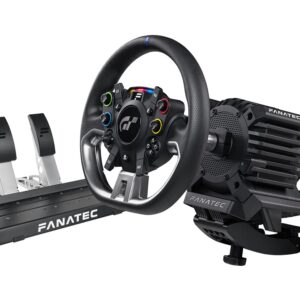
Fanatec Gran Turismo DD Extreme
-
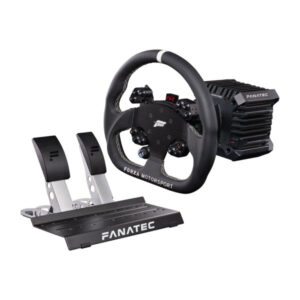
Fanatec CSL DD Ready2Race Forza Motorsport Bundle (5 Nm) for Xbox & PC
-
MOZA R12 & KS Steering Wheel Bundle
-
Fanatec Gran Turismo DD Pro (8 Nm)
-
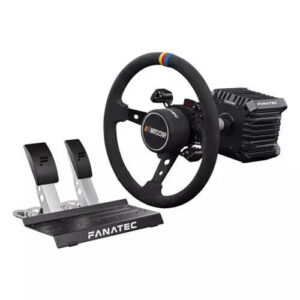
Fanatec CSL DD Ready2Race NASCAR Bundle for Xbox & PC
-
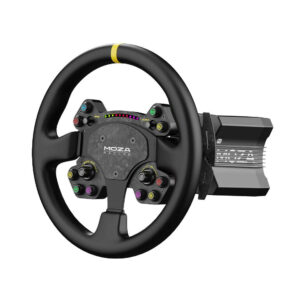
MOZA R12 & RS V2 Steering Wheel Bundle
-
Fanatec CSL DD Ready2Race Bundle for PC (5 Nm)





Reviews