Simucube 2 Sport : Test & Review | What it's really worth in 2026
Simucube 2 Sport: My quick review
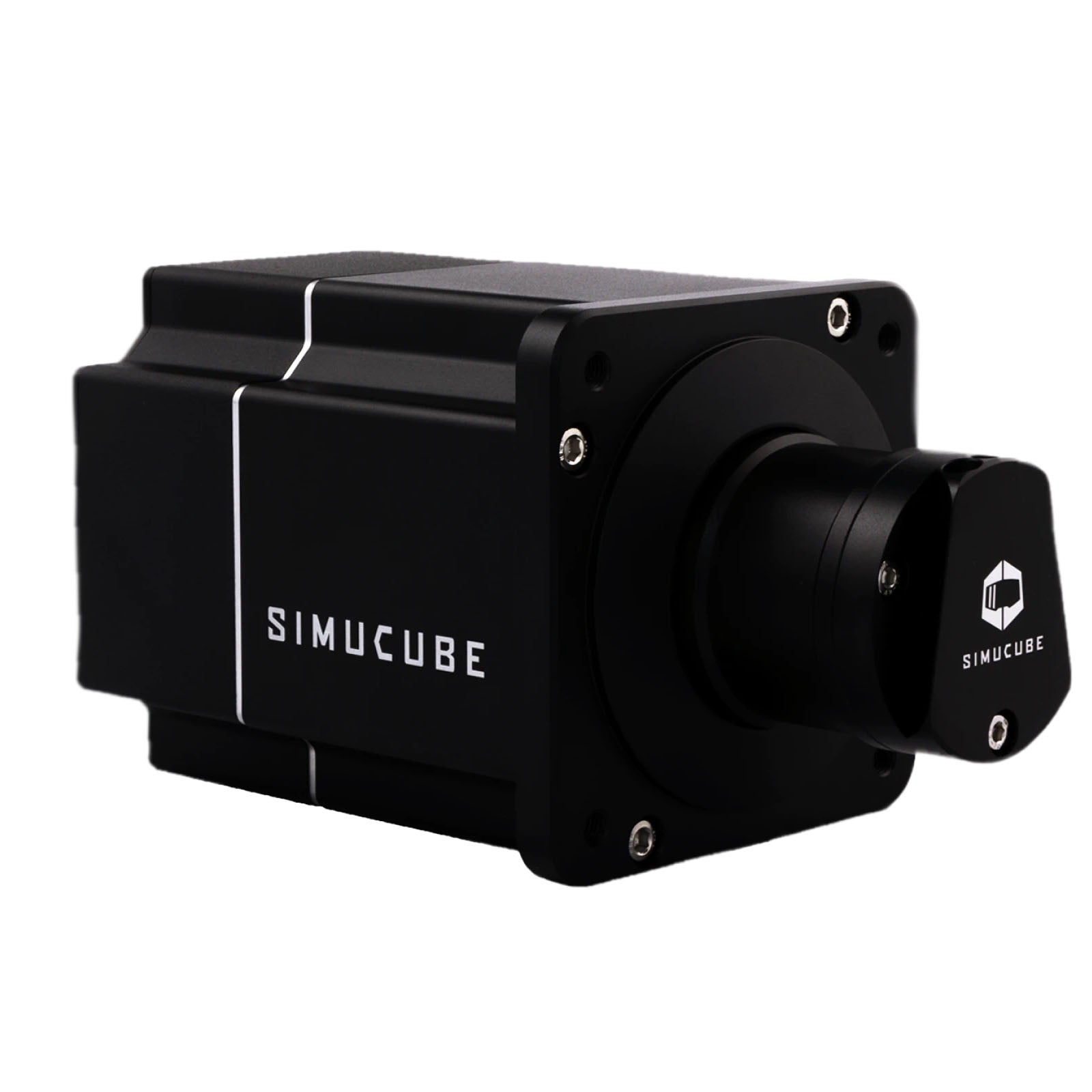
The Simucube 2 Sport is an ultra-compact, 17 Nm direct-drive base, machined from aluminum and designed for PC use. It features force feedback of rare clarity, True Drive software that’s both user-friendly and feature-rich, and construction that exudes durability. It’s our favorite entry point into the high-end direct-drive market.
When you buy through our links, we may earn an affiliate commission.
What We Liked
- 17 Nm is more than enough; no clipping even at low force on the play side
- Very detailed and direct feedback, with rear slip detected instantly
- Premium aluminum construction and compact size: 130 x 130 mm
- Stay cool and steady during long endurance sessions
- Simucube quick-release mechanism with absolutely no play in the center
- Emergency stop button included as standard
- True Drive: accessible for beginners, in-depth for advanced users; profiles shared via Paddock
Reserves
- Windows PC only; not compatible with PlayStation or Xbox
- Base only; steering wheel not included
- Quick-release kit for the steering wheel side (sold separately) for non-Simucube steering wheels
- Mounting bracket not included
- No automatic profile loading by game or by car
Technical Specifications
| Maximum torque | 17 Nm |
| Torque Rise Rate | 4.8 Nm/ms (adjustable from 1 to 4.8) |
| Engine | direct drive with very low torque ripple |
| Angle Sensor | 22-bit absolute |
| Power supply | 280 W |
| Dimensions | 130 x 130 x 250 mm (quick-release included) |
| Weight | 8 kg |
| Case | machined aluminum |
| Quick Mount | Simucube Quick Release (steering wheel side sold separately) |
| Wireless Steering Wheel Mount | yes |
| Compatibility | Windows PC only (DirectInput) |
The direct-drive system that's winning over purists
We hooked up the Simucube 2 Sport expecting just another basic model, and we were pleasantly surprised. In a case barely bigger than a brick, the Finnish brand has packed a 17 Nm direct-drive motor that’s anything but a stripped-down entry-level model. It’s the most affordable member of the Simucube 2 family, but it shares most of the DNA of its bigger sisters, the Pro and Ultimate. Let’s just say it right away: this Sport is already playing in the big leagues.
Manufacturing That Inspires Confidence
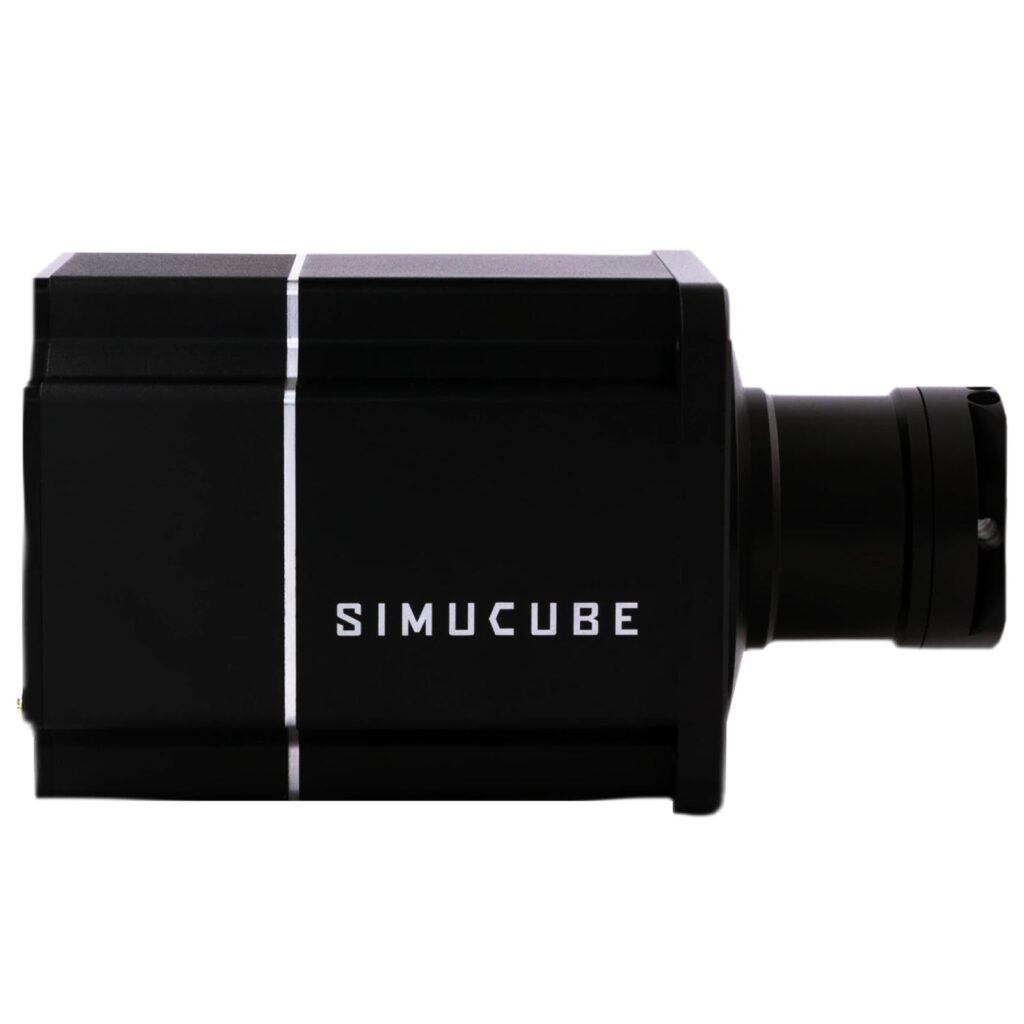
The first thing you notice is the object’s weight and density. Eight kilograms packed into a machined aluminum chassis measuring 130 x 130 x 250 mm, with beveled edges and finishes that leave no room for cheap-looking plastic. Nothing moves, nothing creaks. The 130-mm square format remains surprisingly compact for the power it delivers, making it easy to integrate into just about any rigid cockpit using the M8 mounts. The emergency stop button included as standard instantly cuts off the force feedback—a real safety net when you hit a wall at full speed and the base tries to rip your wrists off.
On the track, clarity comes first
It’s behind the wheel that the Sport really comes into its own. What struck us wasn’t the harshness, but the clarity of the feedback. When the rear end breaks loose, the feedback travels up through the steering wheel with a game-changing immediacy. You can feel the rear end breaking loose before it’s too late, and you can correct slides that you would have let get out of hand in a belt-driven base model. Over speed bumps, the texture of the asphalt, and load transfers during braking, the feedback is precise, direct, and perfectly clean, without any unwanted jerks or strange oscillations.
The advertised 17 Nm proves to be more than enough. During races, you often drive well below the maximum, and yet we never experienced any clipping, even when lowering the force to 40 percent on the “game” side in Assetto Corsa Competizione. Another plus during long endurance sessions is that the motor stays cool and doesn’t lose consistency over the course of the stints. We lowered the setting to around 60 percent to spare our forearms over time, and the feedback remained just as responsive. That’s exactly what we look for in a base setup of this caliber: precision rather than a display of power.
True Drive: Deep without being intimidating
The in-house True Drive software automatically recognizes the base, manages firmware updates, and offers two levels of sensitivity. Beginners can set up the basics in just a few minutes: steering angle, overall force, smoothing, and damping. Discerning users can dive into the inertia, friction, and torque reconstruction filters to fine-tune their driving experience. The Paddock platform lets you access profiles shared by the community—a real time-saver for roughing out a setup. Our only complaints are the lack of automatic profile loading by game or car, and the default profile management, which isn’t always intuitive. Nothing deal-breaking, but you’ll need to get used to switching profiles manually.
Quick release and open ecosystem
We were impressed by the Simucube quick-release mounting system’s complete lack of play. You clip on a steering wheel, tighten it, and there isn’t the slightest bit of wobble at the center—which matters a great deal on such a precise base. The spring-loaded mechanism is designed to withstand thousands of adjustments without wearing out. Be aware, however, that the Sport is a base unit only. To mount a third-party steering wheel, you’ll need to add the quick-release kit on the steering wheel side, which is an additional cost to factor in. On the plus side, this remains an open ecosystem compatible with a wide range of steering wheels on the market—from Cube Controls to Ascher Racing—unlike closed systems.
Compatibility, the PC, and Nothing Else
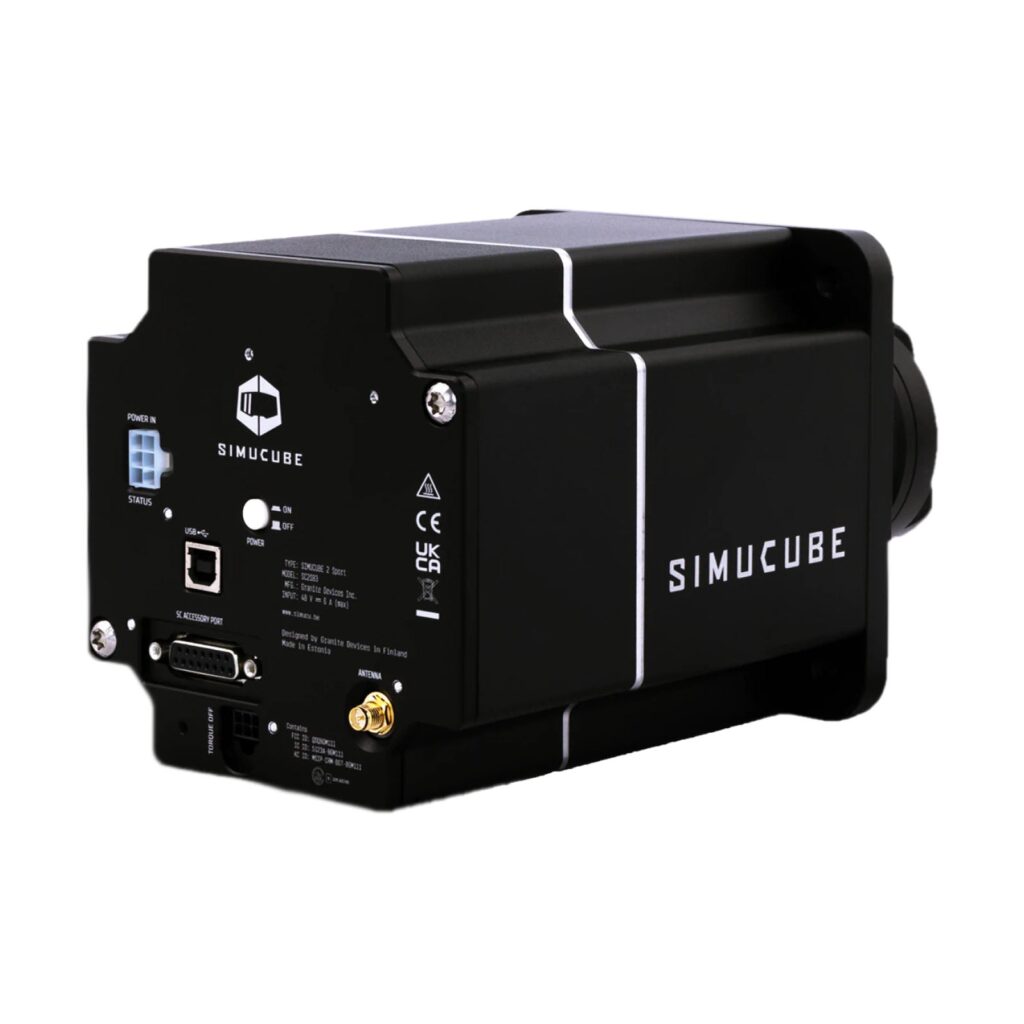
One crucial point to keep in mind: the Simucube 2 Sport is a Windows PC-only system. It does not work on PlayStation or Xbox; no consoles are supported. On the other hand, on PC, it works with anything that uses DirectInput—iRacing with its 360 Hz force feedback, Assetto Corsa and its sequels, rFactor 2, the F1 series, and many others. If your setup is 100 percent PC, this is a great option. If you play on a console, look elsewhere—this base isn’t for you.
Our verdict after testing
The Simucube 2 Sport won us over with its hard-to-find balance, perfectly controlled power, exemplary feedback clarity, and a build designed to last for years. Its main limitations stem from the additional components required—a steering wheel, a mounting kit, and a stand—as well as its exclusive PC compatibility. But for anyone looking to enter the world of high-end direct-drive systems without breaking the bank on the Pro version, it’s a safe bet that won’t disappoint.


Reviews