Fanatec Podium Steering Wheel NASCAR : Test & Review | What it's really worth in 2025

Fanatec Podium Steering Wheel NASCAR: My quick review

This steering wheel gave me a more stable and natural feeling of control on the oval, with a very consistent feel for heavy cars. It makes perfect sense for simracers already equipped with Direct Drive, who mostly race in NASCAR or related disciplines. It's a worthwhile investment if you accept this fairly specialized choice over the long term.

When you buy through our links, we may earn an affiliate commission.

Fanatec Podium Steering Wheel NASCAR: the complete sensations-oriented test

In the Fanatec range, the Podium Steering Wheel NASCAR is positioned as a premium steering wheel for the oval, but not only. This is a clearly competition-oriented product, designed to take full advantage of a Direct Drive base, with a very "pure racing" approach: no useless gadgets, everything is there for precision, rigidity and efficiency.

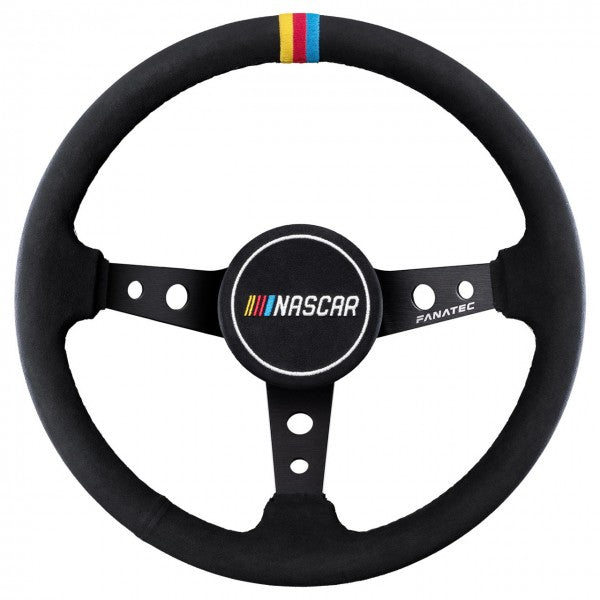
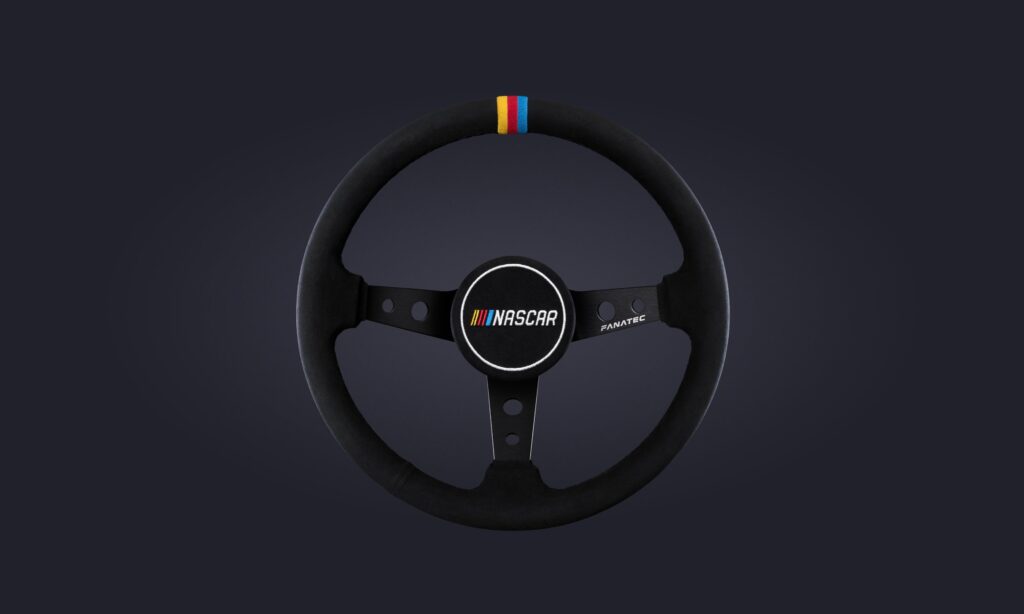
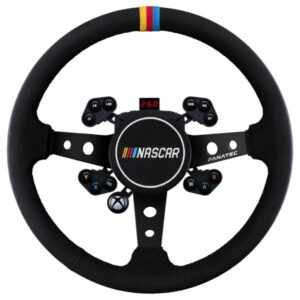
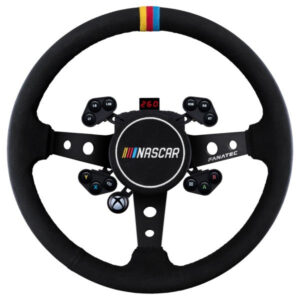
This steering wheel is appealing because it promises two clear things: an authentic NASCAR feel, with a substantial diameter and almost round shape, and a build quality reminiscent of racing equipment. Visually, it's closer to a stock car steering wheel than a classic GT or F1 wheel. The size and design alone change the way you drive.

My angle is simple: how much does this steering wheel add in terms of control, grip reading and comfort over long sessions, especially on ovals and in Touring/GT-type races? And above all: is it worth it compared to a more versatile steering wheel, when you're also riding on road circuits?

Design and manufacture: a real racing wheel in your hands

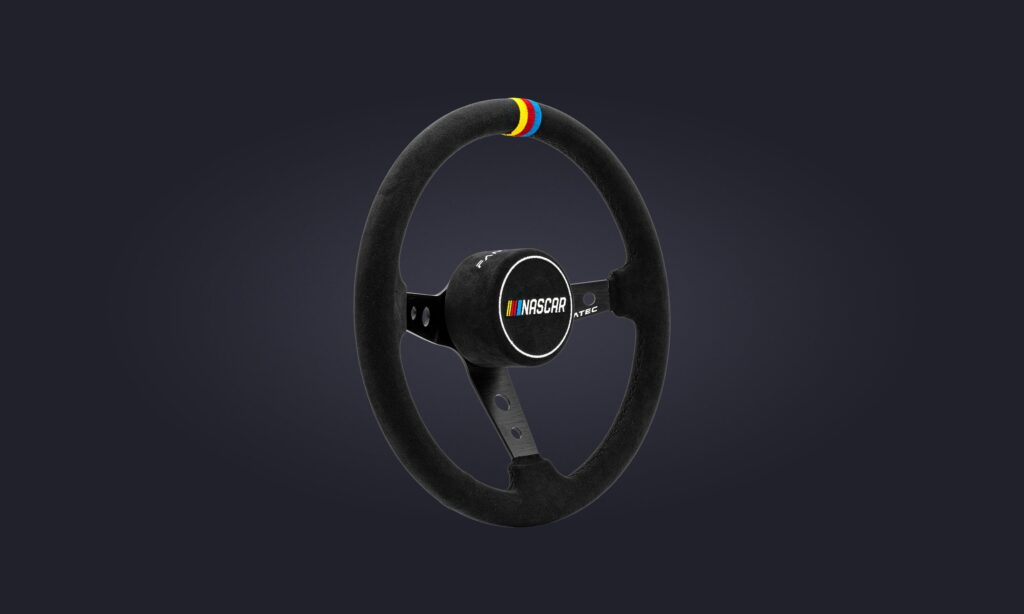
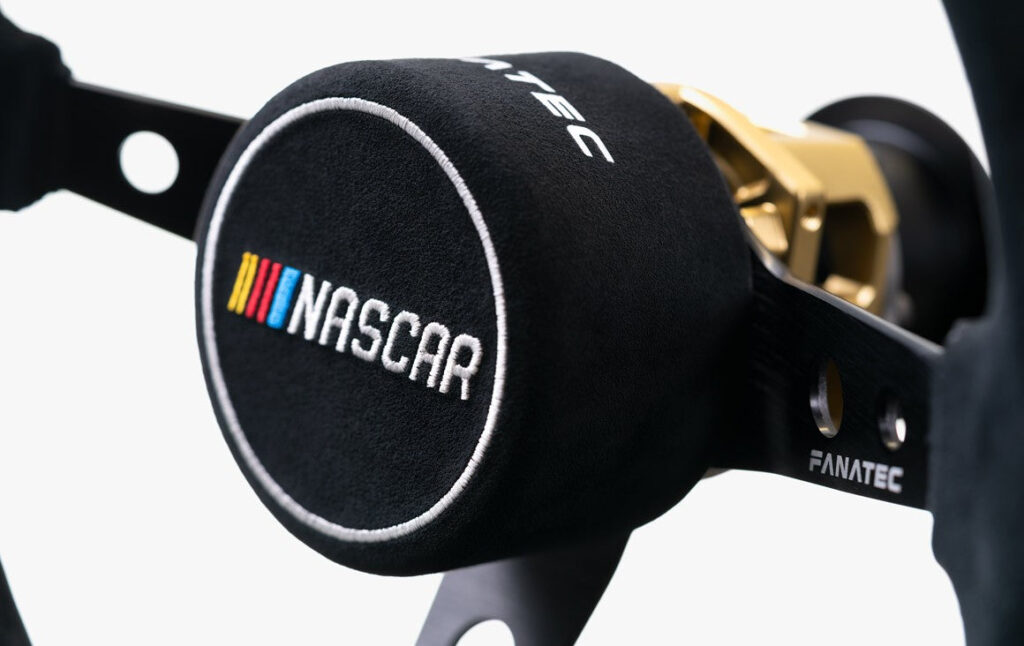
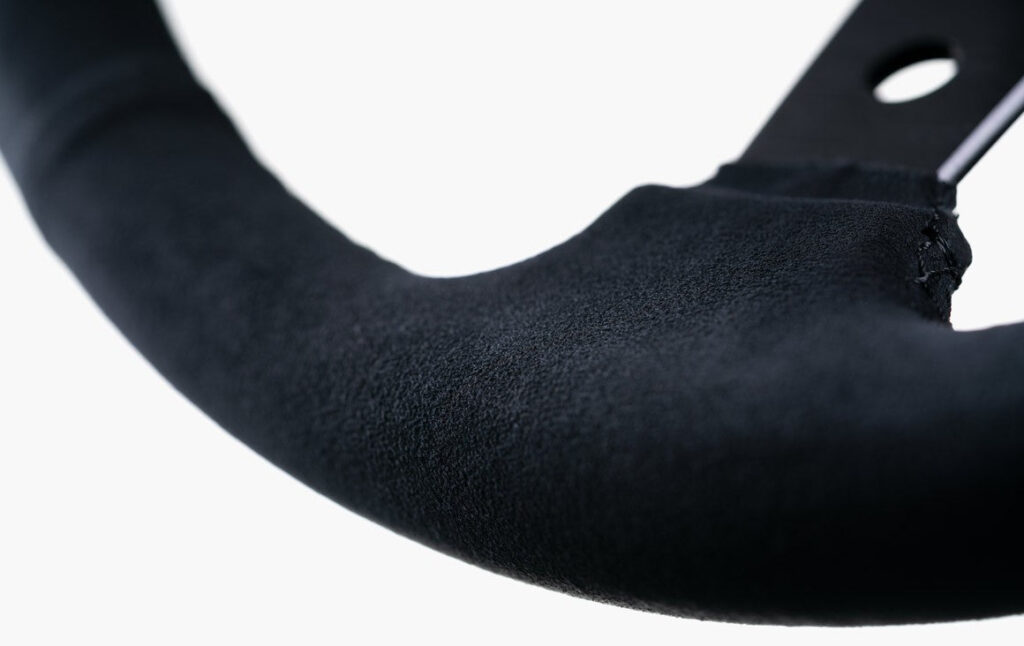
In hand, the Podium Steering Wheel NASCAR immediately gives an impression of density. The hoop is wide and rigid, with a full rim more reminiscent of a real racing car wheel than a gaming peripheral. You can tell that Fanatec has focused on solidity and stability, not extreme lightness at all costs.

The materials breathe seriousness: metal for the structure, sturdy central plate, grips covered with a pleasant material, offering a good compromise between grip and comfort. We're not talking about overly fragile alcantara, but something that gives you confidence for long sessions, even with gloves on. The steering wheel doesn't bend, squeak or move a millimeter when pushed hard. You can really go for it without restraint.

What's immediately surprising is the diameter and shape. Compared to a GT or Formula steering wheel, there's more inertia, more arms to mobilize. Movement becomes fuller, more progressive. It really reinforces the sensation of driving a heavy, stock car-like machine. Visually, it's consistent with a NASCAR- or oval-oriented setup: on a cockpit, it clearly has presence.

On the disappointment front, you have to accept that this isn't the most versatile steering wheel on the market. For tight rallying, technical drifting or single-seaters, the diameter may seem a little cumbersome. Some will also find the design rather sober, almost Spartan, compared to other Podium steering wheels with more buttons or integrated displays.

Compared with Fanatec steering wheels from the ClubSport or CSL ranges, we feel we're one level above in terms of rigidity and overall seriousness. On the other hand, in terms of "visual wow effect", some GT or Formula models surpass it with more detail and embellishments. Here, the focus is on raw efficiency.

Settings, customization and compatibility: serious, but with an ecosystem in mind

The Podium Steering Wheel NASCAR blends in naturally with the brand's Direct Drive bases. Integration with the Fanatec ecosystem is a real strength: you attach the steering wheel, recognition takes place automatically, and the basic profiles offered in the drivers are already largely usable. It's clear that the steering wheel is designed to work "plug and play" with all major simulators.

The really useful settings are mainly at the base level: angle of rotation, maximum force, filtering, damping, Natural Damper, etc. This flywheel handles high forces well, so you can push the sliders a little without feeling like you're hammering it. The important thing is to adjust the angle of rotation according to the discipline: wider for oval racing, narrower for certain road races if you prefer shorter movements.

Live customization will depend on the exact version of the associated hub, but the spirit remains the same: there are buttons, sometimes rotors or encoders depending on the bundle, more than enough to manage the essential functions for NASCAR or touring. The layout is easy on the fingers, with no need to let go of the steering wheel. You don't have to spend time looking at the wheel for a button, which is crucial when you're driving at high speed in a package.

The learning curve is reasonable. After a few sessions, you'll get the hang of the controls. The biggest change actually comes from the size of the steering wheel: it takes a little time to adjust your habits if you've come from a small F1 or GT steering wheel.

On PC, compatibility is broad, as is often the case with Fanatec. On consoles, the base + steering wheel combo has to be taken into account, but the Podium Steering Wheel NASCAR follows the usual logic of the ecosystem: if the base is compatible, the steering wheel follows. With a Fanatec crankset and possibly a shifter or handbrake, it's easy to build a complete, coherent setup around this wheel.

In terms of upgradeability, we're not talking about an entry point, but rather a long-term investment. It's a steering wheel that makes sense with a strong base and a user who knows what he wants: a clear focus on the NASCAR/ovale style, even if it means adding another steering wheel later on to diversify disciplines.

Sensations in play: where the steering wheel shows its true personality

On the track, the character of the Podium Steering Wheel NASCAR is immediately apparent. The combination of diameter and rigidity really changes the way you read the car. With a Direct Drive base worthy of the name, force feedback becomes very legible and progressive. You feel more amplitude in the movements, and this makes it possible to fine-tune oval corrections.

In terms of pure feedback, the steering wheel reveals the nuances of FFB: the load that increases in the wheel as you enter a bend, the onset of understeer that translates into a slight lightening, the micro-corrections needed to stay on track. The size of the steering wheel helps to read these variations, as the lever arm is greater. The slightest movement translates into a more subtle action on wheel angle. The result is better control and less jerking.

In fast corners, you gain in gesture stability. You're more in tune with the car than with a small, nervous steering wheel. On long oval bends, keeping a constant angle, adjusting slightly as grip changes, becomes more intuitive. You can really feel the weight of the car and the chassis work in the downforce. It gives you a lot of confidence when you're driving at high speed in the middle of other cars.

In terms of grip, the steering wheel performs well. Progressive loss of grip is clearly perceptible. It's easy to understand when the rear starts to float or when the front end becomes saturated. The steering wheel doesn't add arbitrary detail; rather, it faithfully transmits what the base gives it. Compared with a smaller steering wheel on the same base, the feel is a little more "mechanically filtered" but more controllable. We lose a little nervousness, but gain in finesse of correction.

Vibrators are well reproduced: you can feel the "clack" of the climb, the passage, then the descent, without exaggerated parasitic vibration. With the right FFB setting, you can tell the difference between an aggressive vibrator and a simple track edge. The rim doesn't squeak or vibrate alarmingly, and the structure holds up well to repeated shocks. You can cut sensibly without worrying about the material.

Over long sessions, this steering wheel shows a real advantage: muscular comfort. The diameter allows you to work more with your shoulders and less with your wrists. Over two hours of racing, you'll tire less than with a small, hyper-reactive wheel set at a high level. As long as the base force is adjusted to your level, the grip remains pleasant. The grip is comfortable enough to ride for a long time without your hands hurting, especially when wearing gloves.

Quick corrections require a little more anticipation than with a small Formula-type steering wheel, but once you get used to it, you gain in stability. Countersteering is more controlled, less brutal, and you tend to correct just what's needed, rather than overdoing it. For NASCAR or heavy cars in general, this is a real quality. You catch fewer uncontrollable tank slappers, and you keep control more often.

Compared with a steering wheel less suited to the oval (a smaller, more F1-style model), the NASCAR Podium gives a more natural impression, more consistent with the discipline. You get a better feel for how the tires work over time, and how grip evolves over a long run. Compared to some steering wheels with even more extreme immersion, integrated screens and a battery of buttons, it's less spectacular visually, but more focused and healthier in feel.

In a nutshell, the feeling is pure: you quickly understand what the car is doing under braking, and that changes your confidence behind the wheel.

Who's it for? What we like, what we don't like

The Podium Steering Wheel NASCAR is clearly aimed at the intermediate to advanced simracer, who's already a little equipped, and who most often drives on ovals, NASCAR, or related categories (stock cars, muscle cars, strong touring). It also performs well on classic road circuits with heavy cars, but is less suitable if your program is 80 % single-seaters or tight rallying.

One of the big strengths is the overall consistency of the product. The size, rigidity and grip of the steering wheel create a very credible experience for all things NASCAR. It really feels like you're holding a real race car wheel, not just a gaming peripheral. The second asset is the perceived solidity: you're not afraid to push the base, increase the FFB, or drive long and hard. Last but not least, integration into the Fanatec ecosystem is a real plus: direct recognition, broad compatibility, and the possibility of easily complementing with other, more specialized wheels if required.

In terms of limitations, versatility is the first point to accept. This steering wheel is perfect for oval racing, but not optimal for all disciplines. If you often change style (F1, rally, drift, GT), you may find that this format handicaps you a little in certain situations. Second limitation: investment. We're in the premium segment, with a solid perceived value, but it's still a budget that's justified, especially if you really intend to exploit the NASCAR or related discipline over the long term. Third point: this isn't the most "bling" steering wheel in the range. If you're looking for a miniature dashboard with screens, LEDs everywhere and buttons all over the place, you'll find something more spectacular elsewhere, even if this NASCAR podium is still very functional.

In terms of value, it's a coherent investment for someone who already knows they enjoy the oval and has or is aiming for a serious Direct Drive base. For a complete beginner or occasional player, the money will probably be better spent on a more versatile wheel.

Verdict: a steering wheel with character, made for the serious oval.

Above all, this wheel changes one thing in a setup: the way you interact with the car on the oval. The NASCAR Podium Steering Wheel transforms a basic Direct Drive into a much more natural tool for everything from stock car racing to long runs and drafting battles. Control, stability and readability of the car's reactions are enhanced.

On the market, this is clearly a premium product, not a mid-range one. It doesn't play the "all-purpose steering wheel" card, but the specialized, serious steering wheel, halfway between the consumer peripheral and competition-typical hardware. Among NASCAR-oriented steering wheels, it's one of the benchmarks for those who want to stay within the Fanatec ecosystem and take advantage of a high-end base.

I'd recommend it to simracers who are already invested, who drive a lot of NASCAR/ovale, or who like heavy, powerful cars and are looking for a steering wheel consistent with this type of driving. For players who do a bit of everything, or who are still hesitating about their main discipline, I'd advise starting out with a more versatile model and seeing later if this type of specialized steering wheel becomes an obvious choice.

If you're looking for a solid, precise, immersive steering wheel, specifically designed for oval and big-box racing, this product can clearly make the difference in your setup.

Reviews

Be the first to review “Fanatec Podium Steering Wheel NASCAR”

Your email address will not be published. Required fields are marked *

en_US