Ascher F64-V3 : Test & Review | What it's really worth in 2026
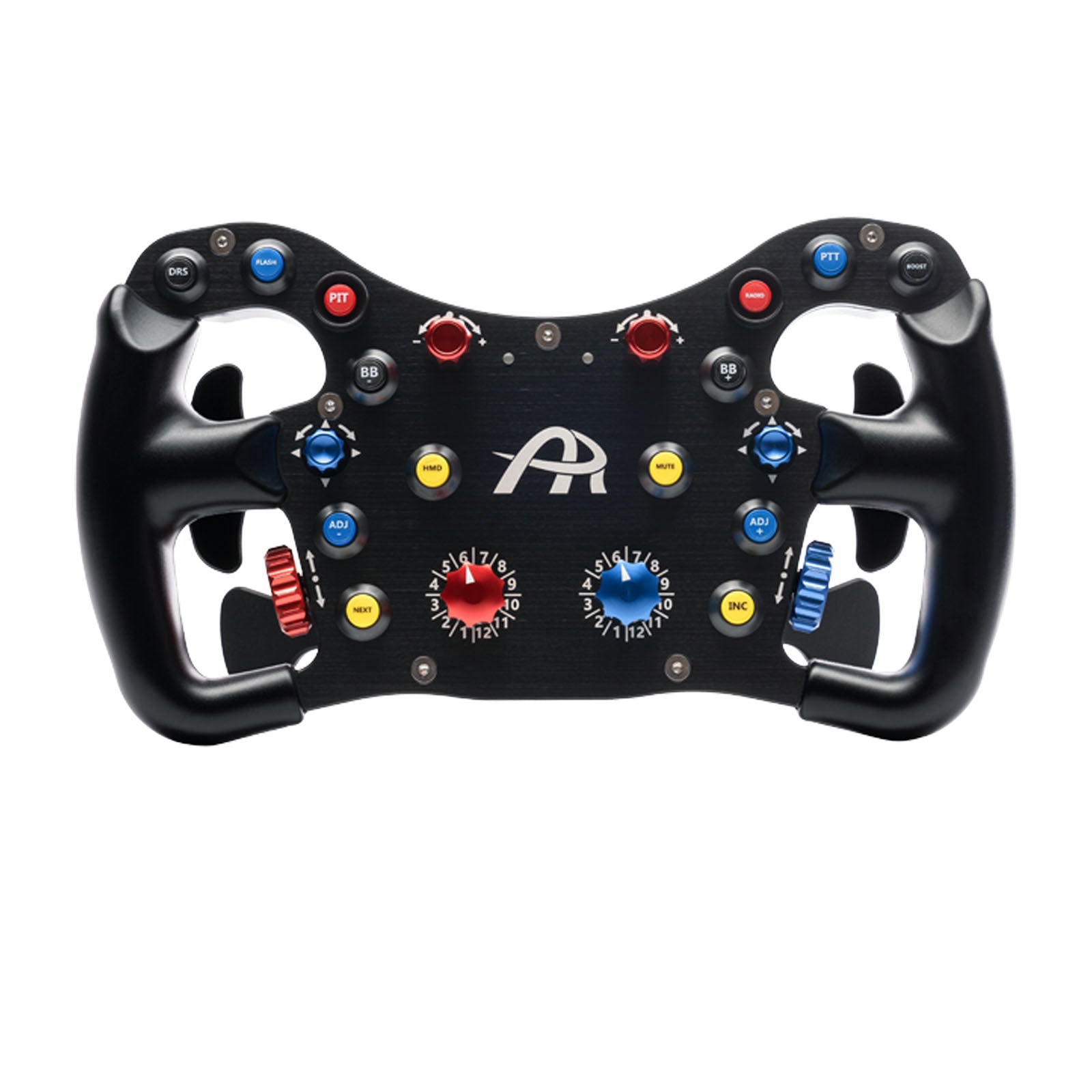
Ascher F64-V3: My opinion in brief
The F64-V3 is Ascher Racing’s top-of-the-line formula steering wheel, a machined aluminum unit packed with 64 configurable inputs. We tested it on a direct-drive platform, and it lives up to its reputation for benchmark build quality. With magnetic paddles, an adjustable slip point clutch, and two 5-axis joysticks, it’s a tool for the discerning driver. It’s available in a USB version (compatible with all bases) and a wireless SC version exclusively for Simucube 2.
When you buy through our links, we may earn an affiliate commission.
What We Liked
- Exemplary construction from machined aluminum, offering total rigidity
- 64 configurable inputs, easy-to-read layout
- Perfectly calibrated rotary valve openings
- Magnetic palettes with a crisp, precise click
- Contactless clutch with a slip point adjustable to within 0.1 pres
- Comfortable grips for long sessions
- USB version compatible with any docking station
Reserves
- No built-in screen or RPM LED (an external display is required)
- Thumb-operated controls positioned low, making them hard to reach while cornering
- The speed controls are a little noisy
- Rubber grips that collect dust
- SC version limited to Simucube 2 bases
- High-end pricing, overkill for occasional use
Technical Specifications
| Type | high-end racing steering wheel |
| Diameter | 285 mm |
| Chassis | CNC-machined, anodized aluminum |
| Front Panel | 5 mm aluminum plate, laser-engraved |
| Weight | about 1,140 g |
| Appetizers | 64 configurable |
| Buttons | 14 multicolored push buttons (2 of which are protected) |
| Joysticks | 2 5-axis joysticks |
| Encoders | 2 push-button + 2 thumb-operated |
| Rotary | 2 12-position switches |
| Speed Pads | magnetic, anodized aluminum |
| Clutch plates | non-contact Hall sensors, adjustable slip point |
| Connectivity | USB version (all bases) or wireless SC version (Simucube 2) |
| Wireless Battery Life (SC) | About 800 hours, USB-C charging |
| Assembly | 70 mm center-to-center distance, standard quick-release clamp |
An aluminum block built to last
The moment you pick up the F64-V3, the message is clear: this is a piece of engineering, not just an accessory. The chassis is made of CNC-machined, anodized aluminum, and the front panel is a 5-mm-thick aluminum plate. The result: zero flex, zero play, and total rigidity—even when you’re pushing it to the limit. The finish is equally impressive: a brushed, laser-engraved front panel, clean chamfers, and aluminum buttons and dials that feel cool to the touch. Ascher has been perfecting this level of craftsmanship for years, and the F64-V3 remains a showcase of its kind. With its 285 mm diameter, it strikes the perfect balance between a pure formula-style design and GT-style use, making it versatile across different racing categories.
Sixty-four entries, and it's easy to find your way around
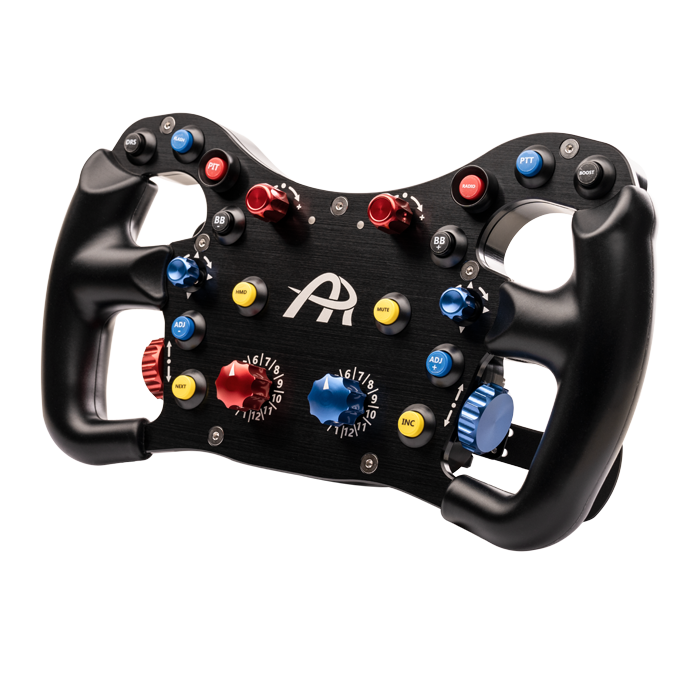
That’s where the name comes from: 64 configurable inputs—and even more once you take advantage of the encoder modes. Specifically, there are 14 multicolored pushbuttons with a crisp feel (two are protected by a cap to prevent accidental presses), two 5-axis joysticks on each side, two push-button encoders, two thumb encoders, and two 12-position rotary encoders. That’s an impressive density of inputs, but the layout remains easy to read. The detents on the rotary controls are perfectly calibrated; each click is clearly felt, which prevents you from having to count blindly in the heat of the race. The switches on the back let you toggle the behavior of the encoders and rotary controls between push-button mode and gear-shift mode, allowing you to map the steering wheel exactly to your driving style.
Shift Paddles and Clutch: The Heart of the Driving Experience
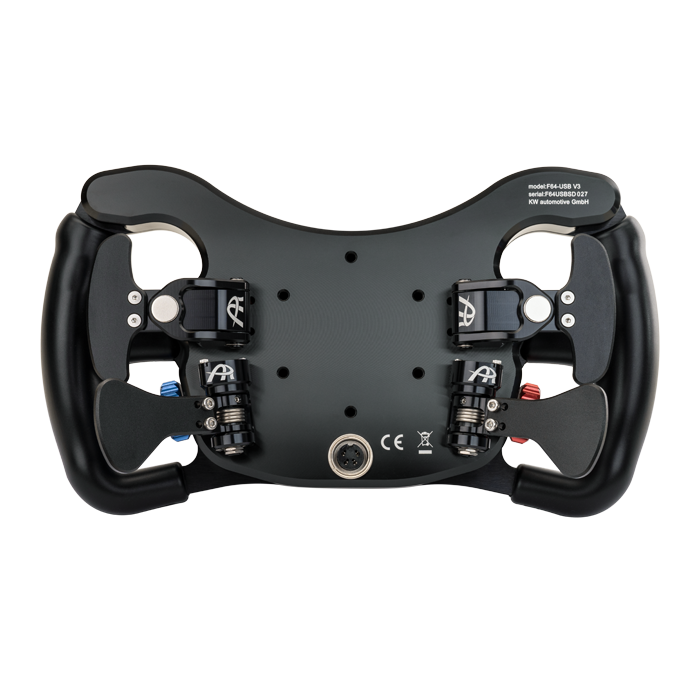
The shift paddles are magnetic, machined from aluminum, and black anodized. In use, you get that crisp, clean click with every gear change—a firm response that leaves no doubt about the action. They’re quite stiff and, honestly, a bit noisy compared to some competitors, but that firmness contributes to precision. The clutch paddles, on the other hand, rotate on contactless Hall-effect sensors and offer a long, very smooth travel. This is where the F64-V3 really stands out for starts: the slip point system is electronically calibrated in 1 % increments and then fine-tuned to 0.1 %. In practice, this results in a clean and repeatable start, and the fine-tuning of the clutch engagement makes takeoffs significantly more predictable race after race.
On the Track: What It Really Feels Like
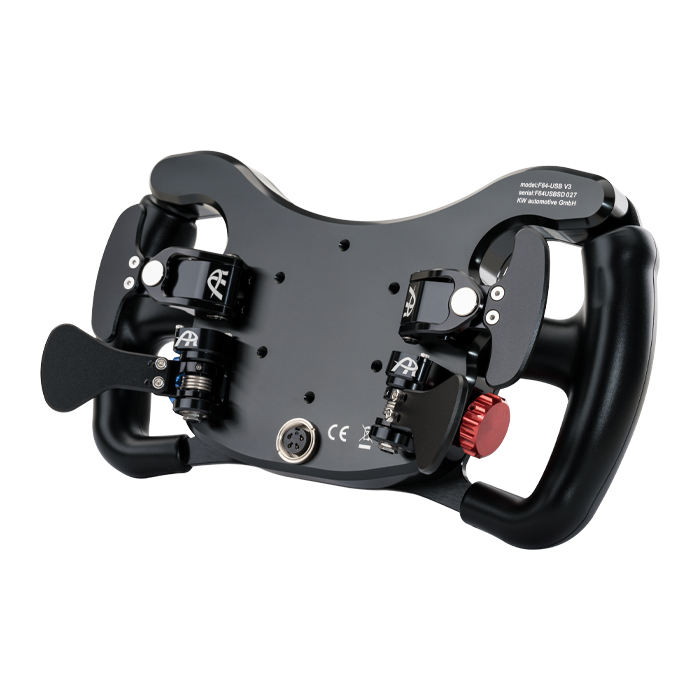
With the direct-drive base in hand, the F64-V3 is unobtrusive in the best possible way. It’s well-balanced, and the shape of the handles—with rubber grips that are slightly thicker than on other models—offers a full, comfortable grip. During long stints, this slight give in the rubber prevents fatigue, and you maintain a firm grip even without gloves. The only downside to this sticky surface is that it picks up dust and lint fairly quickly, so you’ll need to clean it from time to time. The main ergonomic consideration is the thumb-operated encoders, which are positioned fairly low: in the middle of a turn, when your hands are high on the rim, reaching them to adjust the brakes or mapping requires you to shift your position slightly. If you use these dials a lot in the middle of a turn, this is a limitation to be aware of. Otherwise, the buttons and joysticks are well-placed under your fingers and respond with immediate precision.
No screen—a conscious choice
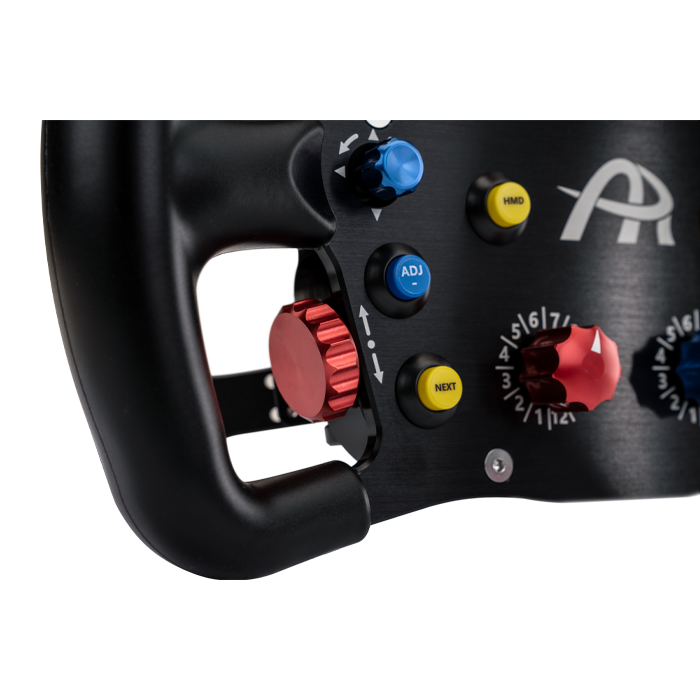
The F64-V3 has neither a display nor a RPM LED. This is a design choice. On the one hand, it maintains a clean, distraction-free steering wheel that’s entirely focused on the controls. On the other hand, if you want to display gear ratios, delta, and alerts, you’ll need to add a separate DDU-style display—a significant additional expense. At this level of the product line and price point, the lack of a built-in dashboard is the main factor that might give you pause, depending on your cockpit setup.
USB or SC: Choosing the Right Version
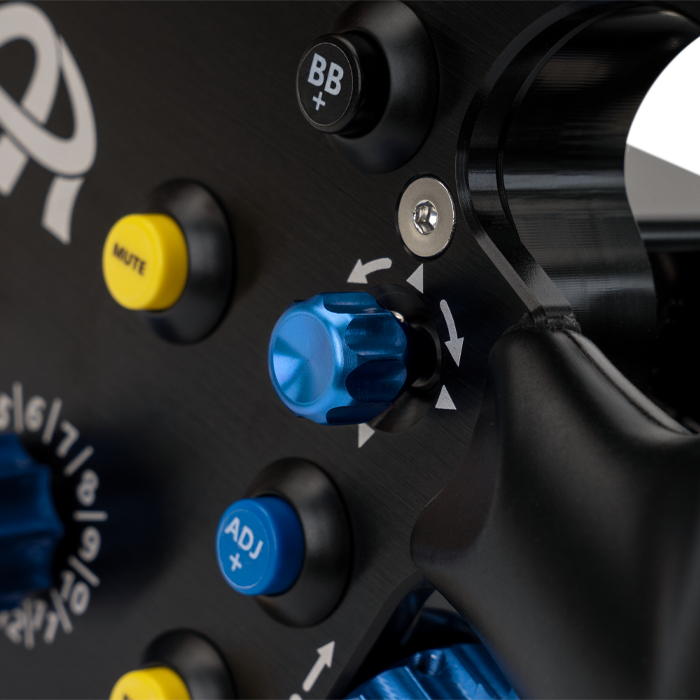
This is the key point to keep in mind when making a purchase. The F64-V3 comes in two versions. The USB version connects directly via a cable and works with any compatible base unit; it’s the universal choice. The SC version uses Simucube’s proprietary wireless technology and is only compatible with a Simucube 2 base (or a Simucube 1 equipped with the Bluetooth module). The wireless connection is described as latency-free, with approximately 800 hours of battery life and USB-C charging. In other words, if you’re not using Simucube, go with the USB version. As for mounting, the steering wheel features a standard 70 mm center-to-center distance and is compatible with common quick-release mounts on the market.
Who, in the end,
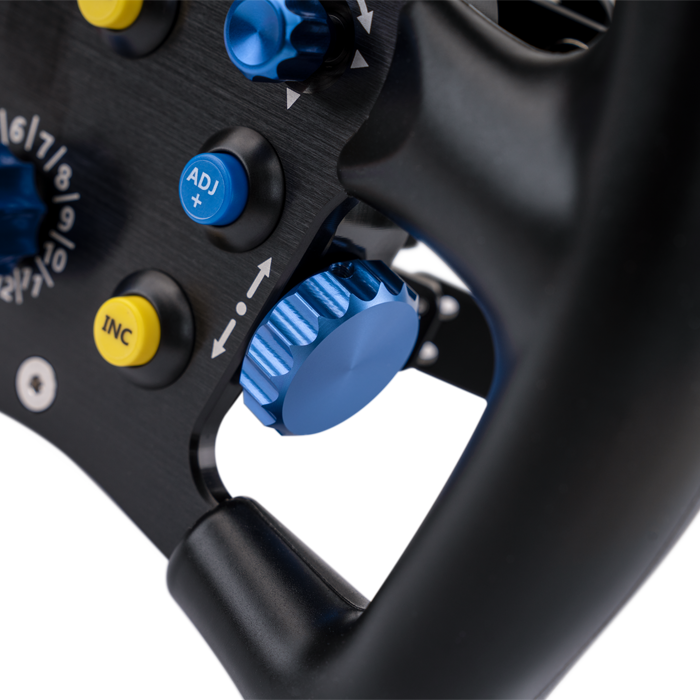
The F64-V3 is not an entry-level steering wheel, nor does it claim to be. It’s a serious racing tool, designed for those who want flawless craftsmanship, a wealth of inputs to map, and a clutch system that’s truly usable in competition. For the casual sim racer, the sheer number of controls and the price tag will be overkill. For the discerning enthusiast or competitor, it’s a masterpiece that delivers on every promise.
Frequently Asked Questions
Which sim racing wheel should you choose if you're just starting out?
Direct drive or belt drive: What's the difference?
Does this hardware work on PS5 and Xbox?
Do you need a cockpit to get off to a good start?
How much should I budget for a good setup?
Other Reviews & Testimonials
-
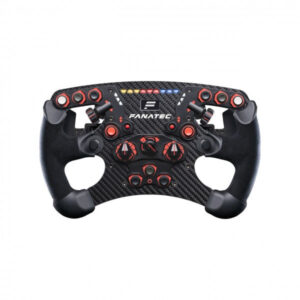
Fanatec ClubSport Formula V2.5 X
-
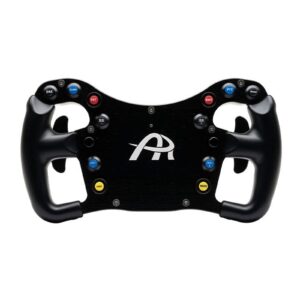
Ascher Racing F28-SC V2
-
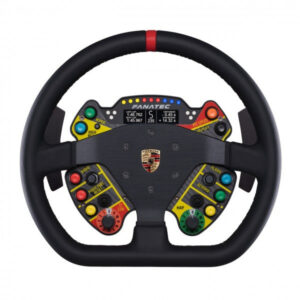
Fanatec ClubSport Steering Wheel Porsche 911 GT3 R V2 for Xbox (Leather)
-
Fanatec ClubSport Steering Wheel Classic 2 V2
-
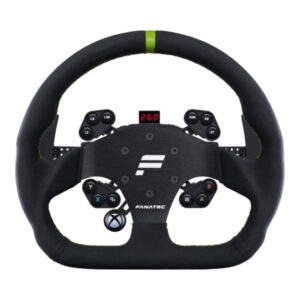
Fanatec ClubSport Steering Wheel GT Alcantara V2 for Xbox
-
Fanatec ClubSport BMW M4 GT3
-
Fanatec ClubSport Steering Wheel GT Forza Motorsport V2 for Xbox
-
Fanatec ClubSport Wheel Drift V2 for Xbox



Reviews