
Fanatec Rennsport Cockpit V2 : Test & Review | What it's really worth in 2026
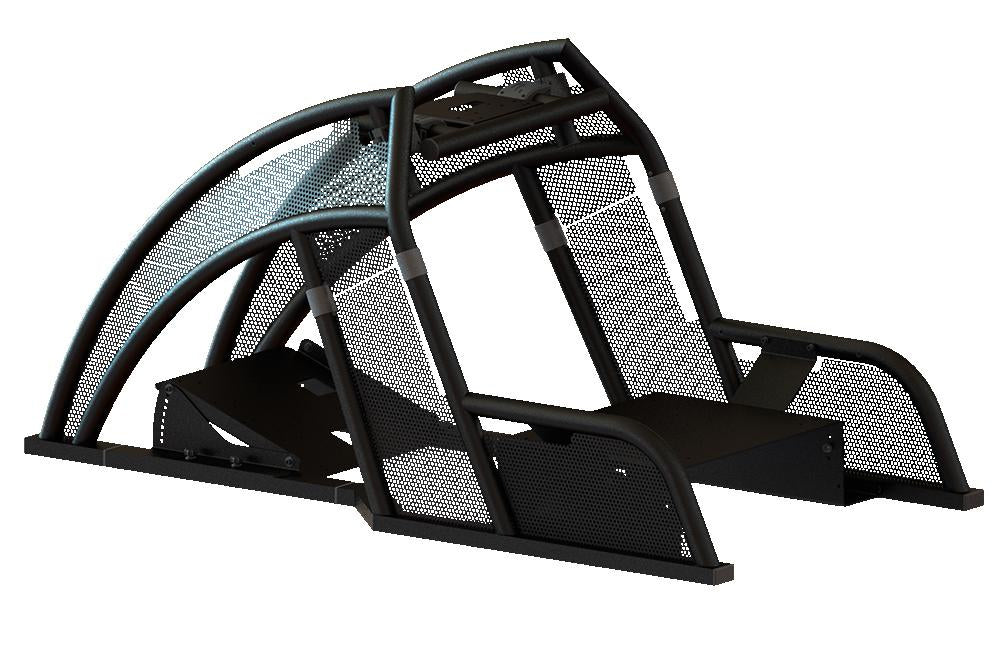
Fanatec Rennsport Cockpit V2: My quick review
This cockpit gave me the sensation of totally solidifying the setup: the steering wheel and pedals finally express themselves without parasitic vibrations, with a coherent driving position over time. It makes sense for simracers already involved, especially in the Fanatec ecosystem, who want a stable, presentable chassis rather than an ultra-modular tubular rig.
When you buy through our links, we may earn an affiliate commission.
In the world of sim racing cockpits, the Fanatec Rennsport Cockpit V2 is clearly positioned as a "serious" chassis for demanding gamers, without going to the extremes of tubular pro sim rigs. It's aimed at an audience who want a rigid cockpit that's clean in the living room or office, capable of handling Direct Drive bases and powerful pedalboards, while remaining relatively compact and aesthetically pleasing.
On paper, it promises a rare combo: a stable structure, a sophisticated design and natural compatibility with the Fanatec ecosystem. The idea is simple: put down your bucket, base and pedals, and get a platform that doesn't move, doesn't squeak, and doesn't give the impression of playing on a plastic steering wheel stand.
For my part, I looked at it mainly from the angle of stiffness, comfort and versatility. Can you really operate a beefy Direct Drive on it without annoying flex? Does the driving position remain good over long sessions, whatever the type of game (GT, F1, rally)? And above all: does the overall feel justify the investment compared to simpler solutions or competing tubular rigs?
Design & manufacturing
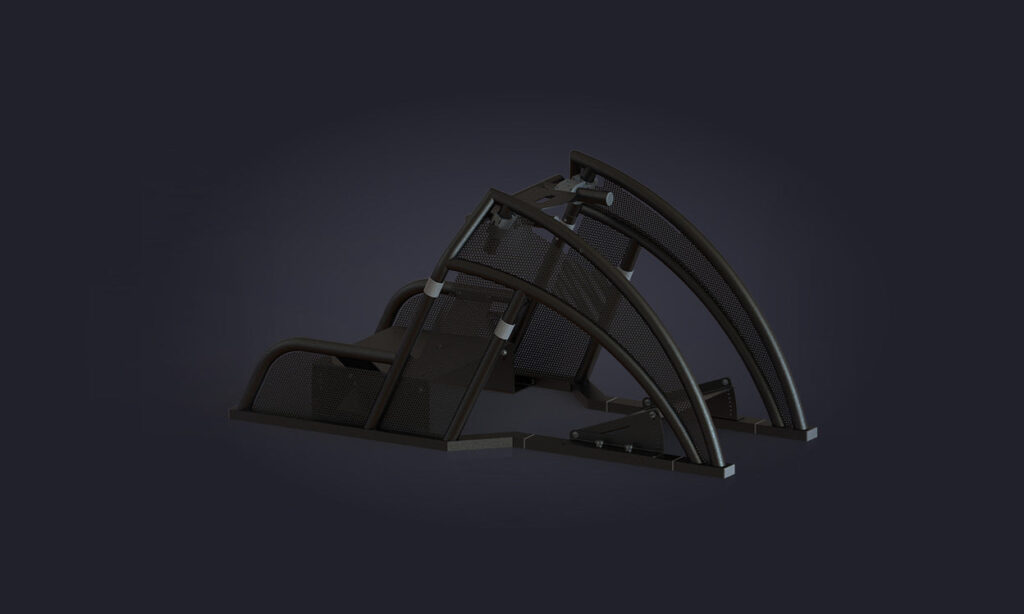
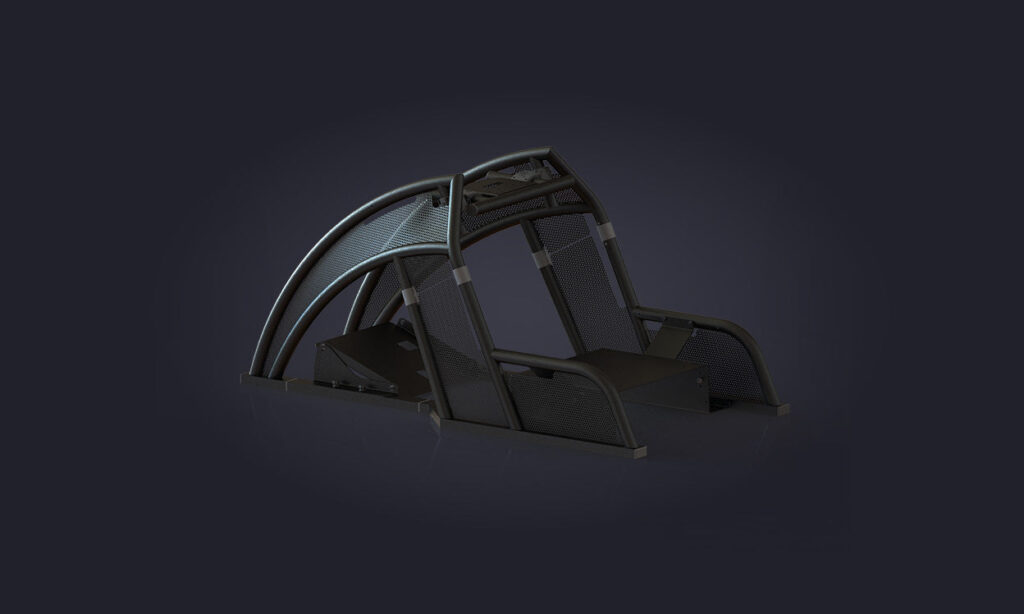
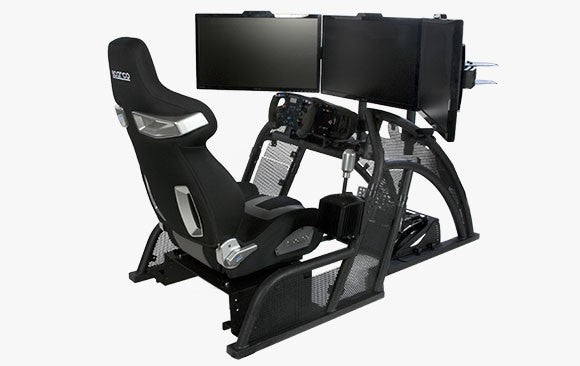
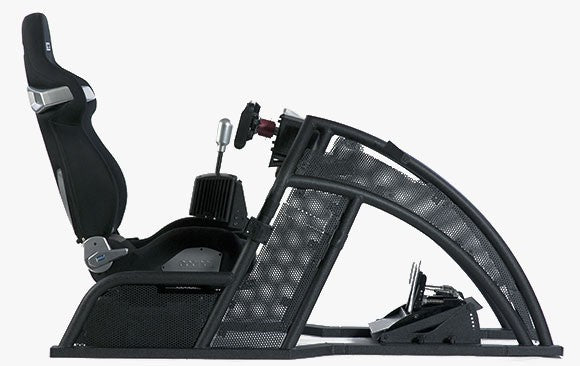
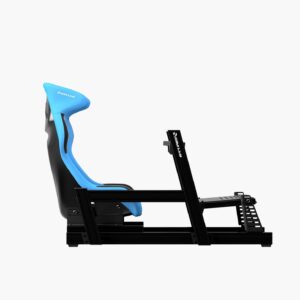
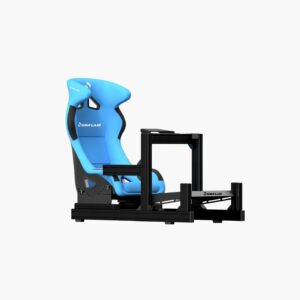
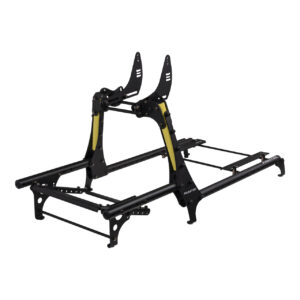
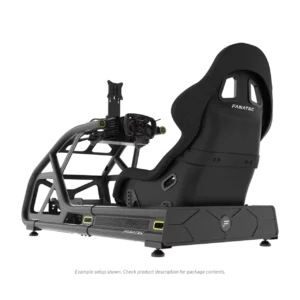
Visually, the Rennsport Cockpit V2 has a very assertive premium feel. The main structure is in metal, with an assembly that immediately gives an impression of density. It's a far cry from lightweight brackets that vibrate at the slightest acceleration. As you handle the components, you get a real sense of the seriousness of the workmanship: well-cut parts, clean fits, paints and finishes that are meticulous overall.
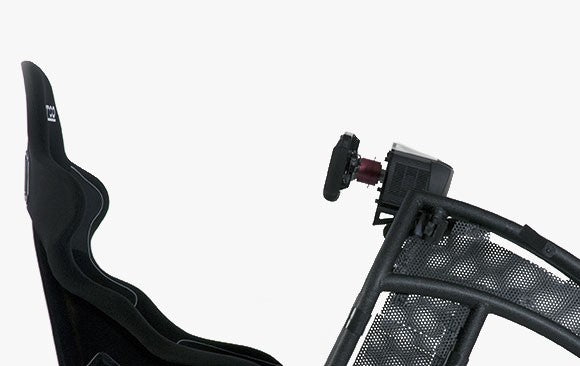
What's most striking is the overall rigidity of the chassis once correctly assembled. The column supporting the steering wheel doesn't bend under braking, and the bottom bracket stays in place even with a high-resistance crankset. You can feel that the cockpit has been designed to support the brand's top-of-the-range products, including Direct Drive bases, without becoming a sounding board.
When it comes to in-hand feel, the chassis is solid. Nothing feels hollow, and there's none of the permanent playfulness sometimes associated with folding or lightweight rigs. The numerous fasteners clearly invite you to take your time during assembly to ensure that everything is perfectly tight.
There are, however, a few points that are a little less flattering. The ergonomics of certain areas, particularly for fine adjustments, may require a little patience: some adjustments require you to loosen several screws, reposition, then retighten, which is not always very quick. Compared with tubular rigs of the aluminium profile type, we also lose a little in terms of pure modularity and millimetre-by-millimetre freedom of placement.
Compared with entry-level cockpits or "lighter" playseats, the Rennsport V2 is clearly in a different league in terms of robustness and presentation. On the other hand, in the face of aluminum-profile chassis, it relies more on integrated design and aesthetic plug & play than on absolute modularity. The choice is clear.
Settings, customization & compatibility
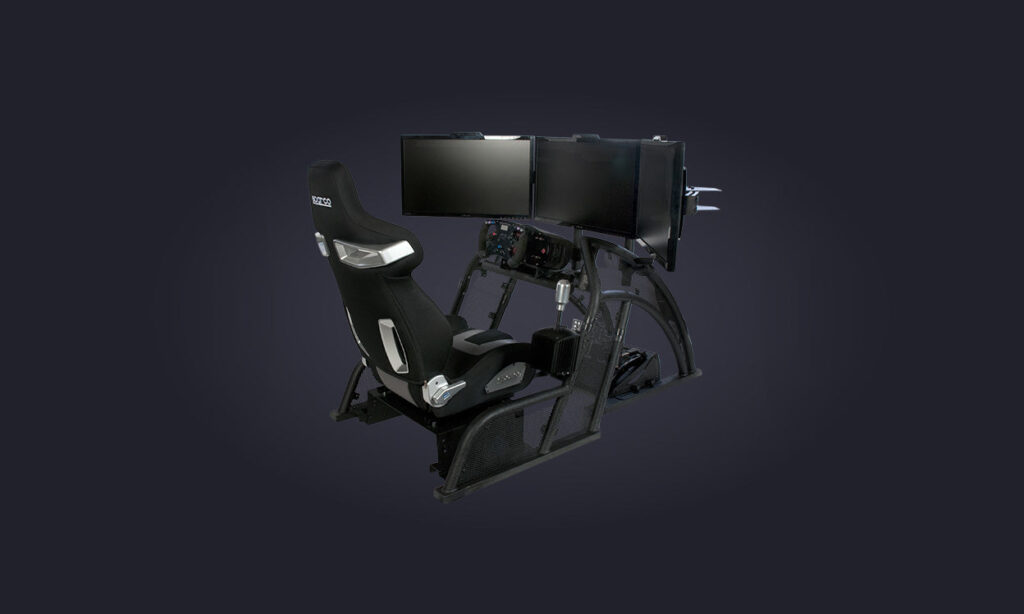
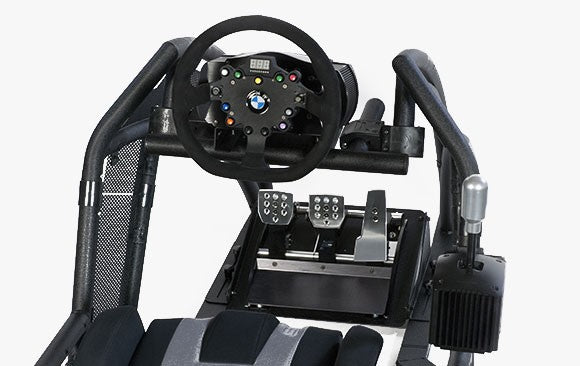
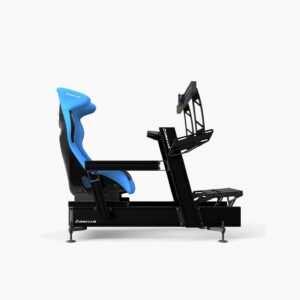
The Rennsport Cockpit V2 offers a good level of adjustability, but with a clear philosophy: offer the important adjustments, without turning the set-up into a permanent construction site. You can adjust the pedal distance, the height and inclination of the steering wheel, as well as the seat position, provided you're using a bucket or rail-compatible seat.
These are really life-changing settings. You can go from a fairly long GT position to something straighter, more rally or touring style. The room for maneuver is not infinite, but it's enough for most morphologies to find a comfortable position. The learning curve is simple: once you understand where the adjustment points are, everything becomes logical, even if some adjustments require a little time with the screwdriver in hand.
In terms of compatibility, the cockpit is naturally designed for the Fanatec ecosystem. Branded chainstays, pedalboards and shifters find their place easily, with adapted holes and plates. On PC as on console, the cockpit imposes no limits: it simply provides the platform, so as long as your steering wheel and pedals are mechanically fixable, the rest depends on your hardware and your machine.
With other brands, it's possible, but it depends on the crankset and chainstay. Many have compatible or adaptable fasteners, but we don't have the flexibility of a universal aluminum profile. You'll need to check the holes, and possibly use intermediate plates.
In terms of upgradeability, the Rennsport V2 is positioned as a durable base rather than a simple entry point. You can start with a mid-range base and a modest crankset, then move upmarket without having to change chassis, as long as you stay within realistic power ratings and loads for "enthusiastic" sim racing use and not extreme professional use.
Sensations in play
Once the setup has been correctly adjusted, the Rennsport Cockpit V2's in-game behavior can be summed up by one powerful idea: everything becomes more coherent. The overall rigidity allows force feedback to express itself fully, without energy being lost in unnecessary flexing. You feel what the base does, not what the chassis does.
On the FFB, the difference compared with a lightweight base or a more basic cockpit is clear. The micro-details of force feedback come through better, especially with a Direct Drive base. Torque variations, small grip losses and grip/slip transitions come through more cleanly, because the steering wheel doesn't "float" in its mount. Steering feels more connected to the road.
In fast bends, you benefit from a welcome stability: no shuddering column, no parasitic vibrations that blur the readout. You can really concentrate on the information sent by the steering wheel. This is where a good chassis makes all the difference when it comes to driving: you're better able to read load transfers and grip changes, and you dare to brake later and throttle back harder because the feel is clean.
On vibrators, the cockpit transmits well what the base produces, without strange amplifications. Jolts remain contained to the steering wheel and pedals, rather than turning the whole chassis into a trampoline. You can feel the edges of the track, the stalls on an aggressive vibrator, but without the structure giving the impression of being on the verge of breaking. The result is greater legibility, not just mechanical "noise".
Over long sessions, the consistency of the chassis is a strong point. No play appears after an hour, no sensation of the spine gradually loosening. On the other hand, it's the quality of the seat you choose and the finesse of the position adjustments that can limit your riding, rather than the chassis itself. With a good bucket seat, you can drive one stint after another without feeling the fatigue associated with awkward positions or a steering wheel that's too high or too low.
In fast corrections, the rigidity of the whole system helps a lot. When the car stalls and you need to counter-steer immediately, everything is done cleanly, with no dead time. The steering wheel returns, you correct, and the cockpit follows without flinching. You immediately understand what the car is doing, and can respond with precision. This is particularly appreciated with advanced simulations where the correction window is very short.
Compared with a more flexible cockpit or a simple stand, the qualitative leap is obvious: you gain in confidence. Compared to a very high-end tubular rig or a sturdy aluminum profile chassis, the difference lies more in modularity and the ability to handle even more extreme bases than in the sensations themselves, for advanced but "normal" simracer use. In a realistic configuration, the Rennsport V2 will not curb the pleasure or performance of most riders.
Who's it for? What we like / What we don't like
The Fanatec Rennsport Cockpit V2 is clearly aimed at motivated simracers who have already outgrown the desktop steering wheel. An ideal profile would be an intermediate to advanced PC or console gamer who already owns a serious steering wheel (Direct Drive or high-end belt-driven base) and wants a solid foundation to build on. It would also suit someone starting out ambitious, with a long-term setup project, who prefers to invest once in a coherent cockpit.
What I particularly appreciate is the overall rigidity of the chassis, which is really well suited to powerful bases. The meticulous design also works in its favor: it's a cockpit that can be assumed in a living room or office without giving the impression of having mounted a race car cage in the middle of the room. Finally, the fact that it integrates naturally into the Fanatec ecosystem makes life simpler: adapted plates, logical positioning, no need for constant improvisation.
On the other hand, there are a few limitations to bear in mind. Firstly, the modularity of the cockpit does not match that of a universal aluminum profile frame: it can be adjusted, but not in all directions, and some very specific positions will be more difficult to achieve. Secondly, assembly and adjustments are not instantaneous: to get the best out of the cockpit, you have to be willing to spend a little time on it, as it's not a plug & play product in ten minutes. Finally, the cockpit's price positioning puts it clearly on the side of well-considered investments: it's not an impulse purchase, especially if you add in the cost of a good seat.
In terms of perceived value, it all depends on how you look at it. For someone coming from an office and a steering wheel stand, the gain in stability, comfort and immersion more than justifies the financial effort. For someone coldly comparing it to an aluminum rig, the question becomes more subtle: you're paying for the design, the Fanatec integration and the "turnkey" aspect, whereas other solutions rely more on extreme customization.
Verdict
The Fanatec Rennsport Cockpit V2 clearly changes the structure of a setup. We've gone from a sometimes rickety assembly (desk, stand, office chair) to a dedicated platform, designed for sim racing, where every element has its place and stays in its place. The biggest impact is on overall consistency: a more natural driving position, better use of force feedback, more controlled braking and greater immersion.
On the market, it is positioned in the premium cockpit category, without reaching the delirium of hyper-modular rigs for quasi-professional use. It targets an enthusiastic public, ready to invest in something clean, durable and high-performance, without embarking on a custom-built project.
I particularly recommend it to those who already ride a lot, with Fanatec or similar equipment, and who want a stable, serious chassis that's also visually acceptable in a living environment. On the other hand, for a beginner who doesn't yet know if he's going to make a lasting investment, or for someone looking for the absolute modularity of profiled aluminum, it won't necessarily be the best choice.
If you're looking for a rigid, well-finished cockpit, designed to exploit a powerful steering wheel and structure your setup around the Fanatec ecosystem, this product can clearly make the difference in your setup.


Reviews