
Simlab GT1 Evo : Test & Review | What it's really worth in 2026
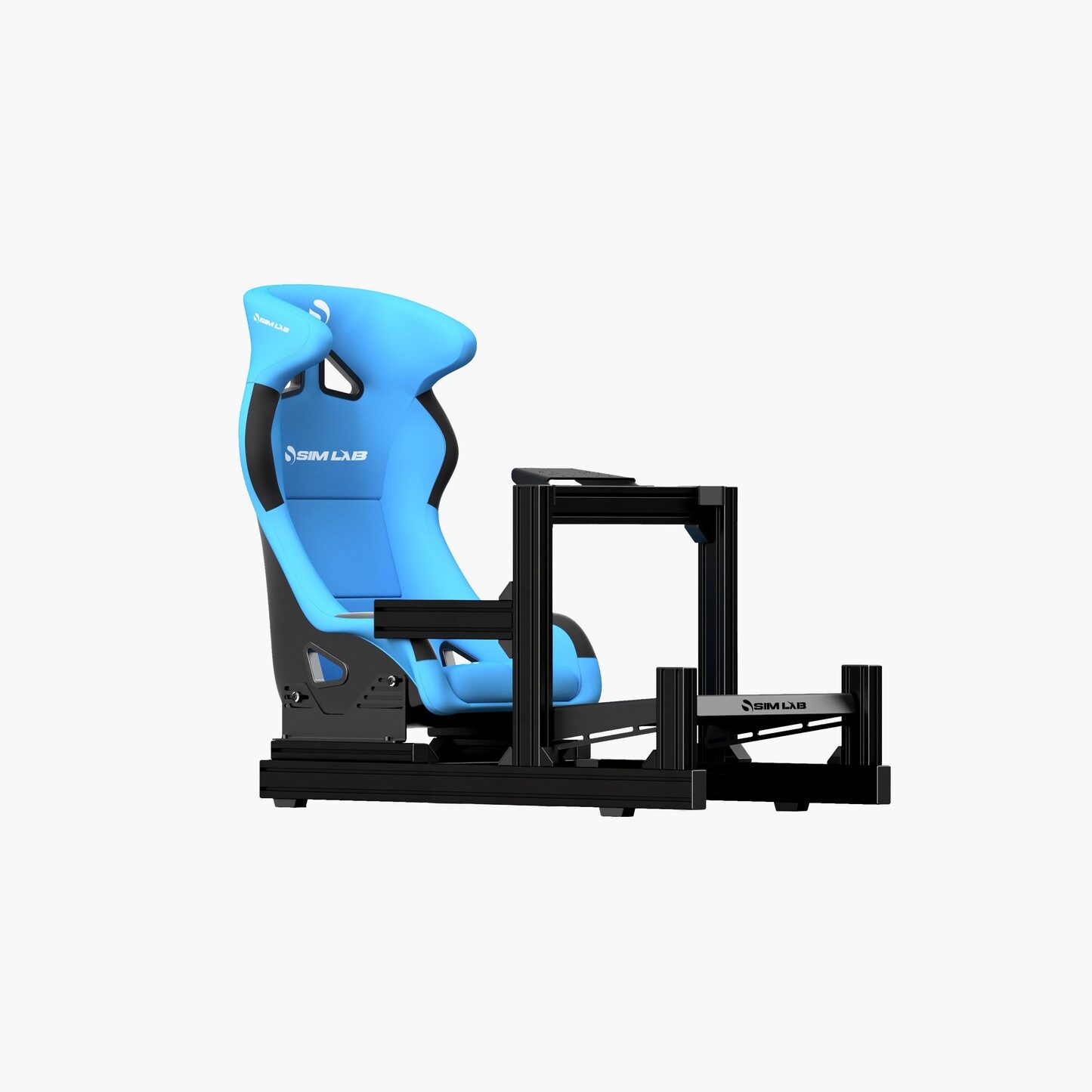
Simlab GT1 Evo: My quick review
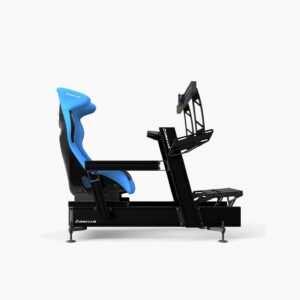
The Sim-Lab GT1 Evo is a cockpit chassis made of 40×80 aluminum extrusions, designed to accommodate both a belt-driven steering wheel and a direct-drive base. We assembled it, tuned it, and pushed it to its limits with high force feedback to see what this compact structure is really capable of. Quick verdict: its rigidity and modularity put it in a class above its price point, though assembly does require some patience.
When you buy through our links, we may earn an affiliate commission.
What We Liked
- Highly rigid 40x80 aluminum profile frame; virtually no flex even at high force feedback levels
- Precise, millimeter-level adjustments to the steering wheel, pedals, and driving position
- Extensive compatibility (Fanatec, Moza, Simucube, Simagic, Asetek, Logitech, Thrustmaster)
- Compact size (1350 x 580 mm) and fully scalable platform
- Grooves in the profile that serve as integrated cable management
- 3-Year Warranty
Reserves
- A long and tedious assembly process, with instructions that could be improved
- Seat not included; sold as a frame only
- Seat and shifter mounts are available as optional accessories
- Slight movement of the steering wheel mount beyond 15 Nm on a direct-drive system
- Black anodized finish that scratches easily
Technical Specifications
| Type | Cockpit frame made of aluminum extrusions |
| Profiles | 40 x 80 mm (frame), 40 x 40 mm (seat rails) |
| Steering wheel cover | 5 mm machined aluminum |
| Crank set | 5 mm high-strength steel |
| Dimensions | 1350 x 580 x 660 mm (L x W x H) |
| Chassis Weight | about 25 kg |
| Steering wheel mount tilt | 60 degrees |
| Pedal set Angle | up to 45 degrees |
| Colors | black anodized aluminum |
| Database Compatibility | Fanatec, Moza, Simucube, Simagic, Asetek, Logitech, Thrustmaster, AccuForce, Conspit |
| Warranty | 3 years |
An aluminum profile that holds its own among the best
On paper, the GT1 Evo is just a chassis—nothing more. In practice, it’s the kind of base that completely changes your relationship with the steering wheel. Sim-Lab built the entire structure around 40 x 80 mm extruded aluminum profiles for the main frame, with 40 x 40 mm profiles for the seat rails. This isn’t just a detail: it’s exactly the material sim racers use to build their own custom rigs, because it combines rigidity, lightness, and virtually infinite adjustability. Here, everything is thought out and pre-drilled, which saves us the hassle of cutting and drilling parts ourselves.
The cast corner brackets are ribbed for added strength and feature anti-rotation tabs that prevent the parts from turning once tightened. The handlebar plate is made of 5 mm machined aluminum, and the pedal set plate is made of 5 mm high-strength steel—a heavy component in its own right that literally anchors the pedal set to the ground. The moment you handle the components, you can immediately tell that you’re not dealing with simply bent sheet metal.
Stiffness: What the Steering Wheel Really Tells Us
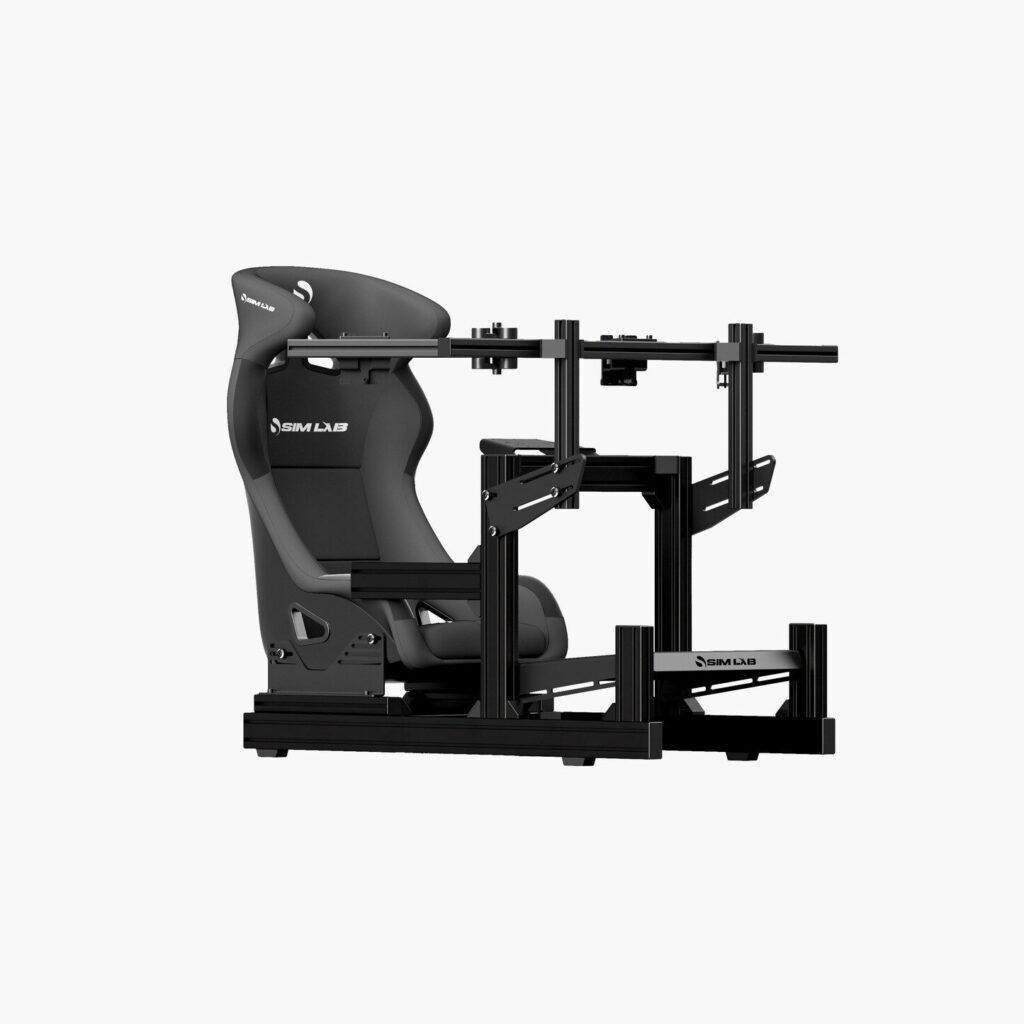
This was the area where we were really putting the GT1 Evo to the test. We started by plugging it into a Thrustmaster TX-style belt-driven base, with force feedback set to maximum, and looked for any flex. We didn’t find any. Even when we deliberately swung the steering wheel from one stop to the other to simulate violent jolts, the steering wheel mount remained disconcertingly still. No unwanted play, no vibrations traveling up through the chassis to interfere with the feedback.
We then moved on to a mid-range direct-drive base—the point where many entry-level setups start to struggle. The GT1 Evo handles this very well: the structure absorbs the torque without flinching, and you get clean, precise feedback without that “platform” sensation under your hands. There is a limit, and we have to be honest about it: when pushing toward 15 Nm and beyond, you can feel a slight movement at the steering wheel mount. It’s nothing deal-breaking, and Sim-Lab has anticipated this—all you need to do is add a reinforcement profile rather than replace the chassis. But if your immediate plan is to build a very high-torque setup, keep this reinforcement in mind right from the start.
The Montage: Our Afternoon at the Allen Wrench
Let’s be blunt: this is the least enjoyable part of the experience. The GT1 Evo is assembled entirely from separate profiles, and you’ll need a good afternoon for it—or longer if you’ve never put together this type of structure before. Every sliding nut, every bracket, and every adjustment must be done by hand, in the correct order, without skipping any steps. As for the instructions, they definitely leave room for improvement: we frequently set aside the PDF to watch an assembly video at the same time, and we highly recommend doing the same.
A practical tip that came up during our test and has been confirmed elsewhere: the anti-rotation tabs on the new brackets are easier to file down than to pry open with a screwdriver. You’ll also want to have some extra screws on hand for certain pedal set mounts. Once the bike is assembled, however, the feeling of solidity makes the effort worthwhile. It’s not a difficult assembly—it’s a time-consuming one—and the finer details matter.
Adjust your position down to the millimeter
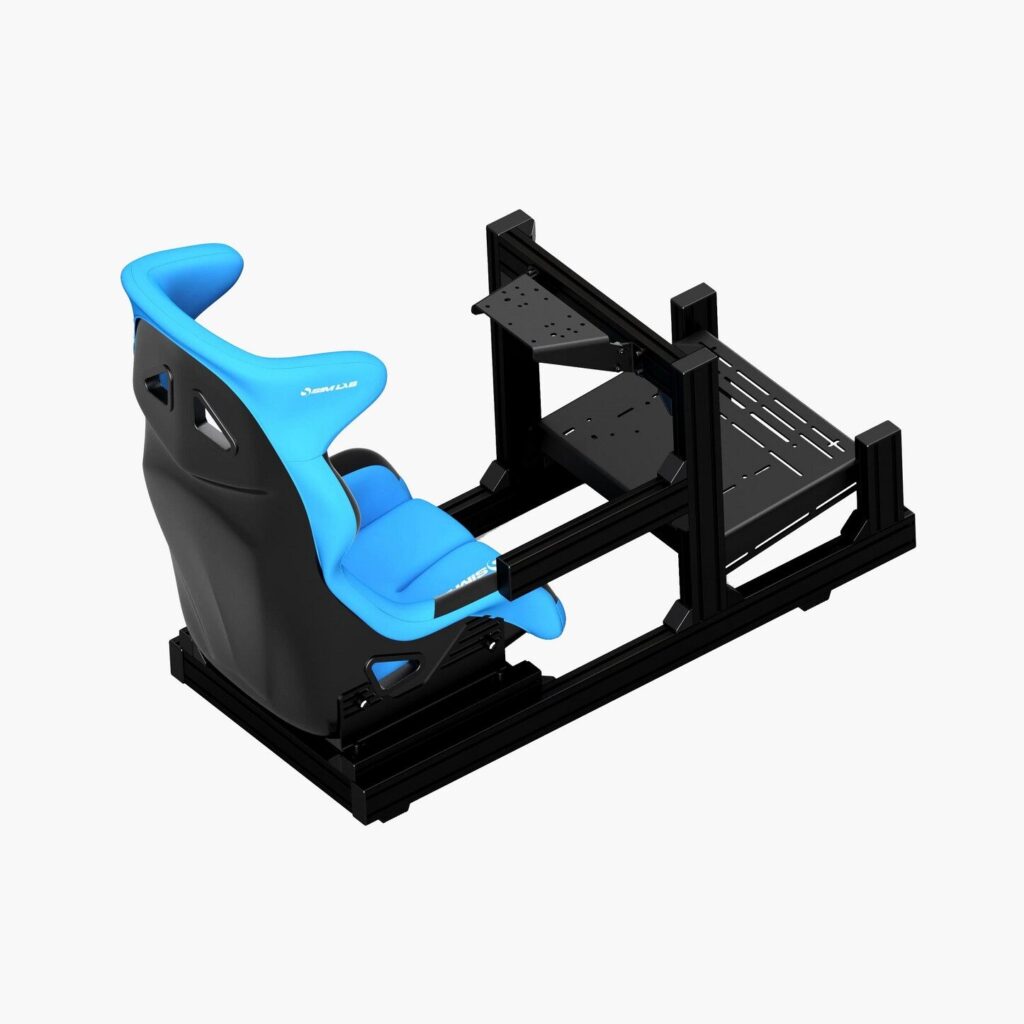
This is where the aluminum frame really comes into its own and where the GT1 Evo truly stands out. You can adjust the position of the steering wheel, pedals, and seat down to the millimeter. The steering wheel mount offers 60 degrees of tilt (30 degrees in each direction) and slides forward and backward, while the pedal platform tilts up to 45 degrees and is height-adjustable. In practical terms, you can switch from a Formula-style position with arms outstretched and legs high to a more relaxed GT position without changing a single part—just by loosening and sliding the components.
Finding the perfect pedal placement takes a little time and a few tries—we won’t pretend otherwise. But once you’ve got it right, you get exactly the position you were aiming for—something a cockpit with fixed holes will never allow. As an added bonus, the grooves in the profile serve as natural cable channels: you can neatly route the base and pedal set cables through them, keeping the cockpit tidy.
Long sessions and everyday usability
On long runs, the stability of the frame pays off over time: you don’t waste energy compensating for a moving structure, and you can stay focused on your path rather than on the equipment. The footprint is a compact 1,350 x 580 mm with a height of 660 mm, making it a compact cockpit that fits comfortably in a living room without taking up an entire garage.
When it comes to compatibility, Sim-Lab has covered a wide range of brands, which is a real selling point. The steering wheel mount and pedal base are pre-drilled to accommodate the vast majority of brands: Fanatec, Moza, Simucube, Simagic, Asetek, Logitech, Thrustmaster, not to mention brands like AccuForce and Conspit. One important point to understand: the chassis is console-agnostic. It doesn’t connect to anything; it simply houses your equipment. Whether you play on PlayStation, Xbox, or PC depends solely on the base and the steering wheel you install on it, not on the GT1 Evo itself. A side mount for a shifter or handbrake is included, and the setup remains expandable: you can add a shifter arm, a monitor mount, or a reinforcement bracket as you upgrade.
What You Need to Know Before Ordering
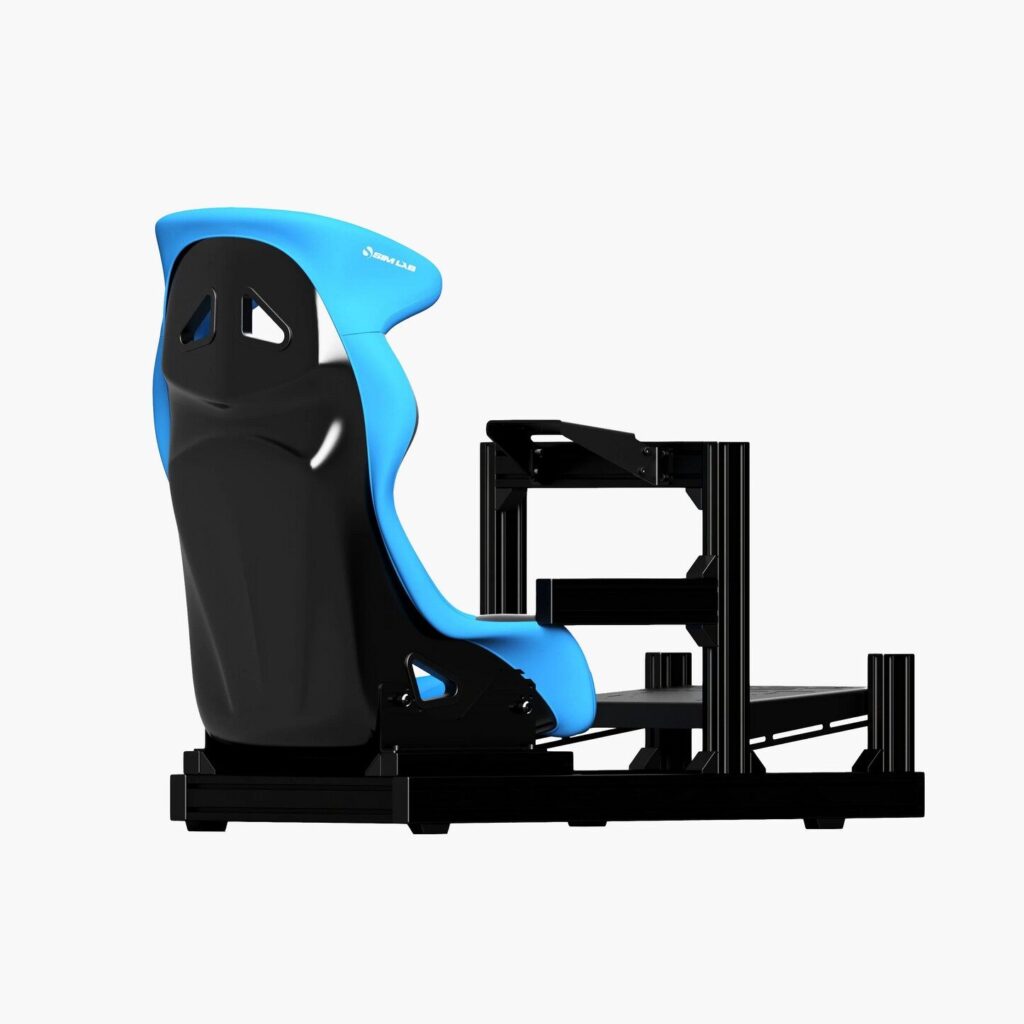
The only real catch with the GT1 Evo isn’t its quality but its packaging. It’s sold as a chassis only. The seat isn’t included, nor are its rails and mounts, which must be ordered separately. This isn’t necessarily a good or bad thing in itself—it’s simply part of the brand’s modular approach—but it’s best to factor this into your budget from the start so you don’t end up with a magnificent frame and nothing to sit on. One final cosmetic detail: the black anodized finish is beautiful but shows scratches fairly easily, though this has no impact on its durability.


Reviews