
Simlab GT1 Pro : Test & Review | What it's really worth in 2026
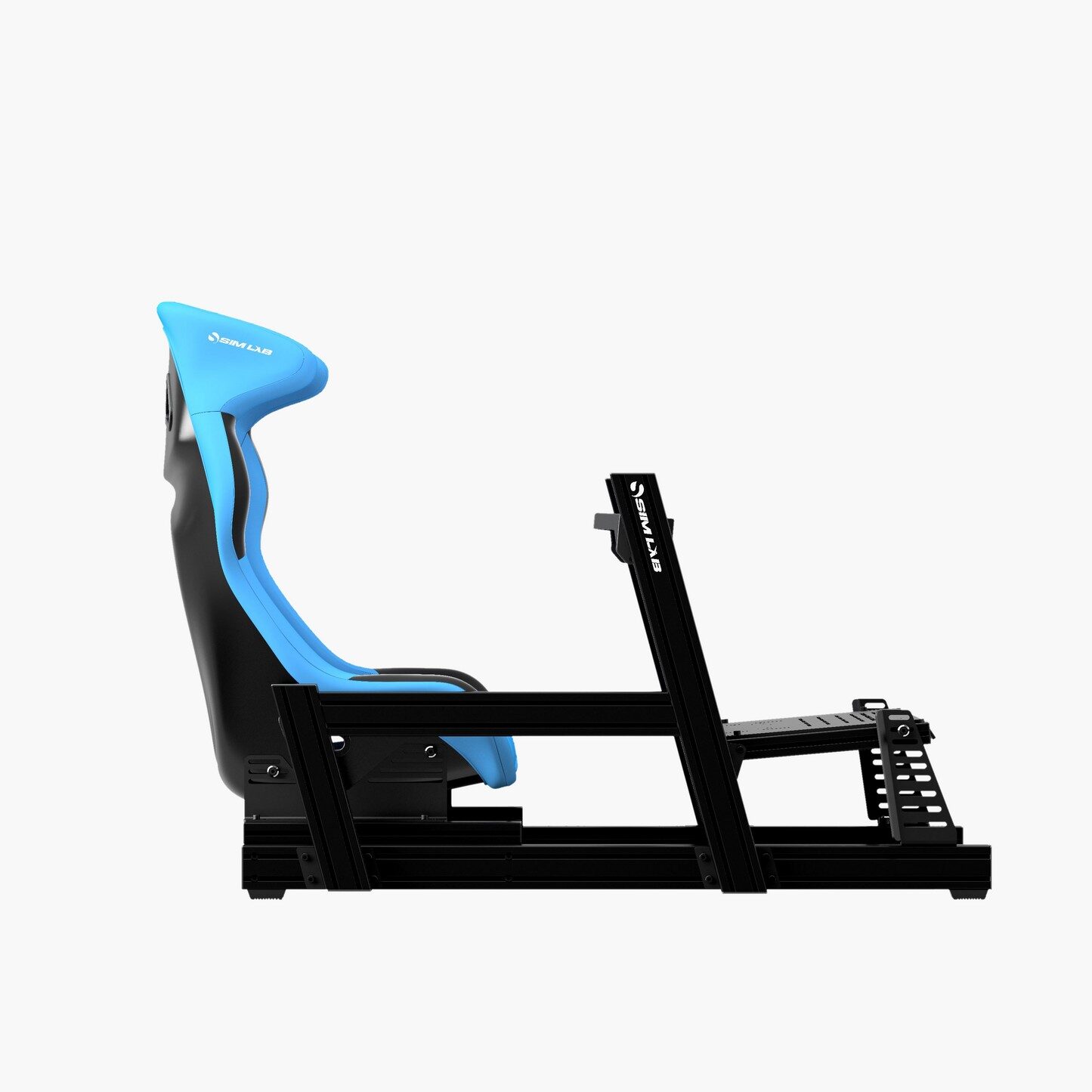
Simlab GT1 Pro: My quick review
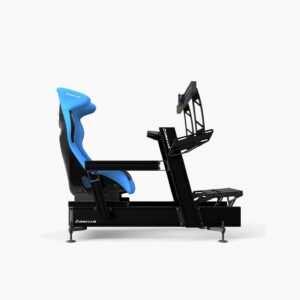
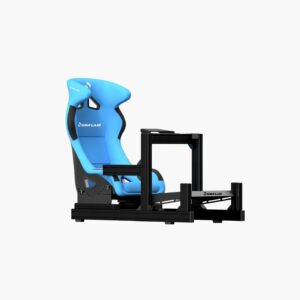
The GT1 Pro is the aluminum-framed cockpit that takes Sim-Lab to the next level, bridging the gap between the GT1 Evo and much more expensive rigs. It features a sturdy chassis, adjustable to the millimeter and designed to handle a powerful Direct Drive system without flinching. Shipped as a bare kit (without a seat), it’s aimed at drivers who want a serious setup without breaking the bank.
When you buy through our links, we may earn an affiliate commission.
What We Liked
- Highly rigid aluminum frame; no flex even with a powerful direct-drive motor
- High-quality black anodized finish, machined plates without corner brackets
- Wide range of height, reach, and tilt adjustments (steering wheel and pedals)
- Wide pre-drilled holes: Fanatec, Moza, Logitech, Thrustmaster, Heusinkveld pedal sets
- Compact size and easy-to-move rig
- 3-Year Warranty
Reserves
- Seat and seat legs not included
- Shifter and parking brake mount must be purchased separately
- Time-consuming assembly; a second person is recommended
- Instructions available only in PDF format
Technical Specifications
| Type | Aluminum frame with profiles |
| Profiles | 4080 (40 x 80 mm) and 4040 (40 x 40 mm) |
| Dimensions | 1350 x 580 x 770 mm (up to 680 mm at the widest point) |
| Steering wheel cover | 7 mm |
| Pedal set | 5 mm steel |
| Colors | Black |
| Steering Wheel Settings | tilt up to 70°, height up to 75 cm |
| Pedal set Settings | protrusion of approximately 11 cm, angle of approximately 35° |
| Compatible bases | Fanatec (CSL, CSW, CSL DD, GT DD Pro, DD1, DD2, Podium), Moza R5 through R25 |
| Compatible pedal sets | Sim-Lab XP1, Fanatec ClubSport V3, Heusinkveld Sprint/Pro/Ultimate |
| Warranty | 3 years |
An aluminum chassis that outperforms its class
The GT1 Pro builds on the formula that made Sim-Lab famous—an aluminum-profile frame—and takes it to the next level. The structure is built around 4080 profiles (40 x 80 mm), reinforced with a few lengths of 4040 (40 x 40 mm) for the seat and pedal rails. Right out of the box, you can feel the solidity of the build, with a black anodized finish—one of the most durable we’ve ever handled—applied even to the insides of the main components. This isn’t just a simple assembly of bars—it’s a frame that inspires confidence even before you’ve installed a single component.
What the "Pro" Version Really Offers
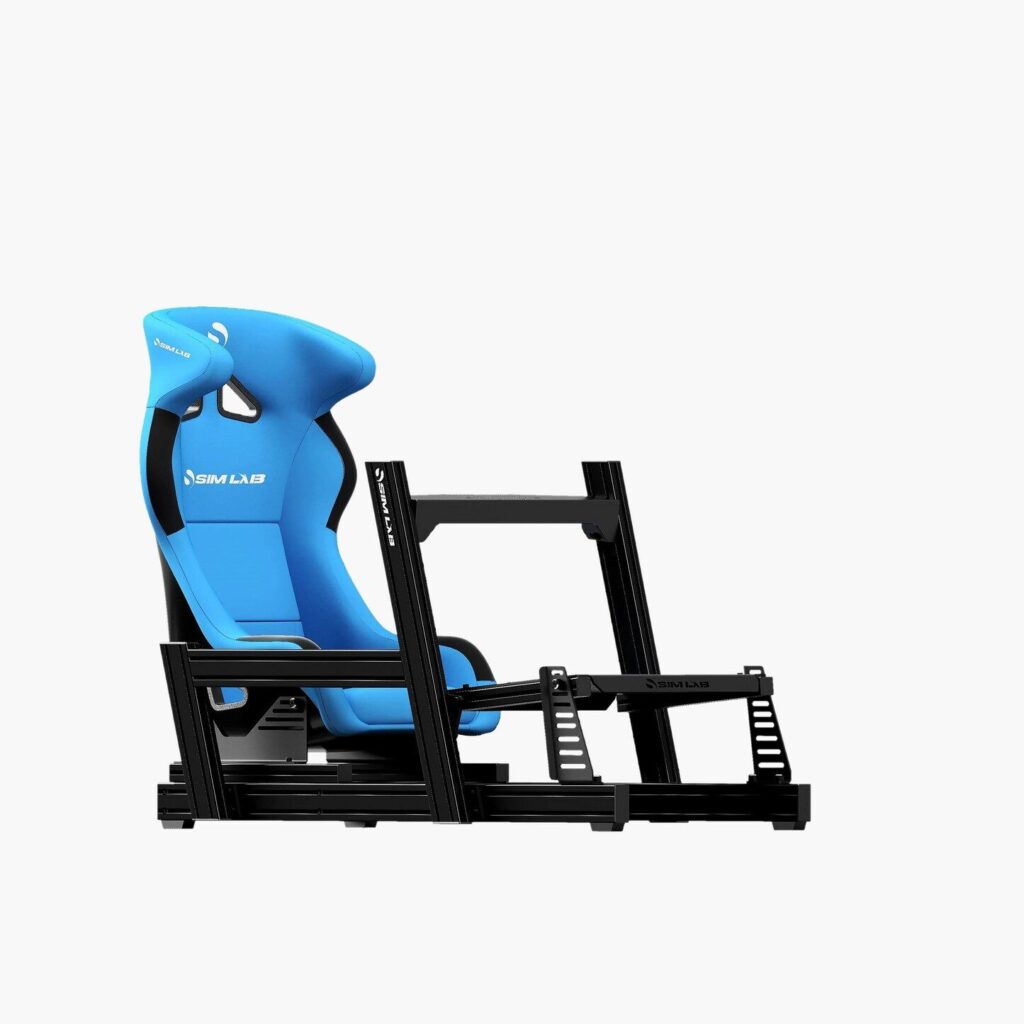
The major change compared to the GT1 Evo is the use of custom-machined plates in place of corner brackets. As a result, the mounting points are stiffer, and assembly is possible without adding extra reinforcements. The steering wheel and pedal decks are machined for a play-free fit; the steering wheel plate is 7 mm thick, and the pedal deck is made of 5 mm steel. There are also more refined profile end caps and laser-etched logos—details that don’t add to performance but elevate the overall visual appeal.
Zero flex, even with a powerful direct-drive motor
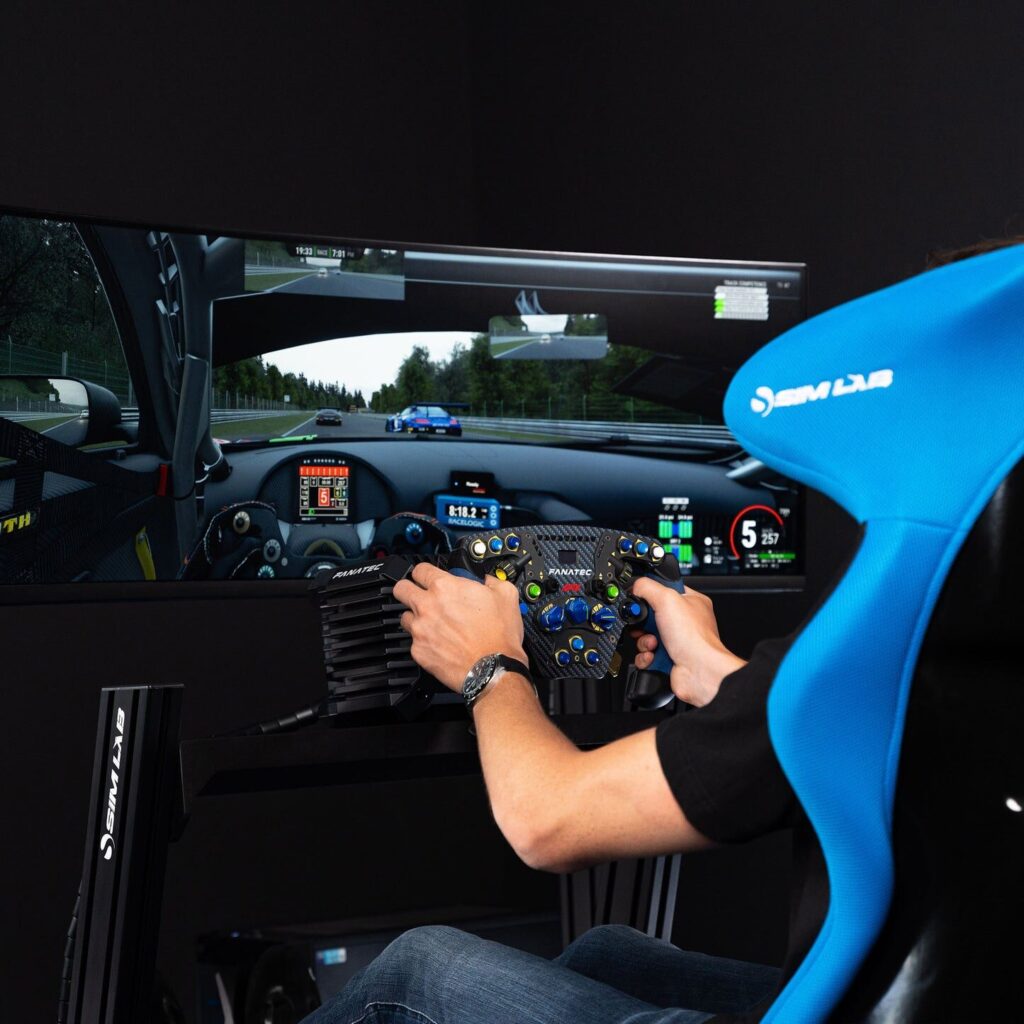
That’s where the GT1 Pro really won us over. With a Direct Drive base secured by four bolts to the front mount and supported by the side brace, we pushed the countersteering corrections to the limit. The frame doesn’t budge. Coming out of a tight turn, when you’re catching up to a rear end that’s losing traction and making a series of sharp steering inputs, no unwanted vibrations travel up from the chassis, and the force feedback comes through clearly, without being muffled by a frame that absorbs energy. During long endurance sessions, this stability makes all the difference—you stay focused on the line instead of feeling the rig work beneath your arms. Hard braking on a heavy pedal assembly doesn’t cause the front deck to buckle either, allowing you to really apply pressure to the pedal.
Adjust to the millimeter
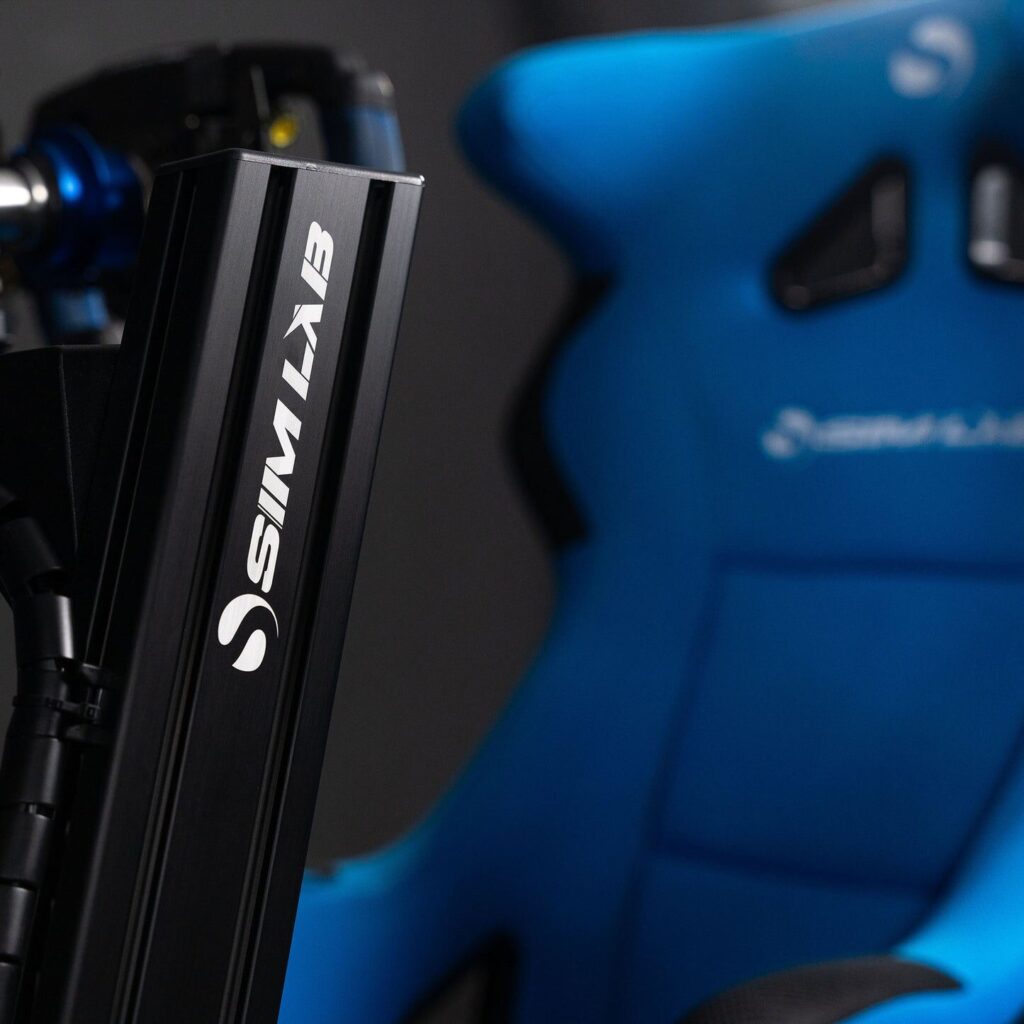
The GT1 Pro adapts to just about any body type and riding style. The steering wheel plate offers a wide range of tilt (up to about 70°), a height that goes up to 75 cm, and a small range of depth adjustment to fine-tune the distance. As for the pedals, there’s a good ten centimeters of reach, an angle of about 35°, and height-adjustable pedal arms with angle extension. In practice, you can switch from a straight-leg “Formula” position to a more upright “GT” seating position without having to pull out the toolbox every five minutes, and once you’ve found the right setting, it stays put.
What equipment is added to it?
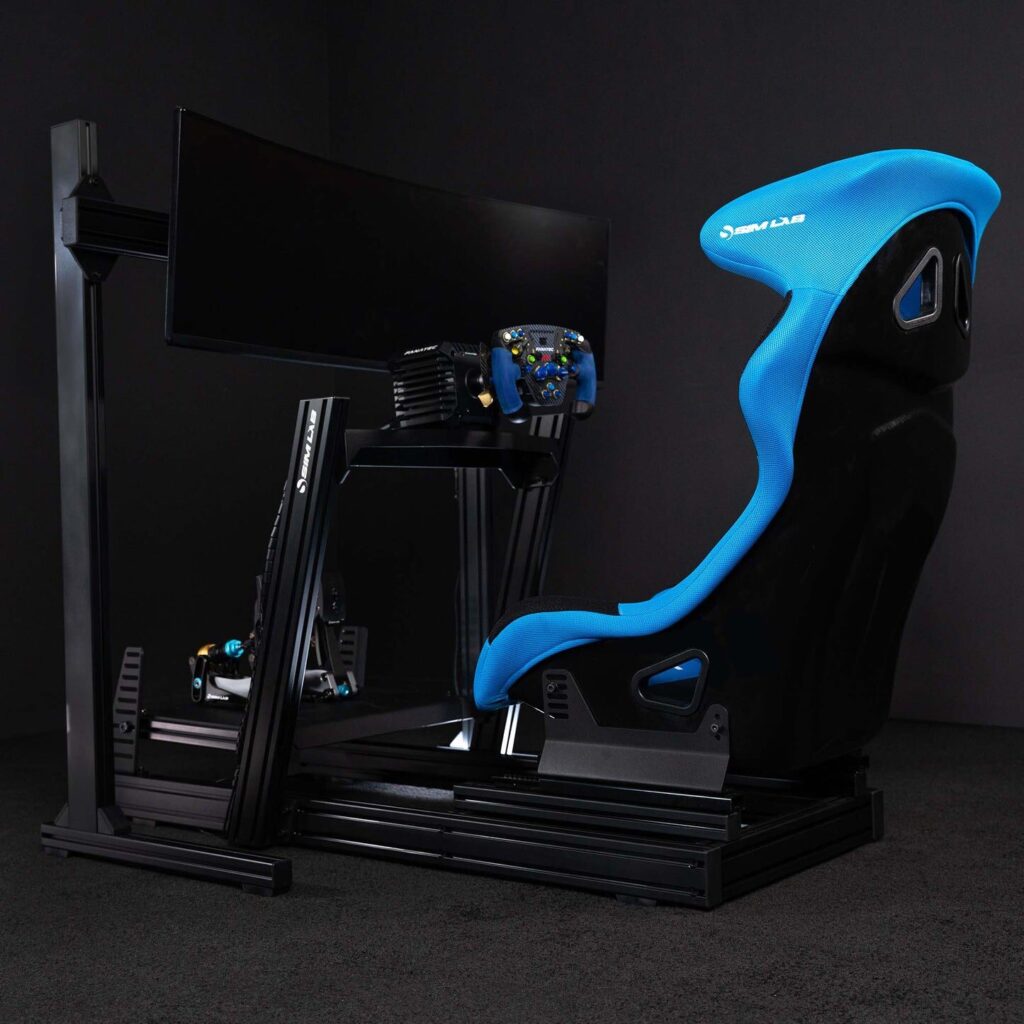
Compatibility is one of its strengths. The decks are pre-drilled for Fanatec bases (CSL, CSW, CSL DD, GT DD Pro, DD1, DD2, Podium) and Moza bases (from the R5 to the R25), and the pre-drilled holes also accommodate Logitech and Thrustmaster. As for pedal sets, you can mount the Sim-Lab XP1, the Fanatec ClubSport V3, and Heusinkveld hydraulic sets (Sprint, Pro, Ultimate). For the seat, Sim-Lab specifically approves the Sparco Grid Q, Circuit II, and S1 Enduro GT. The side mount accommodates the shifter and handbrake at the desired position along the frame. Since this is a chassis, it can accommodate either a PC- or console-based unit; it is the base’s electronics that determine the platform, not the cockpit itself.
Assembly—set aside your afternoon
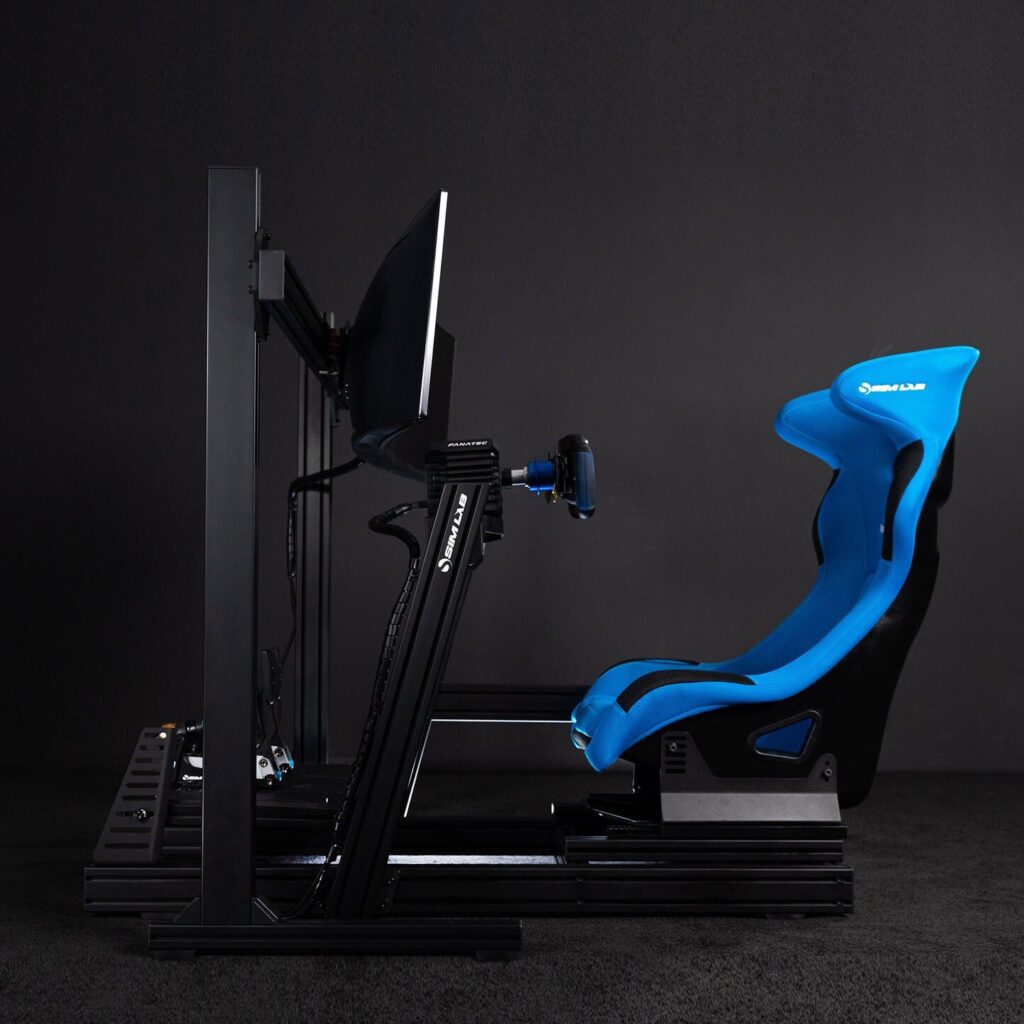
Let’s be clear about one thing: the GT1 Pro takes time to assemble. Expect to spend a good half-day—or even two short sessions—on it, and having a second pair of hands makes the tricky angles much easier to handle. The screws are sorted and labeled, and the parts are high-quality, but the instructions are limited to a downloadable PDF—less convenient than having a paper manual right next to you. Nothing insurmountable, though; that’s the usual trade-off for a profile-based rig that prioritizes total modularity.
Who it's for, and what to expect
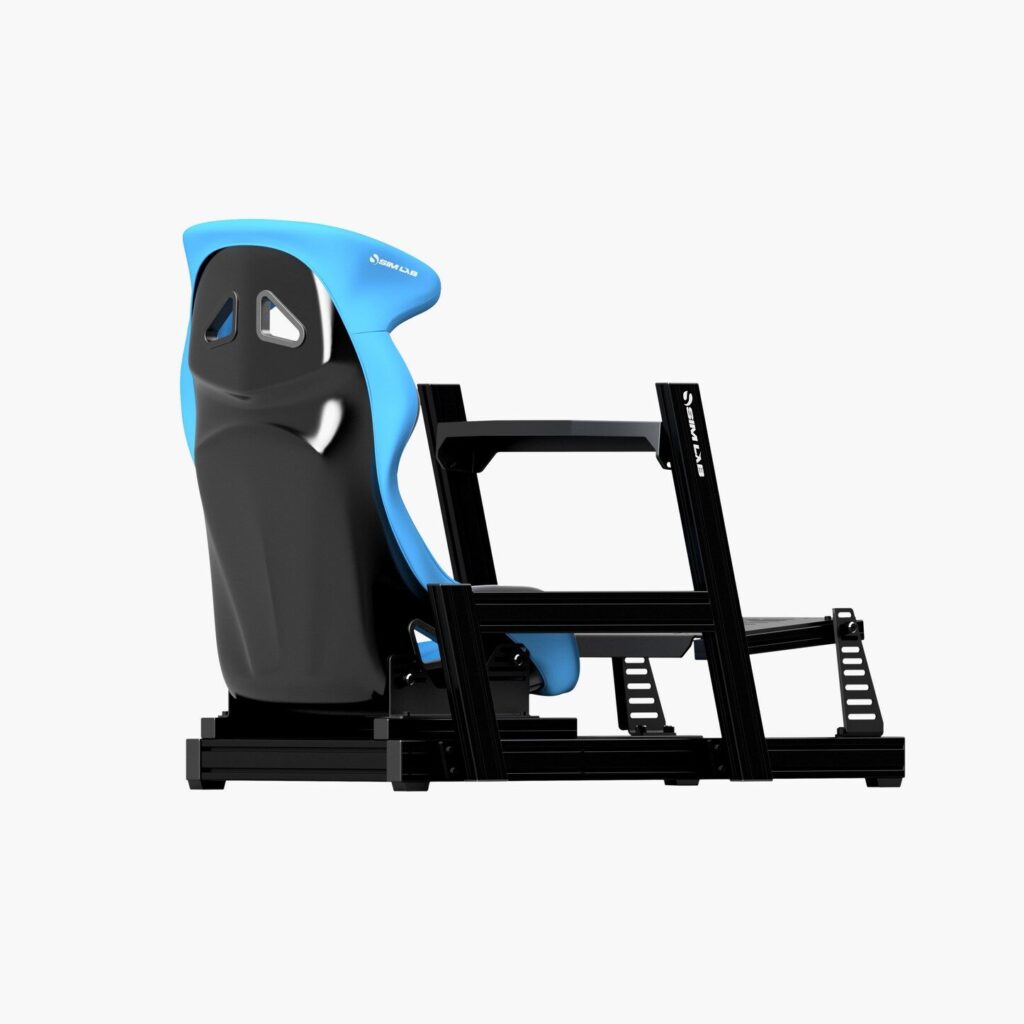
The GT1 Pro is designed for gamers who want a rigid, upgradeable base without having to spend four-figure sums on gaming rigs. Its footprint remains compact (approximately 1350 x 580 mm, up to 680 mm at its widest point), and the entire setup moves effortlessly across a hard floor. Keep in mind that the kit is a bare-bones setup—the seat isn’t included, and the seat mounts and shifter or handbrake mounts must be added separately depending on your configuration. The three-year warranty and high-quality construction further reassure buyers about their investment. In our view, this is a cockpit that holds its own against significantly more expensive models and is a worthy replacement for a GT1 Evo in everyday use.


Reviews