
MOZA R9 V2 : Test & Review | What it's really worth in 2026
MOZA R9 V2: My quick review
The R9 V2 really does give you the impression of upgrading to a serious tool: steering becomes clearer, more precise, and you feel more confident about attacking. It makes sense for PC simracers who have already invested a little (T300, G29, etc.) and want to take a sustainable step forward without aiming for the very top end of the market. The consistency/price ratio seems solid to me.
When you buy through our links, we may earn an affiliate commission.
MOZA R9 V2: the Direct Drive base that aims to shake up the mid-range segment
The MOZA R9 V2 is positioned in a key sim racing segment: that of compact Direct Drive bases, powerful enough to be credible, yet still affordable for a wide audience. This is typically the kind of product you look for when you want to move on from a belt-driven or geared steering wheel to "something serious", without falling into the ultra high-end monsters.
What the R9 V2 promises is simple: solid torque, a compact format, good force feedback finesse, and an ecosystem that's starting to take root. The idea is to offer a base that can serve both a demanding player who rides several evenings a week, and a progressing simracer who wants an upgradeable setup.
My angle on this base is twofold: on the one hand, the quality of feel (precision, grip reading, control in critical phases), and on the other, ease of handling (settings, compatibility, everyday comfort). To put it plainly: does the MOZA R9 V2 really change the experience compared to a more modest base, and is it a purchase that holds up over the long term?
MOZA R9 V2 design and manufacture
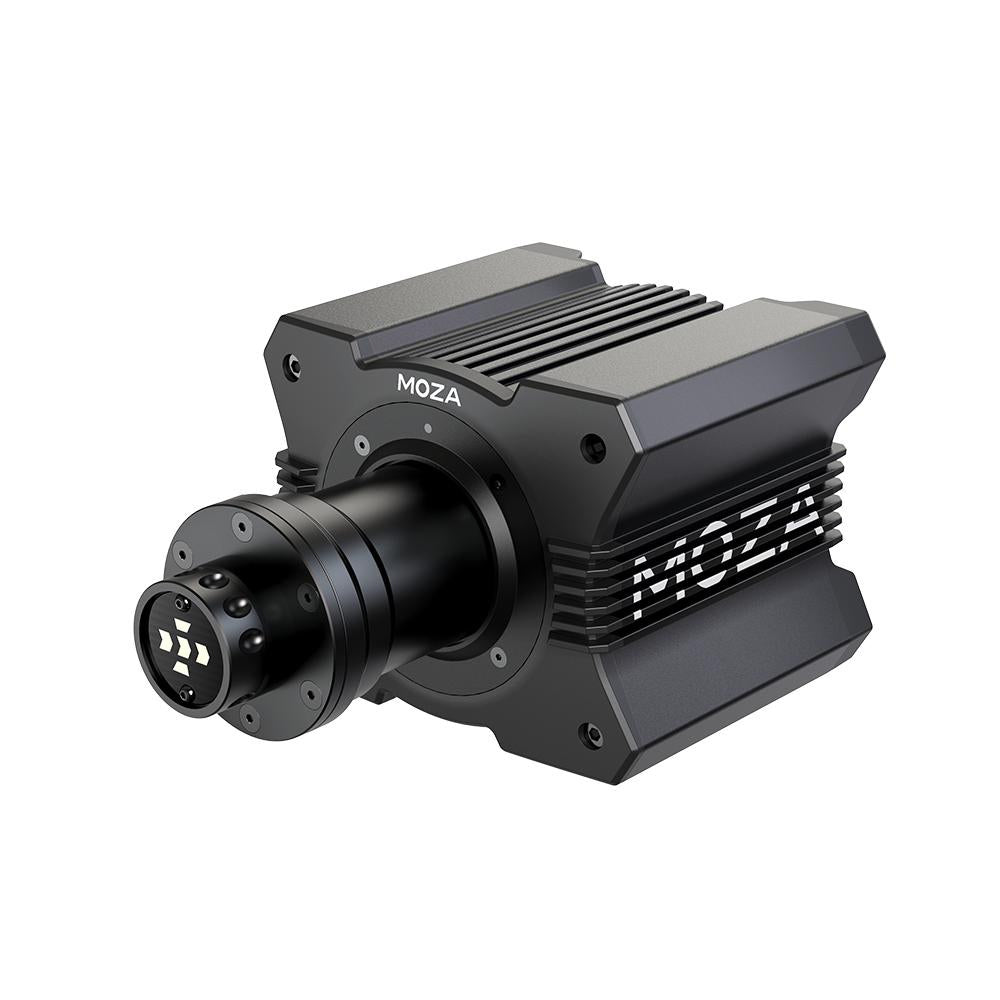
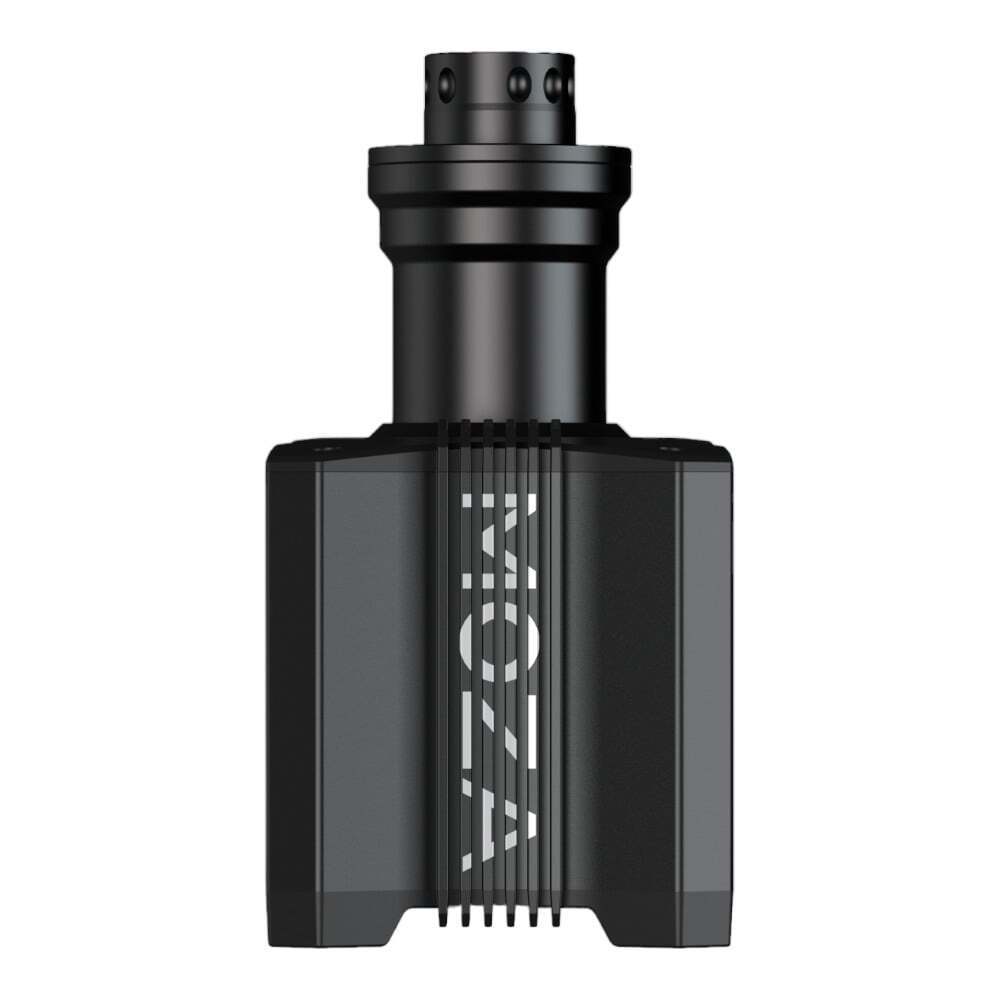
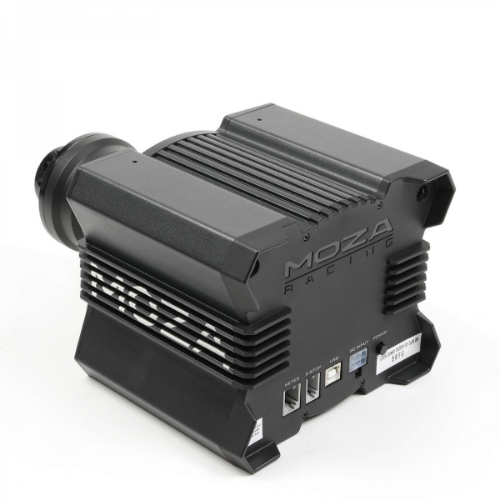
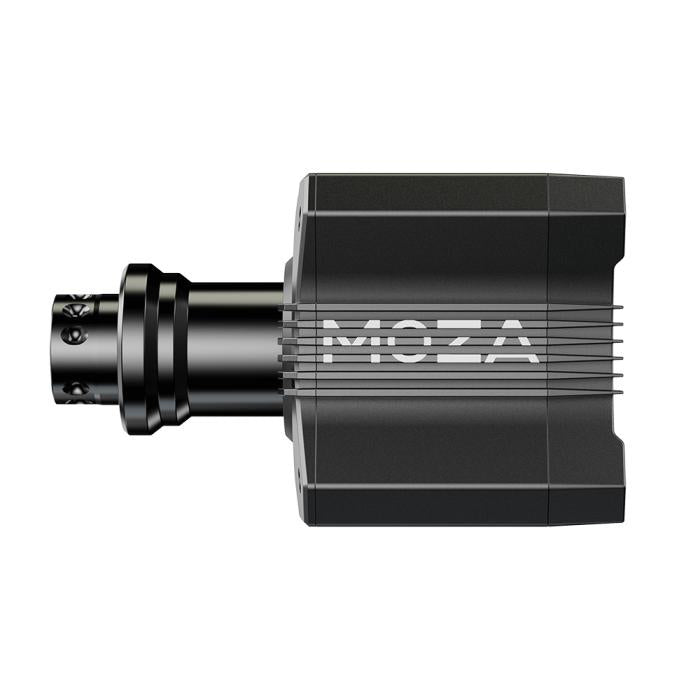
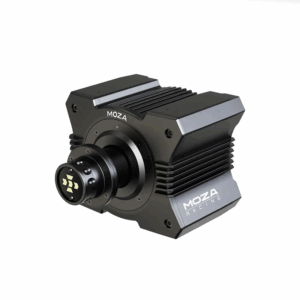
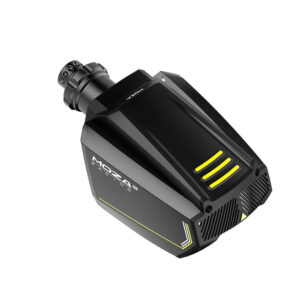
The first impression of the R9 V2 is its compactness and density. The metal body immediately gives the impression of a solid block, with thick walls, sharp edges and a finish that inspires confidence. It's a far cry from the hollow plastic of entry-level steering wheels: here, the base has that reassuring "engine block" feel.
The machining quality is clean, the fasteners well thought-out, and the whole thing exudes rigidity. Once mounted on a proper cockpit, you can feel that the base doesn't move, flex or vibrate in any way. It really feels like a precision tool, not a toy. For a mid-range product, the level of finish is clearly top of the range.
What's surprising is the format: for a Direct Drive base of this power, it remains relatively compact. This makes life easier in tight cockpits or on lightweight profile structures. The sober, rather discreet design is a plus for those who don't want a flashy pad in the middle of the living room.
There are a few drawbacks, however. The steering wheel's quick-release system, though practical, lacks the slight, unmistakable mechanical "click" found on even more high-end systems. It's nothing to write home about, but you can feel the difference compared to more expensive bases. Similarly, some may find the base a little warm during long sessions, although this remains within acceptable limits.
Compared with other Direct Drive bases of comparable power, the R9 V2 clearly holds its own. Compared to a belt-driven base, we immediately gain in perceived solidity and consistency: here, everything is more direct, sharper, with no mechanical play or blurring. It feels like a "pro" tool in the hand.
Settings, customization and compatibility
The MOZA R9 V2 is based on a fairly comprehensive management software package, with predefined profiles and the possibility of fine-tuning everything. The interface remains relatively clear: the various force, filtering and shock response parameters are grouped together in a logical fashion. You're not drowned in obscure terms, but there's plenty of scope for fine-tuning behavior.
The presets provided for the big sim racing games are a good basis. You can drive like this and simply adjust the overall strength, without spending hours in the menus. To go further, the useful settings are mainly gain, filtering, fast effects strength and friction management. There is a learning curve, especially for those coming from a simple steering wheel, but it remains reasonable. After a few sessions, it's easy to understand what each slider changes.
Where the base remains very interesting is in its PC compatibility and integration into the MOZA ecosystem. The R9 V2 is clearly PC-oriented, with broad compatibility with modern sims as long as Windows recognizes it correctly. For consoles, you'll have to check for indirect support via certain steering wheels or dedicated solutions: we're not talking about universal plug-and-play like some multi-platform products.
In terms of ecosystem, the base accepts MOZA steering wheels and integrates well with the brand's cranksets, shifters and other accessories. The advantage is that you can build a coherent setup around this base and add to it over time. In my opinion, the R9 V2 can be used as an entry point into the MOZA ecosystem, but without being a "disposable" product: there's real room for improvement, and you don't get the impression that it will be outdated after just a few months.
MOZA R9 V2: gaming sensations and power feedback
It's on the track that the R9 V2 shows its true colors. What's immediately striking is the precision of the force feedback. Small steering wheel movements, micro-corrections and slight load transfers are clearly transmitted. You can feel the car come alive in your hands, without needing to push the FFB to extremes.
In the corners, the progression of force is consistent. Effort increases in a fairly linear fashion as you angle and load the tires. We understand when the car is well supported, when we're at the limit of grip or just beyond. The transition between grip and stall is clear, which is vital for clean, steady driving. Where some belt-driven bases can feel a little "rubbery", the R9 V2 is sharper and more direct.
Grip reading is one of this base's strong points. You can feel when the front end starts to slip, when the rear becomes light, or when a tire starts to spin. We're not talking about exaggerated effects here, but a set of small pieces of information that give you confidence. You immediately understand what the car is doing. That's where the base really changes the experience.
On vibrators, the R9 V2 offers a sharp but not excessive rendering, provided you don't overboost the effects in the software. Flat vibrators are well differentiated from big, aggressive sidewalks, and curbs at the end of the track feel like clean breaks. This isn't a base that "drools" or obscures detail under big, uniform torque. On the contrary, the impulses are short, clear and fairly well controlled.
On long sessions, consistency is quite good. Strength remains stable, there's no blatant degradation of return, and the base holds its own without becoming saturated or imprecise. You can ride for a long time without feeling a major change in the base's behavior, which is essential for serious riding or championships.
In fast corrections, the R9 V2 is responsive. When the car pulls back a little, the steering wheel "calls back" vigorously, but without giving the impression of fighting against a machine. If you're coming from a weaker base, you'll need a little time to get used to this reactivity, but once you're used to it, you'll clearly gain in control when sliding and catching up.
In terms of overall immersion, the combo of power, finesse and responsiveness is very convincing. It's a cut above an entry-level base in every respect: the feedback isn't just louder, it's cleaner and more legible. Compared with even more powerful high-end bases, the R9 V2 may seem to lag a little behind in terms of pure "punch" on big shocks or in ultra-physical cars, but for the majority of users, the torque reserve and detail provided will be more than sufficient.
To sum up the pure sensations: you get a return of force that gives you confidence, that invites you to attack, but that remains usable and manageable on a daily basis. You don't suffer the base, you use it to go faster.
Who's it for? What we like, what we don't like
The MOZA R9 V2 is clearly aimed at the motivated PC simracer who wants a real Direct Drive base without blowing his budget or his cockpit. For a total beginner in sim racing, this may be a little ambitious, but for someone who has come from a T300, G29 or equivalent, and who has already spent hours on virtual circuits, the qualitative leap will be obvious. Intermediate and experienced drivers will find it a serious tool, capable of tracking their progress.
Among the strong points, I appreciate first and foremost the quality of the feel: the level of detail in the FFB, the readability of the grip and the consistency of the torque make this a pleasant and efficient base. Then there's the construction: solid, rigid and reassuring, with a finish that looks premium without being ostentatious. Finally, the MOZA ecosystem and the logic of evolution: you can start with this base, then enrich your setup by adding steering wheels, pedals or accessories, all within the same software environment. You get the feeling you're investing in a platform, not just an engine block.
On the other hand, there are certain limitations to bear in mind. Console compatibility is not its favorite playground: for a mainly console user, other more "official" alternatives will undoubtedly be easier to live with. The software, while clear overall, may take a little time to find the really perfect settings for different games, especially for those who don't like touching the advanced settings. Finally, for the most extreme users, who ride exclusively on protos or GTs with very high forces, the torque reserve may seem a little low compared to more massive bases.
In terms of perceived value, the R9 V2 is a reasonable investment for those who want to take a real step up in sim racing without plunging into the very high-end. You pay a little more than for a belt-driven steering wheel, but you gain a force feedback that clearly changes the way you drive. For a serious setup, it's a central element that justifies its place and its price.
Verdict: the MOZA R9 V2 in a sim racing setup
The MOZA R9 V2 brings a real qualitative leap in setup. It transforms a cockpit equipped with a mid-range steering wheel into an already credible platform, capable of showcasing a good crankset and a rigid chassis. It's the kind of base that makes you want to ride more, refine your trajectories and work on your lap times, because the information arrives more clearly.
On the market, the R9 V2 occupies a pivotal position in the Direct Drive mid-range. More serious, finer and more immersive than a belt-driven solution, but more compact and more accessible than the big, high-powered blocks. It ticks all the essential boxes for a simracer who wants a high-performance, long-lasting tool, without going overboard.
I'd recommend it mainly to PC users, with a minimum investment in a stable cockpit and a little time to devote to settings. For the occasional console gamer, or someone who just wants to plug-and-play without touching a thing, it won't be the simplest or most suitable choice.
If you're looking for a compact Direct Drive base with just the right amount of power, real riding feel and a solid ecosystem, this product can clearly make the difference in your setup.


Reviews