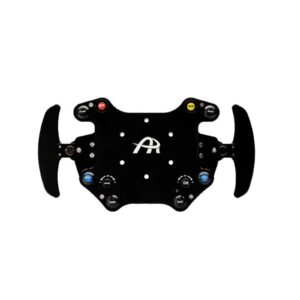
Fanatec ClubSport Steering Wheel R300 V2 : Test & Review | What it's really worth in 2025

Fanatec ClubSport Steering Wheel R300 V2: My brief review

Above all, this steering wheel gave me the sensation of a very clear link with the car, with a feel for grip and load transfers that's easier to read than on more "gadgety" models. It will appeal above all to simracers who are already a bit committed, and who prefer pure driving to ultra-complete ergonomics. For a Fanatec setup geared to sustainable performance, its positioning seems coherent.

When you buy through our links, we may earn an affiliate commission.

Fanatec ClubSport Steering Wheel R300 V2: a real driver's wheel, not a display case

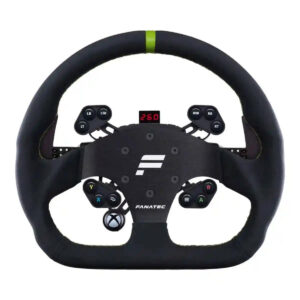
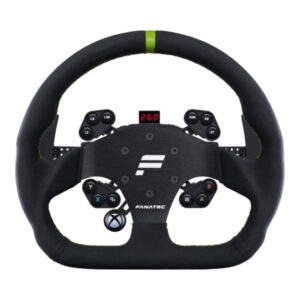
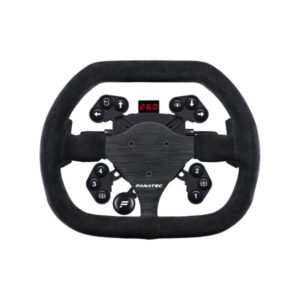
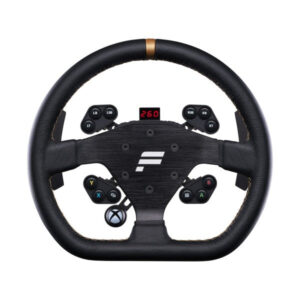
In the Fanatec range, the ClubSport Steering Wheel R300 V2 is positioned as a "pure" driver's wheel, compact and metallic, designed for those who prefer on-screen feel and efficiency to RGB displays or integrated screens. It's clearly aimed at the simracer who wants a clean, versatile racing-type wheel that can be used in GT as well as in light single-seaters and rallies.

This steering wheel is attractive because it promises three things: serious construction, broad compatibility within the Fanatec ecosystem and, above all, a very direct, no-frills mechanical feel. It's a bit like the discreet Swiss Army knife in the catalog: not the flashiest, but designed to be driven over and over again.

For my part, I approached it from a very simple angle: does it transmit information better than more "gadgety" steering wheels? Does it remain comfortable over time despite its compact diameter? And does it deserve its place as the main steering wheel in a ClubSport or CSL setup, or rather as a specialized second wheel?

The idea is really to see whether this R300 V2 brings a concrete plus in terms of feel, control and riding pleasure, or whether we're just paying for the ClubSport logo.

Design and manufacture: sober, robust and uncompromising

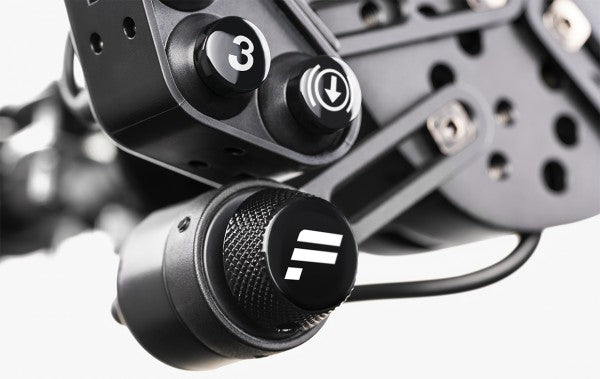
In hand, the ClubSport Steering Wheel R300 V2 immediately gives the impression of a serious object. The metal rim, with its compact diameter, exudes real rigidity. You can feel that nothing moves or twists, even when you press hard on the base. This is the kind of steering wheel that doesn't squeak or vibrate on its own: anything that moves comes from force feedback, not from the hardware.

The grip, covered in leather or an equivalent high-end material, gives a firm feel. This isn't the ultra-soft leather of a road steering wheel; it's denser, more sporty. The seams are clean, with no annoying extra thickness in the grip areas. You can squeeze hard without it hurting, but this isn't a "sofa" steering wheel: you can feel that it's designed for attacking, not cruising.

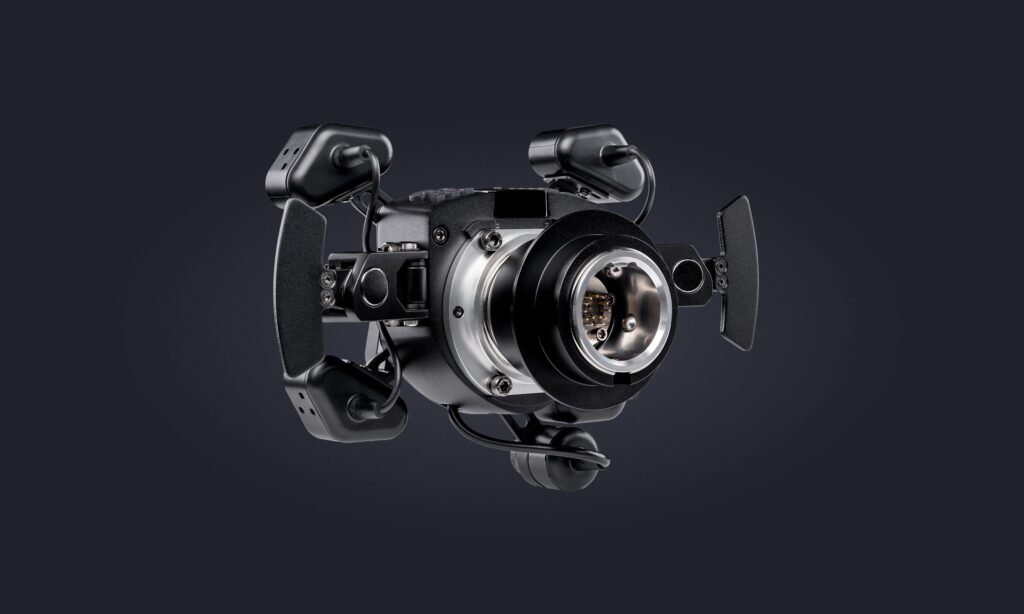
The faceplate, temples and overall assembly all exude seriousness. Tolerances are tight, with no discernible play between QR, rim and hub. The overall density is pleasing: heavy enough to look premium, but not so heavy as to render the steering inert on a slightly less powerful base.

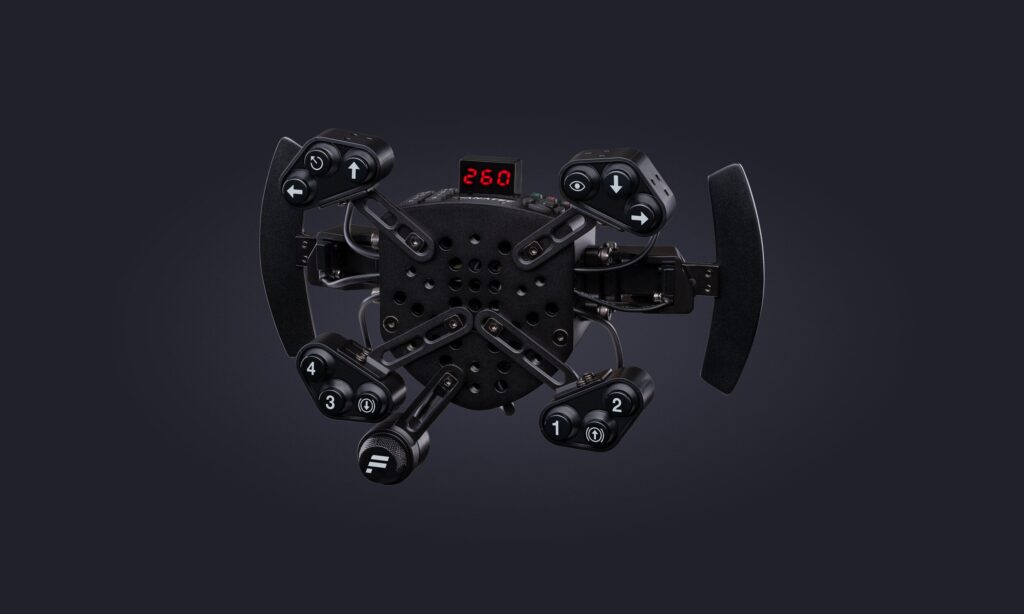
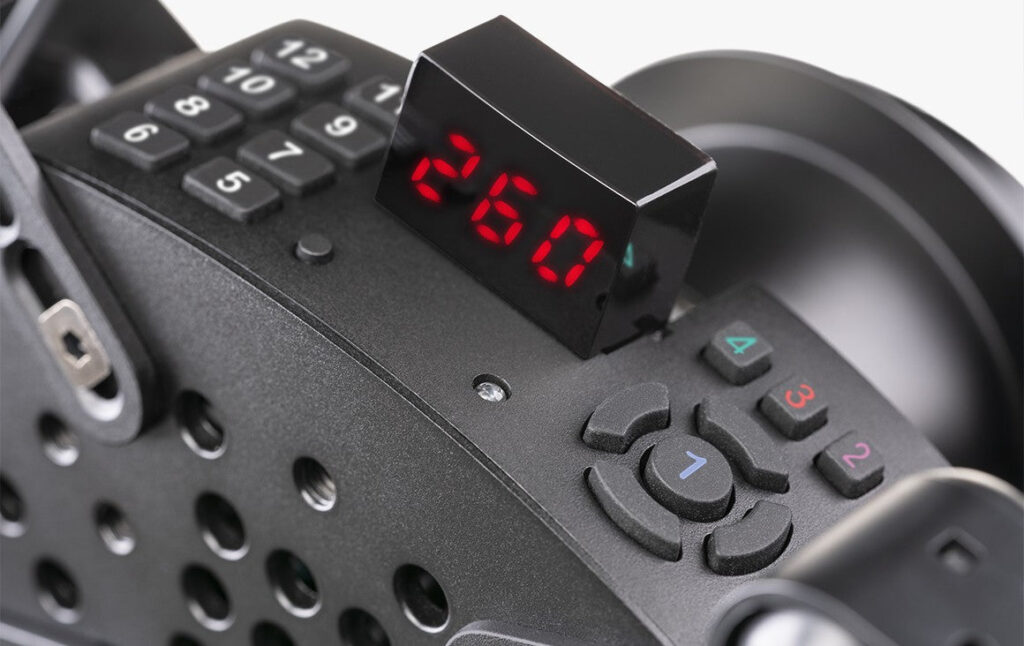
What's surprising is precisely this feeling of a monolithic block. You really get the impression of a rigid, coherent whole, with no weak points. On the other hand, those who like visually charged steering wheels, with lots of switches, screens or LEDs everywhere, may find the R300 V2 too tame, almost "naked".

Compared to other more GT or F1-oriented Fanatec steering wheels, with their many buttons and visual elements, the R300 V2 is more of a work tool than a technological showcase. Compared with more entry-level steering wheels, the difference is mainly in rigidity and assembly quality: there's clearly less flex, less parasitic noise, and a more consistent overall finish.

Settings, customization and compatibility

The ClubSport Steering Wheel R300 V2 integrates naturally into the Fanatec ecosystem. Once mounted on a compatible base, you'll find the usual settings in the base menu and in the PC software. Overall ergonomics depend very much on your base, but the steering wheel itself doesn't complicate matters: all the buttons are easy to use, and the mapping logic is simple.

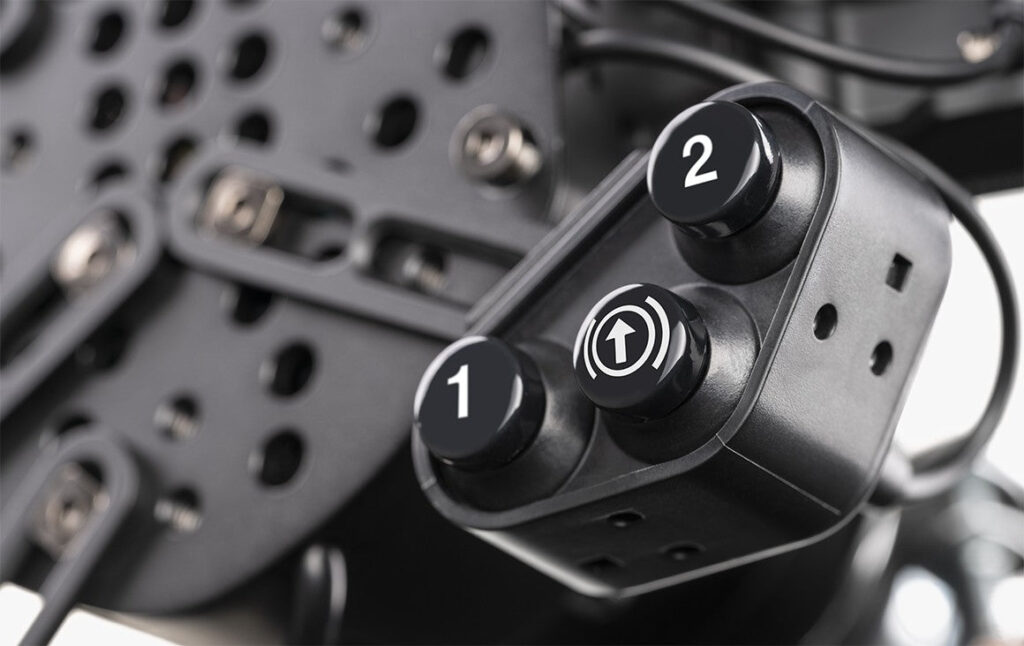
This steering wheel doesn't offer the greatest number of physical controls, but what it does offer is enough to comfortably pilot the majority of simulations: headlight management, radio, limiter, engine maps, everything can find a coherent place. We're really talking about a steering wheel geared towards driving, not the technical management of a modern prototype.

Customization is mainly a question of sensitivity, force feedback and filters adjustable in the Fanatec database: overall intensity, effects, interpolation, damping, etc. The R300 V2 reacts well to changes in settings: you can quickly feel the difference in feel between a more raw FFB and a more filtered FFB. The learning curve remains reasonable, even for an intermediate user. You can switch from a very lively setup to a more stable steering wheel without getting lost in a thousand sub-menus.

Compatibility is in line with Fanatec's usual logic: PC with no particular worries, consoles depending on the base used. The steering wheel itself is part of this ecosystem: pedals, shifters, handbrakes, all combine naturally. This is clearly a product designed for a setup that will evolve, and not an isolated purchase.

In terms of upgradeability, the R300 V2 is more a durable flywheel than a simple entry point. Its compactness and rigidity mean it can easily keep up with the move upmarket, whether from a more modest base to a beefier Direct Drive, or a change of discipline. It can also be used as a main steering wheel over the long term, as long as you accept its sober, steering-focused nature.

Game feel: precise, responsive, easy to read

Where the ClubSport Steering Wheel R300 V2 really comes into its own is on the track. Its compact, rigid rim transmits base force feedback remarkably well. Every micro-variation of FFB seems to rise in the hands without being stifled by the structure of the wheel. You really get the feeling that this steering wheel lets information flow through instead of smoothing it out.

Cornering behavior is very sound. Steering feels direct, without excessive inertia. Changes in downforce are easy to read: the increase in load on the steering wheel as you enter the bend, then the slight relief at the chord point, are clearly visible. It's easy to understand just how far you can load the front end before slipping. There's a pleasant feeling of "connection" between your hands and the front end, giving you the confidence to push a little harder.

In terms of grip, the R300 V2 does an excellent job. Micro-losses of grip, and the beginnings of understeer or oversteer, are well transmitted to the steering wheel. You can feel the tires hooking up, then starting to stall, with enough nuance to correct in time. For a driver who likes to play on the edge, this makes a big difference: you can anticipate the car's reactions instead of being subjected to them.

Vibrations are particularly well rendered with this steering wheel. The rigidity of the rim avoids the "soft" effect sometimes experienced with more flexible wheels. When you climb onto an aggressive vibrator, you feel the relief, the successive impacts, but without falling into excessive noise or the arcade side. On flat vibrators, the feedback remains more discreet, allowing you to really feel the difference between different types of track edge. It's very telling when you're racing.

Over the course of long sessions, comfort remains decent, but it's clear that this steering wheel has been designed for dynamic driving. Its compact diameter and firm feel will tire the forearms a little more than a big, well-damped wheel if you keep the FFB high. Slightly lowering the intensity strikes a good balance between immersion, precision and endurance. Over two or three hours of riding, you'll maintain good control without wearing out.

In fast corrections, the R300 V2 proves very comfortable. Its compactness helps a great deal: countersteering, catching up with a rear end that goes off, changing direction in a chicane, everything is done with very little arm movement. The steering wheel follows the base perfectly, with no lag or wobble. You really get the impression of being able to "catch" the car on the fly. That's where the difference with a bigger or softer steering wheel comes in.

Compared with a less powerful base or a more entry-level steering wheel, the difference is reflected in better legibility of details and more lively steering. You feel transitions, micro-shocks and grip variations more clearly. Compared to a more powerful base model with a steering wheel loaded with electronics, we lose a little in terms of pure ergonomics (fewer controls under the fingers), but gain in mechanical clarity. It all depends on your riding style: if you prefer raw feel to the number of switches, the R300 V2 is clearly in the right league.

Overall, in terms of immersion, this steering wheel does exactly what you'd expect from a ClubSport product: it mentally disappears, to make way for the driving sensations. You'll be surprised not to think about it any more, so natural is the link between the base and the virtual car.

Who's it for? What we like, what we don't like

The ClubSport Steering Wheel R300 V2 is aimed above all at intermediate to advanced simracers, already established in the Fanatec ecosystem, who want a compact, precise, performance-oriented steering wheel. Motivated beginners are perfectly welcome to use it, but will really appreciate its true value if they've already put in a few dozen hours of serious driving and have a minimum of FFB requirements. Whether on console or PC, the ideal profile remains the same: someone who drives regularly, likes to feel their car and isn't looking for a "show-off" steering wheel.

What I particularly appreciate is the overall rigidity of the whole. There's a real sense of solidity and seriousness, which immediately gives you confidence. Then there's the feeling of compact, responsive, responsive steering, which feels more like a race car than a road car, which is perfect for modern simulations. Last but not least, its compatibility and integration into the Fanatec ecosystem make it a coherent choice for a setup that wants to remain homogeneous and evolve progressively, without getting stuck.

On the limitations side, the reduced number of controls compared to some very complete wheels may frustrate those who play complex prototypes or like to adjust everything on the fly. Its compact diameter, coupled with a high FFB, may also tire the arms of more occasional players, especially if they don't take the time to adjust the settings. Finally, its rather sober design, with no screen or striking visual elements, may give the impression of a less "spectacular" product than other models from the same brand, even if the sensations are up to scratch.

In terms of investment, this is clearly a product positioned above the entry-level range. Perceived value will therefore depend on how you use it: if you don't drive much, and you're mainly looking for a steering wheel that will look good in your living room, this won't be the best ratio. On the other hand, if you spend a lot of time on the virtual track and value feel more than aesthetics, the ClubSport Steering Wheel R300 V2 justifies its price by the quality of its feedback and perceived durability. You invest more in sensations than in gadgets.

Verdict: a steering wheel for fast, long-distance driving

The Fanatec ClubSport Steering Wheel R300 V2 brings something very simple but highly desirable to a setup: a clean, crisp and reliable link between the base and what you feel on the track. It doesn't magically transform an average base into a racing Direct Drive, but it clearly lets the details of the FFB come through better than a more flexible or "toy" steering wheel. In a coherent Fanatec setup, it quickly becomes a real daily reference.

On the market, it can be considered a mid-range to high-end product, oriented more towards performance than staging. It's not trying to compete with ultra-premium wheels packed with electronics, but it offers a very solid compromise between quality, feel and versatility. It's a serious enough wheel to accompany a move upmarket to more powerful bases, without becoming the weak link.

I'd recommend it to simracers who value precision, grip reading and control in critical phases, rather than to players who want a steering wheel with lots of controls or spectacular aesthetics. If you're looking for a compact, rigid steering wheel that can clearly tell you what the car is doing and follow your progress over time, this product can clearly make the difference in your setup.

Reviews

Be the first to review “Fanatec ClubSport Steering Wheel R300 V2”

Your email address will not be published. Required fields are marked *

en_US