
Fanatec CSL Pedals : Test & Review | What it's really worth in 2026
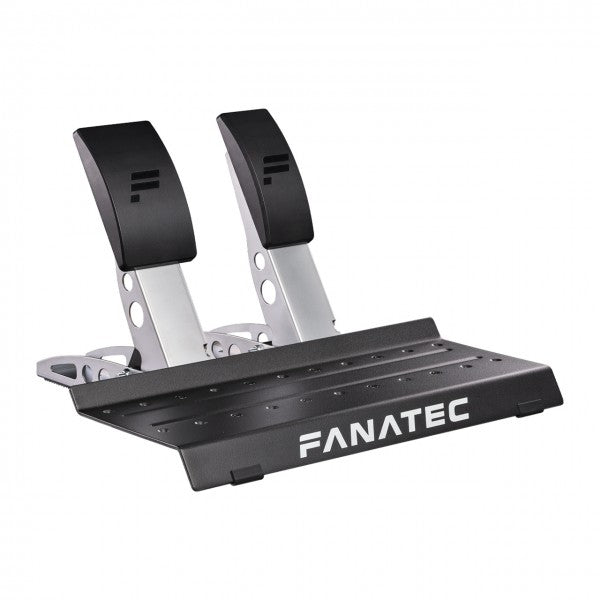
Fanatec CSL Pedals: My quick review
This pedalboard gave me a real sense of extra control, especially under braking, with a consistency that clearly changes lap times and confidence on the track. It makes sense for gamers who want to get away from the "toy" pedalboard without aiming for the very high-end, especially on PC or console with Fanatec base. The whole package remains coherent and relevant as an evolutionary entry point.
When you buy through our links, we may earn an affiliate commission.
Fanatec CSL Pedals: entry-level/mid-range pedals that are already making a difference
In a sim racing setup, a pedalboard often does more for lap times than a more expensive steering wheel. The Fanatec CSL Pedals is the perfect entry point into the Fanatec ecosystem: an affordable, metal pedalboard designed to evolve with a load cell later on.
On paper, it promises more controllable braking than a basic potentiometer pedalboard, more serious construction than entry-level "plastic" pedals, and broad PC and console compatibility via Fanatec bases.
My angle here is simple: how much do these pedals improve consistency, braking confidence and overall precision, especially for someone coming from a basic crankset? Is it really worth investing in this rather than a new flywheel or a more powerful base? And, above all, does this crankset hold up over time and remain pleasant to use when you start riding seriously, for several hours at a time?
Design & manufacturing: metal at last
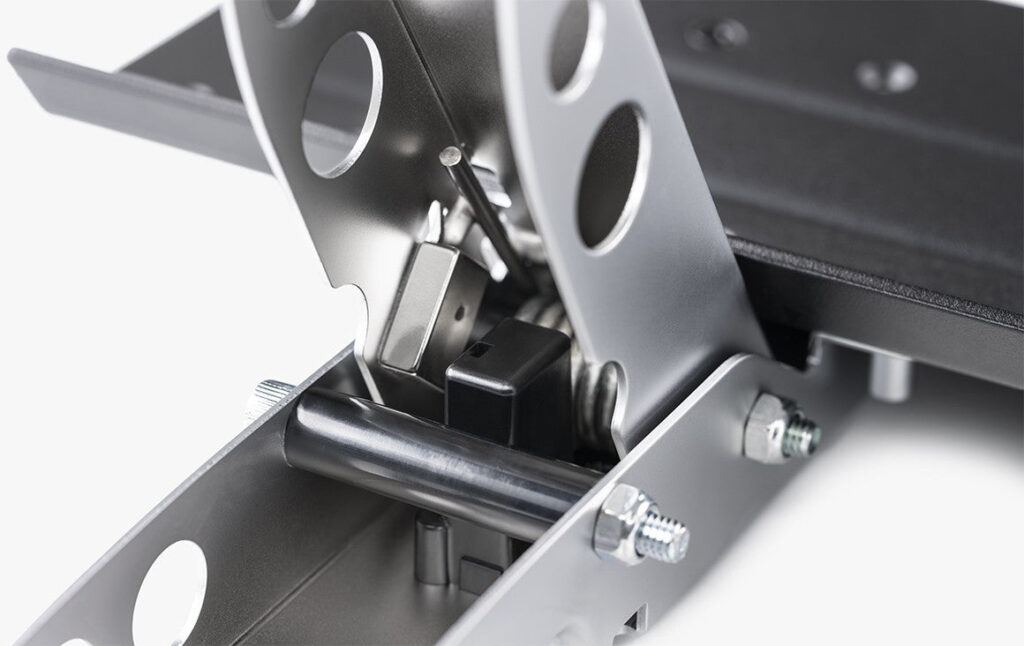
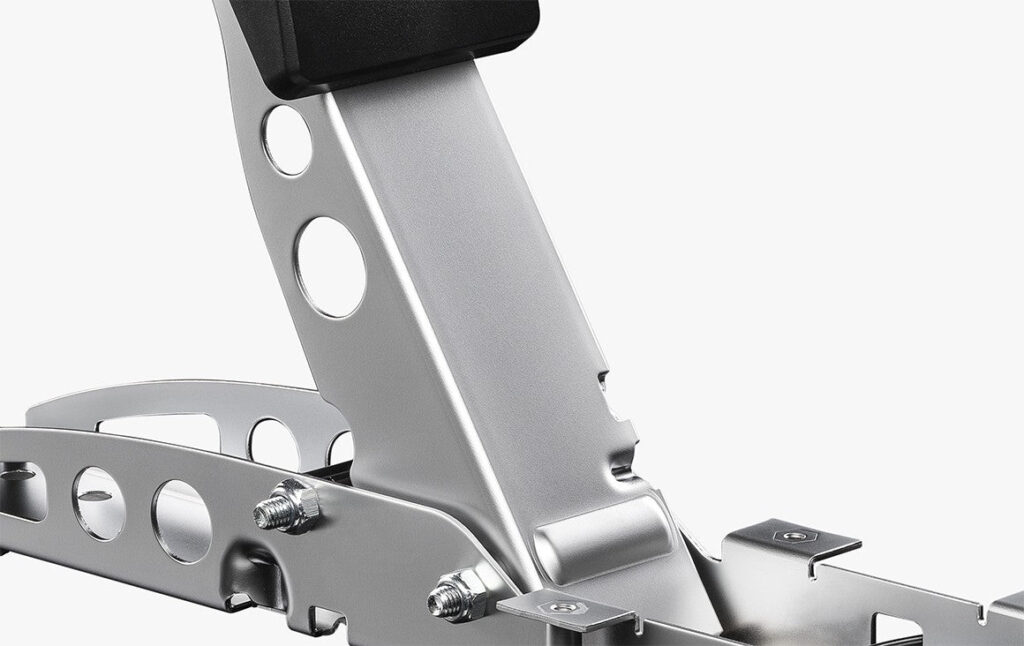
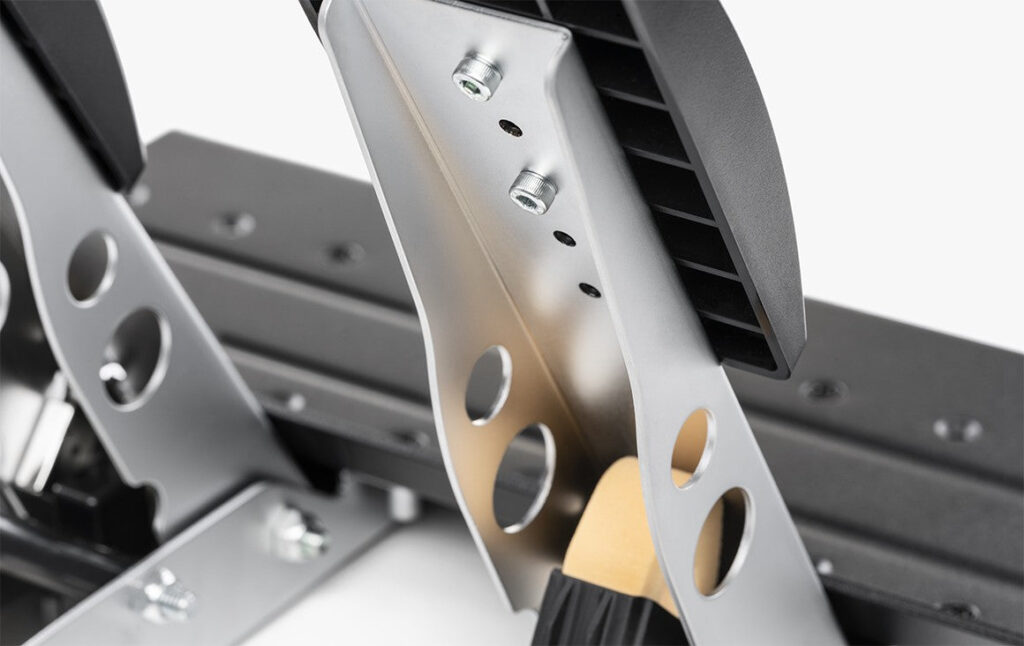
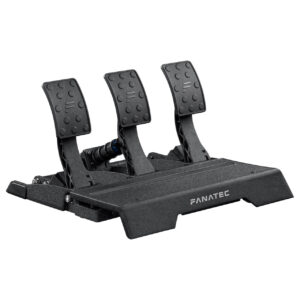
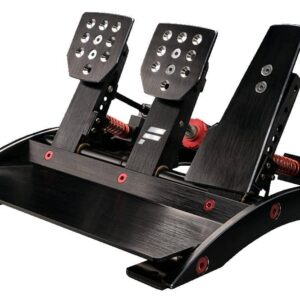
The first thing you notice about the Fanatec CSL Pedals is their solid feel. Metal structure, rigid base, dense pedals: a far cry from the lightweight plastic pedalboard. In hand, everything feels like a "serious" product, even if the positioning is clearly entry-level/mid-range.
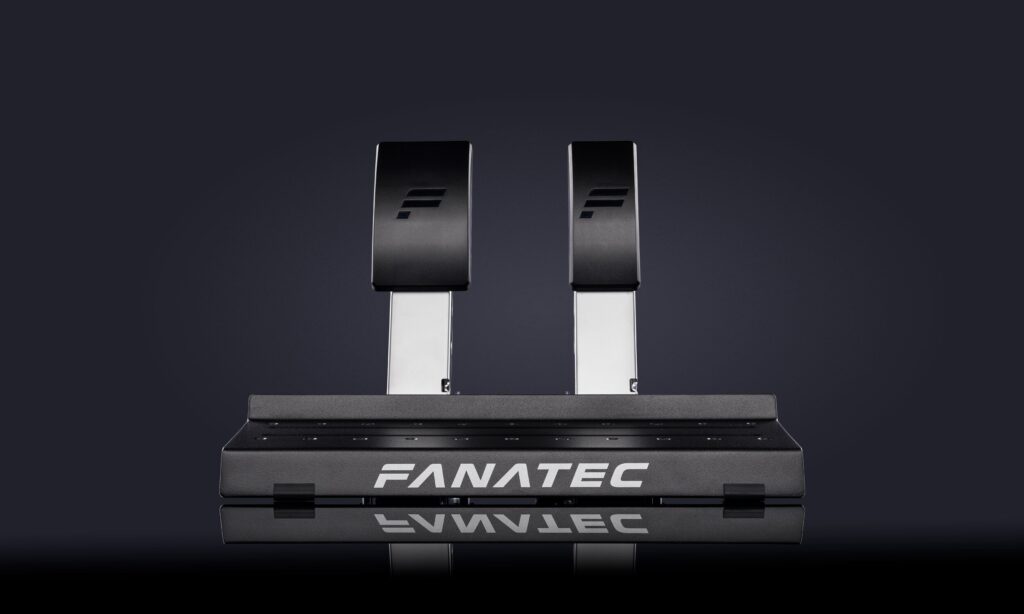
The pedal arms are firm, with no parasitic play. Once on the ground or attached to a cockpit, the whole unit doesn't give the impression of wanting to move when braking hard. The weight remains reasonable, but the base is wide enough to inspire confidence. It feels like it's designed to be screwed onto a chassis, but on the ground, with a mat or a bumper, it's still usable.
The finish is decent: not luxurious, but clean. You can see that the design has been optimized to keep costs down, with fairly simple shapes and a slightly "industrial" look. It's not a premium object that makes a setup shine like some high-end pedalboards, but that's not the objective either. It's functional, clean and unadorned.
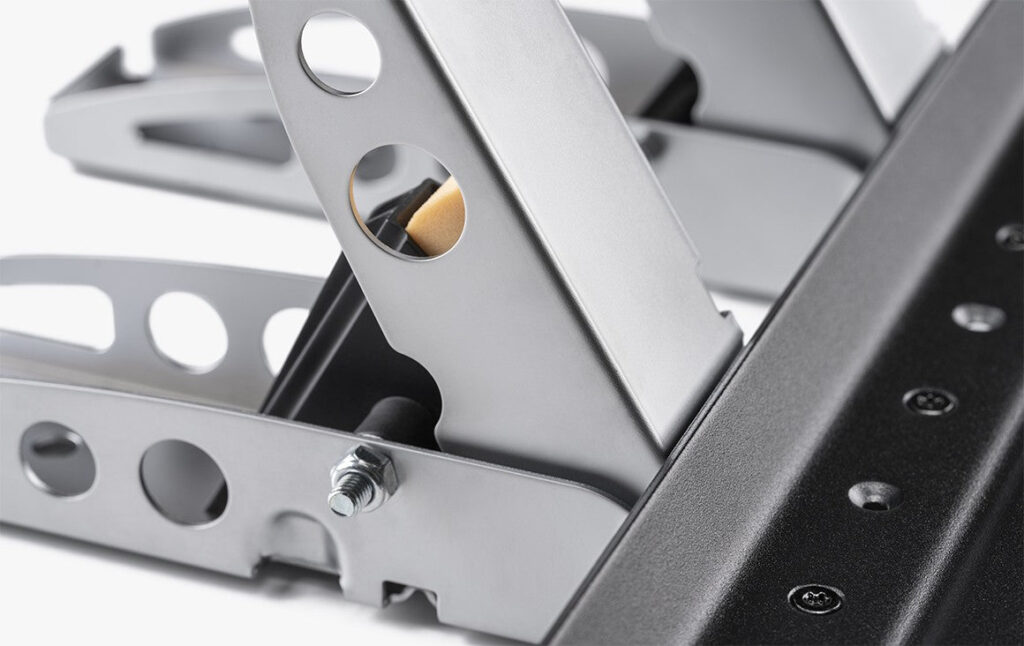
What's surprising is the overall rigidity for this price level. The chainstay hardly twists at all, even when the brake is applied hard. The pedals have none of the softness or sponginess of some of our competitors' entry-level models. The feel underfoot is clean and direct.
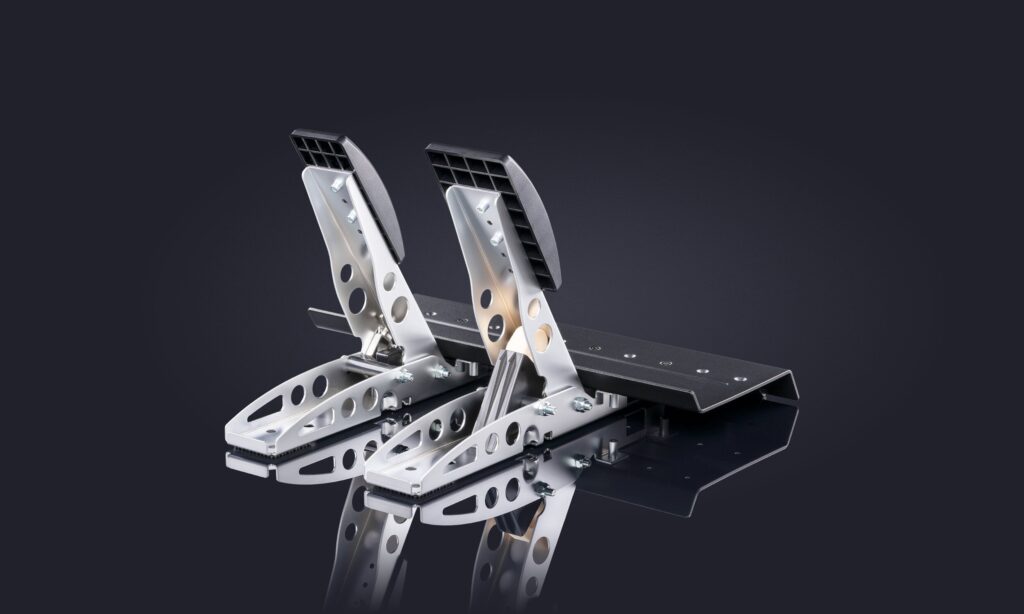
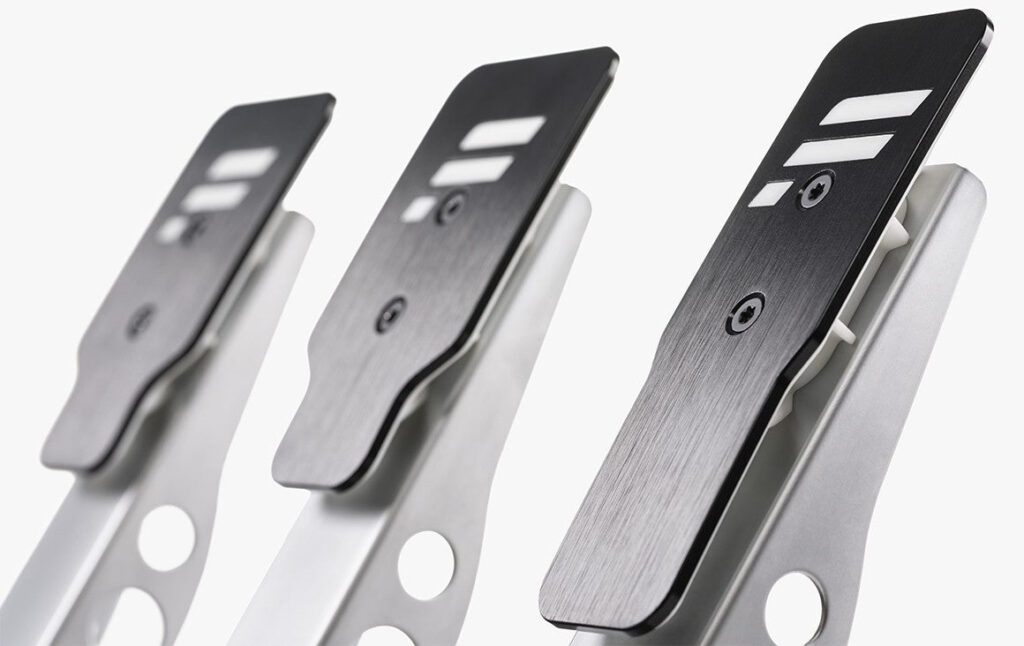
The small disappointment comes rather from the limited physical adjustments and the rather simple design of the pedals. The plates aren't very wide, and height and angle adjustment remains basic. Compared to higher-end cranksets, we lose out on "mechanical" customization possibilities and fine positioning comfort. But compared with a basic plastic crankset, the CSL Pedals clearly give the impression of changing category.
Settings, customization & compatibility
In terms of physical adjustments, the Fanatec CSL Pedals offer the essentials without going very far. You can adjust pedal spacing and lateral position, and play with the stroke via mechanical stops. The resistance of the brake pedal, in the basic version (without load cell), remains more "pedal stroke" than "pressure". That's enough to gain finesse, but it won't replace a real load cell.
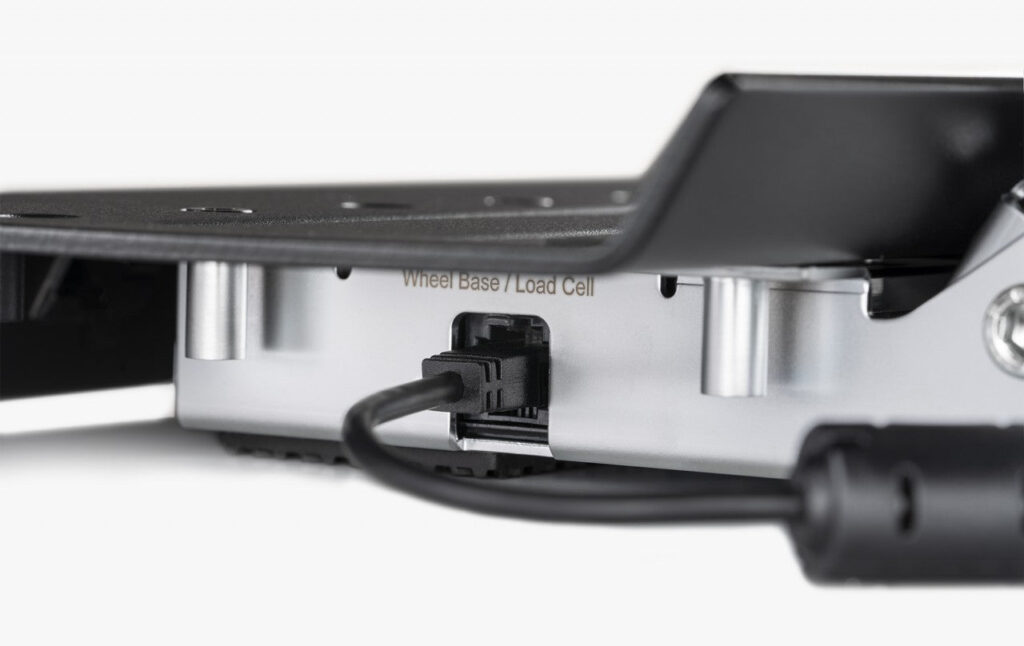
With the optional load cell module, the philosophy clearly changes: the brake becomes force-controlled, with much greater resistance and a firmer end-of-stroke. This is where the crankset comes into its own for those who want to work on their braking points, dosage and consistency lap after lap. You go from an "OK" brake to a brake that can really be used to push the pace.
Software settings are made via the Fanatec driver and, depending on the base used, via the wheel or base menus. You can calibrate the stroke, set dead centers and adapt the maximum braking threshold. The interface is fairly clear, with useful options without being swamped by obscure parameters. The learning curve is reasonable: a few tries, two or three adjustments, and you'll quickly find a setting that suits you.
Compatibility is one of our major assets. On PCs, we have the greatest flexibility. On consoles, the pedalboard must be connected to a compatible Fanatec base, and it's the base that talks to the console. In concrete terms, for a console player already in the Fanatec ecosystem, the CSL Pedals integrate effortlessly. For a PC player, the added benefit is the flexibility of calibers and games.
In terms of ecosystem, this crankset is a natural match for the brand's steering wheels, chainstays, shifters and handbrakes. It's ideal as an entry point: start with the basic kit, then add the load cell, then upgrade later to a more high-end crankset while keeping the rest of the setup.
In practice, I see it more as a "serious starter" than as a definitive product for the ultra-demanding purist. But for a progressing pilot or a console gamer who wants to take a real step forward, upgradeability is a real argument.
Fanatec CSL Pedals: sensations at play
Once on the track, it's clearly the braking that takes the upper hand in terms of feel. Compared to a conventional entry-level crankset, the difference is immediately felt in the way you can repeat the same braking point lap after lap.
With the standard version (without load cell), the brake is still mainly stroke-controlled, but the resistance is more progressive and linear than with a plastic bottom bracket brake. You get a better feel for the end of the stroke, you know where you are in time, and you dose more naturally. The main benefit is consistency. Wheel lock-ups are less of a surprise, and you'll find yourself braking later and keeping control.
With the load cell module, the crankset changes dimension. The brake becomes much firmer, and you brake more with your leg than with your ankle. The brain focuses on force rather than position. As a result, reference points become much easier to hold, especially when braking hard after long straights. This is where the crankset really saves time. You immediately understand what the car is doing.
When cornering, mass transfer is more manageable. You can release the brake more gradually to keep the car stable as you enter the bend, without abruptly switching from "strong braking" to "nothing at all". On GT or prototype cars, this fine control over the trail braking phase changes the confidence you have when attacking. The car becomes more predictable, especially on corner entry.
The accelerator pedal is simple but effective. There's enough travel for clean power delivery, with no awkward hard points or marked dead zones. You'll feel the difference between a pedal that's too soft or too short for racing, and the throttle, when you come out of a tight corner or in precarious grip conditions. You have more leeway to adjust the throttle and avoid slippage.
On vibrators, the pedals don't provide direct feedback like a steering wheel can with the FFB, but the precision of the accelerator pedal helps to catch a car that jumps a little more cleanly. Slight oversteer can be corrected by fine-tuning the throttle. Small, rapid corrections become more natural, less "all or nothing". It's discreet, but in long sessions, mental fatigue diminishes a little as you gain confidence in your pedal response.
After several hours of riding, comfort remains good. Pedal travel doesn't overtax the ankles, and resistance, even with the load cell, remains within reasonable values for domestic use. We're not talking about an ultra-hard brake like a full-competition crankset, but rather a good compromise between realism and comfort.
Compared to a top-of-the-range load cell or hydraulic crankset, the CSL Pedals are obviously less refined in terms of micro-variations, and less customizable in terms of feel. Foot feedback is a little "simpler", less nuanced. But compared to a basic bundle pedalboard, the qualitative leap is enormous. Where a low-end crankset tends to make the car nervous and unpredictable under braking, the CSL Pedals restore calm, legibility and that famous feeling of control.
To sum up the sensations: this crankset is above all a confidence booster. You know what you're doing, you know what the car's going to do. That's exactly what you expect from a good sim racing crankset.
Who's it for? And what we like / don't like
The Fanatec CSL Pedals are aimed primarily at gamers who want to break away from the world of "toy" pedalboards without blowing their budget. A motivated beginner coming from a basic console / PC bundle will find it a huge leap in quality. An intermediate simracer, starting to focus on braking points and lap times, will find it a coherent tool for progress, especially with the load cell. For an already highly specialized driver, with a rigid cockpit and a large volume of driving hours, it will be more of a transitional choice or a secondary setup.
What I appreciate most is the build quality for the price. Having an all-metal structure with no major play instantly changes the confidence you have when you press hard on the brake. Secondly, the possibility of adding the load cell module at a later date makes it an excellent evolutionary entry point, without forcing you to change everything as you progress. Last but not least, the overall sensations in play, especially the consistency of braking, offer a real tangible gain in performance and pleasure, especially if you come from a plastic crankset.
There are limits, however. The physical adjustment options remain rather limited: angle, height, pedal shape, everything is a bit fixed compared to higher-end models. Those who like to adjust every detail of their position may find it a little limited. The non-load cell version, while correct, doesn't give that "force rather than stroke" feel that really makes the difference when working to the tenth. You're clearly encouraged to invest in the add-on module. Finally, the aesthetics and overall feel remain those of a product optimized for the price, not a premium crankset: this doesn't hinder performance, but some users with a strong "object pleasure" orientation will remain hungry for more.
In terms of investment, the value/performance ratio is very well placed. For a contained budget, it represents a real step forward in the pedalboard hierarchy. Being able to evolve with a load cell means you don't have to resell everything to move upmarket. It's a purchase that makes sense for many setups, especially in a medium-term progression perspective.
Verdict: a truly serious starting point
The Fanatec CSL Pedals don't pretend to compete with competition pedalboards costing several hundred euros more. That's not the point. Its strength lies in transforming an average setup into an already very solid base, especially when it comes to braking. For someone who rides with a decent steering wheel but a basic crankset, it's often the upgrade that has the most immediate impact on lap times and consistency.
On the market, it's clearly positioned in the serious entry/mid-range segment: above the bundle pedalboards, below the premium monsters with high-capacity load cells or hydraulics. In this segment, it holds its place very well, above all thanks to its scalability via the load cell module and its natural integration into the Fanatec ecosystem.
I'd recommend it without hesitation to PC or console gamers already equipped with a Fanatec base, who want to give their car control a real boost without going for a very complex crankset. For a simracer already equipped with a good load cell or hydraulic crankset, this won't be an upgrade, but rather a secondary product or a budget choice.
If you're looking for a solid, upgradeable pedalboard that's really more precise than an entry-level model, this product can clearly make the difference in your setup.




Reviews