Fanatec CSL Pedals Clutch Kit : Test & Reviews | What it's really worth in 2026
Fanatec CSL Pedals Clutch Kit : My opinion in brief
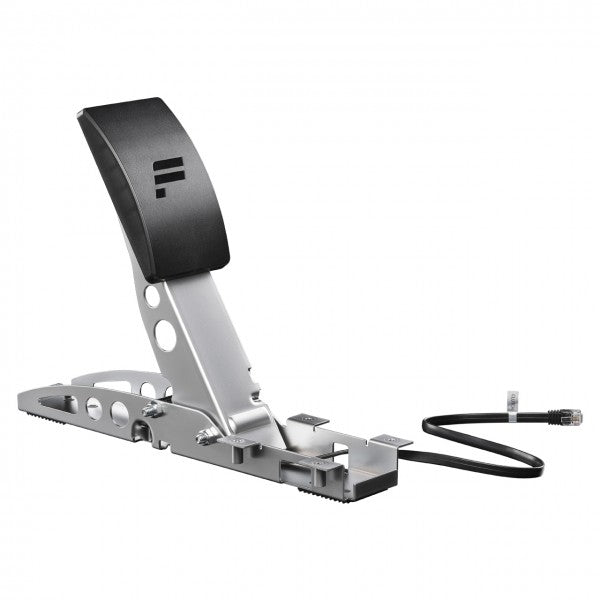
The Clutch Kit adds a third pedal to Fanatec’s CSL Pedals to enable manual transmission shifting. Featuring a steel construction, a 12-bit contactless Hall sensor, and a spring that’s stiffer than the gas pedal, it can be installed on the existing two-pedal set in just a few minutes. It’s designed for drivers who use a sequential or H-pattern shifter and want a real clutch pedal without having to adjust their brake.
When you buy through our links, we may earn an affiliate commission.
What We Liked
- Solid, rigid steel construction, identical to CSL Pedals
- Precise and durable 12-bit non-contact Hall sensor
- Spring is stiffer than the accelerator; clear feedback
- Plug-and-play setup, automatically recognized as a three-pedal setup
- Adjustable for height and lateral spacing
- Price includes the addition of a real third pedal
Reserves
- No slip point simulation (bite point)
- No USB ports; requires a compatible Fanatec base
- It's only worth it if you already own the CSL Pedals two-pedal set
- The Load Cell Kit already includes all three pedals; a decision needs to be made
Technical Specifications
| Type | Clutch kit (third pedal) for CSL Pedals |
| Sensor | Contactless Hall sensor, 12-bit |
| Construction | steel (excluding the pedal plate) |
| Finish | pearl chrome plating on the base and arms |
| Spring | firmer than the accelerator |
| Insole | wide, the same as the brake |
| Settings | height and lateral position |
| Assembly | M4x12 screw, Torx wrench included |
| Connectivity | via Fanatec base (no standalone USB) |
| Compatible bases | CSL Elite, CSL DD, ClubSport, Podium, ClubSport USB Adapter |
| Warranty | 3 years |
A third pedal to finally switch to a manual transmission
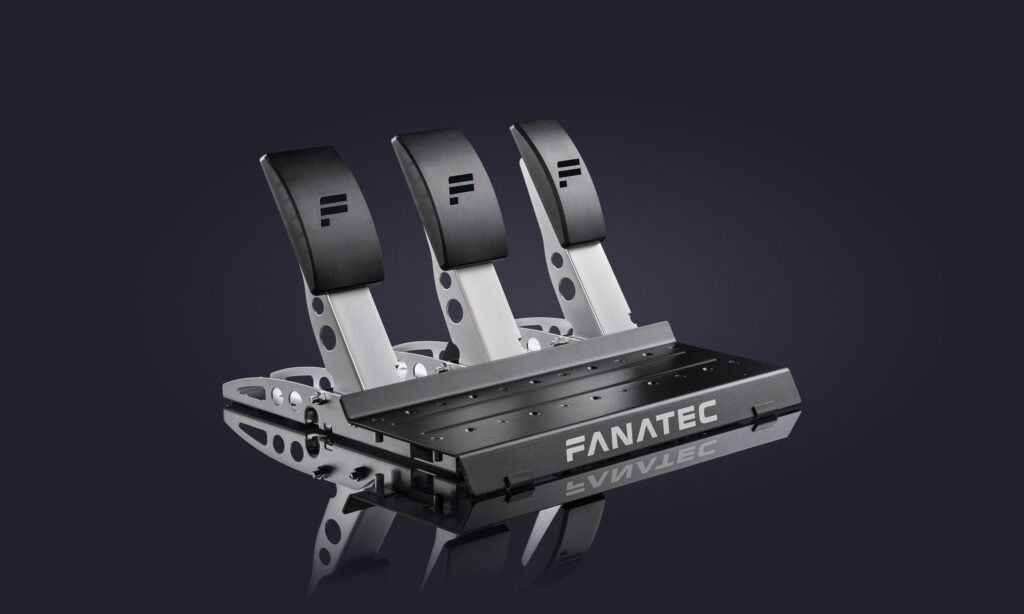
The Fanatec CSL Pedals come standard with two pedals: the gas and brake. But if you want to drive classic GTs, rally cars, drift cars, or any car with an H-pattern shifter, you’re missing the essential component: the clutch. That’s exactly the gap this Clutch Kit fills. It’s not a complete pedal set but an expansion module—a single clutch pedal that you bolt onto the existing CSL Pedals to upgrade from a two-pedal setup to a three-pedal setup.
This approach aligns with the philosophy behind the CSL line: providing access to a specific component at the lowest possible price rather than requiring the purchase of a complete set. For those who already own the basic pedal set, this is the most direct path to a true three-pedal layout.
The same metal strength as the rest of the pedal set
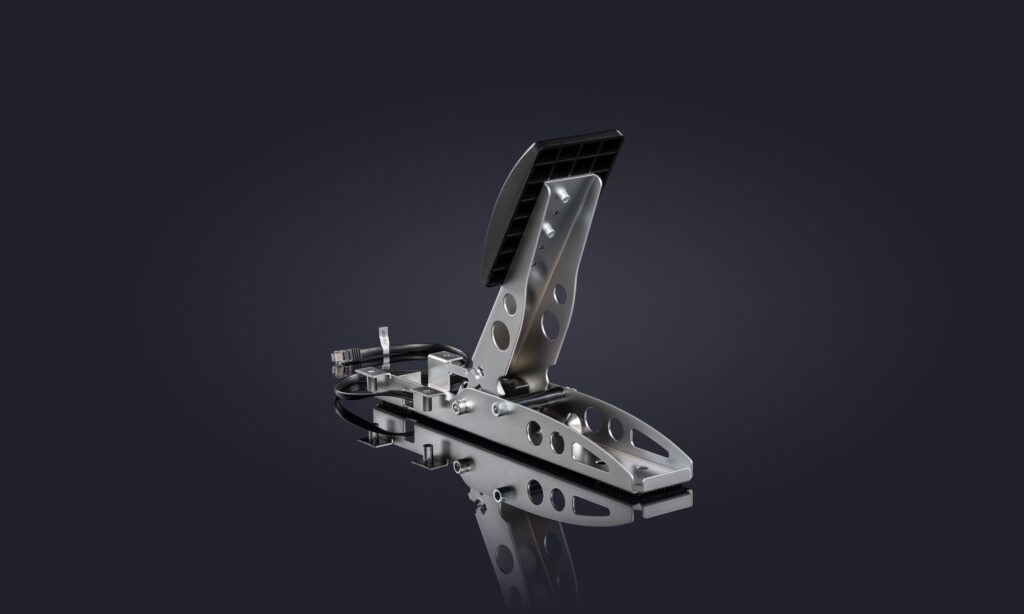
The pedal fully embodies the CSL Pedals design language. The frame is made of steel (excluding the base plate), with a pearl chrome finish on the base and arm, so that once installed, the kit is indistinguishable from the original pedal assembly. It features the solid construction for which CSL Pedals is renowned, with no unwanted play and a truly solid feel underfoot. The footplate is wide, identical to that of the brake pedal, providing a generous support surface and facilitating heel-toe work.
Hall sensor and tight spring—that's what the clutch delivers
On the electronics side, the pedal features a 12-bit contactless Hall sensor—the same technology used in the CSL Pedals accelerator. With no mechanical friction on the sensor, this ensures greater durability and consistent measurement over time. The spring, meanwhile, is intentionally stiffer than that of the throttle, giving the clutch its own distinct resistance and preventing it from feeling like a mere copy of the gas pedal.
Let’s be clear: this pedal doesn’t simulate a slip point; it’s still a standard progressive control. In practice, the spring’s higher resistance makes it easy to gauge the force applied and allows for smooth, controlled operation. For clean stops-and-goes with an H-pattern shifter, this is exactly what you’d expect from a clutch pedal in this price range.
Setup and installation—it only takes a few minutes
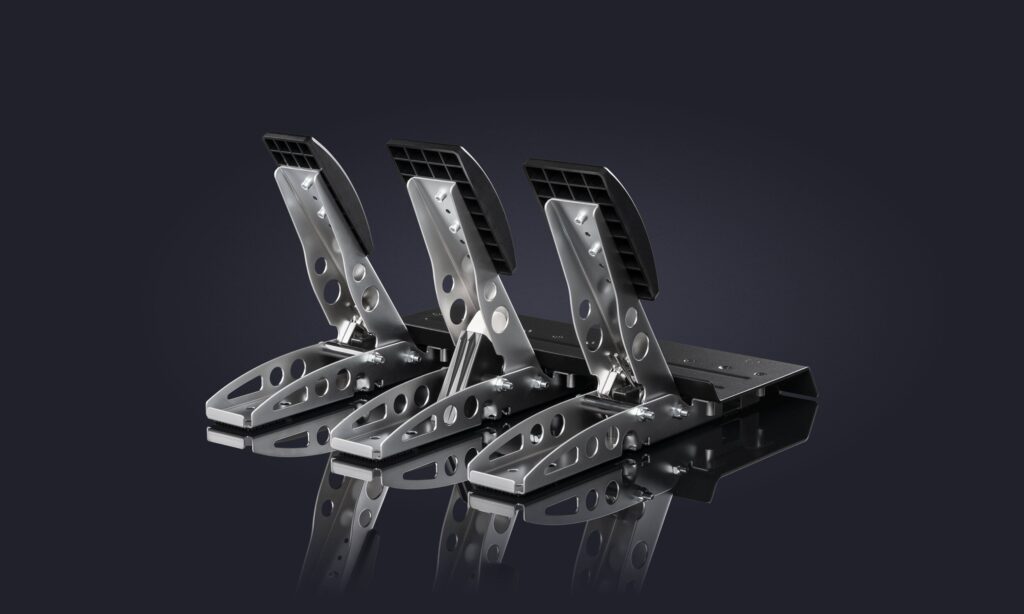
The setup is plug-and-play. Secure the pedal to the heel rest using the included M4x12 screws and Torx wrench, adjust the lateral spacing and the height of the soleplate, then connect the cable to the CSL Pedals throttle assembly. The Fanatec base then automatically recognizes a three-pedal set without requiring any special software configuration. The modular design also allows for reverse mounting on a chassis, and the vertical rear plate lets you prop the pedal set against a wall for floor-mounted setups.
Compatibility: What to Check Before Buying
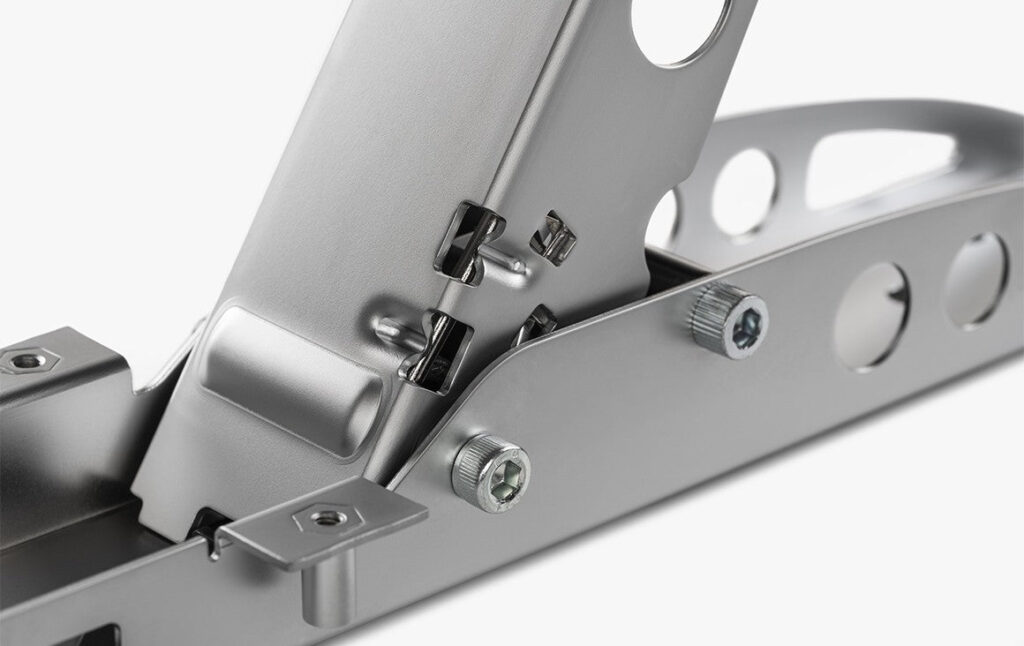
This is an important detail to keep in mind. The Clutch Kit does not include any USB ports. It works only when connected through a compatible Fanatec base—specifically the CSL Elite, CSL DD, ClubSport, and Podium models—or via the ClubSport USB Adapter, which is sold separately. In other words, the pedal does not connect directly to a PC via USB; it must be connected through the base.
As a direct result of the console, the pedal set inherits the platform of the base to which it is connected. A PlayStation-compatible Fanatec base enables use on PlayStation, while an Xbox-compatible base enables use on Xbox. You must therefore consider the base, not the pedals. One final useful consideration: since the Load Cell Kit already provides all three pedals—as it converts the stock brake pedal into a clutch—you shouldn’t combine the two kits. The Clutch Kit is intended for those who simply want a third pedal without modifying their brake.
For whom, and when?
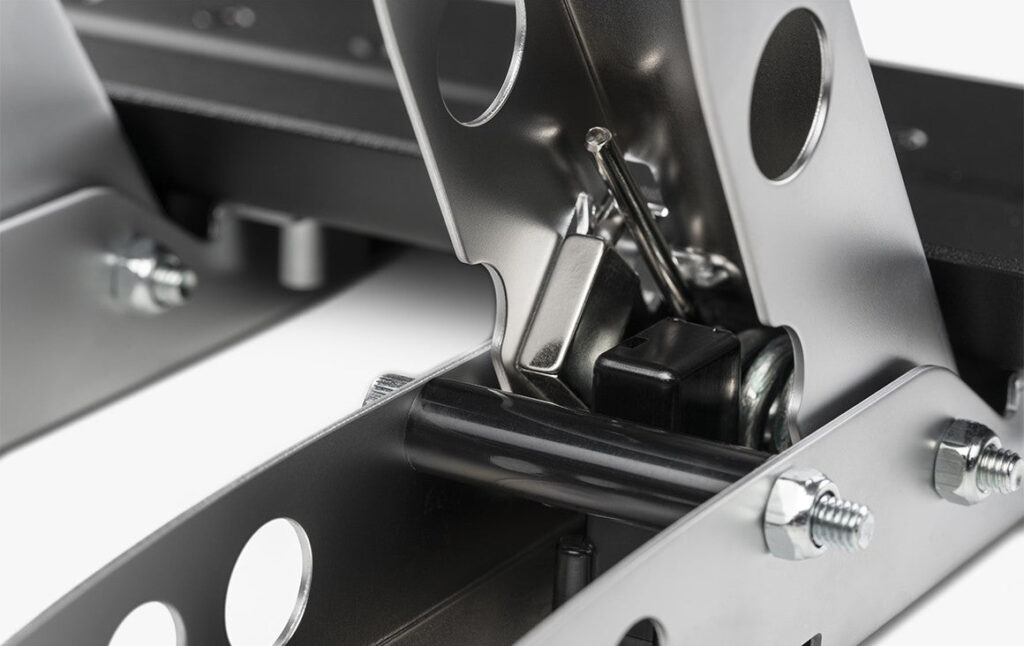
This kit is ideal for a simracer who already owns the CSL Pedals two-pedal set, frequently races in H-class, classic GT, rally, or drift events, and wants the feel of a clutch without breaking the bank. It’s also a logical starting point for beginners who want a consistent three-pedal layout right from the start. Well-built, precise thanks to its Hall sensor, and easy to install, it does exactly what you need it to do.




Reviews