Fanatec Podium Hub : Test & Review | What it's really worth in 2026
Fanatec Podium Hub: My opinion in brief
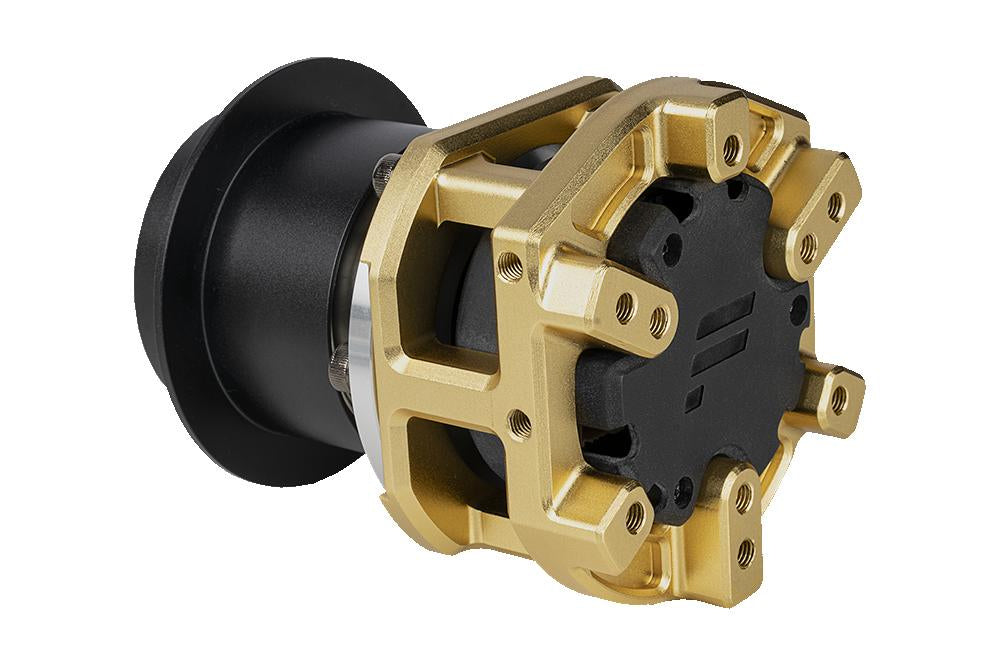
The Fanatec Podium Hub is a hub that incorporates all the electronics of a Fanatec steering wheel, allowing you to mount any third-party rim or real racing wheel on your base. Machined from a single block of anodized aluminum and shipped with the QR2 quick-release mechanism, it delivers force feedback and controls without any play. It supports magnetic paddles and button modules, but is more minimalist than a Universal Hub and is primarily designed for PC use. A high-end component—expensive but built to last.
When you buy through our links, we may earn an affiliate commission.
What We Liked
- Premium craftsmanship, one-piece machined anodized aluminum body
- Opens the Fanatec base to third-party rims and real racing wheels (50 and 70 mm center distances)
- QR2 aluminum quick-release clamp, play-free locking mechanism
- Modular: magnetic palettes, button clusters, DataPort-C port
- Full electronics (ARM processor, firmware updates, 16-bit inputs)
- Compatible with a wide range of Fanatec bases; 3-year warranty
Reserves
- High price for a hub with limited built-in features
- Less feature-rich than a ClubSport Universal Hub (no rotary encoder; menu settings must be adjusted via software or a module)
- Careful assembly of the rim (use short screws; tweezers are helpful)
- Slightly extend the axle and reposition the rim
- Not compatible with Xbox; features are limited on PS4 (full potential on PC)
Technical Specifications
| Type | Sim Racing Steering Wheel Adapter Hub |
| Body | Machined from a single piece of anodized aluminum, space frame structure |
| Mounting Spacing | 6x70 mm and 3x50 mm (Sparco, MOMO, OMP, etc.) |
| Quick-release mechanism included | QR2 Pro (steering wheel side) (aluminum) |
| Electronics | Dedicated ARM processor, firmware updates |
| Appetizers | 10 buttons, 2 16-bit analog inputs |
| Connectors | 2x Podium Advanced Paddle Modules, 2x button clusters, 1x DataPort-C |
| Compatible Modules | ClubSport Magnetic Paddle Shifters, Podium Button Module (Endurance and Rally), ClubSport Button Cluster Pack |
| Compatible bases | DD1, DD2, DD1 PS4, ClubSport DD and DD+, CSL DD, GT DD Pro, ClubSport V2 and V2.5, CSL Elite |
| Platforms | PC (full version), PS5 (full version), PS4 (limited version), Xbox (not compatible) |
| Box contents | Hub, QR2 Pro (steering wheel side), 2 mm Allen wrench, security screw, guide |
| Warranty | 3 years |
The link that connects your Fanatec base to the rest of the world
If you own a Fanatec base and are eyeing a steering wheel that isn’t made by Fanatec, you’ll quickly hit a wall. A Fanatec base doesn’t natively recognize third-party steering wheels, and without an intermediary electronics unit, you won’t get force feedback or button functionality. The Podium Hub exists precisely to overcome this obstacle. It’s a hub that houses all the electronics typically found in a complete Fanatec steering wheel, and it fits between the base and the steering wheel of your choice. In practice, you screw a third-party steering wheel (Cube Controls, Ascher, Sparco, MOMO, OMP) or even a real racing wheel onto it, and the whole setup functions just like a genuine Fanatec steering wheel, complete with force feedback and inputs.
We approached this hub from the perspective of someone who wants to break free from a limited catalog without changing their ecosystem. And that’s the whole point of this product: keep your Podium or ClubSport DD base, but freely choose whichever wheel you have on hand—whether it’s a dedicated sim wheel or a rim borrowed from a real race car.
An aluminum block built to last
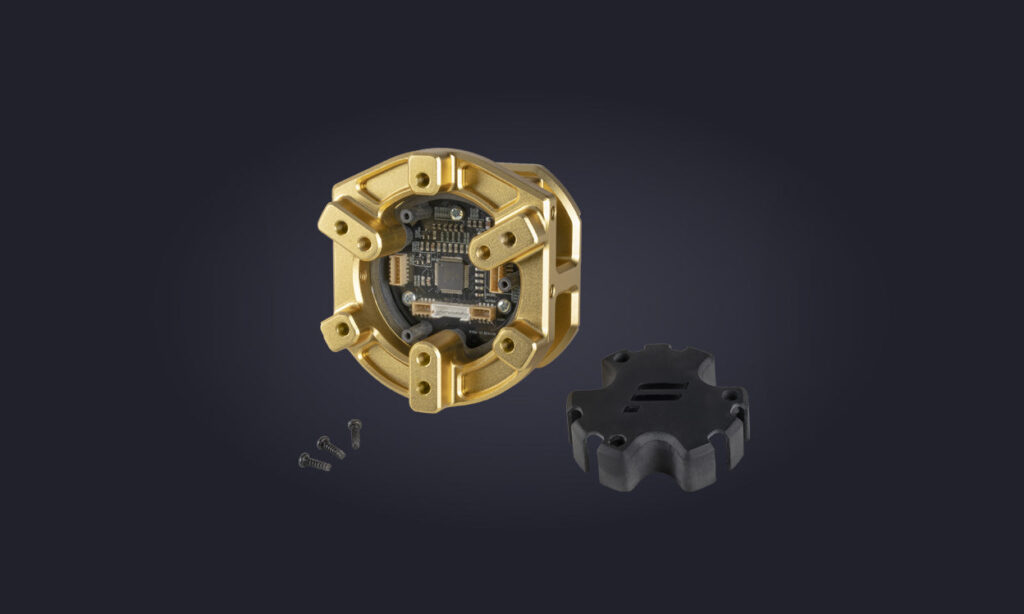
First impressions, initial verdict: this is a serious piece of equipment. The central body is machined from a single block of anodized aluminum, featuring a gold finish that may seem controversial at first glance but ultimately wins you over once it’s assembled. The open-frame structure—what Fanatec calls its “space frame”—encloses the electronics while keeping the weight down. The result: the unit is solid without being heavy, lighter than its appearance might suggest, thanks to its hollow construction. The edges are sharp, the surfaces are clean, and there are no assembly flaws to be found. It’s the kind of finish that justifies the “Podium” label—the brand’s top-of-the-line series.
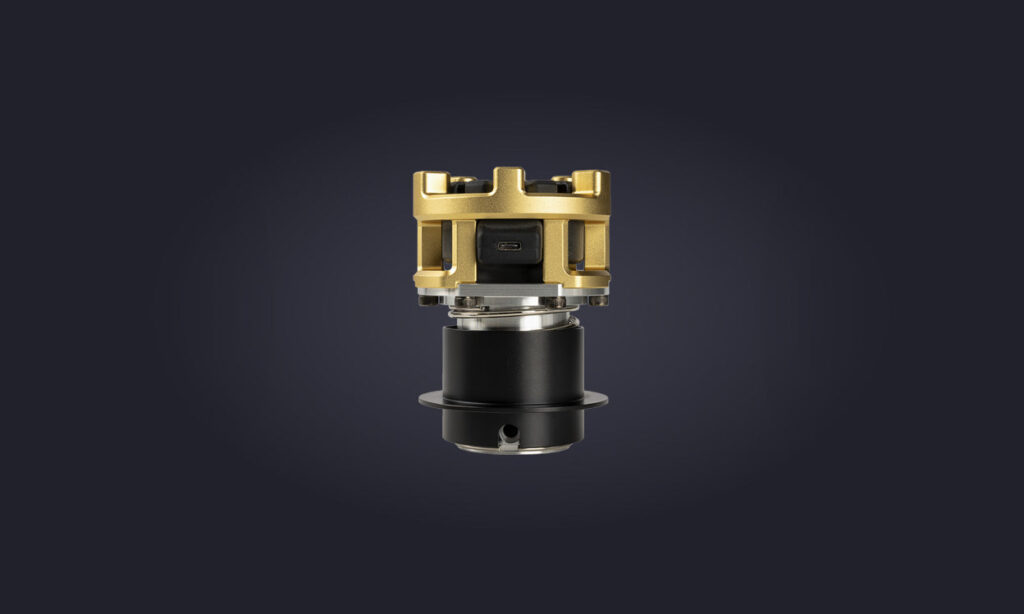
The current version comes with the QR2 quick-release mechanism on the steering wheel side, made entirely of aluminum. The first batches were released with the QR1, and the switch to the QR2 is a game-changer in terms of locking strength—it snaps into place without any play whatsoever. Inside the box, you’ll find the hub, this QR2 on the handlebar side, a small 2 mm Allen wrench, a security screw, and a quick-start guide.
Assembly: a blend of the joy of tinkering and meticulous attention to detail
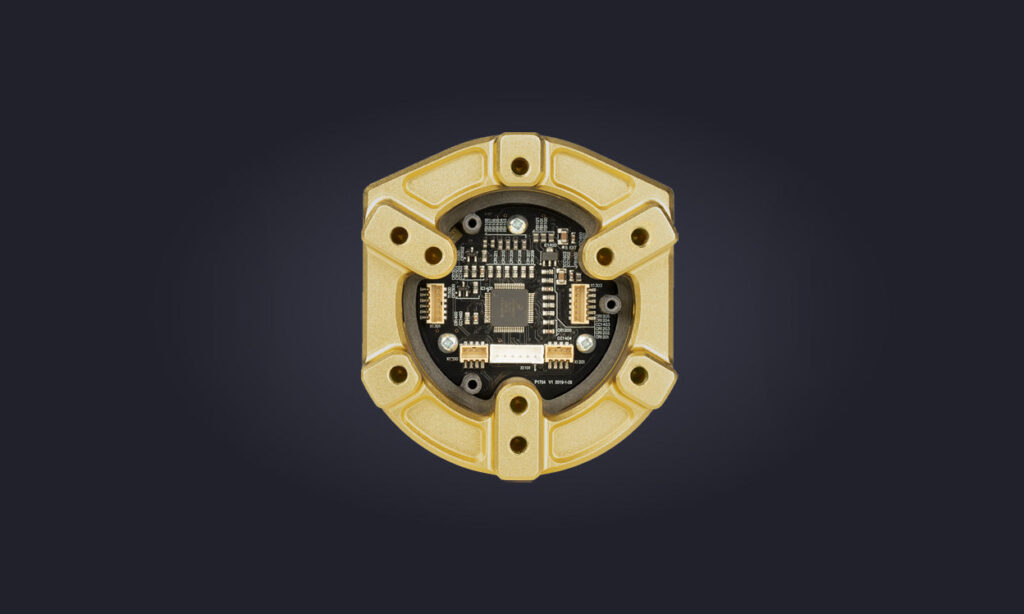
Installing the Podium Hub is a bit of a ritual. The order matters: first, attach the QR2 to the steering wheel, then connect any modules (magnetic paddles, button clusters) before closing the cover, and only then do you attach the rim. Depending on the complexity of your setup, expect it to take anywhere from five minutes for a simple installation to a good half-hour if you’re stacking paddles and button modules.
The only real annoyance comes when bolting on the rim. The bolts are short, space is tight, and you’ll find yourself using tweezers to position each bolt before tightening it with the 8 mm wrench. We’d describe the process as fiddly rather than difficult: nothing insurmountable, but it’s best not to be in a hurry the first time. On the plus side, however, many third-party steering wheels designed for this purpose (we tested this with a Cube Controls model) come with short screws that are just the right length, which makes the process much easier.
On the Road: The Stiffness You Feel Behind the Wheel
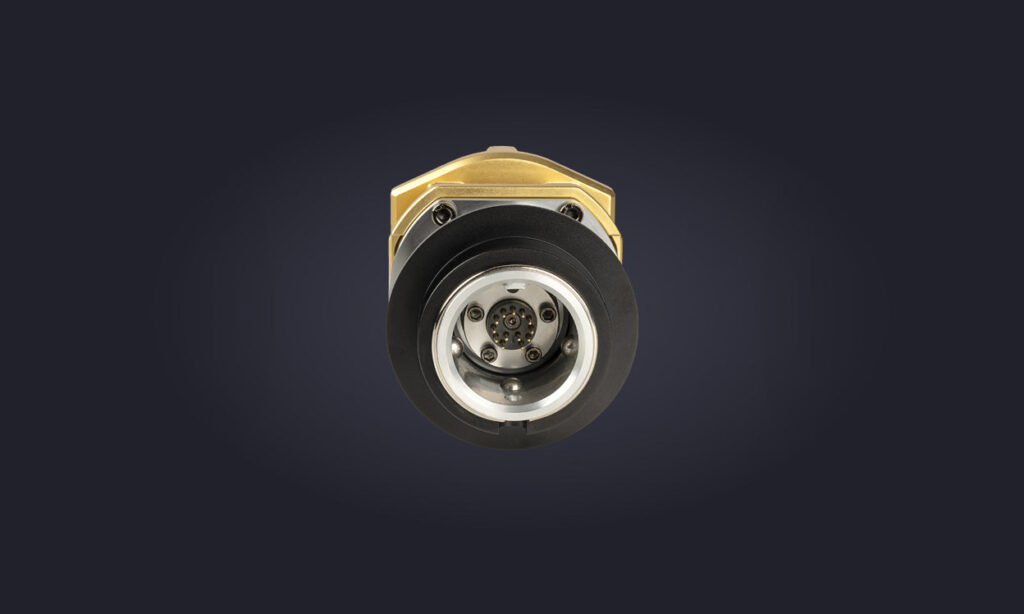
Once the hoop is in place, what stands out is the total absence of play in the chain. The hub adds no unwanted flexibility between the base and the steering wheel, and that’s exactly what you’d expect from a component positioned so close to the torque. On a powerful chassis like a DD1 or a ClubSport DD, you maintain that crisp, direct feel: every time the car regains traction, every small correction coming out of a turn is transmitted to the steering wheel without any filtering or wobble. The QR2 locking mechanism plays a big part in this; it doesn’t budge an inch even when you’re really pushing the force feedback to its limits.
Another feature we appreciate in use: the quick-release mechanism makes changing the steering wheel a matter of seconds. Once the QR2 is in place, switching from a Formula steering wheel to a GT steering wheel no longer requires any tools—just unlock, swap, and relock. For those who like to switch between disciplines, the Podium Hub becomes the central hub of a truly modular system.
Keep in mind, however, that the hub adds a little length to the assembly. By fitting between the components, it pushes the rim back a few centimeters compared to a very thin third-party hub. During our long sessions, this isn’t a deal-breaker, but if your riding position is already fine-tuned to the millimeter, plan to slightly readjust the setback of the seat post or saddle. A single turn of the adjustment screw won’t be enough.
Pads, buttons, and modules: what you can attach to them
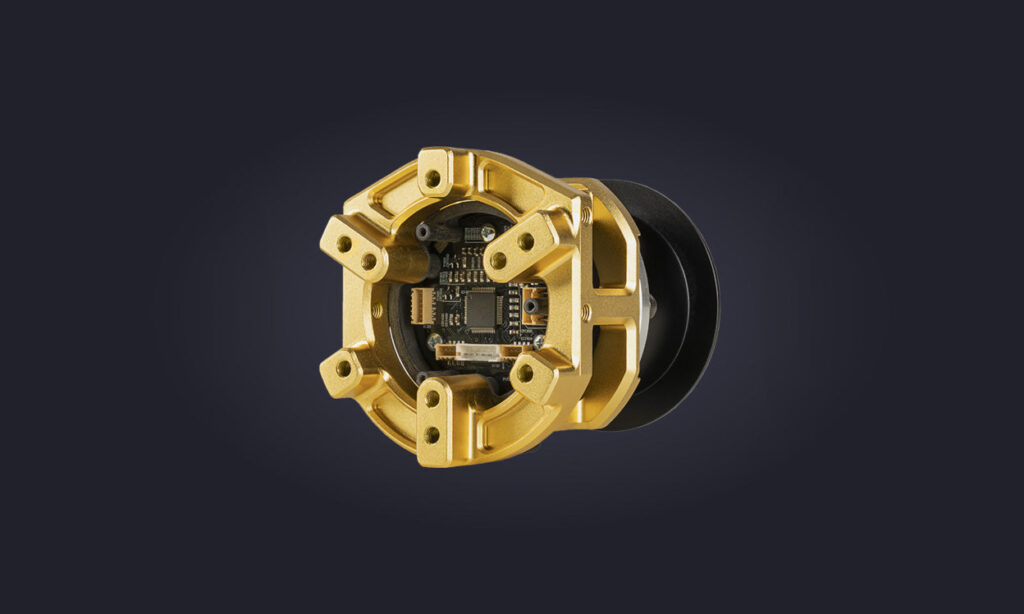
On the electronics side, the Podium Hub emphasizes modularity—to a certain extent. It features a dedicated ARM processor, receives firmware updates, and supports ten buttons and two 16-bit analog inputs. It offers two connectors for the Podium Advanced Paddle Module, allowing you to connect two clusters of buttons, and a DataPort-C port for adding modules or a display. This allows you to add ClubSport magnetic paddles, the Podium Button Module (Endurance or Rally), or the ClubSport cluster pack.
That’s where the Podium Hub truly stands: it’s more stripped-down than a ClubSport Universal Hub. It has no built-in rotary encoder, fewer stackable button modules, and access to the tuning menu is available either through PC software or via an added button module. Without a module connected, you can acknowledge high-torque warnings simply by holding the steering wheel at a 90-degree angle. It’s worth noting that the DataPort-C does not support USB devices. For those who want to connect a genuine third-party steering wheel with its own display and buttons, the only other option is the coiled USB cable connected directly to the PC.
Bases and Platforms: Who Are They Really For?
The Podium Hub is compatible with a wide range of Fanatec bases: the Podium DD1 and DD2, the DD1 PS4, the ClubSport DD and DD+, the CSL DD, the Gran Turismo DD Pro, as well as the ClubSport V2 and V2.5 and the CSL Elite (with limited access to the tuning menu on some models). It’s therefore a great companion for both high-end direct-drive models and more affordable bases.
The most important thing to check before making a purchase is the platform. The Podium Hub performs at its best on a Windows PC. It’s not compatible with Xbox—a detail that could end up costing you dearly if you overlook it. On PlayStation, functionality may be limited on PS4 depending on the console, while full compatibility is available on PS5. In other words, it’s primarily an accessory for PC sim racers, and that’s where it really shines. The three-year warranty provides real peace of mind for a component you’ll keep for years.





Reviews