
Fanatec Podium Wheel Base DD1 QR2 : Test & Reviews | What it's really worth in 2026

Fanatec Podium Wheel Base DD1 QR2 : My opinion in brief
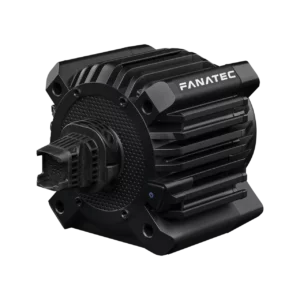
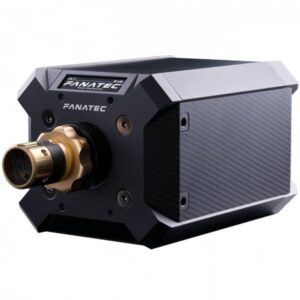
The Podium Wheel Base DD1 QR2 is Fanatec’s top-of-the-line direct-drive wheel base, featuring 20 Nm of torque and built-in electronics that have established it as the first truly plug-and-play direct-drive wheel base. It features a proprietary servomotor with very low ripple, an OLED display for in-game adjustments, and a billet-machined QR2 quick-release mount. On the track, it delivers precise and powerful force feedback, with a level of detail on par with the DD2. Compatible with PC and Xbox (when used with a licensed Xbox steering wheel), it’s designed for drivers who want direct drive without compromise.
When you buy through our links, we may earn an affiliate commission.
What We Liked
- 20 Nm of torque with strong performance across the entire operating range
- Level of detail comparable to the DD2; very clean sound after the firmware update
- Made entirely of aluminum and featuring a QR2 quick-release mechanism with absolutely no play
- Truly plug-and-play, with built-in electronics and no external enclosure
- OLED display for adjustments while driving and comprehensive Fanalab software
- FullForce for immersive filter effects on compatible tracks
- Discreet cooling, ideal for long gaming sessions
Reserves
- No PlayStation compatibility, and cannot be unlocked
- Fanalab is very feature-rich but has a steep learning curve at first
- Slightly less gross reserve than the DD2 in extreme scenarios
- Premium positioning compared to certain PC-only rivals
- Xbox gameplay requires an Xbox-licensed steering wheel
Technical Specifications
| Type | Direct-drive base |
| Maximum torque | 20 Nm |
| Holding torque | about 15 Nm |
| Engine | Custom-built outrunner servomotor with very low torque ripple |
| Screen | 2.7-inch OLED (256 x 64) |
| Quick-release fastener | QR2 base side (Type-M), CNC-machined solid aluminum |
| Rotation | 2520 degrees, electronically adjustable |
| Electronics | Built into the housing; no external control box |
| USB refresh rate | 1000 Hz |
| Chassis | All-aluminum, interchangeable brushed trim plates |
| FullForce | Yes (on compatible titles) |
| Software | Fanatec Fanalab |
| Compatibility | PC (all Fanatec steering wheels), Xbox One and Series X/S (Xbox-licensed steering wheel) |
| PlayStation | not compatible |
| In the box | base unit with QR2 preinstalled, torque wrench, quick start guide, power adapter (EU and UK plugs), USB cable |
The foundation that made direct drive simple
When you plug in the Podium Wheel Base DD1 QR2, one thing stands out immediately, even before you start a lap: there’s no external box to tuck away under your desk. All the electronics are housed inside the aluminum block, making this base one of the first to truly deserve the “plug-and-play” label in the world of direct drive. Just screw it in, plug in the power supply and the USB cable, clip a steering wheel onto the QR2, and you’re good to go. For a machine capable of delivering 20 Nm of torque to your forearms, this ease of setup is truly impressive.
The DD1 QR2 is positioned at the top end of the Fanatec lineup, just below the DD2. It features the same all-aluminum chassis, the same display, and the same modern quick-release mount, but its maximum torque is capped at 20 Nm, whereas the DD2 reaches 25 Nm. In practice, this difference in numbers matters less than one might think, and that’s precisely what makes the DD1 so appealing.
20 Nm at your fingertips—what a difference it makes when cornering
The transition from a belt-driven system to this direct-drive setup is immediately noticeable. The first hard braking causes the weight transfer to kick in sharply, and as the front end begins to understeer, it results in a distinct lightening of the handlebars rather than a jumble of vibrations. When entering a turn, you can feel the point where the front end grips the road, followed by the increase in resistance as you load the tire. It’s this direct connection between the road and your wrists that makes you want to take another lap—and then another.
The 20 Nm peak torque provides ample control across the entire operating range. In practice, the holding torque is often around 15 Nm, which already leaves a comfortable margin before the signal saturates. In a single-seater or a tightly tuned GT, there’s still enough reserve to handle large speed bumps without the base hitting its limit. The only limitation becomes apparent in extreme, all-or-nothing scenarios, where the DD2 and its 25 Nm offer a touch more responsiveness. For the overwhelming majority of drivers, the DD1 already delivers more force than can realistically be utilized during long sessions.
Attention to detail—that's his true signature
Where the DD1 impresses the most isn’t in its power but in its finesse. The level of detail it conveys is on par with that of the DD2: you can feel the texture of the asphalt, the small undulations of the track, and the precise moment when the rear tire loses traction. After the firmware updates, the overall experience has become even smoother and more refined, with the rendering of micro-textures playing a major role in gauging traction.
We did not observe any cogging—that defect where the motor seems to jerk in steps at low speeds. The base remains smooth and consistent regardless of the diameter of the mounted steering wheel, from small formula-style wheels to large GT rims. This consistent performance throughout the entire rotation range—2,520 degrees, electronically adjustable—is what sets a good direct-drive base apart from a machine that’s simply powerful.
A block built to last
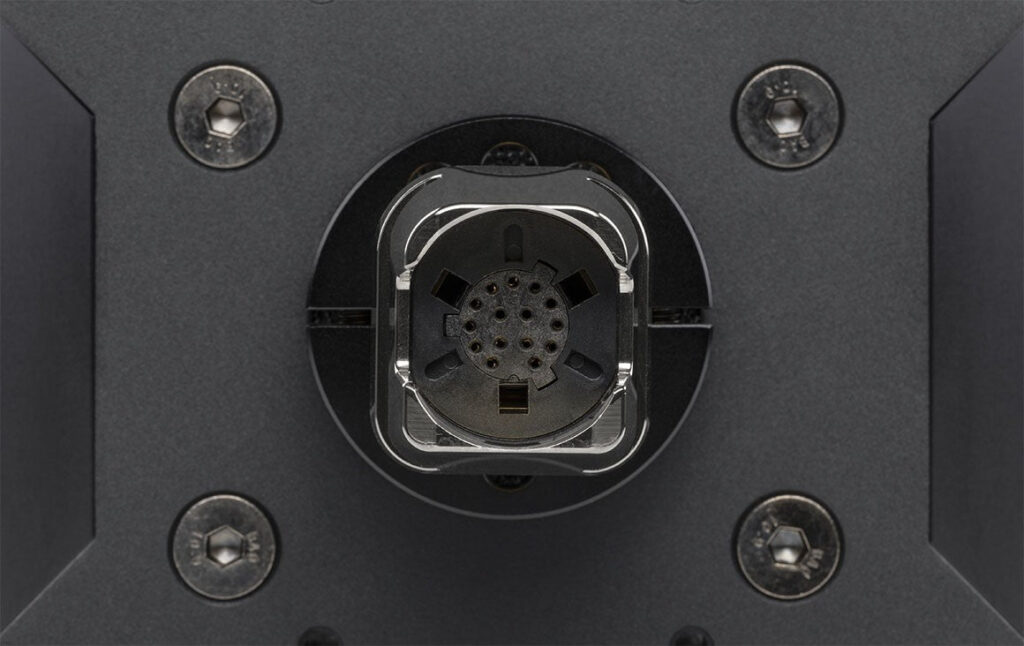
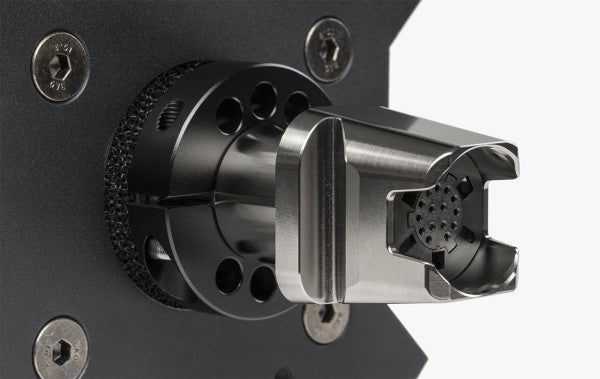
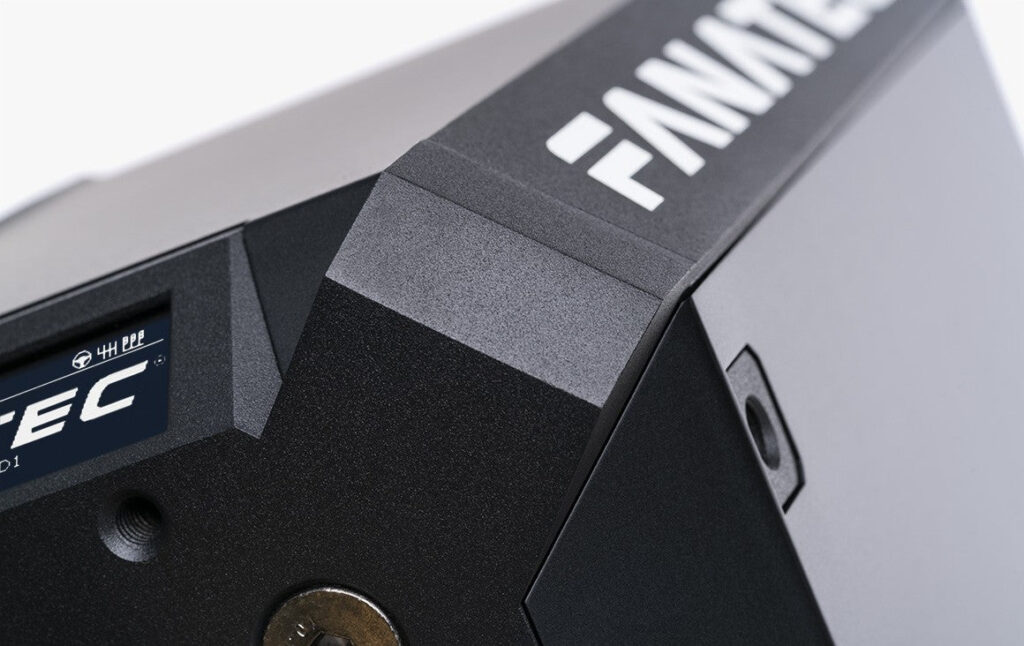
The build quality lives up to the product’s positioning. The all-aluminum housing exudes high-quality craftsmanship, with interchangeable brushed aluminum trim plates available for those who want to customize its look. The QR2 quick-release clamp on the base, machined from a solid block of billet aluminum, has no perceptible play: the steering wheel is anchored as if it were an integral part of the base, with absolutely no wobble when re-centered. This represents a real gain in precision compared to older quick-release clamps.
As for noise, the cooling fans remain quiet during normal use, and the base handles long sessions without a hitch. You can string together endurance runs without feeling the haptic feedback weaken due to heat.
OLED Screen and Fanalab: Adjust Settings Without Leaving Your Seat
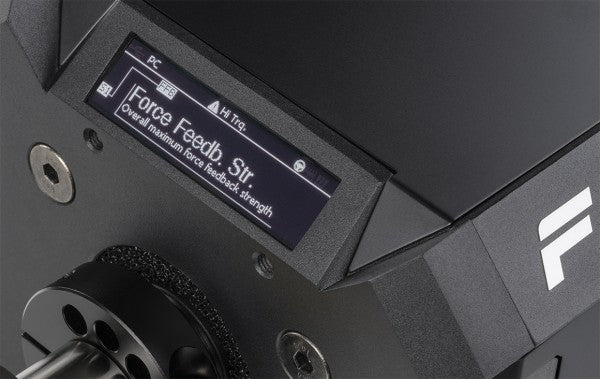
The 2.7-inch OLED screen built into the base isn't just a gimmick. It provides access to the settings menu directly while driving, allowing you to adjust force, damping, or sensitivity between turns without taking your hands off the wheel or exiting the software. It can also display real-time engine data and a telemetry mode for those who like to keep an eye on what’s happening under the hood.
To take it a step further, Fanalab offers a level of customization that few competitors can match. The community has built a massive library of ready-to-use profiles, organized by game, which saves valuable time when getting started. You’ll need to get used to a learning curve at first, since the tool is feature-rich, but it’s often this depth of functionality that explains the loyalty of the brand’s regular users.
FullForce: Take Immersion to the Next Level
On compatible titles, FullForce technology adds a layer of filtered effects directly to the force feedback: ABS pulses under the brake pedal, engine vibrations, and surface reactions. When balanced just right, this enriches the driving experience without interfering with the core feel. For non-compatible games, the base functions as an excellent classic direct-drive controller, without losing any of its precision.
Trading Platforms: Be Sure to Check Carefully Before Buying
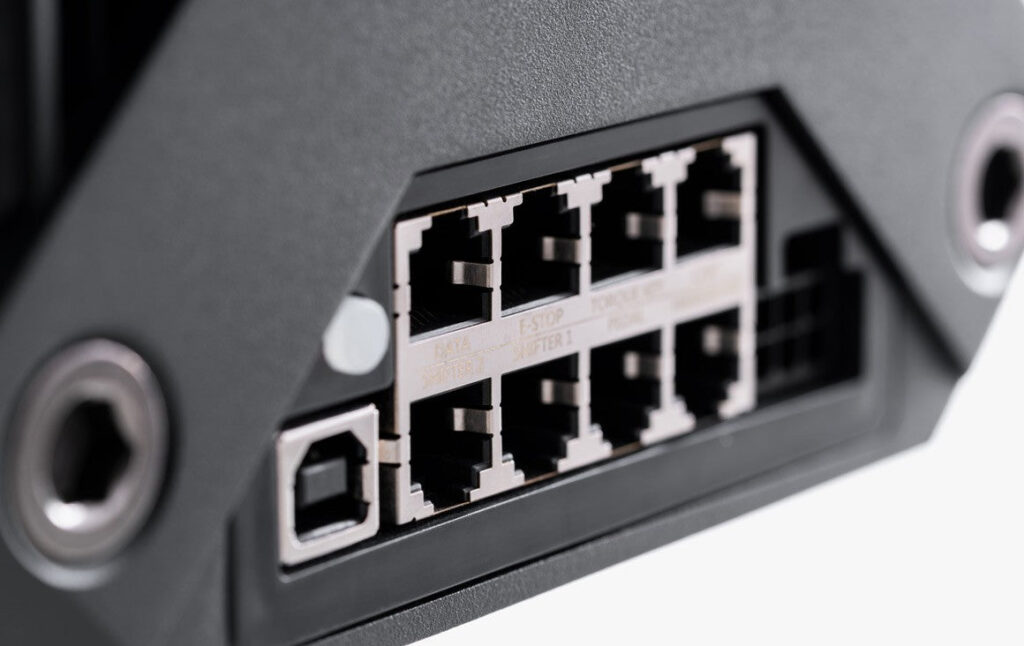
This is the key point you shouldn’t miss. This Podium DD1 QR2 is PC-compatible with all Fanatec steering wheels, and compatible with Xbox One as well as Xbox Series X and S, provided you pair it with an Xbox-licensed steering wheel. However, it is not compatible with PlayStation consoles, and there is no way to make it work with them. If you plan to play on a PS4 or PS5, you’ll need to look elsewhere in the lineup. For PC or Xbox gamers, on the other hand, integration into the QR2 ecosystem is seamless and comfortable.
For whom, and to what extent?
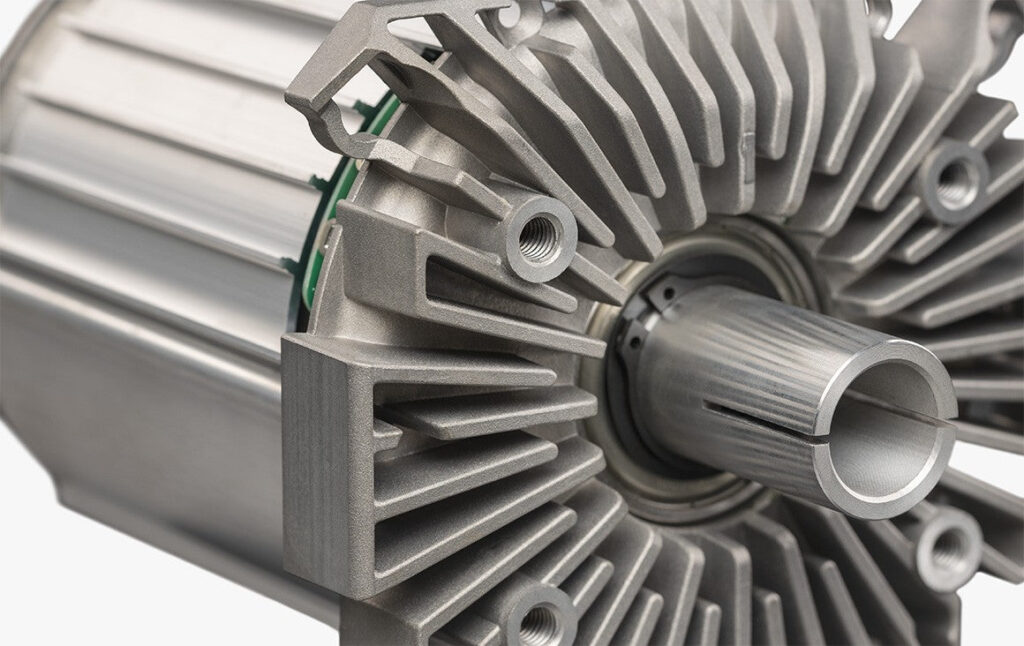
The DD1 QR2 is designed for PC or Xbox gamers who want a top-of-the-line direct-drive base that will last for years and accommodate a gradual upgrade to higher-end steering wheels and pedals. It offers Fanatec’s top-of-the-line attention to detail, impeccable craftsmanship, and more than enough torque to drive fast and smoothly. Those seeking maximum raw power for off-road driving or the most extreme setups might consider the DD2, but they’ll pay more for extra power that few actually use to its full potential. For everyone else, the DD1 remains one of the best entry points into the very high-end market.


Reviews