
McLaren Artura Ultimate-USB - Ascher : Test & Review | What it's really worth in 2026
McLaren Artura Ultimate-USB - Ascher : My opinion in brief
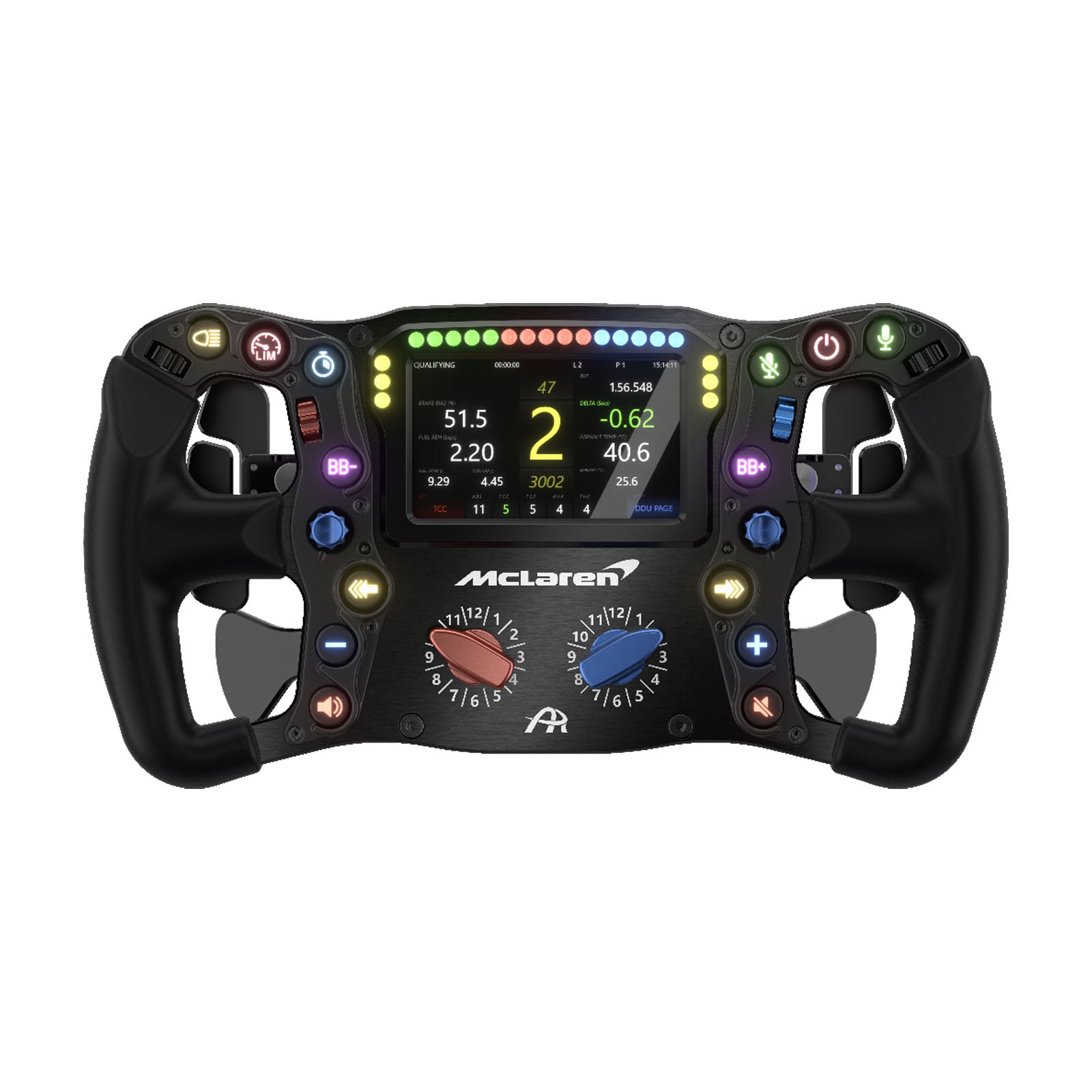
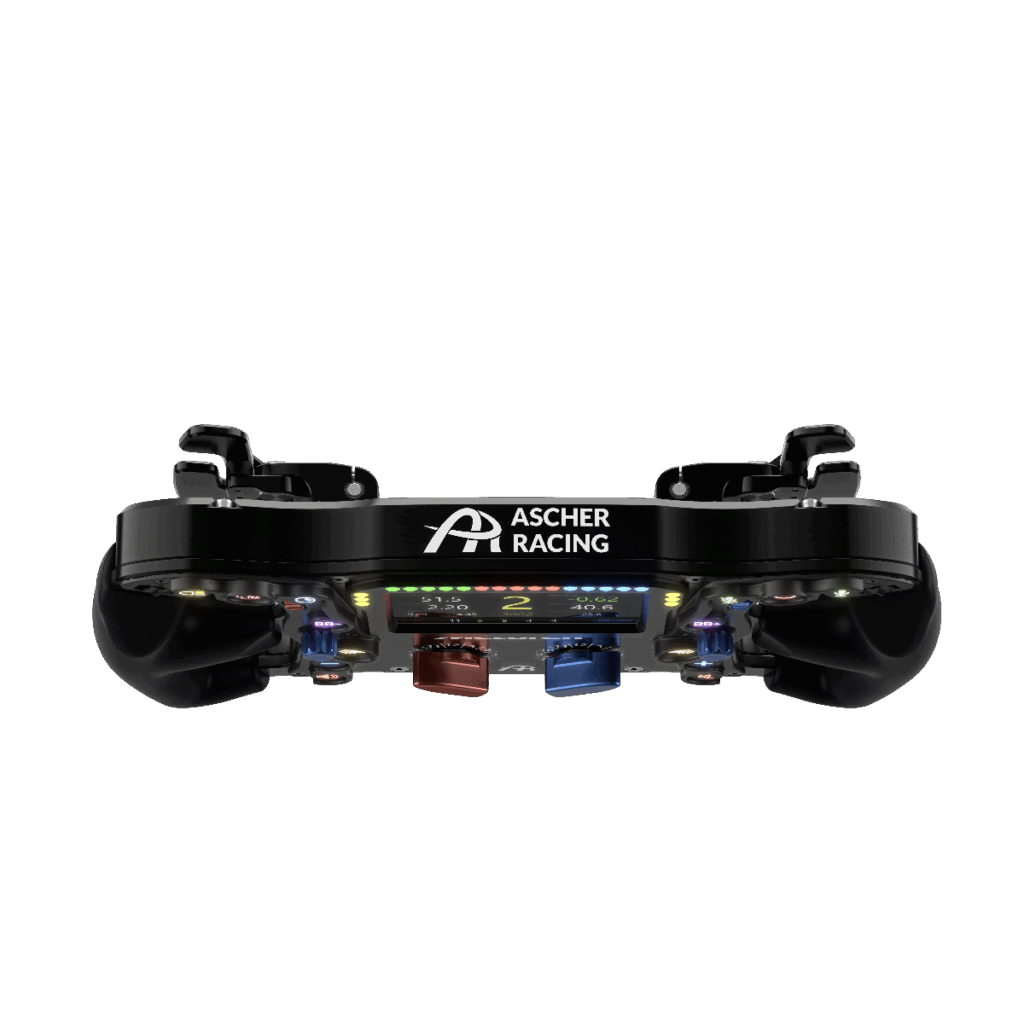
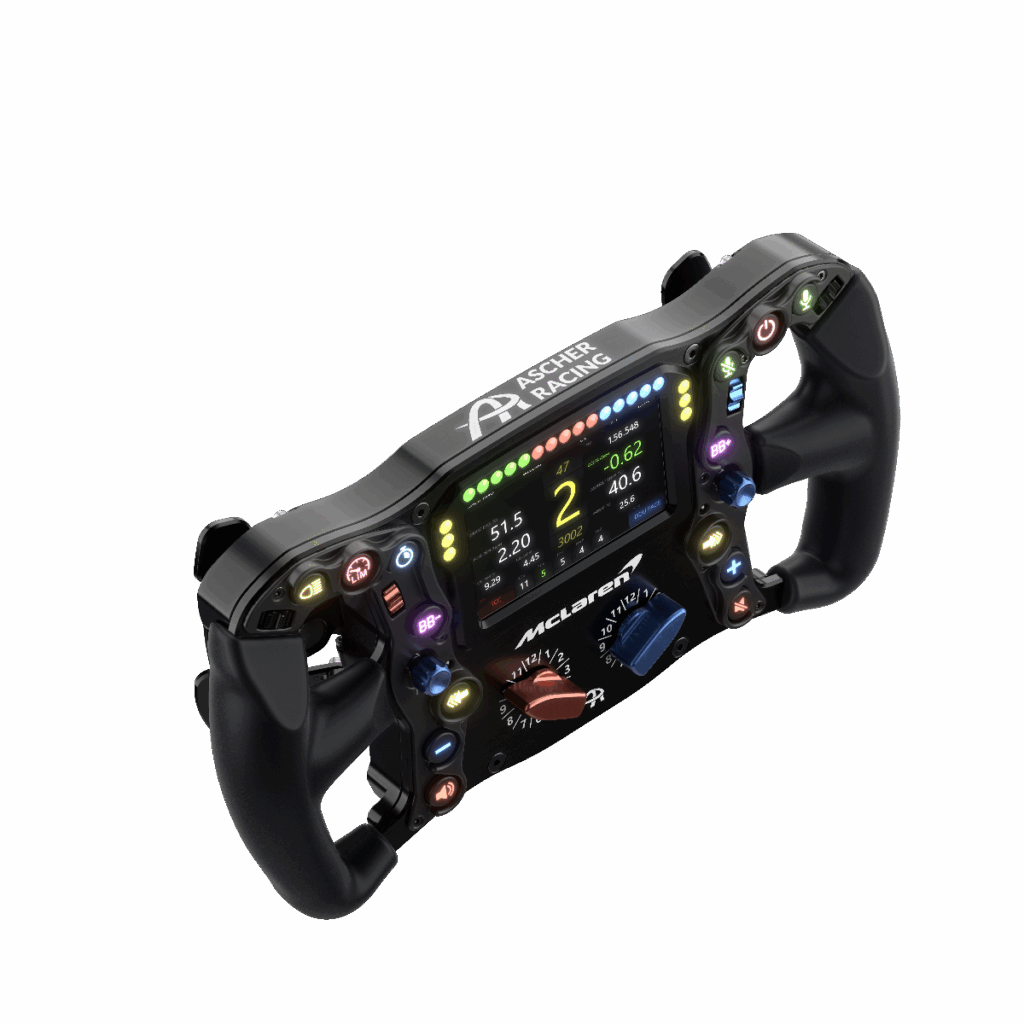
Ascher Racing’s McLaren Artura Ultimate-USB uses components from the genuine Artura GT4 racing wheel and integrates them into our force-feedback bases. It features a built-in 4-inch display, silent magnetic paddles, an adjustable slip point clutch, and impeccable machined aluminum construction. A high-end steering wheel designed for GT and endurance racing, connected to a PC via USB.
When you buy through our links, we may earn an affiliate commission.
What We Liked
- Flawless machined aluminum construction, zero flex
- Quiet, short, and predictable magnetic palettes
- Built-in 4-inch display plus 21 easy-to-read shift LEDs
- Clutch with adjustable slip point on the rim
- Components taken from the actual Artura GT4 steering wheel
- Compatible with virtually all bases via QR adapters
Reserves
- Very high price, at the very top of the market
- Software that requires a learning curve
- USB steering wheel for PC only; not for consoles
Technical Specifications
| Diameter | 300 mm |
| Mounting | 6 x 70 mm |
| Screen | 4-inch high-resolution |
| Shift lights | 21 RGB LEDs |
| Buttons | 14 RGB buttons (16 million colors) |
| Report Ranges | silent double magnetic blades |
| Clutch | paddles with slip point adjustment |
| Encoders | 4 encoders per inch |
| Rotary | 2 rotary units with 12 positions |
| Joysticks | 2 7-way joysticks |
| Connection | USB (industrial connector, shielded cable) |
| Consumption | 500 mA max |
| Weight | about 1,520 g |
| Compatibility | PC via USB and SimHub; Simucube, Fanatec, Asetek, Simagic, MOZA, VRS, and 70 mm bases |
| Technical Basis | Components of the official McLaren Artura GT4 steering wheel |
The McLaren GT4 mounted on our base
We’ve rarely held a steering wheel that so openly embraces its racing heritage. The Artura Ultimate uses the same components as the official McLaren Artura GT4 steering wheel, and you can tell as soon as you take it out of its mount. The CNC-machined, anodized aluminum shell doesn’t wobble or creak, and feels more like a tool of the trade than a flashy gadget. Plugged into our base via USB, it instantly transforms the experience: you’re no longer just driving an accessory—you’re gripping a real GT cockpit.
Craftsmanship that never compromises
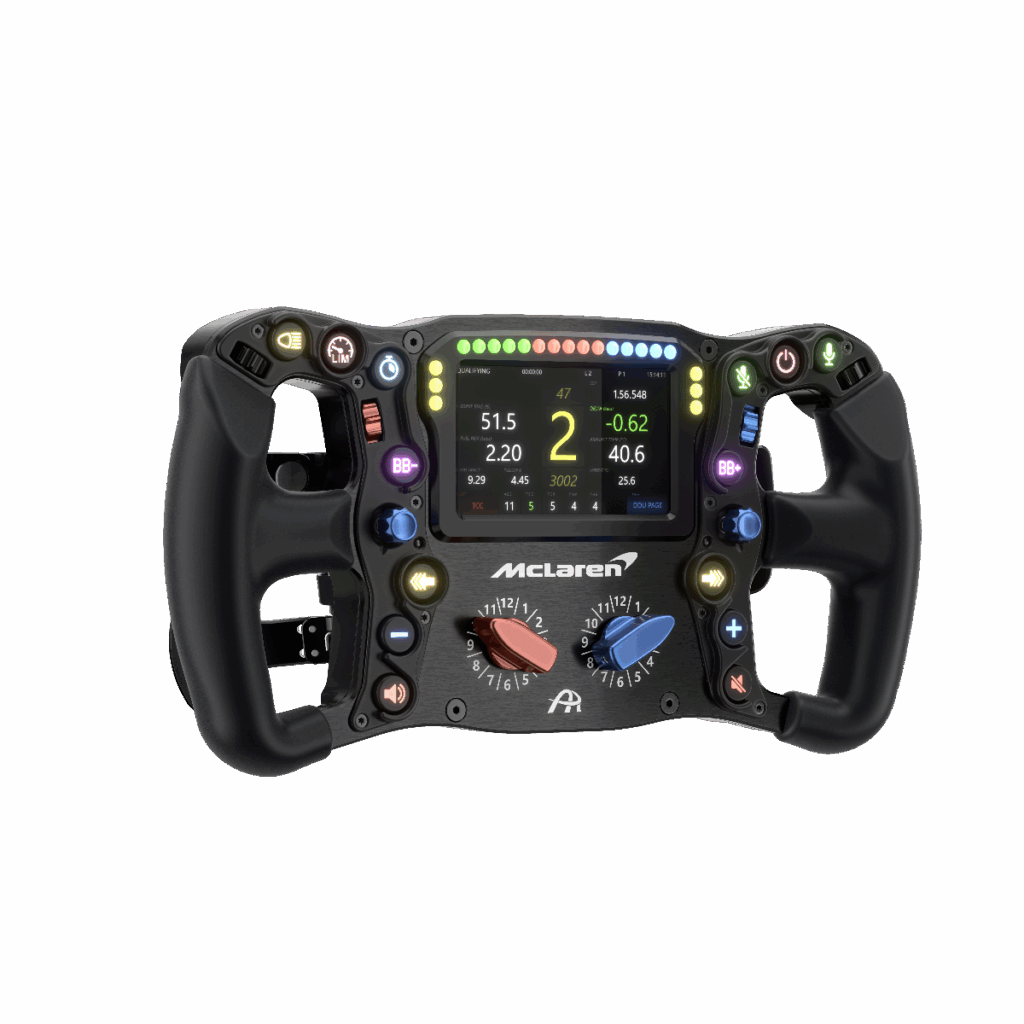
The first touch confirms the ergonomics. The rubber grips, redesigned from previous generations, fit naturally in the palms and position the thumb just right. Nothing wobbles: even when deliberately pushing and pulling the rim with maximum force, there is no play or flex. The automotive-grade push buttons offer a distinct resistance that prevents accidental presses, and the laser-engraved, interchangeable caps give it a genuine cockpit-style finish.
Magnetic paddles and the clutch: pure pleasure
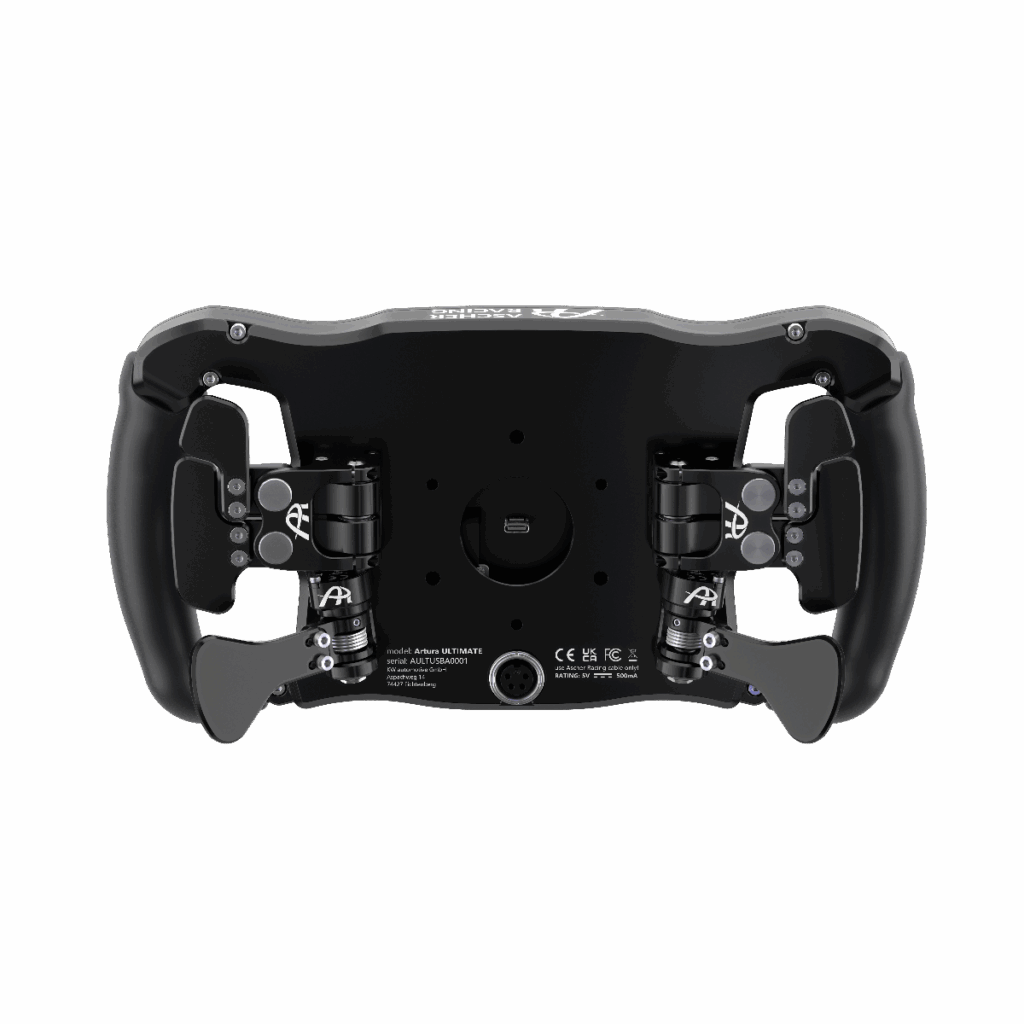
That’s where the Artura really won us over. The silent dual magnetic shift paddles deliver a short, smooth, and perfectly predictable shift travel, with a gentle stop that provides a sense of certainty with every gear change. When accelerating, you can shift up through the gears without ever worrying about a mis-shift, and when braking hard into a tight corner, you can keep a firm grip without triggering any unintended input. The clutch paddles, with their slip point adjustment accessible directly on the rim, make standing starts clean and repeatable once the bite point is set.
The 4-inch screen and the density of controls
The high-resolution 4-inch screen isn't just for show. Controlled via SimHub, it displays useful telemetry, speed, gear selection, and lap time, while the 21 RGB LEDs in the top strip signal gear shifts with enough precision that you can keep your eyes on the track as much as possible. Surrounding it, the control layout is comprehensive: 14 RGB backlit buttons, two 12-position rotary controls for adjusting traction control and brake balance on the fly, four thumb encoders for navigating menus, and two seven-way mini-sticks. During an endurance race, everything is right at your fingertips without having to let go of the steering wheel.
Long sessions and track performance
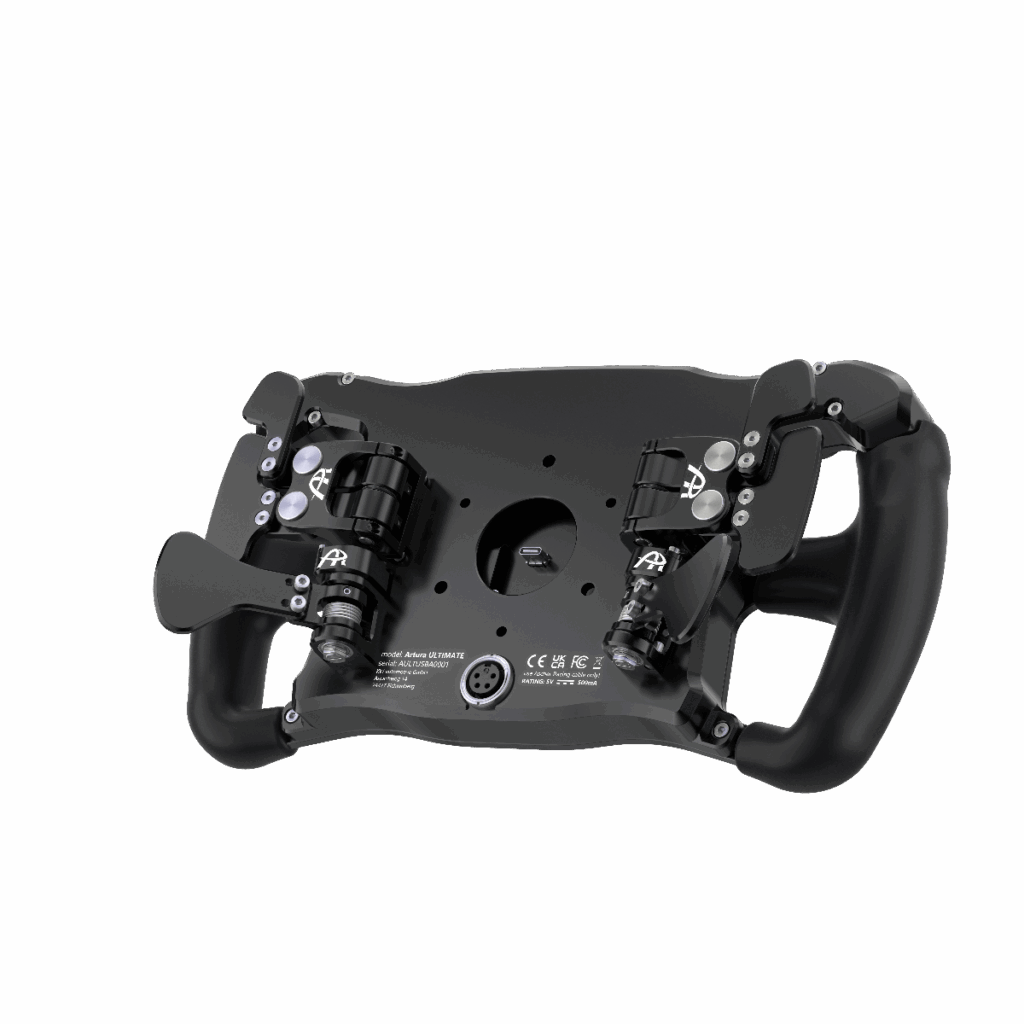
Over time, the ergonomics live up to their promise. The grips don’t cause premature fatigue and allow the details of the force feedback to come through without smoothing them out. The 300-mm diameter suits both an aggressive riding style and a smooth, relaxed ride, and the rim remains perfectly neutral: it conveys exactly what the frame is doing without adding or masking anything. After several stints, it’s the consistency that stands out—no controls go out of adjustment, and nothing develops play.
Connectivity, Software, and Compatibility
The USB version connects via a shielded cable with an industrial connector and functions as a single device on the PC side, without adding extra cables. The Ascher Control Center provides precise control over the encoders and rotary modes, while SimHub controls the display and LEDs. The factory settings work right out of the box, but the system offers extensive customization options for those who like to have full control. As for mounting, the quick-release adapters support Simucube, Fanatec, Asetek, Simagic, MOZA, VRS, and the 70 mm standard, making the steering wheel interchangeable between different mounts. Note: This is a USB steering wheel for PC, not a console peripheral.
Who, exactly?
The Artura Ultimate is clearly aimed at the demanding GT and endurance driver who wants a comprehensive, reliable cockpit that faithfully replicates the racing experience. Its price puts it at the very top of the market, and the software takes some time to get used to, but the build quality, paddles, and display justify its high aspirations. If you’re looking for a setup that never compromises on durability and feel, this one checks all the boxes.
Frequently Asked Questions
Which sim racing wheel should you choose if you're just starting out?
Direct drive or belt drive: What's the difference?
Does this hardware work on PS5 and Xbox?
Do you need a cockpit to get off to a good start?
How much should I budget for a good setup?
Other Reviews & Testimonials
-
Fanatec ClubSport Steering Wheel Flat 1 V2
-
Fanatec ClubSport Steering Wheel GT Alcantara V2
-
Fanatec ClubSport Steering Wheel Formula V2.5
-
Fanatec ClubSport Steering Wheel F1 Esports V2
-
Ascher Racing F28-SC V2
-
Fanatec ClubSport Steering Wheel Porsche 911 GT3 R V2 for Xbox (Suede)
-
Fanatec ClubSport Drift V2
-
Fanatec ClubSport Steering Wheel 320 Xbox



Reviews