
Simlab GT1 Evo : Test & Review | What it's really worth in 2026
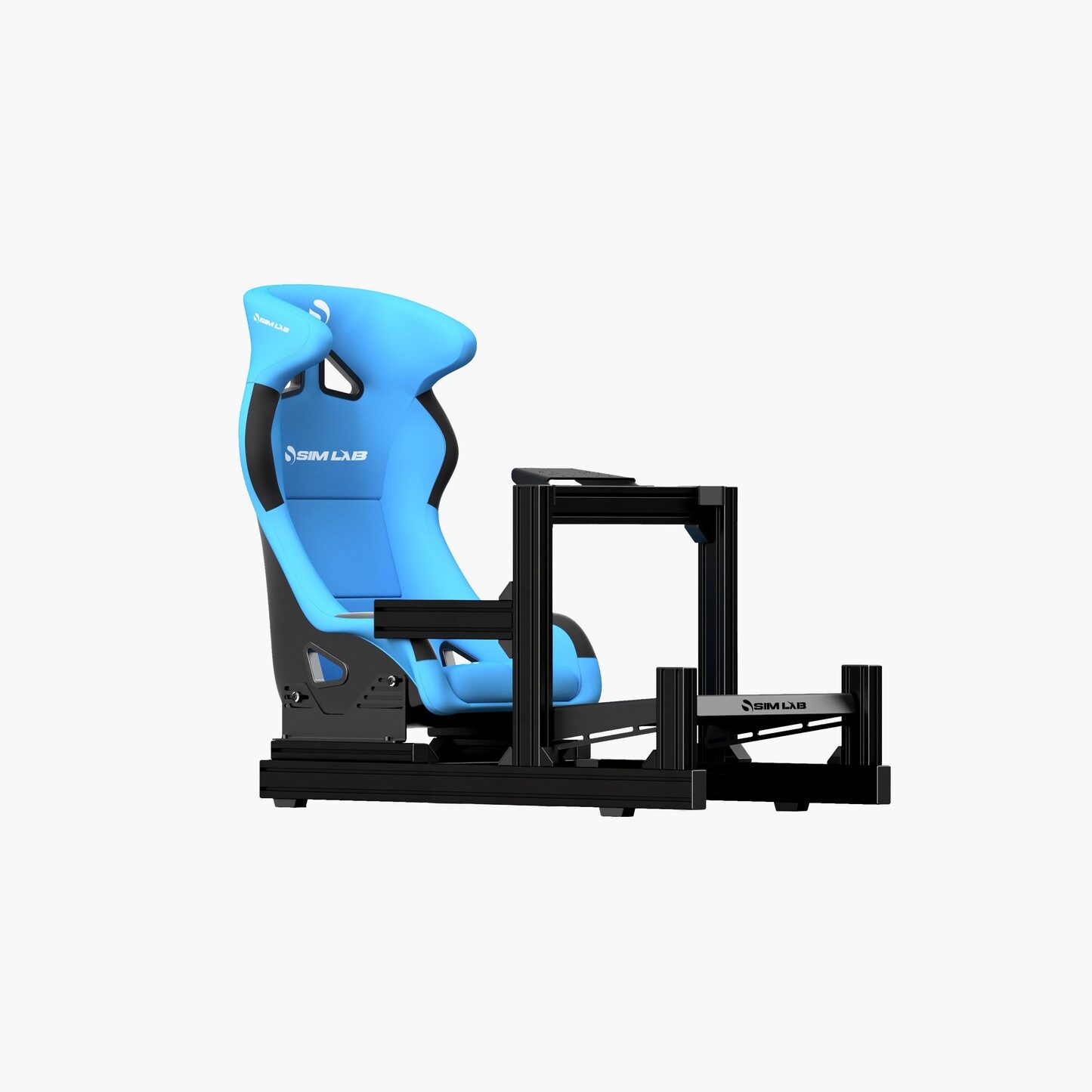
Simlab GT1 Evo: My quick review
The GT1 Evo gave me the feeling of turning a "decent" setup into a really solid, stable base that disappears as you ride. It makes sense for motivated simracers (intermediate to advanced) who want a durable, Direct Drive-ready chassis, without upgrading to the very high-end. The investment makes sense in the long term.
When you buy through our links, we may earn an affiliate commission.
In the world of streamlined aluminum cockpits, the Sim-Lab GT1 Evo has become something of a "reasonable" benchmark. It's not an overpriced ultra-high-end monster, but clearly more of a simple entry-level chassis. It's aimed at the heart of serious simracing: powerful Direct Drive bases, load cell or hydraulic cranksets, and users who want something clean, rigid and upgradeable.
On paper, the GT1 Evo promises an 8020 aluminum profile chassis, rigid enough to accept bases up to already hefty forces, with a versatile GT position, plenty of adjustability and "logical" assembly for this type of product. It's attractive because it often represents the first "real" solid cockpit after folding stands or lightweight tubular structures.
My angle here is simple: real rigidity, positional comfort, ease of adjustment and the ability to handle a real Direct Drive and a beefy crankset without vibrating or twisting. In short: does the GT1 Evo really hold up in everyday use, or is it just another aluminum profile in the middle of the current range?
Design and manufacturing
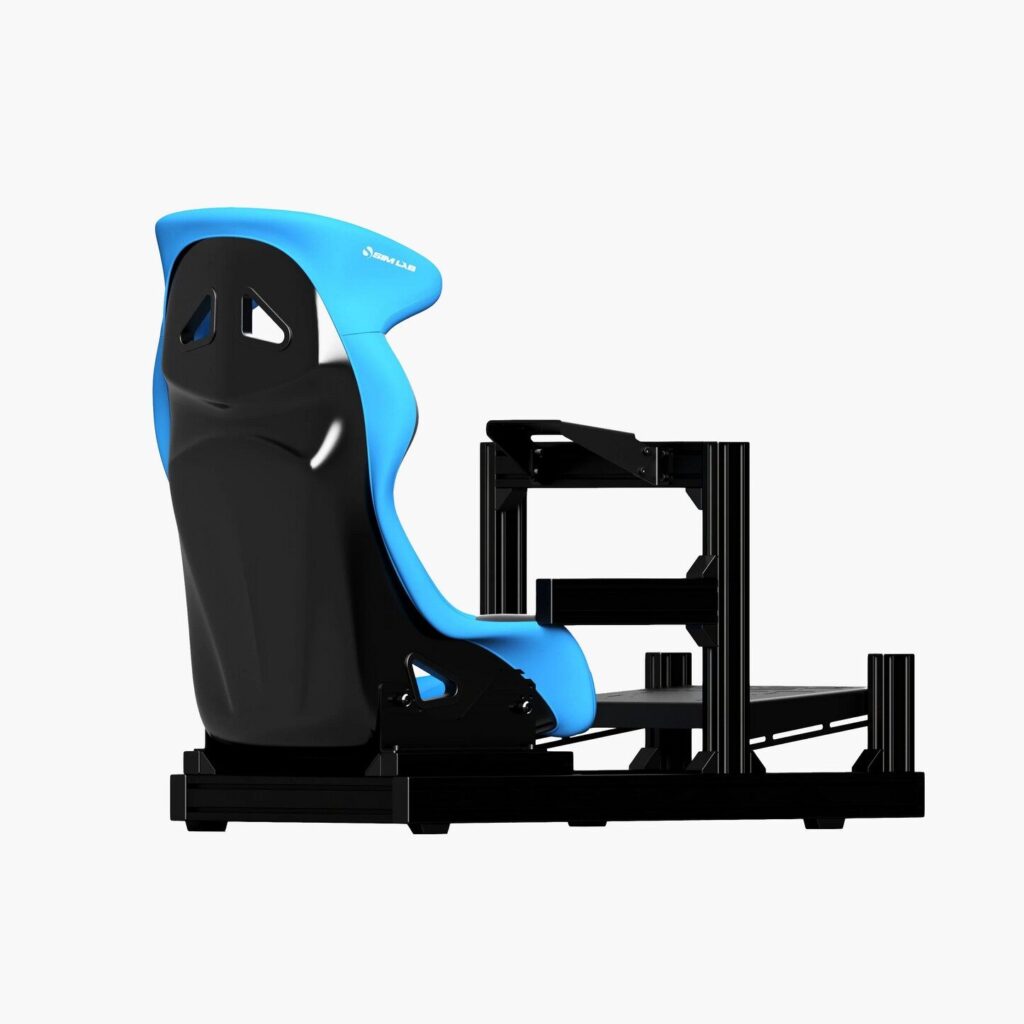
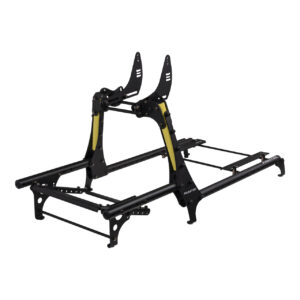
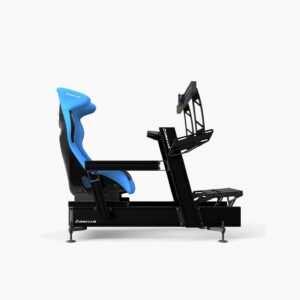
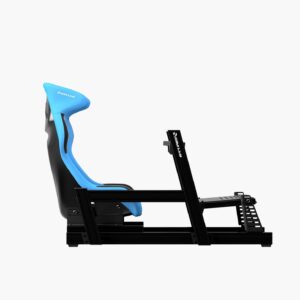
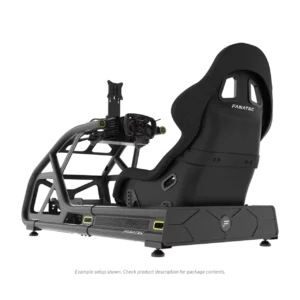
Visually, the GT1 Evo exudes seriousness: anodized aluminum extrusions, generous cross-sections, abundant screws and bolts, thick plates in all the right places. In hand, the bars give the impression of density and precision machining that you'd expect from a proper aluminum cockpit. The edges are clean, the drillings fall out well overall, and it's easy to see that this is no toy.
Once mounted, what's striking is the overall rigidity of the frame. The Direct Drive chainstay is ready to go, and it hardly flinches at all. The bottom bracket stays firmly in place, and the steering column (or front frame, depending on configuration) doesn't start pumping with every aggressive correction. You can feel that the architecture has been designed to withstand fairly high lateral and longitudinal stresses.
The finish remains more "industrial chic" than salon design. This isn't luxury furniture, it's technical profile. Up close, you can see the screw heads, the brackets and the grooves. For me, it fits perfectly with its purpose: it's a tool, not a work of art. The support plates (seat, steering wheel, pedals) inspire confidence, with their reassuring thickness and multiple fastenings.
This can be a little disappointing: a few small gaps are possible if you don't tighten everything methodically, and a tolerance that sometimes requires you to adjust angles a little, play with the brackets or re-align. There's no escaping the "meccano" aspect of aluminum profiles. Compared to some pre-assembled tubular frames, the GT1 Evo requires a little more care, but in exchange, you clearly gain in solidity and upgradability.
Compared with other aluminum cockpits in the same segment, it's at the top of the range in terms of rigidity once correctly assembled. We're not on the level of a huge oversized chassis designed for the most extreme bases, but for "GT / GT3 / prototype" use with a strong Direct Drive, the perceived quality is frankly very good.
Settings, customization and compatibility
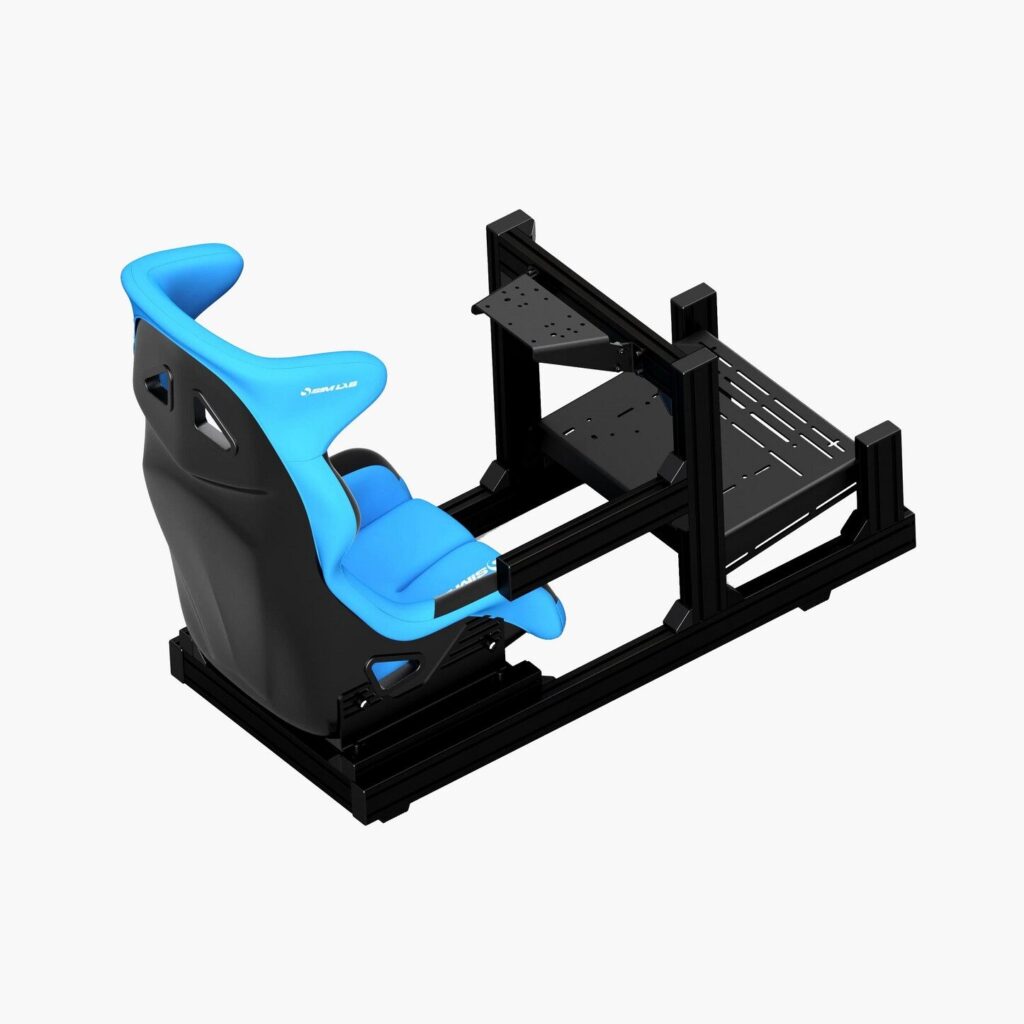
One of the great advantages of the GT1 Evo is the wide range of adjustment possibilities. The riding position can be adjusted to the nearest millimetre: frame length, steering wheel height, pedal tilt and distance, seat support adjustable in depth and sometimes in height, depending on the plate used. You can really adapt the setup to your morphology and style.
The adjustments that matter most in day-to-day use are easy to understand: move the crankset forward/backward, adjust the angle for heel-toe support, raise or lower the steering wheel base to simulate a low GT position or something more touring-style. Once you've grasped the logic of the profiles (grooves + hammer bolts), the learning curve is reasonable. You simply have to be willing to spend a little time on assembly and initial adjustments.
In terms of compatibility, the chassis is clearly designed for the PC first and foremost, but mechanically it accepts most of the steering wheel bases on the market, whether for PC or console. The real limit often comes from the steering wheel brands rather than the chassis itself. Holes and plates are designed for the big names in the industry, and the profiled aluminum always allows you to adapt or add a plate if necessary.
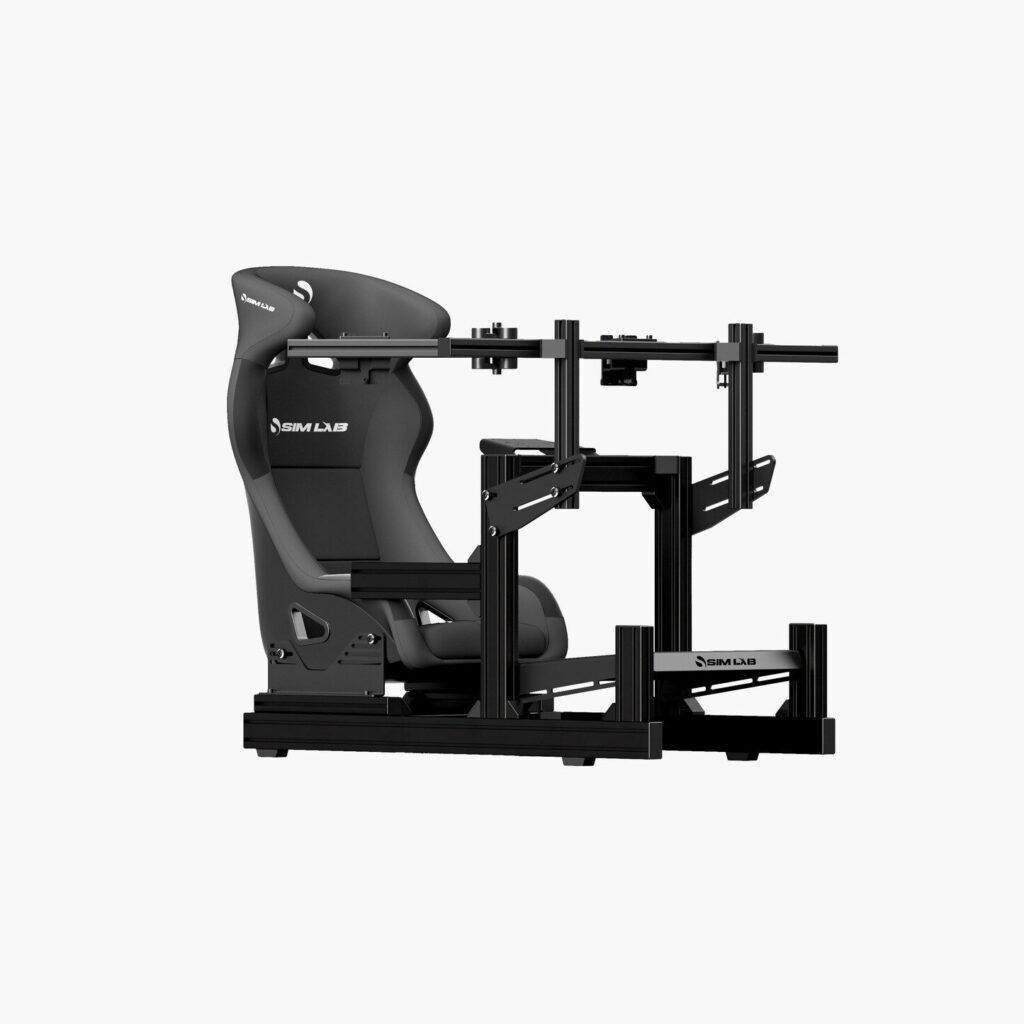
The same goes for cranksets: load cells, hydraulics, complete three-pedal cranksets - the structure can take it all in its stride. A shifter, handbrake, independent or frame-mounted screen support can also be fitted, depending on options. The Sim-Lab ecosystem provides a number of ready-to-install solutions, and the standard profile opens the door to accessories from other brands or homemade.
In terms of upgradeability, the GT1 Evo is a real long-term base. You can start with a mid-range base and a standard crankset, then move up the range without having to change cockpits. It feels more like a "serious" setup pivot than just a temporary entry point.
Sensations in play
It's one thing to have a beautiful aluminum cockpit, it's quite another to feel the difference on the track. On the GT1 Evo, the first thing that stands out is the stability of the control point. The steering wheel remains in the same place, with no lateral or vertical microflex. You can really lean on the base, physically, in fast corners, without perceiving any parasitic wobble.
With a Direct Drive, force feedback is as precise as ever. You can feel grip variations, small losses of grip at the front, and microcorrections become more natural because the chassis doesn't filter information by twisting. You immediately understand what the car is doing. Base reactions are "cleaner" than with a lightweight chassis that absorbs part of the energy.
The GT1 Evo handles slow bends, heavy steering and hard braking very well. The combination of rigid crankset and stable structure gives real confidence when modulating pressure. You don't have to fight against a receding or vibrating floorboard. Transfers simulated by the FFB are better absorbed, and the car feels "planted" on all four wheels.
On vibrators, this is where a shoddy cockpit usually gives itself away. Here, the vibrations remain in the steering wheel and possibly the crankset, but the frame doesn't jerk excessively. You can feel the aggressive vibrators, the softer edges and the gentle stalls. The frame serves as a neutral base, and that's exactly what we're looking for: it doesn't add its own parasitic feedback.
Over long sessions, the key is consistency. When the position is set correctly, you keep the same ergonomics lap after lap. No flying column that sinks, no pedals that play up. Fatigue comes from riding, not from struggling against an unstable installation. You also gain in mental comfort: you know that everything stays where you put it.
For quick corrections, such as catching up with oversteer on corner exits, the absence of perceptible flex gives an advantage. The arm immediately transmits the correction, the base responds, but the chassis doesn't "pump". It feels like a direct link between brain, hands and virtual tires. This is where the structure really comes into its own compared to a more basic cockpit.
Compared to a lightweight tubular frame or an entry-level steering wheel support, the gap is clear: you gain in precision, stability and confidence. Compared to an even more massive and more expensive aluminum cockpit, the difference is more extreme, with very high-power bases or ultra-hard cranksets. For predominantly GT/endurance/rally use with a standard or beefy DD chainstay, the GT1 Evo goes the distance without being humiliated.
In general immersion, being in a clean, stable, well-set position clearly changes your relationship to the game. You concentrate on the trajectories, not the hardware. The cockpit fades into the background, and that's what we expect from a good support system: that it becomes invisible in the experience, while remaining irreproachable behind the scenes.
Who's it for? What we like / What we don't like
The Sim-Lab GT1 Evo is aimed above all at intermediate to advanced simracers who have already gone beyond the simple flying stand and want a serious, Direct Drive-compatible cockpit, without yet switching to the ultra high-end. It's also a logical option for highly-motivated beginners who know they're going to stick with simracing, and prefer to invest once rather than buy twice.
What I particularly like is the overall rigidity for the price of the chassis. You get the feeling that it's designed for intensive use, with real cranksets and powerful chainstays. Secondly, the modularity is very pleasant: you can adjust the position precisely, add supports and adapt the ergonomics over time. Finally, the space/stability ratio is well managed: it's not an unmanageable monster in a room, but it remains extremely stable in use. This is a coherent investment, which makes sense in a setup geared to progression over several years.
On the other hand, there are a few limits to keep in mind. Assembly requires time, space and a minimum of patience. Between assembly, alignment and initial adjustments, you can't expect to be rolling within an hour of opening the boxes. Another point: the very "industrial profile" look won't please everyone, especially if the cockpit is in a visible living room. Finally, for the most extreme users, with overpowered chainstays and ultra-hard cranksets, some will still be looking for a higher level of oversizing, closer to truly premium niche chassis.
In terms of perceived value, you feel you're paying for substance, rigidity and scalability, not cosmetic marketing. For a serious PC-oriented setup, it's an investment that makes sense. You simply have to accept the technical side of initial assembly and adjustment.
Verdict
The Sim-Lab GT1 Evo clearly transforms the basis of a simracing setup. We go from a more or less compromised support to a true structuring chassis, capable of handling a Direct Drive, a high-performance crankset and hours of driving without flinching. The gain in comfort, consistency and confidence is tangible, especially if you come from a lighter cockpit or a simple stand.
On the market, it's positioned in the "rational mid-range/high-end" segment: more serious and more rigid than the majority of entry-level solutions, less extreme and less expensive than the oversized monsters destined for the craziest configurations. It's a very solid fulcrum on which to build a coherent setup.
I'd recommend it to those who play mainly on PCs, with or without Direct Drive, and who want a chassis on which they can upgrade the rest of their hardware over several years. For someone who plays occasionally, in the living room, with a more modest steering wheel and who wants something very discreet, it won't necessarily be the best choice.
If you're looking for an aluminum cockpit that's rigid, scalable and really serious without going overboard, the Sim-Lab GT1 Evo can clearly make the difference in your setup.


Reviews