
Simlab P1X Pro : Test & Review | What it's really worth in 2026
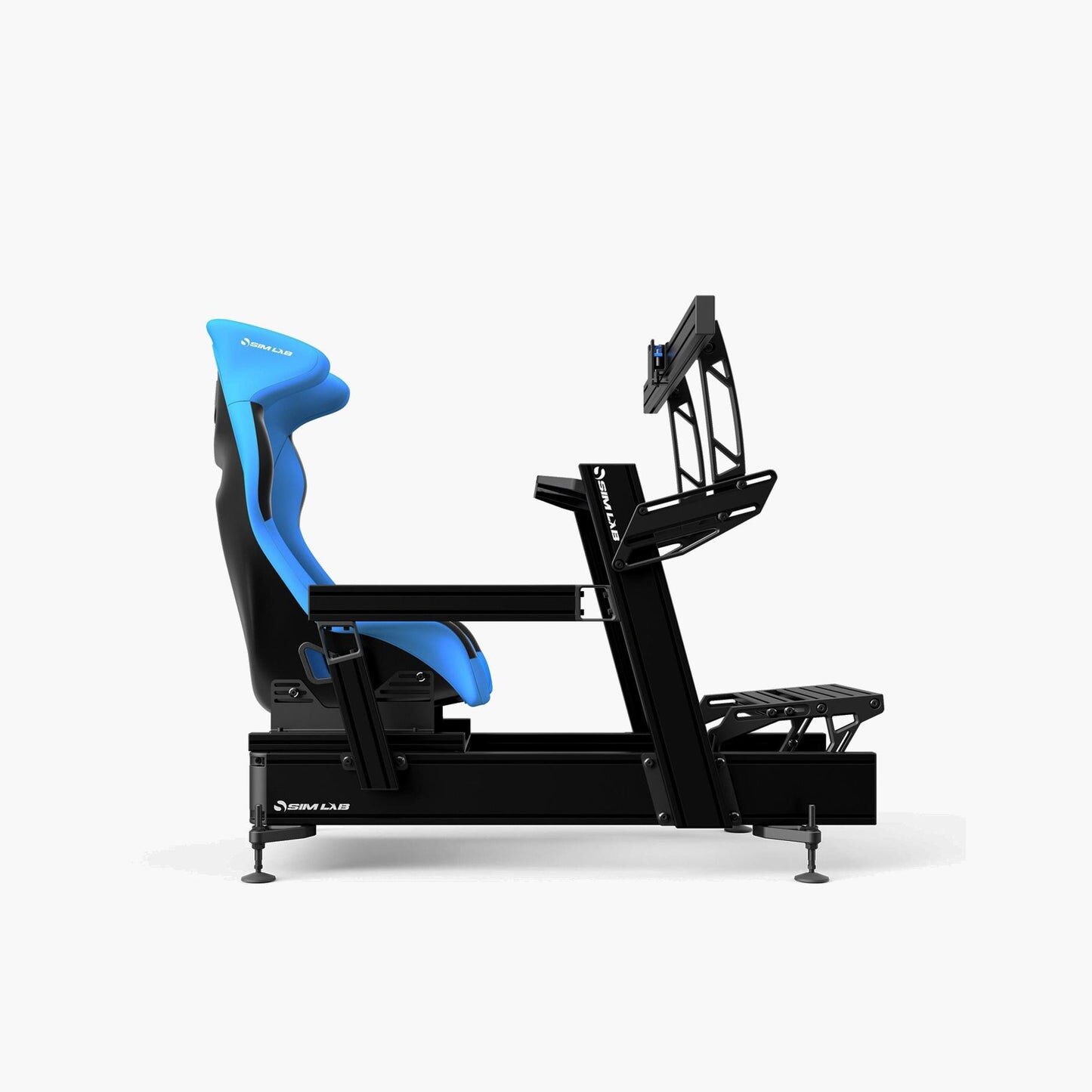
Simlab P1X Pro: My quick review
Above all, this chassis provides a feeling of total stability: you completely forget about the cockpit and concentrate on the steering wheel, pedals and track, with a sharper, more consistent feel. It really makes sense for regular simracers equipped (or planning to be equipped) with a Direct Drive and a good pedalboard, who want a durable, consistent base from which to evolve their setup.
When you buy through our links, we may earn an affiliate commission.
The Sim-Lab P1X Pro is clearly aimed at those who want to enter the "big league" in terms of cockpit design, without resorting to overpriced customization. We're talking about a streamlined full-aluminum chassis, designed to cope with the most torquey Direct Drive chainstays on the market and the firmest cranksets. On paper, it promises absolute rigidity, almost infinite modularity and ergonomics that are far more advanced than the previous generation.
What immediately attracts is its positioning: a premium cockpit, but designed for intensive use, halfway between a passionate simracer's setup and a quasi-professional tool. It's not trying to look good for the showroom, it's trying to be efficient, rigid and upgradeable. And you can feel it in every design choice.
My angle here is simple: does the P1X Pro offer a real gain in feel, comfort and precision over a more basic alu cockpit or a classic tubular frame? Does it justify the investment over time, especially with Direct Drive chainstays and loadcell or hydraulic cranksets? And, above all, is it still usable on a daily basis, with accessible settings without becoming a permanent worksite?
Design and manufacturing
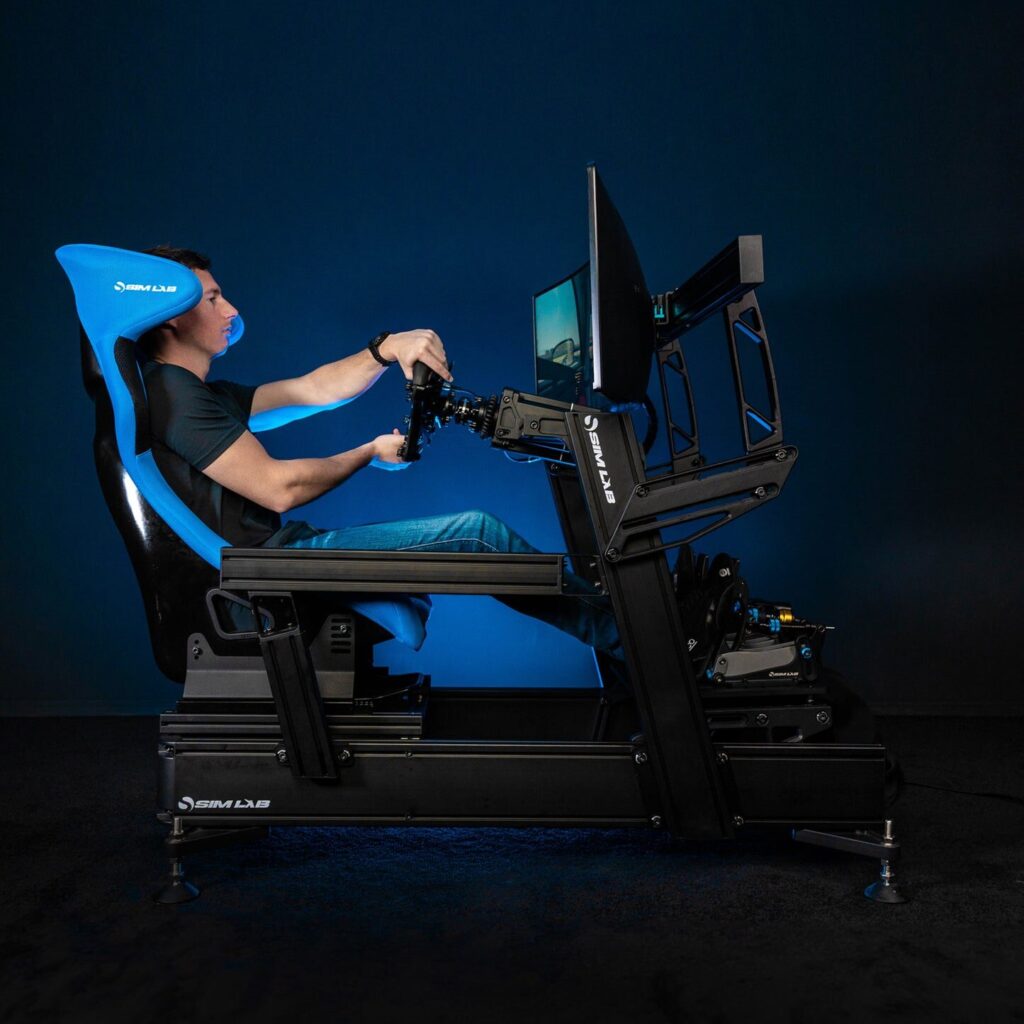
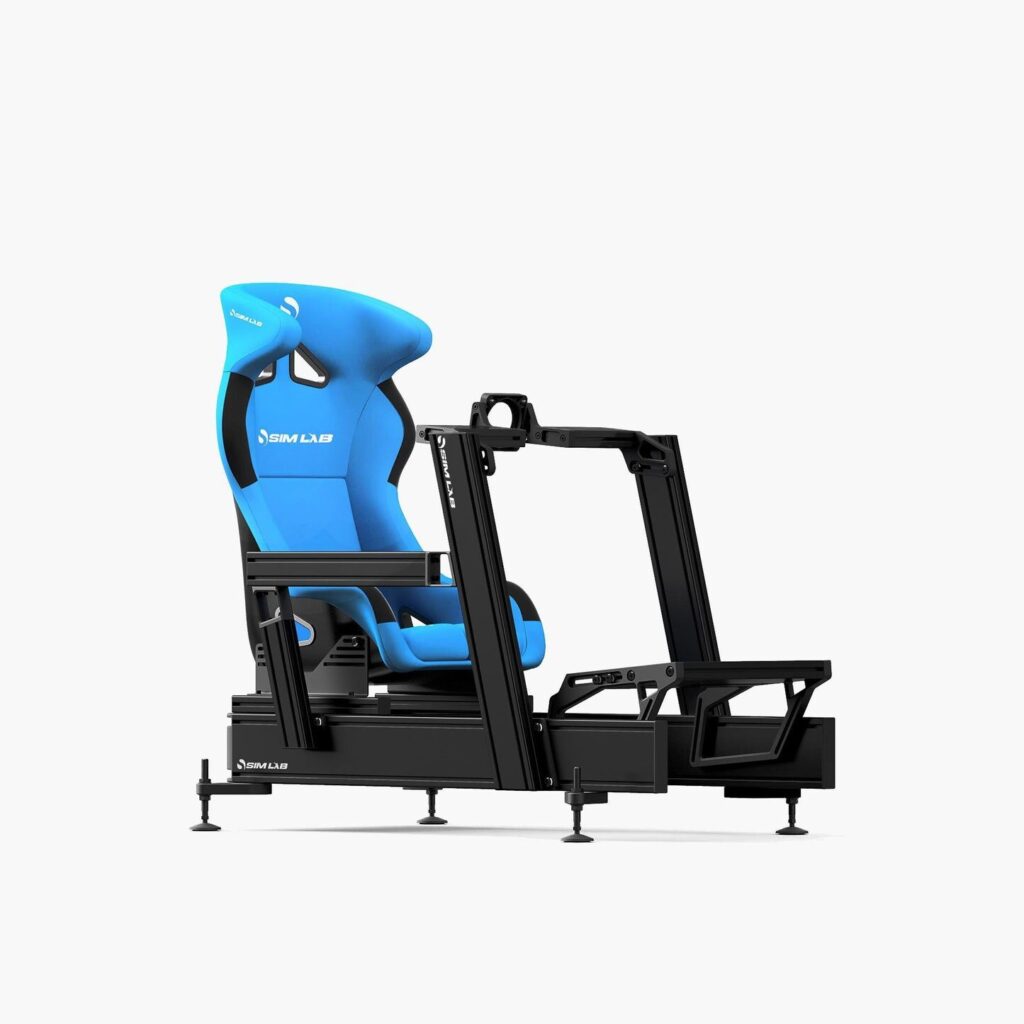
Visually, the P1X Pro exudes seriousness. It's a solid aluminum profile, with generous cross-sections, anodized surfaces and clean edges. In hand, the components give the impression of density and precision that we've come to expect from this range. Once assembled, the first word that comes to mind is "monolith". Nothing moves, nothing creaks, nothing vibrates.
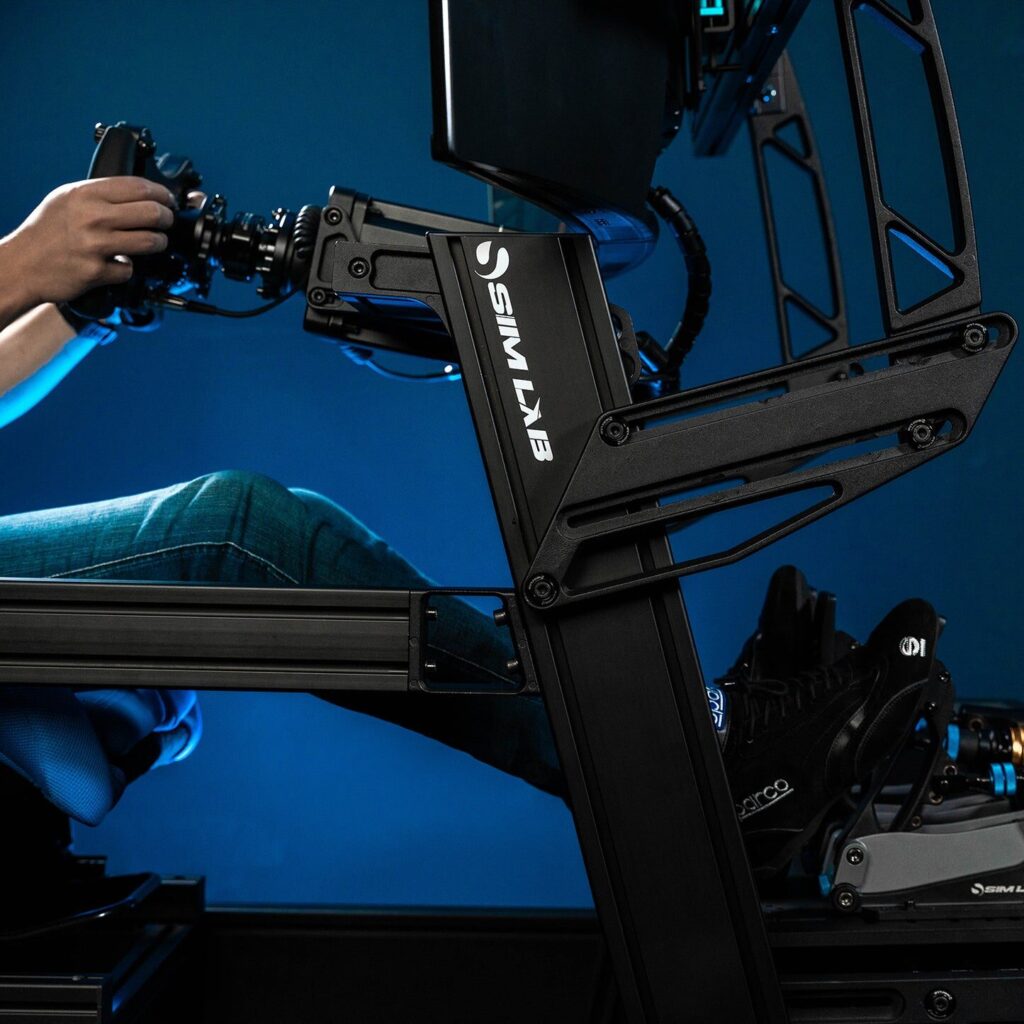
The flywheel plate and front structure are designed for large Direct Drives. You can feel that the specifications have been designed to withstand high torque forces without flinching. Even when deliberately forcing the steering wheel, flexion is minimal, if not imperceptible. In this respect, the P1X Pro is clearly a cut above mid-range tubular steel cockpits, and stiffer than most slimmer or entry-level aluminum chassis.
In terms of finish, the machining of the profiles is clean, the holes well aligned and the steel/aluminium plates well cut. Adjustments are precise, which limits headaches during assembly. This is equipment that will give you confidence over the long term, both for simracing and for more intensive or semi-pro use.
There are, however, a few less appealing points. The aesthetic is very "industrial". If you're looking for a designer cockpit to take pride of place in the middle of your living room, you'll have to accept this precision machine-tool look. Covers, plastic finishes and lifestyle touches are limited. And depending on the configuration chosen, cable management will require a little imagination to be really clean.
Compared to other aluminum cockpits, the P1X Pro stands out above all for its overall rigidity and the quality of the plates (steering wheel, pedals, seat). There's less compromise, less flex, more mechanical confidence. It's this kind of chassis that gives the impression that your setup could run continuously without degrading.
Settings, customization and compatibility
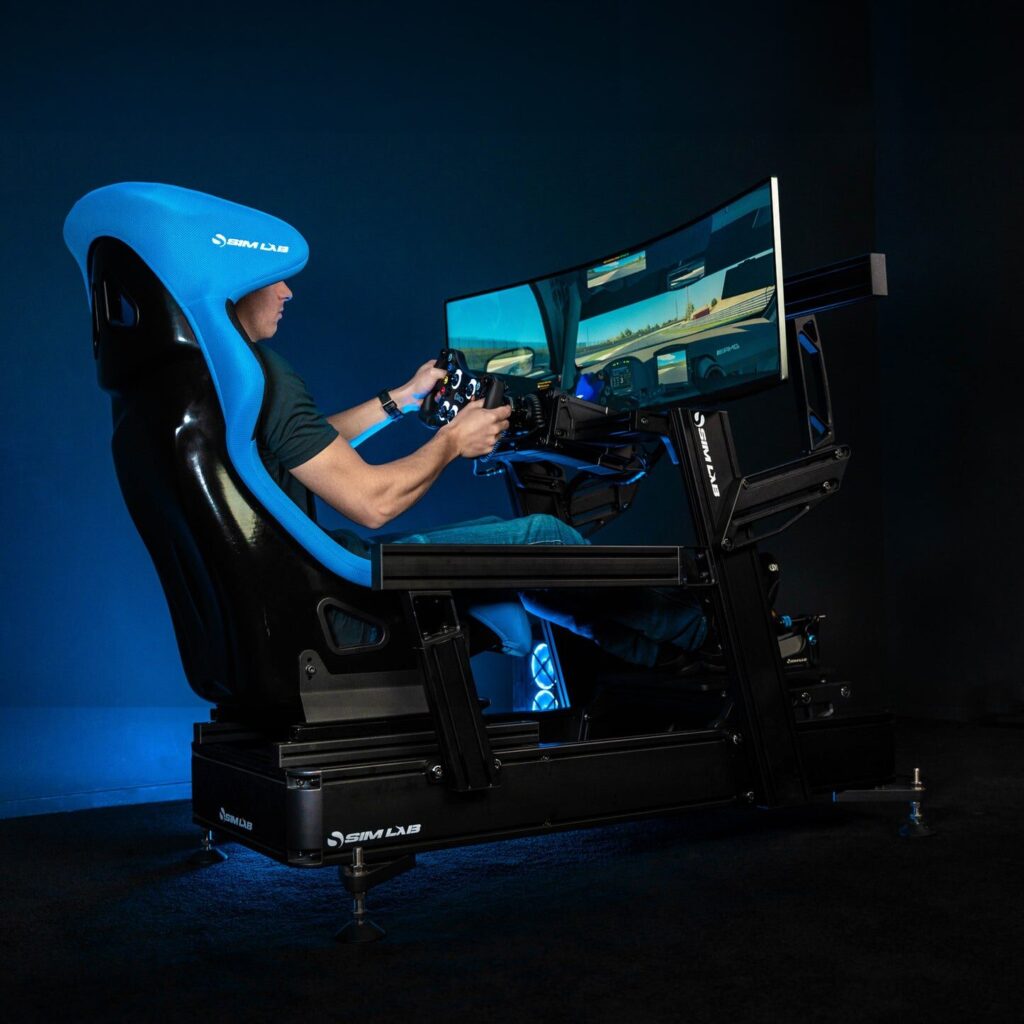
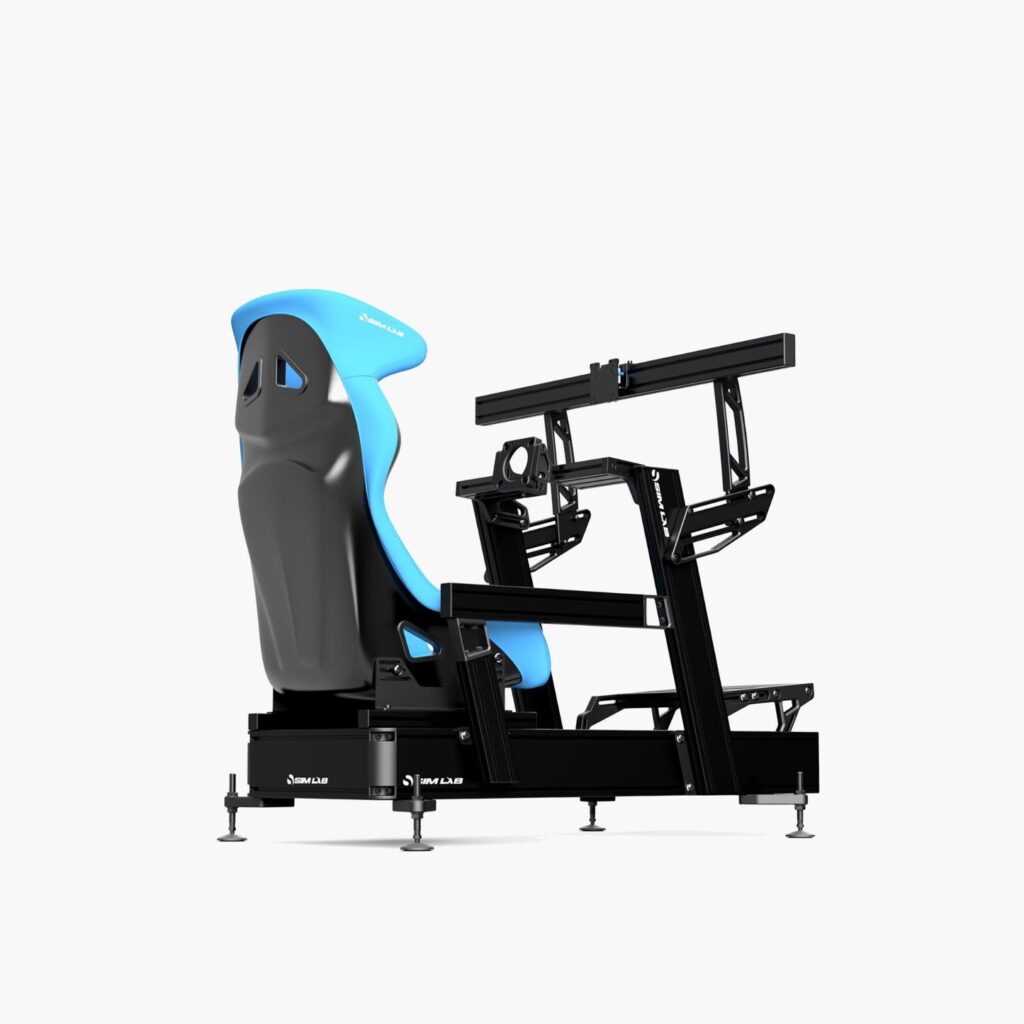
One of the great advantages of the P1X Pro is its modularity. Thanks to the profiles, you can adjust virtually everything: steering wheel height and distance, pedal tilt and position, seat overhang and overall height. You can also easily add accessories: shifter support, handbrake, button box, screen support, etc.
The settings are logical, but require a little method. This isn't a plug-and-play folding cockpit: you have to be willing to spend some time finding your ideal position. Once you've understood the logic of the slides and profiles, adjustments become simpler, but initial fine-tuning may take several sessions. On the other hand, once you've got everything right, you'll have a driving position that's very close to that of a real race car, and above all, perfectly reproducible.
In terms of compatibility, the P1X Pro is clearly PC-oriented, but not limited to any particular ecosystem. The flywheel board accepts most Direct Drive and belt-drive bases on the market, via adapted holes or adapters. The same logic applies to cranksets: the plate supports a large number of loadcell and hydraulic models, with multiple mounting points. Shifters and handbrakes are easily mounted on the side rails using dedicated brackets.
For console users, the cockpit itself is obviously not a hindrance; compatibility will mainly depend on the steering wheel you choose. The chassis is ready to accept both an entry-level console base and a high-level Direct Drive PC, making it a good long-term investment if you plan to upgrade over time.
For my part, I clearly see the P1X Pro as a durable base rather than an entry point. It's a chassis you buy to keep, and evolve all the rest of the setup around it: steering wheel, pedals, screens, accessories. You go upmarket without having to change the cockpit's "skeleton", and that's where its value is best defended.
Sensations in play
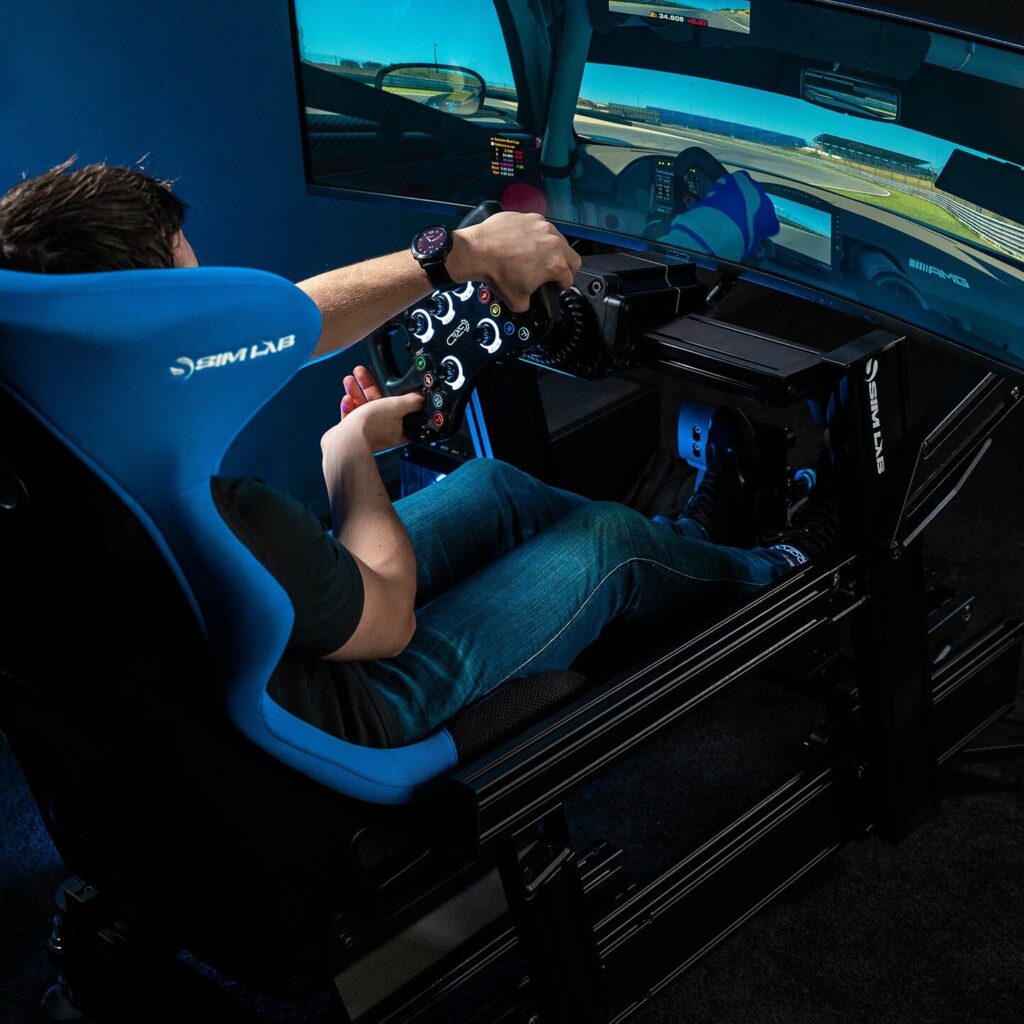
It's on the virtual track that the P1X Pro really shows what it's made of. The rigidity of the chassis changes the way forces are perceived. With a Direct Drive, what's striking is the absence of interference. You only feel what the base sends out, not what the structure takes in.
On fast bends, grip readings become much clearer. The steering wheel doesn't "pump", the cockpit doesn't work in its own corner, and micro-variations in load are transmitted more clearly. You immediately understand what the car is doing. Transitions between front and rear loads, lateral support and small losses of grip at high speeds are all more apparent. Compared with a tubular chassis that's a little soft, the car is more legible than rough.
On the vibrators, the difference is obvious. Instead of a steering wheel + cockpit assembly that shakes and vibrates all over the place, the feedback is drier, more precise and better contained. Shocks are distinct, but the chassis plays its role as an immovable base. This makes it possible to ride with a slightly louder FFB at times, without the whole setup becoming a sounding board.
When braking hard, especially with a firm pedal, the rigidity of the pedal plate and chassis removes much of the fuzziness. When the brake is applied, the cockpit hardly tilts or twists at all. As a result, muscle memory settles more easily. Brake proportioning becomes more consistent, especially on long stints where fatigue could quickly amplify any parasitic movements on a softer chassis.
The feeling of control becomes even clearer on quick corrections, changes of grip, and catching up on slippage. As the flying base doesn't dance with the chassis, hand movements remain directly linked to what the car is doing. You can go in harder, correct harder, without that little hesitation associated with cockpit deformation. This is where the P1X Pro really changes the experience, especially with its torquey Direct Drive.
Over long sessions, the main benefit is in terms of postural comfort and consistency of feel. The riding position, once properly adjusted, doesn't move. Contact points remain identical from one session to the next. There's less of a feeling of fatigue as the body micro-adjusts to compensate for a cockpit that warps or slips slightly. Mentally, you can concentrate on the track, not the equipment.
Compared to a lighter or entry-level cockpit, we gain above all in stability and consistency of feedback. Compared to a more high-end aluminum cockpit, or one very close to it in spec, the differences are more in the details: ultimate rigidity, ergonomic settings, quality of the turntables, ability to support very large equipment without flinching.
Who's it for? What we like, what we don't like
The Sim-Lab P1X Pro is aimed primarily at intermediate to advanced simracers, who already have a fairly clear idea of what they want in terms of feel, and who ride regularly. It's a logical choice if you're considering or already own a serious Direct Drive and a high-performance pedalboard, play mostly on PC and want a chassis that won't be the weak link.
What we appreciate most is the overall rigidity. In this price range, seeing a cockpit withstand high forces without flinching is immediately reassuring. Secondly, the cockpit's extensive modularity means it can be adapted to almost any size and driving style, whether you're a GT, single-seater or rally driver. Last but not least, the feeling of stability it brings to play really transforms the way you feel with a good steering wheel and pedals: everything seems cleaner, sharper and more legible.
Nevertheless, there are limits to keep in mind. Assembly and adjustment can be quite time-consuming, especially if you're new to aluminum profiles. It's an investment in time, not just money. The very "mechanical" look won't appeal to everyone, especially in living-room use. And the rich ecosystem of accessories can quickly drive up the price if you want a complete setup with screen mounts, shifter, handbrake, etc.
In terms of perceived value, we're talking about a product that may seem expensive compared with entry-level or mid-range cockpits, but which stands up well if you see it as a long-term base. The real question is not just "how much it costs", but "how long it will remain satisfactory when you evolve your equipment around it". From this point of view, the P1X Pro is one of those purchases you won't be replacing any time soon.
Verdict
The Sim-Lab P1X Pro changes one thing above all else in a setup: it removes the cockpit from the equation as a source of problems. No more exaggerated flex, no more moving chassis, no more pedals sinking into the virtual floor. It becomes a solid base on which everything else can fully express itself, especially with a Direct Drive base and a demanding pedalboard.
On the market, it's clearly positioned in the premium segment, oriented more towards performance than decoration. It's not a "fun" cockpit for beginners, but a serious platform that bridges the gap between enthusiast simracing and configurations very similar to those used by certain structures or pilots for training.
I'd recommend it to those who want to stabilize their setup for the long term, who already have or are aiming for intermediate/advanced level equipment, and who are willing to spend a little time getting everything right. On the other hand, for an occasional player, console only, or looking for a discreet, modular and easy-to-store cockpit, this will clearly not be the best choice.
If you're looking for an ultra-rigid, upgradeable chassis, designed to get the most out of a good Direct Drive steering wheel and a serious crankset, the Sim-Lab P1X Pro can clearly make the difference in your setup.


Reviews