
Fanatec Podium Steering Wheel Fanatec GT World Challenge : Test & Review | What it's really worth in 2026
Fanatec Podium Steering Wheel Fanatec GT World Challenge: My opinion in brief
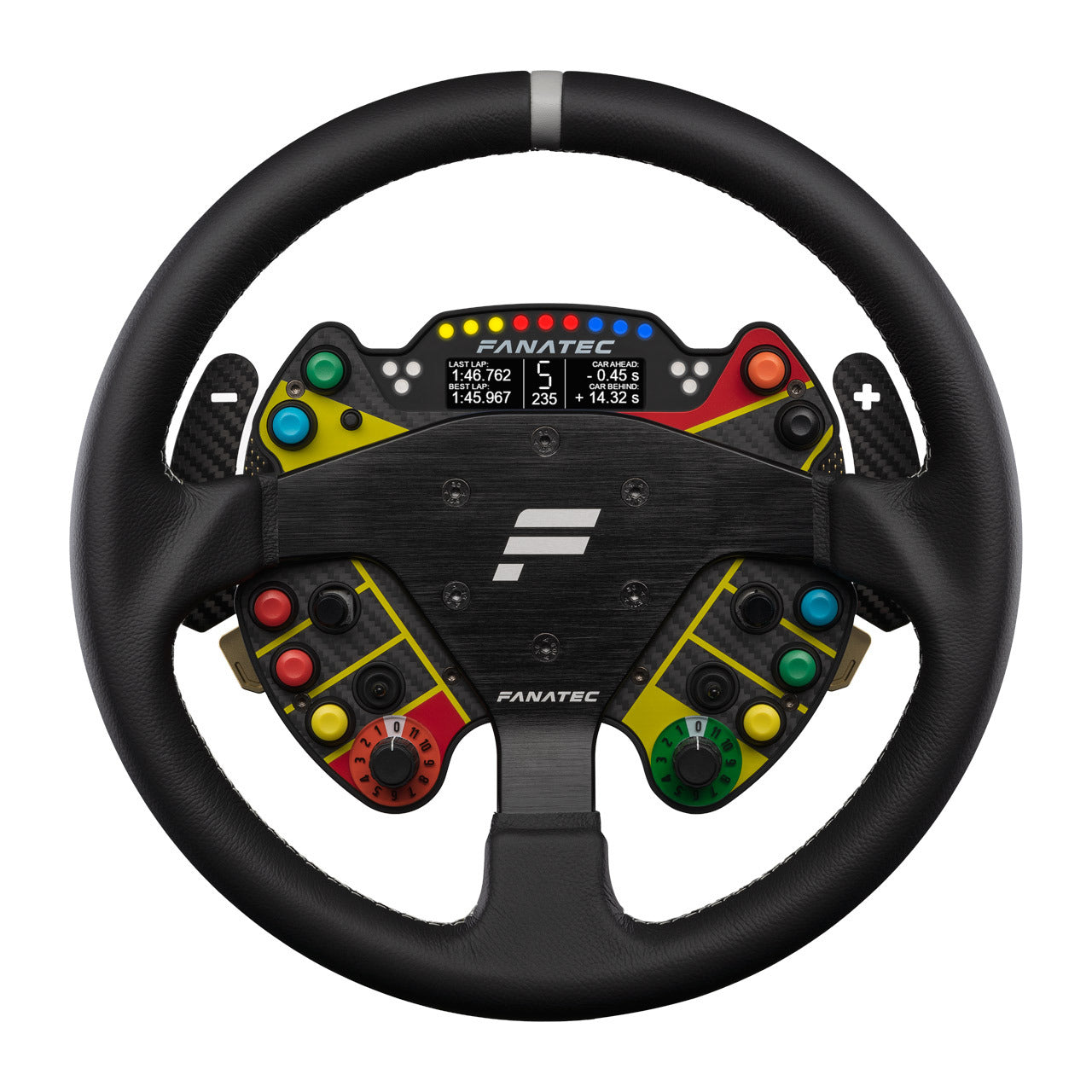
The Fanatec GT World Challenge Podium Steering Wheel is a replica of the steering wheel used in the championship’s official endurance races. It combines the 320 mm leather ClubSport rim, the Podium Endurance button module with an OLED screen, the carbon-fiber Advance paddle module, and the Podium Hub. It is a high-end add-on steering wheel designed to be mounted on a compatible Fanatec base for use with a PC or PlayStation. It does not include a vibration motor and is not compatible with Xbox.
When you buy through our links, we may earn an affiliate commission.
What We Liked
- Faithful replica of the official GT World Challenge steering wheel
- 320-mm leather rim and top-of-the-line aluminum and carbon fiber components
- Customizable 2.7-inch OLED display and RGB FlagLEDs
- Extensive control options (buttons, FunkySwitch, 12 positions, joystick)
- Six palettes, including four magnetic carbon palettes with a crisp click
- Podium Hub included in the set
Reserves
- Not compatible with Xbox
- Wheel rim only: Requires a compatible Fanatec base (not included)
- No vibration motor built into the steering wheel
- Premium positioning targeting a niche audience
Technical Specifications
| Diameter | 320 mm |
| Weight | 2,250 g |
| Coating | genuine smooth leather |
| Structure | brushed and anodized aluminum, carbon fiber blades |
| Screen | Customizable 2.7-inch OLED display |
| Orders | 10 buttons, 2 two-position toggle switches, 2-axis joystick, 7-direction FunkySwitch, 2 12-position switches |
| Paddles | 4 magnetic + 2 analog |
| Lighting | RGB FlagLEDs |
| Quick release | ClubSport (QR1) via Podium Hub |
| Compatibility | PC and PlayStation (not Xbox) |
| Compatible bases | Podium, CSL DD, ClubSport V2.5 |
| Vibration | not included |
A replica of the GT World Challenge race steering wheel
When Fanatec puts the name of an official championship on a product, it’s not just about a sticker. This Podium Steering Wheel features the same configuration found in the cars competing in the endurance races of the Fanatec GT World Challenge. In other words, you’re holding the same interface as the drivers who take turns behind the wheel in these races. For anyone looking to recreate a realistic GT3 cockpit, this is a starting point that’s hard to ignore.
This is not a one-piece steering wheel but a cohesive assembly of four Podium and ClubSport modules combined here into a single unit. It features the ClubSport 320 rim, the Podium Button Module Endurance, the Podium Advance Paddle Module, and the Podium Hub, which connects to the base. This modular design, very much in line with Fanatec’s philosophy, explains both its premium positioning and its versatility.
A 320-mm rim designed for endurance
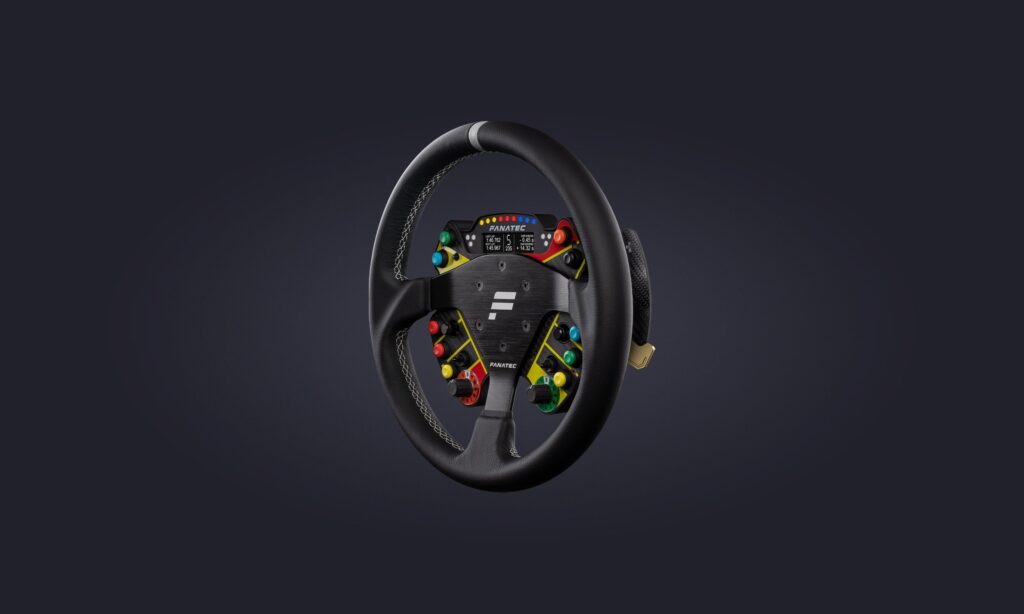
The rim has a diameter of 320 mm, a measurement perfectly in line with GT and endurance racing standards. It is covered in genuine smooth leather, and the structure combines brushed and anodized aluminum. The complete set weighs 2,250 grams—a substantial weight that reflects the density of the materials and the high level of craftsmanship rather than a flaw. This is clearly a product designed for long sessions, where the quality of the grip matters just as much as the aesthetics.
OLED display and a feature-rich dashboard
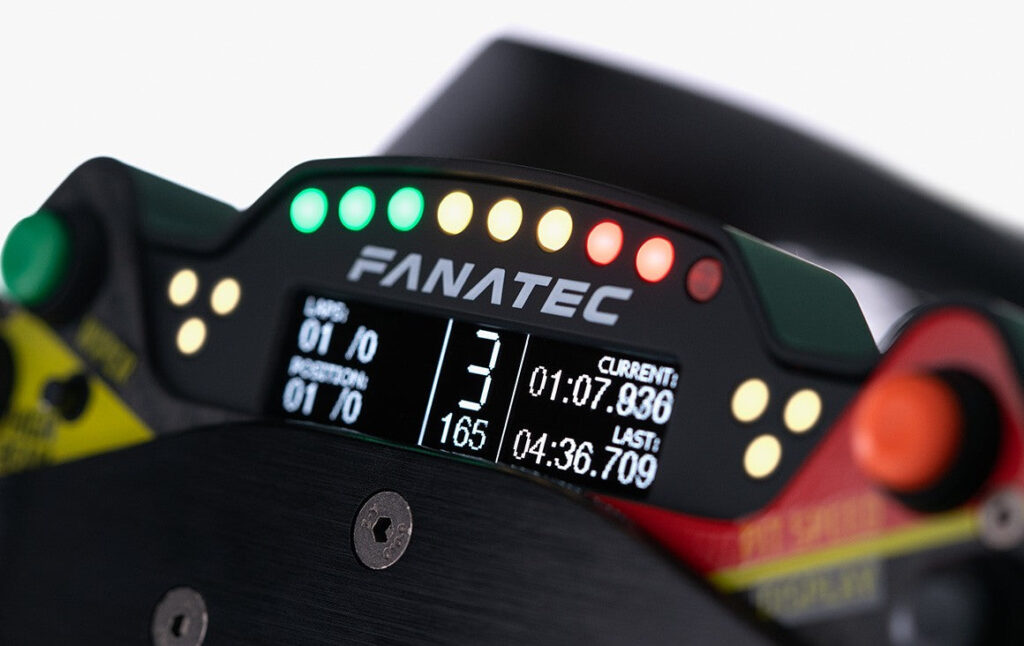
The heart of the system is the Podium Button Module Endurance. It features a fully customizable 2.7-inch OLED screen designed to monitor telemetry, display RGB FlagLEDs, and adjust force feedback settings directly from the steering wheel. Surrounding this screen is a generous array of controls: ten buttons, two 2-position toggle switches, a 2-axis mini analog stick, a 7-direction FunkySwitch, and two 12-position switches that can also function as infinite rotary encoders. That’s enough to map out a full range of functions without ever letting go of the steering wheel.
Double-deck carbon blades
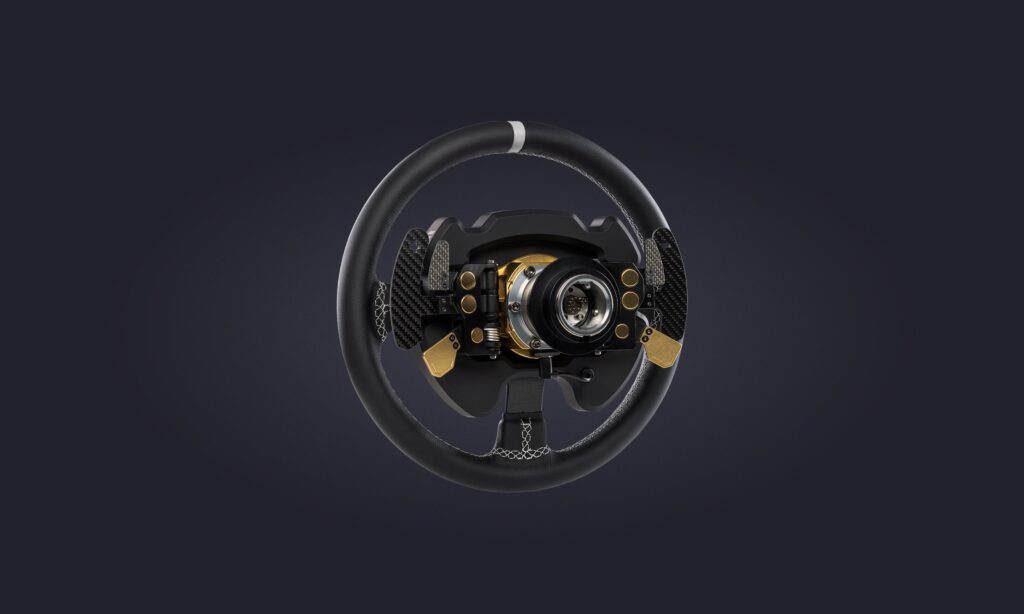
The Podium Advance Paddle Module features a six-paddle configuration. Two pairs of magnetic paddles, made of genuine carbon fiber, control upshifts and downshifts with a crisp, distinct magnetic click on every shift. Two additional analog paddles round out the package, ideal for smooth clutch engagement at the start or for precise control functions like bite point. This combination is exactly what you’d expect from a steering wheel designed for endurance racing.
Compatibility: PC and PlayStation; Fanatec base required
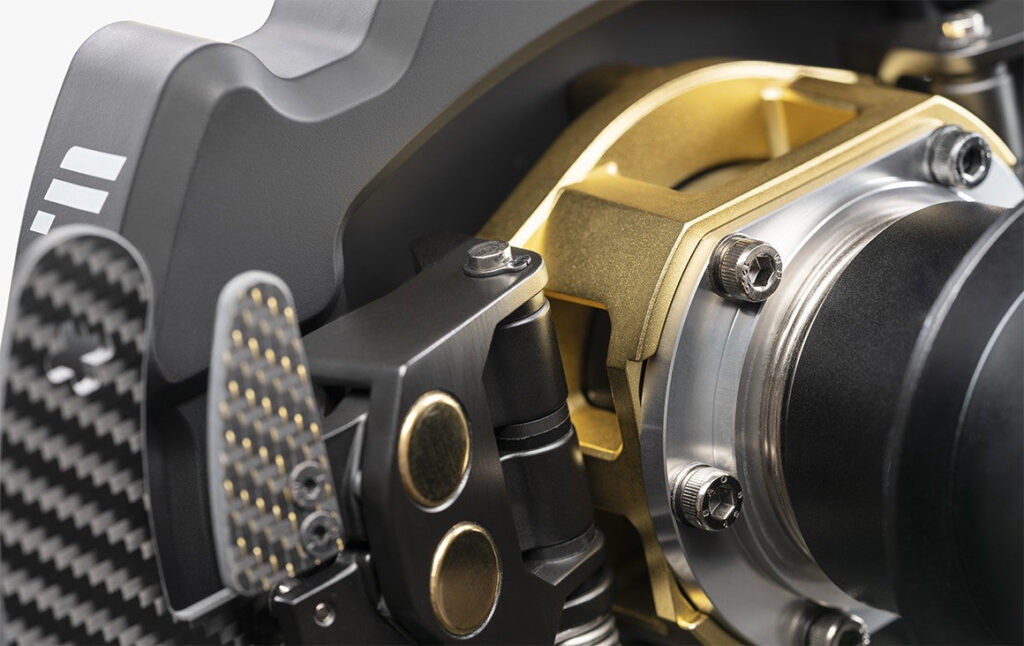
An important point to check before purchasing: this steering wheel is compatible with PC and PlayStation, but not Xbox. On PC, you can take advantage of all features via FanaLab, while on PlayStation, certain capabilities are limited by the console itself. Another important point to note is that this is a steering wheel hub only: it attaches via the ClubSport quick-release mechanism and the Podium Hub to a compatible Fanatec base, such as the Podium, CSL DD, or ClubSport V2.5 bases. The base and pedals are not included.
For whom, and with what reservations?
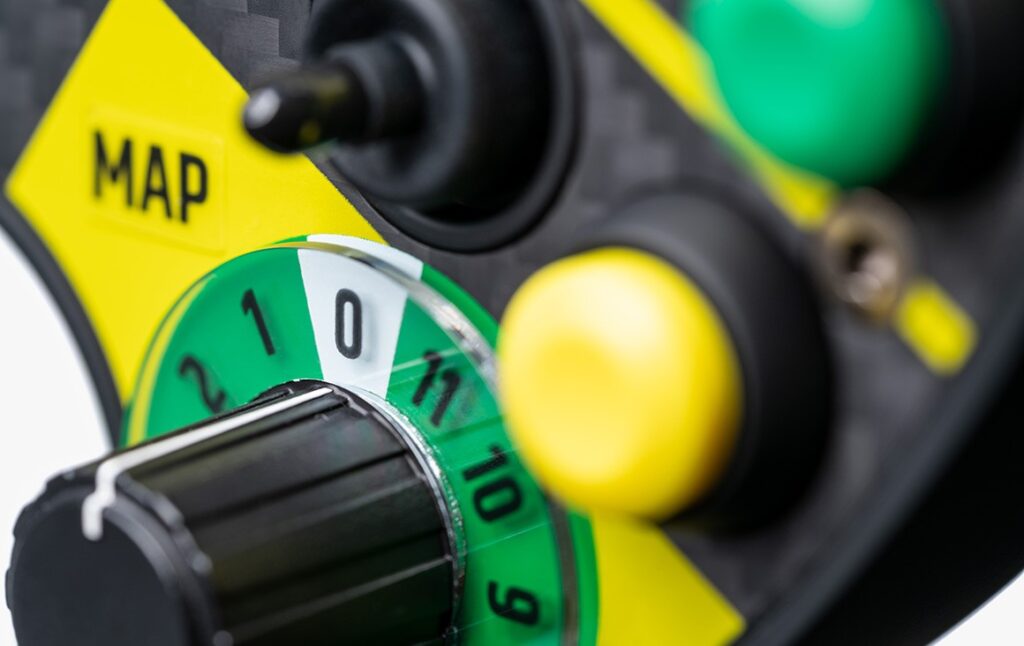
This Podium GT World Challenge is designed for enthusiasts who are already part of the Fanatec ecosystem—or ready to join it—and who are looking for a full-featured GT steering wheel that’s richly equipped and faithful to a real competition-grade unit. The leather and carbon fiber finish, the built-in display, and the abundance of controls place it at the very top of the pack. Two caveats to keep in mind: the steering wheel lacks a vibration motor, and you’ll need to add the Podium Hub and a compatible base to use it. It’s a niche purchase, but a logical choice for a serious GT3 cockpit.
Frequently Asked Questions
Which sim racing wheel should you choose if you're just starting out?
Direct drive or belt drive: What's the difference?
Does this hardware work on PS5 and Xbox?
Do you need a cockpit to get off to a good start?
How much should I budget for a good setup?
Other Reviews & Testimonials
-
Fanatec ClubSport Steering Wheel Classic 2 V2
-
Fanatec ClubSport Wheel Drift V2 for Xbox
-
Fanatec ClubSport Steering Wheel NASCAR V2 for Xbox
-
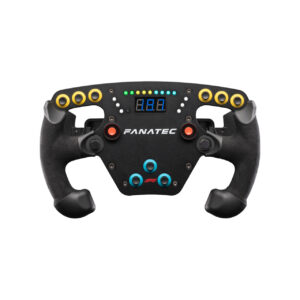
Fanatec ClubSport Steering Wheel F1 Esports V2
-
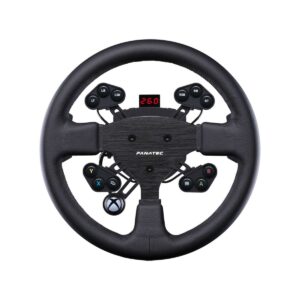
Fanatec ClubSport Round 1 V2 for Xbox
-
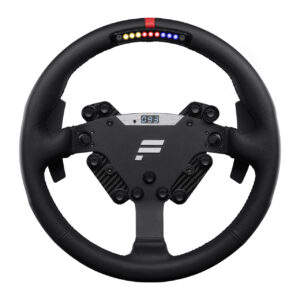
Fanatec ClubSport RS
-
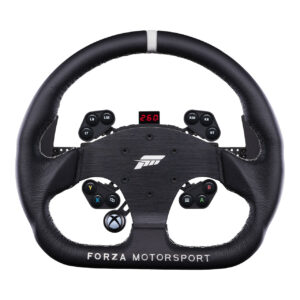
Fanatec ClubSport Steering Wheel GT Forza Motorsport V2 for Xbox
-
Fanatec ClubSport Steering Wheel Porsche 911 GT3 R V2 for Xbox (Suede)



Reviews