
MME Motorsport handbrake : Test & Review | What it's really worth in 2026
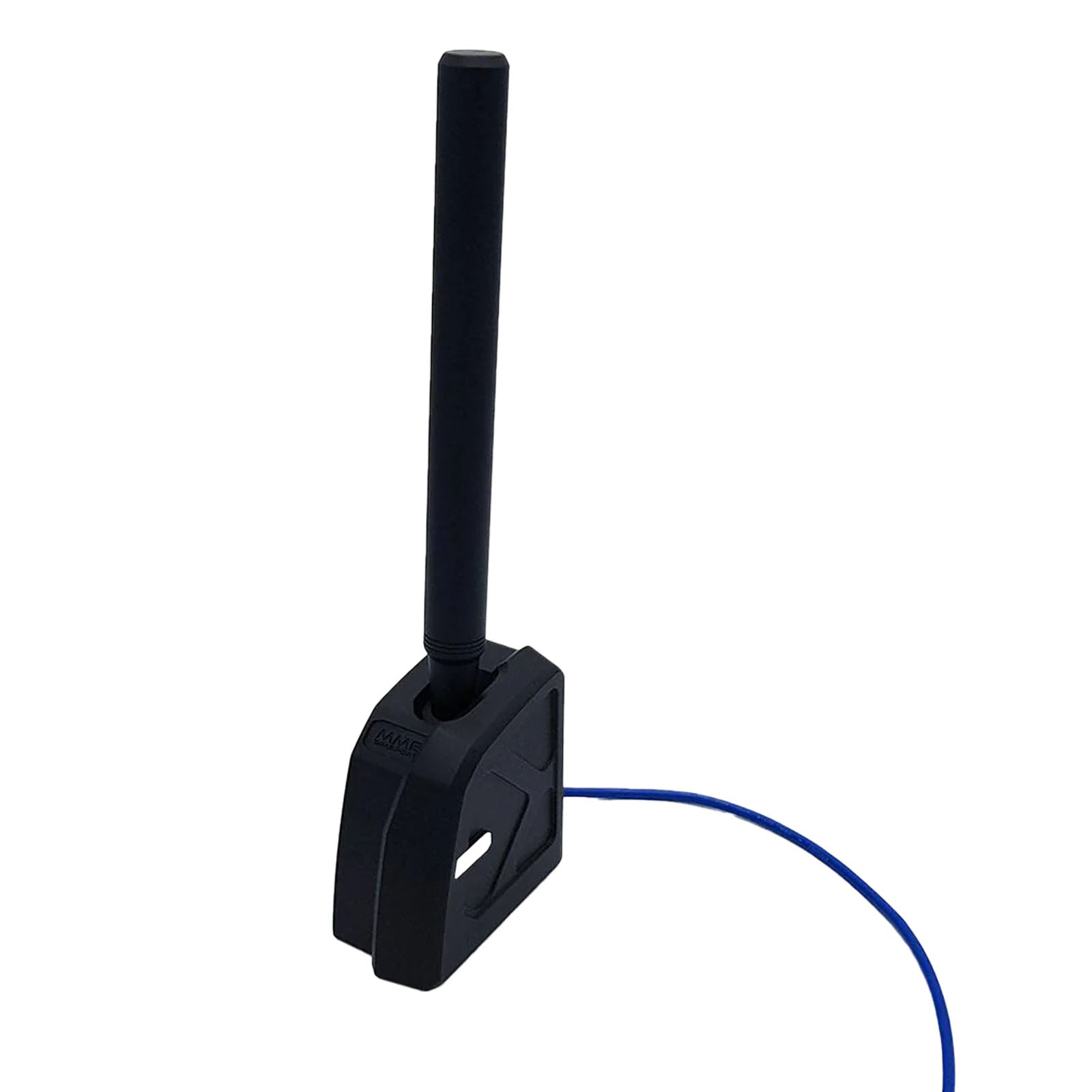
MME Motorsport handbrake: My brief review
This handbrake gave me a real feeling of a piloting tool, with glide control that was much finer and more consistent than with consumer models. It's aimed above all at sim racers already equipped with a rigid cockpit and performance-oriented equipment, who ride a lot in rallying or drifting. It's a sound investment if you're looking for a serious, long-lasting device.
When you buy through our links, we may earn an affiliate commission.
MME Motorsport handbrake: test & full review
The MME Motorsport handbrake is clearly aimed at sim racers who want something serious for rallying, drifting and all disciplines where glide control is central. This is a "semi-pro / pro" product, with a very race car approach and much less of an "improved toy" than some entry-level handbrakes.
What it promises: a feel akin to a real hydraulic handbrake, an ultra-rigid structure and consistent behavior, whether on short drift sessions or chained rally stages. It's aimed at those who already have a strong setup (Direct Drive, loadcell crankset, rigid cockpit) and want to add a truly credible brick.
My angle here is simple: precision, progressiveness and confidence. Does the MME Motorsport allow for fine-tuned glide or is it just a slightly more premium on/off lever? Does it remain consistent and enjoyable for several hours? And above all, does the perceived quality justify the investment, at a time when the supply of handbrakes has clearly become denser in recent years?
Design, manufacture and finish
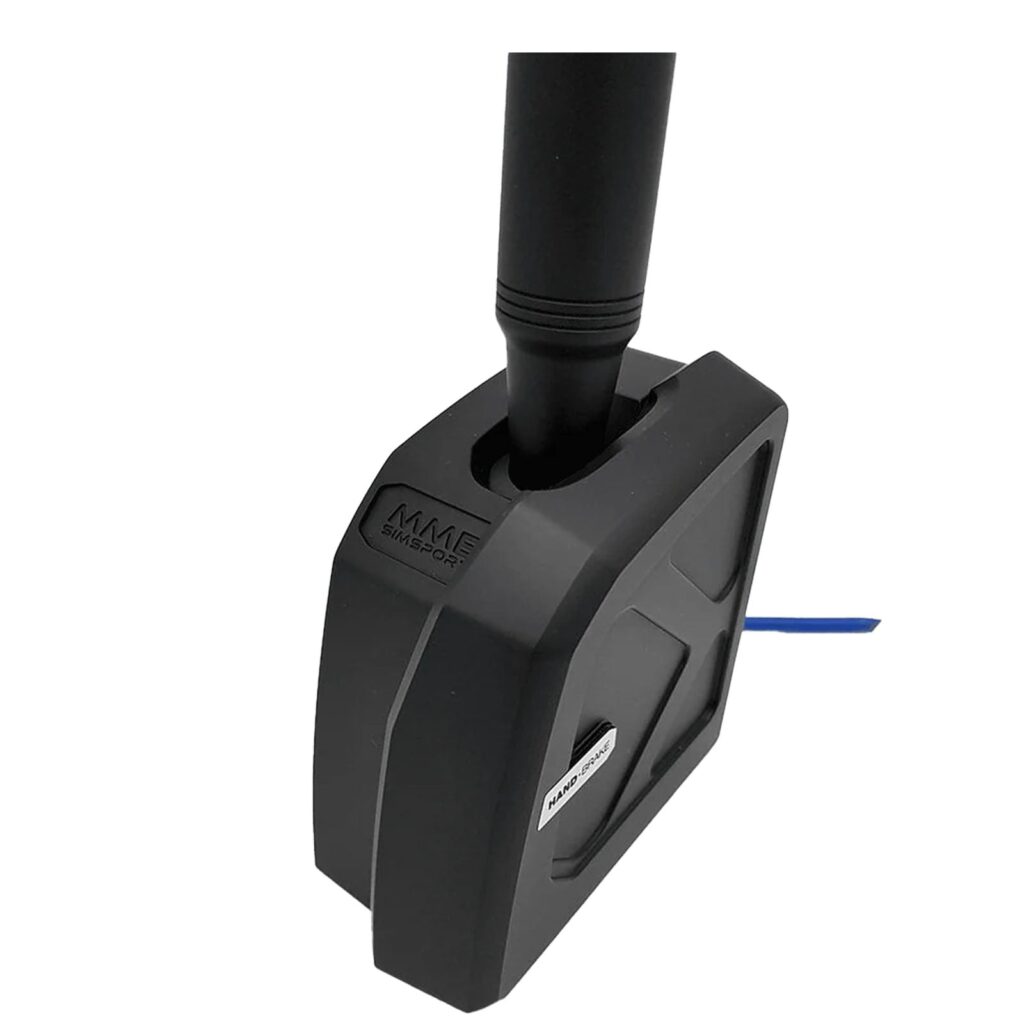
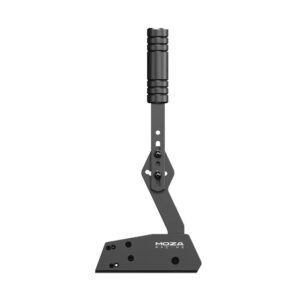
As soon as you pick up the MME Motorsport handbrake, the first impression is one of density. Machined metal structure, massive lever, no floating or hollow-sounding parts. We're on to something reminiscent of competition-oriented peripherals, with a real feeling of a compact, rigid block.
Overall, the finish is very clean: well-machined edges, uniform paint or anodizing, serious screws and bolts. Nothing looks like DIY or rough 3D printing. There's no perceptible play in the lever axis, and the lever travels without any hard spots. When you really pull on it, you can feel that the internal chassis can take it without flinching. You can really get to grips with it without a second thought.
The mechanical feel is rather dry and precise. You can clearly feel the resistance of the spring or elastic element, with a legible, repeatable progression. It's not soft, it's not fuzzy. Those who come from an entry-level handbrake in thin sheet metal will immediately feel the solidity gap. This is a lever that inspires confidence, even when mounted on a rigid aluminum cockpit.
What may be a little disappointing is the rather crude appearance of certain elements, depending on the configuration chosen: visible screws, very industrial look. It's more like a work tool than a design object to be displayed at a trade show. Compared with more visually polished "mass-market" products, the MME Motorsport assumes a no-frills racing feel.
Compared with mid-range handbrakes, the feeling of rigidity and mechanical coherence is clearly superior. Compared with some of the very high-end models on the market, the same philosophy applies: priority is given to structure, lever feel and perceived durability, rather than styling effects.
Settings, customization and compatibility
MME Motorsport doesn't try to be all things to all people. It concentrates on the essentials: offering usable racing, resistance adapted to your style and clean integration into a sim racing-oriented PC setup. Compatibility is typically PC, via USB, with recognition as an independent peripheral in the main games. On console, everything will depend on your base and the limitations of each ecosystem, but clearly the product is aimed primarily at PC users.
On the mechanical side, you can adjust the overall resistance and sometimes the useful travel, depending on the version. In general, you can switch from a fairly firm, very "asphalt rally" feel, to something a little more progressive for drifting or gravel rallying, where you play more with modulation. Adjustments can be made with simple tools, but you still need to take your time at first to find the setup that suits your style.
The sensor used generally gives a clean analog reading, with no disguised dead zones. In games, this provides a usable curve that can be fine-tuned in the simulation menus: saturation, sensitivity, dead zone at the start or end of the race. Most serious titles (rally, drift, circuits) allow you to calibrate the handbrake perfectly, and here the MME comes into its own.
The learning curve depends very much on your experience. If you've already ridden with an analog handbrake, you'll quickly get the hang of it. If you've come from a simple knob or a very basic lever, you'll have to accept a few adaptation sessions to understand how to dose the glide input rather than ripping everything off at every pull.
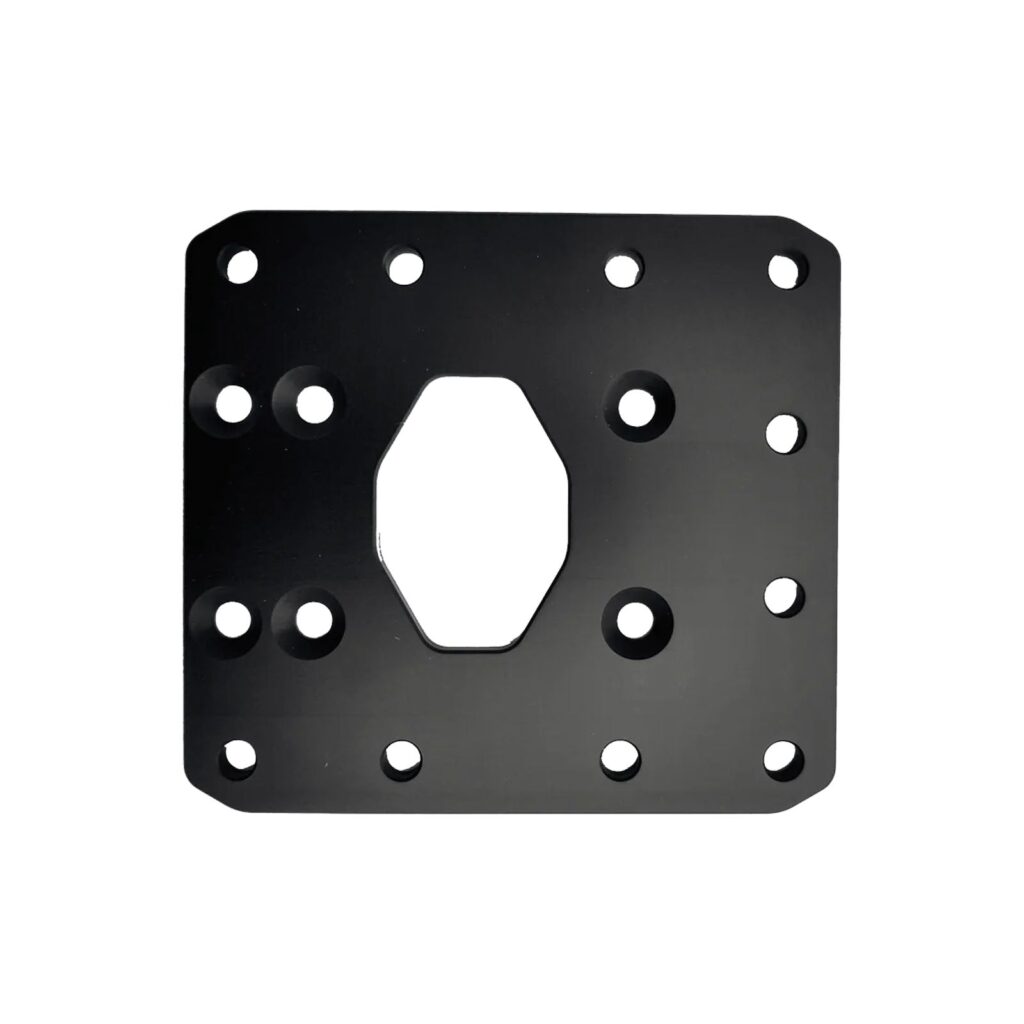
In terms of integration, it fits very well on profiled aluminum structures or serious steel cockpits. It requires a sufficiently rigid base to express its full potential. On a lightweight cockpit or desk, it would be a complete waste. In terms of upgradeability, we're not talking about a simple entry point: this is a peripheral that can remain at the heart of a highly advanced setup without becoming the weak link.
Sensations in play: precision and sliding control
Where MME Motorsport really comes into its own is when you start to work on the grip limit. The lever doesn't just trigger the handbrake: it also allows you to control the amount and duration of braking. You soon feel a logical relationship between the force applied to the lever and the car's reaction.
In rallying, entering tight corners becomes much more controllable. You can cause the car to rotate with a short, dry pulse, or on the contrary, hold the glide slightly to adjust the angle. The handbrake does not provide active force feedback in the FFB sense, but the stable mechanical resistance and exploitable travel give the impression of a precise tool, not a simple switch.
What really makes a difference compared to a less sophisticated handbrake is the finesse with which you can read what's happening. Depending on the sensitivity set in the game, you can feel when the rear axle releases and when it hangs up. You immediately understand what the car is doing. You no longer feel as if you're undergoing the slide; you're driving it.
On vibrators or in fast transitions between turns, the MME never starts to vibrate or move erratically, provided you have a solid mounting. The lever remains stable, the handle doesn't wobble, and the position markers are clear. When you need to make a quick correction because the car's going a bit too far, you can pull straight back without wondering if something's going to move on the cockpit.
In drifting, the benefits are even more obvious than with a conventional entry-level handbrake. You can attack releases with greater confidence, play with the length of the pull, release early to start a long drift or, on the contrary, correct an angle that escapes. The lever responds to intention, not approximation. You get the feeling that every centimetre of travel serves a purpose.
Over long sessions, consistency is a strong point. Resistance doesn't seem to change noticeably, and the mechanics don't creak or change their behavior. Mentally, this is important: you can concentrate on your riding without having to relearn how to use the handbrake over and over again. Comfort comes from the fact that the grip is always the same, run after run.
Compared with a cheap handbrake, you gain in confidence and reproducibility. Where a basic model sometimes feels a little fuzzy, with release varying from lap to lap, the MME is truly consistent. On the other hand, compared with some ultra-high-end hydraulic systems, the feel is a little less organic, less like a real car's hydraulic system, but the difference lies more in the "ultra purist" aspect than in the efficiency involved.
In terms of overall immersion, it brings that little click that's often missing in a rally- or drift-oriented setup. When the handbrake becomes a real driving tool, everything else in the setup takes on a different dimension.
Who's it for? Real strengths and limitations
This handbrake is clearly aimed at the intermediate to advanced sim racer. Those who already have a minimum of virtual driving experience and spend a lot of time on rallying, drifting or rallycross. For a total beginner, the product is still usable, but will only be truly exploited once basic driving skills are in place.
The big plus points are rigidity and a serious feel. Once fitted correctly, the lever doesn't move, there's no flex and no questionable play. Then there's the progressive stroke, which makes a real difference when compared with simpler solutions. Finally, the consistency of behavior over time provides real stability: you know you can build your riding around this handbrake without having to constantly adapt.
But there are limits. Firstly, the very racing look and design may seem a little austere to those who are also looking for a design object for an office or lounge setup. Secondly, it requires a serious cockpit to reveal its full potential. On a light stand or desk, the weaknesses of the surrounding structure will be more noticeable, making the investment less relevant. Thirdly, it's not the most "plug and play" on the market for the general public: you need to spend a little time on software and mechanical settings to find the sweet spot.
In terms of investment, this is not a product designed to tick the "cheap handbrake" box. It is aimed at those who are prepared to spend a considerable amount of money on a dedicated peripheral, with the idea of keeping it for a long time and integrating it into a performance-oriented setup. Perceived value is high if you're looking for real-world sensations and a real step up from basic options. If you're on a tight budget, or if handbrakes are only used occasionally, the MME becomes harder to justify.
Verdict: a real handbrake for demanding sim racers
The MME Motorsport handbrake is a clear game-changer in a rally- and drift-oriented setup. Where many handbrakes simply trigger an action, this one becomes a real driving tool, capable of managing the glide angle with finesse and repeatability. It brings that "working tool" aspect that is often lacking in more playful peripherals.
On the market, it's positioned as a performance-oriented premium product, above mainstream handbrakes and neck-and-neck with serious references aimed at advanced sim racers. It's not trying to appeal to everyone: it's aimed at those who already have or are planning a rigid cockpit, Direct Drive steering wheel or equivalent, and who want a link consistent with this level of requirement.
I particularly recommend it for virtual drivers who spend a lot of time in rally, rallycross or drift, and who have already taken a step forward in terms of hardware. For the occasional console gamer or lighter setup, there are simpler, less financially demanding and more plug-and-play options.
If you're looking for a solid, precise handbrake capable of transforming your glide management and accompanying a high-end evolutionary setup, this product can clearly make the difference in your setup.


Reviews