
Fanatec Clubsport Handbrake V2 : Test & Review | What it's really worth in 2026

Fanatec Clubsport Handbrake V2: My quick review
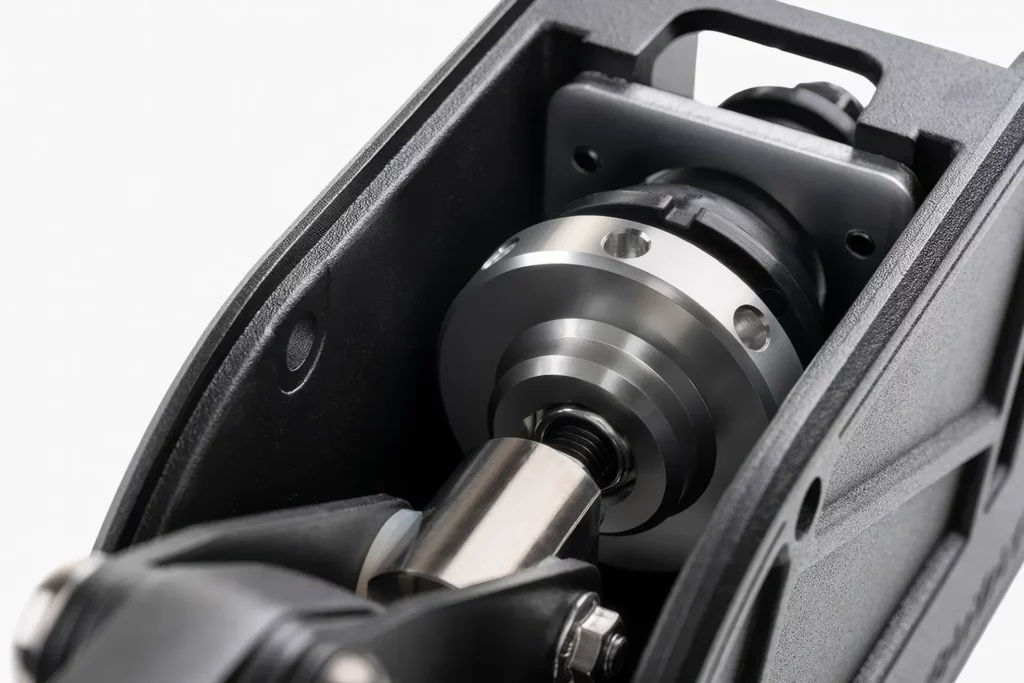
The ClubSport Handbrake V2 replaces the position sensor with a true force load cell, housed in a machined metal block that doesn’t budge an inch. You can adjust its preload, travel, and position; mount it horizontally or vertically; and it excels in both rally and drifting. The only real downside: there’s no direct USB connection without purchasing the separate adapter.
When you buy through our links, we may earn an affiliate commission.
What We Liked
- Force load cell, providing much finer control than the old position sensor
- Machined steel and aluminum construction, zero flex even under heavy tension
- Full range of adjustments: preload, travel (spacers: 60/70/80 mm), three-position angle
- Two orientations—horizontal (road) or vertical (rally)—in just a few seconds
- Excellent grip and consistency for rally and drifting
Reserves
- No built-in USB port; adapter must be purchased separately
- On a console, it works only when connected to a Fanatec base
- Each adjustment requires removing the top plate
- A firm feel that might put off occasional users
- The signal is not yet perfectly calibrated on belt-driven bases (firmware update announced)
Technical Specifications
| Sensor type | Load cell (force measurement) |
| Chassis | Steel and aluminum, cast and CNC-machined |
| Pivot | Ball Bearings |
| Guidelines | Horizontal (road) and vertical (rally) |
| Stroke Adjustment | Spacers: 60, 70, and 80 mm |
| Preload Adjustment | Rear metal disc |
| Angle Adjustment | Three positions |
| Basic Connection | RJ12 to Fanatec Base |
| Standalone PC Connection | ClubSport USB Adapter (sold separately) |
| Console compatibility | Via Fanatec base only |
A handbrake that engages with force
The real change in the ClubSport Handbrake V2 isn't cosmetic—it's in the sensor. Fanatec has replaced the position potentiometer from the previous generation with a load cell that measures the force applied to the lever. In practical terms, it’s no longer the distance the lever travels that matters, but the pressure applied. And for a handbrake, that changes everything: you can feel a real progression between the initial load transfer and the complete locking of the rear wheels—exactly what you’re looking for when managing a drift down to the millimeter.
A block of metal that doesn't bend
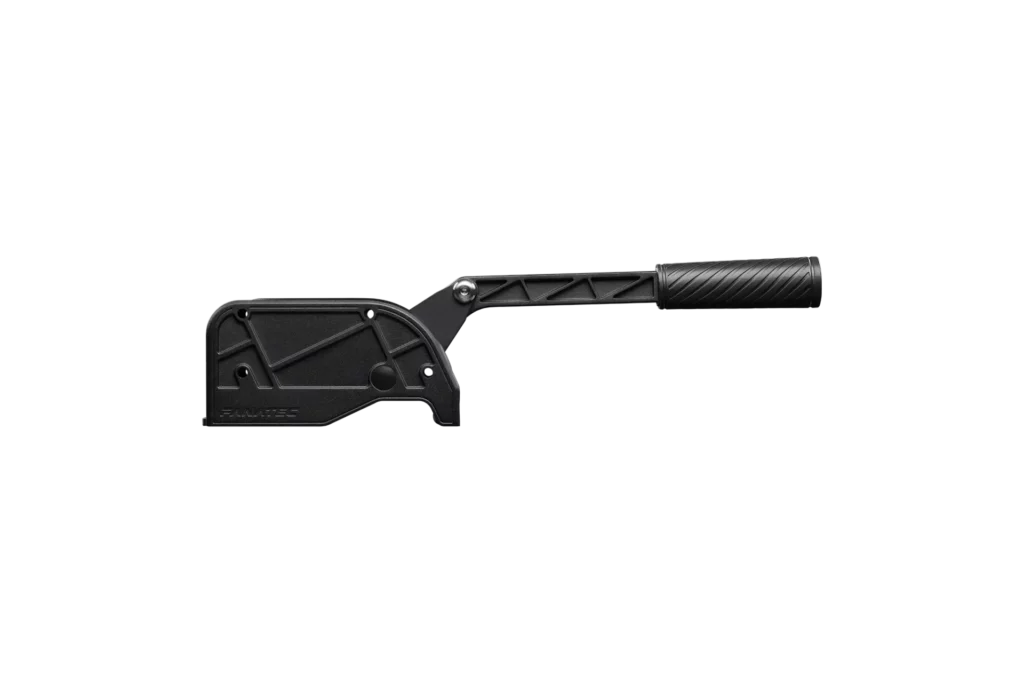
This is some serious piece of equipment. The frame is a steel-and-aluminum assembly, cast and then CNC-machined, with ball bearings at the lever’s pivot point. The handle is thick and fits comfortably in the hand, and most importantly, the entire unit remains completely rigid even when you pull on it like a maniac. With this level of craftsmanship, it’s a far cry from plastic: the device is heavy, it inspires confidence, and this rigidity directly contributes to precision, since nothing twists between your hand and the sensor.
Some room for adjustment under the hood
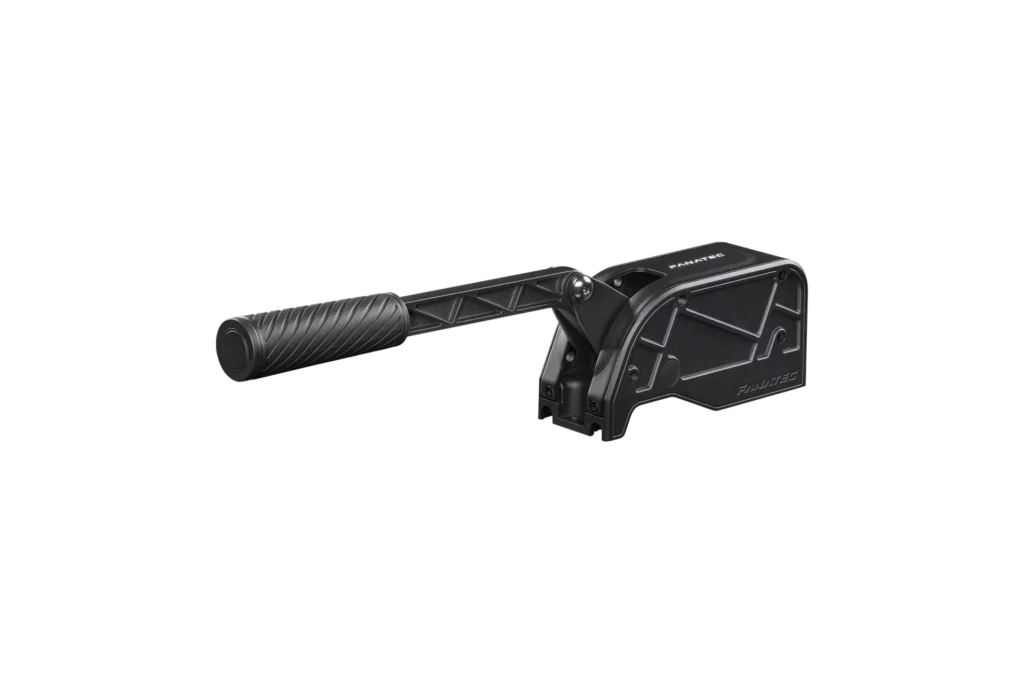
Once the top plate is removed, you’ll find a wide range of adjustment options. Preload is adjusted via a metal disc at the rear: the more preload you apply, the more tension is placed on the elastomer and load cell stack, and the greater the lever’s initial resistance becomes. The travel is adjusted using the spacers provided in 60, 70, and 80 mm lengths, and the lever angle has three positions. This gives you plenty of options to customize the stiffness and pull length to your liking. The only real downside: all these adjustments require removing the top plate each time; we would have liked quicker access to them.
Handle: horizontal or vertical
The V2 can be mounted in two orientations. In the horizontal position, it features the classic configuration of a road car’s parking brake. In the vertical position, it switches to rally mode, with the lever standing upright like a competition-style hydraulic brake. Switching between the two takes only a few seconds, which is a real plus if you’re alternating between GT driving and gravel stages.
What it looks like once it's up and running
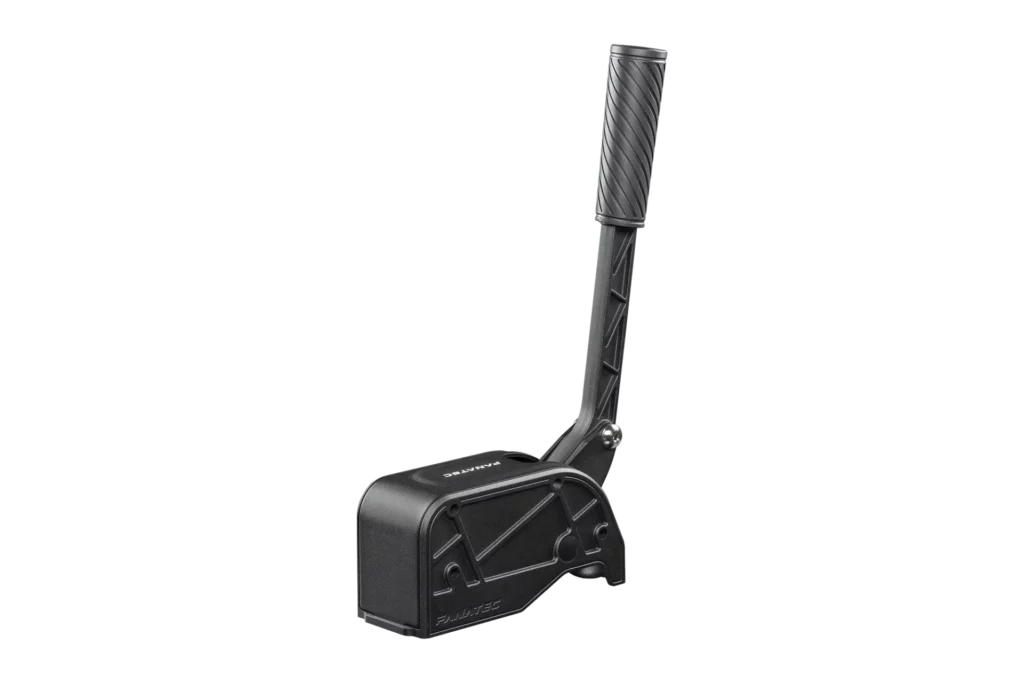
In use, the feel is excellent. The lever is firm and direct, providing a reassuring mechanical response when pulled. In rallying, this firmness works wonders: you can modulate the load on the rear with remarkable consistency, applying exactly the same pressure turn after turn—and that’s precisely what you need to navigate a dirt hairpin without spinning out. In drifting, the load cell shines during partial braking, where an on/off position sensor leaves you in the dark: here, you can truly fine-tune the percentage of lockup. However, it’s important to be realistic: even when adjusting the preload and the rubber, the brake remains on the firm side of the spectrum. For a demanding driver, this is an asset; for a casual player who wants a very gentle pull, it might come as a surprise at first. During long sessions, this firmness requires a decisive motion but doesn’t cause fatigue, since the travel is short and the feedback is immediate.
The Connection: The Real False Note
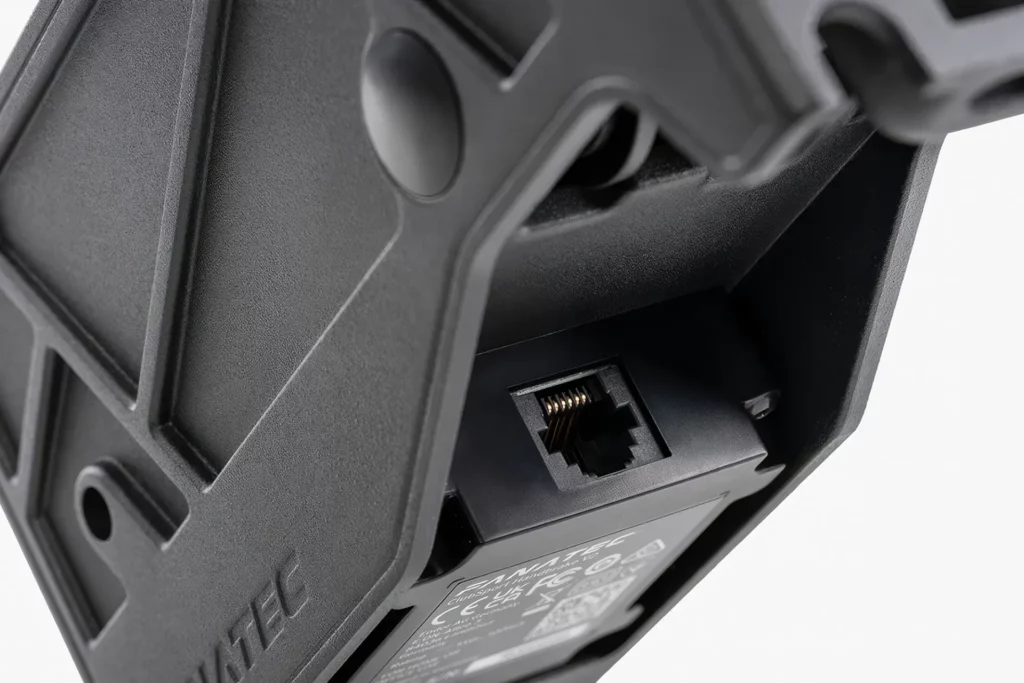
This is the part that has everyone scratching their heads. By default, the V2 connects via an RJ12 port on the back of a Fanatec base—and that’s it. To use it directly on a PC as a standalone USB device, you have to buy the ClubSport USB adapter separately, which costs around twenty euros. At this starting price, not including this cable is a decision that’s hard to defend, and it’s clearly what’s going to turn off a portion of the audience. On the console side, the same logic applies: the handbrake only works through a Fanatec base; it has no standalone connection to an Xbox or PlayStation. Another detail to note is that the analog signal isn’t yet perfectly calibrated on the belt-driven bases (the maximum doesn’t calibrate as expected), an issue that Fanatec says it will fix via a firmware update.
Who should consider this
The ClubSport Handbrake V2 is an excellent handbrake—sturdy and incredibly precise—designed for those who take rally, drifting, and off-roading seriously. Whether it’s the right choice for you depends mainly on two things: how deeply you’re already invested in the Fanatec ecosystem, and how much the USB connection matters to you. If you’re already using a Fanatec platform, it plugs in and works seamlessly, and its build quality and load cell justify its premium price point.


Reviews