
MOZA CRP2 Pedals : Test & Review | What it's really worth in 2026
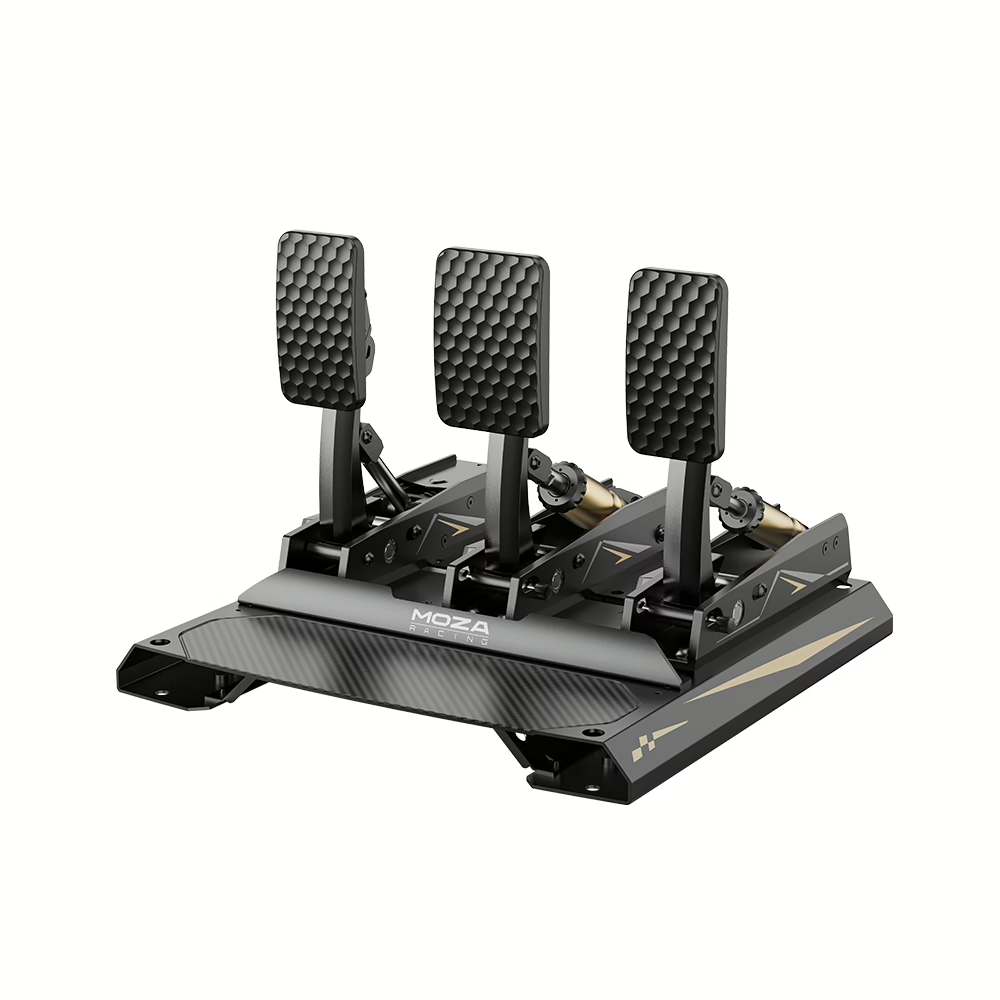
MOZA CRP2 Pedals: My quick review
This crankset gave me the sensation of truly transforming braking: more legible, more constant and more reassuring, you dare to brake later without losing control. It makes sense for PC simracers who are already a bit invested (serious cockpit, desire to progress) and who want a lasting solution without switching to hydraulics. The consistency/price ratio seems solid to me.
When you buy through our links, we may earn an affiliate commission.
MOZA CRP2 Pedals: a "serious" load cell pedalboard to take you to the next level
In today's sim racing ecosystem, the MOZA CRP2 Pedals are clearly positioned as a mid-range/high-end load cell crankset, designed for PC and simracers who want to take a real step up from original cranksets. The idea is simple: more braking precision, more consistency, more realism underfoot, without the price tag of full-hydraulic cranksets.
What immediately attracts you is the combo of racing design, massive construction and the promise of a racing-like feel. It's clear that MOZA is targeting the "serious" simracer who has already logged a few hours on the virtual track, who may already have a basic load cell crankset, and who is looking for a stiffer, more modular and more reliable package.
My angle is therefore clear: precision braking, coherence of the three pedals, quality of the physical and software settings, and ease of building a feeling specific to your riding style. No marketing blah-blah: what counts is whether you brake later, harder and more serenely, and whether the throttle really allows you to measure out your motricity, lap after lap. Because, in the end, that's where the tenths come in.
Design and manufacture: a serious block built to last
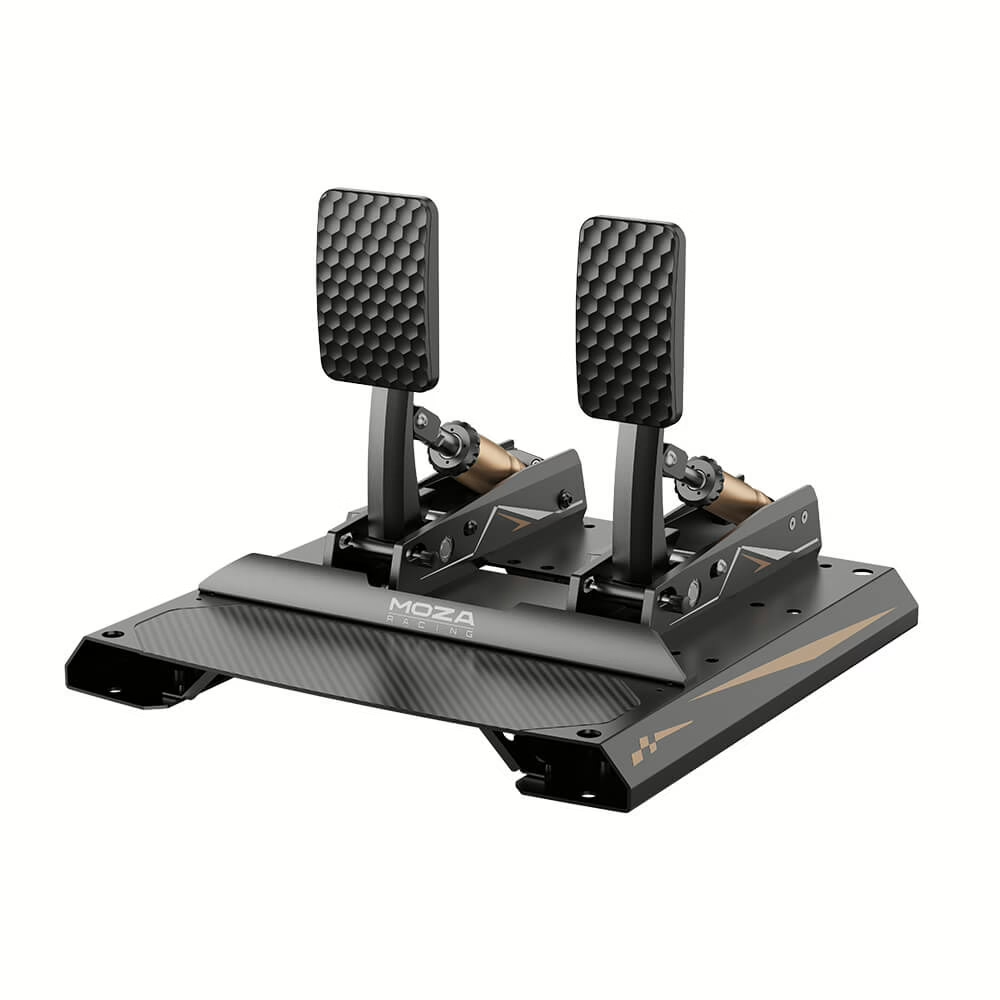
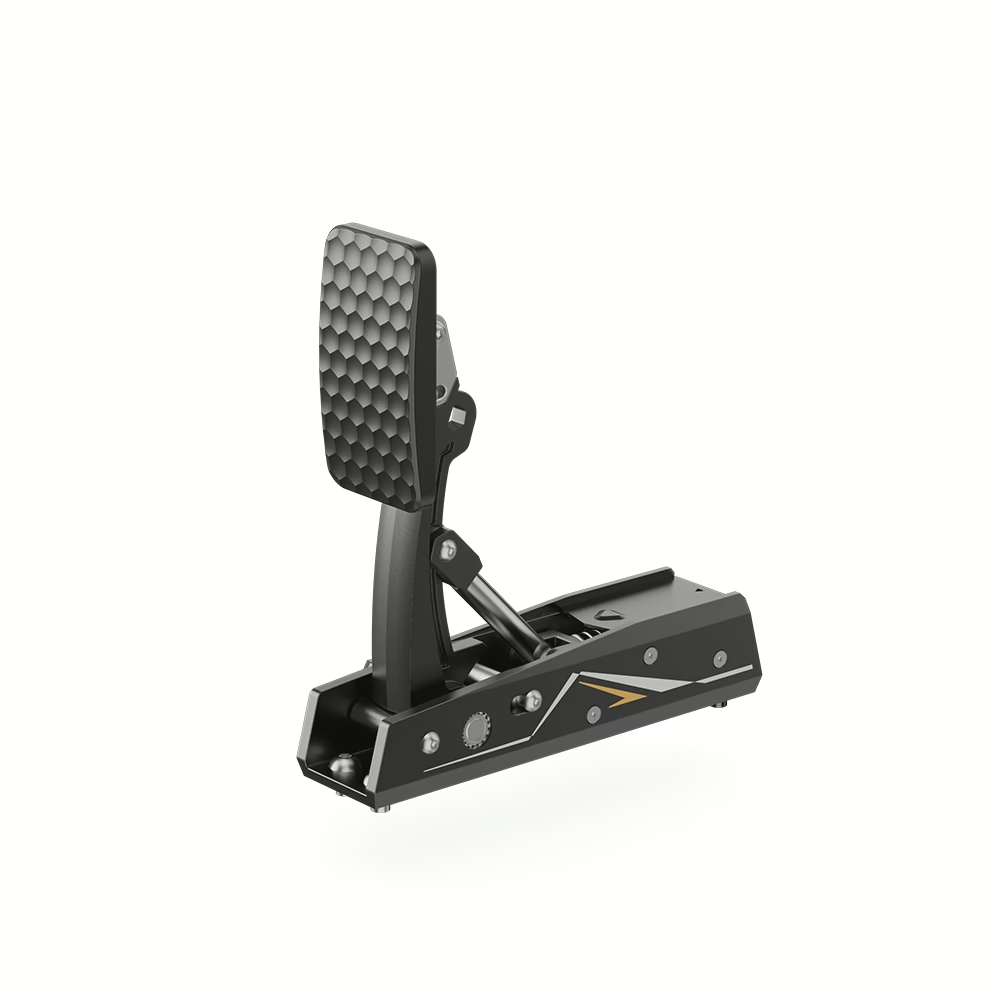
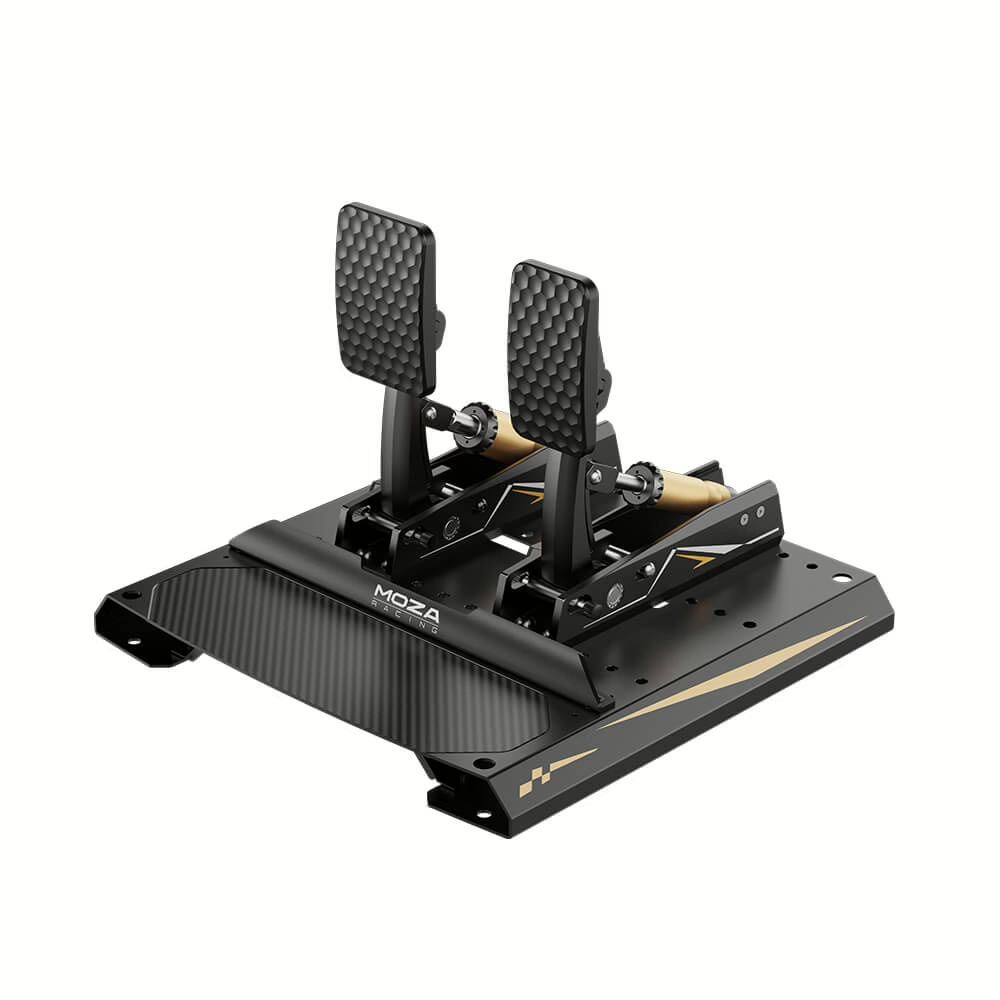
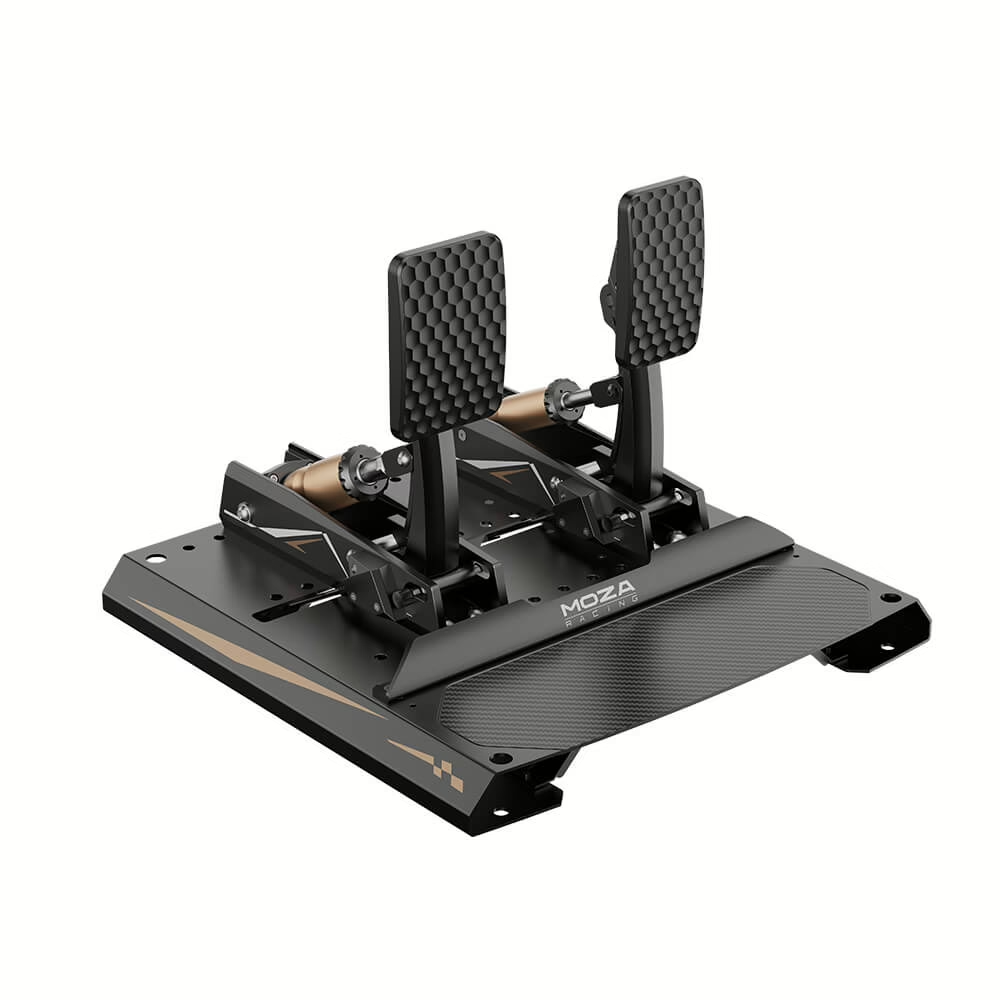
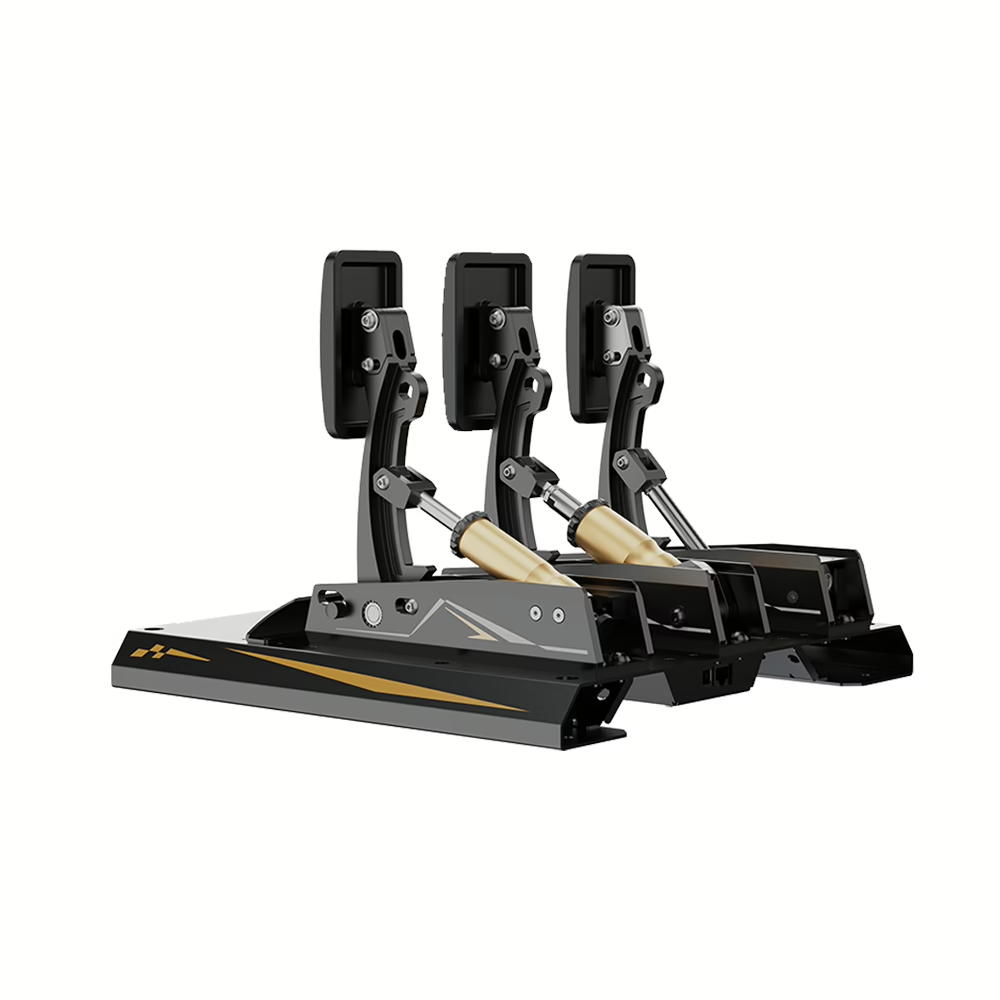
Visually, the MOZA CRP2 Pedals immediately give the impression of rather high-end "racing" equipment. The metal chassis, massive pedal arms, aluminum faces and reinforcements inspire confidence. In hand, everything feels dense, with no hollow or fragile parts. You clearly get the feeling you're buying a crankset built to withstand years of hard braking.
Overall rigidity is very good. Once correctly mounted on a solid cockpit, the block doesn't flinch. No perceptible torsion of the support, no excessive flex in the pedals, even when the brake is well applied. In this respect, we're well ahead of entry-level cranksets with conventional springs, and on a par with the good load cell competitors in the segment.
Overall, the finishes are clean: paint, machining, silk-screening, everything exudes a certain industrial seriousness. The pedals have an aggressive but functional look, with no unnecessary decorative parts. Underfoot, the faces offer a decent grip, neither too abrasive nor too smooth. You can ride in socks or go-kart shoes without question.
What's most surprising is the weight and one-piece feel. You feel like you're putting a real chassis component in your cockpit. On the other hand, the whole thing requires serious assembly: on a light stand or thin board, you feel that the crankset is "too strong" for the rest.
The small disappointments lie in the details. Some adjustments could be a little smoother, a few screws sometimes need a little attention to be perfectly aligned, and cable management lacks refinement compared to some more premium competitors. Overall, however, the product remains a cut above what you'll find in wheel + crankset base bundles, and comes very close to specialized mid-range references.
Settings, customization and compatibility: comprehensive, but still a challenge to master
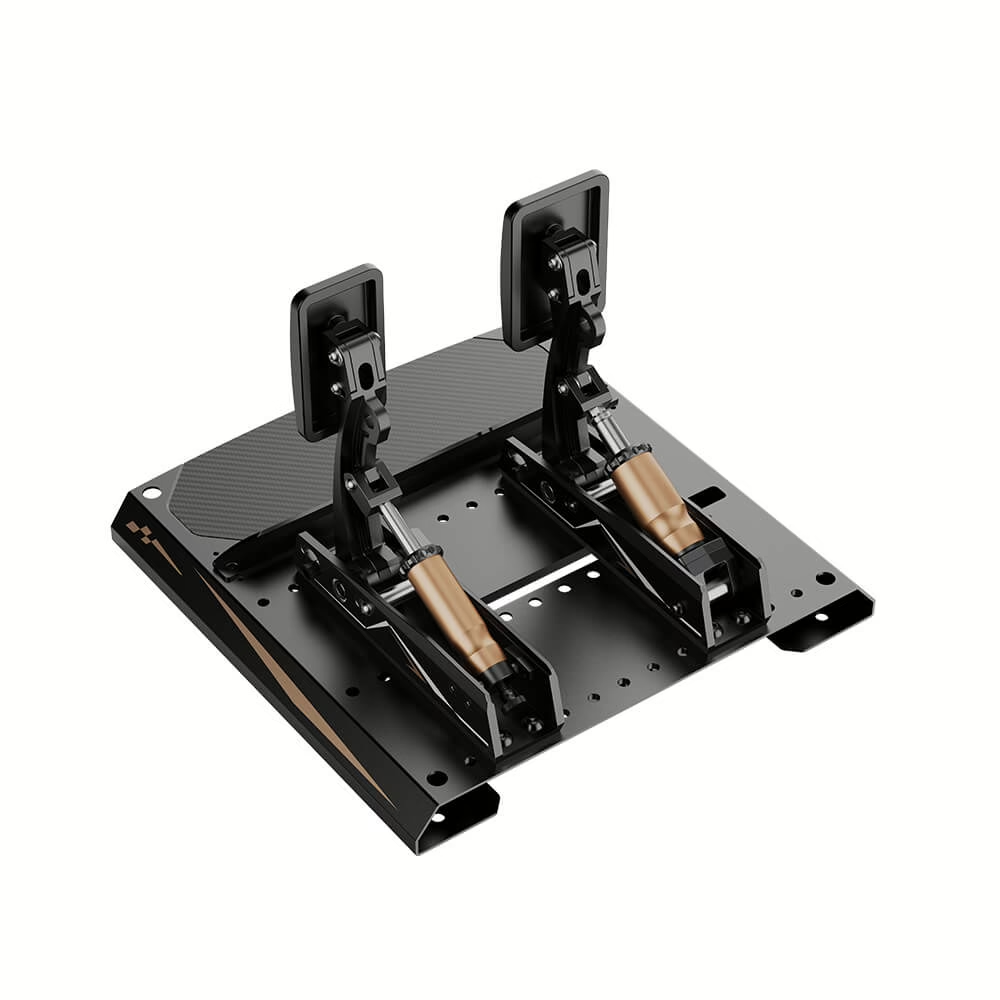
MOZA CRP2 Pedals are all about customization. Physically, you can adjust the lateral position of the pedals, the angle, and above all the hardness and stroke of the brake via elastomers and the load cell system. The throttle and clutch also benefit from useful adjustments to find a point of comfort and responsiveness consistent with your riding style.
On the software side, the MOZA Pit House software serves as the control center. The interface remains fairly clear: each pedal has its own response curve, dead zones and gain. It doesn't take long to get a feel for the pedal, whether it's a very progressive brake or, on the contrary, a hard, single-seater-style block, with a useful zone concentrated on a short stroke. The default presets are usable, but it really pays to spend time fine-tuning them.
The learning curve is there. It's not a simple "plug it in and forget it" as with a basic crankset. You need a minimum of curiosity to test different mechanical combinations (springs/elastomers) and fine-tune the software calibration. As far as I'm concerned, this is where the pedalboard really comes into its own: once you've found your setup, the sensations take off.
In terms of compatibility, this is clearly a product designed primarily for the PC. Integration into the MOZA ecosystem is straightforward: bases, steering wheels, shifters, everything can be controlled via Pit House. As a USB standalone, the pedalboard can also be integrated into a mixed setup with other brands, provided the game manages several peripherals. On consoles, use depends very much on the base and overall support: the CRP2 should be considered above all as a "PC-friendly" pedalboard.
In terms of upgradeability, we're talking more about a lasting step up than a simple entry point. For an intermediate or experienced simracer, the CRP2 can clearly stay in the setup for a long time, with no urgent need to upgrade to hydraulics, unless the quest for absolute realism becomes an obsession.
Sensations in play: the brake as a strong point, coherence as an asset
On the virtual track, it's the brakes that immediately set the tone. The load cell offers braking based on force rather than stroke, and this feature changes everything compared to conventional spring-loaded cranksets. Once properly calibrated, the brain begins to think in terms of pressure rather than pedal centimeters.
When braking, the first phase is clearly visible: you can clearly feel the attack, the moment when the pads "grab", then the build-up of effort. The feel of the elastomers gives the sensation of the rubber being compressed, with increasing resistance. You can fine-tune the locking threshold, especially with the ABS deactivated. You quickly understand what the car is doing, and that's very reassuring in difficult braking zones.
When braking hard at the end of a straight line, the crankset remains very stable. The foot anchors itself naturally, and the rigidity of the frame means that no energy is lost through deformation. Last-second corrections, small releases to avoid a jam, go down very well. You gain confidence lap after lap, which encourages you to brake later and harder. This is where the crankset really starts to save time.
On corner entry, the brake/release transition is well managed. You can "carry" the brake right up to the chord point with great finesse. For trail braking, you can really feel the amount of pressure remaining under your foot, which helps stabilize the front end. Compared with a more basic crankset, there's less of that blurred feeling where everything is decided by a few millimeters of travel.
On vibrators, the contribution is indirect but real. The brake remains stable enough to keep the pedal slightly depressed even when the car jumps or bounces. Stiffness helps to avoid parasitic pressure. The pedal is not "pumped" involuntarily, keeping the car in a more predictable grip zone.
Throttle response is excellent. The stroke is fluid, the resistance well proportioned, and you can modulate the driveability with precision, especially on powerful drives. On corner exits, it's easier to find the point where the wheels start to slip slightly without immediately spinning out. Half throttle/full throttle transitions are crisp and consistent with what you'd expect from a crankset of this level.
As for the clutch, how you feel about it depends very much on your style of driving. In modern driving with paddles and sequential gearboxes, it obviously plays a secondary role. In H-pattern, the clutch is convincing, with decent resistance and an identifiable bite for standing starts.
Over long sessions, the crankset shows its strength: consistency. Once you've memorized a pressure level for a given braking action, it remains reproducible throughout the session. Muscle fatigue may increase with the hardest settings, but feedback remains stable. This avoids the unpleasant "drift" of some cheap sensors which drift with temperature or time.
Compared to a more affordable load cell crankset, the main gains are in overall rigidity, stroke quality and fine adjustment. Compared with a very high-end hydraulic crankset, we lose a little of the nuance of micro-variations and the "organic" texture of the brake, but the CRP2 remains very clean and precise enough for most simracers, even the most demanding.
Who's it for? What we like, what we don't like
The MOZA CRP2 Pedals are clearly aimed at intermediate to advanced simracers, mainly PC users, who want to move up from the original pedalboard to something serious, without jumping straight to a very high-end investment. For a motivated beginner who knows he's going to invest, they can also be a relevant "direct" purchase, provided he accepts the set-up and learning phase.
What I appreciate most is the quality of the brake. The transition to pressure-based braking is clear, legible and usable. You really feel a gain in control under heavy braking, and the confidence it gives you quickly translates into lap times. Second strong point: overall rigidity. You can push without restraint, without feeling like you're torturing the equipment. Last but not least: the wealth of physical + software settings, allowing you to adapt the crankset to a GT, single-seater or rally style without feeling stuck in a single type of feel.
On the other hand, there are a number of limitations. Firstly, installation requires a solid cockpit. On a lightweight chassis, much of the pedalboard's appeal is lost, and vibrations or parasitic movements can become a nuisance. Then there's the handholding phase, which can be confusing: without spending a minimum amount of time adjusting the set-up, you may end up with an average feel, and fail to exploit the product's full potential. Finally, in terms of compatibility, this is not the most universal pedalboard for console gamers; it is aimed above all at a structured PC environment.
In terms of investment, we're in a price range that requires a minimum of thought, but the perceived value is good. Serious materials, coherent feel, real room for improvement: you really get the impression of putting money into a key riding element, not just a cosmetic accessory. For a simracer who intends to ride regularly, this is typically the kind of purchase that justifies itself over time.
Verdict: a real step up in a serious setup
MOZA CRP2 Pedals bring something very tangible to a sim racing setup: more reliable, more consistent and more legible braking, supported by solid construction and adjustment possibilities wide enough to suit many profiles. We're clearly moving on from the "correct crankset" stage to the "performance tool" stage.
On the market, I'd place them in the ambitious mid/top range: above entry-level load cells often limited in rigidity and settings, but still below ultra-premium hydraulic cranksets, both in price and complexity. For many players, this will be exactly the right compromise between realism, budget and relative simplicity.
I clearly recommend them to PC simracers with a serious cockpit, who want to stabilize their setup for several years and who attach real importance to braking and consistency. For the very occasional gamer, or those who drive mainly on console with a lightweight chassis, the interest is more limited and the budget can be better allocated elsewhere.
If you're looking to take your braking to the next level, gain confidence and settle on a crankset that can keep up with your progress, MOZA CRP2 Pedals can clearly make the difference in your setup.




Reviews