
Fanatec ClubSport Pedals V3 : Test & Review | What it's really worth in 2026
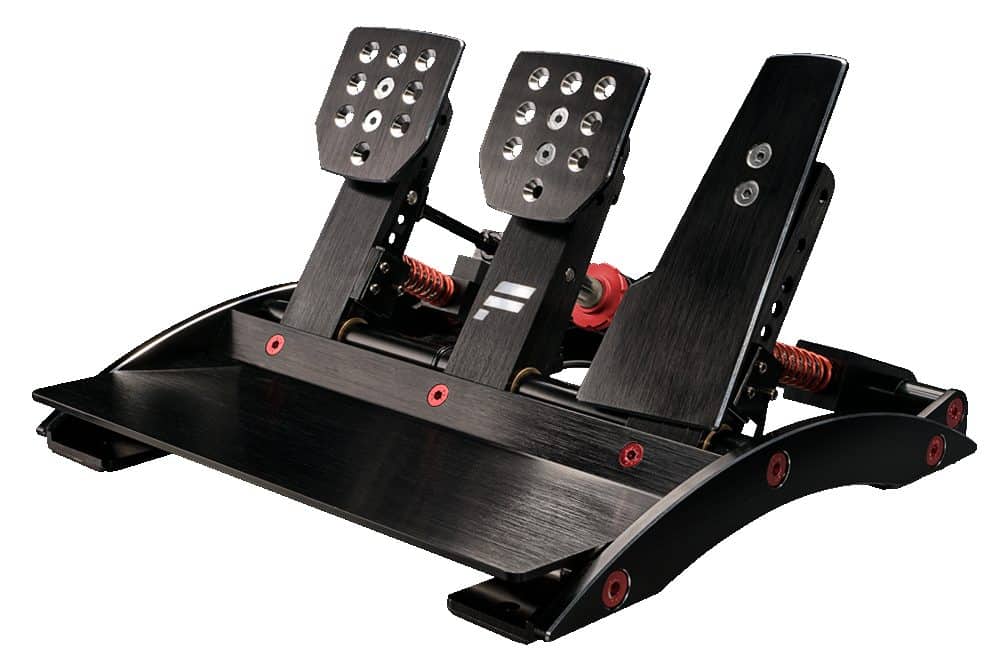
Fanatec ClubSport Pedals V3: My quick review
The ClubSport Pedals V3 is the pedal set that got us into pressure-based braking, and it remains a reliable choice years later. Its 90 kg load cell brake and all-metal construction ensure consistent braking performance—provided you have a rigid cockpit and, ideally, the Brake Performance Kit for a firm braking feel. It’s no longer the newest model on the market, but for shaving off tenths of a second where it really counts, it remains the gold standard.
When you buy through our links, we may earn an affiliate commission.
What We Liked
- 90-kg load cell brake: precise, controllable, and, above all, consistent braking
- All-metal construction (machined aluminum), heavy-duty and virtually indestructible
- A wide range of adjustment options: brake hardness and travel; plates and springs included
- A clutch that simulates the slipping point—a real plus for immersion
- Rugged RJ12 connector + direct USB connection to PC (works with any steering wheel)
- Brake (ABS/lockup) and throttle (slip) curbs
Reserves
- The brake requires a lot of force: a stiff rig is essential
- The Brake Performance Kit (for firmer braking) is not included; it is optional
- The front of the base is difficult to attach
- The curbs are a bit weak and get weaker over time
- Optional D-shaped plastic plates that look a little cheap
Technical Specifications
| Configuration | 3 pedals (gas, brake, clutch) |
| Brake | 90 kg load cell, adjustable stiffness and stroke |
| Acceleration / Clutch Sensors | Contactless magnetics |
| Resolution | 12 bits (4,096 points) via USB |
| Construction | CNC-machined aluminum, approximately 6.8 kg |
| Connection | RJ12 (Fanatec base) or direct USB connection to PC; console via Fanatec base |
Fanatec ClubSport Pedals V3: What if the real time-saver were right under your right foot?
We spend hours choosing our base and steering wheel, and we often overlook the component that makes the biggest difference to lap times: the pedals—and especially the brake. The ClubSport Pedals V3 has remained at the top of our recommendations for years for one simple reason: it offers a high-quality load-cell brake in an all-metal construction, without requiring the budget of a custom-built pedal set. We put it to the test with just one question in mind: Does it still truly change the way you brake today, and under what conditions?
The brake—it all starts there
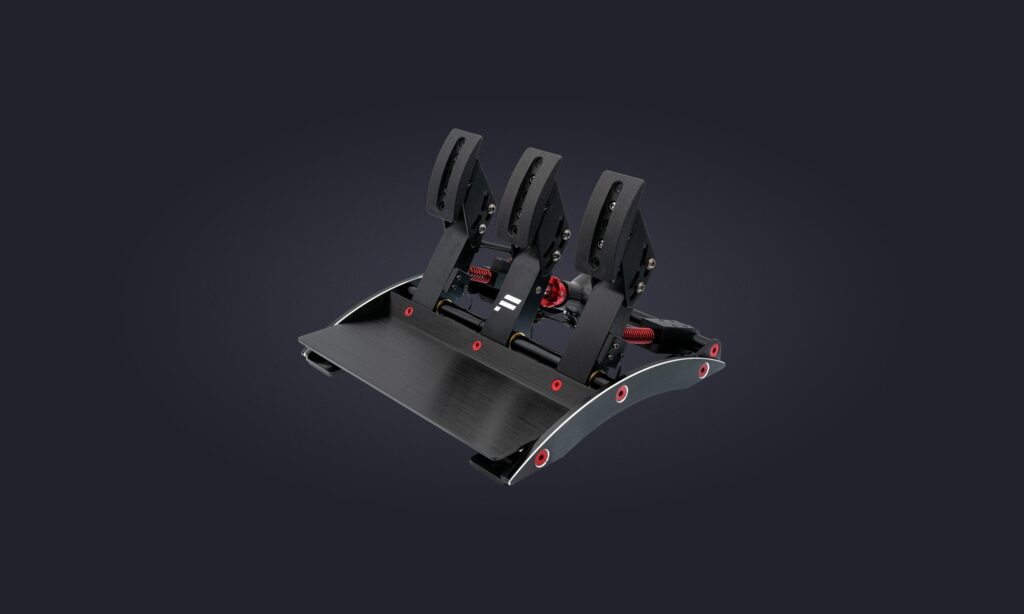
On an entry-level pedal, a potentiometer measures the distance the pedal travels. On the V3, a load cell measures the force applied, up to 90 kg of pressure. This distinction may seem technical, but it makes all the difference in practice: you no longer brake based on the position of your foot, but rather on the pressure you apply. And since the body remembers muscle tension much better than a position in space, consistency improves dramatically.
In practice, you plant your heel, push off with your leg, and find the same point of contact lap after lap. The brake’s firmness and travel are adjusted mechanically, the sensitivity is adjusted in the software, and you can even fine-tune it mid-session depending on the car. That’s when the pedals stop being just an accessory and become a true driving tool.
On the Track: What Changes, Turn by Turn
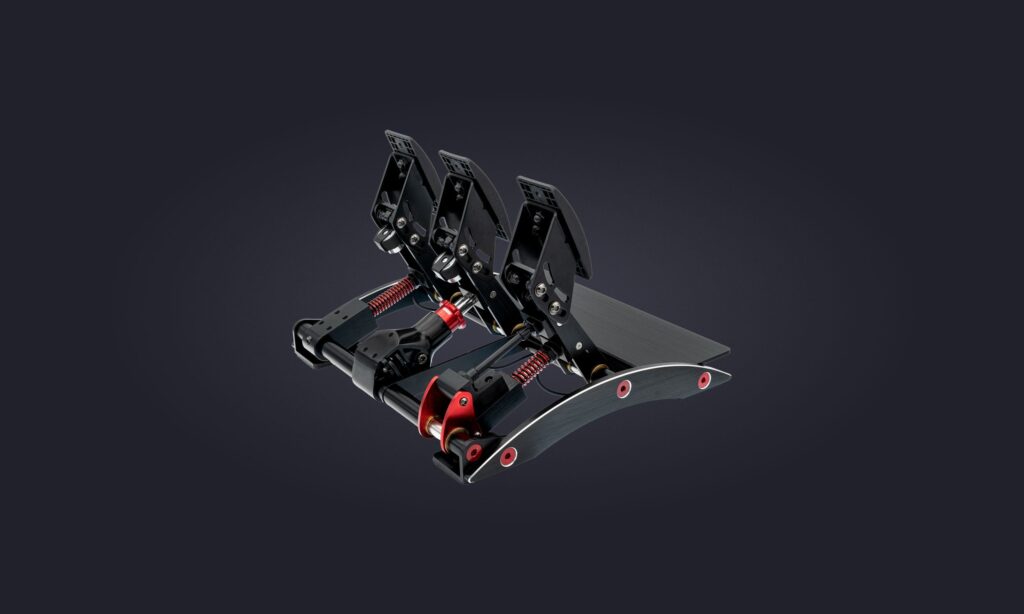
The first time you use it, it’s a bit of a shock if you’re used to spring-loaded brakes. When entering a turn, you aim for a constant percentage of brake pressure, and the car immediately becomes more stable under braking—especially without ABS or in a car that’s sensitive to weight transfer. You don’t lock up by accident: you lock up in a controlled manner, because you can feel the force at which the wheel loses traction and you’re able to stay just below that threshold.
The biggest improvement comes from trail braking. When you gradually release the brake while turning, the consistent pedal feel allows you to finely control the transition from braking to cornering. You maintain front-end control and avoid those silly understeer situations caused by braking too long or too hard. Most importantly, you dare to brake later, simply because you know you can adjust your braking without losing everything.
When accelerating again, the accelerator responds with smooth, progressive control. Whereas a basic pedal setup offers a somewhat on-off response, this system allows you to precisely modulate traction when exiting slow corners and better recover from minor loss of traction in high-powered cars. The clutch, meanwhile, offers a pleasant surprise: its mechanism simulates the slip point of a real clutch, making starts and downshifts with a manual transmission much more intuitive. The game determines the actual friction point on its own, so it’s mostly about immersion—but what an immersion it is.
Curbs add another layer of information when configured properly: wheel lockup and ABS on the brakes, wheel spin on the throttle. In some simulations, this helps you react a little sooner during hard braking. Let’s be honest, they’re still a bit weak; you notice them mostly when you’re not focused on driving, and they tend to lose their effectiveness over time. That’s not why you buy the V3, but it’s there.
During long sessions, consistency really stands out. You set the brake pretty hard—your legs have to work a little harder than with a soft pedal—but in exchange, you stop having to search for your braking point during the race. Muscle memory takes over; you settle on a specific force, and you gain consistency lap after lap. Whether switching from a heavy GT to a nimble single-seater, you quickly find your bearings by simply adjusting the sensitivity in the software, without touching the mechanics. That’s another strength of the V3: it adapts to the car instead of forcing a single driving style on us.
Metal, weight, and adjustments: the mechanics inspire confidence
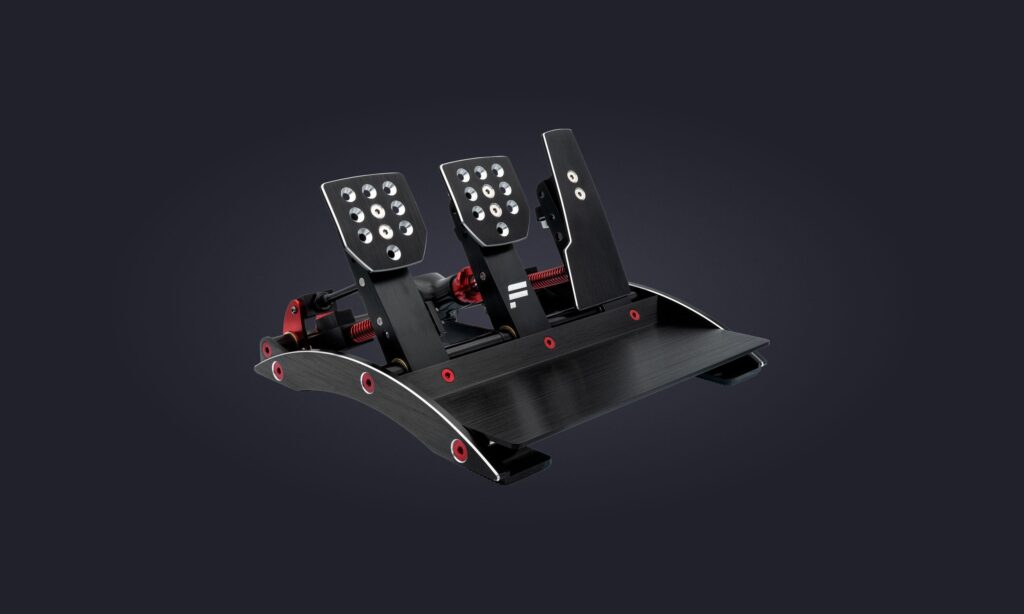
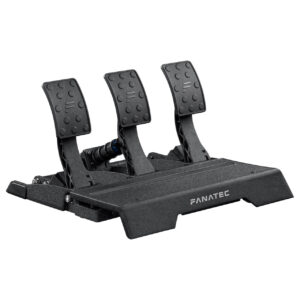
As soon as you unpack it, the tone is set. Everything is made of machined aluminum—including the base and footrest—and the whole unit weighs nearly seven kilos. Nothing bends, nothing sounds hollow, and you quickly realize that this weight is an asset: it’s what allows you to slam on the brakes without the bike budging an inch. Its reputation for being indestructible is well-deserved.
When it comes to adjustments, the V3 is a playground. Side-to-side position, height, and angle of the pedals; stiffer throttle and clutch springs included in the box; alternative D-shaped pedals with extensions to perfect your heel-and-toe technique: you can always find a setup that feels just right under your foot. Only one detail struck us as a bit cheap: these D-shaped pedals are made of plastic and clash with the rest of the all-metal build, but they’re optional. The Fanatec software recognizes the pedals immediately, and calibration is simple. Our practical tip: don’t set the brake’s maximum force higher than what you’ll actually apply in-game—there’s no point in aiming for full travel if you never push that hard.
The Accessories That Really Matter
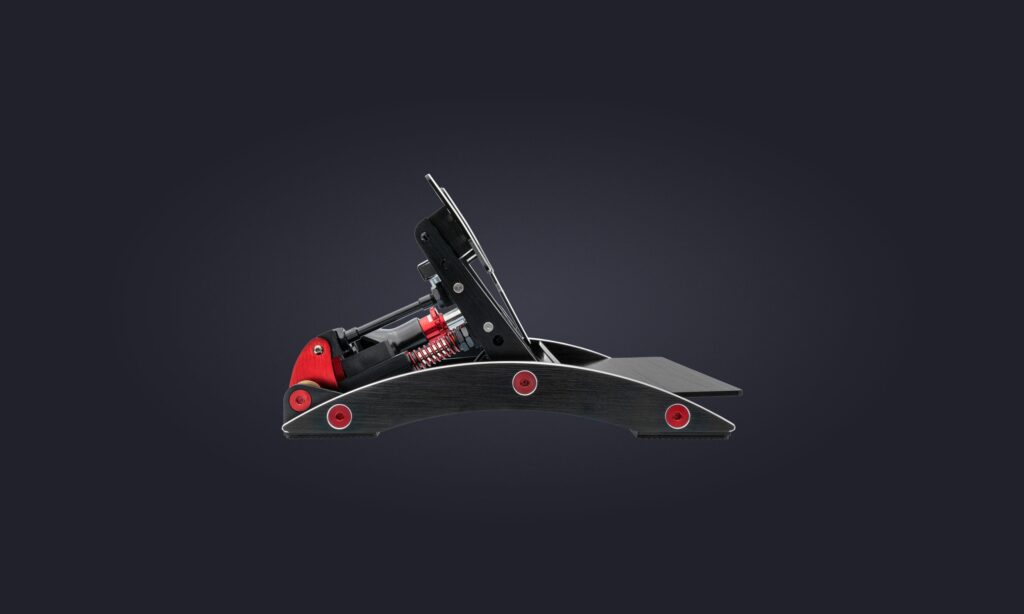
Two options are worth noting, because they directly affect the brakes. The Brake Performance Kit replaces the stock stop pads with firmer elastomers to shorten the travel and increase braking firmness, with several hardness options available. Stock, the pedal may feel a bit soft depending on personal preference, and this kit clearly takes it up a notch. It’s not included—which we frankly regret—but it’s still inexpensive, and we’re happy to consider it the perfect complement to the V3 for anyone who prefers firm brakes with a short pedal stroke.
The Damper Kit, on the other hand, adds adjustable hydraulic resistance to the pedal. On the brake, it gives the pedal that nice, car-like feel. On the accelerator, however, we don’t recommend it: even at the lowest setting, it prevents the pedal from returning fully and makes it harder to give quick bursts of gas. The good news is that if you install the Brake Performance Kit, the Damper becomes largely redundant on the brake. You might as well save your money and focus on the stop kit instead.
Before You Buy: Three Things to Know
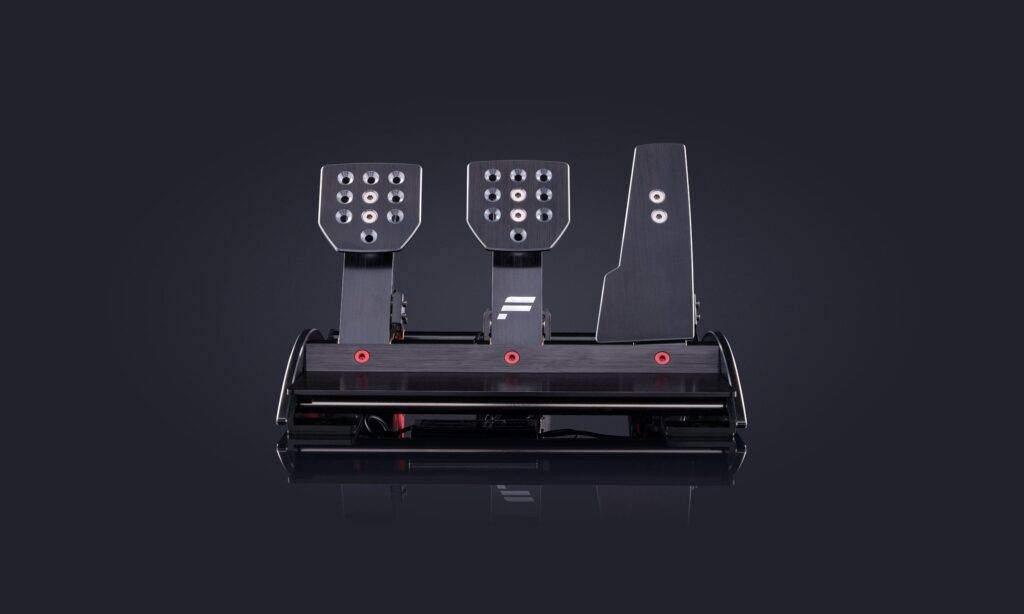
First, and this is crucial, these pedals require a rigid mount. The brake requires so much force that a structure that flexes will result in inconsistent feedback, with the braking point becoming unpredictable. On a simple, lightweight steering wheel and pedal set, much of the product’s appeal is lost. On a serious rig, on the other hand, the firmness is consistent and reassuring.
Next, assembly. The connections are neat and sturdy—RJ12 connectors—which are much more reliable than the small connectors used in previous generations. But attaching the front of the base was a bit of a hassle: the front holes are hard to reach, and you often have to screw from the bottom while holding the nut on top. Nothing insurmountable, but be prepared to be patient and make sure you have the right length of screws.
Finally, compatibility. When connected directly via USB to a PC, the V3 units work with any steering wheel, regardless of brand. On a console, you must connect them to a Fanatec base via the RJ12 port. A dedicated port also allows you to connect the ClubSport handbrake, which is handy when staying within the Fanatec ecosystem.
Who is it for, and our verdict
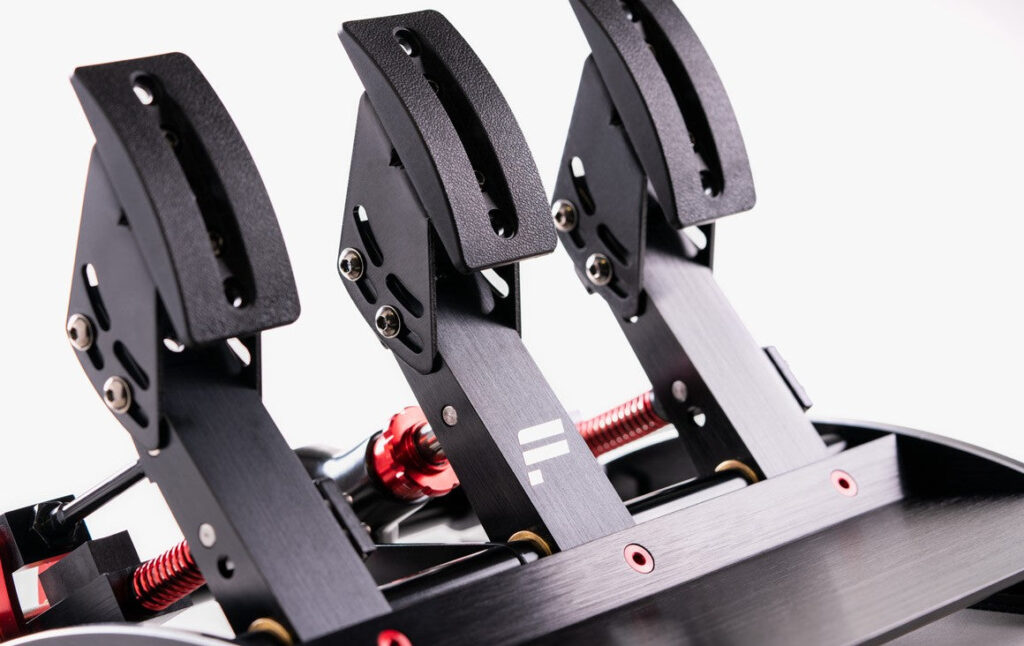
The ClubSport Pedals V3 are designed for drivers who want to take their braking to the next level without investing in an overpriced custom pedal set. You just have to accept its requirements: a rigid cockpit, a little time for setup, and ideally the Brake Performance Kit for truly firm braking. For a complete beginner, this isn’t the first purchase you should make; for an already experienced driver who feels their pedals are holding them back, it’s an upgrade that makes all the difference.
We’re not going to claim that this is the newest or most realistic pedal set on the market. High-end hydraulic stops go further in terms of sheer finesse, the curbs are showing their age, and the front mount reveals that the design is a bit dated. But the essentials are still there, and they’re impressive: a precise and consistent load-cell brake, a nearly indestructible metal construction, and a rare range of adjustment. If you want to improve in the area where tenths of a second are truly won—braking—without breaking the bank, it remains one of the safest bets in sim racing.



Reviews