Fanatec CSL Steering Wheel P1 V2 : Test & Review | What it's really worth in 2026
Fanatec CSL Steering Wheel P1 V2: My quick review
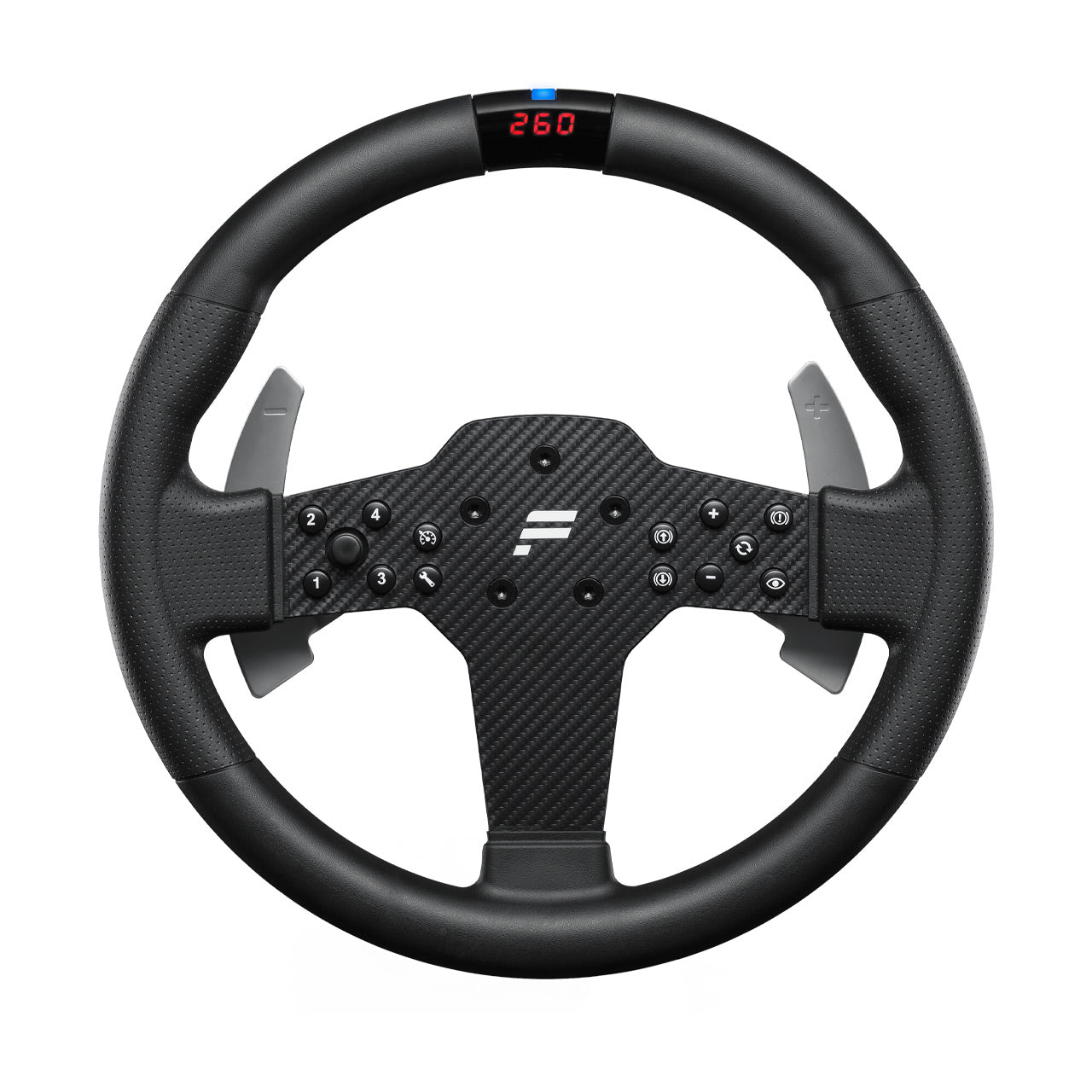
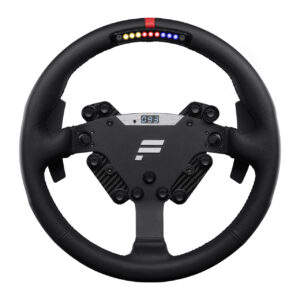
The CSL Steering Wheel P1 V2 is a solid entry point into the Fanatec ecosystem—a 300-mm round steering wheel designed for those on a budget without feeling like a cheap plastic toy. We’ve put it through its paces from rally to GT to F1, and it holds up well as long as you use it within reason. Its real limitations lie in torque limit and console compatibility—two things to keep in mind before adding it to your cart.
When you buy through our links, we may earn an affiliate commission.
What We Liked
- A very affordable price for a genuine Fanatec steering wheel
- Rubber-coated handle grips, secure grip, and maintenance-free
- Lightweight (about 1.2 kg), maintains a low-torque feel
- A versatile driver from rallying to GT and F1
- Integrated LED telemetry display and RevStripe
- A dozen buttons plus a programmable directional pad
- Metal paddles, QR2 Lite mount pre-installed
Reserves
- Carbon-fiber-look polymer front panel, no metal
- Buttons that feel a little mushy to the touch, like a game controller
- Snap-dome palettes without the magnetic snap
- Tighten to approximately 8 Nm; set to reduced mode on DD1/DD2
- Not compatible with Xbox
- No rotary encoders
Technical Specifications
| Diameter | 300 mm (round) |
| Weight | about 1.2 kg |
| Facade material | carbon-like polymer |
| Paddles | metal, snap-dome system |
| Buttons | a dozen plus a multi-position directional stick |
| Display | 3-digit LED display and RevStripe RPM |
| Quick-release fastener | QR2 Lite Preinstalled |
| Couple | limit of approximately 8 Nm (maximum torque with CSL DD / GT DD Pro and Boost Kit 180) |
| Platforms | PC and PlayStation (not Xbox) |
| Compatible bases | CSL DD, GT DD Pro, CSL Elite, Podium, and ClubSport (flange torque) |
The Ultimate Entry-Level Model from Fanatec
The CSL Steering Wheel P1 V2 plays a specific role: it offers a genuine Fanatec steering wheel to beginners or those on a budget, without making them settle for a cheap plastic toy. It’s a classic 300 mm diameter wheel—a versatile size that works just as well on a GT3 as it does on a single-seater or a rally car. As soon as you pick it up, you’ll notice how light it is (about 1.2 kg), and this isn’t just a passing impression: it allows the base to reproduce the fine details of force feedback, even when you lower the torque.
Production that stays within budget
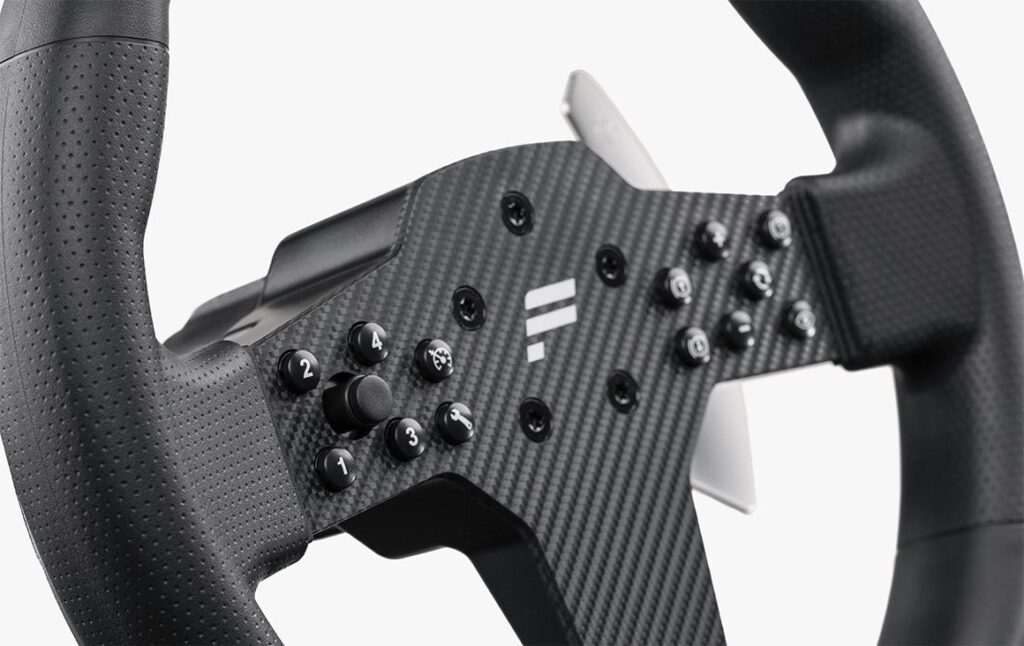
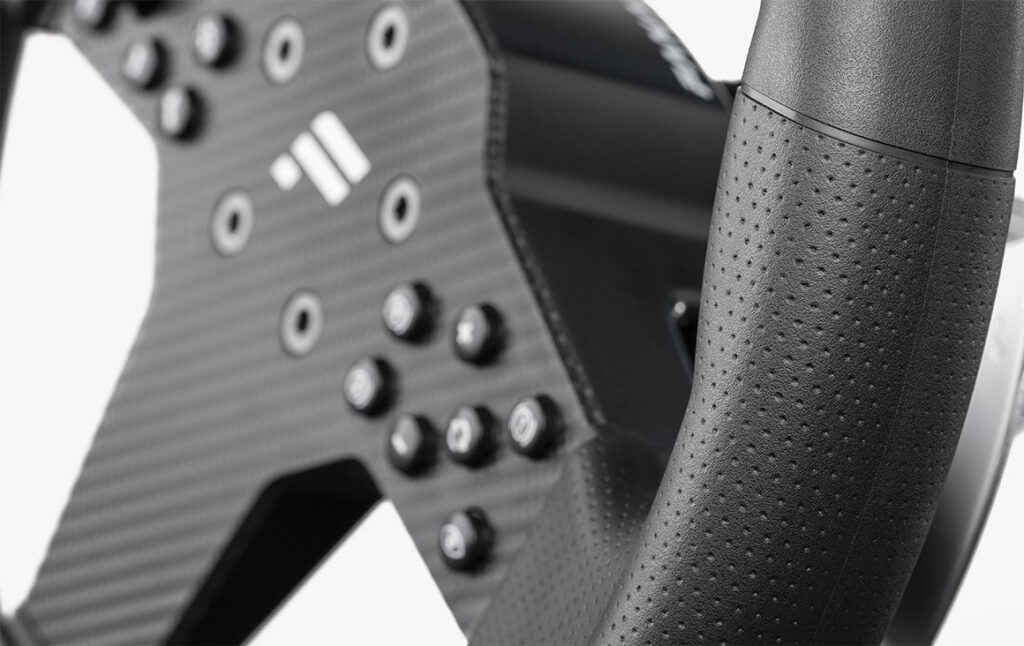
Let's be clear on this: the carbon-look trim is a polymer, not metal, and the steering wheel is mostly made of plastic. But the construction is solid and doesn’t creak under your hands. What impressed us most was the rubberized grip on the handles. It offers a firm grip—slightly thicker than on the Formula V2—making it easy to hold securely. Unlike entry-level Alcantara, which quickly becomes shiny, this coating requires no maintenance and showed no noticeable wear after our long sessions. In the uncoated areas, you’re left with hard plastic—which is no surprise at this price point.
Buttons, paddles, and a small screen
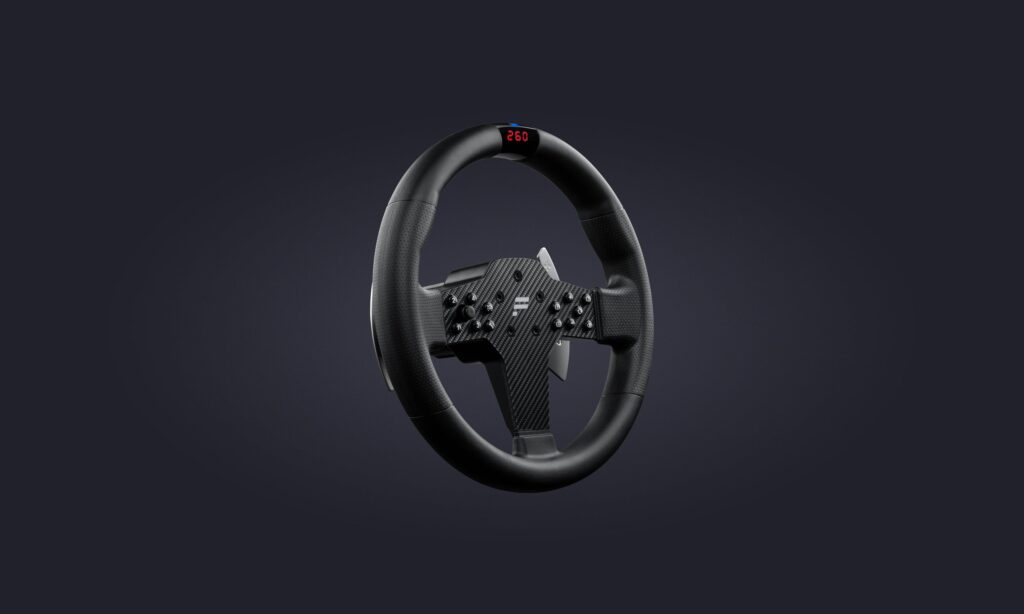
In terms of controls, you use a dozen buttons plus a multi-position directional stick with a push button—enough to navigate menus and adjust settings without letting go of the steering wheel. Honestly, the buttons feel a bit mushy—quite similar to a game controller—which doesn’t feel very premium but is still functional. The shift paddles are made of metal and use a snap-dome mechanism, with a satisfying click. We do miss the magnetic click of the Advanced Paddle module, which is more satisfying, but at this price point, it’s an expected compromise. The small three-digit LED display, located beneath the RevStripe, is surprisingly easy to read given its size: speed, gear selected, and basic telemetry all display clearly in compatible games.
Behind the wheel, what makes a difference on the track
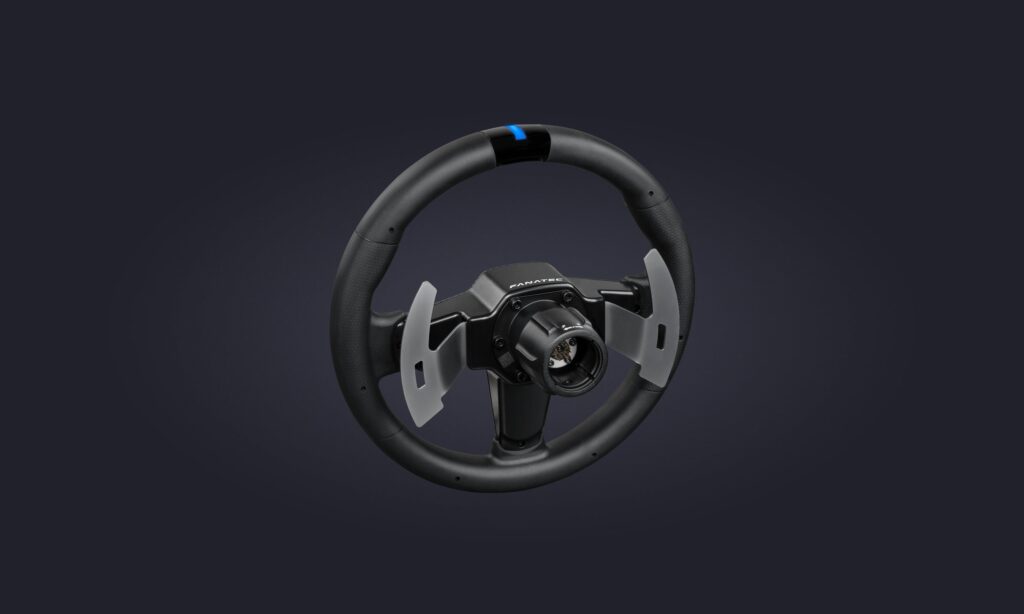
That’s where the P1 V2 pleasantly surprised us. In an MX-5 or a 911 GT3 Cup, we found it easier to turn the wheel sharply than with a Formula V2, which reduces stress in tight corners and during long stints. The lightness of the round wheel helps maintain feedback during small corrective movements. We’ve taken it from drifting to rallying to GT and F1: the versatility of the round wheel works well for just about every driving style. For a typical sim racer using an entry-level or mid-range setup, it delivers exactly what it promises.
The Real Catch: Relationship and Compatibility
A crucial point to understand before buying. This steering wheel always limits the base’s torque to about 8 Nm, regardless of the quick-release mount used. When connected to a high-end base like the DD1 or DD2, it automatically activates a reduced-torque mode, resulting in a noticeable decrease in force feedback: so this isn’t the right wheel to pair with a Podium. On the other hand, it takes full advantage of a CSL DD or a Gran Turismo DD Pro, and can even tap into their full torque if they’re equipped with the Boost Kit 180. It comes with the QR2 Lite quick-release mount pre-installed. Regarding platforms, please note: it works on PC and PlayStation, but it is not compatible with Xbox. On PS4, certain features depend on the capabilities of the console and the game.
Who is it for, and our verdict
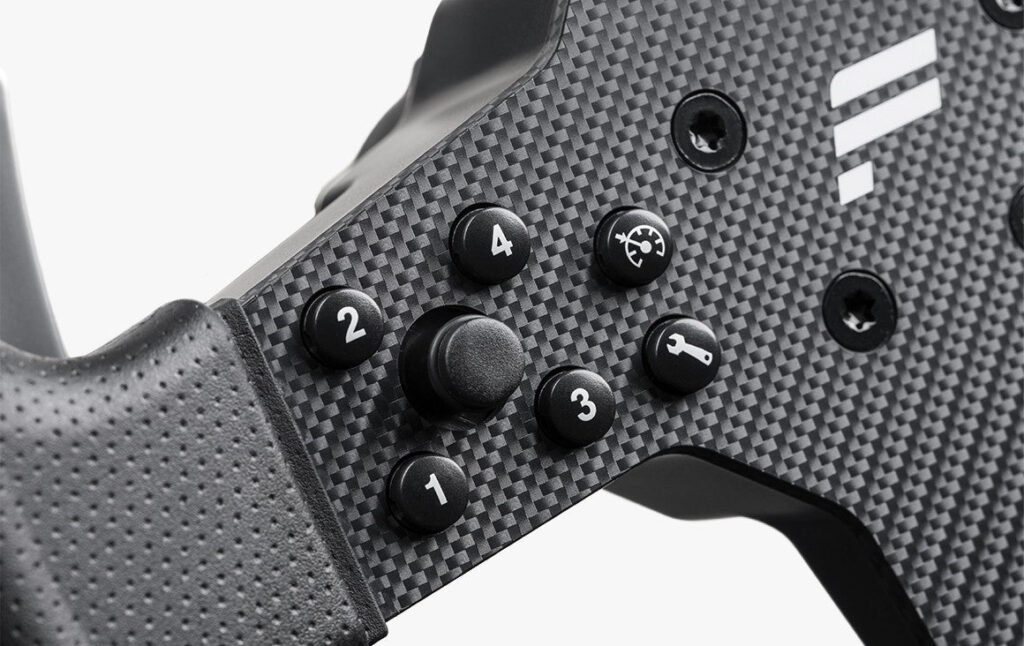
The P1 V2 is designed for owners of the CSL DD or GT DD Pro who want a truly versatile Fanatec steering wheel without breaking the bank. It lacks the metal construction, the magnetic click of the paddles, and the rotary encoders found on premium models, and its torque is limited. But for the price, it delivers much of what a high-end steering wheel offers: a solid grip, a telemetry display, mappable buttons, and durability that held up through our sessions. An excellent starting point—as long as you stick to its intended use.
Frequently Asked Questions
Which sim racing wheel should you choose if you're just starting out?
Direct drive or belt drive: What's the difference?
Does this hardware work on PS5 and Xbox?
Do you need a cockpit to get off to a good start?
How much should I budget for a good setup?
Other Reviews & Testimonials
-
Fanatec ClubSport Steering Wheel GT Forza Motorsport V2 for Xbox
-
Fanatec ClubSport RS
-
Ascher Racing B24-SC
-
Fanatec ClubSport Steering Wheel Flat 1 V2 for Xbox
-
Fanatec ClubSport BMW M4 GT3
-
Fanatec ClubSport Steering Wheel R300 V2
-
Fanatec ClubSport Steering Wheel NASCAR V2
-
Fanatec ClubSport Steering Wheel GT Alcantara V2


Reviews