
Heusinkveld Sim Pedals Sprint : Test & Review | What it's really worth in 2026
Heusinkveld Sim Pedals Sprint: My quick review
This crankset gave me the feeling of really taking back control of my braking: more confidence, more consistency, fewer silly mistakes on big downstrokes. Above all, it makes sense for PC simracers already equipped with a rigid cockpit and who ride often. The investment remains coherent if the objective is clearly performance and progression.
When you buy through our links, we may earn an affiliate commission.
Heusinkveld Sim Pedals Sprint: my opinion after intensive use
In the world of sim racing, Heusinkveld Sprint pedals have become a kind of "serious" reference for those who want to go beyond entry-level equipment without falling into the ultra-competitive extreme. On paper, they promise one thing: to turn braking into a main weapon, with almost "engineer-like" precision.
This crankset is clearly aimed at demanding simracers who ride often, who want consistent lap times, and who are beginning to feel the limits of the original pedals in their cockpit or steering wheel. The promise is simple to formulate, but difficult to keep: ultra-constant braking, fine tuning, industrial-model robustness, without becoming unplayable or elitist.
For my part, I approached them from a very clear angle: braking feel, consistency over time, ease of use of settings, and "investment / real gain on the track" ratio. Because a crankset at this level of the range isn't just an accessory, it's a key part of the setup. When you change pedals, you really change the way you ride.
What I'm interested in here is whether Sprint justifies its reputation, and above all for what type of simracer it really makes sense.
Design and manufacturing: real simulation equipment, not toys
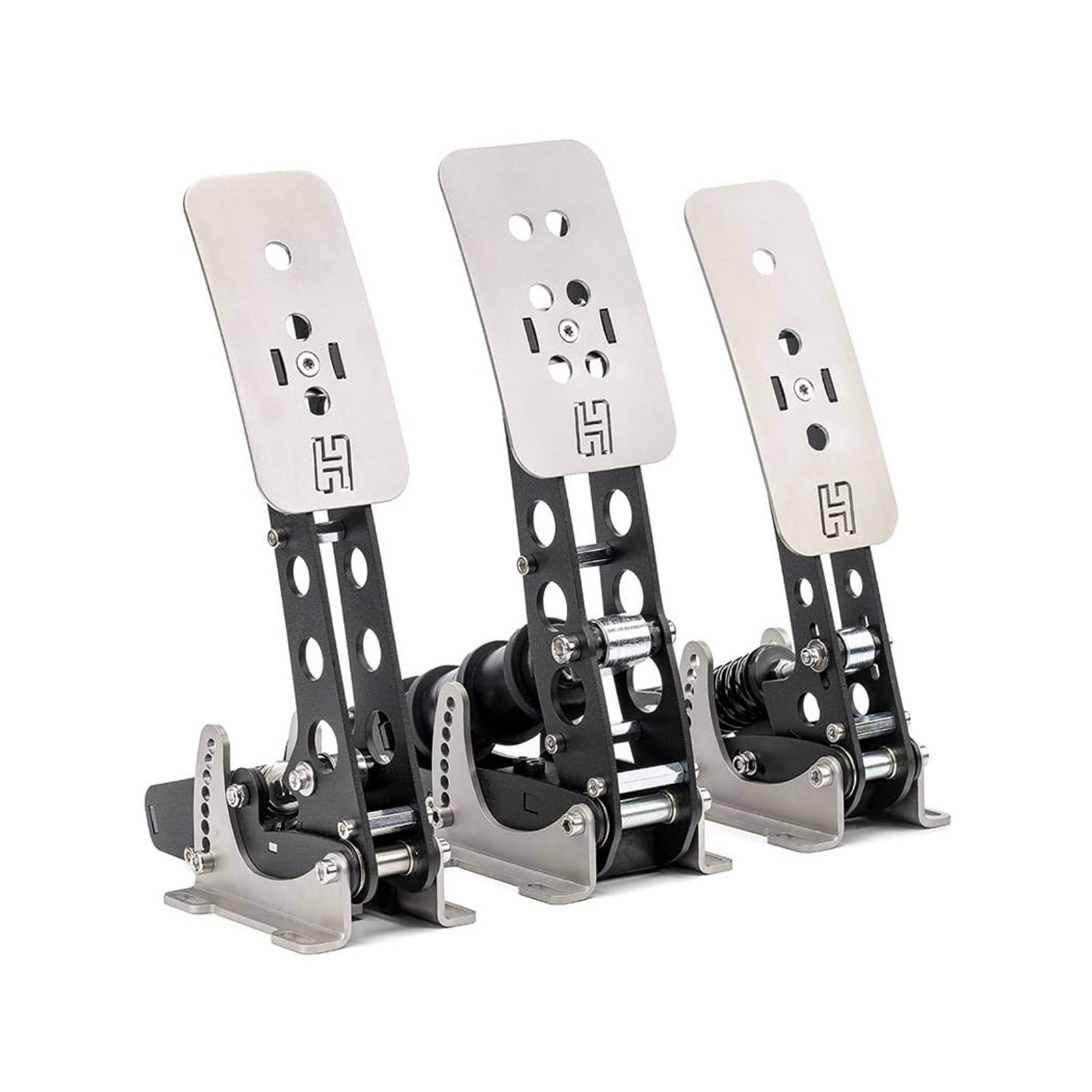
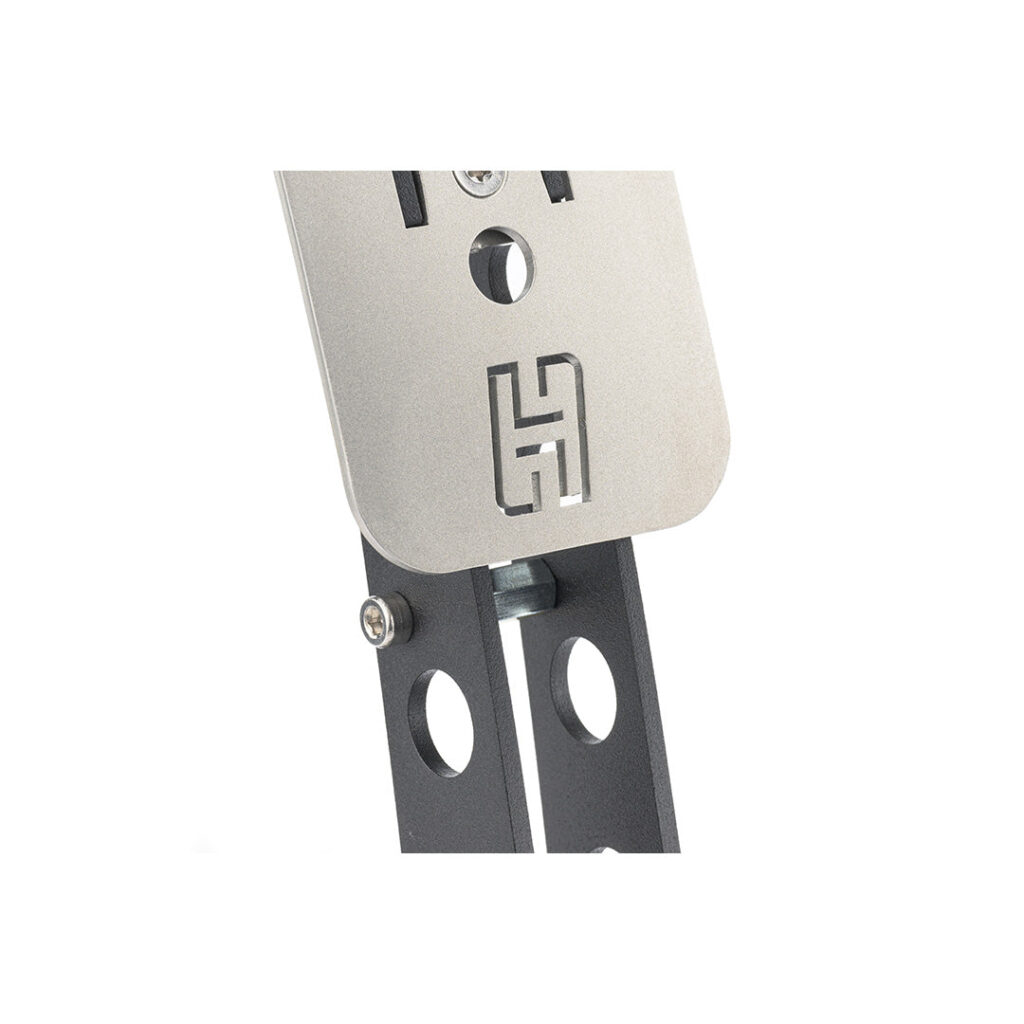
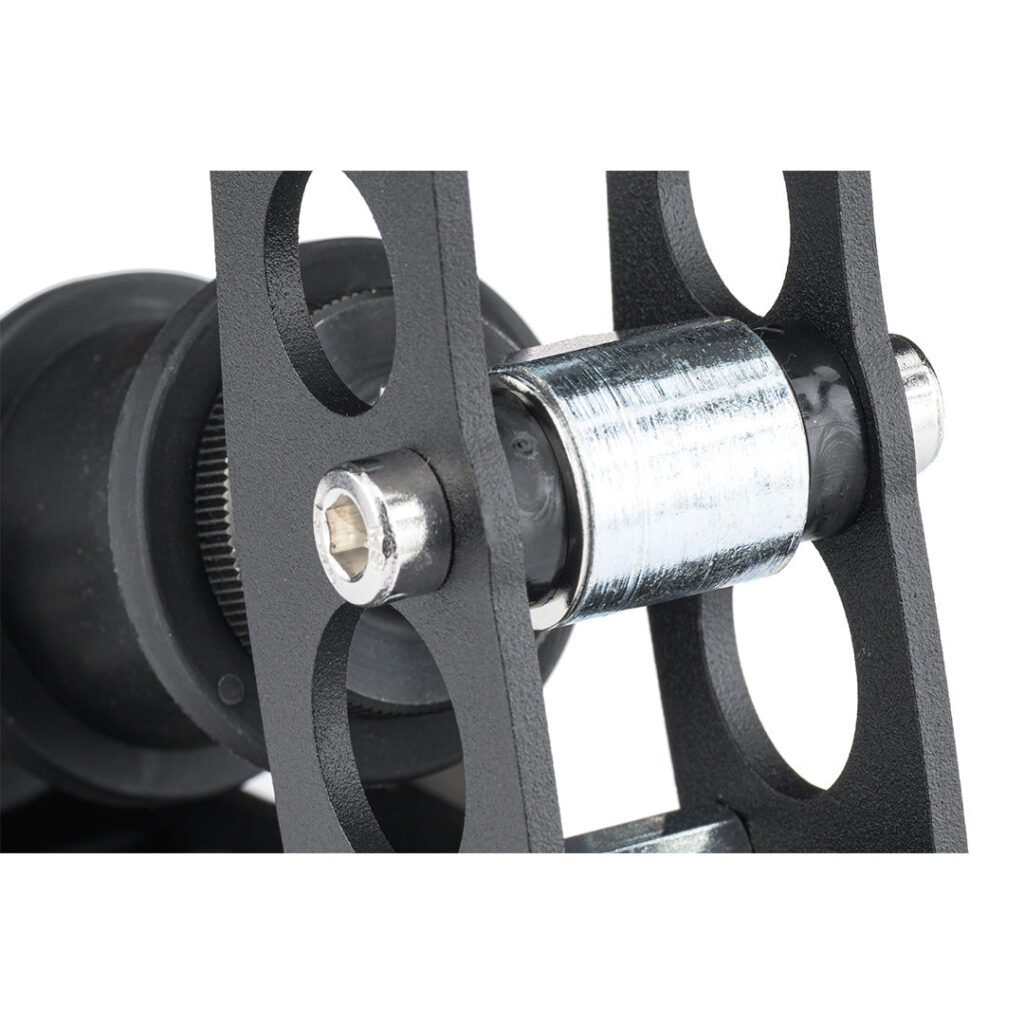
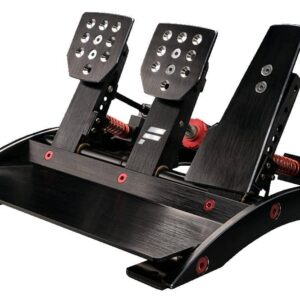
The first thing you notice about Heusinkveld Sprint is the metal. Everything exudes precision machining, clean-cut steel plate, thick parts, burr-free surfaces. It feels dense and compact in the hand, like a professional tool rather than a leisure accessory. Nothing moves, nothing flexes, even when you're clearly forcing it harder than you would in racing conditions.
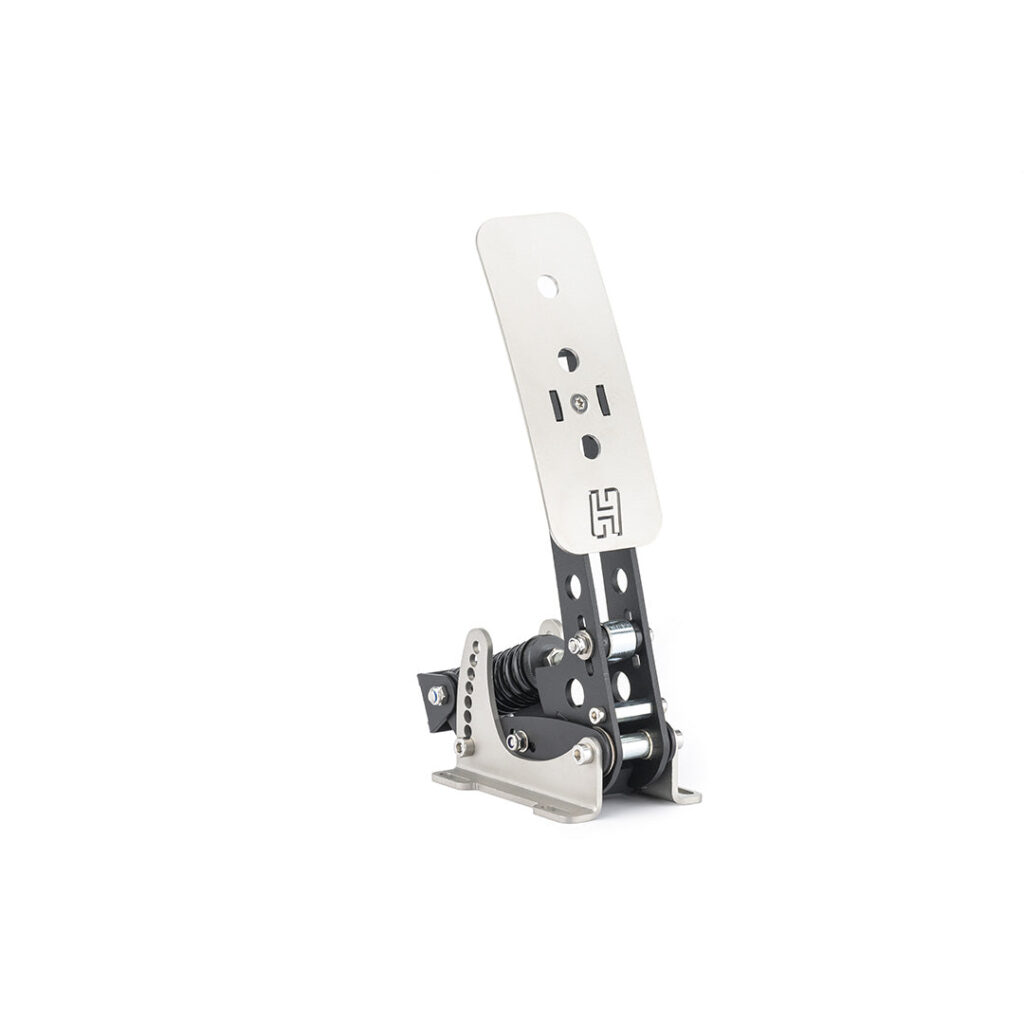
The pedals are entirely metal, with an open, almost "industrial mechanics" architecture. Visually, it's very technical, sober and unadorned. This won't necessarily appeal to those looking for a colorful racing or bodywork design, but for a performance-oriented setup, it fits perfectly. You get the feeling that they've been designed to be adjusted, disassembled and reassembled, rather than just set down and forgotten.
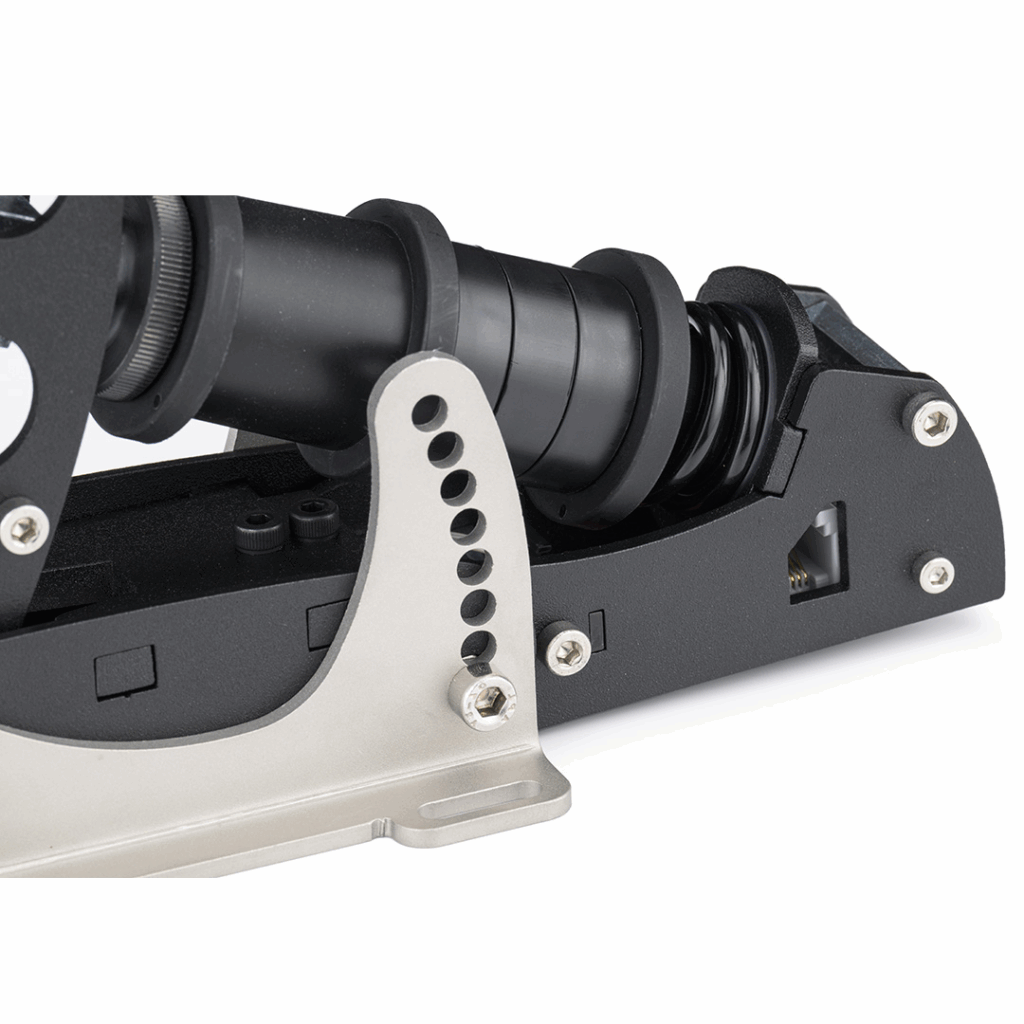
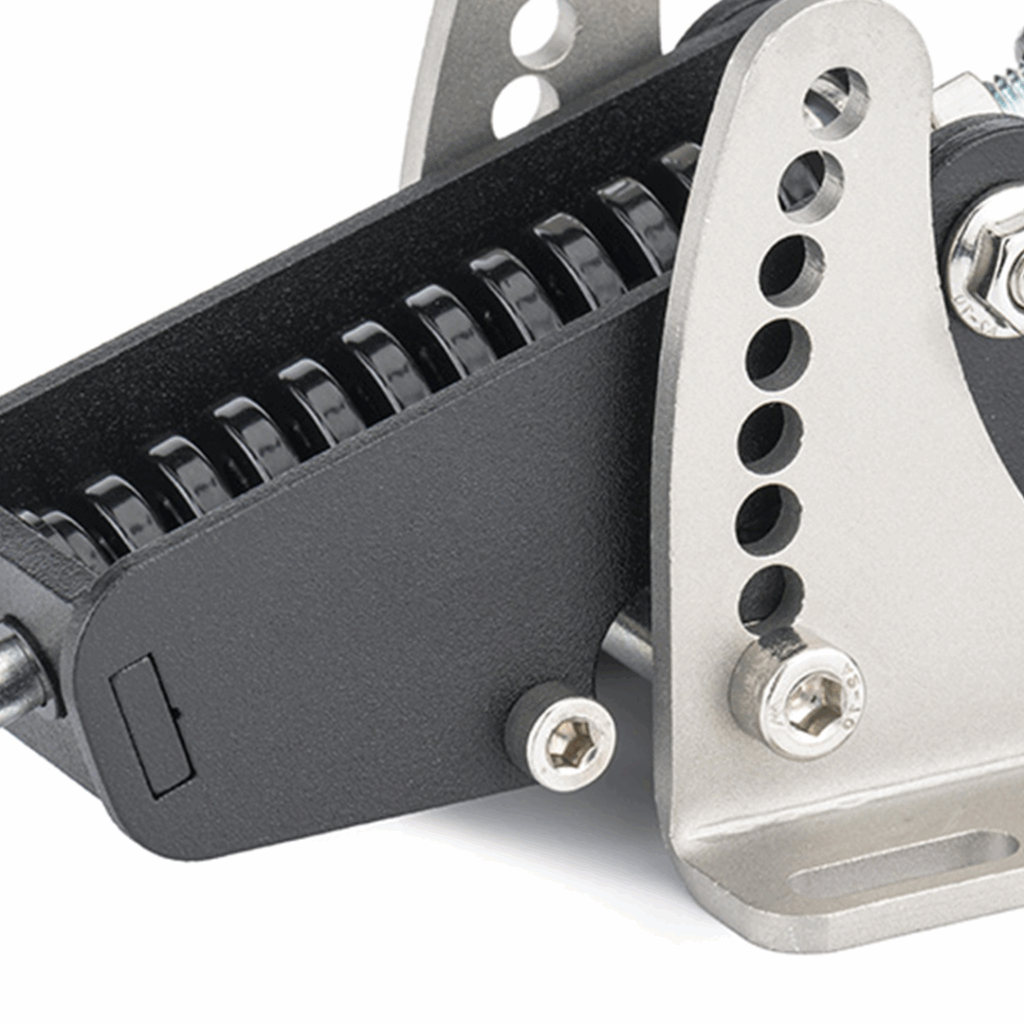
The axles are firm, the springs well guided, and there's none of the side-to-side play felt on many more mainstream cranksets. Overall rigidity is impressive. On a solid cockpit, even when you hit the brakes hard, you don't feel like you're bending anything. You just slam into it, and everything stays in line. It's very reassuring.
What's immediately surprising is their compactness: the pedals are quite small in height, very straight, with a very "sim rig pro" look. This can be disconcerting if you've come from G29/T300-type pedals, which are much bulkier and more rounded. Here, it's raw and functional.
One minor disappointment is that the base is not designed to be placed directly on the ground without a solid cockpit. They require a rigid structure, otherwise the appeal of the material is clearly lost. The finish is very clean, but not "luxurious" in the decorative sense: it's more a precision tool than a showcase product. Compared with other, more mainstream Load Cell pedalboards, the rigidity is greatly enhanced, but the "plug-and-play beauty in the living room" aspect is somewhat lost.
Settings, customization and compatibility: powerful but not instantaneous
Heusinkveld Sim Pedals Sprint are designed to be finely tuned. Physically, you can adjust the pedal position (height, angle, distance), the hardness of the gas pedal and clutch springs, and above all the brake resistance via a combination of springs and elastomers. In practice, you can go from a rather progressive brake to a very firm, single-seater or modern GT-type brake.
It's the really useful settings that count. On the throttle, you can switch from a very light pedal to something more substantial, which allows you to dose the throttle better on corner exits. The clutch, for H-shifters, can be adjusted to simulate a more pronounced slip point. The brake is the real heart of the system: dead travel, preload and overall hardness can be adjusted. You can really tune the feel to what you like: a short, hard brake, or a slightly longer but very smooth brake.
On the software side, the Heusinkveld configurator lets you calibrate each pedal, define response curves, adjust sensitivity and deadband, and save profiles. The interface isn't glamorous, but it's clear. It does take a little time to get the hang of if you've never touched input curves before. There is a learning curve, but it remains reasonable: a few test sessions are enough to understand what works for you.
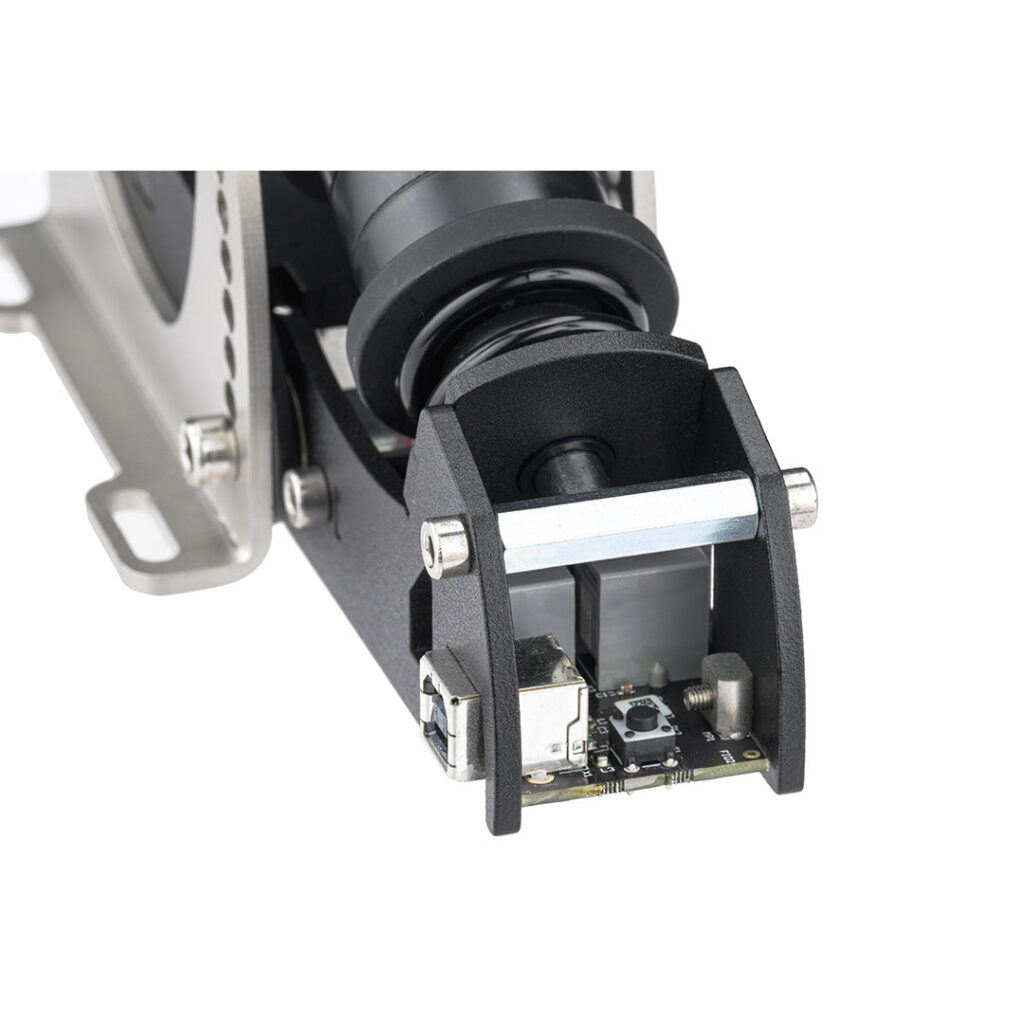
The pedals operate via direct USB, making them clearly intended for PC use. In practice, on consoles, you have to depend on the hardware being supported by another peripheral or interface, which makes them a much less obvious choice. On PC, on the other hand, compatibility is total with all steering wheels, Direct Drive bases, shifters and cockpits on the market.
In terms of upgradeability, Sprint is a durable product. You can start with two pedals (brake + gas pedal), add the clutch, or even upgrade to the brand's higher range at a later date. But for most simracers, Sprint can clearly remain at the heart of the setup for a long time without giving the impression of being limited.
Sensations in play: braking changes dimension
On the track, the major difference is immediately apparent in the brakes. The Load Cell and overall rigidity mean that braking is no longer a function of pedal stroke, but of pressure. You press down, the force increases, and the car reacts very consistently. You find yourself almost forgetting the pedal itself, and concentrating solely on the car's deceleration.
Precise braking is what really counts. When braking hard, you can come in hard, apply the brake very quickly and then release gradually, clearly feeling the point at which the tires start to saturate. You can read the grip limit much better. On a more basic crankset, this moment between maximum grip and sudden blocking is often blurred. Here, it becomes exploitable.
In corners, especially those requiring trail braking, you gain enormous control. You enter a bend with just a touch of brake, release it gradually, and the car pivots in a very predictable manner. You understand what the front axle is doing. For cars without ABS, it's a real game changer. It's easy to dose, to correct if you feel the brakes hardening, and to bring the car around without panicking.
On vibrators, the main advantage is the consistency of the pressure. Even when you're a little shaken by the steering wheel's force feedback or visual shocks, the pedal doesn't move underfoot, doesn't vibrate mechanically, and doesn't transmit any parasitic play. You keep a very stable footing. That's a big help in aggressive chicanes or fast sequences.
Quick corrections are easier to manage. When the car stalls a little at the start of a curve, you can lift the brake a little, re-accelerate very slightly, and play with the front/rear grip distribution with much more finesse than with a soft or long pedal. You can steer more actively with your left foot.
Over long sessions, consistency is impressive. Once you've found your hardness setting, the brake remains identical lap after lap. No sponginess, no drift, no mechanical overheating. At the end of an hour's riding, the brakes respond exactly as they did on the first lap. This is where the crankset really comes into its own, compared with more mainstream equipment.
Compared with an "entry/middle-range" Load Cell crankset, the main gains are in structural rigidity and finesse of adjustment. The brake is less "elastic" and more reliable in feel. On the other hand, compared with even higher-end pedals, such as hydraulic ones, Sprint pedals remain a little "drier", less like the feel of a real circuit, but much simpler to manage and maintain. The result is a very interesting balance between realism, performance and ease of use.
On the whole, immersion is enhanced by a feeling of confidence. You dare to brake later, harder, because you know you'll be able to modulate precisely. You make fewer stupid mistakes. Your lap times become more regular. You feel that the pedals are no longer a limiting factor, but a real performance asset.
Who's it for? What we like, what we don't like
The Heusinkveld Sprint is clearly aimed at committed simracers: those who ride several times a week, take part in leagues, or are looking to make serious progress in driving. For a total beginner, it's honestly a bit overkill, especially if the rest of the setup is still very basic. But for an intermediate player who has already tasted the limits of his original pedals, the gain will be obvious.
What I appreciate most is the quality of the braking. The combination of rigidity and Load Cell, well exploited, completely changes the way braking zones are managed. Next, the overall consistency of the crankset is really pleasing: precise throttle, usable clutch, all pedals aligned in terms of mechanical feel. Finally, the construction inspires confidence: you get the feeling you're buying a durable tool, ready to withstand thousands of hours of intensive riding.
On the other hand, there are limits to be borne in mind. The first is dependence on a rigid cockpit: on a desk or light structure, this pedalboard loses much of its appeal. The second is the technical aspect of the settings: to get the most out of it, you have to be willing to spend a little time in the menus and Allen keys in hand. This is not a product that can be installed, plugged in and forgotten in five minutes. Finally, its PC orientation limits its appeal to console gamers, who will have to look for sometimes impractical add-on solutions.
In terms of investment, the Sprint is in an interesting zone: it's not extreme luxury, but it's clearly a well-considered purchase. From my point of view, the value/price ratio is good for someone who rides really often and wants a crankset capable of keeping up with several setup evolutions (new base, triple screens, higher-end cockpit). For occasional use, you're paying for precision that you won't fully exploit. For regular use, this is one of the upgrades that offers the most "pure" performance per euro invested.
Verdict: a pedalboard that takes things to the next level
Heusinkveld Sim Pedals Sprint clearly change the hierarchy in a setup. With this crankset, braking becomes a strong point rather than a compromise. It almost forces you to rethink your approach to riding, to be cleaner and more consistent, and rewards this requirement with more consistent lap times and much greater confidence in the deceleration phases.
Sprint cranksets occupy a "premium performance" position on the market, without falling into the ultra-elitist niche. Above mass-market Load Cell cranksets, below ultra-high-end hydraulic systems, they are an ideal pivot for a serious sim racing-oriented setup. They are a coherent choice to accompany or complement a mid/high-end Direct Drive base.
I recommend them to PC simracers who want to take a lasting step forward, who already have a sufficiently rigid cockpit and who value braking and consistency above all else. For the occasional gamer, on a console, or on a very light installation, it's not the best choice: too much potential wasted, too many hardware requirements around.
If you're looking to transform your braking, gain confidence with every turn and build a performance-oriented setup, this crankset can clearly make the difference in your setup.



Reviews