MOZA R5 Bundle : Test & Review | What it's really worth in 2026
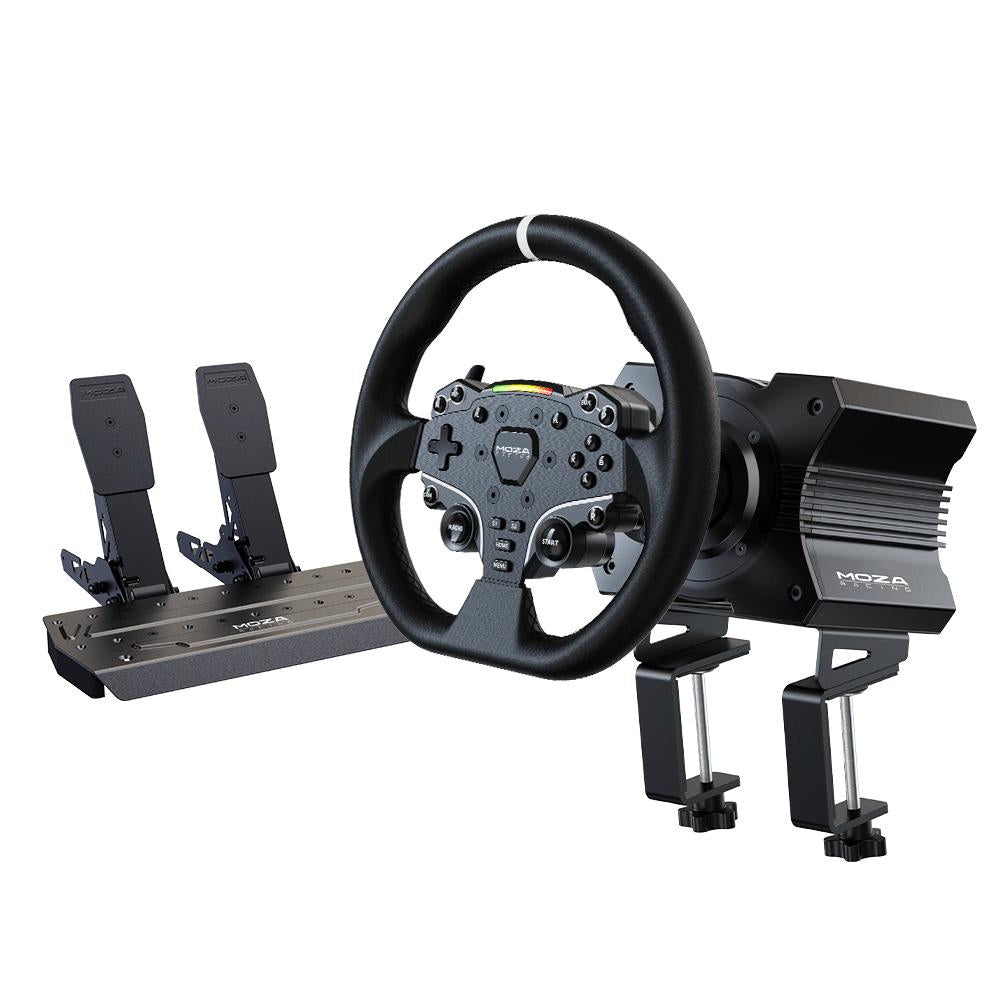
MOZA R5 Bundle: My quick review
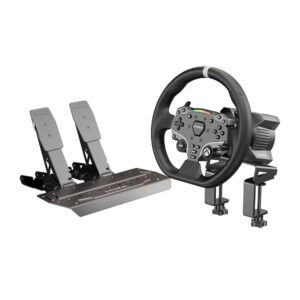
The MOZA R5 Bundle brings direct-drive technology within a beginner’s budget without skimping on the essentials. It includes the 5.5 Nm R5 base, the ES steering wheel, and the SR-P Lite pedals—all ready to be mounted on a desk in just a few minutes. The torque is modest, but the smooth feedback and build quality are surprisingly good for the price. There’s just one real caveat to consider before buying: compatibility.
When you buy through our links, we may earn an affiliate commission.
What We Liked
- A complete and consistent direct-drive system at an entry-level price
- Subtle and detailed force feedback, with clearly discernible track texture and rumble effects
- Immediate responsiveness that helps correct skids
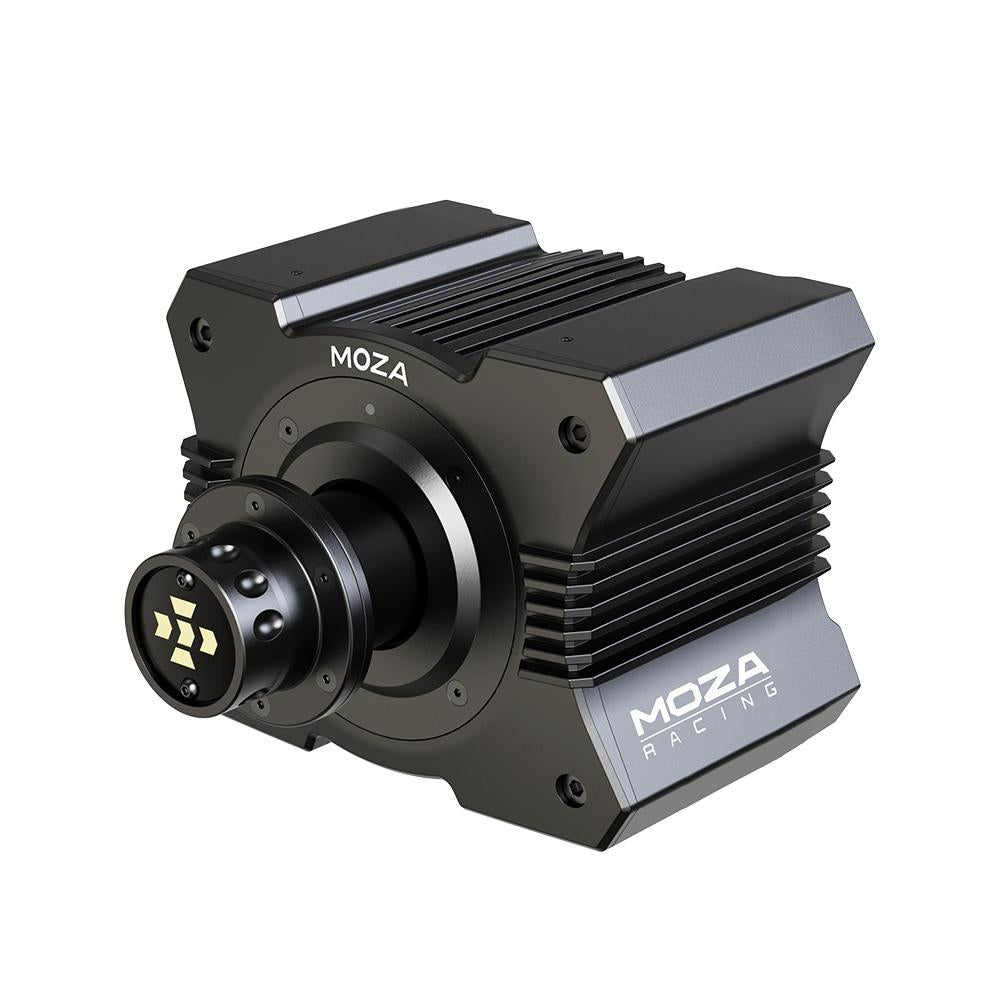
- Compact, well-built base (aluminum front, high-quality quick-release)
- Rigid ES steering wheel, virtually no flex, comfortable aluminum paddles
- Stable performance during long sessions; operates very quietly
- Scalable MOZA Ecosystem (steering wheels, pedals, handbrake, sequential gearshift)
- Instant desktop setup; cables and clamp included
Reserves
- Limited to 5.5 Nm of torque for those seeking maximum intensity
- SR-P Lite pedals with a linear, not very progressive brake—the first component to upgrade
- PC-only; no native console support
- A somewhat non-standard drilling pattern for frame mounting
Technical Specifications
| Base Type | Direct drive |
| Maximum torque | 5.5 Nm |
| Steering wheel | ES, 280 mm (11 inches) in diameter |
| Steering wheel cover | poly-leather type |
| Paddles | aluminum |
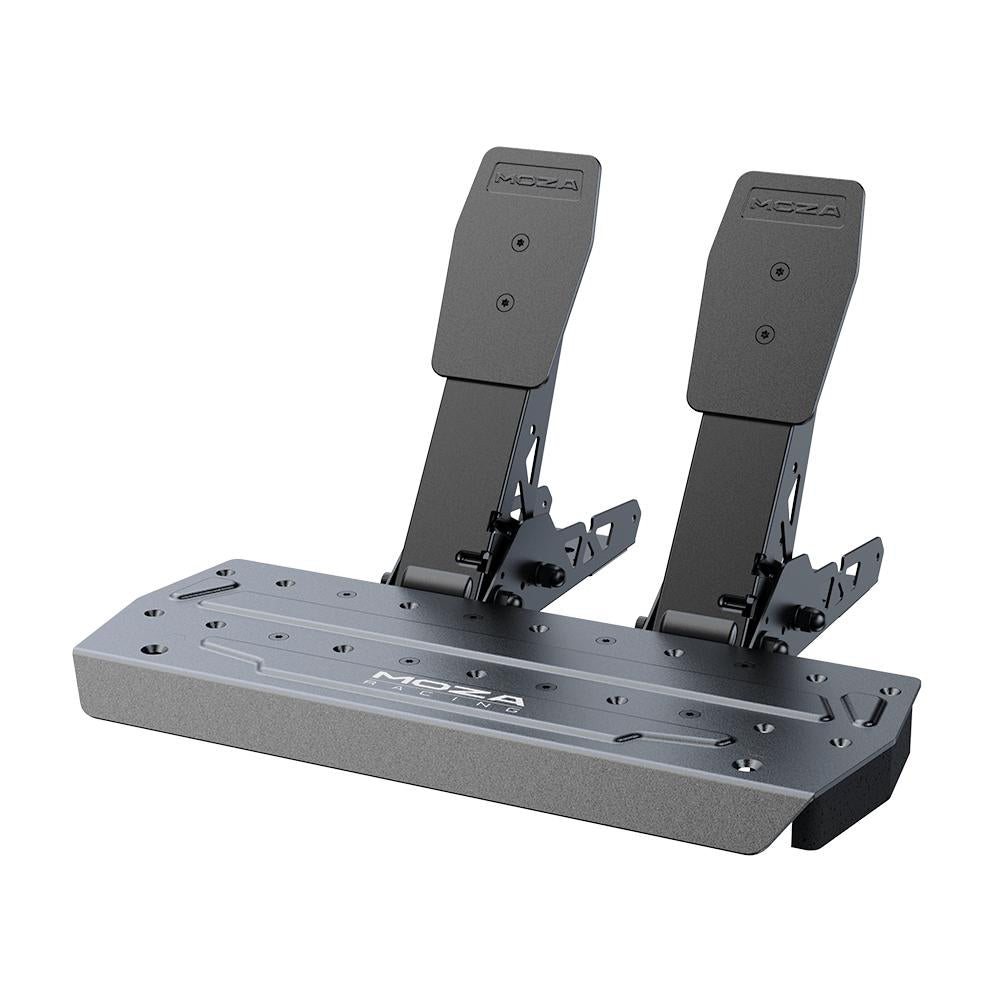
| Pedals | SR-P Lite, 2 pedals, Hall-effect sensors, steel frame |
| Steering wheel mount | metal quick-release clamp |
| Software | MOZA Pit House |
| Connectivity | USB, Windows Plug-and-Play |
| Compatibility | PC only (no consoles) |
| Installation | desk clip and cables included |
| Scalability | Compatible with MOZA gimbals and accessories |
The most affordable way to get started with direct drive
For a long time, switching to direct drive meant buying a base, a steering wheel, and pedals separately—and the bill would quickly add up. The MOZA R5 Bundle turns that on its head by combining all three components into a single box, designed to work together right out of the box. It includes the R5 base (5.5 Nm of torque), the 280 mm ES steering wheel, and the SR-P Lite pedals. We set up this complete package, and it took less than ten minutes from opening the box to our first lap on the track—including the desk clamp and cables that come standard.
The most striking aspect is the positioning. For equivalent torque, most competing kits require significantly more, and the R5 turns this logic on its head by offering a cohesive direct-drive system where, until now, belt or gear-driven systems were the norm. This gamble only makes sense if the product holds up once you actually get your hands on it. The good news is, it does.
What the engine puts in the palms of our hands
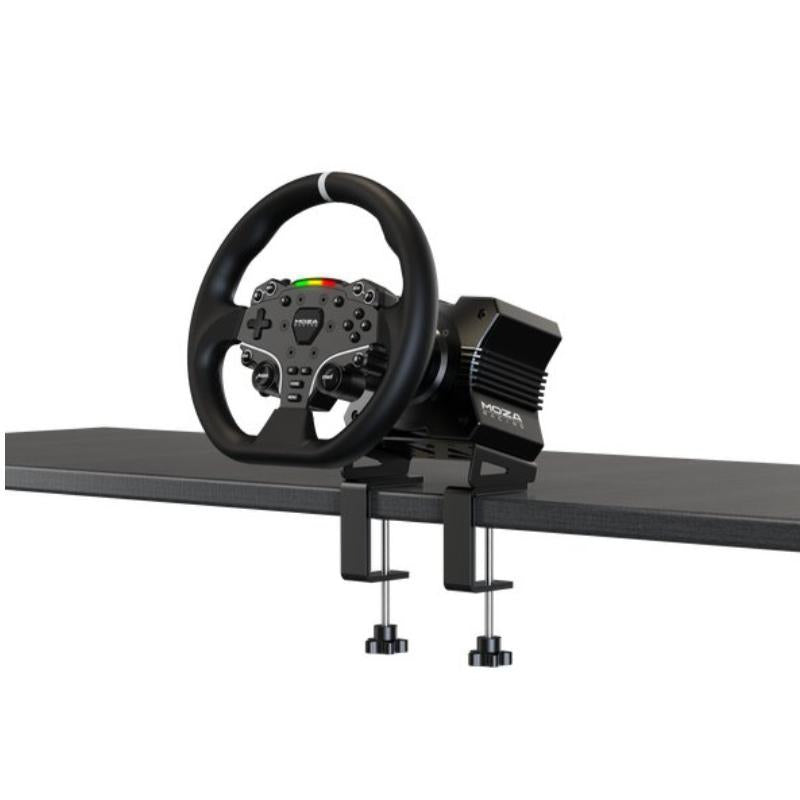
The first thing that strikes you when tackling a turn is how crisp the feedback is. The R5 conveys the texture of the asphalt, changes in surface, speed bumps, and potholes with a clarity you wouldn’t expect from a 5.5 Nm engine. When the front end starts to slide at the entrance to a fast corner, the feedback comes early and clearly through the steering wheel, giving you time to apply the correction gradually rather than being caught off guard by the loss of traction. The chassis’s responsiveness is a real asset; it quickly recovers when you correct oversteer and catches slips without any hesitation.
Where expectations should be set is on the intensity. The 5.5 Nm is more than enough to learn, feel the load in long turns, and work on your line, and the torque feels a bit more generous than the number suggests. But if you’re looking for a stiffened arm after twenty laps or the most intense immersion possible, the R5 naturally shows its limitations compared to a base model with 8 or 9 Nm. This isn’t a flaw—it’s what you get with an entry-level model—and for a pilot coming from a G29 or a belt-driven system, the leap in finesse and responsiveness is enormous.
During long sessions, performance remains consistent. We observed neither overheating nor a drop in performance as the sessions progressed; torque doesn’t drop off after an hour, and the motor runs remarkably quietly, even under load. That kind of consistency is what matters when you’re stringing together endurance runs or long training sessions.
A compact, solidly built base
The front of the housing is made of aluminum (the back is plastic), and the whole unit feels very sturdy for a product in this price range. The base is short, which is a real practical advantage—you can position the screen closer to the steering wheel and save space in a cramped cockpit. The steering wheel’s quick-release system is well-made, precise, and reassuring, with a better finish than what you sometimes see in higher-end models.
A note for those who want to screw the base onto a chassis: the drilling pattern isn't exactly universal, and on some cockpits, only two of the four holes line up. In our case, the base remained perfectly secure despite this, but it’s best to check the compatibility of your mount. With the included desk clamp, however, installation is quick and stable enough to get started.
The ES steering wheel—a real pleasant surprise
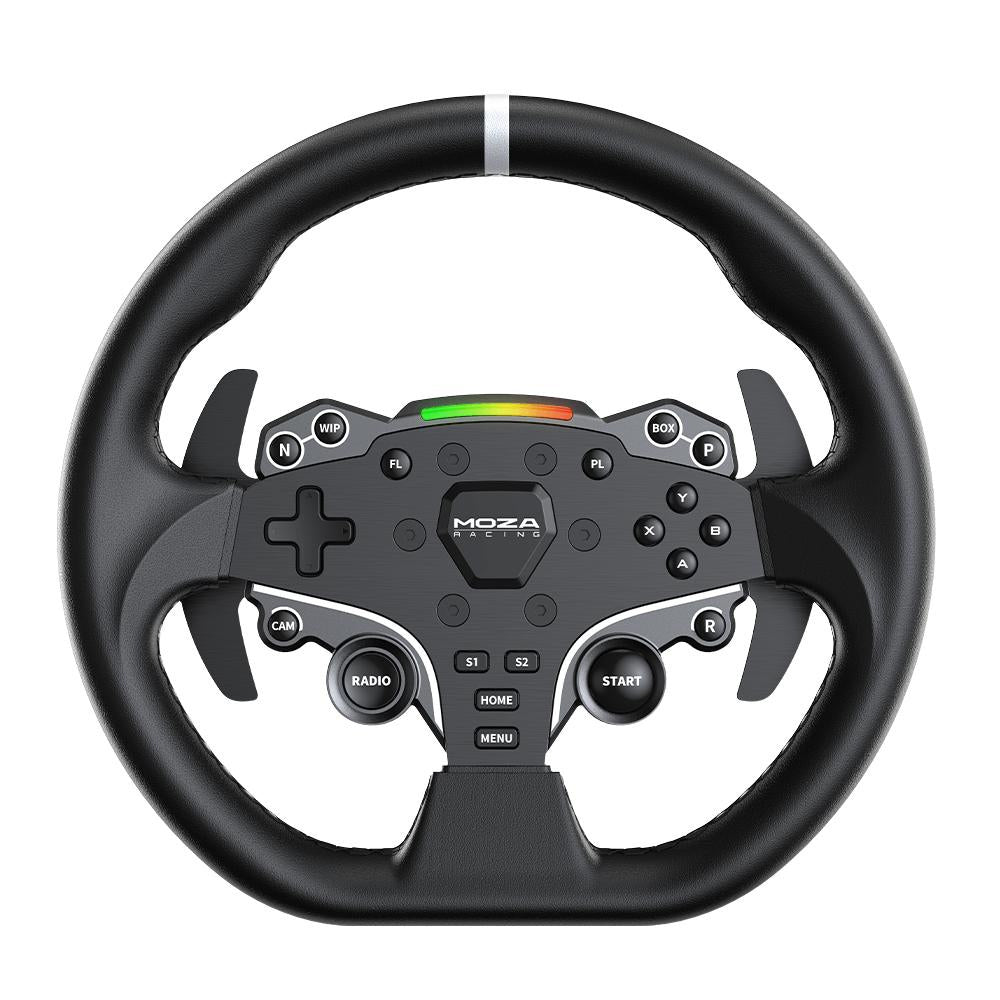
On paper, the steering wheel included in an entry-level bundle is often the component that gets cut. Here, the ES pleasantly surprised us. The 280-mm rim is covered in a poly-leather-like material that feels nice to the touch, and—most importantly—the structure hardly bends at all; there’s almost no flex or torsion when you apply pressure to it. It may seem like a minor detail, but a rigid steering wheel makes all the difference in the precision of hand placement and the sense of connection to the car. The aluminum paddle shifters fit comfortably under the fingers and offer a crisp click. For its class, this steering wheel performs well above its weight class.
The SR-P Lite pedals: the one to watch
This is, without a doubt, the kit’s weak point. The SR-P Lite brakes are well-built, with an all-steel frame and Hall-effect sensors, and for a first set, they get the job done. The issue lies with the brake pedal, whose travel remains linear and not very progressive. In practice, there’s a lack of feedback as pressure builds, and trail braking (easing off the brake gradually as you enter a turn) requires more concentration than with a load-cell brake. For beginners, they’re sufficient and allow you to ride cleanly. But they’re clearly the first component you’ll want to upgrade once you’ve mastered the basics.
Pit House: The Software Has Matured
Pit House’s in-house software has come a long way since MOZA’s early days. Force feedback adjustment, curve management, and overall stability are now all on point, with a more intuitive and reliable interface. You can adjust the settings without getting overwhelmed, which is important for users new to direct drive who don’t want to spend an entire evening navigating through menus. The MOZA ecosystem is also a major selling point; the R5 base is compatible with the brand’s other steering wheels and accessories, leaving the door open for a formula steering wheel, load-cell pedals, a handbrake, or a gearshift lever down the road.
Compatibility: The First Thing to Check
That’s the key point to keep in mind. The R5 Bundle is designed for PC and works on a plug-and-play basis with Windows. It isn’t natively compatible with consoles—neither PlayStation nor Xbox. If your game runs on PC, no problem—it works right away. But if you’re planning to play on a console, this bundle isn’t the right choice as is, and you’ll need to look elsewhere in the lineup. This isn’t a criticism—it’s simply something to keep in mind before ordering, to avoid any unpleasant surprises.
Who is this bundle designed for?
The MOZA R5 Bundle is perfectly suited for a specific audience: PC gamers who want to try out direct drive without breaking the bank, or those upgrading from a belt- or gear-driven steering wheel and looking for a real leap in quality. You get a slim, responsive, and well-built base unit, a surprisingly rigid steering wheel, and software that’s finally mature—all of which are scalable within a comprehensive ecosystem. In exchange, you’ll have to accept modest torque and brake pedals that could be improved. For those who are okay with these trade-offs, it’s hard to find a better first step into direct drive.
Frequently Asked Questions
Which sim racing wheel should you choose if you're just starting out?
Direct drive or belt drive: What's the difference?
Does this hardware work on PS5 and Xbox?
Do you need a cockpit to get off to a good start?
How much should I budget for a good setup?
Other Reviews & Testimonials
-
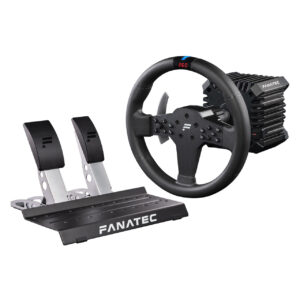
Fanatec CSL DD Ready2Race WRC Bundle for Xbox & PC
-
Fanatec CSL DD Ready2Race McLaren Bundle for Xbox & PC
-
Fanatec CSL DD Ready2Race Bundle for PC (5 Nm)
-
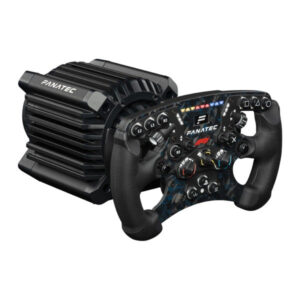
Fanatec Gran Turismo DD Extreme
-
Fanatec ClubSport Racing Wheel F1®
-
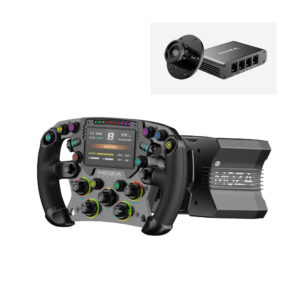
MOZA R12 & FSR Formula Wheel & Hub Kit Bundle
-
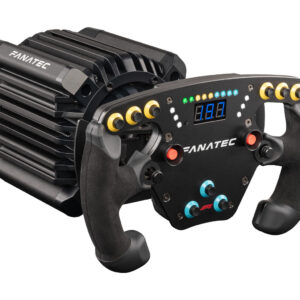
Fanatec ClubSport DD F1 Esports V2
-
MOZA R3 Bundle



Reviews