MOZA RS V2 Steering Wheel : Test & Review | What it's really worth in 2025
MOZA RS V2 Steering Wheel: My quick review
This steering wheel gave me the feeling of really "locking in" the feel of the car: more finesse in grip, more confidence in corrections and a cleaner ride overall. Above all, it makes sense for PC sim racers already committed (or motivated) to a MOZA base, who want a serious, long-lasting GT main steering wheel. In terms of overall value, it's a coherent investment rather than a whim.
When you buy through our links, we may earn an affiliate commission.
MOZA RS V2 Steering Wheel: a serious GT steering wheel to take sim racing to the next level
The MOZA RS V2 is clearly positioned as a top-of-the-range GT steering wheel for Direct Drive bases, designed for sim racers who want to go upmarket without going ultra-premium. It's a performance-oriented model, with a GT/endurance design, aimed at both the regular user and the already well-equipped virtual racer.
This steering wheel is particularly appealing for three reasons: its very "professional" look, its premium materials, and its integration into the MOZA ecosystem, which is becoming increasingly solid. On paper, we're looking at a product that promises a quantum leap in sensations compared to entry-level steering wheels, with advanced ergonomics and comprehensive controls.
My angle here is simple: does the RS V2 really bring a concrete gain in precision, comfort and pleasure on the track, or is it just another pretty accessory? Is there a real difference in trajectories, grip reading and consistency over several hours of riding? And above all, does this steering wheel make sense in today's setup, in the face of the many alternatives on the PC / Direct Drive market.
Design and manufacture: a steering wheel that's serious in the hand
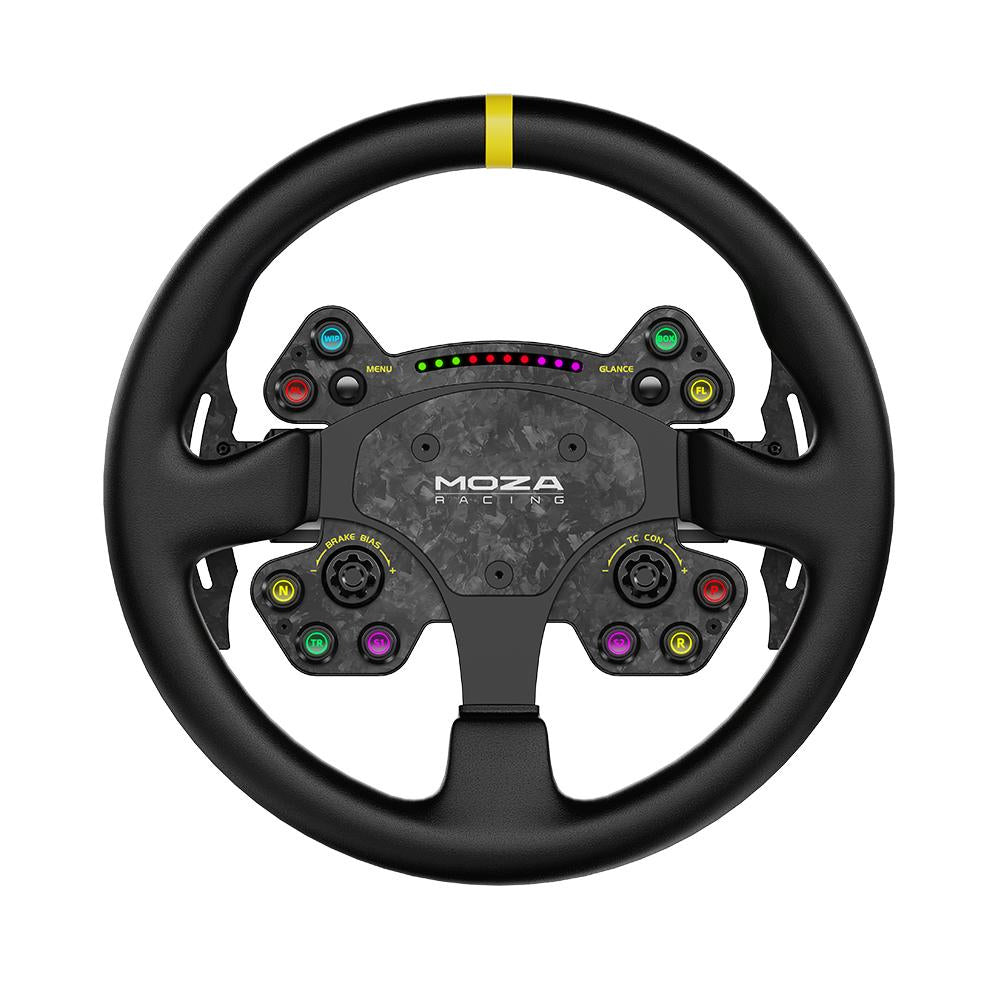
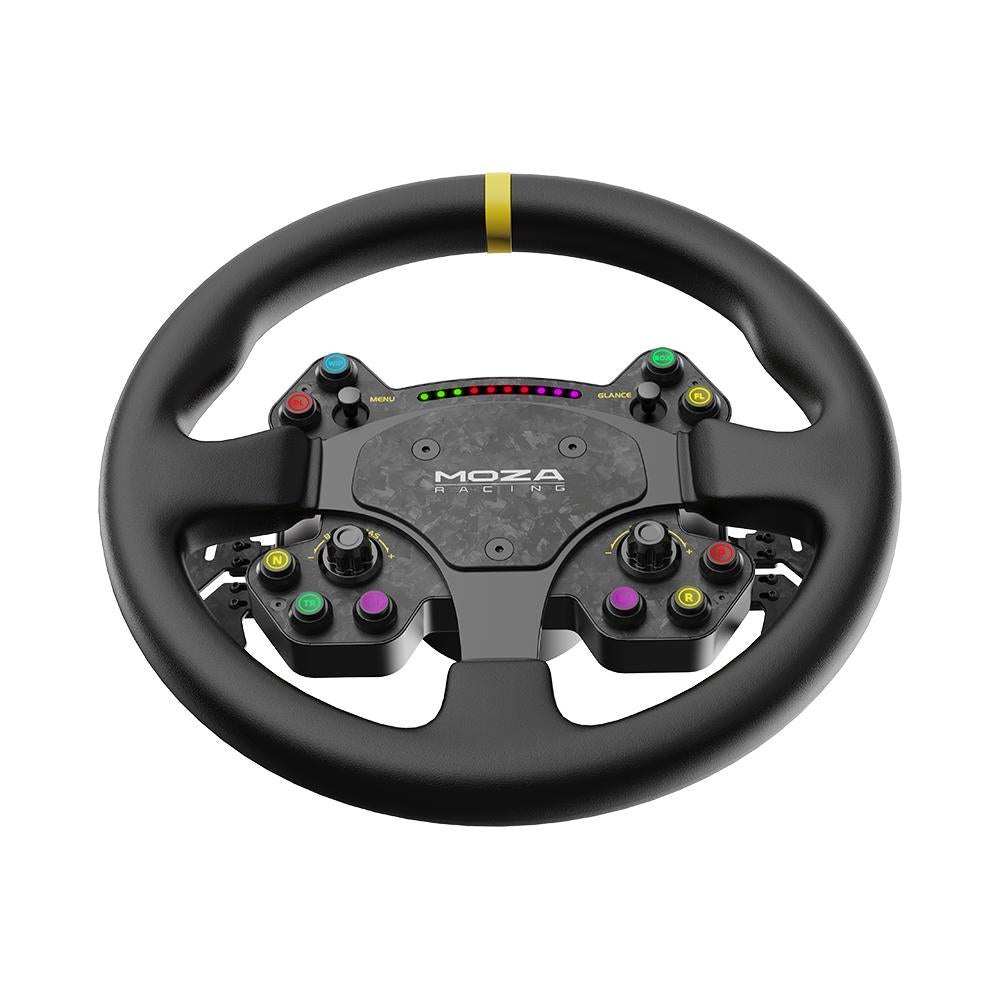
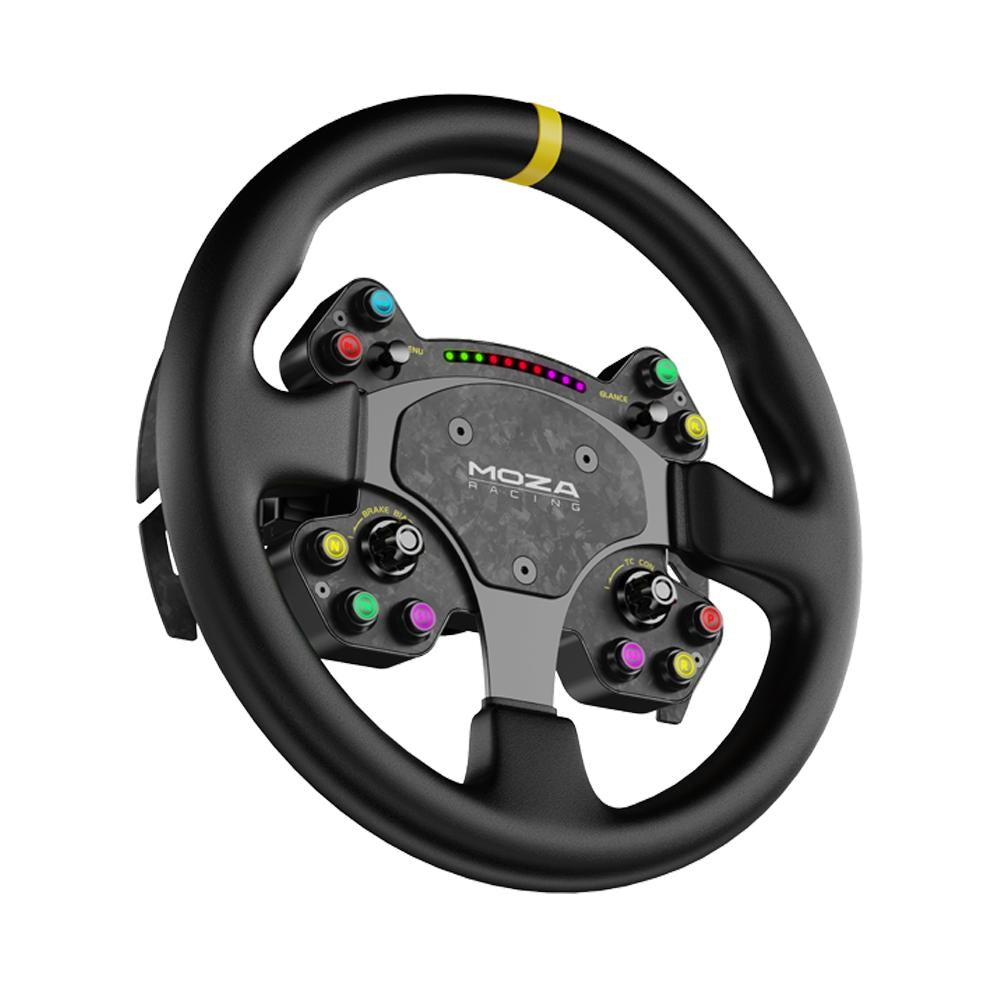
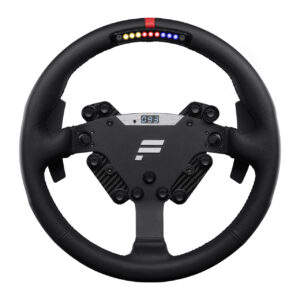
In hand, the MOZA RS V2 gives an immediate impression of seriousness. The metal rim inspires confidence: it's dense, rigid, and there's no perceptible flex when you hold it firmly or force it down. It's a far cry from the hollow feel of some plastic-framed entry-level steering wheels.
The handle covering, in good quality leather or imitation leather depending on the version, really adds to the premium feel. The grip is firm, with a thickness well suited to medium to large hands. You can ride for a long time without tensing your fingers. The stitching is clean and even, with no annoying extra thickness. Clearly, the overall finish is more "pro product" than "gaming peripheral".
Buttons and rotary controls are easy on the fingers. They click cleanly, without being too hard. The small rotary knobs are just what you need to manage race settings. You can feel that the placement has been thought out for driving without taking your hands off the wheel, and this really changes the way you manage the car in race conditions.
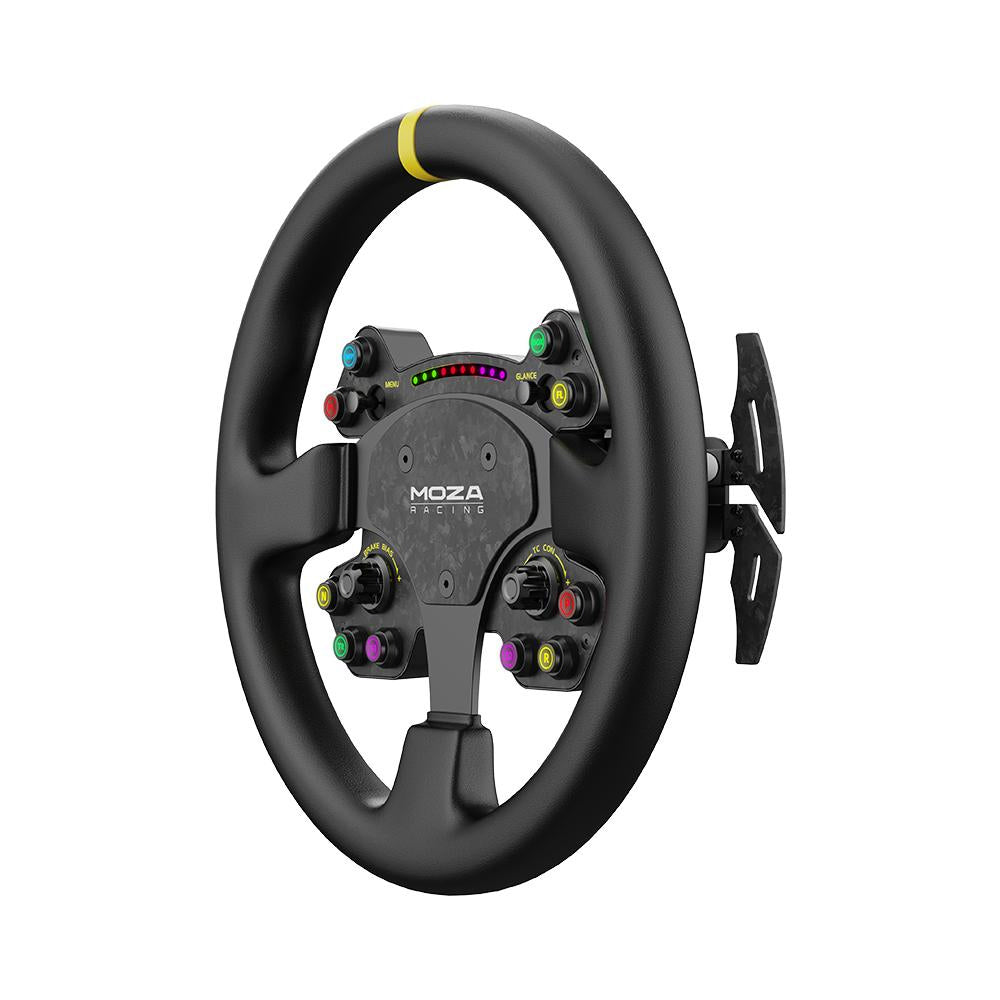
The metal clutch and gearshift paddles reinforce this impression of rigidity. The click is dry, very mechanical, with a short stroke. You can clearly feel each gear change. On the other hand, some may find them a little noisy, depending on setup and environment. It exudes solidity, but doesn't try to be muffled.
What may be slightly disappointing are a few aesthetic details when compared to the very top of the range: some plastic parts around the hub or buttons don't give the same level of "visual luxury" as expensive steering wheels. It's still serious, but not ultra-refined.
The RS V2 compares very well with similar steering wheels from other brands. In terms of rigidity, feel and quality, it's clearly at the top end of its price range. It feels like a product designed to last, not just to look good on a desk.
Settings, personalization and compatibility: a steering wheel tailored to the MOZA ecosystem
The RS V2 takes its place in the MOZA ecosystem. It uses the brand's proprietary quick release system, which is quite successful: connection is fast and firm, with no perceptible play. Once attached to a MOZA base, the whole unit forms a single unit, which contributes greatly to the solid feel of the steering wheel.
When it comes to customization, the main attraction comes from the combination of steering wheel and MOZA Pit House software. The RS V2 offers enough buttons, encoders and paddles to map everything to the main simus. ABS, traction control, brake balance, fuel mixture, radio, pit limiter: everything has its place. You'll quickly understand what's at hand, without having to spend hours looking for the right button.
MOZA's software menus remain accessible, even if you're not a pure technician. Game-specific presets help you get started, then refine according to your preferences. You can adapt the intensity of vibrations, the response of buttons and, above all, combine these with the settings of the Direct Drive base to obtain a coherent whole. The learning curve isn't steep: it takes a little time to optimize everything, but you can soon be riding in good conditions.
Compatibility is clearly aimed at the PC. With a MOZA base, all the main PC sim racing games are supported. For consoles, it's more a question of the base used than the steering wheel itself, so don't buy this model hoping for universal compatibility without checking the rest of the setup.
The RS V2 fits in well with the logic of an evolving ecosystem: you can start with a moderately powerful MOZA base, then move up the range without changing the steering wheel. It can be used as the main steering wheel for the majority of GT/touring-oriented disciplines, then later be complemented by a more specific F1 or rally steering wheel. It's not just a "disposable" entry point, it's an element that can remain at the center of the setup for a long time.
In-game sensations: precision, control and confidence with every turn
Where the MOZA RS V2 really comes into its own is on the track, mounted on the brand's Direct Drive chassis. The first thing you notice is the precision of the rim and the way the flywheel transmits torque variations. The rigidity of the flywheel's frame avoids parasitic deformation: what the base sends out, you feel directly in your hands.
When cornering, the steering wheel gives a clear indication of the load being transferred to the front axle. On entry, you can feel when the tires are starting to work, then when you're approaching the grip limit. Compared to a more "toy" steering wheel or a belt-driven base with a light rim, you get clearer feedback. You understand more quickly when you overdrive, when you brake too late, or when you come in a little optimistic.
On the vibrators, the feeling is clear-cut. Small track edges translate into short, clean, well-separated vibrations. On more aggressive vibrators, we feel a more massive, more physical return, but the steering wheel remains controllable, with no impression of floating. The rim doesn't twist, it just sends back what the base generates. It's clean. This is where the whole thing really changes the experience: the rims become a real driving cue, not just background noise.
Grip reading is one of our strong points. On a technical track, with a fairly lively GT, you can feel micro-losses of grip even before you spin. The rear begins to shed weight, the front widens slightly: everything goes through the steering wheel. This gives you extra leeway to correct early, instead of having to suffer.
When it comes to quick corrections, the RS V2 is a great help. The paddles are well positioned, the grip doesn't wobble, and you can make sharp countersteers without losing contact with the rim. Having a rigid, well-balanced steering wheel means you can launch and catch the car with greater confidence. It's easier to dare to push the limit, because you feel you have room to correct.
Over long sessions, consistency is good. The shape of the rim and the thickness of the grip enable you to maintain a stable hand position without excessive fatigue, especially if the base force is intelligently adjusted. This is not an inherently "tiring" steering wheel. Hands remain firmly planted, and important buttons are easily accessible, reducing the need for unnecessary manipulation.
Compared to a package with a less powerful base and a more basic steering wheel, there's a real gap in immersion and feedback finesse. Everything seems more connected to the car. Compared with much more powerful bases, the RS V2 doesn't limit the experience: it takes in, it transmits, and it follows the base's level without becoming the weak link.
Overall, this steering wheel delivers exactly what you'd expect from a good GT steering wheel for Direct Drive: a clear reading of the chassis, precise control in tight sequences, and a feel fine enough to work on trajectories and steering inputs. You quickly feel "connected" to the car.
Who's it for? What we like, what we don't like
The MOZA RS V2 is clearly aimed at the serious PC-based sim racer who wants a versatile, durable GT steering wheel. For a highly motivated beginner aiming straight for a Direct Drive base, it can be an excellent starting point, provided you can afford the investment. For an intermediate user coming from an entry/mid-range steering wheel, it's a truly coherent upgrade. For an experienced user who drives a lot of GT, endurance or touring cars, it could well become his or her main steering wheel.
What I appreciate most is the combination of rigidity, feel in the hand and richness of controls. It's a steering wheel that inspires confidence, doesn't move, and lets you manage everything from the rim. The integration of the MOZA quick release reinforces this impression of solidity. The overall ergonomics, with well-spaced buttons and pleasant paddles, make for "clean" riding without tinkering or compromise. Finally, consistency with the rest of the MOZA ecosystem gives the impression of a product designed to fit into a complete setup, not just to look pretty.
There are limits. Openness to consoles depends largely on the base used, which somewhat limits the interest for those who want a single multi-platform setup with no headaches. The visual aspect, although serious and successful, doesn't reach the level of refinement of some very premium models: sim racers looking for an ultra-luxurious object for pure aesthetics may remain slightly hungry. Finally, the price clearly positions this steering wheel as an investment: you can feel the quality, but it's not a "budget" product. You need a minimum commitment to sim racing to get the most out of it.
In terms of perceived value, the RS V2 stands up very well. You pay a certain price, but you get a steering wheel that can remain at the center of your setup for several years, keep up with a growing base, and cover the majority of closed-car-oriented disciplines. For a sim racer who sees his setup as a progressive investment, this is a coherent choice.
Verdict: a solid, consistent GT steering wheel built to last
The MOZA RS V2 makes a real difference to the feel of a setup as soon as you move away from simple or "toy" steering wheels. It provides real rim stiffness, a serious grip and a set of controls complete enough to handle a modern sim racing car without compromise. You go from a rough ride to a finer, clearer, more committed driving experience.
On today's market, I'd place it squarely in the upper mid-range/early premium segment for Direct Drive-oriented GT steering wheels. It's not a toy, nor an ultra-rare collector's item, but an accomplished sim racing tool, designed for regular, demanding use.
I'd particularly recommend it to PC users, equipped (or soon to be equipped) with a MOZA base, who drive mainly GT, touring, endurance and who want a serious, durable main wheel. For a pure console gamer, or for someone looking for the widest possible compatibility with no questions asked, there are more universal options, even if less advanced in terms of pure sensations.
If you're looking for a GT steering wheel that's rigid, well finished, very pleasant in the hand and capable of fully exploiting a Direct Drive MOZA base, this product can clearly make the difference in your setup.

Reviews