
Simlab GT1 Pro : Test & Review | What it's really worth in 2026
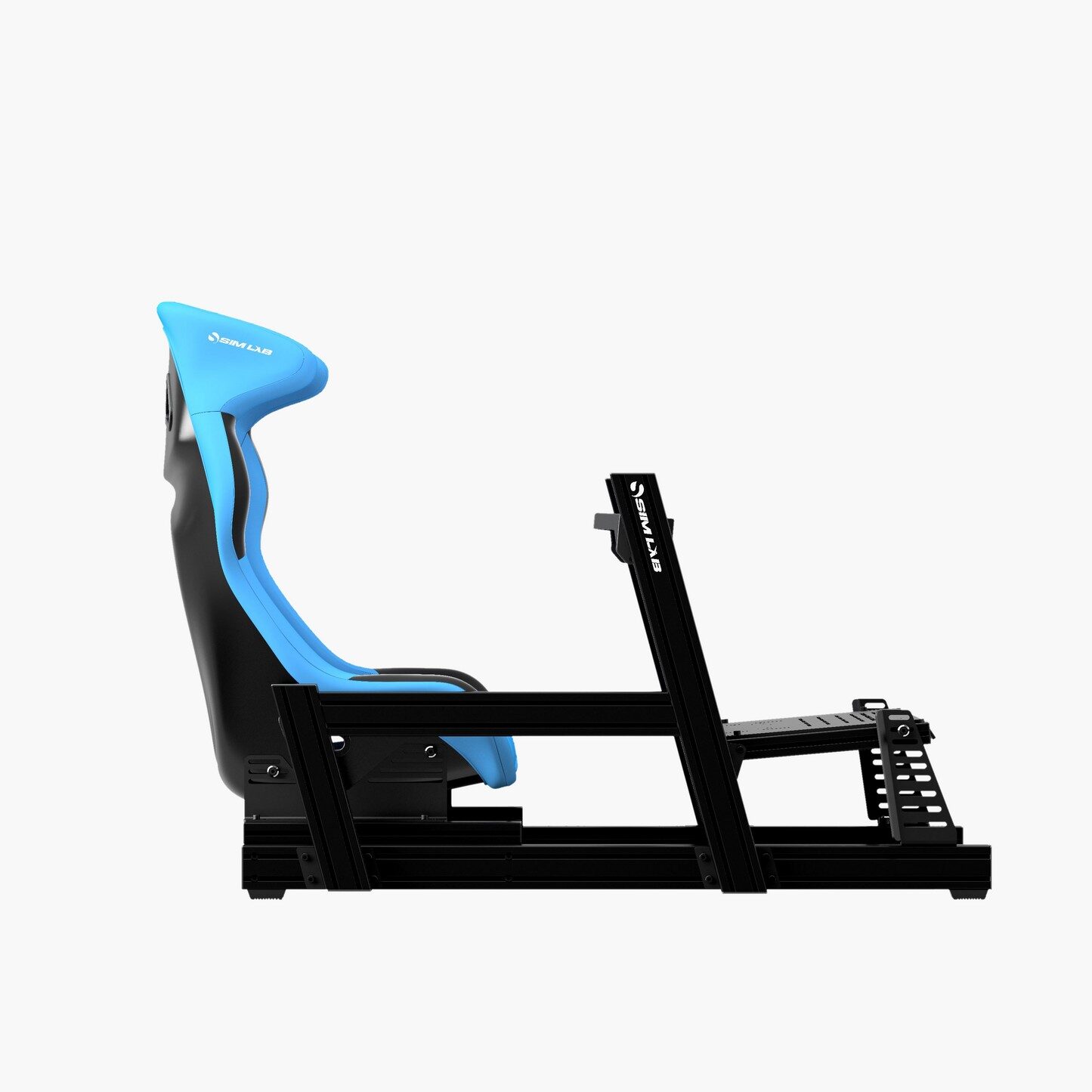
Simlab GT1 Pro: My quick review
This cockpit gave me the sensation of a support that disappeared to leave all the room for driving sensations, with very reassuring rigidity and stability. It makes more sense for regular simracers, already equipped or aiming for a Direct Drive and a beefy pedalboard, than for the occasional gamer. All in all, it's a sound long-term investment.
When you buy through our links, we may earn an affiliate commission.
Sim-Lab GT1 Pro test & review: the aluminum cockpit set to become the new benchmark
The Sim-Lab GT1 Pro is positioned in a highly coveted segment: the streamlined aluminum cockpit for serious sim racing, yet still accessible to the individual enthusiast. It's clearly aimed at the driver who wants to take rigidity and comfort to the next level, without resorting to monstrous structures that are ultra-complex to assemble.
On paper, the GT1 Pro promises a compact chassis, visually cleaner than older-generation aluminum "meccanos", capable of handling a beefy Direct Drive base and high-pressure pedalboard without flinching. The idea is simple: get a solid, upgradeable platform that's still "liveable" in an office or living room.
My angle is twofold: on the one hand, pure rigidity and stability in intensive use, and on the other, everyday practicality. Do we really gain in riding comfort compared to a tubular cockpit or an older aluminum profile? And above all, does this chassis justify its price in a modern Direct Drive setup with load cell/hydraulic pedals?
Design & manufacture of the Sim-Lab GT1 Pro
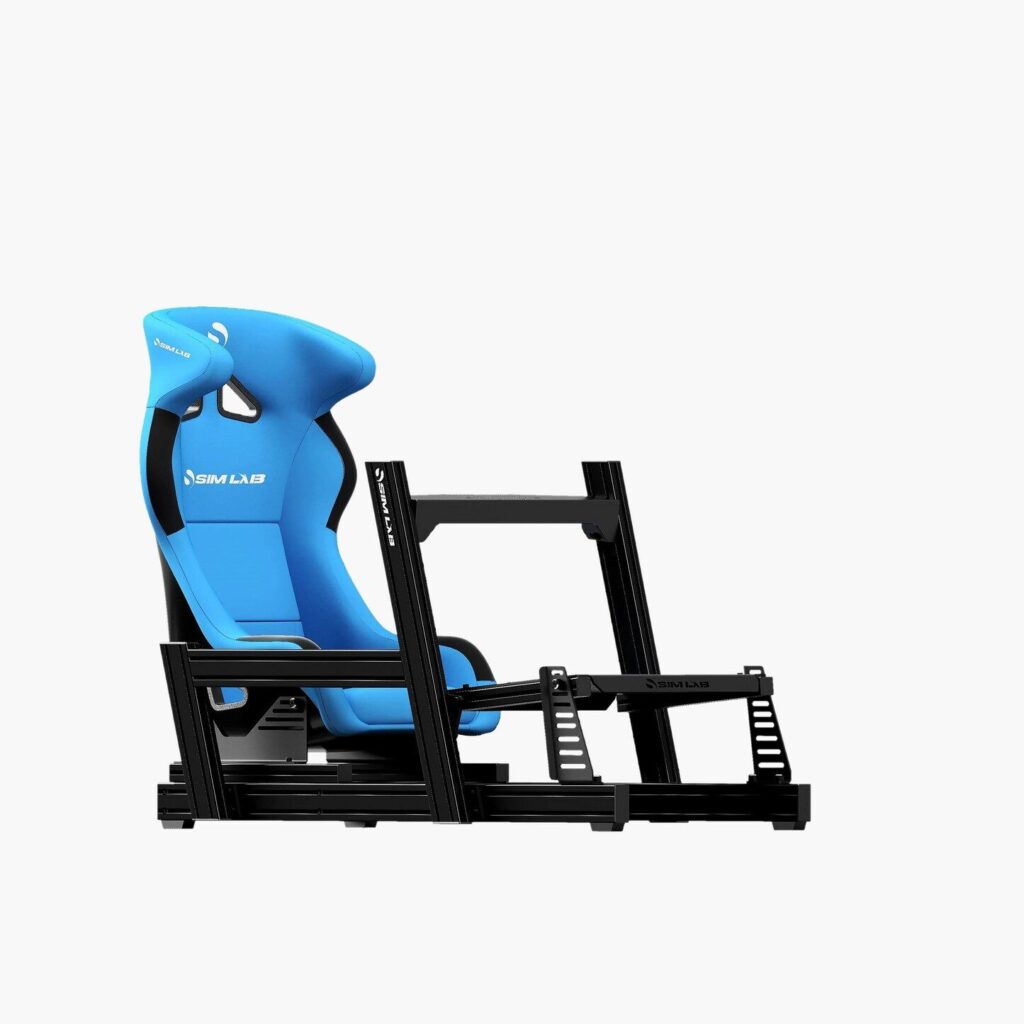
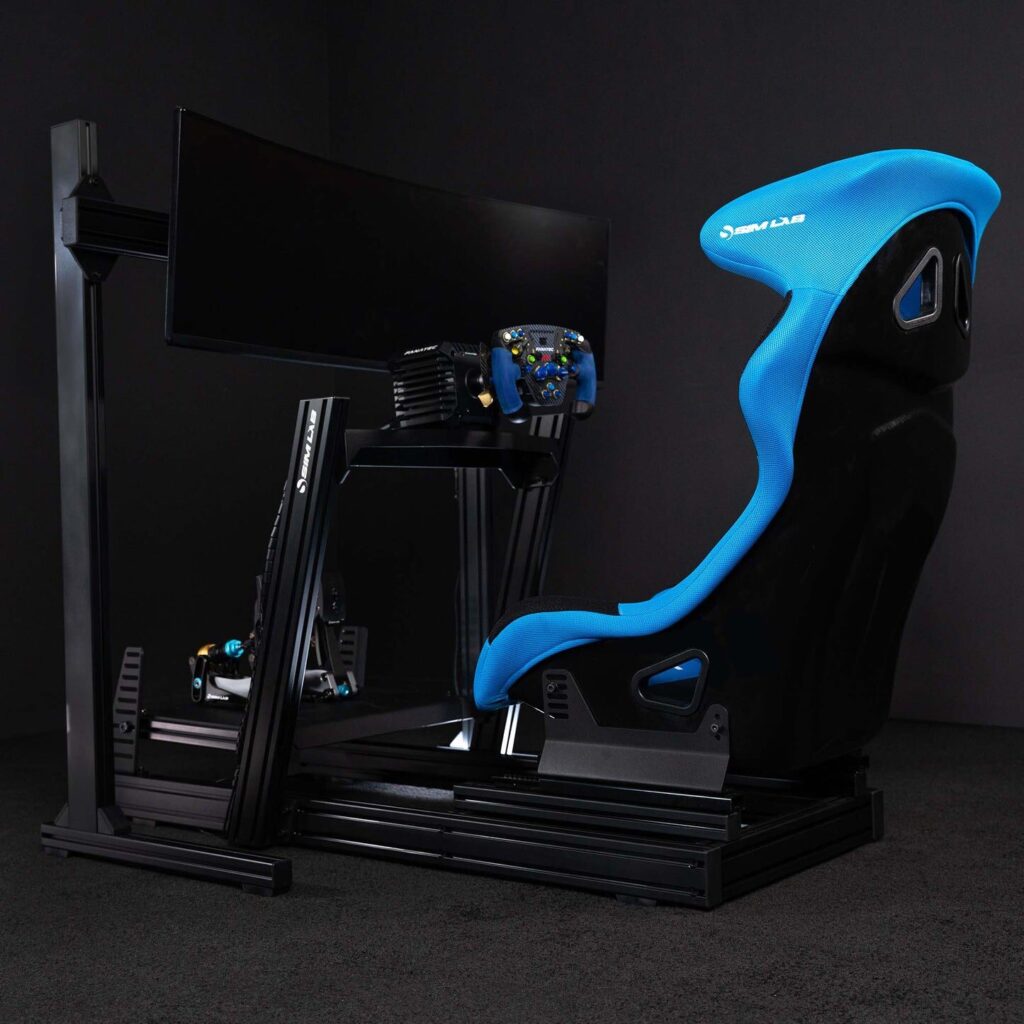
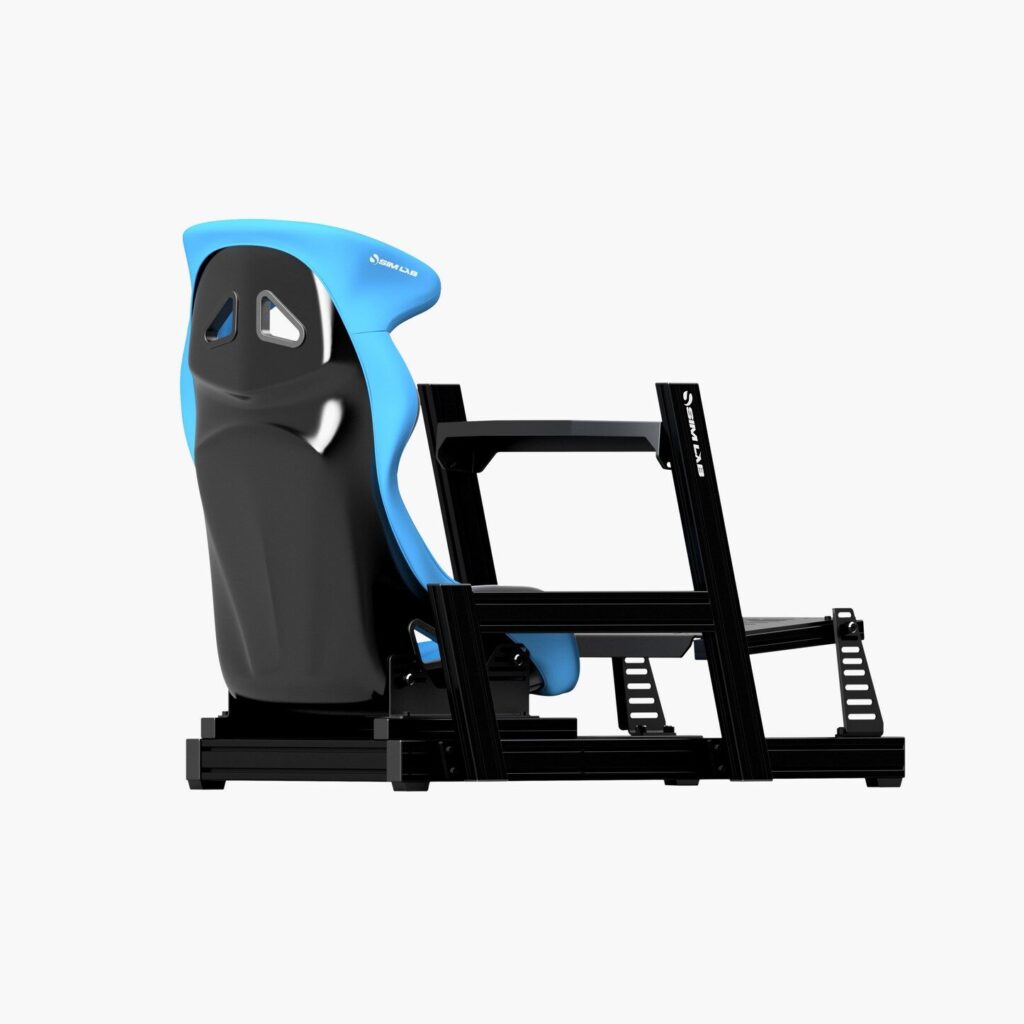
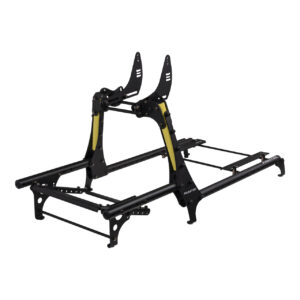
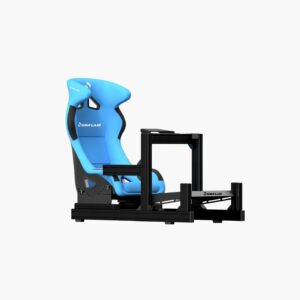
The first thing that strikes you is the much more "accomplished" look than many profile cockpits. The curved uprights of the central structure give a less industrial, cleaner look, while retaining the extruded aluminum DNA. Visually, it looks better in a room than raw rectangles screwed everywhere.
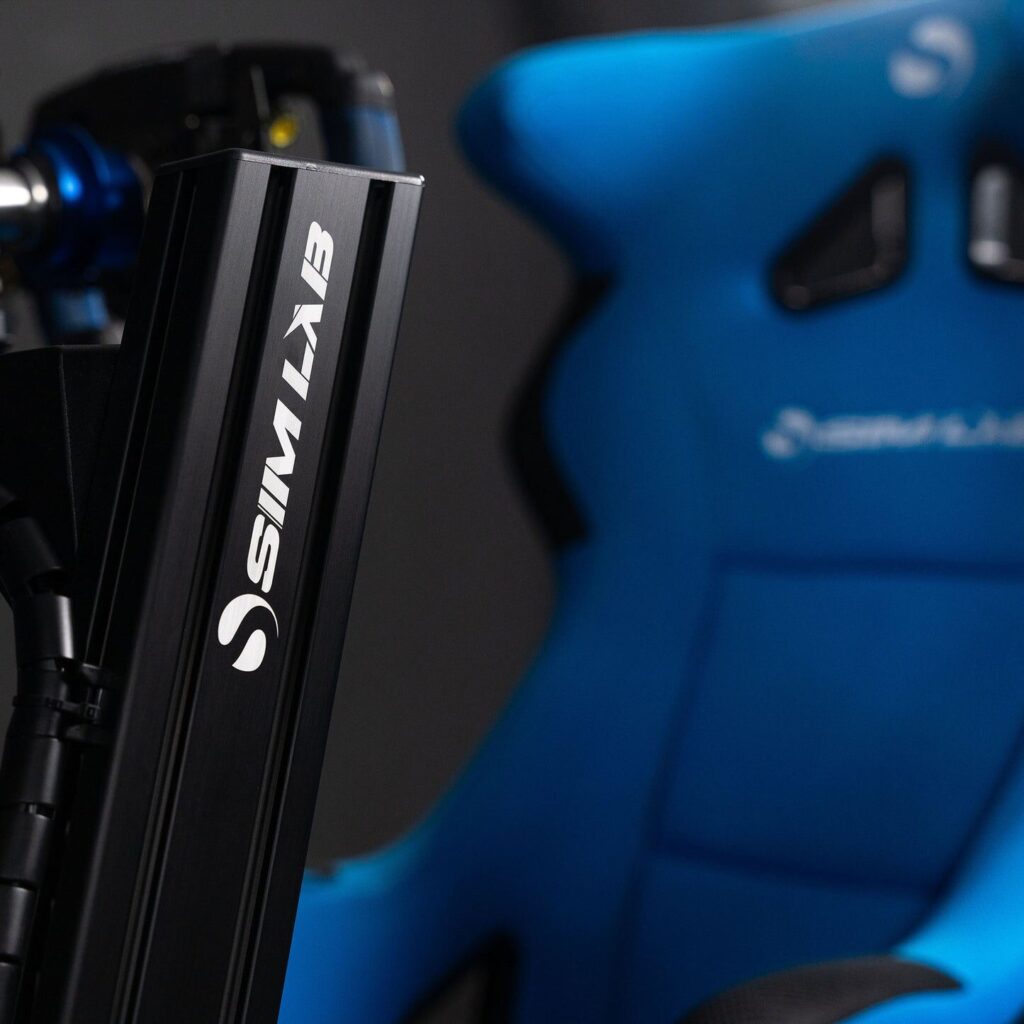
The profiles are thick and dense, and the cut-outs are clean. In hand, the parts really inspire confidence: no impression of flex or "thin" metal. The textured black paintwork reinforces the perception of quality. You can feel that the chassis has been designed to last for years and take heavy loads without warping.
The assembly is serious: the bolts and nuts are generous and well dimensioned, and the junction plates give a real cohesion to the whole. Once everything is properly tightened, the structure hardly moves at all, even when you put a lot of torque into the steering wheel or push hard on the pedals. It's immediately clear that this is far from an entry-level cockpit.
There are, however, a few less flattering points. Assembly requires a minimum of patience and method, especially to align all the parts properly and avoid micro-twists. It's not complicated, but it does take longer than a pre-assembled tubular cockpit. Some adjustments also require a bit of Allen wrench play before the perfect position is achieved.
Compared to other profile cockpits in similar ranges, the GT1 Pro stands out for the rigidity of its central section and its more modern design. There's no sense of "paying for empty space" or simple profile length. Everything seems more optimized, more thought out. We're clearly dealing with demanding simracer-oriented hardware, not a simple reinforced desktop chassis.
Settings, customization & compatibility
The GT1 Pro remains an aluminum profile, so the general philosophy is the same: you can adjust almost anything, as long as you have the time and a set of wrenches to hand. It's not instantaneous adjustment, but rather "I take an evening, adjust everything, and then I don't touch it again".
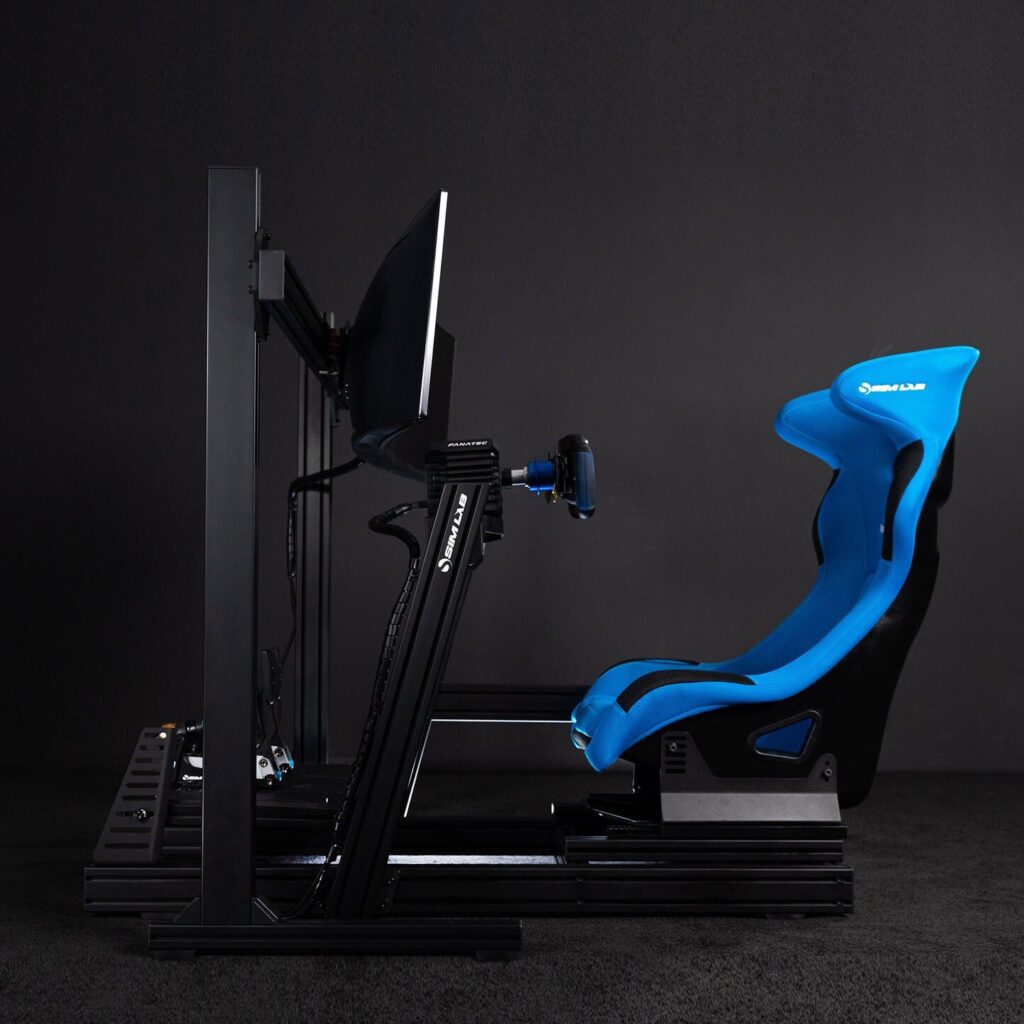
Base height, pedal setback, steering wheel plate angle, seat-to-steering distance - everything is adjustable to the millimeter. What's even more interesting is that Sim-Lab's options (side supports, reinforcements, accessories) can be integrated neatly, without any DIY. You can easily adapt the cockpit to a GT, rally or slightly more F1 position, provided you have a suitable seat.
The learning curve is reasonable. For someone who has never assembled a profile before, you'll have to accept that you'll have to spend a little time on it, and go back to certain settings after a few sessions. Once you understand the logic (T-nuts, sliding, progressive tightening), it becomes very natural. The advantage is that every modification is precise and reproducible.
In terms of compatibility, the GT1 Pro is primarily designed for the PC, but that doesn't mean you can't use it with a console if your steering wheel allows it. In practice, it accepts the majority of current Direct Drive chainstays, as well as load cell or hydraulic cranksets, thanks to the numerous drillings and adapted plates. Handwheels, shifters, handbrakes - everything finds its place without having to re-drill.
The Sim-Lab ecosystem is also a real asset: arms for screens, keyboard support, mouse support, PC tray, seat carrying handle, everything can be added to and evolve with your setup. It's not just an entry point, it's a base that can accompany several generations of hardware. We're clearly talking about a chassis designed to last, and to keep pace with a driver's move upmarket from a belt-driven steering wheel to a beefy Direct Drive.
Sim-Lab GT1 Pro: the thrill of the game
The real question is what the GT1 Pro changes once you're in the thick of it. The answer is quite clear: the rigidity of the cockpit transforms the way you perceive feedback from the steering wheel and pedals.
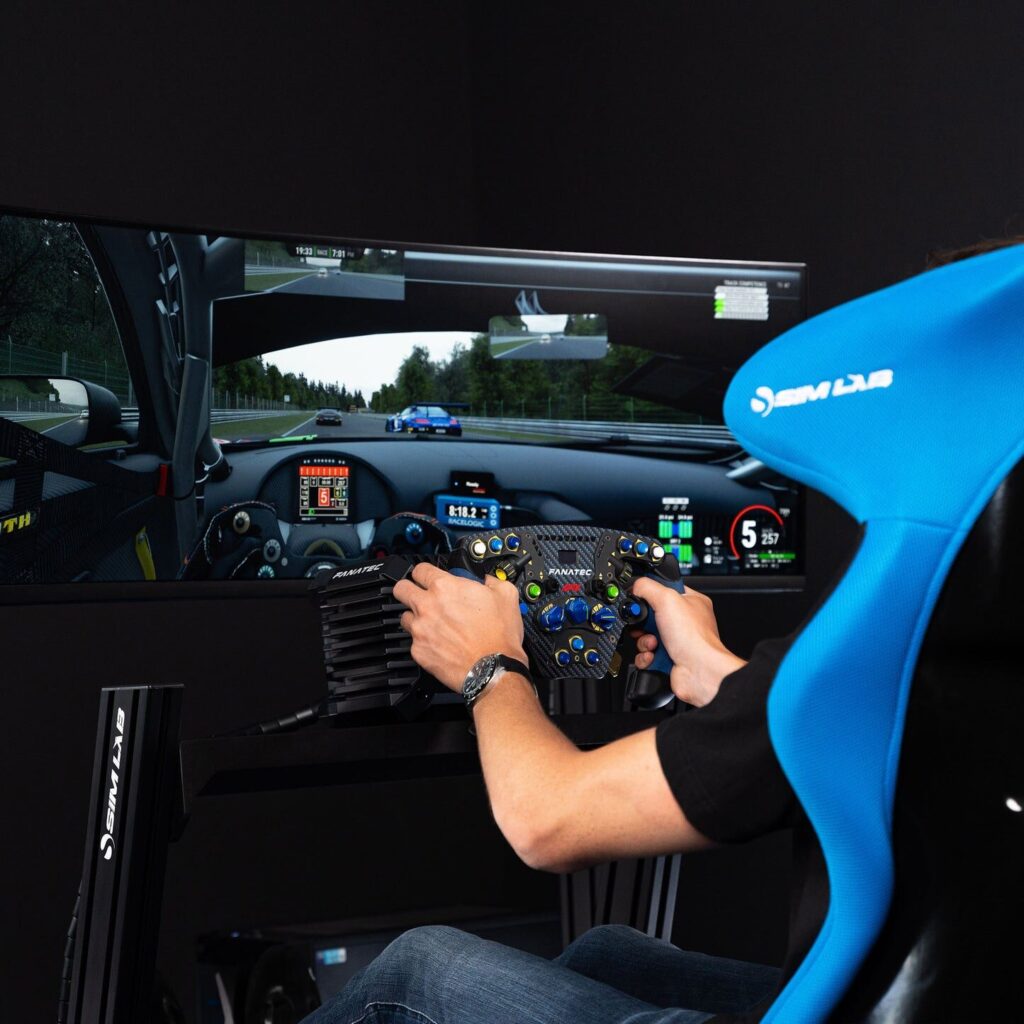
With a Direct Drive base, the difference is immediately noticeable. Torque is no longer absorbed by parasitic flexing of the chassis. The steering wheel doesn't "recoil" or pivot slightly on its axis, even during heavy impacts on vibrators or violent corrections. You get a cleaner, easier-to-read FFB. It's easier to understand where the grip is, especially in transitional phases.
In fast corners, when the car loads the front end, the absence of parasitic cockpit movement helps enormously. The body only moves because of the steering wheel, not because the structure twists. The brain is quicker to distinguish between what comes from the game and what comes from the hardware. In concrete terms, this translates into greater confidence when attacking.
On the vibrators, the stiffness makes for a slightly rougher feel, but paradoxically more comfortable in the long run. You can feel the detail of the oscillations, without the chassis resonating or vibrating in all directions. The jolts transmitted by the track remain under control. It's clean, crisp, with no random shaking. You stay in control, even in "maximum attack" mode on a qualifying lap.
Under braking, especially with a heavy crankset, the difference is even more striking. With a lighter or tubular cockpit, you can sometimes feel the structure recoil or compress a little under pressure. Here, the frame stays planted. You can really lean on the brake without a second thought. The result: greater consistency, less mental fatigue, and better repeatability of braking points.
Over long sessions, this gain in consistency is noticeable. Not having to compensate for micro-movements in the chassis reduces the cognitive load. You concentrate on the trajectories, the rhythm, the race. The cockpit disappears from your head, which is the best compliment for this type of product. You forget about the support, and focus solely on the car.
Compared to a lighter cockpit or one built with less rigid profiles, we clearly gain in steering precision. We dare to correct harder, earlier, without fear of the steering wheel "going" or the pedals moving. Compared to even more massive full-aluminum monsters, we lose a little in pure inertia, but gain in compactness and ease of integration at home. The balance struck by the GT1 Pro is highly appropriate for a serious, but still "domestic" simracing setup.
In terms of immersion, the combo of rigidity + adjustable driving position really makes the difference. When everything is properly adjusted, you feel as if you're inside the shell of a miniature racing car. Nothing moves, nothing creaks, and every driver action translates directly onto the screen. It's exactly what you'd expect from a cockpit at this price level.
Who's it for? What we like / What we don't like
The Sim-Lab GT1 Pro is clearly aimed at the motivated simracer who already spends time on virtual circuits and wants a chassis capable of handling a serious Direct Drive base. For a total beginner, it's a bit oversized, unless the idea is to directly build a high-end base without going through the entry-level cockpit box. For an intermediate or experienced PC user, on the other hand, it's a very coherent choice.
What I particularly like is the combination of rigidity and compactness. The result is a very stable structure, capable of handling high torque and a powerful crankset, while remaining relatively compact. The rounded design of the center column also improves access comfort and overall aesthetics. Another strong point is the complete ecosystem offered by Sim-Lab: screen mounts, accessories, extensions... you can really build a coherent "cockpit" around the GT1 Pro, without tinkering.
I also like the "long-term investment" aspect. It's not a cockpit you change after a year. It can keep up with several generations of steering wheels, pedals and PCs, without showing any signs of weakness. For a user who sees simracing as a lasting passion, the perceived value is high.
On the other hand, there are a few limitations to bear in mind. Firstly, assembly requires time and a minimum of rigor. It's not plug-and-play, and someone who hates using an Allen wrench is likely to find it a chore. Then, even if it's more compact than some big aluminum chassis, it's still a bulky piece: in a small apartment, you need to think about the space it will take up. Finally, the price clearly puts it above tube cockpits or folding structures. For the occasional gamer, the cost may seem hard to justify.
For a regular simracer, ready to invest in a Direct Drive base or already equipped with a heavy-duty crankset, the balance is clearly in the right direction. For someone who rarely plays and only with a small entry-level wheel, the investment doesn't make the same sense.
Sim-Lab GT1 Pro verdict
The Sim-Lab GT1 Pro changes one thing above all else in a setup: it transforms the chassis into a non-subject. Once fitted and properly adjusted, it almost disappears. It doesn't vibrate, bend or move. It lets the steering wheel, pedals and driver do their work without interference. That's where this cockpit really comes into its own.
On the market, it's clearly positioned as a very solid mid/top-of-the-range product. More serious and cleaner than a tubular cockpit, more compact and more "livable" than some ultra-heavy full-profile monsters. It serves as the ideal pivot for a Direct Drive and powerful pedal-oriented setup, without tipping over into the extreme.
I'd recommend it to those who see simracing as a regular activity, who ride mainly on PC, and who already have or are considering an advanced base and pedalboard. For the occasional gamer, or for someone who needs a cockpit that's easy to fold and store, it won't be the best choice.
If you're looking for a rigid, scalable and serious cockpit, capable of getting the best out of a Direct Drive base without turning your living room into an industrial workshop, the Sim-Lab GT1 Pro can clearly make the difference in your setup.


Reviews